Category: Childhood Indigenous Games

  • “Ama dum mar para khie”

    Kane ka jingrwai ka dei kaba bun na ngi, ngi lah ju ïa lehkai ha ka por khynnah ✨🍃🪁

    Ka wanrah biang ïa ki jingkynmaw ba kordor jong ka por jinglong khynnah ❤️❤️

    Khublei Shibun Professor Esther Syiem @meiithei bad Bah Maxter Warjri @maxterwarjri ba phi la pynthoh ïa ki ktien jong kane ka jingrwai! 😃🙏🙏

    Khublei Shibun ïa phi Kong Ellerine Diengdoh ( Associate Professor) ba phi la pynrecord ïa ka sur jong i Mei jong phi, kaba la ïoh ban pyndonkam ha kane ka video! 😃🙏❤️

    Khublei Shibun ïa baroh na phi kiba la jubab ïa kane ka jingkylli! Lyngba jong phi la ïoh ban pyni ïa ki bun jait ki rukom ong jong kane ka jingrwai. 🙏🙏

    .

    .

    .

    "Amar dumma para khie…" may be described as a Khasi nonsense rhyme that was recited to play a children's game. It was said with glee and anticipation of what would happen at the end of it.

    The slides that have been posted show the different versions of the song that we remember 😃😃

    #amadummaparakhie #childhoodgames #khasichildhoodgames #khasichildhoodsongs

    #khasigames #nonsenserhyme #speakyourroots #speakyourrootschallenge #talklocal

  • “La dikut u ‘sai tyllai…”

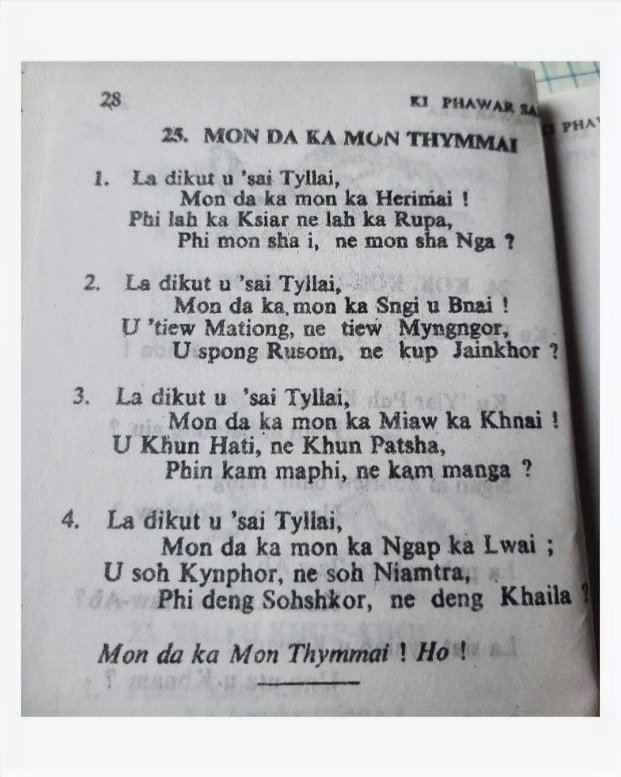
    "Mon Da Ka Mon Thymmai" da u Primrose Gatphoh

    1. La dikut u 'sai Tyllai,

    Mon da ka mon ka Herimai!
    Phi lah ka Ksiar ne lah ka Rupa,
    Phi mon sha i, ne mon sha Nga?

    2. La dikut u 'sai Tyllai,

    Mon da ka mon ka Sngi u Bnai!

    U 'tiew Mationg, ne tiew Myngngor,

    U spong Rusom, ne kup Jainkhor?

    3. La dikut u 'sai Tyllai,
    Mon da ka mon ka Miaw ka Khnai!
    U Khun Hati, ne Khun Patsha

    Phin kam maphi, ne kam manga?

    4. La dikut u 'sai Tyllai,
    Mon da ka mon ka Ngap ka Lwai;
    U soh Kynphor, ne soh Niamtra,
    Phi deng Sohshkor, ne deng Khaila?

    Mon da ka Mon Thymmai! Ho!

    "La dikut u 'sai tyllai…"

    Phi ïa kynmaw ïa kane jinglehkai? 😄😄 Tip ka don kyrteng ne em?

    Ïa ki kyntien pura jong ka jingrwai ba kine ki khynnah ki ïa rwai la shem ha ka poitri kaba kyrteng "Mon da ka mon thymmai" ha "Ki Phawar Sara (Nursery Rhymes) Bad Ki Poetry Rit Na Ka Bynta Ki Basic Bad Primary School" ba la thoh da u Primrose Gatphoh. Kane ka dei sha Byrong, Wahlong.

    Khublei Shibun @gregoria_ann3 ba phi la phah ïa kane ka video bad ki dur 😃🙏❤️ Sngew kmen ba phi la lap ïa ki kyntien jong kane ka jingrwai!

    This is a game that reminds us of childhood days ❤️🥺 It is accompanied by a stanza of a poem entitled "Mon da ka mon thymmai" that is found in the book "Ki Phawar Sara (Nursery Rhymes) Bad Ki Poetry Rit Na Ka Bynta Ki Basic Bad Primary School" written by Primrose Gatphoh.

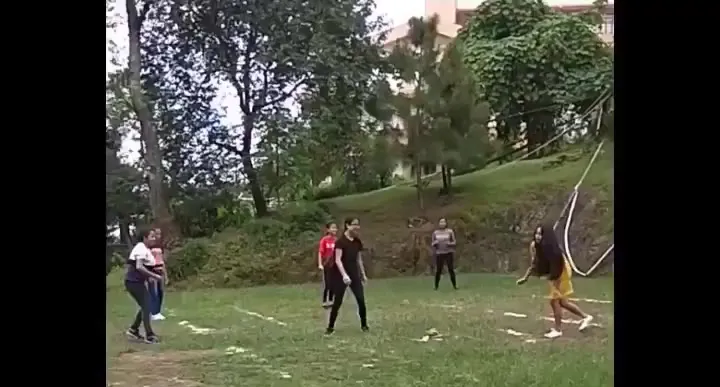
  • “Mawpoiñ” game held in St. Mary’s College, Shillong during the Sawangka Festival, 2019.

    This is a video of the last 17 seconds of a round of "Mawpoiñ" held in 2019 in St. Mary's College, Shillong during the Sawangka Festival.

    The Sawangka Festival is a one of a kind festival started by the Department of English, St. Mary's College, Shillong, which aims to nurture the talent of students while promoting language, literature, art, music, dance, theatre, sports and others.

    "Mawpoiñ" is an enthralling indigenous Khasi game which is similar to dodge ball. Here the ball is made of cloth and one team attempts to build a steady pile of stones while the other team tries to hit them with the ball 😄😄

    🟡 Rights to this video belong to the Department of English, St. Mary's College, Shillong.

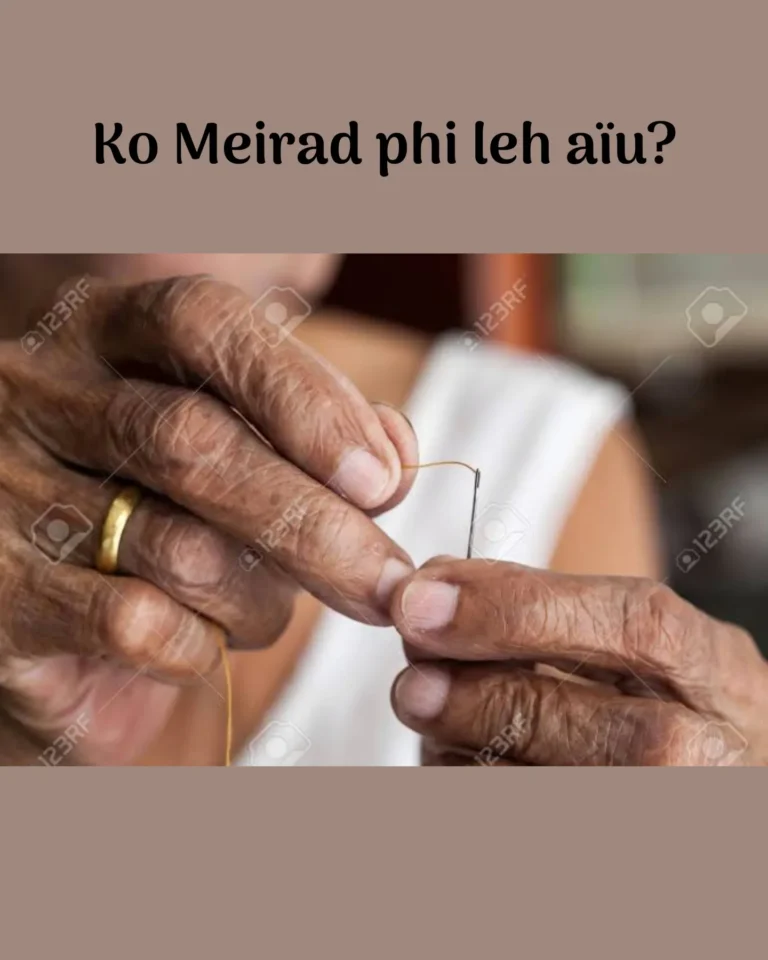
  • Ko Meirad phi leh aïu?

    Ko Meirad, phi leh aïu?

    Nga wad thyrnia…

    Ban leh aïu thyrnia?

    Ban suh ka pla…

    Ban leh aïu ka pla?

    Ban thep pisa…

    Ban leh aïu pisa?

    Ban thied khanshi…

    Ban leh aïu khanshi?

    Ban khap shñiuh ïa phi!

    Oh granny, what are you doing?

    I'm searching for a needle…

    What do you need the needle for?

    To stitch a bag…

    What do you need the bag for?

    To keep money in it…

    What do you need the money for?

    To buy scissors…

    What do you need the scissors for?

    To cut you hair!

    "Ko Meirad phi leh aïu?…" ka dei sa kawei ka jingïalehkai kaba ngi shait ïalehkai. 😄😄 Don ki por ba ngi shait ai da ki jubab kiba komik ruh 😂🤡 I dei ito iba dei Meirad em iba beh ïa kiwei ha kaba kut? 🤔

    Khublei Shibun @sandrahynniewta ba phi la pynkynmaw ïa kane 🙏

    This is another childhood game that most of us played when we were children. I've said this before and I'll say it again: We don't hear kids playing these games anymore 😢😢

    🟡 English translation by @speakyourroots

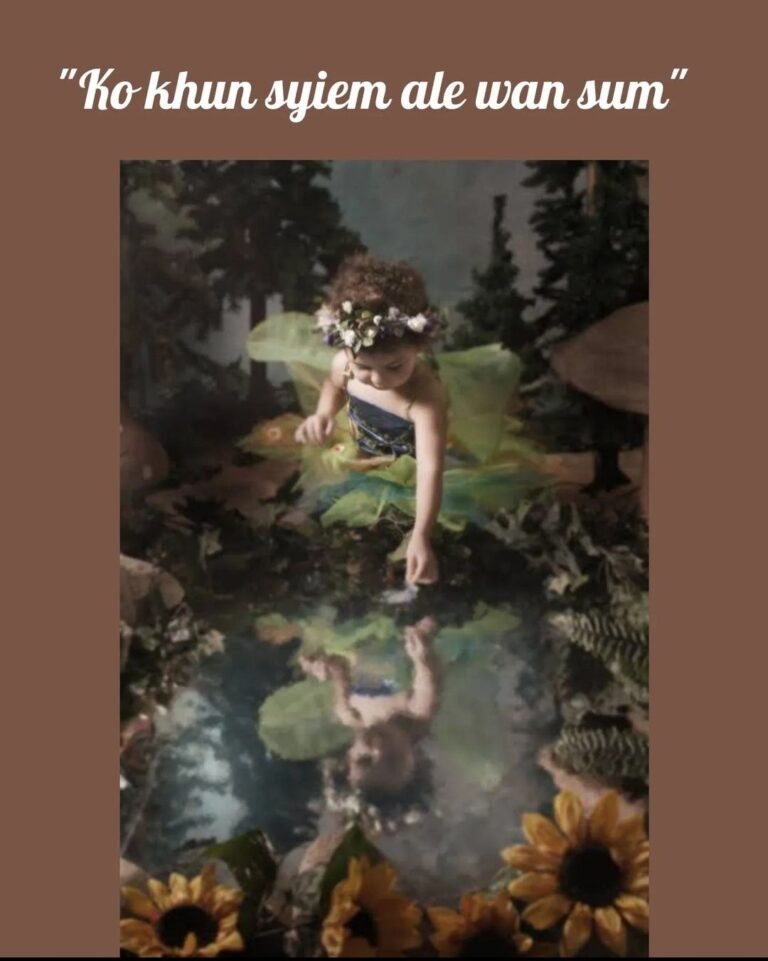
  • Ko khun syiem ale wan sum

    "Ko khun syiem ale wan sum…"

    "Ynnai ba rit ka pung"

    "Thep da ka kot shispah ban heh ka pung!"

    Te ynda lah thep ïa ka pisa (ne ka ksiar), ka pung ka ïar bad ka khun syiem ka rung ha pung. Tangba ynda lah dep ban sum, ka khun syiem kam lait shuh ban mih bad ka hap leh katba lah ban bthat ïa ka jingker ban mih na kata ka pung.

    Phi kynmaw ïa kane ka jinglehkai mynshuwa ha ka por ba dang rit? 😄😄 Ka don ne em ka jingmut sha lyndet jong kane ka jingkylli bad ka jubab?

    Khublei Shibun @bah_komiks ba phi la pynkynmaw ïa kane 🙏 bad ba phi pyrkhat de ïa ka jingmut jong kane ka jinglehkai.

    This is a game that we used to play as children. We would form a circle (which is the pond) and the princess (who is standing outside the circle) is asked if she would like to bathe in the pond. The princess replies that the pond is too small. The rest of the children in the circle reply back and tell her to drop money (a hundred rupee note or gold) for the pond to become bigger. Once the princess does this the circle/ pond grows larger and she enters. But the catch at the end is that she will not be able to get out of the circle/ pond. So the fun of the game lies in the struggle of the princess as she tries to get out of the circle. 😅😅

    Sounds a little scary now that it's been narrated 😬 But who knows what the symbolic meaning of this game is. Maybe we're over analysing. 😜

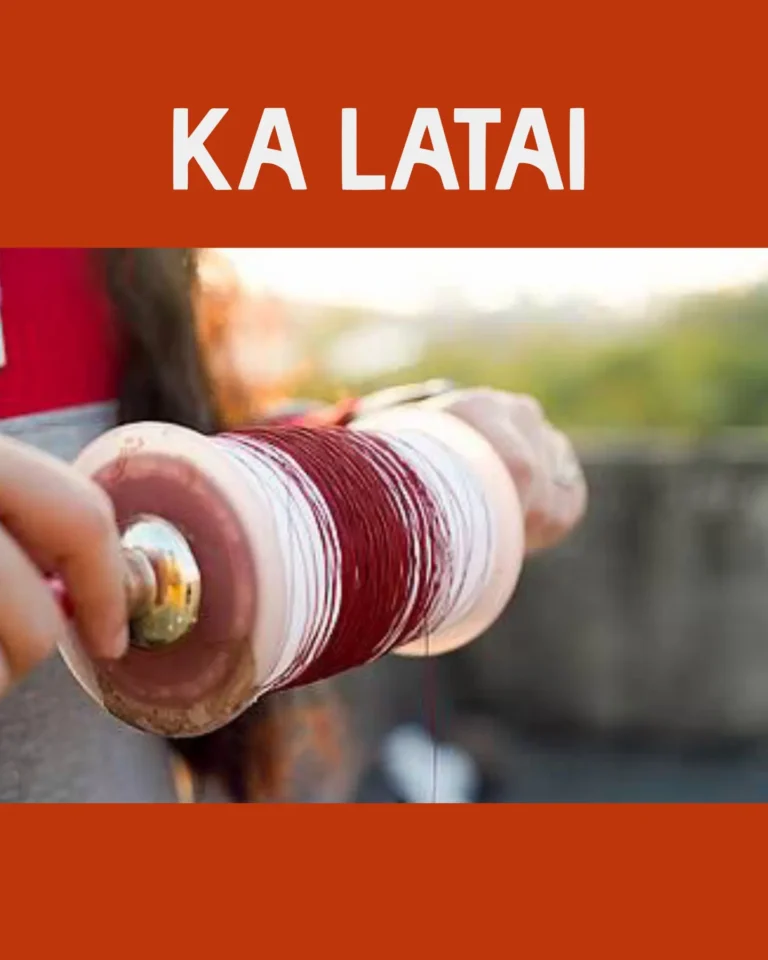
  • Ka Latai

    "Ka latai" ka dei ka tiar kyllaiñ ksai kot kudi ne ka shaka kyllaiñ ksai.

    The Khasi word "Ka latai" is the roller or the spool on which the kite string or thread is rolled.

    Katno ka jingshongshit haba pynher kot kudi! 🪁🪁😄😄 Her lang u dohnud katba nang her ka kot kudi 🪁

    Those sunny days with those steady winds for kite flying 🌬️🌬️🌤️🌤️

    🟡 English translation by @speakyourroots

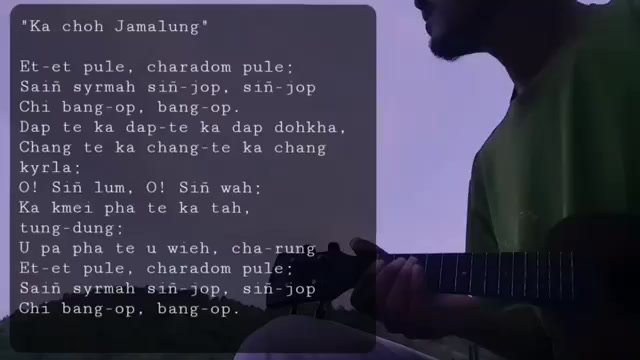
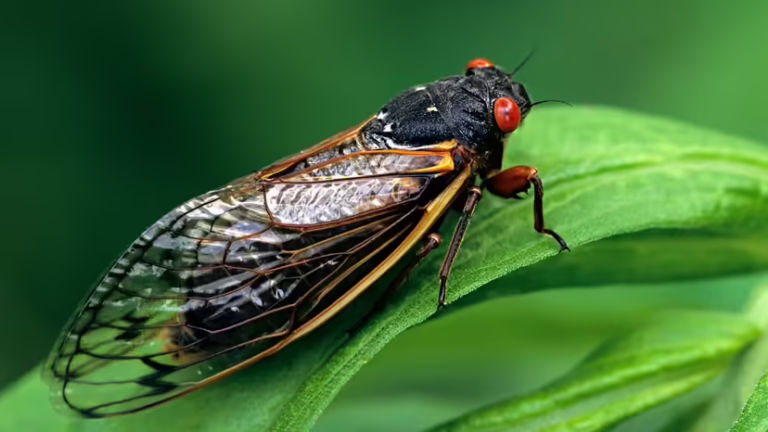
  • Ka Choh Jamalung (The Call of the Cicada)

    This is the tune and the lyrics to the chanting song "Choh Jamalung" (The Call of the Cicada) performed by @esra_syiem . The tune is endearing and draws in a nostalgia for those crisp village evenings. 🌤️🌲

    This chanting song is sung by children at dusk as described in the post. It is popular in Raid Nongtluh of Ri Bhoi District, Meghalaya. Thank you @esra_syiem for sending this unique entry! 😃😃

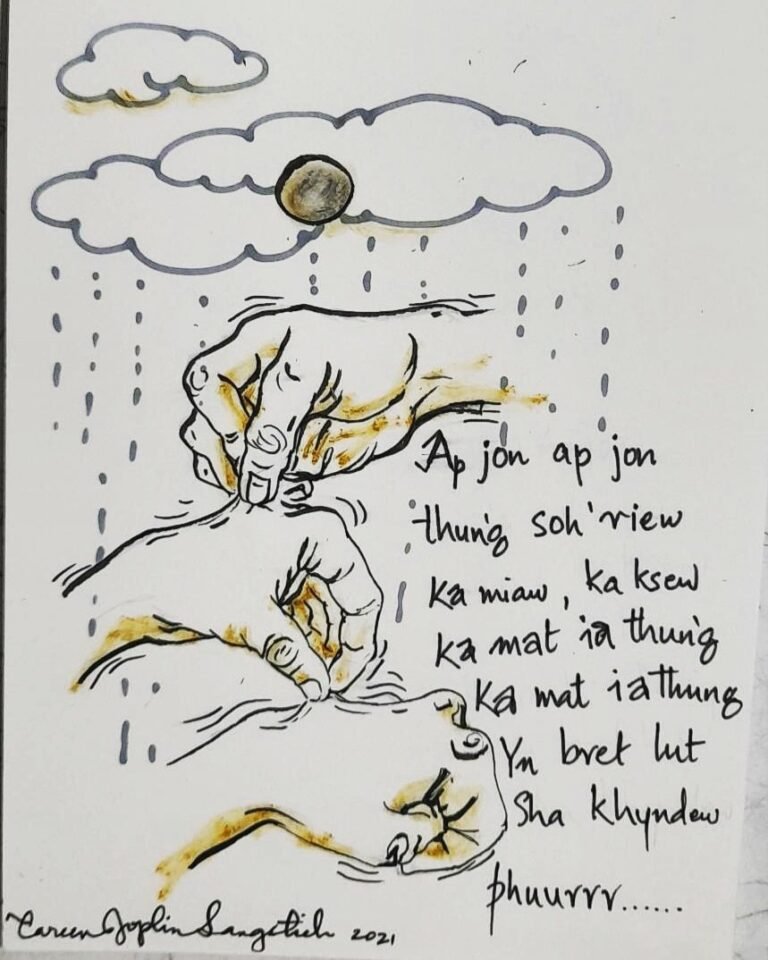
  • Ap jon, ap jon by Careen J. Langstieh

    "Ap jon, ap jon,

    thung soh 'riew,

    ka miaw, ka ksew.

    Ka mat ia thung,

    ka mat ia thung.

    Yn bret lut sha khyndew.

    Phurrrrrr…..”

    "Ap-jon" or "Ap-jan" is a favourite children's pastime played with as many participants present. It involves pinching each other's hands one on top of each other to make a ladder-like formation. The rhyme is then sung while rocking the chain of hands up and down. The song ends with 'phurrrr' which signals letting go of the hands and immediately is followed by children tickling each other. When I was little, I always knew who was going to give me the sharpest pinch so I'd try to put my other hand on top of that kid's hand to counter myself. But we carry no grudges because in the end we would end up laughing hysterically by tickling each other.

    "Ap jon, ap jon" sent by @careenjoplinlangstieh 😄😄😄 This is a beautiful art piece on the childhood game! 🤩🤩🤩❤️❤️👏👏

    "Ap jon, ap jon" is a childhood game that most Khasi children will know. Like the post says it is a popular pastime during play. Remember those painful pinches with voices anticipating the tickles at the end? 😅😂 Khublei shibun Kong @careenjoplinlangstieh for this entry! ❤️🤍💜💙

  • “Choh Jamalung” (The call of the Cicada)

    As dusk fell, there are days in the valley of Ri Bhoi when children would gather outside their houses; and hold two little bamboo sticks in their hands. In front of a small tree or a branch and just beside the light bulb, they make beating sounds with those sticks to call the "jamalung" (an insect under cicada family).

    The children from Raid Nongtluh would also phawar (chanting song):

    “Et-et pule, charadom pule;

    Saiñ syrmah siñ-jop, siñ-jop

    Chi bang-op, bang-op.

    Dap te ka dap-te ka dap dohkha,

    Chang te ka chang-te ka chang kyrla;

    O! Siñ lum, O! Siñ wah:

    Ka kmei pha te ka tah, tung-dung;

    U pa pha te u wieh, cha-rung”

    The "jamalung" is captivated by the radiance of tungsten lights, and wings its way to the tree. The children are enlivened as they contend with each other for the catch. And the fate of "jamalung" is uncertain, it may be consumed, released back or played with till it is no more.

    "Ka Choh Jamalung" (The Call of the Cicada) is a chanting song sent by @esra_syiem ! 😀😀 Thank you for this unique entry!

    It is reminiscent of those childhood chants and games which sound like gibberish but no one cares because they're so much fun to say 😂😂😂 Those were the days when children were shooed away outside the house to play and shout 💞💞

    "tungsten light" is the light from a filament bulb.

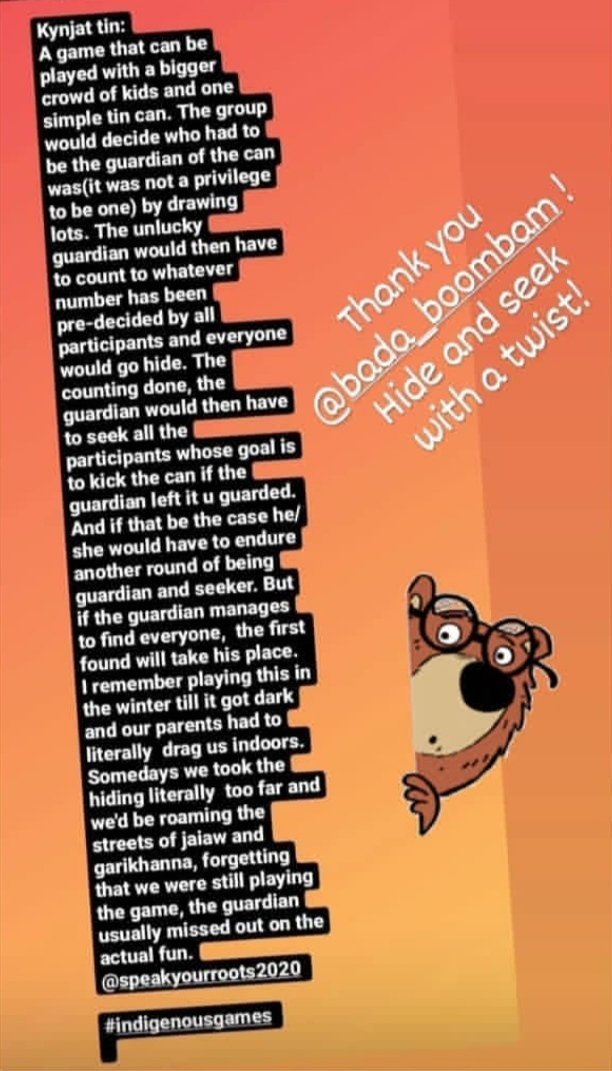
  • Kynjat Tin

    A game that can be played with a bigger crowd of kids and one simple tin can. The group would decide who had to be the guardian of the can (it was not a privilege to be one) by drawing lots. The unlucky guardian would then have to count to whatever number has been pre-decided by all participants and everyone would go hide. The counting done, the guardian would then have to seek all the participants whose goal is to kick the can if the guardian left it unguarded. And if that be the case, he/she would have to endure another round of being guardian and seeker. But if the guardian manages to find everyone, the first one found will have to take his place. I remember playing this in the winter till it got dark and our parents had to literally drag us indoors. Some days we took the hiding literally too far and we would be roaming the streets of Jaiaw and Garikhana, forgetting that we were still playing the game, while the guardian usually missed out on the actual fun.