Category: Interviews

  • Interview with Auswyn Japang, Assistant Professor and Research Scholar

    1. Ka ktien "folklore" ka mut aïu?

    Folklore ka dei ka jingiasoh jong ki ar tylli ki kyntien: ‘Folk’ kaba mut ki briew – ym tang kito kiba don ha ki nongkyndong, bad ‘Lore’ kaba kdew ia ki khanatang, ki puriskam, ki purinam, bad ruh ki jingrwai ki phawar. Hynrei, ka Folklore kam kut tang katne; ka dei ruh ka jingwan lang jong ki jingmut jingpyrkhat, ki khana ba laiphewjait bad ruh ki rukom. Ka kynthup ruh ia ka kolshor bad rukom im, ki jingngeit bad kumjuh ruh ia ki jingohdur bad ki rukom shna bapher bapher. Ka kynthup ruh ia kiei kiei kiba ngi lah ban iohi bad ia kito kiba ngi shu lah ban sngap. Bad ju ong ruh ba ka Folklore ka dei ka jingstad ba khlem da hikai jong ka pyrthei.

    1. What does the word "folklore" mean?

    Folklore is a combination of two words: ‘Folk’ implying people – not necessarily just the rural population, and ‘Lore’ predominantly implying stories, myths, legends, as well as songs. However, Folklore is more than just these elements; it is the coming together of ideas, narratives, and practices. It encompasses culture and tradition, beliefs, as well as art and architecture. It includes that which can be seen and that which can only be heard. Folklore is sometimes considered as unofficial knowledge about the world.

    2. Kumno ngin kham sngewthuh jylliew ïa ki riti dustur Khasi kiba la ïoh pateng na ka ktien ka thylliej?

    Ka jingdonkam ba kongsan eh jong ka ia kaba mynta ka dei ba ngi donkam ban don ka lad ha kaba ki khun samla ki long kiba shah pynshlur bad kiba kloi ban tip shaphang ka kolshor bad ki rukom kiba long tynrai lyngba ki khana. Dang shen ruh nga sdang ia kawei ka projek ha St. Anthony’s College lyngba ka Design Innovation Centre, ha kaba ngi pyndonkam ia ki khanatang kum shi bynta na ki jingpyrshang jongngi. Lyngba kane ka projek, ki khynnah jong ngi ki ioh ban nang ki skill kiba thymmai bad ruh ki ioh ia ka jinghikai ban burom ia ki khana bad kin long kiba kloi ban wad jingtip ba kham janai na ki. Kumjuh ruh, ki don katto katne ki kot ba ngim da kham pule la ngi dei ki rangbah ne khynnah kiba lah ban ai jingmut shuh shuh shaphang ka ktien ka thylliej u Khasi.

    Ngi donkam ruh ban don ka jingpynmlien ba pynshlur ban pule kot, khamtam kito ba lah thoh khnang katkum ka jingdonkam jong ka por ka ia jong ngi khnang ba ngin sngewthuh kham bha ia ka ktien ka thylliej u Khasi. Ka jingtip bniah ia la ka kolshor ka long kaba kongsan tam, da kaba ngi shim bynta ha ki cultural fest ne kino kino ki jingrakhe kiba iadei bad ka riti ka dustur jong ngi kum u Khasi. Ha kajuh ka por ruh, ki jaka pule (naduh kiba rit tam bad ter ter) ki lah ban noh synniang ha kane ka bynta. Kine ki lah ban wanrah ia ka jingsngewjan bad jingsngew sarong ia la ka jong ka kolshor. Ki literashor kiba iadei bad ki khynnah bad ki novel ba don bad ki dur ki dar kin iarap bha.

    2. How do we deepen our understanding of Khasi orality?

    One of the greatest needs of the hour is to create a situation where young people are encouraged and excited to learn about culture and traditional values through stories. I have recently started a project at St. Anthony’s College through the Design Innovation Centre, where we use folklore as the basis for our endeavours. Through this project, our students are not only learning new skills but are also being taught to find value in narratives and are encouraged to explore them. Additionally, there are a considerable number of books that are rarely read by both adults and children which can add towards the deeper understanding of Khasi orality.

    A reading culture is needed as well, one that is tailored to the demands of the time in order to understand the conceptual idea of Khasi orality. Exposure to one’s culture remains highly necessary, with active participation in cultural festivities and celebrations being strongly encouraged. Simultaneously, academia (starting from the lowest level and so on) can contribute to this. It can foster a sense of connection and pride in one’s own culture. Children's literature and Graphic novels can truly add so much.

    3. Kiei ki mat pdeng jong ka rukom ngeit rukom pyrkhat jong ki Khasi?

    Ki phang pdeng jong ka jingpeit, jingsngewthuh bad ka jingiadei jong U Khasi bad ka pyrthei ka long halor ka bor jong ka jingiateh, kiba iaid ryngkat ha kiba bun ki bynta – bad U Blei, para briew, bad ka mariang. U Khasi um lah ban im khlem ka jingiadei bad la U Blei, kum ba u/ka kim lah ban im khlem ka iing ka sem bad ki kur ki kha. Shuh shuh, u Khasi u bym suitniew ia ka mariang bad baroh kiba ha ka u lah phet jngai noh na ki jingngeit tynrai jong ki Khasi kum naduh ka mynnor. Kine baroh ki paw shai bha haba ngi leit wad jingsngewthuh shuh shuh sha ki field (lyngba ki fieldwork). Haduh kine ki sngi, ngi lah ban shem ia ki ha ka folklore jong ki Khasi, ki jingrwai tynrai, bad ruh ki riti ki dustur. Ki snem ba nga pynleit ha ka fieldwork ka lah ailad ianga ba ngan sngewthuh ia kine baroh, bad ki pyni shai ia ka jinglong kylluid ka jingpeit, jingsngewthuh bad ka jingiadei jong U Khasi bad ka pyrthei ha kaba u im da kaba wad ia ka jingim kaba shongsuk shongsaiñ.

    3. What are the salient features of the Khasi worldview?

    The Khasi belief system centres around the strength of bonds, operating on multiple levels – with God, among humanity, and with nature. A Khasi cannot exist without a connection to God, just as he/she cannot exist without their family and clan. Moreover, a Khasi who lacks deep respect for the land and the natural world has deviated from the beliefs of their ancestors. These elements become evident when one engages with them in the field (through fieldwork). To this day, these aspects remain observable in Khasi folklore, folksongs, and religious traditions. My years in the field allowed me to observe all of these, and it speaks volumes about the inclusiveness of the Khasi worldview that yearns for harmonious existence.

    4. Kumno ki rukom ngeit rukom pyrkhat jong ki nongwei ki ktah ïa ka rukom ngeit rukom pyrkhat jong ki Khasi?

    Namar ba ka jingwad jingtip jong nga ka dei ha ki War-Khasi, ngan jubab ia kane ka jingkylli lyngba nga jingsngewthuh jong nga. Ka jingpeit, jingsngewthuh bad ka jingiadei jong ki phareng, khamtam ha ka niam ka jingngeit, ka paw ba ki don katto katne ki jingktah. Haba u Khasi u pdiang ia ki jingpeit, jingsngewthuh bad ka jingiadei jong u bad ka pyrthei kumba ki peit ki phareng, ngin shem ba ka jingiadei jong u bad la ka jong ka jaka ka hiar, watla U Blei u iai long ba kongsan ha ka jingngeit jong u. Ki khana bad ki riti ki dustur ki kylla noh bad u jngai noh na ki, teng teng lah pynjngai bad lah bthah leh klet noh. Hynrei, khyndiat eh kiba pynneh iaki. Ka jingsaphriang jong ki khanatang bad kumta ter ter ka hiar noh, bad ju iohi bha ia kane ha kiba dang kham samla. Hynrei, kito ba don ka jingieit ia la ka jong ka kolshor bad ki pyrshang ban pynneh ia ka jingpeit, jingsngewthuh bad ka jingiadei jong u Khasi bad la ka mariang hi. Kaba sngewsih ka long ba bun kiei kiei kiba dei bad ka kolshor ne ka jinglong Khasi ka paw shai ka la duna. Ngi lah ruh ban ong ba ki jingpyrshang bad ka jingshimkhia jong ki jaka pule ka ai jingkyrmen.

    4. How have foreign worldviews affected the Khasi worldview?

    Since my research has primarily focused on the War-Khasi, I will be addressing this issue from that perspective. Foreign worldviews, especially concerning religious beliefs, have exerted certain influences. When a Khasi adopts a foreign worldview, their connection to the land weakens, even though God remains central to their belief system. Belief narratives and practices related to the land become unfamiliar to them, often discouraged and even suppressed. However, a small minority strives to preserve them. The sharing of folklore diminishes as a result, a phenomenon sadly observable among the younger generation. Conversely, cultural lore is retained mainly by those who maintain a strong affinity with their own worldview. The erosion of cultural memory is evident in most cases. However, a rising trend in academic interest seems to be promising.

    5. Kumno ki tiar stad ka juk mynta bad ki kor pathai jingtip kin nang bteng ban ïarap ban pynneh ïa ki riti dustur, ki rukom ngeit rukom pyrkhat bad kiwei kiwei jong ki Khasi?

    Ki technology bad ki kor media kiba mynta ki ai ia ki lad ban leh ia ki documentation ba bun rukom ha kaba iadei bad ka Khasi folklore. Ngi lah ban leh digital recording bad archiving, pyndonkam online platforms bad databases ban pynneh pynsah ia ka folklore jong ngi bad ruh ngi lah ban thoh ban tar bad ban pynkylla ktien ia ki jingthoh jong ngi sha kiwei pat. Ngi lah ruh ban shna ki kot pule, lah ban wanrah design bad innovation, bad ter ter. Ki lad ki long kiba bun bha. Hynrei, ki snem kiba nga lah pynleit ha ka fieldwork ki kdew ba ki don katto katne ki bynta jong ka folklore jong u Khasi ba ym lah ban lym kat kum ki kor ki bor mynta bad kan long kaba bakla ban shu pynwan dur noh ia ki ha ki kot ne hapoh ki kor media bapher – donkam ban mad ban shem ia ki kumba ki long hi. Katba dang don ki nongioh kynti jong ki riti ki dustur jong ngi, kiba pynneh ban pyndep ia ki, ka folklore jong u Khasi kan neh. Watla katta ruh, ha kaba donkam, ki kor technology ba ngi don ki lah ban iarap ban pynneh ban pynsah ia ka. Ha kaba mynta, nga tip ba ki don katto katne ki projects kiba trei nylla ha kaban lum bad pynneh pynsah ia ka folklore u Khasi kaba donkam mynta mynta.

    Ha kane ka artikl, nga lah pyrshang kat ba lah ban pyni ia kiba pule ba kin sngewthuh ia ka jingdonkam ban don ha ka field ban lum ban lang ia ka folklore. Kawei de ba nga lah ban kdew ka long ki riti ki dustur ba nga thoh ha kane ka artikle ki long ka Phur Nongjri bad ka Phur Sohbar ki bym shah ban ring ne shon dur ha kano kano ruh ka rukom, namar ka field hi ka kyntu ba ym baroh ki bynta jong ka folklore u Khasi ki donkam ban shah lum shah lang lyngba ki kor media kiba mynta.

    “Lore and the Process of Tradition: Locating the Place of Narratives and Religion in Ka Phur Nongjri and Sohbar”. In Untold Narratives, Invisible Marks, Ethnographica et Folkloristica Carpathica, Ethnology and Folklore. No 23. Pp. 89-102. 2021. https://ojs.lib.unideb.hu/ethnographica/article/view/9223/9132

    5. How will technology and media continue to help in the documentation of Khasi folklore?

    Modern technology and media offer numerous incentives for the documentation of Khasi folklore. We can utilize digital recording and archiving, online platforms and databases for preserving folklore and folk traditions, transcribe and translate materials, create educational resources, develop adaptive designs and innovations, and much more. The potential is limitless. However, my years of experience in the field suggest that certain aspects of Khasi folklore defy archiving or documentation in textual or digital spaces – they must be experienced and felt in the moment. As long as custodians of folk traditions exist, who continue to articulate and practice them, Khasi folklore will endure. Yet, whenever the need arises, modern technology can assist. Presently, I am aware of a few projects that are diligently working towards documenting aspects of Khasi folklore that require immediate attention.

    In this article, I have tried my best to direct the reader’s attention on the insistence of being in the field to be part of the documentation of folklore. The fact that the practices considered in this study ‘Phur Nongjri’ and ‘Phur Sohbar’ discourages documentation, the field itself suggests that not all aspects of Khasi folklore needs or can be documented.

    “Lore and the Process of Tradition: Locating the Place of Narratives and Religion in Ka Phur Nongjri and Sohbar”. In Untold Narratives, Invisible Marks, Ethnographica et Folkloristica Carpathica, Ethnology and Folklore. No 23. Pp. 89-102. 2021. https://ojs.lib.unideb.hu/ethnographica/article/view/9223/9132

    Happy World Folklore Day!

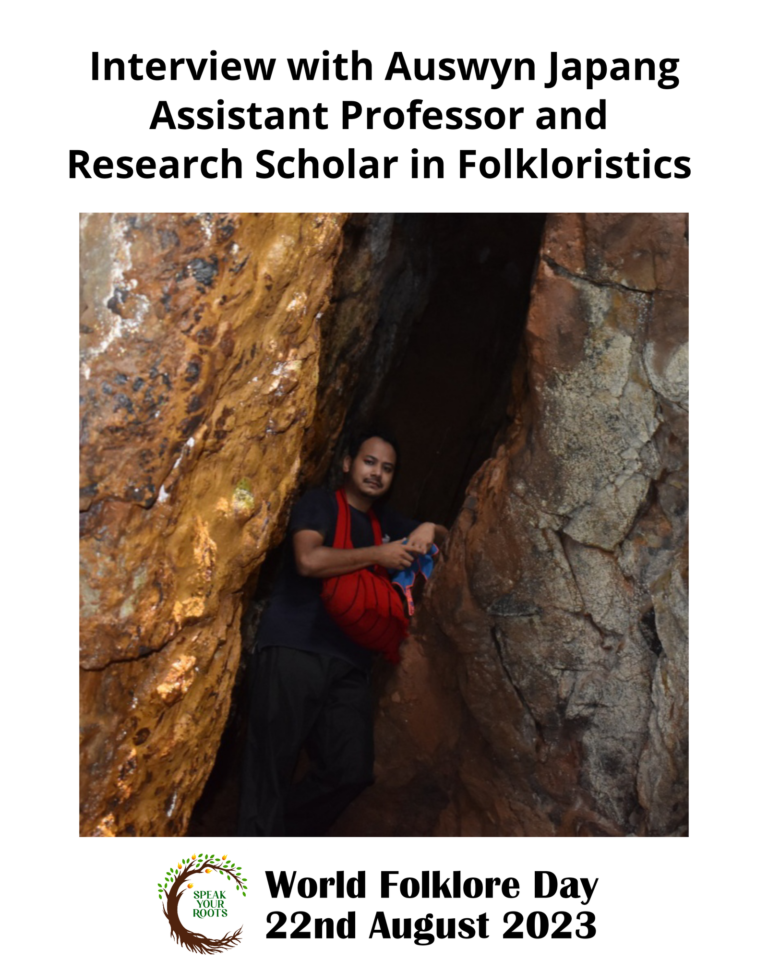
    Today on World Folklore Day, 22nd August 2023, we have an interview with Auswyn Japang @ausjapang who is an Assistant Professor and a Research Scholar in Folkloristics 🏞️🌿

    Khublei Shibun @ausjapang for expressing your thoughts and expertise on these questions, which have been made quite comprehensive! 😄🙏

    Auswyn says about research and fieldwork: "While every now and then I do get to engage in fieldwork, this is where true folklore resides. Some fieldwork involves treks of tremendous distances and they sometimes happen late in the evening as well. Sometimes without a streetlight. And no roads. Fieldwork also demands a great deal of endurance. I had to go down a sharp decline to reach a cave of religious significance whose folklore is unknown to a great many."

    We express our appreciation and gratitude for your hard work and the gruelling experiences that you have to go through to complete your research! 🙏🙏 Kudos to all research scholars who are who are plodding day and night to preserve and document Khasi folklore and folklife!

  • Interview with Careen J. Langstieh, Artist

    1. How and why is art a suitable medium to portray indigenous life?/ Kumno bad balei ka jingdro dur ka long ka lynti pdeng kaba ïahap ban pyni bad pashat ïa ki rukom im bad ïa ki riti dustur tynrai?

    Art is not only a medium to portray indigenous life but it portrays life as it is. Art in its various forms of expression has always been about capturing historical events, addressing social and political issues, also a medium of self-expression or a way of seeking answers when nothing makes sense. In our case, our ancestors have managed to do that with the art of storytelling, using metaphors, situations, words and melodies and the art of embroidery to mimic nature and stone structures all around us to make sure that their existence is not forgotten.

    Ka jingdro dur kam dei ka lynti pdeng ban pyni tang ïa ki riti dustur tynrai hynrei ka dei ka lynti pdeng ban pyni ïa ka jingim briew hi kumba ka long. Ha ki rukom ba pher ba pher, ka jingdro dur ka ksoh bad kem ha ka ïa ki mat ba donkam jong ka histori, ka imlang sahlang bad ka saiñ pyrthei. Ka jingdro dur ka dei ruh ka lynti pdeng ban pynpaw ïa ka malade ne ban wad jubab haba ka wan ka jingjynjar jingmut. Ïa ngi ki Khasi, ki longshuwa manshuwa jong ngi ki la lah ban leh ïa kane lyngba ka jingtbit jong ki ban ïathuhkhana, ki rukom pynïasyriem, ki jingjia ba har rukom, ki ktien, ki sur rwai, ka suh ka thaiñ kaba pyrthuh ïa ka mei mariang bad ki jingthaw jingshna da ki maw ban pynthikna ba ngin ym klet ïa ka jingim jingman jong ki.

    2. How do people respond to art that speaks about indigenous life and embodies indigenous themes? / Kumno ki briew ki sngew bad kren shaphang ka jingdro dur kaba kren shaphang ki rukom im tynrai bad kaba kynthup ïa ki phang pdeng kiba ïadei bad ki riti dustur tynrai?

    Within our place I can say that our understanding of language is gradually becoming more important and interesting. We have come a long way, wherein people now have been able to express their interest and are keen in participating in discourses especially with subjects that are inclined towards our heritage and culture, our past, our stories, our origin, our traditional Khasi faith without hesitation.

    Hapdeng jong ngi, nga lah ban ong ba ka jingsngewthuh shaphang ka ktien ka thylliej ka la nang man kongsan bad ring jingmut. Ngi la ïaid ïa ka lynti kaba jrong, ha kaba ki briew mynta ki la lah ban pynpaw ïa ka jingsngewtynnat bad jingkwah ban ïa shim bynta ha ki jingkren bad jingphylliew jingmut ha ki mat kiba ïadei shaphang ka jingïoh pateng jong ngi, ka deiriti, ka mynnor, ki jingïathuhkhana parom, ka thymmei, ka jingngeit Khasi tynrai khlem don ka jingartatien.

    But, we should also understand that the visuals we were exposed to in the recent past has always been with the coming of Christianity and the various iconographies of the Catholic church. So visually the masses are always inclined towards everything eurocentric; everything from pictures, books, to arrangements of homes is very much according to those aesthetics.

    With regard to visual art portraying indigenous life, it has always been about portraying indigenous people's life in relationship with nature.

    Tangba ngi dei ban sngewthuh ba kiei kiei kiba ngi ïohi mynshuwa ki la long bad ka jingwan jong ka niam Khristan bad ki jingpynwandur nuksa jong ka balang Katholik. Te namar kata ki paidbah ki noh ka jingmut sha kiei kiei kiba longpdeng shaphang ki phareng, naduh ki dur ki dar, ki kot ki sla, ki rukom pynbeit pynitynnat ia ki ïing ki sem. Kine baroh ki long kat kum ka rukom kheiñ itynnat jong ki phareng.

    Ha ka liang jong ka jingdro dur kaba pyni ïa ka jingim tynrai ki trai muluk trai jaka, ka lah ju long ka rukom ban pyni ïa ki trai muluk trai jaka ha ka jingïadei jong ki bad ka mei mariang.

    3. What is the scope of art in building a past, present and future for indigenous life?/ Sngewbha pynshai shaphang ka jingïar jong ka jingdro dur ha ka jingpynwandur bad jingtei ïa ka mynnor, ka mynta bad ka lawei jong ka rukom im bad riti dustur tynrai?

    Our ancestors have paved the way in expressing themselves through the art of erecting monoliths and other stone structures that have stood out prominently everywhere in our landscapes. Almost every artist I know including myself have and still continue to portray these iconic symbols in our works. With time I'm sure these stones will find a new form, new meaning and a language through the works of younger artists who are yet to come. Also our folktales and folklores will continue to allow us to understand them from perspectives beyond what we imagine now. Art will always continue to grow and change.

    Ki longshuwa manshuwa jong ngi ki la prat lynti ïa kaba kumno ban pynpaw bad pyni ïalade lyngba ka jingtbit jong ki ban pynïeng ïa ki mawbynna bad kiwei kiwei ki jingshna da ki maw kiba ïeng shynna ha ki lum ki them ka ri Khasi. Jan man ki barikor ba nga ithuh bad manga ruh, ngi dang ïai bteng ban pynwandur ïa kine ki dak kiba khraw ka jingkordor ha ki jingdro dur jong ngi. Lyngba ka jingïaid ka por, nga thikna ba kine ki maw kin mih ha ki jingsaiñdur ba thymmai, da ki jingmut kiba thymmai bad ka ktien ruh kan mih da kawei ka dur lyngba ki barikor ki ban nang wan. Ki khanatang, khanaparom bad ki rukom im, rukom ngeit jong ngi kin nang ai lad ïa ngi ban sngewthuh na ki rukom ïohi kiba ngim pat lah ban mutdur. Ka jingdro dur kan nang ïar bad nang kylla.

    4. In your paintings there are indigenous images which carry an indigenous ethos. What do you have to say about this?/ Ha ki jingdro dur jong phi ki don ki dur kiba pynpaw ïa ka jinglong mynsiem jong ka rukom im tynrai bad ki riti dustur tynrai. Phi don aïu ban ong halor kane?

    Because I am a Khasi, I cannot create and mould that which is not part of the flesh and blood of this place. Yes, at times I imitate work which is not by me or from my homeland. But in my own individual work, my thought process flows towards those things which are the essence of being Khasi.

    Namar ba nga dei ka Khasi, ngam lah ban pynwandur ïa kiei kiei ki bym longdoh longsnam na kane ka jaka. Hooid, nga pyrthuh bud hateng hateng ïa ki kam ki bym dei na lade ne na la ka ri lajong. Hynrei ïa ki kam ba shimet jong nga ka jingmut ka shoh hi tang ïa kiei kiei kiba ïadei bad ka jinglong Khasi.

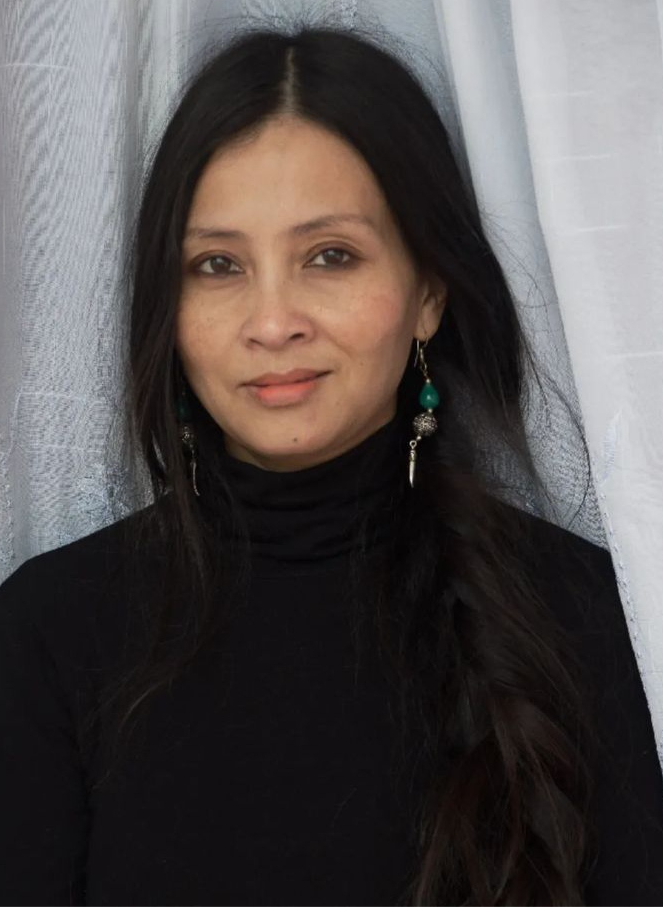
    Ban rakhe ïa ka International Day of the World's Indigenous Peoples, ka Speak Your Roots ka la ïoh ban kren bad i Kong @careenjoplinlangstieh iba dei i barikor iba bun na ngi ngi tip shaphang jong i. Ka sap ka phong i Kong Careen ka la wanrah ka burom bad ka nam ïa i bad ïa ngi ki Khasi ha ka ri India bad shabar ruh.

    La thmu ban kren bad i ruh kum iwei na ki kynthei kiba stad bad shemphang shaphang ka jaitbynriew ban pynshai shuh shuh ïa ka phangpdeng jong mynta ka sngi kaba dei "The Role of Indigenous Women in the Preservation and Transmission of Traditional Knowledge".

    Khublei Shibun Kong @careenjoplinlangstieh ba phi la pynsngew ïa ki jingmut bad jingthmu jong phi lyngba kane ka jingïakren! 😃🙏

    To celebrate International Day of the World's Indigenous Peoples, Speak Your Roots had the opportunity to talk with Kong @careenjoplinlangstieh who is a senior practicing artist, who is well-known among us. Kong Careen's gift and talent has brought name and fame to her and to the Khasi community in India and abroad.

    It is hoped that the talk with her as one of the women who are well-versed about the Khasi community will enlighten us about this year's theme "The Role of Indigenous Women in the Preservation and Transmission of Traditional Knowledge".

  • Interview with Naphibahun Lyngdoh, Archaeologist

    Celebrating International Day of the World's Indigenous Peoples, 9th August 2022

    1. What do you think is special about the history of the Khasis?/ Ha ka jingsngew jong phi kaei kaba kyrpang ne kynsai shaphang ka histori jong ki Khasi?

    Ka histori jong ngi ki Khasi ka long shisha kaba riewspah bad kaba kyrpang ha kiba bun ki liang. Haba ngi peit kylleng sawdong ngi lah ban ïohi ki jingtei jong ki mynbarim kiba bun rukom, naduh ki mawbynna-mawbyrsiew, ki jingkieng jyrmi, ki lynti hat, lynti rim, ki ïew rim bad kumta ter ter. Ka jingstad bad jingshemphang jong ki, ka pyni ruh ha ka jingynneh pynsah ïa ka Mei Mariang da kaba buh ia ki 'law kyntang. Kine ki pyni bad batai ia ngi ia ka histori kaba kyrpang jong ki Khasi. Ngi lah ruh ban ïohi ka jingkynsai ka histori jong ngi na ki riti-ki dustur, ka sap-ka phong, ka put-ka tem, ka shad-ka mastieh, ka riam-ka beit, ki khana-ki puriskam, bad kumta ter ter.

    The history of the Khasis is one that is special and truly rich in many aspects. When we look around, we see the rich architectural legacy of our ancestors, from the Megalithic culture (mawbynna-mawbyrsiew), the living root bridges, market routes, old roads, old markets and so on. Their intelligence and wisdom is seen in their ability to sustain and preserve the environment through the setting up of " 'law kyntang" or sacred groves. The uniqueness of our history is also showcased in our tradition and custom, our talent and skill, our music, our dances, our attire, our myths and folklore, etc.

    2. In your research, what have you found about the role of indigenous women in the preservation and transmission of traditional knowledge?/ Ha ka kam wad bniah jong phi, phi lap aïu shaphang ka bynta kaba ki kynthei Khasi ki sei bor ha ka jingpynneh bad pynsaphriang ïa ka jingstad jingshemphang bad jingtip ïa la ka riti ka dustur?

    Ha ka jingleit wad bniah jong nga sha ki shnong kiba pher bapher, nga lah shem bun ki riew kynthei kiba da ka buit ka sap jong ki, ki lah pynneh pynsah ïa ka riti ka dustur u Khasi. Kum ban shu ai nuksa, ka jingshna khiew ha ri Khasi-Jaiñtia lah sdang nyngkong eh ha Larnai kaba dei kawei na ki shnong ha Jaiñtia Hills, naduh ki spah snem mynshwa. Ha ka jingleit jong nga sha kane ka shnong, nga shem ba dei tang ki kynthei naduh kiba rit haduh kiba heh, kiba shna ia ki khiew ranei.

    In my research in different villages, I had found that women, through their intelligence and resourcefulness have been able to preserve our customs and traditions. For instance, the art of pottery making in the Khasi and Jaiñtia Hills was first started centuries ago in Larnai, a village in Jaiñtia Hills. When I went to the village, I found that not only older women but even young girls were involved in the making of the black earthen wares called khiew ranei.

    Haba nga leit pat sha ka shnong Mawsahew, nga shem ïa kawei ka sap bniah kaba dei ka jingthaiñ ki pla ïarong na u sla sohtrun bad kumba ngi tip ha ki por mynshwa, ha pyrthei baroh kawei ka dei tang ka Mawsahew bad ha Philippines ba ki pynmih ïa u ksai na u sla sohtrun (pinatex). Ha kane ka bynta ruh, nga shem ba bun na ki nong shna ïa kine ki pla
    ïarong kidei ki kynthei.

    When I had gone to Mawsahew, a village in Sohra, I came across a particular skili that is unique to our region and that was the weaving of ïarong bags from the fiber extracted from pineapple leaves. As we know, since time immemorial it was only in Mawsahew village and the Philippines that the skill of spinning thread from the fiber extracted from pineapple leaves (pinatex) had been practiced. Here too, I found that many of the weavers of the ïarong bags were women.

    Sha Umden, kaba dei kawei na ki shnong ka ka thaiñ Ri Bhoi, nga shem ïa ka jingthaiñ jong ki riam tynrai ki Khasi na u khniang ryndia bad hangne ruh bun na kiba trei ïa kane ka kam ki dei ki kynthei. Na ki nuksa kiba la kdew haneng, ngi lah ban ïohi ba ki kynthei ki sei ïa la i buit i bor bad ka sap ban pynneh pynsah bad pynsaphriang ïa ka jingstad bad ki riti ka dustur u Khasi. Hynrei kumban shu ong noh, ka jingpynneh ïa ka deiriti kaba riewspah jong ngi ka nym da urlong khlem ka jingiatrei lang shynrang bad kynthei.

    In Umden, a village in Ri Bhoi, I saw that the weaving of our traditional Khasi attire from the eri silkworm is done mostly by the women. From these examples cited above, we see that women have made use of their intelligence, strength and skill to preserve and spread Khasi wisdom, custom and tradition. However, the preservation of our rich culture will not be possible without the combined efforts of both men and women.

    3. What do you have to say to students who want to pursue their studies in History and Archaeology? / Phi don ban ong aïu ïa ki samla kiba kwah ban pule ha ki shlem jong ka History bad Archaeology?

    Nga ai mynsiem ïa kito kiba don shisha ïa ka jingthrang ban pule Archaeology khamtam ïa kito kiba don ïa ka jingthmu ban wad bniah ïa ka Histori jong ki Khasi naduh ki por ba rim-ba jah.

    As we all know, there is a dearth in research on the history of our people and region so I heartily encourage those who have a passion to study Archaeology to pursue research on Khasi history, dating back to undocumented times and ages so that they can contribute to the society as a whole.

    4. Please suggest books on Khasi history that we can read./ Sngewbha ai jingmut ïa ki kot aïu ba ngin pule shaphang ka histori Khasi?

    • A K Nongkynrih- Khasi Society of Meghalaya

    • David Roy- A Khasi Remembered

    • David Syiemlieh- Layers of History: Essays on the Khasi Jaiñtias

    • Hamlet Bareh- The History and Culture of the Khasi People

    • J N Chowdhury- The Khasi Canvas

    • P R T Gurdon- The Khasis

    • Shobhan Lamare- Jaiñtia Oral Narratives

    • Soumen Sen- Social and State Formation in Khasi and Jaiñtias Hills

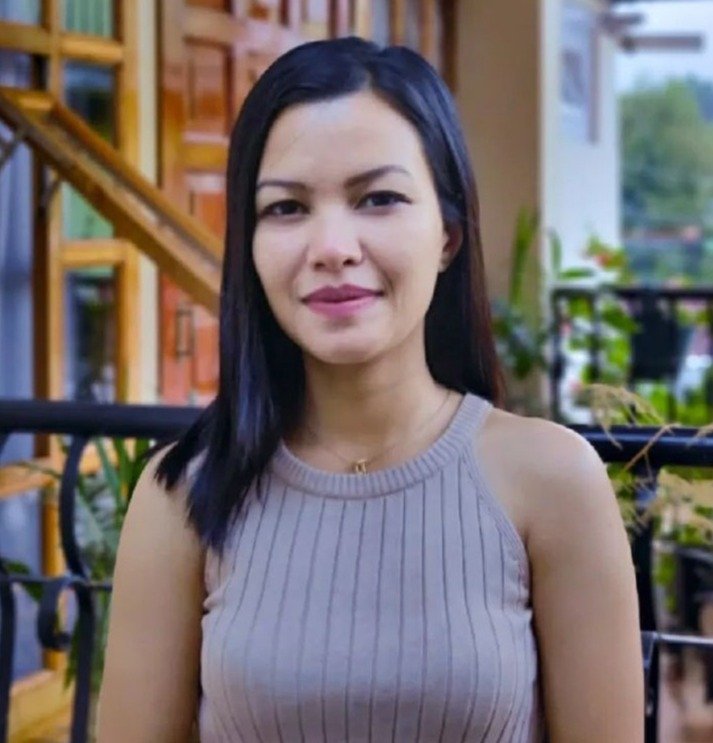
    Ban rakhe ïa ka International Day of the World's Indigenous Peoples, ka Speak Your Roots ka la ïoh ban kren bad i @naphi_lyngdoh iba dei i Archaeologist. Ka kam wad bniah jong i ka la pynshai ïa bun ki phang jong ka histori bad jymbriew Khasi. ✍️🪖🛠️🏞️

    La thmu ban kren bad i kum iwei na ki kynthei iba trei ïa ka kam wad bniah shaphang ka jaitbynriew ban pynshai shuh shuh ia ka phangpdeng mynta ka sngi kaba dei "The Role of Indigenous Women in the Preservation and Transmission of Traditional Knowledge".

    Khublei Shibun @naphi_lyngdoh ba phi la pynsngew ïa ki jingmut bad jingthmu jong phi lyngba kane ka jingïakren! 🙏😄

    To celebrate International Day of the World's Indigenous Peoples, Speak Your Roots had the opportunity to talk with @naphi_lyngdoh who through her archaeological research has illuminated many areas of Khasi history and culture. 🪖🛠️🏞️✍️

    It is hoped that the talk with her as one of the women who is well-versed about the Khasi past will enlighten us about this year's theme "The Role of Indigenous Women in the Preservation and Transmission of Traditional Knowledge". 🙏😄

    🟡 Naphibahun Lyngdoh, is a Shillong based Archaeologist with interest in Ethnoarchaeology and Digital Archaeology.

    Her research focuses on abandoned settlements, megalithic culture and the ethnoarchaeology of this region. She is a recipient of the Nehru Trust for the Indian Collections at the Victoria and Albert Museum Award, 2019 for her research on the Megaliths of Mookyndur. Her research has been published in national and international journals.

    Congratulations Naphibahun and keep up the good work!!

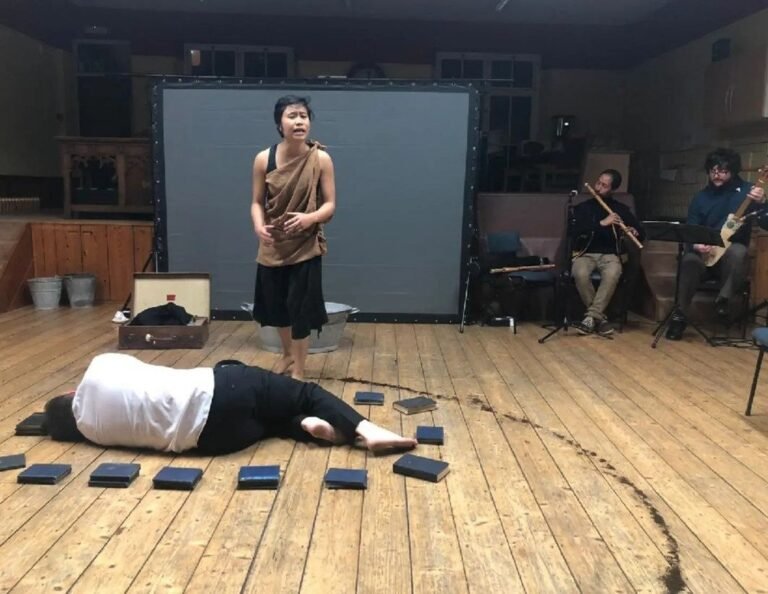
  • Interview with Lapdiang A. Syiem on World Theatre Day, 27th March 2022

    1, Why do you choose indigenous themes for your performances?/ Balei phi jied da ki khanatang, khanaparom Khasi na ka bynta ki performance jong phi?

    I look to our folk narratives as a foundation on which I build my performances. These stories that we have, live in our individual and collective memory and it's important to keep these memories alive and relevant in our contemporary understanding. I find my connection to myself, my roots, my identity through these stories. The themes I choose are reinterpreted and adapted to where we are now as a society. They carry significant metaphors to perhaps lead us on to examine what we've become as community.

    Nga phai sha ki khanatang khanaparom kum ki maw nongrim jong ka sawangka kaba nga leh. Kine ki khana kiba ngi don ki khih ki ksar ha ki thymmei jingkynmaw jong ngi shimet shimet bad kum ka jaitbynriew, kadei kaba donkam eh ban pynim ïa ki ha ka juk mynta. Nga shem ba lyngba jong ki, la lah ban plie ïa ka jingiadei jong nga bad ka tynrai ba shapoh jong nga, ka longbriew manbriew jong nga bad ka jinglong ba pura jong nga. Nga pynïahap dur ïa ka jingmut jong kine ki khanatang bad ka juk mynta. Ki ïeng na ka bynta bun kiei kiei kiba ktah ïa ngi kum ka jaitbynriew kiba long ruh kum ka ïit khmih jong ngi.

    2. How does theater make folklore more accessible?/ Kumno ka sawangka ka pyn ïar ïa ki riti ki dustur, ki khanatang jong ngi ki Khasi?

    I have often considered this when I look back into our folklore and our oral culture and tradition. Storytelling around the hearth is what we all go back to and theater has its roots in storytelling, of coming together and sharing in a common space. We live with an understanding of value systems that have been passed down to us by our ancestors and I think it's important to examine what they mean to us today.

    Theater is expressive, unlocks emotions and can move beyond the realm of realism into the imagination, into liminal spaces that are often felt and not seen. And our folklore captures these very liminal spaces that exist in our consciousness. I find so much potential in how theater as a medium can take a story, a narrative, a memory and bring it to life. And in my work it captures the spirit of the oral or the folk in its expression.

    Nga la ju pyrkhat bha ïa kane haba nga phaidien sha la ka folklore bad oral kolshor lajong. Sawdong ka lyngwiar dpei ban ïathuhkhana sngewtynnad para mangi, ka long ka thymmei jong ngi bad ka long ruh ka tynrai jong ka jingïaleh sawangka. Ngi la ïoh pateng ïa ka jingstad ba wan na ki kmie bad kpa tymmen jong ngi bad ka long kaba donkam ban sngewthuh ïa ka jingmut bad jingthmu jong ki ha ka juk mynta.

    Ka sawangka ka kren briew, ka ailad ïa ngi ban pynpaw ïa ki jingmut barieh bad ka tih ruh ïa ka thymmei jong ki jingmutdur, ki kyndong kynshrot, ki bynta sharud shakiar jong ki jingmut jingpyrkhat jong ngi, kiba ngi shu tip, tangba kiba ngim iohi. Bad ki folklore jong ngi ki ïoh kem ïa kine. Nga shem ba ka sawangka ka plie lad ban pynwandur ïa kine ki khana, ki jingmutdur, ki jingkynmaw, ban ai dur ïa dar ïa ki. Bad ka sawangka kaba nga leh ka kem dur lut ïa kine.

    3. What do you have to say about bilingual theater?/ Phi don aïu ban ong shaphang ka sawangka kaba pyndonkam ïa ka ktien phareng bad ïa ka ktien Khasi?

    I gravitated to bilingual theatre (English and Khasi) because of my upbringing; my schooling, my environment and being away from home during my training in theater. I often regret not being completely fluent in Khasi and I regret that I was taught to speak English in a way so as to get rid of what would have been my natural Khasi accent. Bilingual theater does have its pros as well, the fact that more people can understand and experience the performance without having to wait for a translation. And we all speak more than one language now. It is the reality we are living in. But we can dismantle hierarchies in language especially when it comes to our mother tongues being placed secondary or lower than another majority language.

    Ka leh sawangka ha ki arjait ki ktien (English bad Khasi) ka khring ïa nga, bad ka daw ka long namar ka rukom pynheh pynsan ïa nga; ka skul ba nga la leit, ka sawdong sawkun jong nga bad ka jingdon jong nga jngai na ïing ha ka por ba nga leit pyntbit ïalade ha kane ka kam. Nga bynñiaw haduh katta ba ka jingkren Khasi jong nga kam long kaba jlih bad ba la hikai ïa nga ban kren English ha kata ka rukom kat ban pynjah noh ïa ka rukom ring Khasi wat haba kren English ruh. Ka leh sawangka bad ka jingpyndonkam ïa ki arjait ki ktien ka don la ka jingïohnong, namar ki kham bun ki briew kiba sngewthuh bad ym donkam ka jingpynkylla ktien. Bad mynta lei bun na ngi kiba kren ar ne lai jait ruh ki ktien. Kane ka dei ka jingshisha jong ngi mynta. Bad ngi lah ruh ban kyntiew la ka ktien lajong lada ngi ñiewkor ïa ka bad pynshong ïa ka halor ka jait ktien jong kiba bun. Da kaba leh kumne ngi pynduh ïa ka jingkheiñ kor ïa khyndiat tylli ki ktien ba kren da kiba bun ki briew.

    4. How do theater and the oral tradition complement one another?/ Ha kano ka rukom ka sawangka bad ka oral tradition ki ïa mir bad ïa hap jingmut baroh artylli?

    They share the same roots. Theatre and the oral tradition are part of the same tree. When I work out a script I speak the words before I pen them down. I have been so used to listening to my grandmother and my father speak on important subjects or tell stories never from a script but entirely from memory. I think history is sometimes one dimensional if we rely only on the written. The oral carries with it more than just a one dimensional story. It has the potential to bring forth so many perspectives of how a story can be told. For me returning home after my training immediately drew me to the possibilities that emerged from an organic confluence of theater and the oral tradition.

    Ki wan lang na kajuh ka thymmei. Ka leh sawangka bad ka oral tradition ki long na u juh u tynrai dieng. Haba nga pyrkhat kumno ban pynshong ïa ki kyntien ha ka jingthoh, nga kren shuwa ïa ki kyntien halade. Nga lah ju mlien ban sngap ïa i Meieit bad i Papa jong nga ba ki kren halor ki sobjek ba bun lane ba ki ïathuhkhana, ym na kaba pule na ki jingthoh hynrei na la ka jong ka jingkynmaw. Nga nud ruh ban ong ba ka histori ka long kaba lah shiliang lada yn shaniah beit tang ha kato ba la buh ha ki jingthoh. Ka ktien ka thylliej (oral) ka long bun syrtap. Ka lah ban pynmih ka khana kaba bun ki mat. Ïa nga hi shimet ka jingwan phai sha ïing hadien ka training ka pynshai ha nga la ka jingïathaiñ lang jong ka sawangka bad ka oral tradition.

    5. What do you think is the scope of theater based on indigenous culture and themes?/ Phi sngew kumno shaphang ka jingïar jong ka sawangka kaba la pynshong nongrim ne pynmih jingmut na ki riti dustur tynrai?

    I think once we step out of the idea of conventional theater, scripts, and narratives we become open to other cultures of theater/ performance/ ritual that have been neglected or ignored in the past. I strongly believe that this is what is needed in our articulations as artists. I know that I have been struggling to fit myself into the space of conventional theater that addresses themes of a larger majority. As an indigenous Khasi woman, I think it's important to address the significance of my indigeneity through the theater that I script and devise. And there is scope for these narratives to be performed and given a place in our contemporary understanding of theater, which is inclusive of minority voices and experiences.

    Lada ngi kyntait noh ïa ka leh sawangka kaba shu buddien thik kumba ju leh, ka rukom buh kyntien kumba ju buh bad ki khana kiba ïathuh kumba ju ïathuh, ngi plie la ki jingmut jingpyrkhat sha kiwei pat ki kolshor jong ka sawangka/ ki rukom pyni/ ki riti ki dustur kiba la shah ieh shrah ne shah iehnoh beiñ ha ka mynnor. Nga ngeit skhem ba ngi donkam ban ïatai halor kane ha ki jingïapyrshang jong ngi kum ki artis. Nga ruh nga la dukhi khait ban pyrshang ban pynhap ïalade hapoh kata ka sawangka jong kiba bun-paid, kaba kren tang ki mat kiba ïadei bad kita kiba bun. Kum ka kynthei kaba dei na ki rit-paid, ka long kaba donkam ïa nga ban pynpaw pyrthei ïa ki mat kiba ïadei bad ka jinglong rit-paid lyngba ki symboh kyntien kiba nga thir bad suh lang ha ka sawangka kaba nga leh. Bad don bun ki lad ban pyni ïa kine ki khana lyngba ka sawangka, ban ai jaka ha ka jingsngewthuh jong ngi shaphang ka sawangka kaba mynta, kaba kynthup ruh ïa ka sur ki rit-paid bad ïa ki jingshem jong ki.

    6. How do you bring out the aspect of gender and matriliny?/ Ha kano ka rukom phi pynwandur bad pynpaw ia ka gender bad matriliny?

    Through an adaptation of "Who Rules The Roost?" adapted from 3 of Esther Syiem's poems and "To the Men with Hate Speech on Their Lips", a poem where I had collaborated with Garth Bonello, a Welsh musician. My body in performance is my tool or instrument of expression. As a female body I want to explore what this means to my expression and how to challenge the stereotypes or conventions we build around gender. Matriliny defines a large part of what my identity is but I think we should stay clear of romanticising it. I think it's important not just to celebrate it but also to critically examine its role, significance and its evolution.

    Lyngba ka jingpynwandur biang jong nga ïa ka " Who Rules the Roost?" kaba la shim na ki 3 tylli ki poitri jong ka Esther Syiem bad "To the Men with Hate Speech on Their Lips" kaba long ka poitri kaba nga la thoh hi bad perform bad u Gareth Bonello, u nongrwai bad u nongtem na Wales. Ka jingpyndonkam ïa ka met jong nga ha ka rynsan ka jingïalehkai sawangka, ka long kum ka atiar ba nga lah ban pynkren ïa bun kiei kiei. Kum ka 'riew-kynthei kaba leh sawangka lyngba ka met kaba nga don (Physical Theater) nga kwah ban wad shuh ki lad kumno ban pyndonkam ïa ka bad lyngba kata, kumno ban pynkheiñ ruh ia ki jingbuh kiba rim kiba ïadei bad ka jingsngewthuh shaphang ka long kynthei (gender). Ka matriliny ka batai ïa bun kiei kiei kiba pynlong ïa nga kumne kumba nga long tangba ngim dei ban shu kyntiew skong palat ïa ka. Hooid ngi dei ban sngewsarong ïa ka hynrei ngi dei ruh ban thir bad tohkit bha ïa ka phang kaba ïadei bad ka jingdonkam jong ka bad ka jingkhih jingksar bad jingtyllun jong ka ha ki por ki ban sa wan.

    On this World Theater Day, here is an interview (English and Khasi) with theater artist Lapdiang A. Syiem who has been a practising actor for almost a decade. Syiem's art has become a medium for the portrayal of Khasi heritage as well as a critique of Khasi society as it moves into the twenty-first century.

    Khublei Shibun @lapdiangsyiem for expressing your thoughts and experience! 😄🙏

    Photo credit: Helen Davies. In frame: Lapdiang A. Syiem, Benedict S. Hynñiewta, Gareth Bonello and Rhys Ap Trefor.

    Lapdiang A. Syiem is a graduate of the National School of Drama, New Delhi. She further specialised in Physical Theater at the Commedia School, Copenhagen, Denmark. Syiem has performed in India, Pakistan, China, Denmark, Sweden, Estonia, Switzerland and the United Kingdom.

    Some of her work includes:

    🟡 "Welsh and Khasi Cultural Dialogues" funded by the Leverhulme Trust, which culminated in "Performing Journeys" 2019-2020.

    🟡 "Ngan Hiar Sha Wah" (I'm Going Down to the River), recipient of the REFUNCTION 2020-2021 grant awarded by Goethe-Institut/ Max Mueller Bhavan, New Delhi.

    🟡 "Speak Up and Act on Sexual Violence and Impunity", a theater production under the projects Stepping Stones and Body of Evidence supported by Zubaan, New Delhi, 2019.

    🟡 "Reaching out to grasp…roots… I stand uprooted " commissioned by the Goethe Institut/ Max Mueller Bhavan (Mumbai) for Poets Translating Poets (Shillong) 2019.

    🟡 An adaptation of the Khasi legend "Ka Noh ka Likai" performed at Cultures of Peace-Festival of the Northeast organised by TISS, Guwahati and Zubaan, Guwahati, 2016.

    Performances in Shillong include:

    🟡 "Reaching out to grasp…roots… I stand uprooted " at Khasi National Durbar Hall, 2019.

    🟡 An adaptation of the Khasi legend "Ka Noh ka Likai" at Dylan's Cafe, 2017.

    🟡 "A being-human; being human human beings" at Kiddies Corner Secondary School, 2017.

    🟡 "Ka Nam" an adaptation of a Khasi folktale, Junior CALM festival, 2013.

    🟡 "Ka Tiew Larun", an adaptation of a Khasi folktale, Monolith festival, 2013.

  • Ganesh Devy Interview

    "There are 600 potentially endangered languages in India…each dead language takes away a culture system".

    In the interview, Ganesh Devy spoke about the dying and dead languages of India, how some languages gain popularity while others remain marginalised, and the impact of colonisation on the language system of India.

    Written By Adrija Roychowdhury | New Delhi |

    Updated: May 3, 2020 8:32:15 am

    When renowned literary critic and activist Ganesh Narayan Devy set out to map the linguistic diversity of India, he had no inkling he would encounter languages that are barely known in the states in which they are spoken. Among his interesting discoveries were 200 words describing snow in the Himalayan region alone, an old form of Portuguese spoken in villages close to Mumbai, a form of Japanese spoken in parts of Gujarat, and a language from Myanmar that is popular in the islands of Andaman. Devy, who documented 780 Indian languages while conducting the People's Linguistic Survey of India in 2010, also, shockingly, found that 600 of these languages were dying. He added close to 250 languages in India had already died over the past 60 years. When a language dies, as Devy notes, “a unique way of looking at the world disappears". In an exclusive interview with Indianexpress.com, the critic spoke about the dying and the dead languages of India. In the interview, he also dwells on how some languages gain popularity while others remain marginalised, and the impact of colonisation on the language system of India.

    According to UNESCO, any language that is spoken by less than 10,000 people is potentially endangered. In India, after the 1971 census, the government decided that any language spoken by less than 10,000 people need not be included in the official list of languages. In India, therefore, all the languages that are spoken by less than 10,000 people are treated by the state as not worthy of mention and treated by the UNESCO as potentially endangered. As per my survey, there are close to 780 languages in India, out of which about 600 are potentially endangered. The census of 1991 and 2001 show not more than 122 languages. So, most others have to be called potentially endangered.

    Examples of such languages would be Wadari, Kolhati, Golla, Gisari. These are languages of nomadic people in Maharashtra, Karnataka and Telangana. Then there are several tribal languages as well, such as Pauri, Korku, Haldi, Mavchi. In Assam, there is Moran, Tangsa, Aiton. There seems to be about 250 languages that disappeared in the last 60 years. There used to be languages called Adhuni, Dichi, Ghallu, Helgo, Katagi. The Bo language in Andaman disappeared in 2010 and the Majhi language in Sikkim disappeared in 2015. But we need to remember that it is impossible to show a language dying in the last moment of its life. A language is not a single life system. It is a very large symbolic system. When the symbols collapse they do not do so in a single moment. The collapse is sprayed over a large time. When a language dies, its speakers decide to migrate. First, they migrate to another language and then they physically start migrating to another region. The second thing that happens is that their traditional livelihood patterns go down. They may have some special skills and that disappears. Thirdly, a unique way of looking at the world disappears. Every language is a unique worldview.

    How do some languages gain popularity while others get marginalised?

    There are a few major reasons for this. One is that some languages as against other alternate languages in the area gain popularity because of an easier syntax. For instance, in Hindi, you can say 'ladka chalta hain' and you can also say 'chalta hain ladka.' So the syntax is flexible. But it's not always that easy in English. This is one major reason but not the reason always. Secondly, the social dominance by any group leads to the language of that group becoming more popular in that society. For instance, Sanskrit became popular in ancient India because of social domination by speakers of Sanskrit. Or English has become popular because of colonial rule. Thirdly, when a language becomes useful in a marketplace, that language gains greater currency. For instance, we in India speak one language at home, maybe another in the office, but when we go to the market we might use neither. For example in Delhi, you might use Punjabi or Bengali at home, English in the office, but in the marketplace, one tends to use the Hindi language. So the patterns of political domination, use in the marketplace and ease of syntactic structuring are three reasons why some languages become more popular than other languages.

    What is the impact of colonisation on Indian languages?

    Quite surprisingly, in other continents, the colonial impact wiped out the native languages. In India that did not happen. Our languages survived. However, colonial times brought us print technology and only very few of our languages got printed. The one that got printed eventually got states to themselves since in India our states are designed in linguistic terms. The other languages did not get states for them, they did not get official recognition and therefore became secondary citizens in the language republic of India.

    How is the language we speak related to our worldview?

    In every manner without any exception, the language we learn or use is the absolute condition of our narrative of the world and the way we see the world. There is no escape from it. A given language only has a certain kind of ability to narrate the world and the consciousness can enter the world only to the extent that languages can allow it to enter the reality surrounding it. If a language has seven terms for distributing colours, then the speaker of the language will see the world only in those colours. But if there is another language which has more colour terms, then the distribution of the world is more multicoloured. For instance, in Marathi, there is a colour term called more multicoloured. For instance, in Marathi, there is a colour term called Kirmizi that cannot be translated into any English term at all. It is brownish, greenish, bluish, it's almost like the colour combination we see in a firefly. It is impossible to replicate that perception in the English language. But in the English language, we have navy blue or sky blue and many other languages might not have the exact colour term that translates the same. This is how language allows or disallows us in interpreting the world.

    Ganesh N. Devy is an Indian literary critic and former professor. He is known for the People's Linguistic Survey of India and the Adivasi Academy created by him. He is credited to start the Bhaashaa Research and Publication Centre. He writes in three languages—Marathi, Gujarati and English. His first full length book in English "After Amnesia" (1992). He has written and edited close to ninety books in areas including Literary Criticism, Anthropology, Education, Linguistics and Philosophy.

    This interview appeared in The Indian Express on 3rd May 2020 and is written by Adrija Roychowdhury.

    Link: https://www.google.com/amp/s/indianexpress.com/article/research/international-mother-language-day-2018-ganesh-devy-indian-languages-5072487/lite/