Category: Khasi Architecture

  • Discover Bridges: Footprints Left by Our Forefathers Part I

    U Khasi and Bridges

    The Mei Mariang posed multiple challenges to U Khasi. Therefore, to overcome these challenges, U Khasi used his understanding of nature to tame nature for his use without destroying it. Therefore, the story of building bridges over the many rivers and rivulets is one to be told. Bridges go by different names depending on the place that they're built in. In the War-Jaintia areas, a bridge goes by the name "ka lywu." While in Pnar it is called "ka yingkieiñ." Interestingly, it's also known as "ka pyrnon" in the Maharam and Nongspung areas. The Bhoi Mawdem areas call it "ka dongki."

    U Mawpun

    Mawpun or mopun as the Pars call it, is a bridge that connects both sides of the river. The stone used to make this bridge depends on the place. In Umtisong, Nartiang, they use granite or mawnar as it is the hardest material found in that area. The same can be found in Thadlaskein. These bridges dot many areas in the hills like Wahlyngkhat (Langkyrdem area), Sohra, Umroi, Weilyngkut and even in Golf links.

    Ka Jingkieng Khilon

    Beautifully engineered, this kind of bridge can be found in the David Scott Trail, Wahumiong, Umrakam, Wahkhilon, Sohra and Them Kubin. U Mawshabi is the stone that holds the arch in the middle of the bridge or jingkieng khilon.

    Ka Jingkieng Mawlyngknep

    This bridge is so called because it is made of mawshutwait or mawnar. These slabs of stones are placed on three or four stone pillars. The famous bridge made of such stone is in Umïaknieh near Amlarem. Similar bridges are also found in Thlumuwi and Syndai.

    "Discover Bridges: Footprints Left by Our Forefathers Part I" by @carey_lynz

    In a land with a myriad rivers, there are also a myriad bridges. These bridges have been built since time immemorial and showcase the knowledge and engineering skill of our ancestors. 😃😃 Thank you @carey_lynz for another significant entry! 🙏🙏

  • U Wer

    Gertrude says:
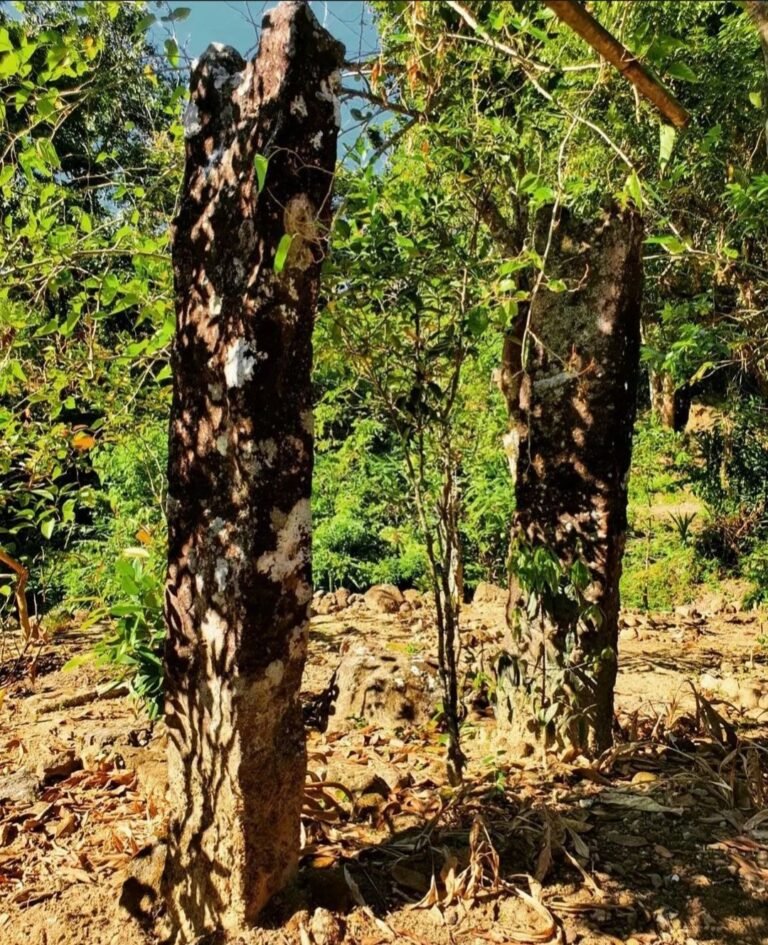
    "U Wer" is remembered by many for his strength, often measured by his ability to carry weighted and bulky materials on his back. He was the person who singlehandedly carved out these 10 feet long stones from a "mawsiang" (boulder), transported them to the village and made "mawthnah’' or foundation stones out of them for a friend's house.

    One of my informants recall him generously uprooting an entire tree from the forest ground for her when she mentioned to him that she needed wood. Another elderly informant said that he once held a barge in place with his hands and stopped it from leaving the shores of Tharia when a friend of his who wanted to board the vessel had not reached the river.

    What people recall most fondly are however the series of jibes "U Wer" casted on authority figures. He was once meddled by a few Border Security Force personnel for carrying a traditional hunting gun. Instead of surrendering, the man readily pointed the gun at them and laughed hysterically that they got deeply uncomfortable and decided to leave him be.

    Another occasion in which he presented his recalcitrant and mischievous self was when he was caught killing fishes in the "Nur Bah" (now commonly known as Wah Rew) with his beloved gun. The person who reported him was the Manager of the Komorrah Limestone Mining Company Limited, which has its factory downstream. Again, the BSF staff came to the scene only to be given the argument by "U Wer" that it was in fact the Manager who taught him, an ignorant and illiterate man, how to kill fish in that brutal manner. He elaborated on how it was Company people who had taught the locals to use dynamite and blow up the river mass-killing fish. "U Wer" was ultimately not punished but people told me that the Manager got fired immediately.

    True or not, these stories live in the messy universe of collective memory. And there I hope they stay.

    There are many stories that we hear of, of individuals possessing talent and skill. 💪💪 "U Wer" was a man of great strength and the stones in the pictures are testament to that. Khublei Shibun @gertrudelamare for this! 😄🙏

    📷 Photo credit: @gertrudelamare

  • Discover Bridges Part 2

    There are very rare bamboo bridges in this day and age. However, they are mostly found in the Ri War areas such as Nongtalang, and areas around Khadarshnong and Noron. Other areas where the bridge is constructed during winter are from Nongbareh in the War Jaiñtia areas to Mawshun of the Hima Khyrim.

    Ka Jingkiengdieng/ A Trunk Bridge

    In actuality, this is not a full-fledged bridge as its basic material is a huge trunk of wood, supported at the ends with other pieces of wood so that it does not roll over when walked upon. In the olden days this can be found in a particular waterfall whereby it got its name as Ka Kshaid Umdiengpun. However, the English have renamed it as Elephant Falls. There is an interesting story behind this renaming of the fall.

    Ka Lywu-Chrai/ Living Root bridge

    These are the dialects of the War Jaiñtia in the Nongbareh Nongtalang areas. Basically "Lywu" means bridge and "Chrai" means "diengjri" or rubber plant. Such bridges are constructed by the community and it takes over 20 years to make it a fully grown bridge. It is called a living root bridge and remains for over a hundred years if it is taken care of by the community.

    The English called it 'Bio-engineering.' Such bridges can be found in areas like near the river Umshiang in Nongriat (Double Decker bridge), in the Ri War or War areas such as Nongwet, in Khadarshnong, in the river Wah Rew, in Amalyne and Amsohkhri which are in Nongtalang areas.

    Ka Jingkieng Doi Doi/ Suspended Bridge

    This bridge is built with suspenders on both sides and it rocks as one walks upon it. Such a bridge is found in Wah Umkjen on the way from Mawshabuit to Sohryngkham. This bridge was constructed during the British rule in the month of June 1927. Another bridge can be found in Ryngksaw near Maw-U tieng, Sohryngkham.

    Here is Part 2 of "Discover Bridges" sent by @carey_lynz 😄🙏

    Khublei Shibun for sending this entry! 💚💚

    Photo Source:
    Living Root Bridge: https://www.sahyogmantratours.com/blog/living-root -bridges-in-meghalaya/202009051 53114
    Suspension Bridge: https://westjaintiahills.gov.in/home9/attachment /2019010948/

  • U Bahtympha

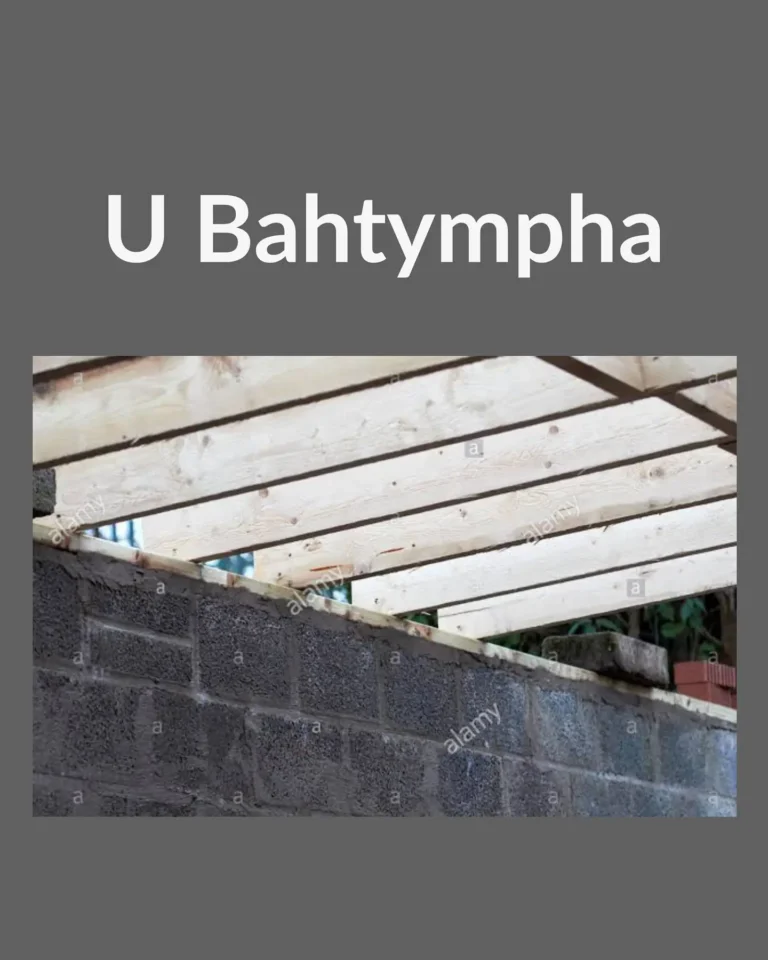
    U Bahtympha u dei u rishot pyngkiang uba la shna ban par sawdong ïa ka ïing bad ki ju pyndait ïa u ha syndah jong ka sad. U Bahtympha u dei uba kyrshan bad pynskhem ïa ki dingshyllangmat/ khanshi jong ka ïing.

    Nangta u khanglad ruh ba kan lait ka sad na ka lyer kaba jur bad u kyrshan ïa ka kynroh da kaba shim ïa ka jingkhia jong ka sad.

    Ka ktien "U Bahtympha" ka thew ïa u briew uba lah ban wallam ïa ka jingïasngewthuh jingmut hapdeng uwei bad uwei pat; u long u nongïalam uba lah ban shaniah.

    U Bahtympha or the wall-plate (lintel) is a flat and a physically load-bearing horizontal beam used in wooden building framing arrangement. It is the timber piece kept over the mortar on the top in the wall portion near the roof structure.

    The wall-plate supports and holds the rafters. The wall plate prevents against uplifting of the roof, caused by the wind which can blow under the roof. It also supports the wall by taking all the weight from the roof.

    The word "Bahtympha" also symbolically refers to an individual who has the wisdom to bring about understanding and harmony between people and this individual is also deemed to be a trustworthy leader.

    The Khasi word "U Bahtympha" symbolically refers to someone who is reliable and trustworthy, an individual who has the capability of being a leader. ✨✨✨

    🟡 Source: Rev. Dr. Ïarington Kharkongor

    🟡 English translation by @speakyourroots

  • Ka Ïing Tynriew

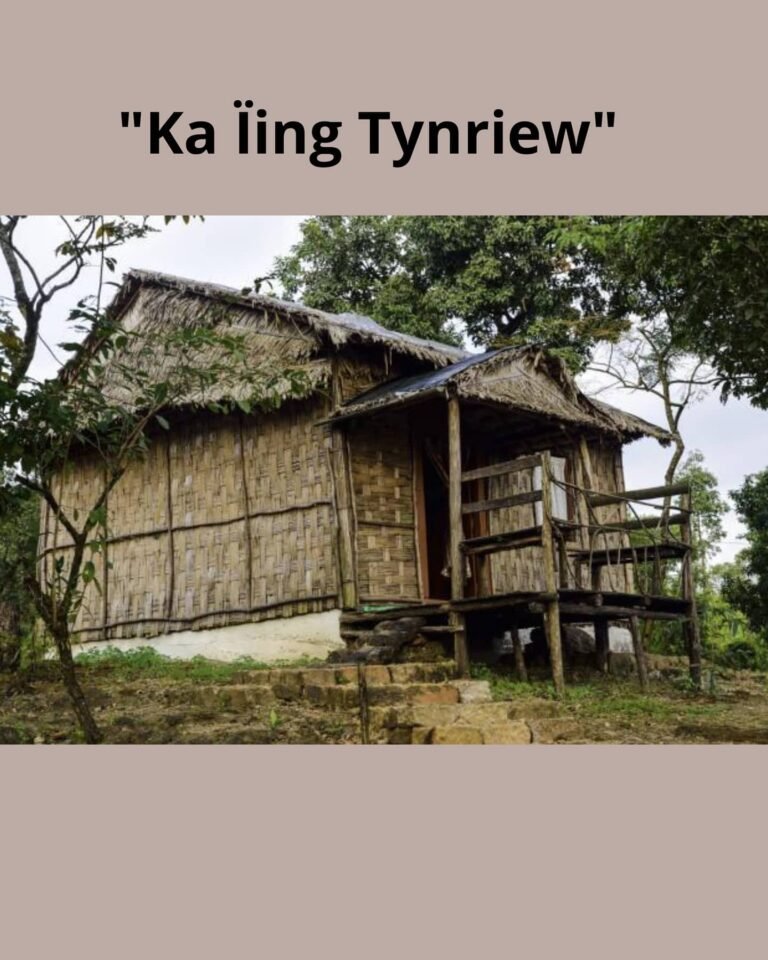
    "Ka Ïing Tynriew" is the traditional thatched house of the Khasis and is made from the leaves of the Tynriew plant. The house in the first slide is an actual house which has a roof made from "sla tynriew".

    There is a difference between the "Tynriew leaf" and the "Dieng Tlai" leaf. The Tynriew is a kind of bamboo plant with thorns or spikes and fruits too which are inedible. The Dieng Tlai is a kind of palm tree with one type growing in the War areas and another type in other areas. The Dieng Tlai leaf can be used to thatch roofs just like the Tynriew leaf. The Tynriew is changed once a year. The scientific name of Tynriew is Calamus Erectus and of Ding Tlai is Caryota Urens.

    We express our gratitude to @click.and.vibe and @dappura_chyne for contributing to the write up! 🙏🙏

    Picture 1: @dappura_chyne

    Picture 2 and 3: Google