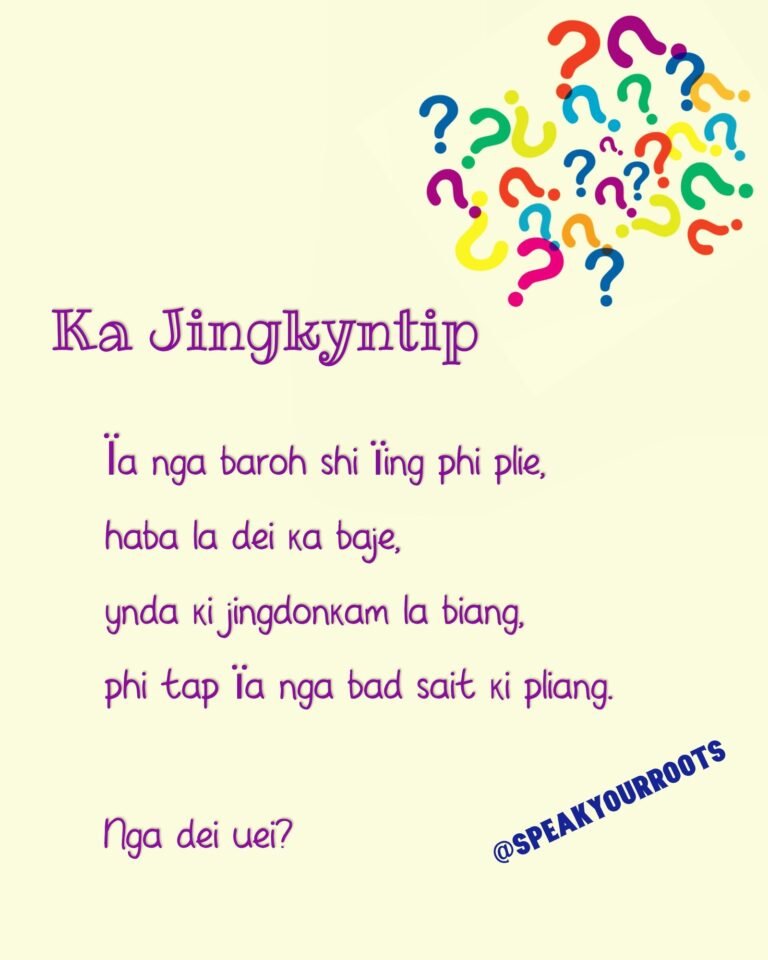
Ïa nga baroh shi ïing phi plie,
haba la dei ka baje,
ynda ki jingdonkam la biang.
phi tap ïa nga bad sait ki pliang.
Nga dei uei?
Ngin ïa kyntip noh mo teng teng 😃😃 Sa comment lada phi tip ïa ka jubab jong ka jingkyntip!


Ïa nga baroh shi ïing phi plie,
haba la dei ka baje,
ynda ki jingdonkam la biang.
phi tap ïa nga bad sait ki pliang.
Nga dei uei?
Ngin ïa kyntip noh mo teng teng 😃😃 Sa comment lada phi tip ïa ka jubab jong ka jingkyntip!


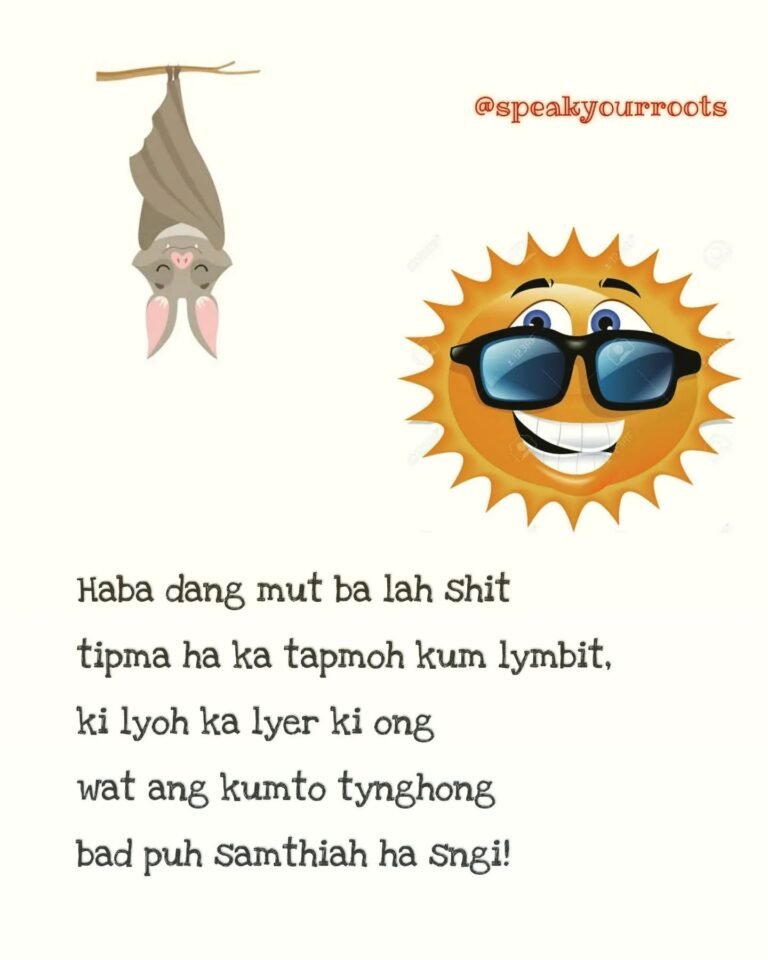
Haba dang mut ba lah shit
tipma ha ka tapmoh kum lymbit,
ki lyoh ka lyer ki
ong wat ang kumto tynghong
bad puh samthiah ha sngi!
Balei lah khriat biang? 😥🥶 Haba lah kham sngew syaid te 😅😅
Da phi lah ban thoh kum kine sa phah ban ïoh sah dak ha ka page!


Rong umshit ja – Dusty pink (literally the colour of water from boiled red rice)
Rong lir – Indigo
Rong ding – Flame red
Rong pukir – Saffron
Rong muka- Muga silk yellow/ gold
Rong eit masi – Cow dung green/ Olive green
Rong khangai pylleng- Egg yolk yellow/ Egg yolk orange
Rong shynrai- Turmeric orange
Here is another set of "rong" colours in Khasi 💜🤎💚💛🤍🧡❤️ Most of them are described using food ingredients.
The ladies will be familiar with these with the different colours in their "nara" and "dhara" 😃😃


Gertrude says:
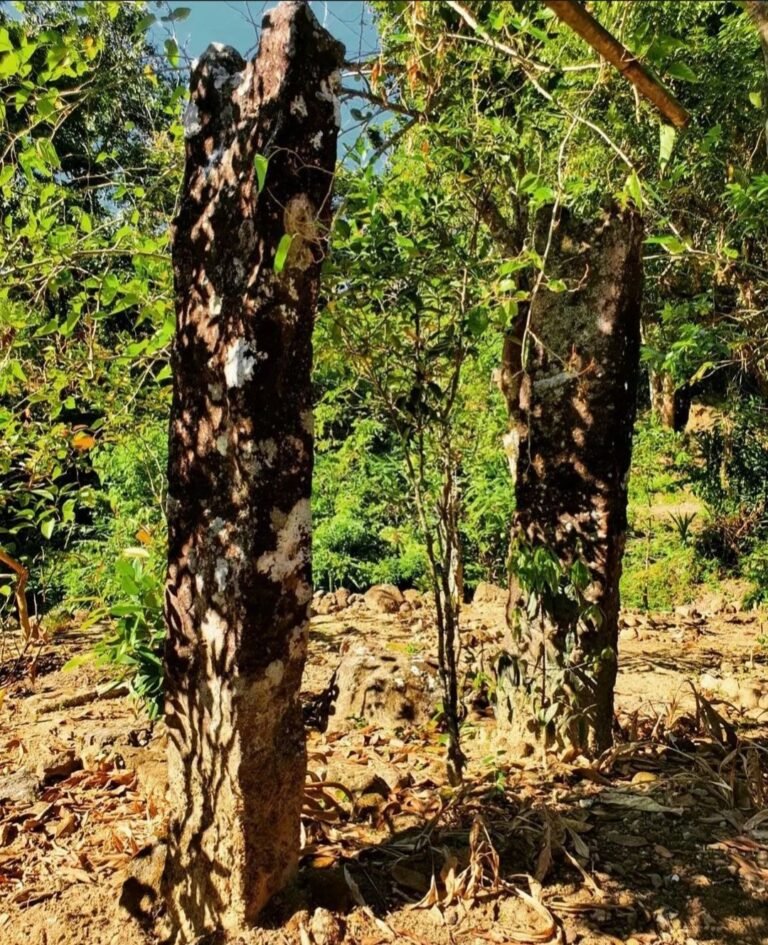
"U Wer" is remembered by many for his strength, often measured by his ability to carry weighted and bulky materials on his back. He was the person who singlehandedly carved out these 10 feet long stones from a "mawsiang" (boulder), transported them to the village and made "mawthnah’' or foundation stones out of them for a friend's house.
One of my informants recall him generously uprooting an entire tree from the forest ground for her when she mentioned to him that she needed wood. Another elderly informant said that he once held a barge in place with his hands and stopped it from leaving the shores of Tharia when a friend of his who wanted to board the vessel had not reached the river.
What people recall most fondly are however the series of jibes "U Wer" casted on authority figures. He was once meddled by a few Border Security Force personnel for carrying a traditional hunting gun. Instead of surrendering, the man readily pointed the gun at them and laughed hysterically that they got deeply uncomfortable and decided to leave him be.
Another occasion in which he presented his recalcitrant and mischievous self was when he was caught killing fishes in the "Nur Bah" (now commonly known as Wah Rew) with his beloved gun. The person who reported him was the Manager of the Komorrah Limestone Mining Company Limited, which has its factory downstream. Again, the BSF staff came to the scene only to be given the argument by "U Wer" that it was in fact the Manager who taught him, an ignorant and illiterate man, how to kill fish in that brutal manner. He elaborated on how it was Company people who had taught the locals to use dynamite and blow up the river mass-killing fish. "U Wer" was ultimately not punished but people told me that the Manager got fired immediately.
True or not, these stories live in the messy universe of collective memory. And there I hope they stay.
There are many stories that we hear of, of individuals possessing talent and skill. 💪💪 "U Wer" was a man of great strength and the stones in the pictures are testament to that. Khublei Shibun @gertrudelamare for this! 😄🙏
📷 Photo credit: @gertrudelamare


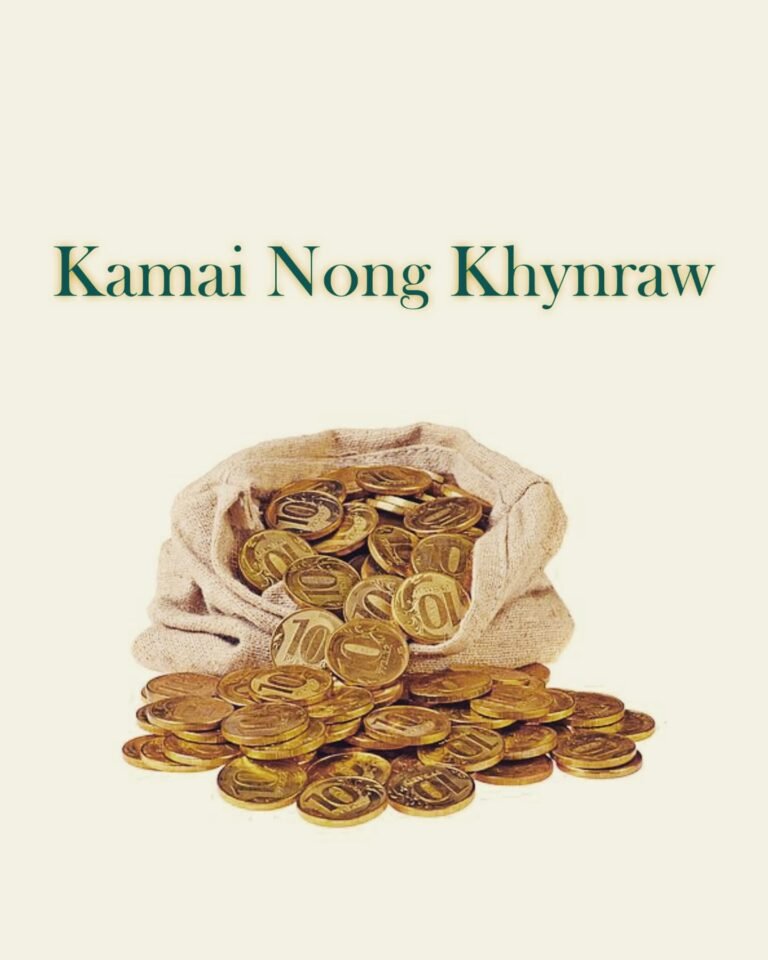
Ka "kamai nong khynraw" ka dei ka spah ka phew ba u kamai u briew katba u dang samla ha la ïing kur, shuwa ba un leit ïing briew. la kane ka spah ka ïoh ka kmie lane ka kur kynthei kaba khadduh jong kata ka ïing.
"Kamai nong khynraw" is the money and wealth earned by a man while he is still single and unmarried. This money and wealth goes to his mother or "khadduh", the youngest sister of the man.
"Kamai nong khynraw" is one of the many duties that a young Khasi man fulfills towards his family before marriage. This support to his own family is valued and cherished. 🙏💚
🟡 Source: Primrose Gatphoh
🟡 English translation by @speakyourroots


U Bahtympha u dei u rishot pyngkiang uba la shna ban par sawdong ïa ka ïing bad ki ju pyndait ïa u ha syndah jong ka sad. U Bahtympha u dei uba kyrshan bad pynskhem ïa ki dingshyllangmat/ khanshi jong ka ïing.
Nangta u khanglad ruh ba kan lait ka sad na ka lyer kaba jur bad u kyrshan ïa ka kynroh da kaba shim ïa ka jingkhia jong ka sad.
Ka ktien "U Bahtympha" ka thew ïa u briew uba lah ban wallam ïa ka jingïasngewthuh jingmut hapdeng uwei bad uwei pat; u long u nongïalam uba lah ban shaniah.
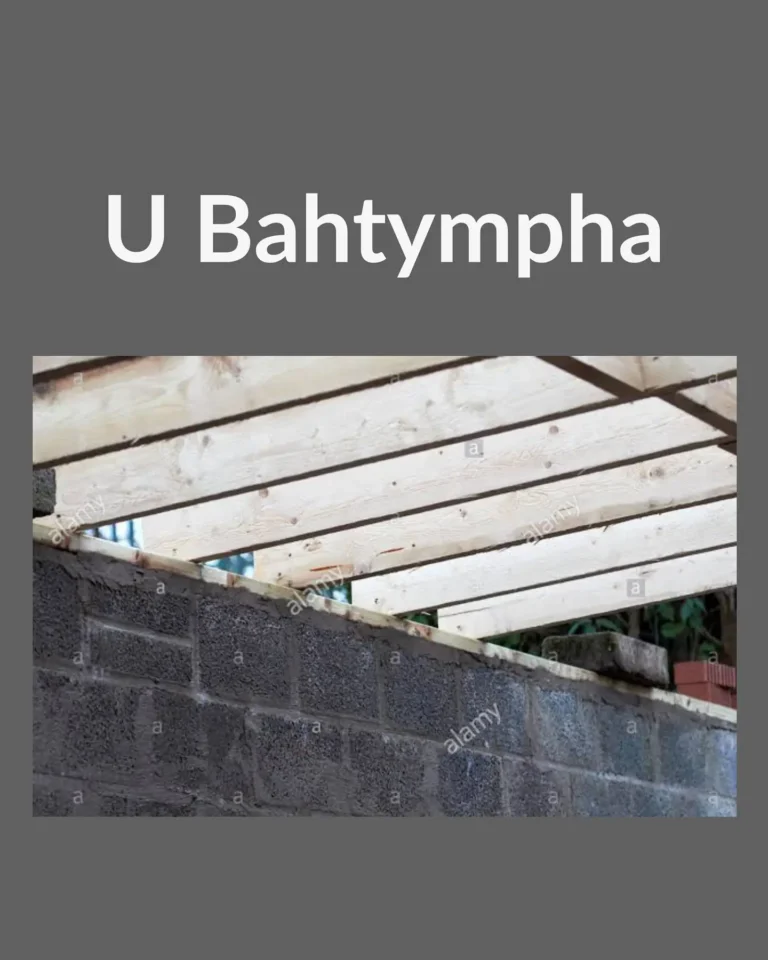
U Bahtympha or the wall-plate (lintel) is a flat and a physically load-bearing horizontal beam used in wooden building framing arrangement. It is the timber piece kept over the mortar on the top in the wall portion near the roof structure.
The wall-plate supports and holds the rafters. The wall plate prevents against uplifting of the roof, caused by the wind which can blow under the roof. It also supports the wall by taking all the weight from the roof.
The word "Bahtympha" also symbolically refers to an individual who has the wisdom to bring about understanding and harmony between people and this individual is also deemed to be a trustworthy leader.
The Khasi word "U Bahtympha" symbolically refers to someone who is reliable and trustworthy, an individual who has the capability of being a leader. ✨✨✨
🟡 Source: Rev. Dr. Ïarington Kharkongor
🟡 English translation by @speakyourroots


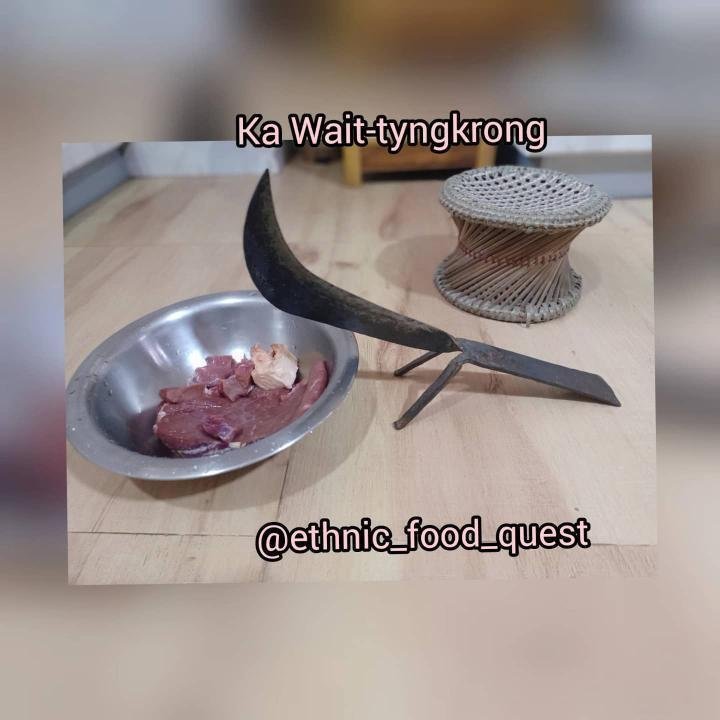
Ka wait tyngkrong ka dei ka wait kaba pyndait da ki artylli ki kjat ha lyngkdong kum ban kyrshan haba ot doh. Ngi ju shong ha ka mula ne ha ka lyngknot haba ngi ot doh ha ka wait tyngkrong. (from Rev. Dr. Ïarington Kharkongor)
"Ka wait tyngkrong" is a large Khasi traditional kitchen knife which stands on two legs at a 45 degree angle that is used to cut meat. One sits on a mula (traditional woven stool) or lyngknot (low wooden stool) to cut meat on the wait tyngkrong.
Ka Wait Tyngkrong" is a very handy large bladed kitchen knife used by Khasis and Pnars. We can sit comfortably and cut meat accordingly dropping the pieces into a large aluminium/ steel dabor (a large aluminium/steel basin).
Khublei Shibun @ethnic_food_quest for sending this! 🥩🍗🍖
"Beiñ kiwa beiñ.
Roh kiwa roh.
Ïei їong kiwi,
ym їe i u pyntoh."
"Let those who criticise, criticise.
Let those who praise, praise.
Other people's opinions,
cannot be catered to."
Here's what may be described as a Pnar quote or chant sent by @laloorisa 😎😎😎 (translated by @speakyourroots)
The lines urge us not to let people's words, either praise or criticism, affect us. Lest we fall prey to pride or feelings of inadequacy. We should just march to the beat of our own drum and do what makes us happy! 🌬️🌬️🌻🌼🌾
Ham pynsñiaw ai ki! Wat pynsngew eh ia ki!
Ha ri Khasi, hyndai ki ong,
u don u men lyngkhung;
kat shaba leit u kieng iarong,
ka khoh u kit kyndung.
U don ki tmaiñ ba jrong shipruh,
ka khlieh kaba syllen.
U kyllan khleiñ ba kan mih shñiuh,
u tah d'u sohmynken.
La sat syllang um lah shah shuh
teng teng u shad kulmar.
Ani! Ynnai… ka kwah mih shñiuh,
pleng dei kaba jynjar!
Rough translation:
"There once was Men Lyngkhung,
in Khasi times of old.
Wherever he went he carried his iarong
and a huge khoh on his back.
His beard and moustache were a feet long
and his head was bald.
He applied fat on his head hoping it would revive some hair.
He even used chilli!
Oh the heat on his head, he couldn't bear it!
He danced in a frenzy…
My goodness! Oh no! This wanting hair
is much too difficult!"
"U Men Lyngkhung" 😃😃😃 Remember those days when we were kids, how we would sing this? Another song that we should teach our kids!


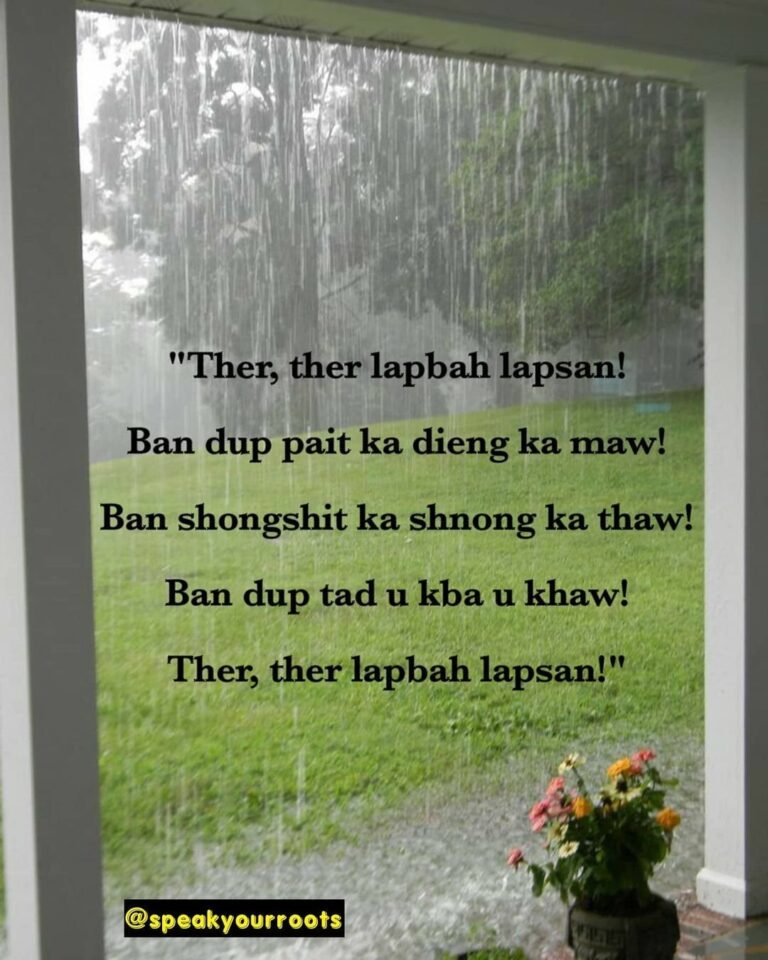
"Ther, ther lapbah lapsan!
Ban dup pait ka dieng ka maw!
Ban shongshit ka shnong ka thaw!
Ban dup tad u kba u khaw!
Ther, ther lapbah lapsan!"
Rough translation:
"Pour, pour heavy rain!
For tree and stone to break!
For the town to burst with excitement!
For paddy and rice to be cheap!
Pour, pour heavy rain!"
"Ther, ther lapbah lapsan!" 🌧️⛈️🌦️🌩️
Most of us will know this 😀😀
This is a chant that we scream on the top of our lungs when it rains heavily! 😂😂 And since the monsoon has arrived, it's a perfect time to remind ourselves and teach the kids this chant 🌦️⛈️🌧️🌩️☔☔