Category: Reflections

  • Musings on Thomas Jones Day by Naomi C. Nonglait, Ph.D.

    I remember my father told me once that he used to write in the Bengali Script. I never understood why he had to write in a script of another language. By then I was learning to read and write in my own Khasi language. It was only years later that I understood this change.

    Rev. William Carey and Alexander Lish had used the Bengali Script for the Khasi Language. It was one of the most challenging and colossal task of their time. However, Thomas Jones felt the need to change the Bengali Script to the Roman Script. It was with much thought that he realised that most of the Khasis could not understand even a paragraph of translation. Since this was the case, he started with the Roman script to create the sounds of the Khasi language which was much less complex as compared to the Bengali Script.

    We have to be reminded here that what Thomas Jones had done in the past did not go without harsh criticism. He was criticised from many quarters especially from the officer-in-charge of the East India Company. The Khasis were also apprehensive and not happy with the change since they were used to the Bengali Script. It can also be understood that the Khasis had a lot of trading with the Bengalis, so maybe knowing the Bengali language and script was advantageous to them. However, this did not deter Thomas Jones to give up on his dream. There were others such as Dr. Duff, Jacob Tomlin and William Lewin (Majaw 38) who wholeheartedly supported him. This brought up many questions to my mind. One of them being how much support would we give to change? If it was not because of Thomas Jones' vision, the spoken word would not have gained the permanence given by ink and paper. Not that I am undermining the oral tradition, but because of the lack of storytellers and the dying art of storytelling, I realize that without the alphabet, I would not have been able to go back, to remember again those stories that intrigued me as a child.

    Source:

    • U Thomas Jones Bad Ka Pyrthei Saitsobpen by S. S. Majaw (2011)

    Suggested Reading:

    • Anne Jones (1812-1845) Ka Missionary Kynthei Kaba Nyngkong Ha Ri Khasi Jaintia by Dr. B. Ps. Toi

    • Welsh Missionaries and British Imperialism: The Empire of Clouds in North-East India by Andrew J. May (2012)

    Khublei Shibun @carey_lynzba phi la phah ïa ki jingpuson bad ki jingpule sani jong phi shaphang ka histori jong ki dak thoh Khasi kiba la pynmih da u Rev. Thomas Jones. 😄🙏

    Thank you @carey_lynz for sending your thoughts and research on the history of the Khasi alphabet established by Rev. Thomas Jones. 😄🙏

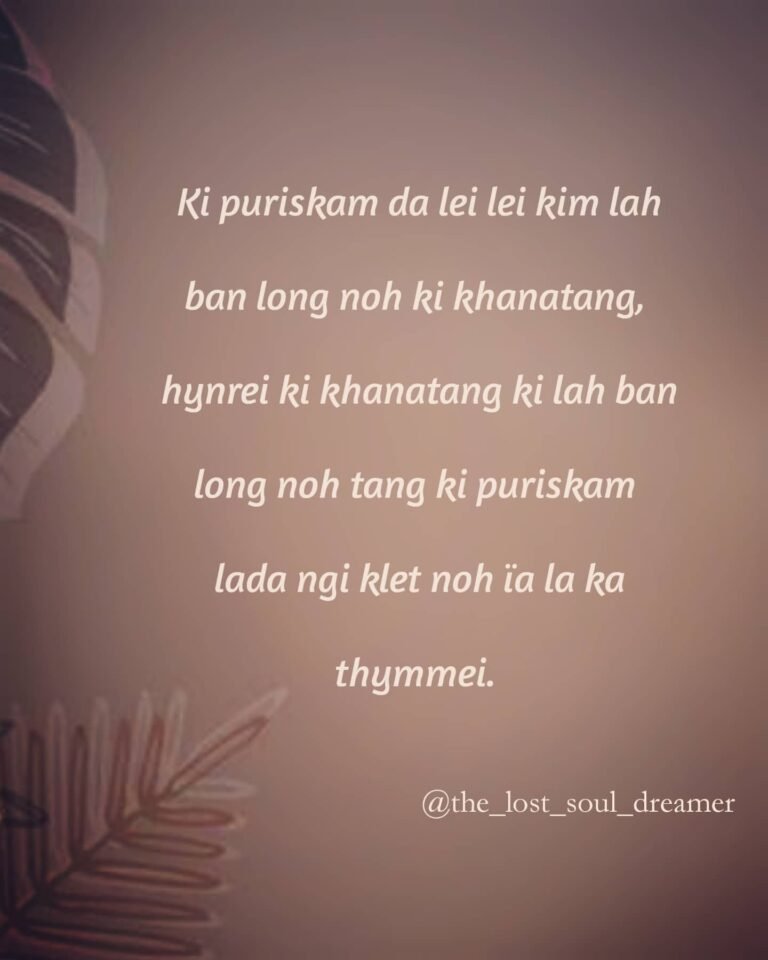
  • Ki Puriskam ne ki Khanatang?

    Ki Puriskam da lei lei kim lah ban long noh ki

    Khanatang, hynrei ki Khanatang Ki lah ban long noh

    tang ki Puriskam lada ngi klet noh ia la ka thymmei.

    A fable will never be able to take on

    the character of a myth,

    but a myth may be reduced to only a fable

    if we forget the source of our being.

    Ki Puriskam ne ki Khanatang? A fable or a folktale? Maybe both have something to teach us 💚💚💚💚 Thank you @__khatduh__03 ! Thank you @the_lost_soul_dreamer for these words of wisdom! ✨✨✨

    A myth, a folktale, a legend or a fable all have important lessons to teach us.

  • Translation

    Khyndiat ki jingpuson shaphang ka jingpynkylla ktien:

    Ka dei kaei kaei kaba sngewtynnat bad kaba phylla ba ka riti ka dustur kaba la ai na kawei ka pateng sha kawei pat da ka ktien kan nym iehnoh ïa ngi da lei lei ruh. Kane kam long tang shaphang ki khanaparom ne ki khanatang jong ngi, hynrei ka jia ha ka jungim kaba man la ka sngi ruh. Kum haba ngi ong ba lah "thoh shun ki blei"' ne haba ngi ong "Kamai ïa ka hok". Ngi ngeit bad ngi bud ïa kata kaba la ïathuh pateng ha ngi. Kano kano kaba la kren ka don ka bor bad ka jingshisha. Kane ka dei ka bor jong ki riti dustur kiba la ai pateng ha ngi.

    Namar ba ki tynrai ba jylliew bad ka jingkordor kaba dang ïai bteng jong ki riti dustur ba la ai da ka ktien ha ka jymbriew Khasi, ka ktien kaba kren ka don ka jingialeh bad ka ktien kaba thoh. Tanga lyngba ka jingpynkylla ktien ka wan ka jingïamir ha ka jaka jong ka jingïaleh hapdeng ka ktien ba kren bad ka ktien ba thoh. Khamtam haba pynkylla na ka Khasi sha ka English ka don ka jingpyrshang ban kem ïa ki bun syrtap jong ka ktien kaba kren kiba tuid hin hin. Ngi kyrmen ba ngim pat duh noh ïa ki 'sai kordor jong ka ktien kaba kren. Ka jingpynkylla ktien ka lah ban pyrshang ban ïoh ksoh ïa kine tangba kan nym lah hi baroh. Ka mynsiem jong ka ktien kaba sawa kan man pher hi na ka sia jong ka ktien kaba thoh.

    Some thoughts about translation:

    It is something beautiful and remarkable that the oral tradition will never leave us. This is not only concerning our folktales but our day to day life. For instance, when we say "thoh shun ki blei", being marked for good fortune by the gods or "kamai ia ka hok", earn righteousness and integrity. We believe it and we adhere to what has been passed down to us. Anything that is said, anything that is spoken holds validity and power. This is the power of the oral tradition.

    Because of the deep roots and continuing relevance of orality in Khasi culture, the spoken word will have its conflict with the written word. Yet through translation, there is perhaps a reconciliation rather than a tussle between the spoken word and the written word. Especially when translating from Khasi to English, the attempt is to capture the multi-layered quality of the spoken word which is itself so fluid. We hope we have not lost the nuances and beauty of the spoken word. Translation should try to capture that, though this is not 100% guaranteed. The spirit of the spoken word will always be different from the ink of the written word.

    Namar ba kawei na ki thong jong ka page ka dei ban pynkylla sha ka ktien English ïa kiba lah sah dak ha ka page, khnang ba kito ki bym sngewthuh ïa ka ktien Khasi bad Pnar kin ïoh ka lad ban sngewthuh bad ïoh ka jingbatai kaba dei shaphang ka histori, ka ktien bad ka jymbriew Khasi-Pnar. Kane ka jingpynkylla ktien kan ïarap ïa kiwei ba kin ïohi ïa ngi ha ka rukom kaba dei bad kaba shai. 🆎🅰️🅱️

    The way in which a community and culture is represented to the world is of critical importance. In this regard, translation serves a relevant role. Has anyone thought of taking up translation as a profession? ✍️🆎🅰️🅱️

    #kajingpynkyllaktien #translation #representation #documentation #oraltradition #khasioraltradition #khasiorality #spokenword #writtenword #kaktien #kaktienbakren #kaktienbathoh #speakyourroots #speakyourrootschallenge
    #talklocal

  • Searching for “U Star” by Lapdiang Syiem

    We were looking to find u star for a new performance we were working on and our first instinct was to look for it in Ïewduh. The lady who was supposed to get it for us told us that there weren't anymore star available that were made from bamboo/ cane/ the natural twine da u thri..ngi ïa wad ïa u star ba thaiñ da u siej ne da u thri. The ones that were available were now mostly made of plastic. We also looked for it in a village called Nongpiur but again what was available was only made of plastic.

    Finally an aunt of mine told us you could still find u star siej in Smit. When I shared the story to more people, Junisha Khongwir told me that they still used it in her shnong (village) and she had used it that week itself to carry water. Careen Langstieh also informed me that recently she also found it in Ïew Mawngap.

    I wonder if in the future the plastic one will slowly replace the natural one. It would be unfortunate if that will be the case. U star siej can be polished with ka umphñiang bam (mustard oil) to keep it supple. It is used as a type of sling or a holder around ka khoh (conical basket) so that it can be easily slung across the back.

    I finally found this old star I needed for the performance from Mei Mei (my aunt) who, after hearing that it was not easy to find u star siej resolved to preserve the one she had lest it was lost…And my mother has also been on the lookout since recently letting me know that she found one in Mawtawar.

    "U Star" is the cane head strap that is wound around ka khoh, the conical cane basket, to carry an array of things. It is tragic that the production of cane star is diminishing in the face of the plastic one which probably lasts longer.

    Khublei Shibun @lapdiangsyiem for sending us something about your experience. Khublei Shibun for also using traditional Khasi utilities for your powerful performances! 😀🙏

  • Ka ktien ka long kaba im/ Language is alive

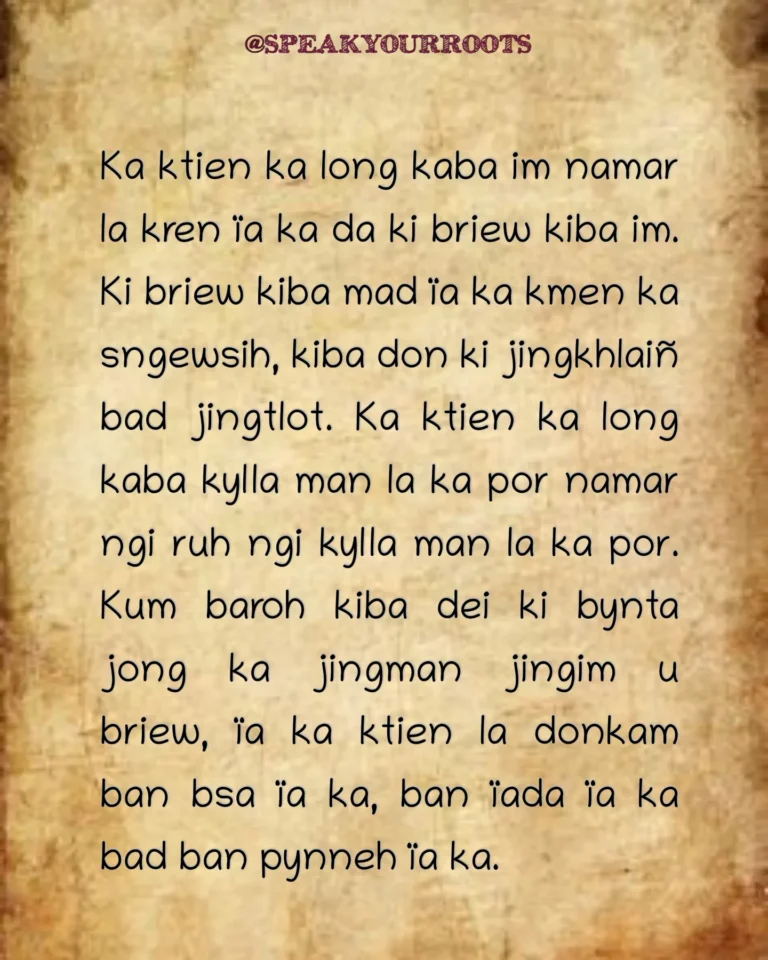
    Ka ktien ka long kaba im namar la kren ïa ka da ki briew kiba im. Ki briew kiba mad ïa ka kmen ka sngewsih, kiba don ki jingkhlaiñ bad jingtlot. Ka ktien ka long kaba kylla man la ka por namar ngi ruh ngi kylla man la ka por. Kum baroh kiba dei ki bynta jong ka jingman jingim u briew, ïa ka ktien la donkam ban bsa ïa ka, ban ïada ïa ka bad ban pynneh ïa ka. Ka ktien ka kylla tangba ka sah kumjuh ruh. Ka don ha ka jingïaid ban san ban miat, ban pynthymmai ïalade bad ha kajuh ka por ka long shisha ha ka bynta tynrai jong ka. Kane ka long kajuh ïa ki briew ruh. Ngi nang kylla na ka por sha ka por tangba ngi neh ka kyrteng, ka jaitbynriew, ka kur ka jait bad kumta ter ter. Ki don namar kata kiei kiei kiba kylla bad kiei kiei kiba dei ban neh kumjuh.

    Ka jingphylla jong ka ktien ka long ba ha kawei ka liang ka dei kaba lah ban ïohsngew da ki shkor bad ïohi da ki khmat, bad ha kawei pat la saiñdur da ki dak bad nuksa ban pynshai ïa ka jingmut jong ka. Ngi kren bad ngi mut kumba ngi ong bad ngi kren bad ngi mut da ka jingmut kaba sha lyndet ruh. Namar kata ka don ka bor ha ki ktien; kumno la pynshong ïa ki bad kumno la ong ïa ki bad la nang ai mynsiem ïa ki da ka rukom ring sur, ka jingsangeh shipor bad ka jingkiew ne jinghiar ka sur.

    Ïa ka jinglong kaba paka tam ne kaba nylla tam jong ka ktien ka dei haba la kren ïa ka. Ka jingher jong ka ktien na u thylliej sha ka sla thoh ka long kaba dap da ki sohkyrdot kiba wanrah ki jingthylli ha ka jingmut jong ka ktien. Ka jinglong maïan jong ka ktien ka pynlong ba ngi nym lah ban shon shap thik kumba pyrkhat. Ka khih ha ka lyer ha shyntur, la klet ïa ka, la kynmaw ïa ka; ka ktien ka pdiang ïa ka jingieit, ka ktien ka shah ïa ka jingbymsalia jong ngi ruh. Ngin ai aïu ïa ka ktien kaba long shi bynta jong ka malade?

    .

    .

    .

    Language is alive because it is spoken by a living person. A person with joy and sorrow, with strengths and weaknesses. Language is always evolving because we are evolving. Like everything that is part of human existence, it needs to be nurtured, protected and preserved.

    Language evolves yet it also stays the same. It is in a constant process of regeneration yet staying true to essence. This is the same for a human being. We evolve yet we have the same name, same tribe, same clan and so on. Perhaps there are things which are supposed to change and others which are supposed to stay the same.

    Language is beautifully concrete and abstract. We say and mean something literal. We say and mean something symbolic. This is why there is so much power in words; in how they are placed and said, given impetus by tone, pause and pitch.

    In its purest form, language exists in the spoken realm. The flight from tongue to page is fraught with gaps of meaning. In its most mysterious, language is not fixed. It moves in breath, it is forgotten, it is remembered, it receives love, it endures apathy. What are we going to give to language that is part of our own self?

    Khyndiat ki jingpuson ha ka sngi World Folklore Day shaphang bor bad ka jingmaïan ka ktien ka thylliej 🆎💭🗯️

    Some food for thought on World Folklore Day about the power and mystery of language 🆎💭🗯️

  • Encouraging the creation of Khasi hashtags!

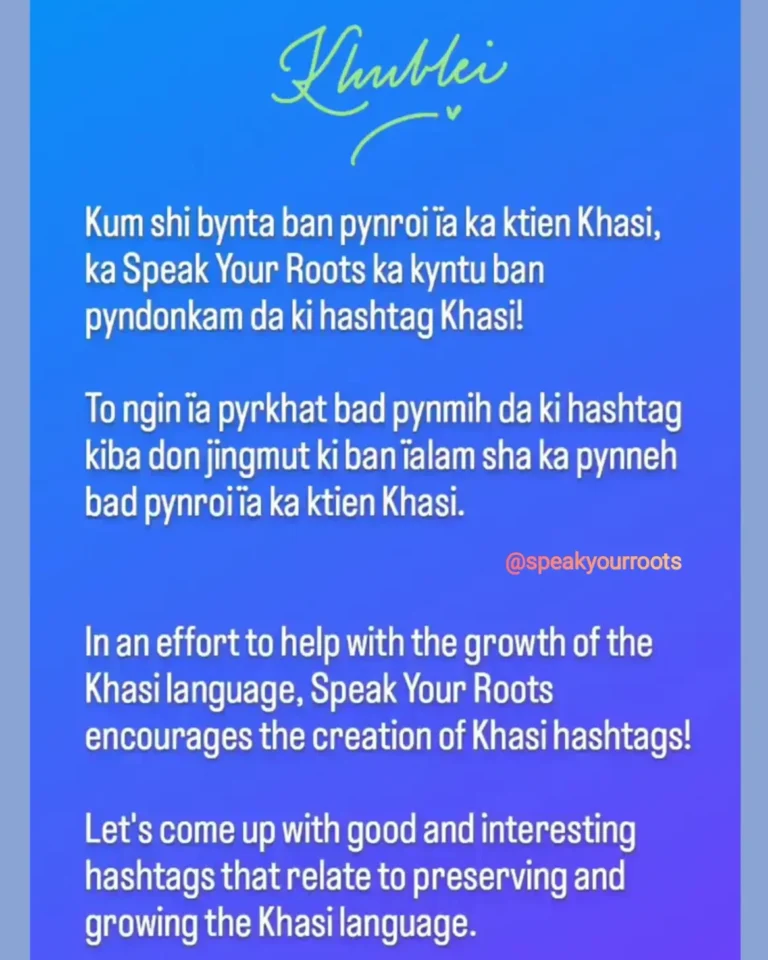
    Kum shi bynta ban pynroi ïa ka ktien Khasi, ka Speak Your Roots ka kyntu ban pyndonkam da ki hashtag Khasi!

    To ngin ïa pyrkhat bad pynmih da ki hashtag kiba don jingmut ki ban ïalam sha ka pynneh bad pynroi ïa ka ktien Khasi.

    In an effort to help with the growth of the Khasi language, Speak Your Roots encourages the creation of Khasi hashtags!

    Let's come up with good and interesting hashtags that relate to preserving and growing the Khasi language.

    Kum ban shu ai nuksa:

    #habaimkaktienimkajaitbynriew

    #kaktienbatam

    #kynmawlatynrai

    #ktienkhasi

    #pyrkhatkhasi

    #shetkhasi

    Sa phah ki hashtag jong phi ne lada phi post eiei sa pyndonkam da ki bad tag lem ïa @speakyourroots ! 😃😃

  • Kynmaw

    How do I explain the word? "Ka ktien".

    Say it. Out loud. Ka ktien. The first, a short, sharp thrust of air from the back of your throat. The second, a lift of the tongue and a delicate tangle of tip and teeth.

    For I mean not what's bound by paper. Once printed, the word is feeble and carries little power. It wrestles with ink and typography and margins, struggling to be what it was originally. Spoken. Unwritten, unrecorded. Old, they say, as the first fire. Free to roam the mountains, circle the heath, and fall as rain.

    We, who had no letters with which to etch our history, have married our words to music, to mantras, that we repeat until lines grow old and wither and fade away. Until they are forgotten and there is silence.

    How do I explain something untraceable? The perfect weapon for a crime. Light as pine dust. Echoing with alibis. Conjuring out of thin air, the ugly, the beautiful, the terrifying.

    Eventually, like all things, it is unfathomable. So, how do I explain?

    Perhaps it's best, as they did in the old days, to tell a story.

    ……………………….

    I was asked recently, what's your favourite word in Khasi? Usually, I find "favourite" questions very difficult–favourite book, song, movie. So many, I reply helplessly, it's impossible to pick just one. But not this time. It came to me easily, immediately, and while there are many delicious words in Khasi (rympei, the hearth; 'lap praw praw, rain on a tin roof), this one is closest to my heart.

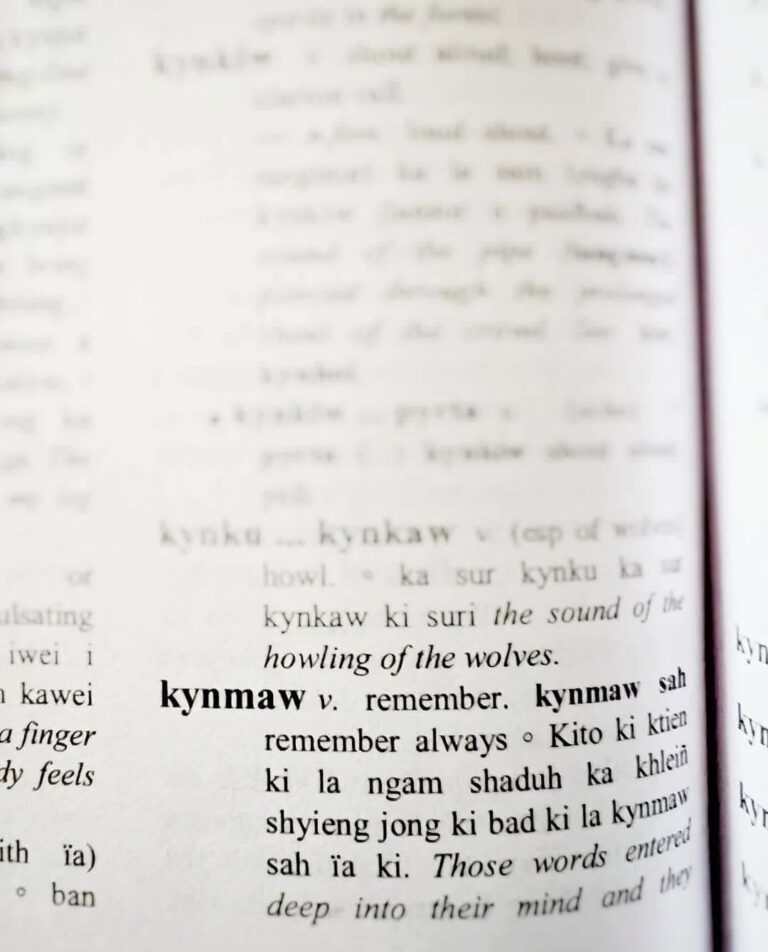
    Kynmaw.

    To remember.

    And not merely because of its rich and resonant meaning, but also because of its etymology. For the longest time, the people of these hills nourished an oral culture–one replete with song and story–and while there were attempts to "give" the languages here a script (using the Bengali alphabet), it was the British missionaries who succeeded. In particular a missionary named Thomas Jones, who travelled to Sohra in 1841, at a time when conversion to Christianity was at its slow beginning. What would help was to disseminate the word of God through the Bible–except how to publish an edition in a scriptless language?

    Today, in Meghalaya, is Thomas Jones Day. And so we remember him. For his diligence and good deeds, of which there were many–how complicated are our colonial histories!–but I choose to remember also how the languages here, at heart, are languages of the wind, the

    mountains, and waterfalls and forests. How they once sprung from land and tongue and remained untethered to page and pen and ink.

    How did we remember? Through song and story, of course, and stone. We computed our histories through stone–choosing to raise monoliths to mark lives and events and relationships. And so even our word for remember-kynmaw–means to "carry like stone". Here, remembering is not taken lightly. It is borne on our backs like stone–unwavering even in the face of (colonial) beliefs that the oral is light and frivolous and inauthentic. The spoken is as much true as the written. When we have no preservatory documents, remembering, to kynmaw, becomes all the more pressing, more important. The spoken does not forget."

    Khublei Shibun @janicepariat for your beautiful and profound thoughts! 🤗❤️🙏

    The era of the spoken word and of Khasi orality is vast, moving in the many sunrises and sunsets of history. This history which is our heritage pleads to be preserved as we move forward.

    As it is the course of things, we were given the Khasi alphabet by Welsh missionary, Rev. Thomas Jones. The Khasi alphabet has brought us to another chapter in Khasi orality, as our stories, teachings and values are transcribed onto paper. Yet as Janice Pariat has asserted, ban kynmaw ka long kaba kongsan, ban kynmaw ka long kaba kumba ngi dei ban long, namar ïa ka ktien la thaw, la shon nyngkong ha ki jylliew ka pyrkhat ka pyrdaiñ; la thaw la shon ïa ka ktien ha ki tyllun u thylliej bad ka shyntur. Kumba ki ong ki longshuwa, ka ktien kaba tam. Ka ktien ka long kaba maïan, ka ktien ka long kaba nylla!

    📸 All photos are from @janicepariat 🙏

  • Ka Wad Bniah/ Research

    Ngi dei ban shlur ïalade ban bad pynshlur ïa kiwei ruh ban wad bniah (research) halor ka jaitbynriew Khasi la jong.

    Ka jymbriew Khasi jong ngi ka la nang kylla katba nang ïaid ki por. Namar kata ka long kaba donkam ba ngin tohkit bad wad bha, lada ka long tang ba ngi pule da ki kot ruh, khnang ba ka jingtip ka jingsngewthuh ïa ka jaitbynriew bad ka ri la jong kan nang ïar bad nang jylliew.

    Ka jingkyrpad ba lada ki don na phi kiba lah dep ka jingwad bniah (research) ne kiba dang leh ruh, lada ka long, sngewbha ban pashat bad phah lem ïa ki jingshem jong phi ha ka page!

    Kan long ka jingmyntoi ïa kiba bun na ngi!

  • Ki jingpuson ha ka janmiet Jymmang

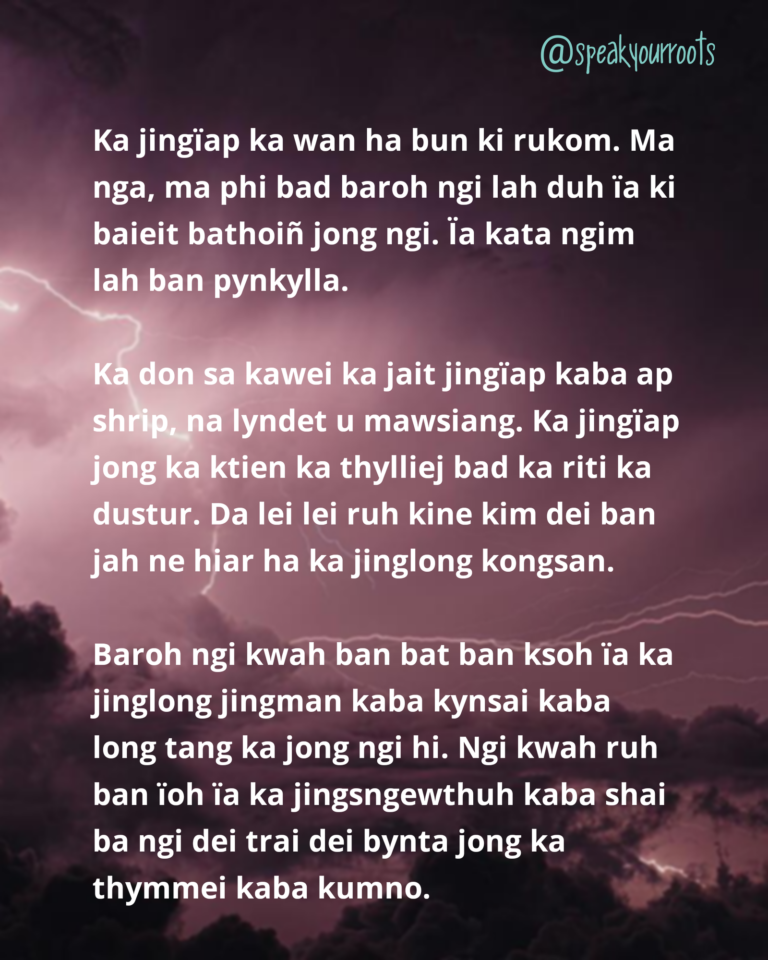
    Ka jingïap ka wan ha bun ki rukom. Ma nga, ma phi bad baroh ngi lah duh ïa ki baieit bathoiñ jong ngi. Ïa kata ngim lah ban pynkylla.

    Ka don sa kawei ka jait jingïap kaba ap shrip, na lyndet u mawsiang. Ka jingïap jong ka ktien ka thylliej bad ka riti ka dustur. Da lei lei ruh kine kim dei ban jah ne hiar ha ka jinglong kongsan.

    Baroh ngi kwah ban bat ban ksoh ïa ka jinglong jingman kaba kynsai kaba long tang ka jong ngi hi. Ngi kwah ruh ban ïoh ïa ka jingsngewthuh kaba shai ba ngi dei trai dei bynta jong ka thymmei kaba kumno.

    Kam myntoi ba ngin kam ba ngi dei ki Khasi haba ïa ka hyndai ngim tip ngim bna, ïa ka lawei ngim thawdur bad ïa ka mynta ngi pynsdot pynswai. Ngi lah ban ong ba uno uno u briew uba klet noh ïa ka tynrai, lada u poi ha ka khep ka jynjar, un kynmaw shuwa ba u dei u Khasi.

    Ka ktien ka thylliej kaba ngi kren man la ka sngi ka shon shap ha ka dohnud bad ha ka jabieng. Ka ktien ka hikai ïa ka akor ka burom para briew, kumno ban im, kumno ban ïaid, kumno ban ïa tyllun kylliang bad ka mariang ka meirisawkun.

    Namar kata sumar bad husiar kumno phi kren. Phi pyntei ne phi pyntor? Phi pyrto ne phi len?

    Death comes in many ways. You and I have lost our loved ones and know how the experience is. This is something we cannot change.

    But there is a different kind of death waiting stealthily, behind rocks and boulders. The death of language, of the spoken word, of culture and custom. Their importance should never be reduced nor should it ever disappear.

    We all want to hold on to a unique identity which is ours alone. We also want to have a clear understanding of the source to which we belong to.

    It is of no use to claim to be Khasi if we do not know anything about our past, if we do not mould the future and if we weaken and cripple the present. It may be said that if an individual who has forgotten his roots experiences the shadow of difficulties, he will remember that he is Khasi.

    The words and language we speak everyday have an imprint on our heart and brain. Language teaches behaviour and conduct, the way to live and exist, how to sustain the cycle with nature and the environment.

    Thus, speak with care and caution. Do you build or tear down? Do you cherish or deny?

    Ki jingpuson ha ka janmiet Jymmang. 💭💭🗣️

    Some thoughts to muse upon on a May evening. 🗣️💭💭

    🟡 Written in Khasi and English by @speakyourroots

  • Ka shawla ha ka por tlang

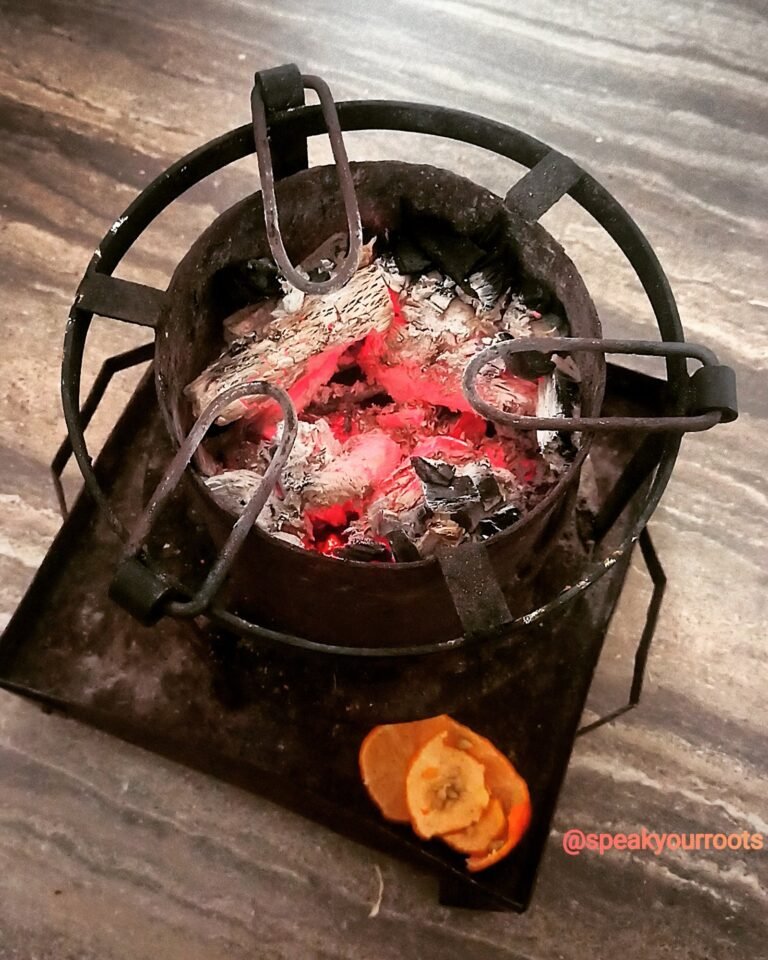
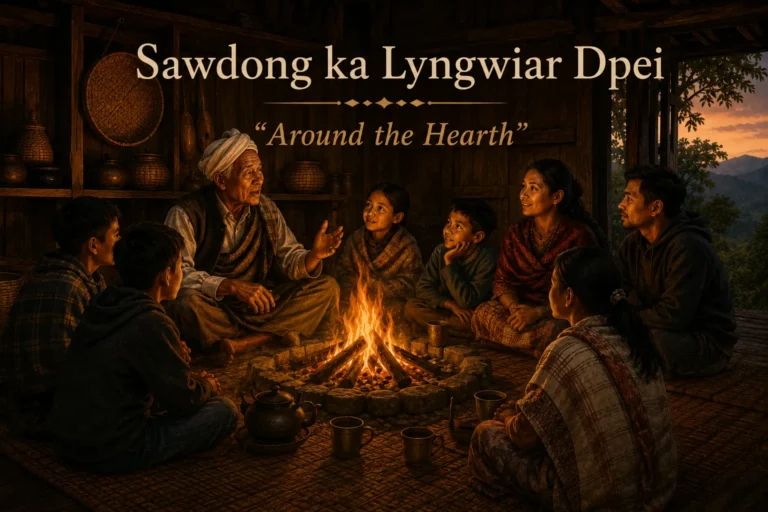
    Ha kum kine ki por tlang, ka syaid hi ka shawla ban syaid ding. Ka dei ka jingïohi ïa u rnga ba u saw, ba u rhem ruh kaba pynsyaid ïa ngi. Katno ka jingïaknieh ban shong sawdong ïa ka shawla ban ïoh pyaw ding; tang ba syaid ka dur khmat bad ki kti ruh lah sngew im 😄😂 Da ïoh sa ban shong ban bam sawdong ka shawla lei lei, sa bad ki jingïathuhkhana ba bun jait…❤️

    Kine ki dei ki rukom im jong ngi ki Khasi kiba iwei pa iwei na ngi ngi tip bad kynmaw bha. Ym lah ban ïoh ne ban kylliang da kiwei kiwei pat ki rukom ha ka pyrthei…ka jingsma jong ka lyer tlang, ka jingsma jong u rnga ba khluit, ka jingsieng jong ka tungrymbai ba shet ha shawla, ka jingiwbih jong ka syrwa tyrso bad dohsñiang 😋😋😋 Nga lah thngan ja biang!! 😂😂

    During the cold of winter, it is the heat of the Khasi "shawla" that is the best in giving warmth. Just the sight of the red fiery charcoal is enough to make us feel warm and cosy. How we fight for a spot to sit around the "shawla" to feel the heat; even if only the face and hands are warm, one feels alive 😄😂

    A bonus is getting to sit and eat around the "shawla" and add to that listening and telling stories of all kinds…❤️ This Khasi way of life is something we remember and know very well. It cannot be replaced by other ways in the world…the smell of winter air, the smell of hot charcoal, the aroma of boiling "tungrymbai" over the "shawla", the delicious smell of pork and mustard leaves boiling in a soup 😋😋😋
    I'm getting hungry again!! 😂😂