Category: Unique Observations

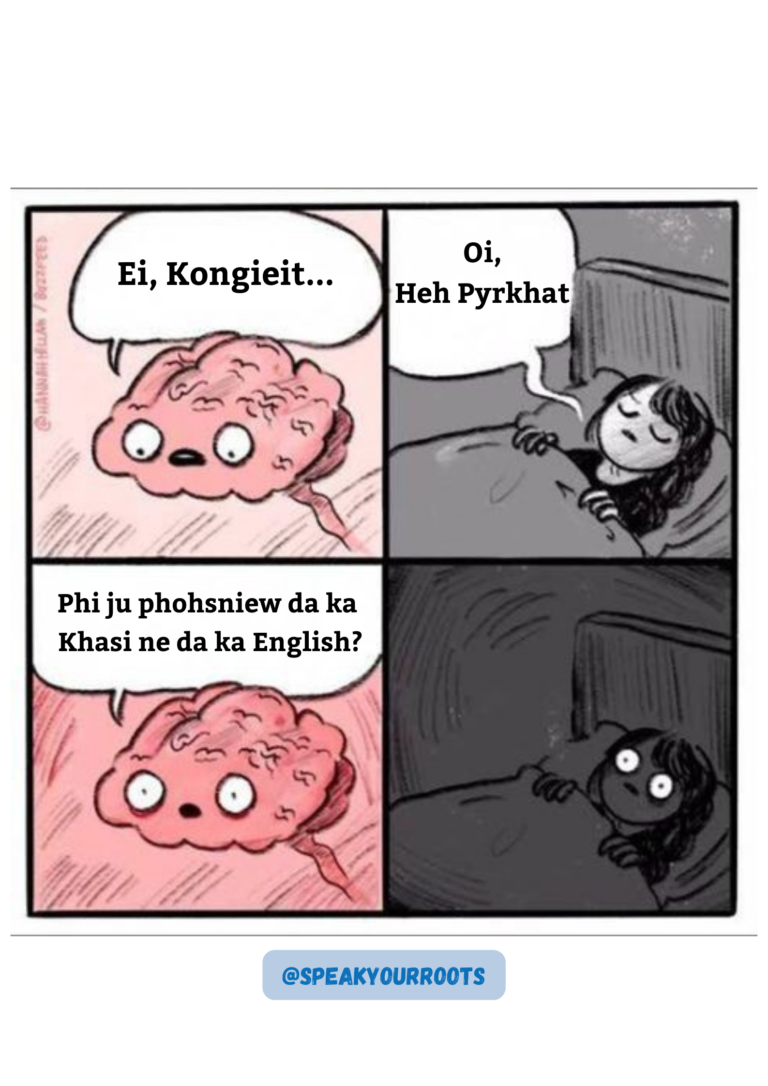
  • What Language Do We Dream In?

    Ei Bahdeng, Bahnah nga mut kylli phi phohsniew aïu? Bad ha ka ktien aïu? 😄😂

    Da nang bun ki ktien te tip ïoh haba phohsniew ruh mih bun jait ki ktien 🤔💤💤

    .

    .

    .

    This post asks what language do we dream in? Our native language or a foreign language? 😄💤

    #khasimemes #languageofdreams #khasihumour #khasilanguage #khasilanguageconservation #speakyourroots #speakyourrootschallenge #talklocal

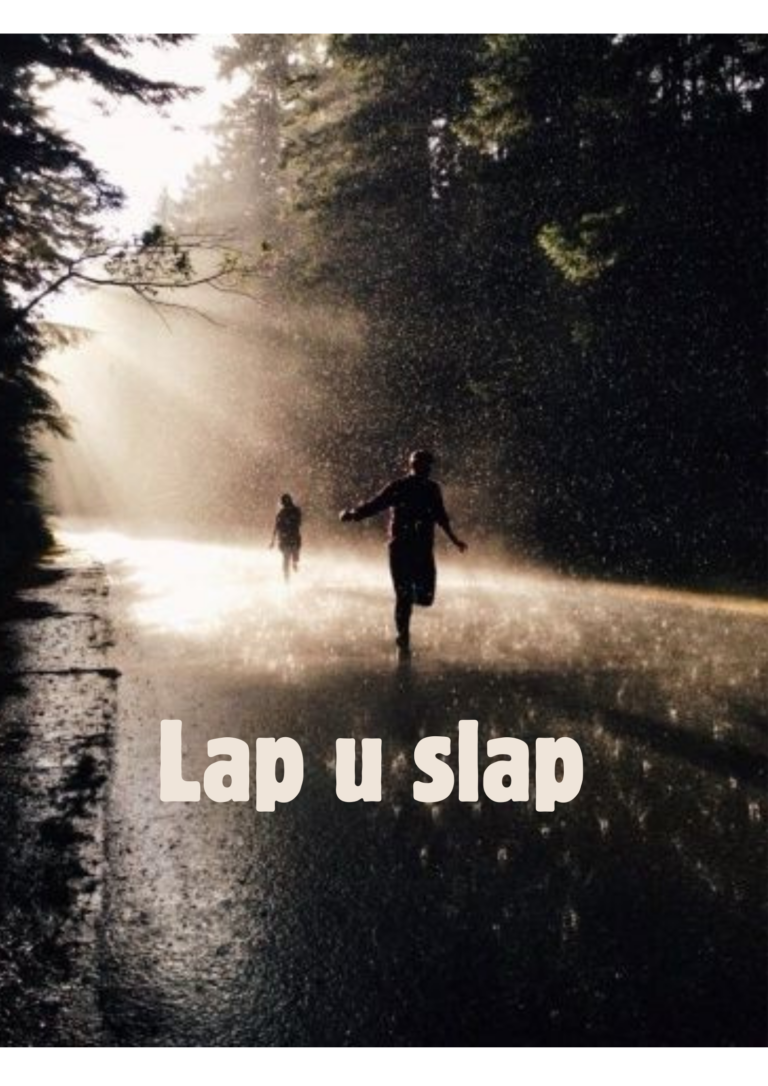
  • Lap U Slap

    U lap u slap ïa phi mynnin ne mynne? 😄🌧️⛈️

    U slap u lah long kum u briew uba beh ïa ngi ha kine ki sngi ba jur bad slap bad lyer 🌪️☔⚡

    .

    .

    .

    Living in a place which holds the record for the wettest place in the world has led to the Khasi language having names for different kinds of rain and phrases or idioms about rain 😄🌧️❤️

    #lapuslap #slap #khasirain #khasimonsoon #khasisummer #wettestplaceonearth #speakyourroots #speakyourrootschallenge #talklocal

  • Bia

    Bia [adverb] The formal union of a man and a woman, typically recognized by law, by which they become husband and wife, a marriage

    This meaning of the word "bia" has been taken from the Pnar-English Dictionary by Sajeki Passah (2013).

    Bia [noun] marriage; wedding. -verb. bia ka•a to marry; to wed;

    This meaning of the word "bia" has been taken from the Garo-English Dictionary by P. R. Marak (2010).

    Khublei Chiboon @micromotives for quite an interesting observation! 😄👍

    Who would have thought that a word in the Pnar and Garo languages would be the same and have the same meaning too.

    Sngew kmen ba lah nang bun na ngi kiba pule ïa ki dictionary ne ki dienshonhi, ki ban ai bun ki jingtip ïa ngi. 👏👏

  • Wei La Saw Bha Ka Bneng…

    "Wei la saw bha ka bneng sepngi jan miet phin sa ioh jingrang lashai."

    (La shim na "The Khasis" by P. R. T. Gurdon, 1907)

    Ha ka jingpeit bniah bad jingkhmih jong ka, nga shem ba katei ka jingong ka jia long shisha. Ka jingshem ka jong nga ka long ba ha ka janmiet jong ka 12 tarik U Kyllalyngkot 2022, nga ïoh peit bniah bha ïa ka bneng kaba paw rong saw kumba 5 minute eiei bad ha ka sngi kaba bud, kata ha ka 13 tarik nga shem ba ka sngi ka rang bad shai kdar bha bad kumjuh ruh ka don ïa ka sngi tlang kaba jem bha.

    "A red sky in the west in the evening is the sign of fine weather tomorrow."

    (Taken from "The Khasis" by P. R. T. Gurdon, 1907)

    In my brief observation, I observed that the Khasi saying found in Gurdon's The Khasis is certifiable. It is quite rare to hear these sayings nowadays but when I revisited Gurdon's book on the Khasis I decided to note this saying down and conduct a brief observation. On the evening of 12th January 2022, I observed that the evening sky at sunset was red in shade for approximately 5 minutes or less and then on the following day, 13th January 2022, I found that we were blessed with a dazzling and bright day. Moreover it had that soft winter sun and an amalgamation of both warm and chilly breeze.

    "Wei la saw bha ka bneng sepngi janmiet phin sa ïoh jingrang lashai" 🌄☀️🌲
    Khublei Shibun @_.adegram._ for sending this observation! 🙏😄

    🟡 English translation by @_.adegram._

  • Different Ways of Saying “Thank You” in the Khasi Language

    Ki rukom ong "Khublei Shibun" ba pher ha ka ktien Khasi

    Ka ktien "Khublei" ka thew ïa ka jingsngewnguh bad ka jingkyrkhu. Ka ktien "khu" ka wan na ka ktien "kyrkhu" bad ka ktien "blei", na ka ktien "Blei", kata ka mut, U Blei un kyrkhu ïa phi. Ka ktien "Shibun" ka mut kaba bun bad ka ktien "Khublei Shibun" ka thew ïa ka jingsngewnguh kaba shikatdei ne katta katta.

    The word "Khublei" refers to a feeling of gratitude and is also an expression of a blessing. The word "khu" comes from the word "kyrkhu" which means to bless and "Blei" which means God. So "Khublei" means God bless you. The word "Shibun" means many and in the phrase "Khublei Shibun" it refers to an immense feeling of gratitude.

    "Khublei Shikatnor" and "Khublei Shikhohtyndaw"

    Kane ka rukom ong Khublei Shibun la shim na ka "Shatwaidong" jong ka kot Ka Kolshor Khasi Kumba Paw ha ka Literashor Khasi (2006) kaba la thoh da i Dr. (Sr.) Philomena Kharkakor RNDM.

    This way of saying Khublei Shibun is taken from the Introduction to the book Ka Kolshor Khasi Kumba Paw ha ka Literashor Khasi (2006) written by Dr. (Sr.) Philomena Kharkakor RNDM.

    Ha baroh artylli ki rukom ong ka don ka jingsngewnguh kaba jylliew bad kaba shikatdei haduh katta katta.

    In both instances, the words express a deep and immense sense of gratitude and thankfulness.

    There are two ways of saying "Khublei Shibun" that are different from the usual way of saying the phrase.
    Khublei Shibun @_.adegram._ and @redfm_rjzack for bringing up these two new ways of saying "Khublei Shibun" 😄🙏

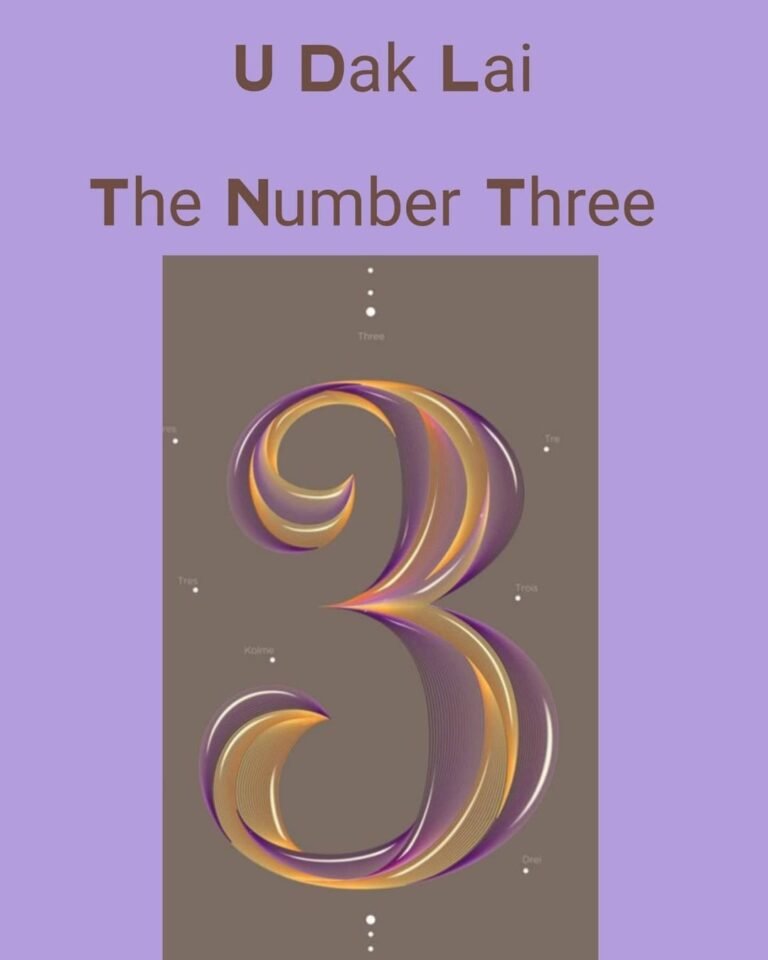
  • U Dak Lai, The Number Three

    U Khasi u don ka rukom pyrkhat kaba kham kyrpang ha ka jingïadei bad ki dak "Lai". Haba thung mawbyrsiew, u pynïeng lai tylli ki maw ban shet jingshet. Haba phah khubor na kawei ka jaka sha kawei pat, u pyndonkam lai tylli ki ksah ne kyrwoh. Haba jer khun shynrang, u pyndonkam lai tylli ki kyrteng bad lai tylli ki khnam. Haba thang briew, u pyndonkam lai tylli ki 'nam tympem ban siat ha ka kpep ha ka por thang briew. Haba pyrta shnong, u pyrta lai sien lai wat. Haba thung mawbynna kur, ki thung lai tylli ki mawbynna na ka bynta u kñi bad ar ngut ki pyrsa. Haba poikha poiman lane haba iap briew, ki ap lai sngi lai miet ban trei ia kiwei pat ki kam.

    The Khasis have a unique perception and regard for the number "3" When they erect a "mawbyrsiew" which is the stone used as support for cooking in the hearth they use three stones. When they send a message or news from one place to another, they use three "ksah" or "kyrwoh" which are rings made from threads of bamboo. When they choose a name for a son during the name ceremony, they choose from three names and also keep three arrows. At the cremation, the Khasis shoot three arrows called " 'nam tympem" in the place belonging to a specific clan for cremations. When there is a public announcement, the "sangot" addresses the people three times before making the actual announcement. When they erect the clan moniliths, there are three moniliths: one for the maternal uncle and the other two for his nieces or nephews. When there is a wedding or a funeral, the Khasis wait for three days to perform other work.

    The number "3" has a significance that is wide ranging for Khasis and Pnars. Here is an excerpt from U Khasi Bad Ka Mariang by Rev. Dr. Ïarington Kharkongor. 3️⃣3️⃣3️⃣

    🟡 English translation by @speakyourroots

  • U Diengbah Ïam Briew (Excerpt from “Ka Jingphylla Ka Ri” by Sumar Sing Sawian)

    Ha ka shnong Nongkynrih ha Hima Khyrim, u ïeng uwei u dieng bah dieng san uba la rim bha. Haduh kine ki sngi ba mynta une u dieng uba la tip kum u dieng "Sping Wait", ju mih ka sur bad ka jingsawa kumba ïam briew, lada don kano kano ka jingïap briew tymmen lane kano kano ka jingïap mynsaw jong ki nongshong shnong. Ïa kane ka jingsawa ïam briew kaba mih na ka jngkhynñiuh jong ki sla jong une u dieng, ju ïohsngew da baroh kawei ka shnong.

    Ki ong ba ym ju bit ban pynthut ïa une u dieng ne pynmong ïa u. Ka la don ka sien, ba uwei u briew uba la sngew nang sngew stad, u la ong ba kane ka long tang ka jingngeit bieit. Kumta u la rah da ka wait bnoh bad khet ïa uwei na ki jyrmi kiba kyllaiñ ïa une u dieng. Hadien kane, la ïathuh ba uta u briew um shym la lait shuh ban leit pynjhieh, wat la u sam tyngeh. Kane ka la pynpisa bad pynlynga ïa uta u briew haduh katta katta, haduh ba um lah shah shuh, bad um banse ban leit pan map, na uta u dieng, bad u sa lait na kata ka sohsat kaba shyrkhei.

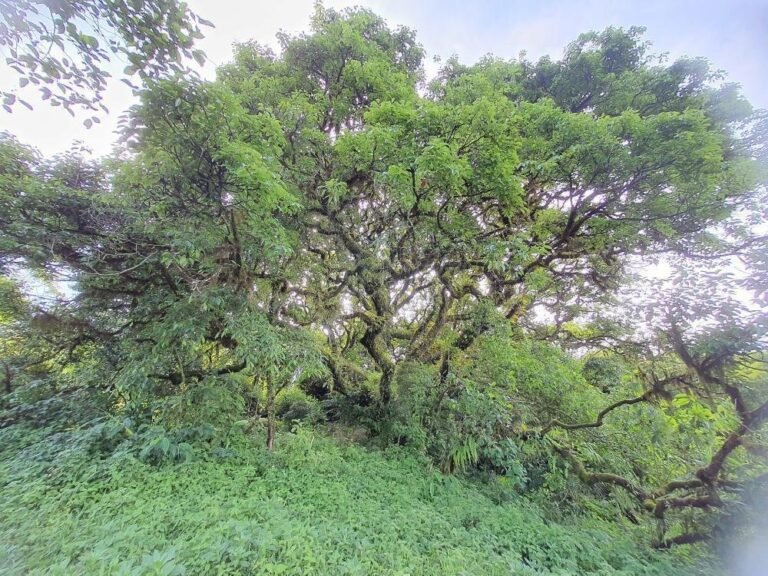
    In the village of Nongkynrih in Hima Khyrim, there stands a massive tree known as a "Sping Wait" tree, whose age is said to be very old. To this day, the voice and the sound of a weeping human being can be heard from it. This can be heard when there is the death of an elderly person or if there is a death caused by injury, with these persons being residents of the village. The weeping sound produced by the trembling leaves of the tree can be heard throughout the village.

    They say that the tree should not be disturbed nor hurt. There was once man who felt he had enough knowledge and know-how, so he declared the belief about the tree to be superstition. He took a "wait bnoh" which is a large bladed knife with a crooked head with the aim of cutting off one of the creeping plants that spread and grew on the tree. After this happened, it was told that this man could not urinate even when he desperately needed to. The man suffered horribly, that ultimately, he was forced to go to the tree and apologise to it so that he would be free of the affliction.

    "U Diengbah Ïam Briew" or "The Weeping Tree" feels like a cautionary tale of what can happen if we feel more powerful than nature. 🌲🌳

    The picture is of U Diengbah Ïam Briew located in Nongkynrih, Hima Khyrim. Khublei Shibun @bashngainrynjah for sending the picture!

    🟡 English translation by @speakyourroots

  • Ki Kyrteng Sin Part II/ Khasi Nicknames Part II

    Sympiw (rit khmat/ small eyes)

    Tun tun (sngaid/ chubby)

    Samah (sngaid bad lyngkot/ short and stout)

    Shrieh (khih ksaiñ, balaiñ/ hyperactive, mischievous, oversmart)

    Shyrjei (ima ka dur/ scary looking face)

    Sadman

    Sadmew

    Thamer

    Thohliap

    Tah (from mattah meaning snail; a reference to being slow)

    Krew krew (big eyes)

    Piduiñ (sngaid/ fat)

    Ldoiñ (heh briew bad biej/ big-built and dumb or foolish)

    Kriw kriw (rit briew bad shalak/ small, smart or sly)

    Bah Rai (raikhoh/ thin)

    Bah Kyn jait Roi (ba kynroi than/ prone to having fights)

    Priñ (Pnar) (ba ïong/ a dark complexion)

    Chru (Pnar) (Ka shriew/ Yam)

    Sti (wrinkled looking or used for someone thin)

    Mum (pronounced as Moom)

    Another round of "Ki Kyrteng Sin"/ Khasi Nicknames 😆😂😆😂

    These nicknames have been collected from the comments section of the earlier post on Khasi nicknames. Thank you to everyone who contributed! 🤡🤠🎃

  • Ki Kyrteng Sin Part I/ Khasi Nicknames Part I

    The Khasis have a practice of giving nicknames and besides the usual Bahduh, Theiheh, Kongdeng, Bahrit, which denote a specific position among siblings based on age, there are other kinds of nicknames that are given because of a context related to the person concerned. Here are some:

    Ka Smaw (ba ïong, ba jaing/ being dark and dirty)

    U Satlew (ba heh bad khlaiñ/ big built and strong)

    U Ren (ba bun ka shang/ always going out)

    U Dum (as in lyndum/ bald)

    Ka Taiñtabul (for timetable)

    U Koted (like the air horn of Bedford buses)

    U Buit (rit, buittuh, shu shyit briew beit/ small, wiry, likes to pinch others)

    U Tamuiñ (saw ki khmat bad ka ïambait/ red eyes and a cry baby)

    U Lo (pronounced like the word Law)

    Ka Bon

    U Been Loons

    U Sahep Laitkor

    Ka Samap (raikhoh/ stang shñiuh/ skinny, limp hair)

    U Bring

    Ka Rai (namar ba bang Krai/ because she likes millet)

    Bah Ling Saphu (a girl's nickname because she was scared of a beggar with this name)

    U Ro

    Ka Thre (named after a woman obsessed with cleanliness)

    U Lui

    U Jon Snai (named after a man who stole roosters to make them fight)

    Shnuit

    Ïong (dark complexion)

    'Ngaid (sngaid/ fat)

    Bung

    Lew Lew (from Pyllew/ big eyes)

    Pit Pit (namar ba sympit/ small eyes)

    Mem Syndem (ba syndem/ flat nose)

    Dem (ba syndem/ flat nose)

    "Ki Kyrteng Sin" or Khasi nicknames

    Don't we love our nicknames?! 😄😄😄😂😂😂 Here are some Khasi nicknames contributed by @indariwarjri @carey_lynz @bibianaryntathiang. Thank you for sending them! 😄

    Some have a context and some don't, but please do enjoy them and come up with your own interpretation!

    Please tell us about your funny nicknames! 🤡🤡😎🤓😎🤠🤠

  • Netaji’s connection to Shillong

    Netaji had a special association with Shillong and had visited the town thrice in his lifetime. Highly impressed by the democratic functioning of the Khasi states when he came for the first time in September 1938, Netaji had remarked, "Those who want to know about democracy should come to Khasi Hills."

    Thank you @othnielpyngrope for bringing this up in the conversation on the post commemorating the death anniversary of U Tirot Sing. 👍👍🙏🙏

    Source: https://m.timesofindia.com/city/guwahati/shillong-remembers-netaji-subhash-chandra-bose/articleshow/18159440.cms