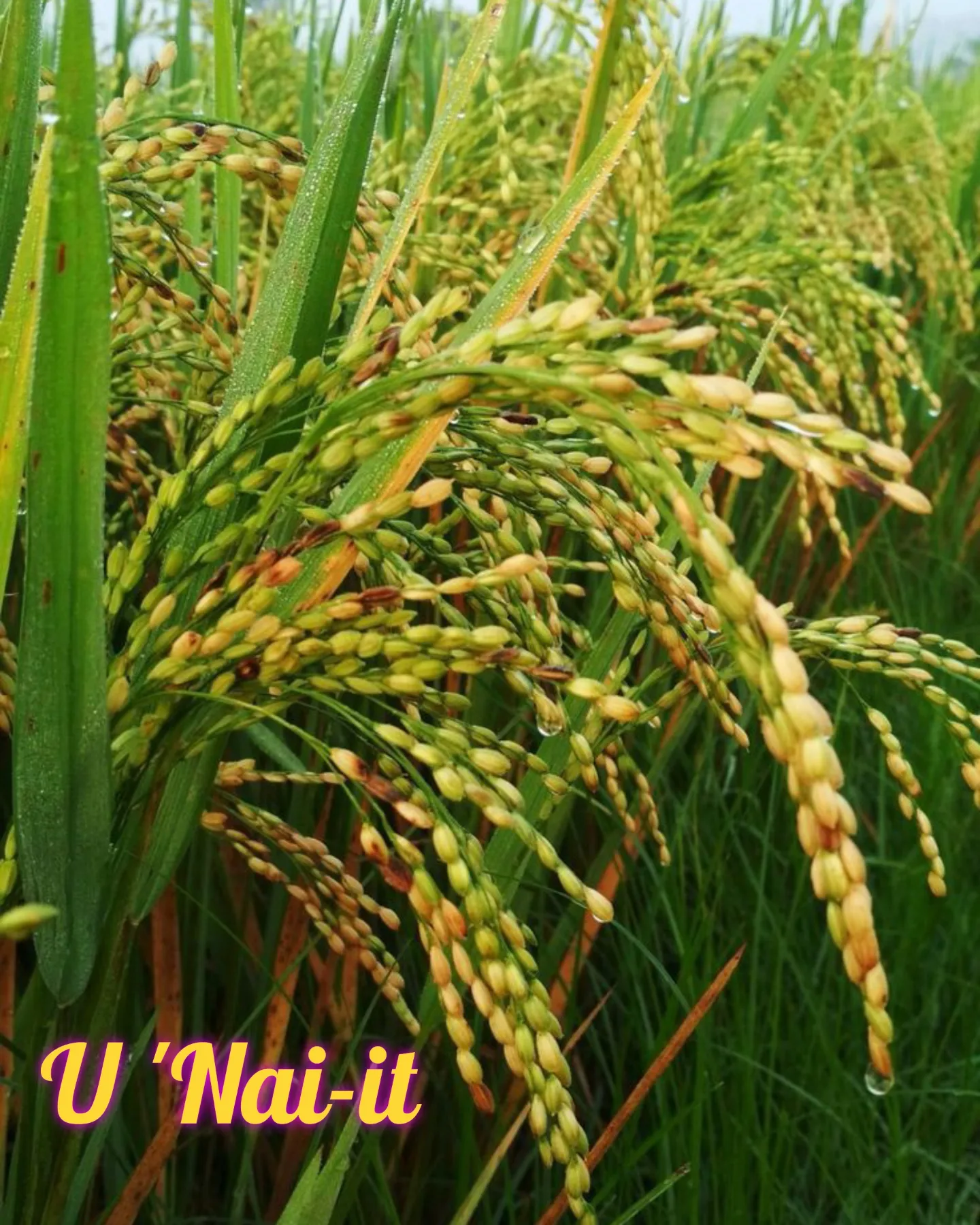
Tag: autumn

  • U ‘Nai-it

    U ’Nai-it u dei u bnai uba shiphew jong ka snem, u dei u bnai uba ar jong ka Synrai. U bnai ba nyngkong jong ka Synrai u dei u 'Nailar. U 'Nai-it u don saw taïew lane arphew phra sngi.

    Une u bnai u wan long kyrteng na ka jingpah u kbeit bad kiwei pat ki jait sim kiba her ha suiñ bneng. Ha une u bnai haba u kbeit u swait ha suiñ bneng ban kem sim ne kem khnai u ju pah ‘it it-it it’.

    U long u bnai ba ki sim laiphew jait ki sngewtynnat ban her suwari ha suiñ bneng ban kem khnai ne khñiang. Baroh ki jait khñiang, ki dkhiew bad kiwei pat ki kynja ba im ki sngewtynnat ban paw pyrthei ha une u bnai. Ki ïa mih na la ki jong ki jong ki trep ban ïalehkai bad rynsied sngewbha ha sla khyndew namar ka bneng ka la rang itynnat bad u kba u la sdang saw doh.

    "U 'Nai-it" is the tenth month of the year and it is the second month of Autumn. The first month of Autumn is " 'Nailar" (which roughly corresponds with September). "U 'Nai-it" has four weeks or twenty-eight days.

    This month gets its name from from the chirping of a bird called "u kbeit" (which the Khasi dictionary calls "a kind of hawk") and other kinds of birds. During this month "u kbeit" while hunting smaller birds and rats makes an "it it-it it" sound.

    Different types of birds go around flying everywhere during this month to hunt rats and insects. Many kinds of insects, ants and others like to emerge during this time. Animals and insects enjoy this time of the year as the weather is warm and sunny and paddy also begins to redden.

    It is interesting that the Khasi calendar has 13 months of 28 days (except in a leap year). The calculation of the months corresponds to the phases of the moon.

    Source: Rev. Dr. Ïarington Kharkongngor

    English translation by @speakyourroots
  • Ka Syaid Sngi

    Ka sngi ka dei ka dawai bah. Haba ki mrad ki ju mlien ban syaid sngi bad ki jingthung jingtep ruh ki heh ki san lyngba ka sngi—te hato kan nym dei kumjuh ïa u briew ruh? Ha ka jingsyaid jong ka sngi ki jingsngewdiaw bad ki jingkhuslai ki phet lai-lum lai-wah.

    Phi ju kynmaw ïa ki Meiieit bad Paieit jong ngi, kumno ba ki shait syaid sngi? Ka don shisha ka jingbha ha kato ka shong syaid sngi. Bun ki khana…nangta ki siang sa u shylliah, sei ka shangkwai, ne u thlong dung kwai ne khleh sa u soh…Hangta sa ki ashar jong i Meiieit, khriak ha ka sngi. Uba bang bad ba shngiam haba u la dei sngi bha.

    The sun is wonderful medicine. When animals sit in the sun to warm themselves and trees and plants thrive in the heat of the sun, will it not be the same for human beings? In those moments in the warmth of the sun we let go of worry, anxiety and despondency, and they seem to escape over three hills and three rivers.

    Do you remember our grandparents sunbathing in seasons like these? There is real good in sitting in the arms of the sun. So many stories…then they lay the shylliah on the ground, taking out ka shangkwai (kwai basket), or u thlong dung kwai (traditional pestle and mortar for grinding kwai) or mixing orange with pomelo fruit for a fruit salad in the sun…And then there basking in the sun are Granndma's pickles. The most scrumptious and delicious, because they've been cooking in the sun.

    "Ka Syaid Sngi" or sunbathing during the Autumn and Winter is one of the past times that we all love. 🌤️🌤️ It is also reminiscent of younger days of childhood and warm hugs and kisses from our grandparents 🤗🤗☀️☀️

    🟡 Explication in Khasi and translation into English by @speakyourroots