Tag: culturalmemory

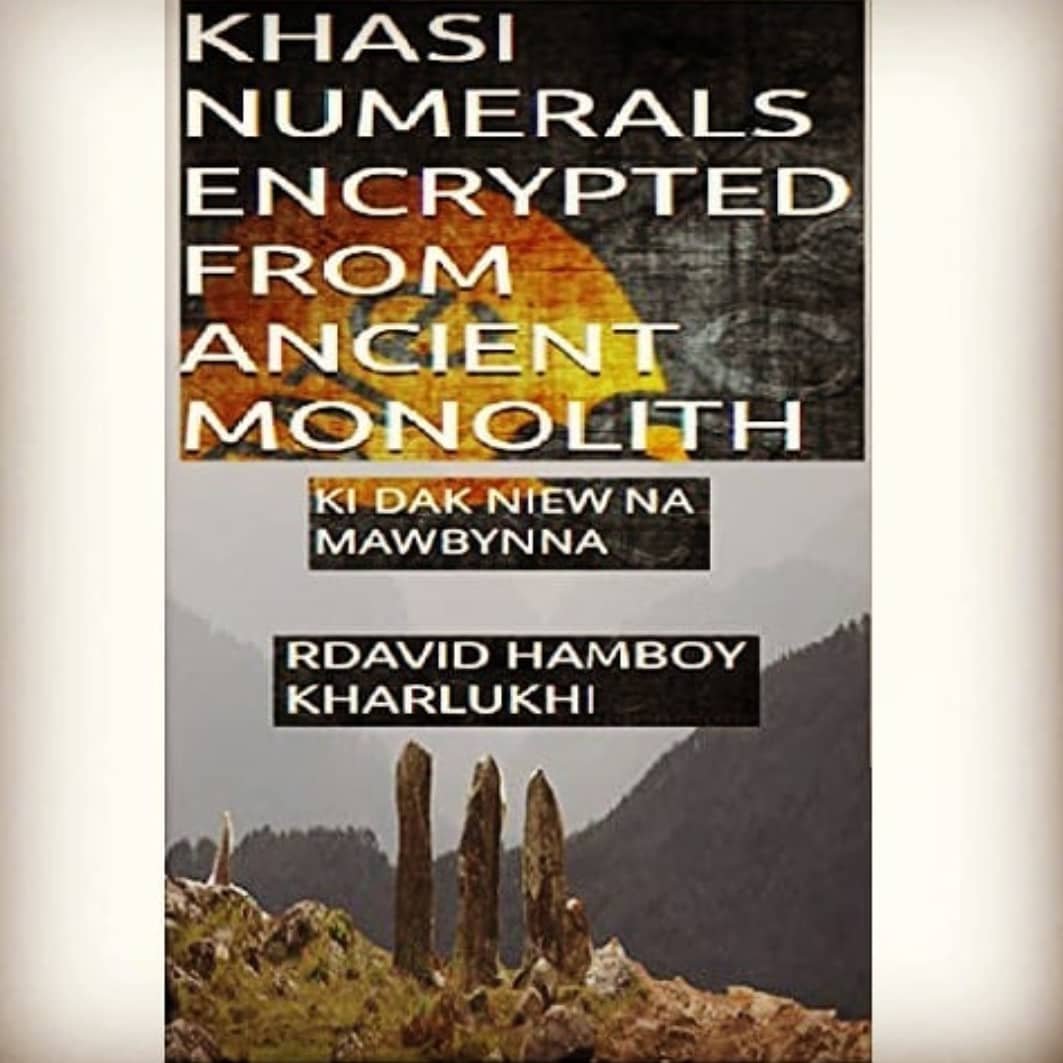
  • Ki Dak Ñiew na Mawbynna by R.David Hamboy Kharlukhi

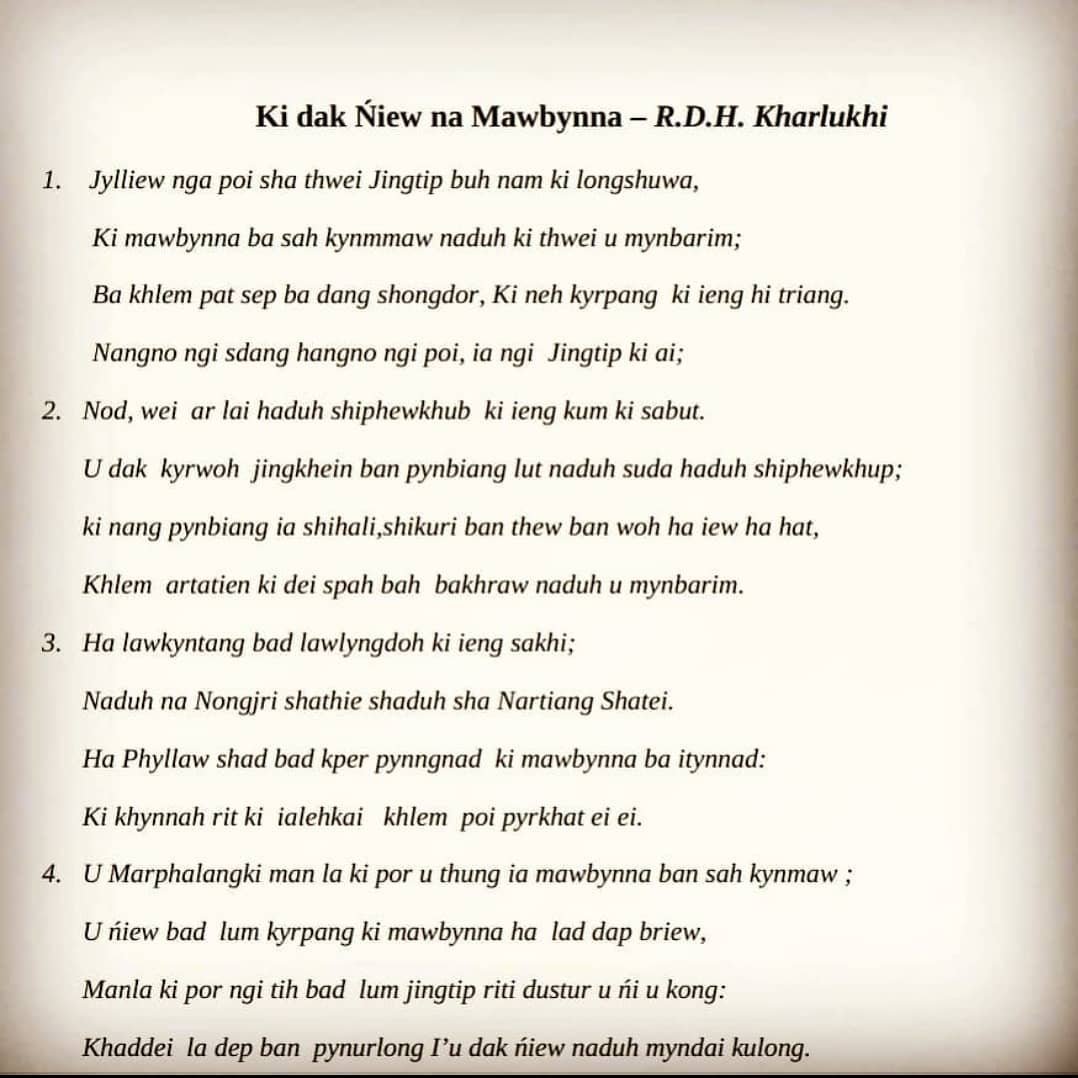
    1. Jylliew nga poi sha thwei Jingtip buh nam ki longshuwa,

    Ki mawbynna ba sah kynmmaw naduh ki thwei u mynbarim;

    Ba khlem pat sep ba dang shongdor, Ki neh kyrpang ki ieng hi triang.

    Nangno ngi sdang hangno ngi poi, ia ngi Jingtip ki ai;

    2. Nod, wei ar lai haduh shiphewkhub ki ieng kum ki sabut.

    U dak kyrwoh jingkhein ban pynbiang lut naduh suda haduh shiphewkhup;

    ki nang pynbiang ia shihali, shikuri ban thew ban woh ha iew ha hat,

    Khlem artatien ki dei spah bah bakhraw naduh u mynbarim.

    3. Ha lawkyntang bad lawlyngdoh ki ieng sakhi;

    Naduh na Nongjri shathie shaduh sha Nartiang Shatei.

    Ha Phyllaw shad bad kper pynngnad ki mawbynna ba itynnad:

    Ki khynnah rit ki ialehkai khlem poi pyrkhat ei ei.

    4. U Marphalangki man la ki por u thung a mawbynna ban sah kynmaw;

    U ñiew bad lum kyrpang ki mawbynna ha lad dap briew,

    Manla ki por ngi tih bad lum jingtip riti dustur u ñi u kong:

    Khaddei la dep ban pynurlong I'u dak ñiew naduh myndai kulong.

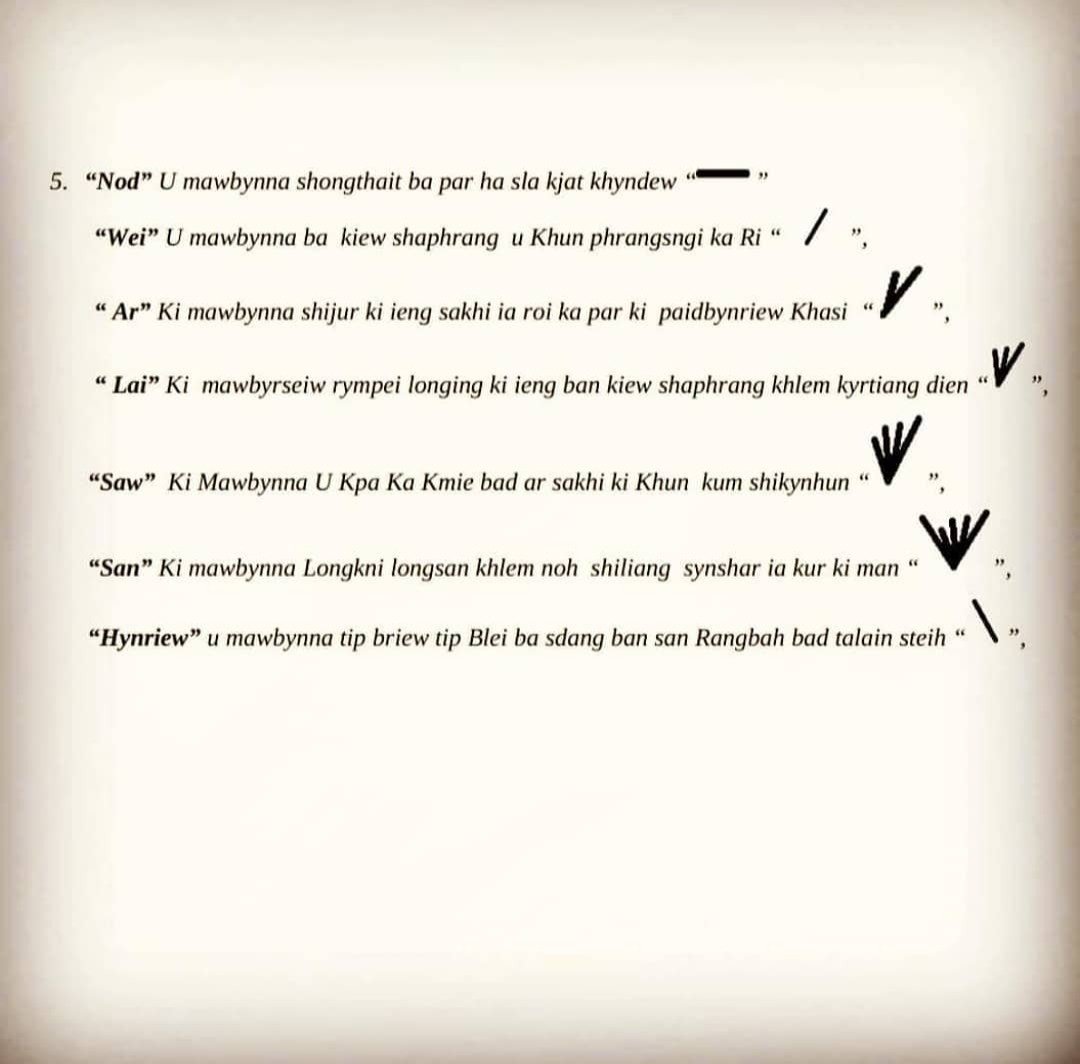
    5. "Nod" U mawbynna shongthait ba par ha sla kjat khyndew

    "Wei" U mawbynna ba kiew shaphrang u Khun phrangsngi ka Ri

    " Ar" Ki mawbynna shijur ki ieng sakhi i-a roi ka par ki paidbynriew Khasi

    " Lai" Ki mawbyrseiw rympei longing ki ieng ban kiew shaphrang khlem kyrtiang dien

    "Saw" Ki Mawbynna U Kpa Ka Kmie bad ar sakhi ki Khun kum shikynhun

    "San" Ki Mawbynna Longkni longsan khlem noh shiliang synshar ia kur ki man

    "Hynriew" u mawbynna tip briew tip Blei ba sdang ban san Rangbah bad talain stieh

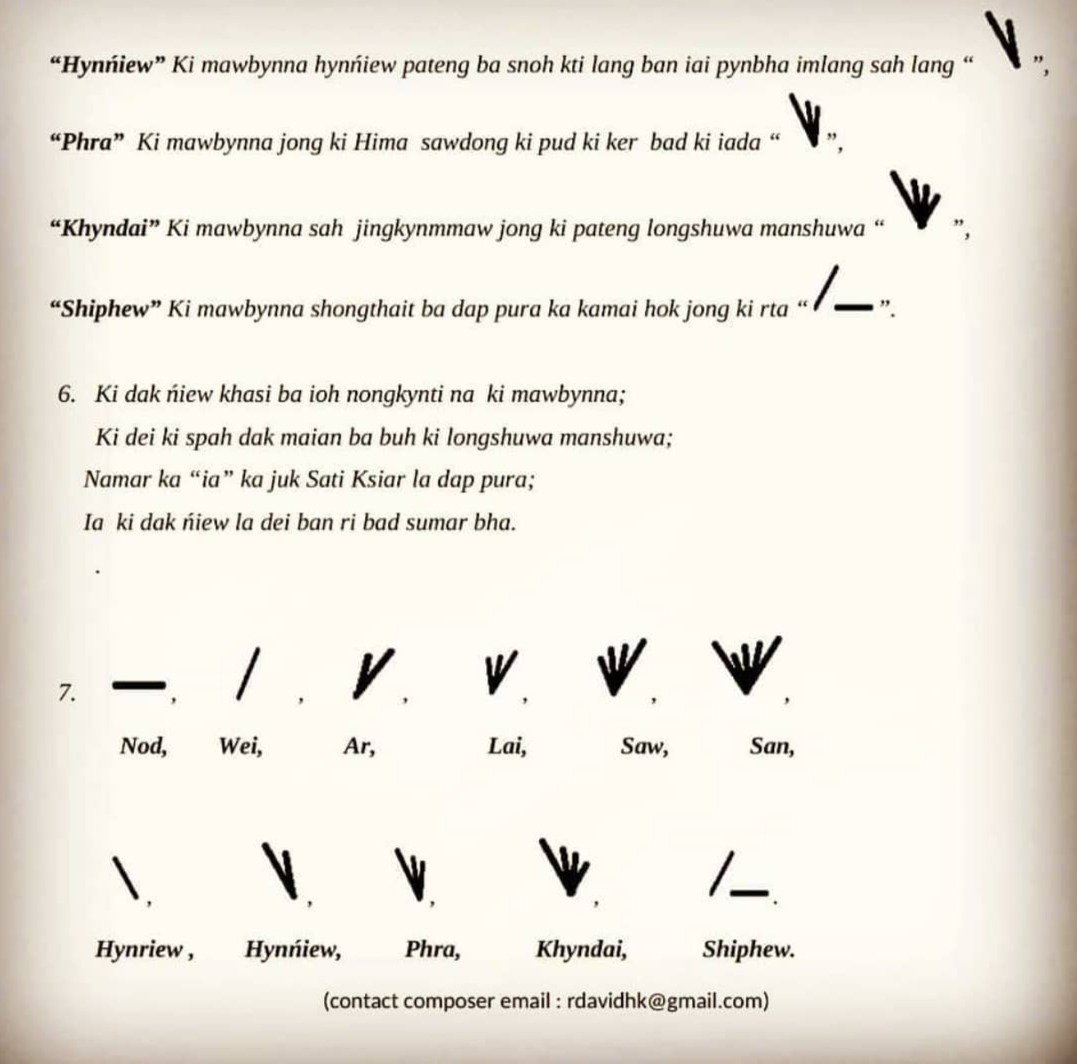
    "Hynñiew" Ki mawbynna hynñiew pateng ba snoh kti lang ban iai pynbha imlang sah lang

    "Phra" Ki mawbynna jong ki Hima sawdong ki pud ki ker bad ki iada

    "Khyndai" Ki mawbynna sah jingkynmmaw jong ki pateng longshuwa manshuwa

    "Shiphew" Ki mawbynna shongthait ba dap pura ka kamai hok jong ki rta

    6. Ki dak ñiew khasi ba ioh nongkynti na ki mawbynna;

    Ki dei ki spah dak maian ba buh ki longshuwa manshuwa;

    Namar ka "ia" ka juk Sati Ksiar la dap pura;

    Ia ki dak ñiew la dei ban ri bad sumar bha.

    "Ki Dak Ñiew Na Mawbynna” by R. D. H. Kharlukhi @davidkharlukhi is an original Khasi poem.

    This beautiful and well-crafted poem brings together Khasi numbers and the different kinds of "mawbynna" (monoliths) that Khasi and Pnar culture possess, to create an ingenious symbolism. It is a significant effort to create an awareness of the deep, inextricable bond between man and nature. Most importantly, the poem highlights the lessons encrypted in nature which many of us do not perceive.

    Thank you to Mr. R. D. H. Kharlukhi @davidkharlukhi for giving the permission to post his poem! This poem is available on amazon.in.
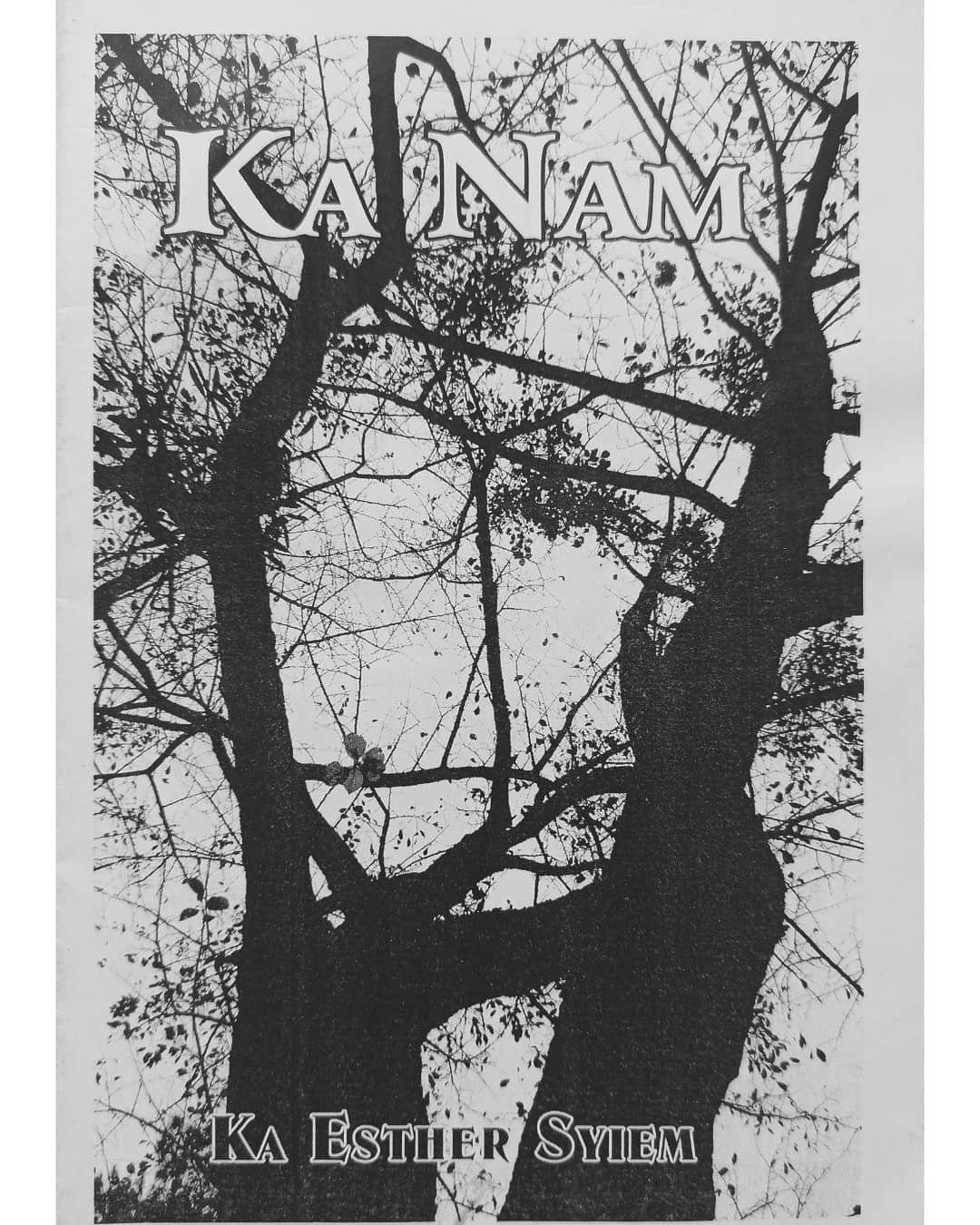
  • Ka Nam by Esther Syiem (Lamkhmat/ Foreword and dialogue excerpt)

    Ka Lam Khmat

    Ki thied ki jaw jong kane ka drama ki sam shaduh ki thymmei jong ka long rynïeng man rynieng ka jaitbynriew Khasi. Ki pud ki sam jong ka pat, ki ïar kat ban kdup lut ïa ka long briew man briew shi snieh ka pyrthei ha khrum ka beng. Ki tyngshop ki puron ki ïeng na ka bynta bun kiei kiei kiba ym lah jer lut hangne. Ka Nam bad ka kmie jong ka ruh ki ïai kha ïalade bun syrtap ha ka mynta ka jong ngi. Ki long kiei? Ïa kane nga ieh ha ka jingbishar bniah bad ka jingthew sawar jong phi baroh.

    Ha kane ka jingpyrshang barit ki don bun kiba la iarap bad kyrshan lem ïa nga. Nga ai khublei kyrpang ïa ki. Nga pynpaw ka jingsngewnguh kaba khraw ia I Kong Temsula Ao, I kong Badaplin War bad I Kong Antoinette Kharmalki ki nongai mynsiem ba rhem. Nga ai khublei ïa I Bah D. Rocker L. Nonglait bad I Kong Mumtaz B. Jyrwa kiba la kloi ban pule bniah ïa kane ka jingpyrshang barit bad ban kdew ruh ïa ki jingduna baroh.

    Nga pynpaw ka jingsngewnguh ïa u khunruit uba la ai jingmut ha ka ba thoh, bad ïa u hymmen rangbah uba la kyrshan ha kaba shon їa kane ka kot.

    Khublei Shibun

    Ka Esther Syiem

    'Moor-Ville'

    Riatsamthiah

    Shillong

    July 2006

    Ka Nam: Ko mei 'ngi ym don ba pynwit ïa nga. Ki dei tang ki jingpyrkhat jingpuson ki jong nga miet la bad sngi ki bym ailad ïa nga ba ngan ïaid pyrshah ïa ka jingïatiplem jong nga.

    Folktales in the oral tradition provide a rich literary and cultural heritage, which speaks volumes about our beliefs, values, principles as a community.

    "Ka Nam" (2007) a Khasi play by Dr. Esther Syiem is a reimagination of the Khasi folktale "Ka Nam and the Tiger".

    A reimagination is a return, a retracing, a reinterpretation, a reworking that perhaps in the case of this folktale, provides a different angle to the character of "Ka Nam". This reimagination is one that is explored for all the characters of the folktale starting from "Ka Nam". As the author states in the Foreword of the play, the life and limit of the play permeates the depth and pervades the condition of being human.

    Ka Nam is a Khasi play written by Dr. Esther Syiem, based on the Khasi folktale of Ka Nam bad u Khla. The play is well-crafted and deeply insightful of man's relationship with Nature. Most importantly, it highlights the will and independence of the human individual through the twist at the end of the play.

    The book is available at Ri Khasi Book Agency, Mawkhar, Shillong.

    Cover photograph taken by @i_a_duppy_conquerer

    Dr. Esther Syiem is a Professor in the Department of English, North-Eastern Hill University, Shillong, Meghalaya.

  • “Mawbynna” by Esther Syiem

    You appear

    to have withstood

    time’s duress

    as you watch

    over a world

    of plastic clutter.

    Your sense of time

    is forbidding,

    but you keep intact

    our self respect.

    You have shut yourself

    in an aura

    that is yours alone.

    Your changelessness

    in flux

    is the only surety

    against the inquisition

    that assails you.

    You are the keeper

    of our past.

    Vertical guardians

    overseeing horizontal quiet –

    wayside offerings,

    arrested in a moment,

    away from passing history.

    Your commodity

    is your soul

    held still, in the

    imbroglio of time,

    as you provide

    shelter and rest

    for wayfarers,

    drawn by your etchings

    in their souls.

    This poem appears in Oral Scriptings: Poems by Esther Syiem (2005) published by Writers Workshop, Kolkata. Dr. Esther Syiem is a Professor in the Department of English, North-Eastern Hill University, Shillong.