Tag: indigenous languages

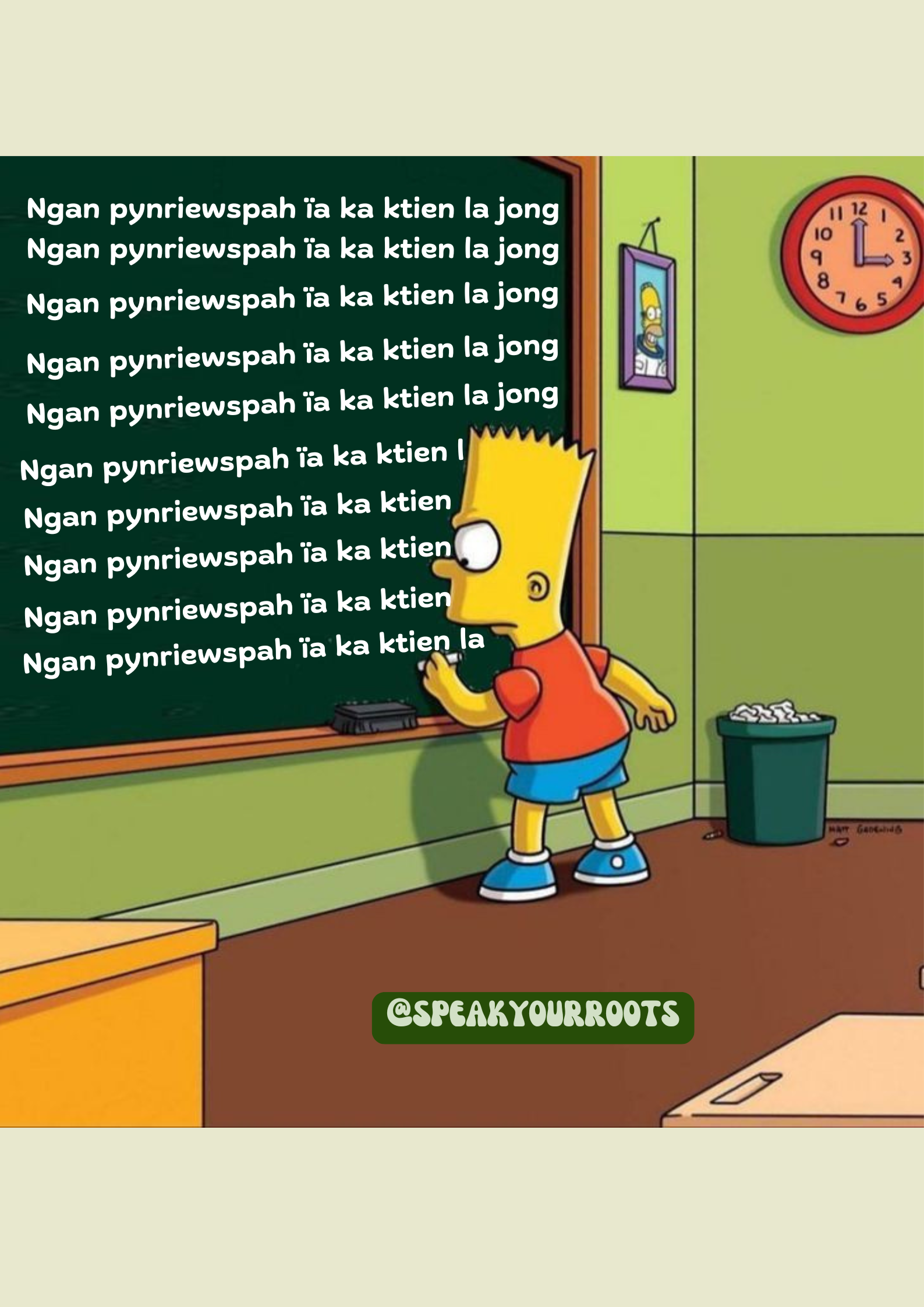
  • Ngan pynriewspah їa ka ktien jong nga!

    Khublei Shibun Bah Heh Bart ba phi la pynsngew ïa ka symboh pyrkhat kaba dei shisha ha kane ka por. Ka ktien ka thylliej ka donkam ïa ngi ban pynriewspah ïa ka namar dei ma ngi kiba kren ïa ka man la ka sngi!

    🟡 Kumno ngin pynriewspah ïa ka ktien la jong? Sngewbha jubab ha ki comments 😃

    #habaimkaktienimkajaitbynriew #ktien #krenktienlajong #thohktienlajong #khasilanguage #khasilanguageconservation #indigenouslanguages #indigenouslanguageconservation #speakyourroots #speakyourrootschallenge #talklocal

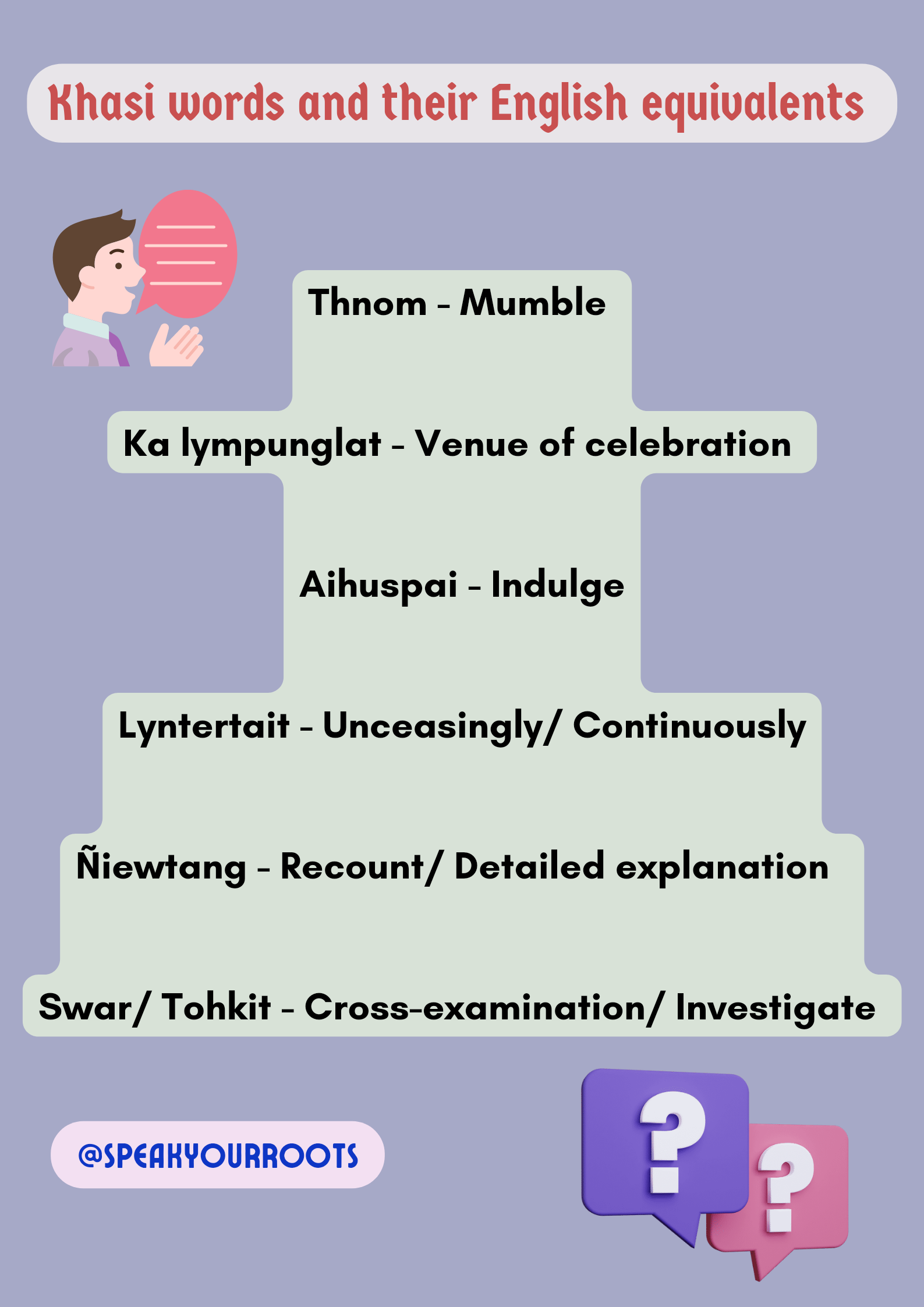
  • Khasi Words and Their English Equivalents

    Sa shisien kine ki dei khyndiat ki ktien Khasi bad ka jingmut jong ki ha ka ktien English! Kan long kaba bha shibun lada ngin kitkhia ban pyndonkam ïa ki ha ka kren ka khana man la ka sngi. 🆎 🗣️

    .

    .

    .

    Here are a few Khasi words with their meanings in English!

    #khasiwordsusage #khasilanguage #khasilanguageconservation #indigenouslanguages #indigenouslanguageconservation #indigenouslanguagedecade #speakyourroots #speakyourrootschallenge #talklocal

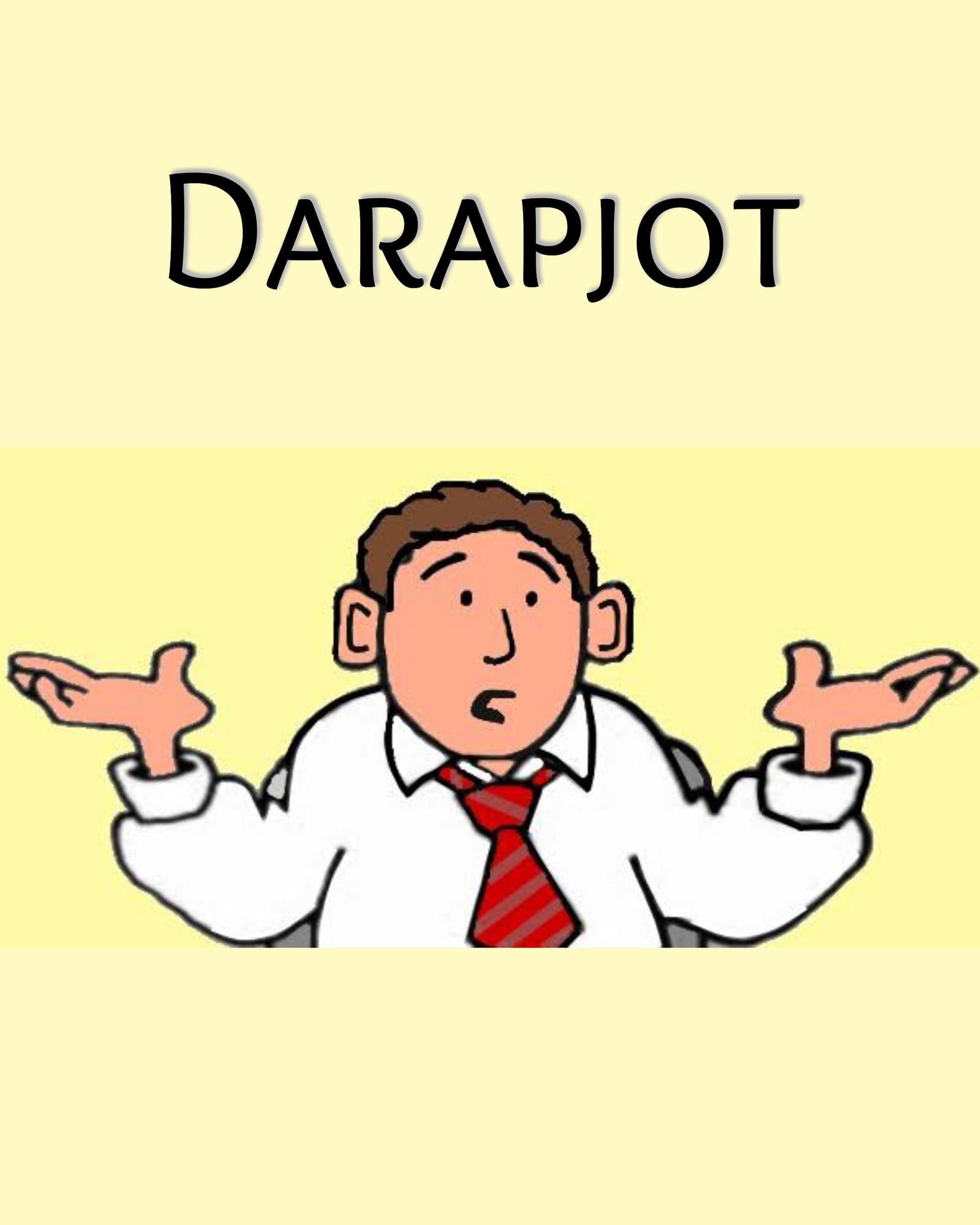
  • Darapjot

    Ka ktien Khasi "darapjot" ka dei ka jingpyrshang ban buhrieh ïa kaei kaei ka bym lah shuh ban buhrieh. Kane ka dei ka jingda ïalade ban lait na kano kano ka jinglehraiñ. Tangba ka lah paw ha kiba peit ne kiba sngap ba u briew u shu thaw daw bym ler ban tap ïa kaei kaei kaba lah ban pynwan ïa ki jingkynthoh ka bym sngewtynnat.

    The Khasi word "darapjot" describes the attempt to hide something that actually cannot be hidden anymore. This is a way to protect oneself so as to be free of any possible humiliation.

    But it may be evident to the observer or the listener that the person is making a lame excuse to cover up something that may invite negative criticism.

    Bun na ngi ngi tip ïa ka ktien "darapjot". Shisyn pule ka pynmih ïa ka dur jong ka jaiñ ba lah jot tangba kaba shu syrdep hangne hangtai ban nym i jot rathai eh. 🆘🤷

    Da peit ïa ka ktien ka i kumba ka wan na laitylli ki kyntien, kata ka "da", "ïarap" bad "jot".

    Many of us know the word "darapjot". The literal meaning of the word brings up the image of a tattered cloth that is mended here and there so as to not appear too torn and shabby. 🆘🤷

    The word also seems to be made up of three words, that is "da" meaning protect, "ïarap" meaning help and "jot" meaning torn or ruined.

    🟡 Khasi explication and English translation by @speakyourroots
  • Where is the Dialect from? #1

    Khublei ïa phi baroh! Kane ka dei ka jingïakob halor ki ktien shnong (dialect contest) na ki bynta ba pher jong ka ri Khasi kum shi bynta jong ka jingrakhe ïa ka International Mother Language Day, kaba la wanrah sha phi da ka @speakyourroots bad ka Big FM 98.3 Shillong lyngba ka jingkyrshan jong ka @neindiaarchive !

    🟡 Kin don saw tylli ki jingkylli. Kane ka dei ka jingkylli kaba nyngkong!

    🟡 Lada phi tip ïa kane ka ktien la kren ha ka shnong ne ka thaiñ aïu, phah ïa ka jubab da ka text sha une u number 8798997511. Phin ïoh ïa ka khusnam kaba la pynkhreh kynsai!

    🟡 SNGEWBHA AI ÏA KA KYRTENG JONG KA SHNONG/ THAIÑ BAD KA KYRTENG KABA PURA KA JONG PHI RUH.

  • Dialect Display #4 and #5

    Kine ki dei ki entry ba saw bad ba san jong ka Dialect Display! 😃😃

    Kaba saw ka dei na i @fdphy na Nongstoiñ bad kaba san ka dei na i Manki Pohchen na Nongtalang. Khublei Shibun na ka bynta ka jingïashimbynta jong phi! 🙏🙏

    We have got our fourth and fifth videos for the Dialect Display! 😃😃

    The fourth video is from @fdphy from Nongstoiñ and the fifth is from Manki Pohchen from Nongtalang. Thank you for your participation! 🙏🙏

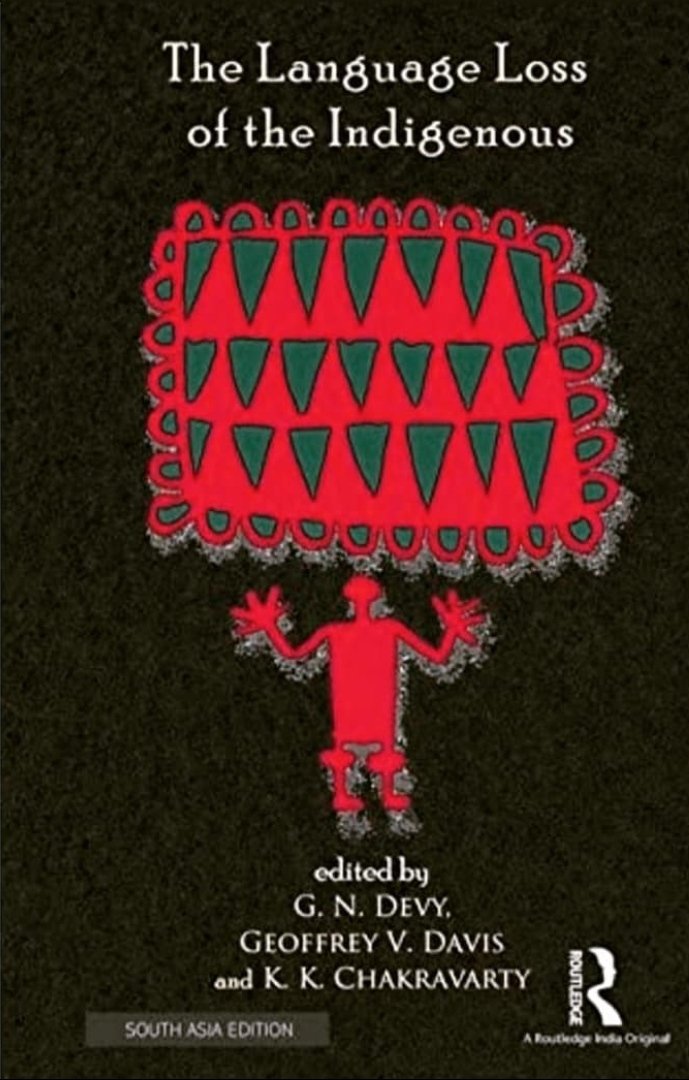
  • The Language Loss of the Indigenous, edited by G.N Devy, Geoffrey V. Davis and K. K Chakravarty

    This volume (published in 2016) traces the theme of the loss of language and culture in numerous postcolonial contexts. It establishes that the aphasia imposed on the indigenous is but a visible symptom of a deeper malaise – the mismatch between the symbiotic relation nurtured by the indigenous with their environment and the idea of development put before them as their future.

    The essays here show how the cultures and the imaginative expressions of indigenous communities all over the world are undergoing a phase of rapid depletion. They unravel the indifference of market forces to diversity and that of the states, unwilling to protect and safeguard these marginalised communities.

    This book will be useful to scholars and researchers of cultural and literary studies, linguistics, sociology and social anthropology, as well as tribal and indigenous studies.