Tag: indigenousgames

  • “Mawpoiñ” game held in St. Mary’s College, Shillong during the Sawangka Festival, 2019.

    This is a video of the last 17 seconds of a round of "Mawpoiñ" held in 2019 in St. Mary's College, Shillong during the Sawangka Festival.

    The Sawangka Festival is a one of a kind festival started by the Department of English, St. Mary's College, Shillong, which aims to nurture the talent of students while promoting language, literature, art, music, dance, theatre, sports and others.

    "Mawpoiñ" is an enthralling indigenous Khasi game which is similar to dodge ball. Here the ball is made of cloth and one team attempts to build a steady pile of stones while the other team tries to hit them with the ball 😄😄

    🟡 Rights to this video belong to the Department of English, St. Mary's College, Shillong.

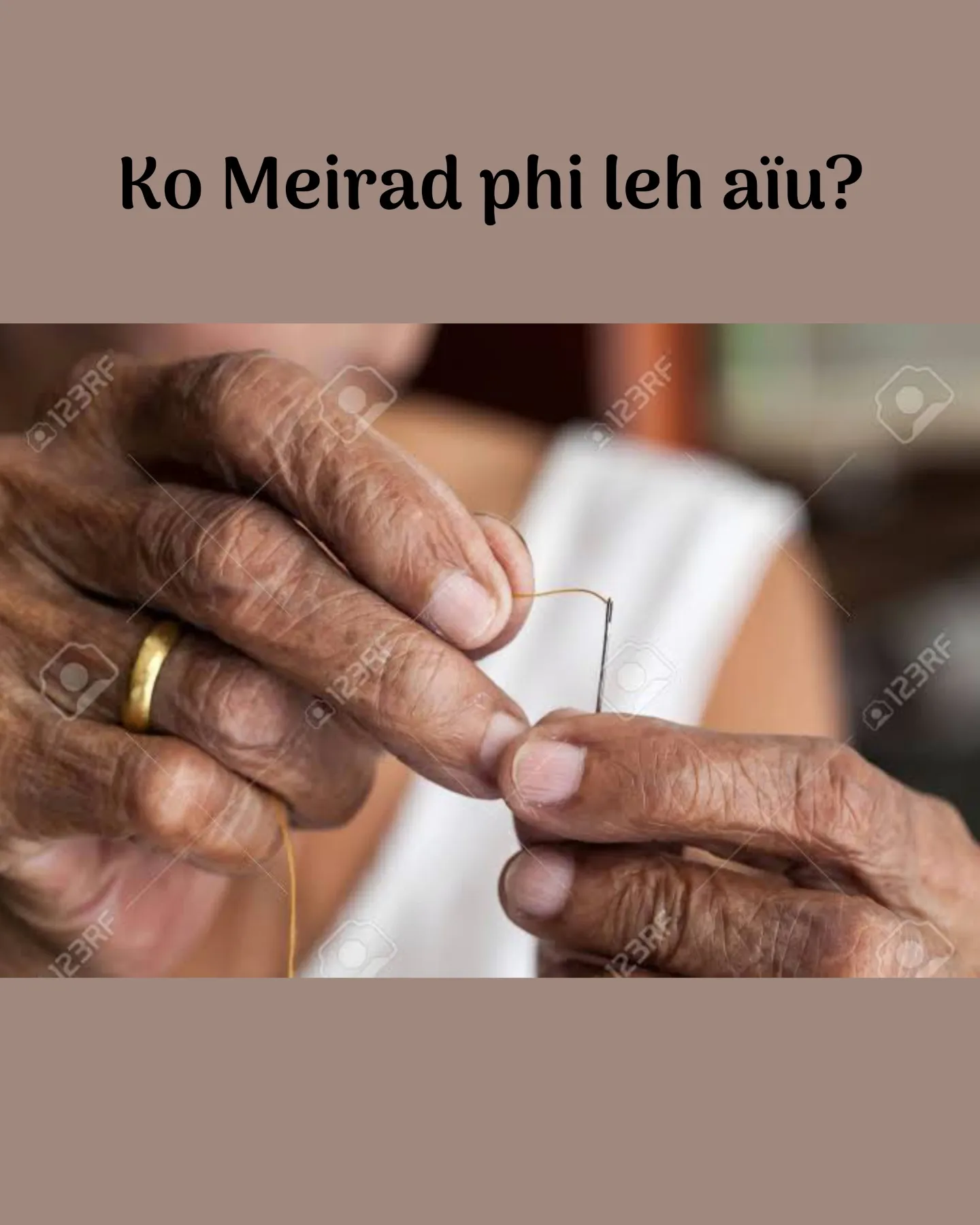
  • Ko Meirad phi leh aïu?

    Ko Meirad, phi leh aïu?

    Nga wad thyrnia…

    Ban leh aïu thyrnia?

    Ban suh ka pla…

    Ban leh aïu ka pla?

    Ban thep pisa…

    Ban leh aïu pisa?

    Ban thied khanshi…

    Ban leh aïu khanshi?

    Ban khap shñiuh ïa phi!

    Oh granny, what are you doing?

    I'm searching for a needle…

    What do you need the needle for?

    To stitch a bag…

    What do you need the bag for?

    To keep money in it…

    What do you need the money for?

    To buy scissors…

    What do you need the scissors for?

    To cut you hair!

    "Ko Meirad phi leh aïu?…" ka dei sa kawei ka jingïalehkai kaba ngi shait ïalehkai. 😄😄 Don ki por ba ngi shait ai da ki jubab kiba komik ruh 😂🤡 I dei ito iba dei Meirad em iba beh ïa kiwei ha kaba kut? 🤔

    Khublei Shibun @sandrahynniewta ba phi la pynkynmaw ïa kane 🙏

    This is another childhood game that most of us played when we were children. I've said this before and I'll say it again: We don't hear kids playing these games anymore 😢😢

    🟡 English translation by @speakyourroots

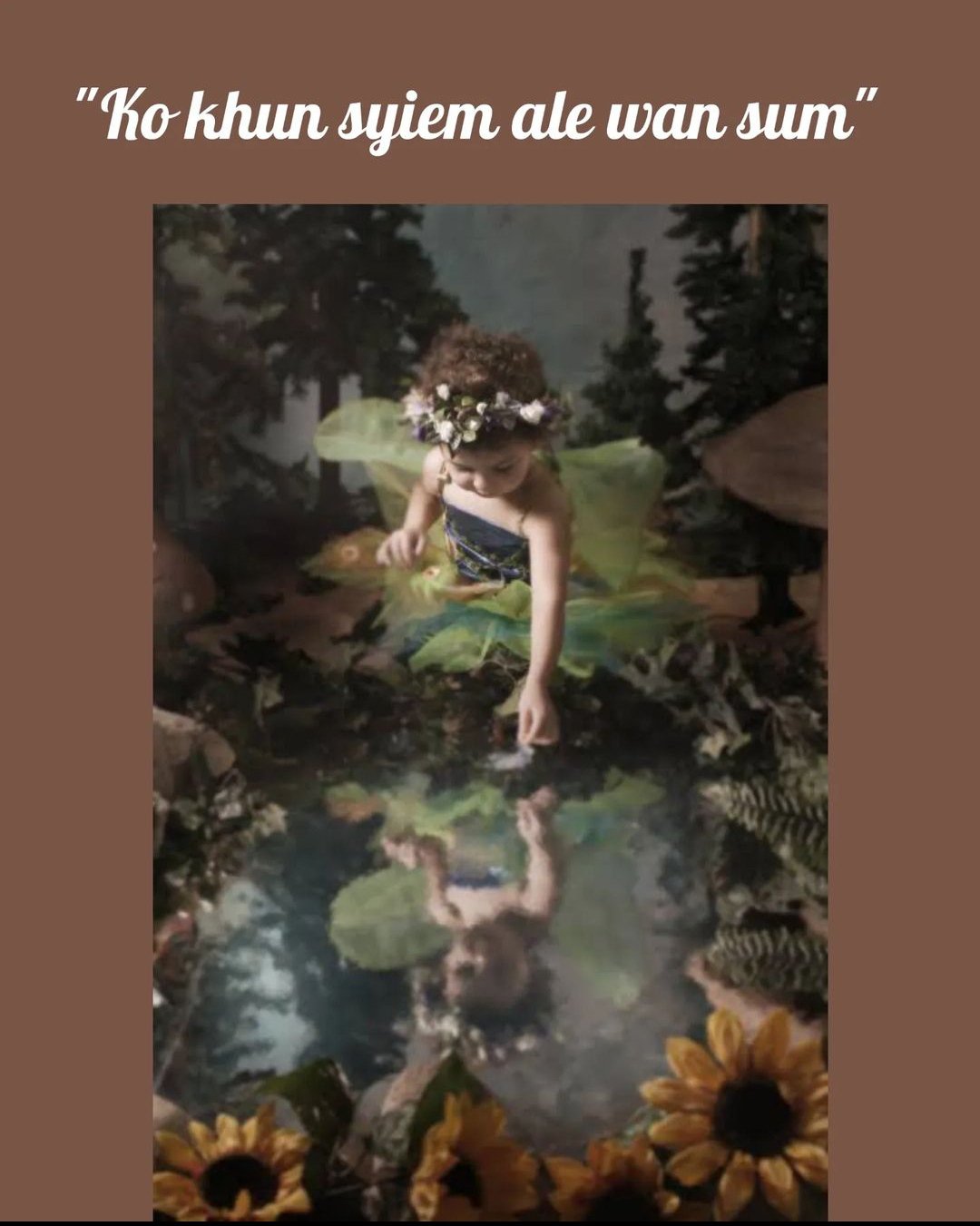
  • Ko khun syiem ale wan sum

    "Ko khun syiem ale wan sum…"

    "Ynnai ba rit ka pung"

    "Thep da ka kot shispah ban heh ka pung!"

    Te ynda lah thep ïa ka pisa (ne ka ksiar), ka pung ka ïar bad ka khun syiem ka rung ha pung. Tangba ynda lah dep ban sum, ka khun syiem kam lait shuh ban mih bad ka hap leh katba lah ban bthat ïa ka jingker ban mih na kata ka pung.

    Phi kynmaw ïa kane ka jinglehkai mynshuwa ha ka por ba dang rit? 😄😄 Ka don ne em ka jingmut sha lyndet jong kane ka jingkylli bad ka jubab?

    Khublei Shibun @bah_komiks ba phi la pynkynmaw ïa kane 🙏 bad ba phi pyrkhat de ïa ka jingmut jong kane ka jinglehkai.

    This is a game that we used to play as children. We would form a circle (which is the pond) and the princess (who is standing outside the circle) is asked if she would like to bathe in the pond. The princess replies that the pond is too small. The rest of the children in the circle reply back and tell her to drop money (a hundred rupee note or gold) for the pond to become bigger. Once the princess does this the circle/ pond grows larger and she enters. But the catch at the end is that she will not be able to get out of the circle/ pond. So the fun of the game lies in the struggle of the princess as she tries to get out of the circle. 😅😅

    Sounds a little scary now that it's been narrated 😬 But who knows what the symbolic meaning of this game is. Maybe we're over analysing. 😜

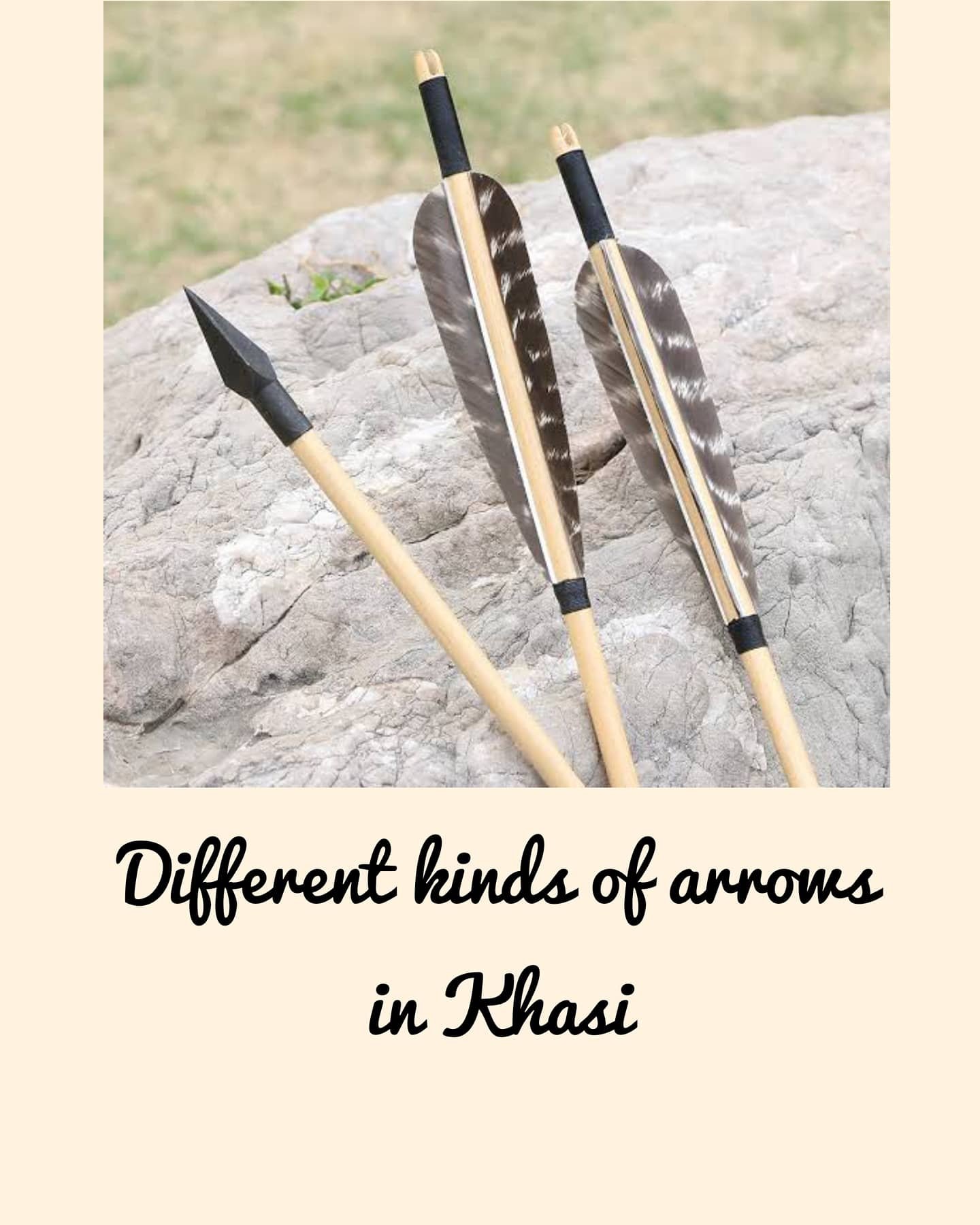
  • Different kinds of arrows in Khasi

    "U 'nam-ïong" u dei u khnam ba don dak ïong ha ki sner jong u (An arrow with a black mark on its feathers/fletching).

    "U 'namlang" u dei u khnam 'langtylli; u khnam kdait (An arrow made from a kind of reed).

    "U 'namphiah" u dei u khnam shiliang sner bad bunsien la ju pyndonkam da ki khynnah (An arrow having feathers/ fletching only on one side and is mainly used by children).

    "U 'namphong" u dei u jait khah uba la ju pyndonkam kum u khnam na ka bynta ban siat sim (Reed that is used as an arrow when shooting birds).

    "U 'namtabla" u dei u khnam pynbúd uba dei ha ka met jong u mrad. Ïa uno uno u briew uba ïoh pynban khnam kumta bad ynda ki la ïoh ïa ka mrad ki ai ka siang tyrpeng ïa u (The arrow that triggers the pursuit of a hunt. The person who is responsible for this is prized with the shoulder blade of the animal).

    "U 'namthang" u dei u khnam bym don sop ba la shu syang pynrkhiang haduh ban da eh bha tnaw. (An arrow without an arrowhead which has only been dry-roasted over a fire till it is very hard).

    "U 'namtohrih" u dei u jait phlang uba long kum u khnam (a kind of grass or reed which is like an arrow and can be used as one).

    "U 'nampliang" u dei u khnam sngáb; u khnam sop. U sngáb u dei u kynja jingpynwoh ha u khnam. La ju pyndonkam bunsien tang ha ka thma bad kaba siat mrad (An arrow with a bard; an arrow with an arrowhead, which is used only during wars and animal hunts).

    "U 'nampur" u dei u khnam sner (A feathered arrow).

    U 'namsop u dei u khnam uba ka dur jong u sop ka long kum ka khoh. La ju pyndonkam ha kaba ïa siat thong. (An arrow whose arrowhead resembles the cone-shaped "khoh". It is used during archery competitions).

    "U 'namtympem" u dei uwei na ki lai tylli ki khnam ba siat na ka kpep ha ka por thang briew. Ïa uba nyngkong ki siat shaphang shatei; ïa uba ar sha sepngi bad ïa uba lai pat shathie. Kane ka rukom ka long ban beh ïa ki ksuid kiba wan thap ban pynbakla lynti ïa ka mynsiem u nongïap. (One of the three arrows shot from the funeral pyre. The first arrow is shot towards the north, the second arrow is shot towards the west and the third arrow is shot towards the south. This protects the spirit of the deceased from being led astray).

    Arrows form an important part of many tribal cultures. They are used for hunting, in games and competitions and during wars. Here are different names of arrows in Khasi! ⬆️↗️➡️↘️⬇️⬅️↖️↪️↩️

    🟡 Source: Rev. Dr. Ïarington Kharkongor

    🟡 English translation by @speakyourroots
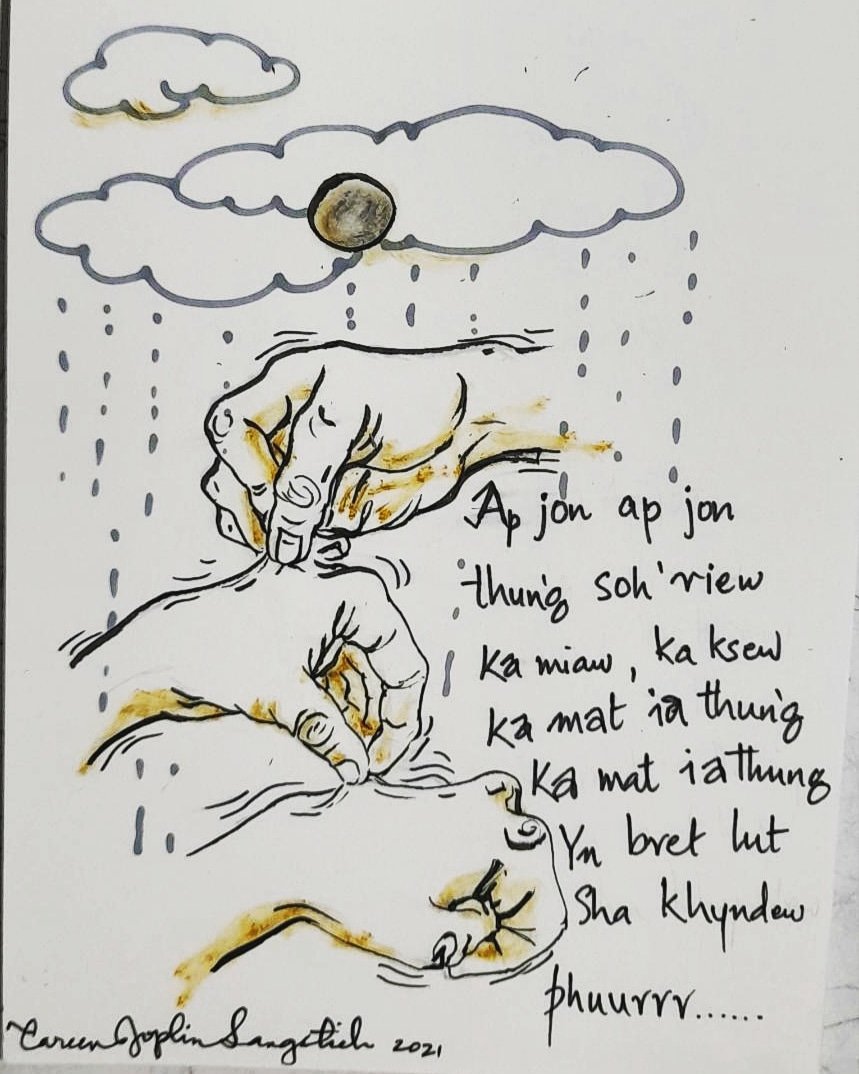
  • Ap jon, ap jon by Careen J. Langstieh

    "Ap jon, ap jon,

    thung soh 'riew,

    ka miaw, ka ksew.

    Ka mat ia thung,

    ka mat ia thung.

    Yn bret lut sha khyndew.

    Phurrrrrr…..”

    "Ap-jon" or "Ap-jan" is a favourite children's pastime played with as many participants present. It involves pinching each other's hands one on top of each other to make a ladder-like formation. The rhyme is then sung while rocking the chain of hands up and down. The song ends with 'phurrrr' which signals letting go of the hands and immediately is followed by children tickling each other. When I was little, I always knew who was going to give me the sharpest pinch so I'd try to put my other hand on top of that kid's hand to counter myself. But we carry no grudges because in the end we would end up laughing hysterically by tickling each other.

    "Ap jon, ap jon" sent by @careenjoplinlangstieh 😄😄😄 This is a beautiful art piece on the childhood game! 🤩🤩🤩❤️❤️👏👏

    "Ap jon, ap jon" is a childhood game that most Khasi children will know. Like the post says it is a popular pastime during play. Remember those painful pinches with voices anticipating the tickles at the end? 😅😂 Khublei shibun Kong @careenjoplinlangstieh for this entry! ❤️🤍💜💙

  • “The Sun, the Peacock and I” by Badondor Diengdoh

    Spirited like the jaiñkyrshah

    flapping with the wind.

    Noisy like the sound of

    a bolbaring indenting tarmacs.

    The girls of summer

    The boys of winter.

    The blue rubber ball.

    targeting stacked rocks.

    Now

    still figuring out my life

    with unmatched socks

    Wish I could still be that

    kid from the block

    who daydreamed of

    the sun and the peacock.

    According to Khasi folklore, it is said that the Peacock and the Sun were together in heaven as lovers. But one day the peacock, while looking down on the earth, saw a garden full of mustard flowers. To him the garden looked like a beautiful girl in yellow and green clothes. He instantly fell in love with what he saw. The peacock left the sun and flew down to earth. The sun was heartbroken and her golden tears descended on his feathers creating the golden spotted pattern we all know.

    To the peacock's utter disappointment, upon landing on earth, he realised that what he saw was only a patch of mustard flowers. Now it was the peacocks' turn to cry. Full of regret he tried to fly back to the sun but could not. That is why the peacock is flightless to this day.

    "Bolbaring" is a wooden toy vehicle made out of small wooden poles and having rotating ball bearings as wheels.

    The rubber ball and stacked rocks refers to a traditional game known as "Mawpoiñ" in the Khasi language. It is like dodgeball, while introducing a new element into the game in the form of stacked rocks. It involves one team hitting their opponents with a ball or destroying the stacked rocks while the other team either dodges or re-stacks the rocks .

    "Jaiñkyrshah" is the traditional Khasi apron which is worn as a loop from one shoulder and its design is always a chequered one of different colours.

  • Kynjat Tin

    A game that can be played with a bigger crowd of kids and one simple tin can. The group would decide who had to be the guardian of the can (it was not a privilege to be one) by drawing lots. The unlucky guardian would then have to count to whatever number has been pre-decided by all participants and everyone would go hide. The counting done, the guardian would then have to seek all the participants whose goal is to kick the can if the guardian left it unguarded. And if that be the case, he/she would have to endure another round of being guardian and seeker. But if the guardian manages to find everyone, the first one found will have to take his place. I remember playing this in the winter till it got dark and our parents had to literally drag us indoors. Some days we took the hiding literally too far and we would be roaming the streets of Jaiaw and Garikhana, forgetting that we were still playing the game, while the guardian usually missed out on the actual fun.