Tag: khasiandenglish

  • Dai/ Die

    Ka khana biria ba nga la ïohsngew kham slem..

    Shisien ki shi lok kiba dang shu ïa shong ïa sah ryngkat ki ïa shongkai bad ïakhlei ki ktien ieit, ktien sbai tien rupa bad ynda ki la dep ki ïa leit bamja noh arngut hi. Te katba ki dang ïa bam, u lok u ong "Darling ai dai". Ka lok pat ka la kyndit bad ka ong "No darling please don't die". U lok u ong biang "No no darling, nga ong ai dai from the karai".

    Mynta ka sngi, ka 1 tarik u Naitung ka dei ka International Joke Day 😄😄

    Khublei Shibun @mebatei_l_khongsti ba phi la phah ïa kane ka khana biria birai 😂😂😂Ngi ju poi sha kaba ïa rkhie da lah khleh ka kren ktien English bad Khasi kum kine shilok 😂😂

    Talking in "Khalish" is what many of us do nowadays 🤭😅😬 and this joke is an example of that. The punchline to the joke is also because of the Khalish involved. To translate this would be to take out the humour from it, so we leave it as it is 😄

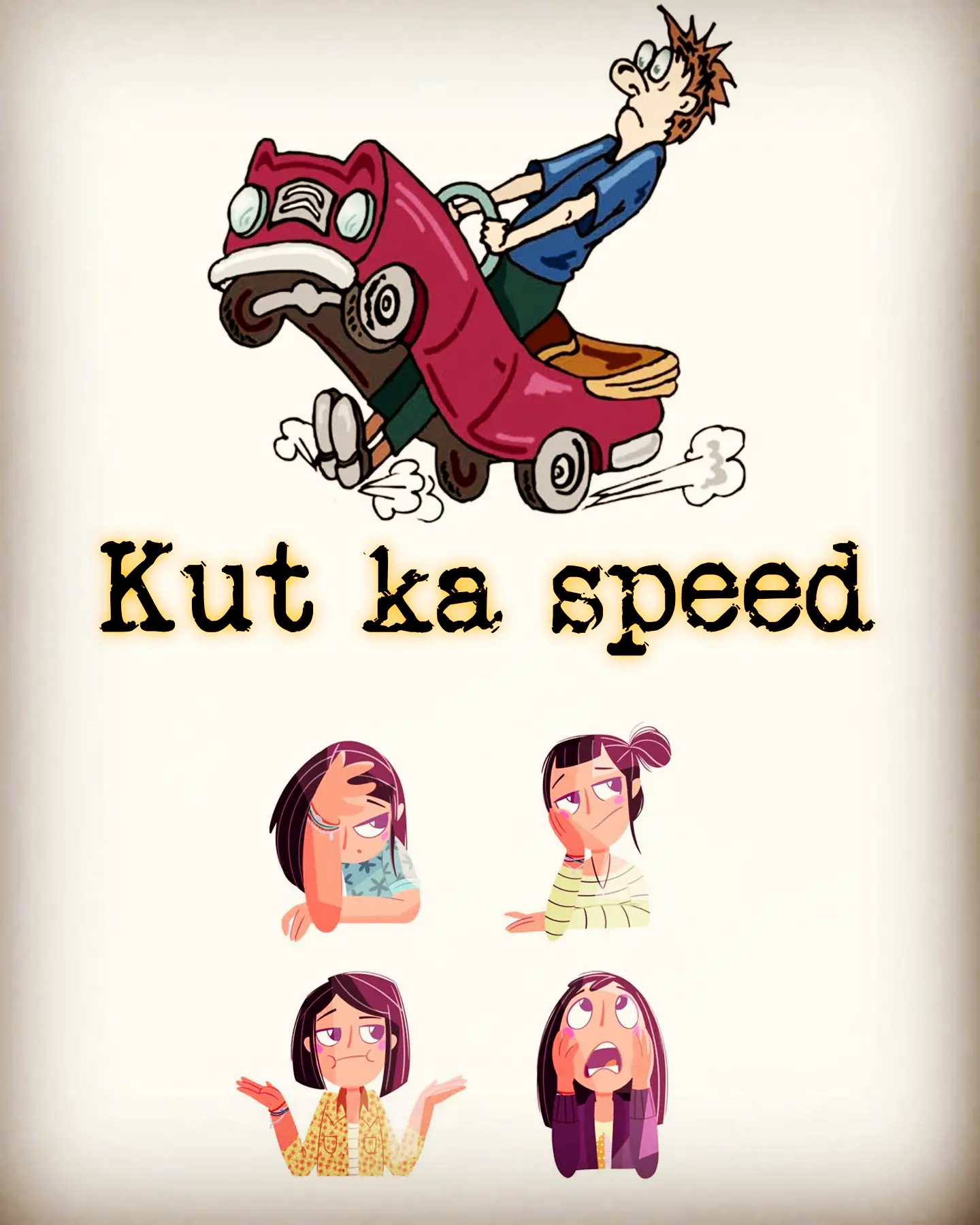
  • Kut ka speed

    "Kut ka speed" is a humorous phrase which is a combination of Khasi and English. "Kut" in Khasi means an end or a stop to something.

    So "kut ka speed" means the end of something that was looked forward to, like the cancellation of a picnic or the abrupt end to something which had promise like a failure in business. The use of the English word "speed" in the phrase emphasises the end or the stop to an action or event which was deemed to have momentum (in the literal and symbolic sense) but which met with an untimely end. The phrase also has the power of a warning, so as to caution someone, in case what they are doing will end up incomplete or as a failure.

    An example of the phrase in a sentence: "Ka bha ba phi mih kloi. Da mih kham sngi tang ka dheng kali ruh lah kut ka speed."

    This sentence can be translated as "You should leave early, otherwise the traffic will be kut ka speed". The phrase sounds unsuitable when the sentence is translated into English. It does not possess the same punch because it is meant to be a sentence in Khalish and not English. Further, the exact sense of the sentence is lost when we try to translate it.

    "Kut ka speed" is an interesting example of "Khalish", that is the combination of English and Khasi. The merging of indigenous languages with English is happening around the world and shows the development and evolution of language. This is present mainly in urban areas where people use English daily in their communication with others.

    Khalish in particular leads to funny phrases and jokes which have a distinct ring and flavour to them which is both indigenous as well as global. Though there will be many critiques, this phenomenon is here to stay and seems inevitable in the evolution of language.

    When you were planning to have that jadoh but when you reach the Kong says there's no more jadoh! Huuu…kut ka speed! 😂😂😂

    "Kut ka speed" is the Khalish equivalent of a buzz kill 😖 Don't deny it, especially the Shillongites 😅 Khalish has become a way of how we speak 😜

    Please comment with sentences having "kut ka speed" 😂😂
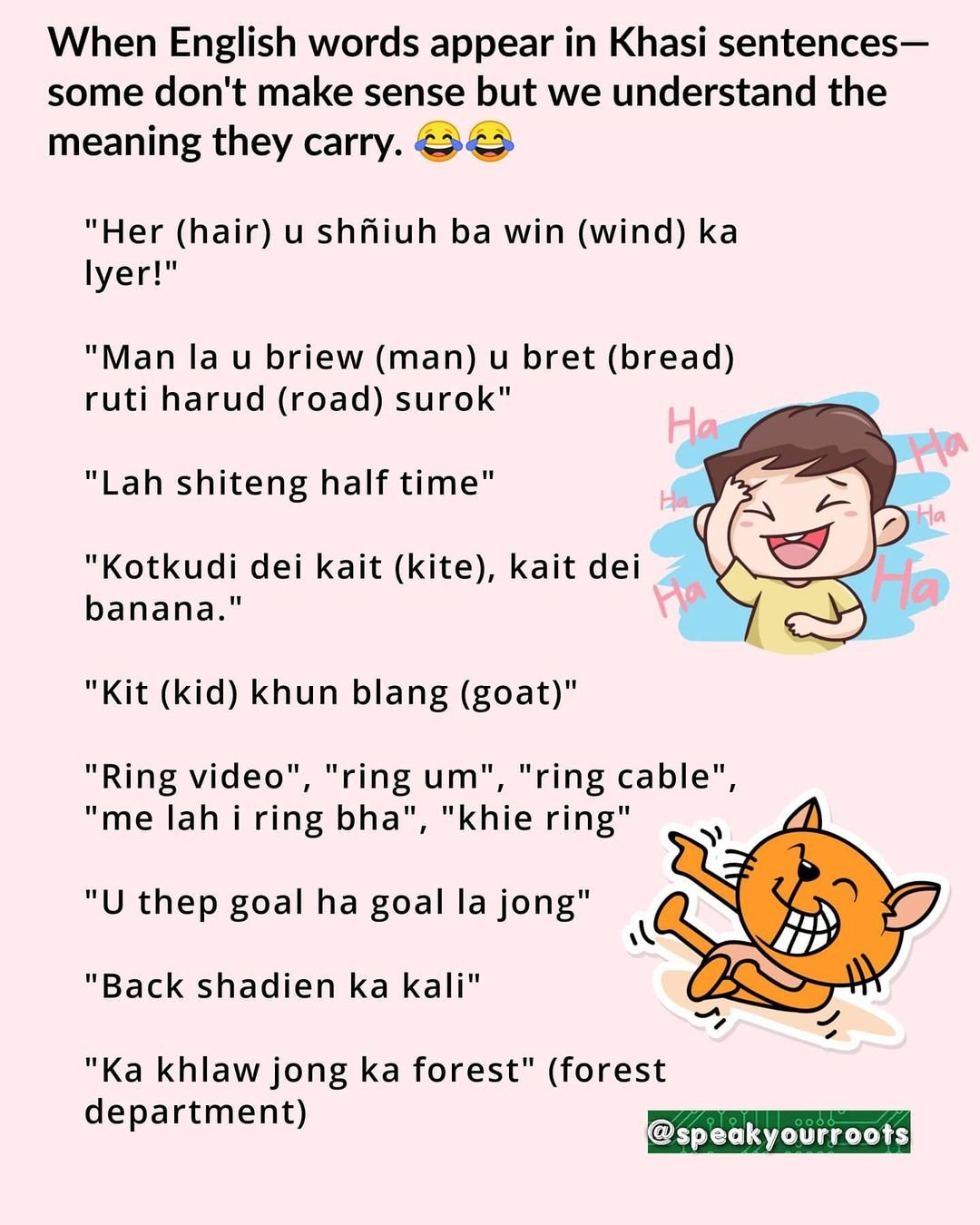
  • When English words appear in Khasi sentences

    When English words appear in Khasi sentences, some don't make sense but we understand the

    meaning they carry. Here are a few examples:

    "Her (hair) u shniuh ba win (wind) ka lyer!"

    "Man la u briew (man) u bret (bread) ruti harud (road) surok."

    "Lah shiteng half time."

    "Kotkudi dei kait (kite), kait dei banana."

    "Kit (kid) khun blang (goat)"

    "Ring video", "ring um", "ring cable", "me lah i ring bha", "khie ring."

    "U thep goal ha goal la jong."

    "Back shadien ka kali."

    "Ka khlaw jong ka forest." (forest department)

    The merging of languages is bound to happen and creates funny and interesting expression! 😂😂😂

    Thank you @_catherinemelam @esra_syiem @shillongftw @jeanrichardmawa @a_pocketful_of_plums @courageaity @longnamkharpuri @wthongnj for your contributions! 😆😆😆

  • Khasi words that share the same spelling with English words but carry different meanings

    King: A male ruler in some countries. In Khasi "king" means to stir something.

    Sing: To make musical sounds with your voice. In Khasi "sing" means lion.

    Song: Words that go with a short piece of music. In Khasi "song" means the action or the process of packing something.

    Tong: A tool used for picking things up. In Khasi "tong" means carrying, ladling or lifting a bucket of water.

    Stem: The long, thin part of a plant that the leaves and flowers grow on. In Khasi "stem" is the colour Yellow.

    Tap: The part at the end of a pipe which controls the flow of water. In Khasi "tap" means to cover or to put something over something else.

    Mop: A piece of equipment used for cleaning floors. In Khasi "mop" means a number or a group of friends

    "Song", "King", "Tong"…here are some Khasi words who share the same spelling as English words but have completely different meanings! Thank you @beccaellie05 for this entry! 💙💙💙