Tag: khasiartists

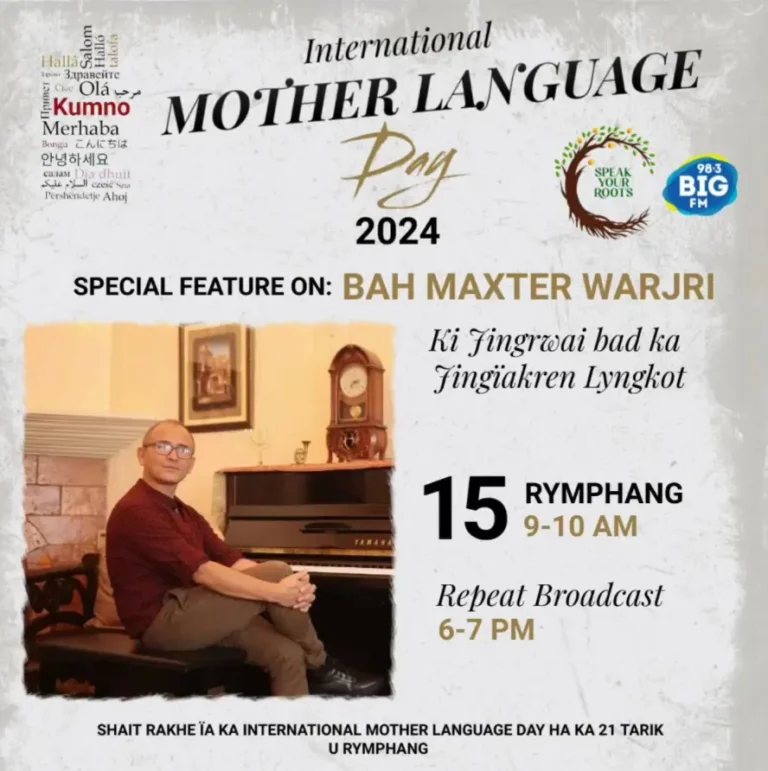
  • Maxter Warjri – International Mother Language Day 2024

    Kane ka dei ka jingïakren jong i Bah Maxter Warjri bad i Rj Bob kum shibynta jong ka jingrakhe ïa ka International Mother Language Day. I Bah Maxter i dei iwei na ki kaitor iba la paw ha ka thaw jingrwai Khasi bad ha ka rwai ka siaw ruh.

    Kane ka jingïaphylliew jingmut ka pynsawa shaphang ka jingthaw jingrwai ha ka ktien Khasi, ki jingeh ha ki por mynta khamtam ka jingpule ïa ki kot Khasi bad ki phang jong ki jingrwai Khasi.

    Khublei Shibun Bah Maxter ba phi la don bynta lem ha ka jingrakhe ïa ka International Mother Language Day bad ban pashat ïa ki jingmut jong phi ha ngi!

  • Review of “Por ba la leit” composed by (L) Loren Sing Marbañiang (Performed by Maxter Warjri and the Band, featuring Donbok Lyngdoh)

    Deep within the soul-stirring verses of this song, one can't help but feel a profound contemplation of the cherished days of childhood, forever beyond our grasp. It weaves a tapestry of memories from a time when life was filled with innocence and boundless joys. The singers voices quiver with the echoes of those days, where they once chanted childhood rhymes, paying homage to Herimai from "La Dikut u 'Sai Tyllai."

    In these verses, we embark on a journey through the vibrant landscapes of childhood, where kites soared high, and ropes danced to the rhythm of childhood laughter. The singer's words paint a vivid picture of crafting playthings from the humble 'tiew saw' stems and creating 'mynja' a mystical blend to strengthen fragile kite strings, infusing their recollections with a deep sense of nostalgia.

    The heart of this song pulsates with an intense yearning to return to the days of carefree childhood. Even the looming specter of discipline and reprimand cannot dissuade this longing, for it is an acknowledgment that the heavy cloak of adulthood and its formidable responsibilities are approaching like an unrelenting tempest, ready to veil the simplicity of those cherished childhood moments.

    Here, the ephemeral nature of time is a prevailing theme, a poignant reminder of our inevitable journey toward maturity and the poignant loss of those precious moments. This song resonates with a wistful longing for a time long gone, stirring the deepest recesses of the soul.

    .

    .

    .

    Ha ki jylliew jong ki dkhot kane ka jingrwai, ngim lah khlem sngew ktah ïa ka jingpuson kaba shoh jingmut shaphang ki sngi kordor ka jinglong khynnah, kiba la lait noh na ki shympriah kti jong ngi. Ka jingrwai ka thaiñ ïa ki jingkynmaw jong ka jingim kaba dap da ka jinglui lui bad ka jingkmen bym kut shuh. Ka sur kynud ki nongrwai ka pynsawa ïa kine ki sngi, haba ki pyrto ïa ka Herimai na "La Dikut u 'Sai Tyllai."

    Ha kine ki dkhot, ngi ïaid lynti lyngba ki lum ki wah jong ka jinglong khynnah, ha kaba ki kot kudi ki her shajrong bad ki ksai ki shad ha ka rkhie ka samut ki sngi khynnah. Ki nongrwai ki ai rong ai rup ïa ki jinglehkai ba la thaw na ki dieng 'tiew saw bad ka mynja, ka jingkhleh ban pynkhlaiñ ïa ki ksai kot kudi, bad ka jingkynmaw jong ki ka long myllung haduh katta katta.

    Ka dohnud jong kane ka jingrwai ka thrang ban leit phai sha ki sngi kordor jong ka jinglong khynnah. Wat lada ka rngai jong ka jingmai bad jingsneng ki ïeng hajan, kim lah ban pynblad ïa kane ka jingthrang, namar kane ka mih na ka jingsngewthuh ïa ka tapmoh kaba khia jong ka jinglong rangbah bad ki jingkitkhlieh ba khia jong ka ki wan kum ka erlangthari ba jur, kaba kloi ban kah ïa ka shisur shidur jong kine ki khyllipmat ka jinglong khynnah.

    Hangne ka jingbymneh jong ka por ka dei ka phang pdeng, ka jingpynkynmaw kaba ktah jur namar ka batai ïa ka jingïaid ka bym lah lait sha ka jinglong rangbah bad ka jingduh noh ïa ki khyllipmat ba kordor. Kane ka jingrwai ka kyrtiangsur ïa ka jingthrang ïa ki sngi ba la leit, kiba khih ha ki khulpi ka mynsiem.

    Kane ka dei ka Peit Bniah jong ka jingrwai "Por Ba La Leit" ba la thoh da i (Late) Loren Sing Marbañiang bad ba la rwai da @maxterwarjriandtheband bad i Donbok Lyngdoh.

    Khublei Shikhohtyndaw Dr. Ellerine Diengdoh na ka bynta kane ka Peit Bniah kaba sngewtynnat bad kaba phi lah thoh sani bha! 😃😃🙏🙏

    Khublei Shibun @maxterwarjri ïa ki jingai jingmut jong phi 🙏😄

    Phi lah ban sngap ïa kane ka jingrwai ha YouTube ha kane ka link https://youtu.be/WIOL_8F8HLc?si=hFWUYX562qpH2PCf

    🟡 Khasi translation by @speakyourroots

    #khasisongs #khasicomposers #khasisingers #khasiartists #porbalaleit #khasilanguage

    #khasilanguageconservation #indigenouslanguageconservation #speakyourroots #speakyourrootschallenge #talklocal

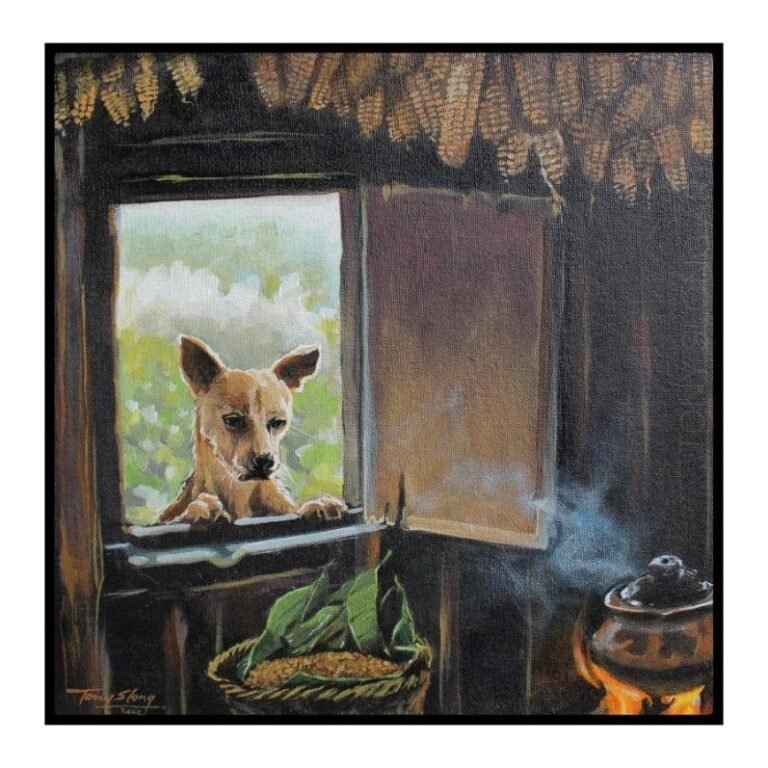
  • U ksew ha ïew luri lura by Tony Slong

    World Folklore Day 2023 🏞️🌿

    Kane ka matti jingdro da i @tonyslong ka pyni ïa u ksew ha ka khyllipmat ba u lap ïa ka tungrymbai shuwa ba un rah ban die ïa ka kumba la ïathuh ha ka khanaparom "Ka Ïew Luri Lura jong u Laiphew Mrad". 🐶😄

    Khublei Shibun @tonyslong ba phi la phah ïa kane ka dur kaba pynmutdur ha ngi ïa kane ka khanaparom! 🙏🙏

    .

    .

    .

    This painting by @tonyslong depicts the dog from the well-known Khasi folktale "Ka Ïew Luri Lura jong u Laiphew Mrad".

    In the story the dog attempts to sell tungrymbai or fermented soyabean in the animal market but it ends up being trampled upon by the other animals because they could not bear the smell of tungrymbai 😅😅🐶🐶 It is said that it is because of this incident that the dog came to live with man.

  • Untitled by Benedict S. Hynñiewta

    International Day of the World's Indigenous Peoples 🏞️🌲🌱

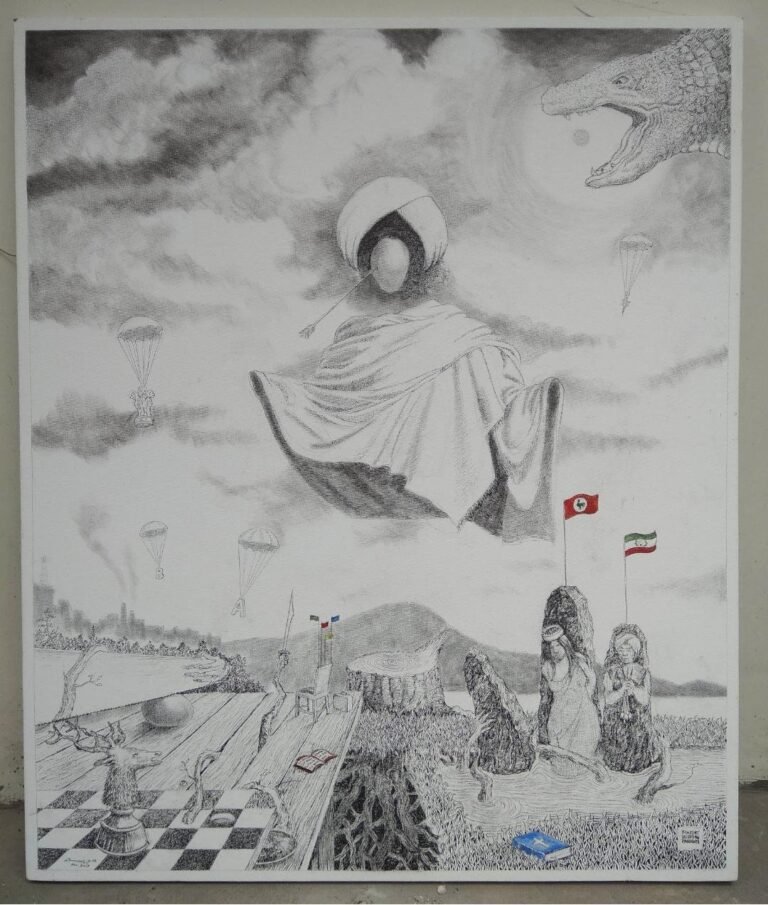
    Ban ïai bteng ïa ka jingrakhe jong ka Indigenous Peoples Day, kane haneng ka dei ka matti jingdro jong i Bah @benedictskhemlang

    Khublei Shibun Bah @benedictskhemlang ba phi la phah ïa kane ka dur! 😄🙏

    Ka long ka dur kaba pynmih bun ki jingpyrkhat shaphang ka imlang sahlang Khasi, ki riti ki dustur jong ngi bad ka pashat ruh ïa ka jingmut sha ka lawei ka ban nang wan.

    Sngewbha ïathuh kumno phi sngew shaphang kane ka matti jingdro ha ki comments!

    Please tell us your thoughts about the art in the comments!

    This art piece by @benedictskhemlang brings up many thoughts about contemporary Khasi society as well as Khasi belief and custom and how they are going to develop into the future.

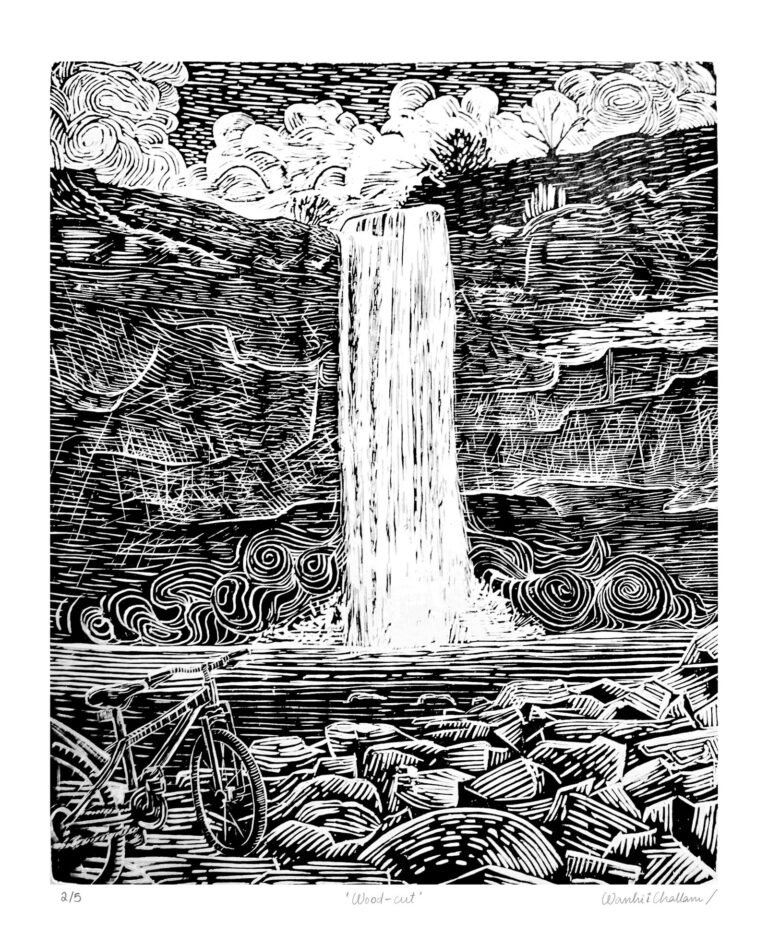
  • Woodcut of Phe Phe Falls by Wanhi-i Challam

    International Day of the World's Indigenous Peoples 2023 🌱🌲

    Contribution by @wanhii.psd 😃

    Title – "Untitled"

    Medium – Woodcut

    Editions – 5

    Year – 2023

    Size – 19'5'' x 24'

    Artist – Wanhi-i Challam

    He says: "This is a woodcut of a waterfall near by my home town – 'PHE PHE falls'. I chose to be very spontaneous with this one. Initially, it was intended to be just a simple, realistic landscape woodcut. However, as I worked on it, I chose to have some freedom in the techniques of cutting the wood and to allow the composition to evolve organically as I worked on it. I allowed the wood to guide me and fused the original form of the waterfall with my personal interpretation. I find it very meditative to work this way, not strictly following the realistic image of the waterfall, but instead capturing the emotions and feeling the rhythm of the waterfall with all its force, aggressiveness, daring, serenity, and stillness, while still conveying a sense of calmness and beauty."

    Khublei Shibun @wanhii.psd ba phi la phah ïa kane ka jingshna oh dur kaba itynnat! 🏞️

  • Ka Ktien by Careen J. Langstieh

    International Day of the World's Indigenous Peoples 2023

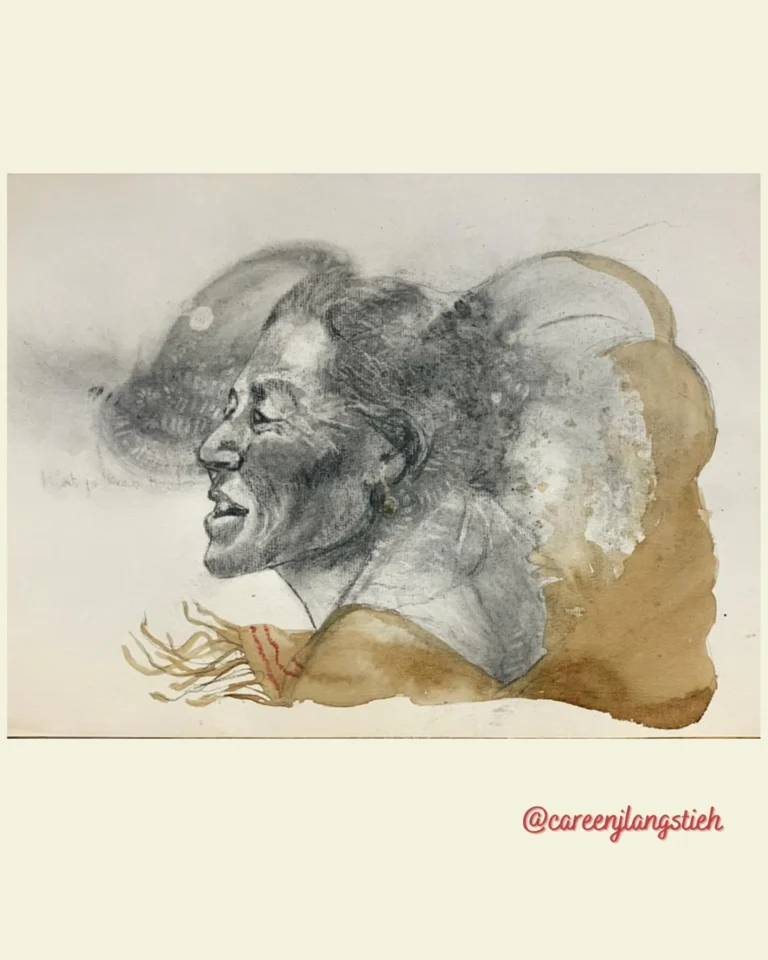
    Khublei Shibun Kong @careenjoplinlangstieh na ka bynta ka jingdro dur rnga kaba itynnat bad ka jingthoh kaba pynpuson shaphang ka ktien kaba ngi khlei man la ka sngi ha ki parabriew. 😄🙏

    Thank you Kong @careenjoplinlangstieh for this thought-provoking charcoal art and also your grandmother's teachings on the power of the spoken word. The belief in the value and effect of the spoken word is well-held by the Khasi community. 😄🙏

  • Ki Snap u Longshuwa bad kiwei ki poim da i Dr. Pascal Malngiang

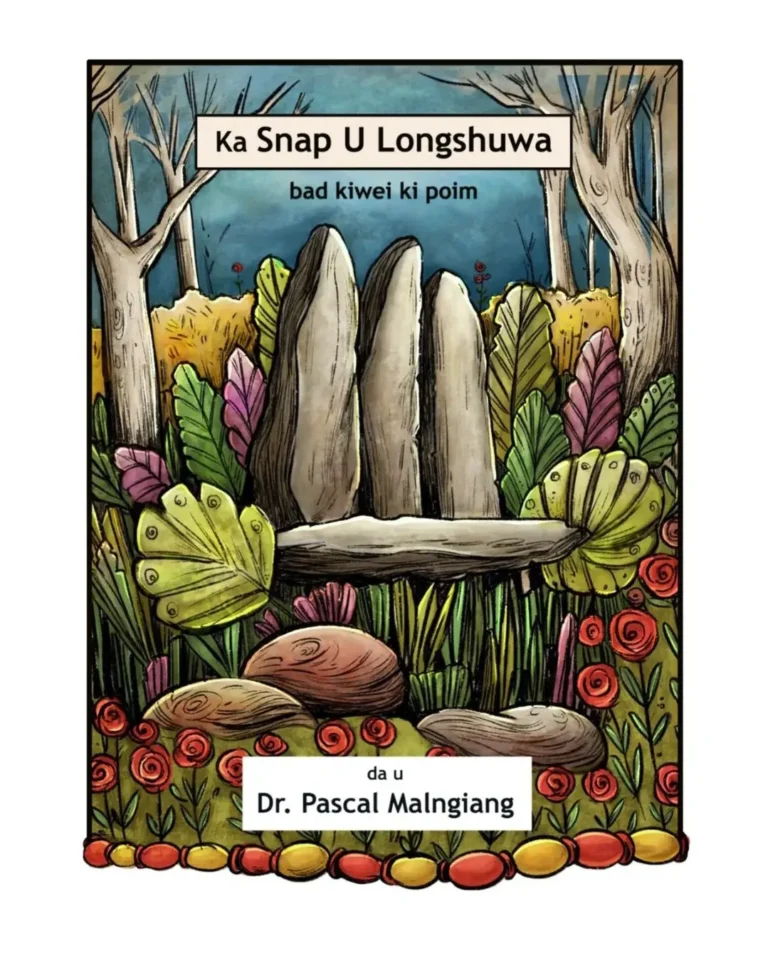
    Khublei Shibun @mario_pathaw ba phi la phah ïa kine ki dur jong ka kot "Ki Snap U Longshuwa" ba la thoh da i Dr. Pascal Malngiang.

    Mario says: I illustrated one of my father's books "Ka Snap u Longshuwa". It has been approved as a text book for class XI by The Meghalaya Board of School Education. Published by Hima Book Stall, Synod Super Market, Motphran.

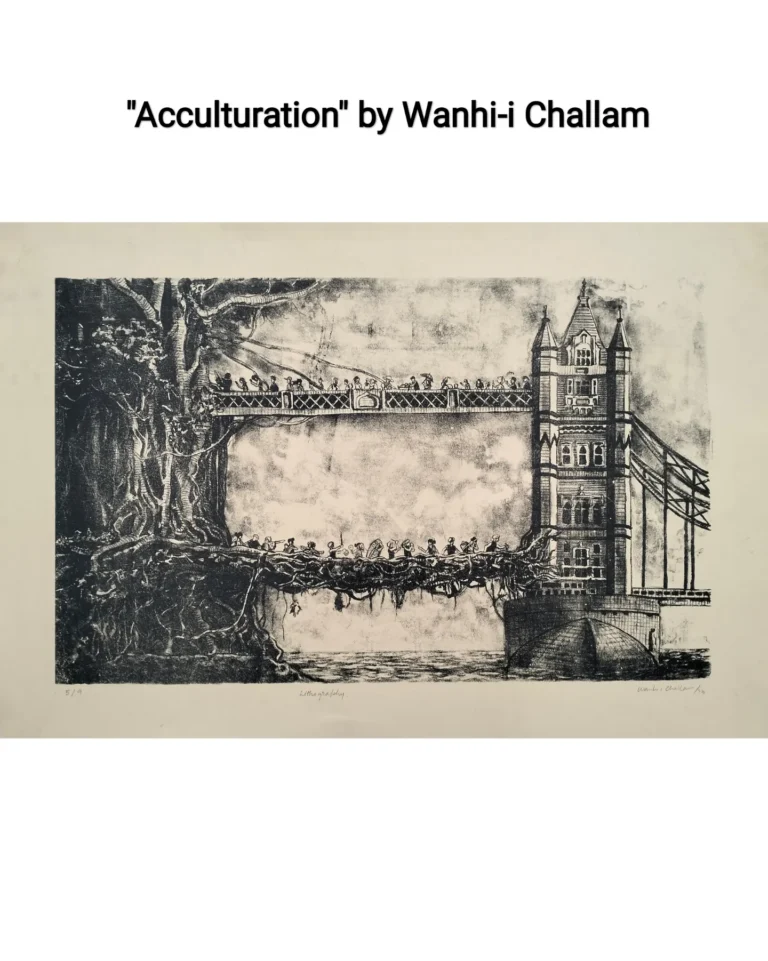
  • Acculturation by Wanhi-i Challam

    "Acculturation" is a lithography print by artist Wanhi-i Challam

    He says:

    The work is a lithography print that explores the effects of cultural assimilation and acculturation on the traditional values, language, religion, plants, animals, and ethnic values of the Khasi people. The print depicts two bridges – the root bridge of Nongriat representing Khasi origins, the relationship between Khasi culture and nature, metaphorically it also represents the "tangnoob tangjri" (as it is believed from the folklores that the Khasi people descend to earth through the golden ladder) and the Tower Bridge of the UK representing Western culture and lifestyle and the other cultures of the world, and also the effect that the Britishers brought on the Khasi culture and tradition when they ruled India. Bridges symbolize connections and, in this case, it symbolizes the connection between two different cultures and the impact of one on the other. There is no significant reason behind why I chose those two bridges specifically, instead I chose them because I found the structure and appearance interesting and used just as a representation of my idea.

    Joining the two bridges through this composition I try to portray how the Khasi people have adapted to Western culture and other cultures by adopting their lifestyle, values, religion, and language. If observed closely one can see the details where the indigenous people tread towards the tower bridge wearing their cultural dress, moving in the order from the most elderly folks, younger generation and then to the youngest daughter. As they move forward entering the tower bridge, some carry indigenous items and crafts with them, others perform cultural dance, and activities. When coming back from the tower bridge to the root bridge, everyone is dressed in western fashion, the order of their movement is random, the first person carries with him a chainsaw, symbolizing the harm caused to nature due to the demands of urbanisation and civilisation. Some are looking down at their phones as they walk back, while others carry with them the luxuries the western culture offers.

    Society brings people of different cultures together, and for them to live in harmony, it is crucial to have practices that facilitate such harmonious living. In fact, history shows that adopting elements from other cultures has always been present from generation to generation. It has happened in the past and is happening in the present, with or without our consciousness and it will continue to happen in the future too and we can't help to change that because the world is constantly changing. Each generation develops new lifestyles, technology grows exponentially, knowledge doubles, and culture also changes. Acculturation and assimilation will always occur, and nothing stays the same.

    But should we neglect the importance, values and essence of our own culture? To me the loss of culture, cultural practices and tradition is the loss of identity and origin and that is concerning if we don't even know about our origin and about our own people. The Khasi culture emphasizes a deep respect for nature and a strong sense of place and belonging, which aligns with modern notions of nature conservation and sustainable use of natural resources. From a philosopher point of view there are infinite ways to live our life, and yes, we can choose any path we want.

    However, our culture's perspective on life is one of the most compelling and admirable ways of living. It is crucial to be aware of how much we are influenced by other cultures and adopt their ways of life, but we should strive to preserve the essential values and essence of our own culture that have been passed down through generations.

    The beauty and significance of "Acculturation" by Wanhi-i Challam is deep and multi-layered, embodying crucial lessons for the Khasi-Pnar community.

    Khublei Shibun @wanhii.psd ba phi la ai lad ban post ïa kane ka kam jong phi kaba itynnat bad kaba kit jingmut haduh katta katta 😄🙏

    Wanhi- i Challam is an artist from Jowai, Meghalaya. Currently, he is pursuing his Bachelor of Fine Arts at Kala Bhavana, Visva Bharati in the Graphics Arts/ Print Making Department.

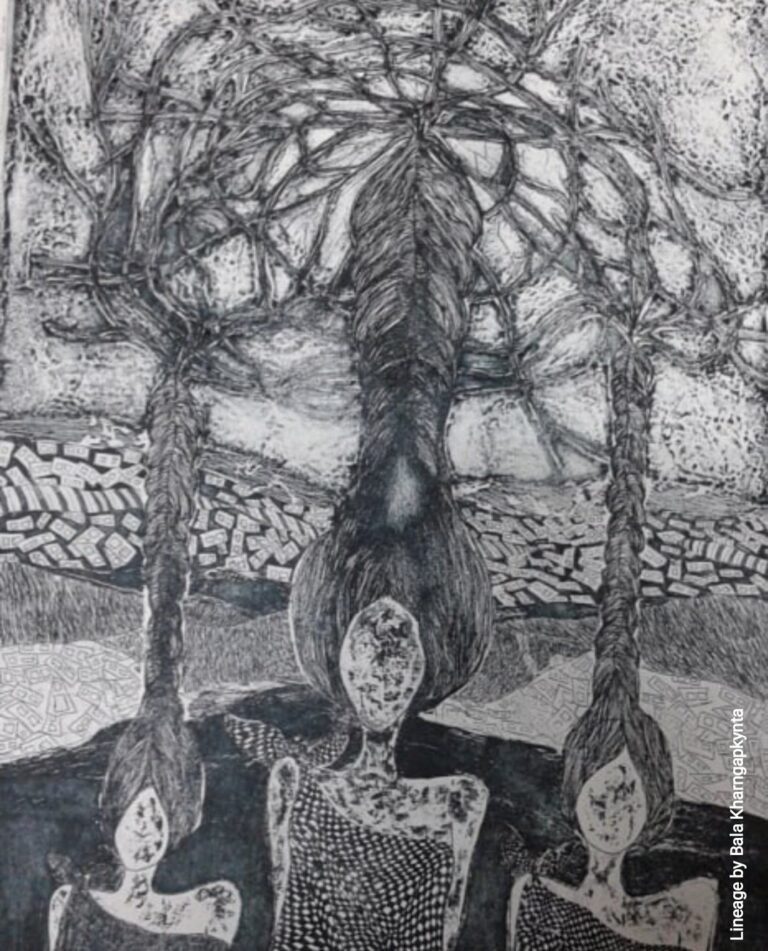
  • Lineage by Bala Kharngapkynta

    "Lineage" is an original art piece by Bala Kharngapkynta. This piece speaks of Khasi matriliny and how it affects her.

    She says:

    My works explore the relationships in a matrilineal society. Coming from such a background and being the youngest daughter in the family plays an important role in my work. In our society the mother plays an important role in the family as the children inherit her surname and expand the clan but the head of the family is always the father.

    It is the general notion that the youngest daughter, that is the khatduh has it easy because she stands to inherit the majority of the family assets but with this comes great responsibility. Being a khatduh is not an easy journey. In most cases we even lose the opportunity to explore and be independent because we carry the title of khatduh consciously or subconsciously. Shared responsibilities with all daughters is common but in most cases it is the khatduh alone who carries the main load.

    In this piece there are three women, they represent myself, my mother and my sister. My mother being the matriarch who leads us in the centre and imparting important tasks to the two of us.

    Khublei Shibun @bala_kharngapkynta ba phi la ai lad ban sah dak ïa kane ka jingoh dur jong phi! ❤️😄🙏

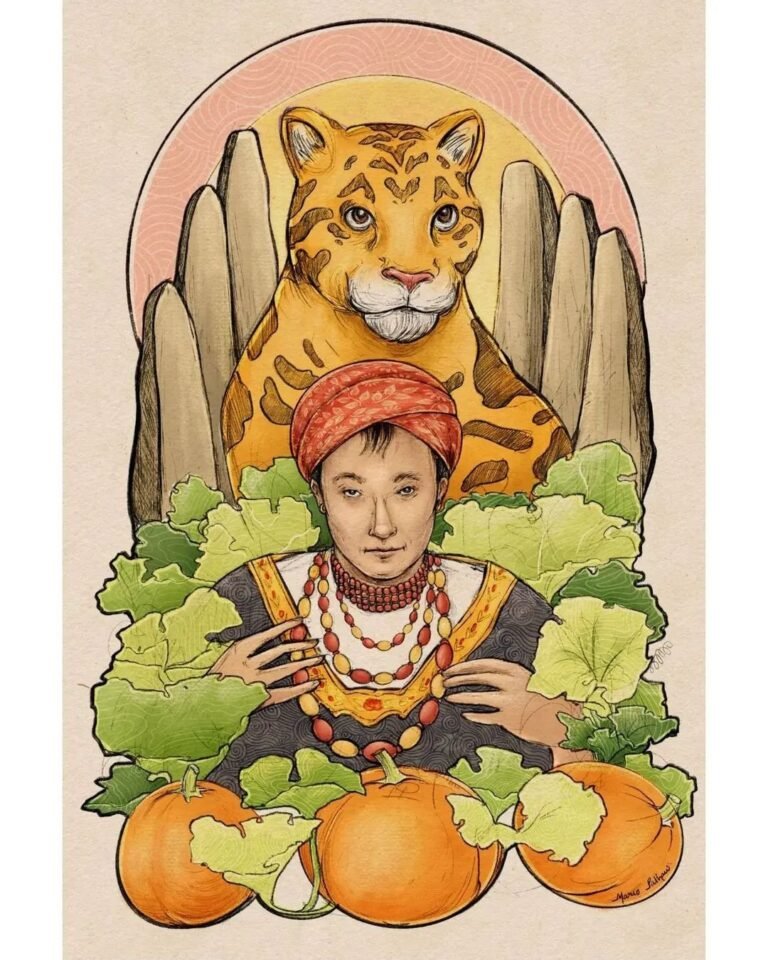
  • Shape shifters by Mario Pathaw

    Mario says: "Shape shifters are popular figures in myths and folktales around the world. In Japan and China, foxes assume human form to bedevil the unwary. In Brazil, the river dolphin Boto can turn into a boy and many Native American cultures have stories of "skin-walkers”. In Ireland, there is a myth which talks about the man wolves of Ossory."

    "This concept is also very popular in the Khasi tribe and there are tales and myths about the shape shifters of my clan, The Pathaw clan. According to the tales passed down from my great grandmother, the men of the Pathaw clan leave their bodies in a seemingly lifeless state while their spirits travel and roam around as the "Khla" (Tigers/ Leopards). The Khasi tribe describes a brave warrior as "U Khla Wait" (attributing to the fighting spirit of the Khla) and my mother describes our Pathaw men as warriors and protectors of the family."

    🐯…….🐯…….🐯