Tag: khasibelief

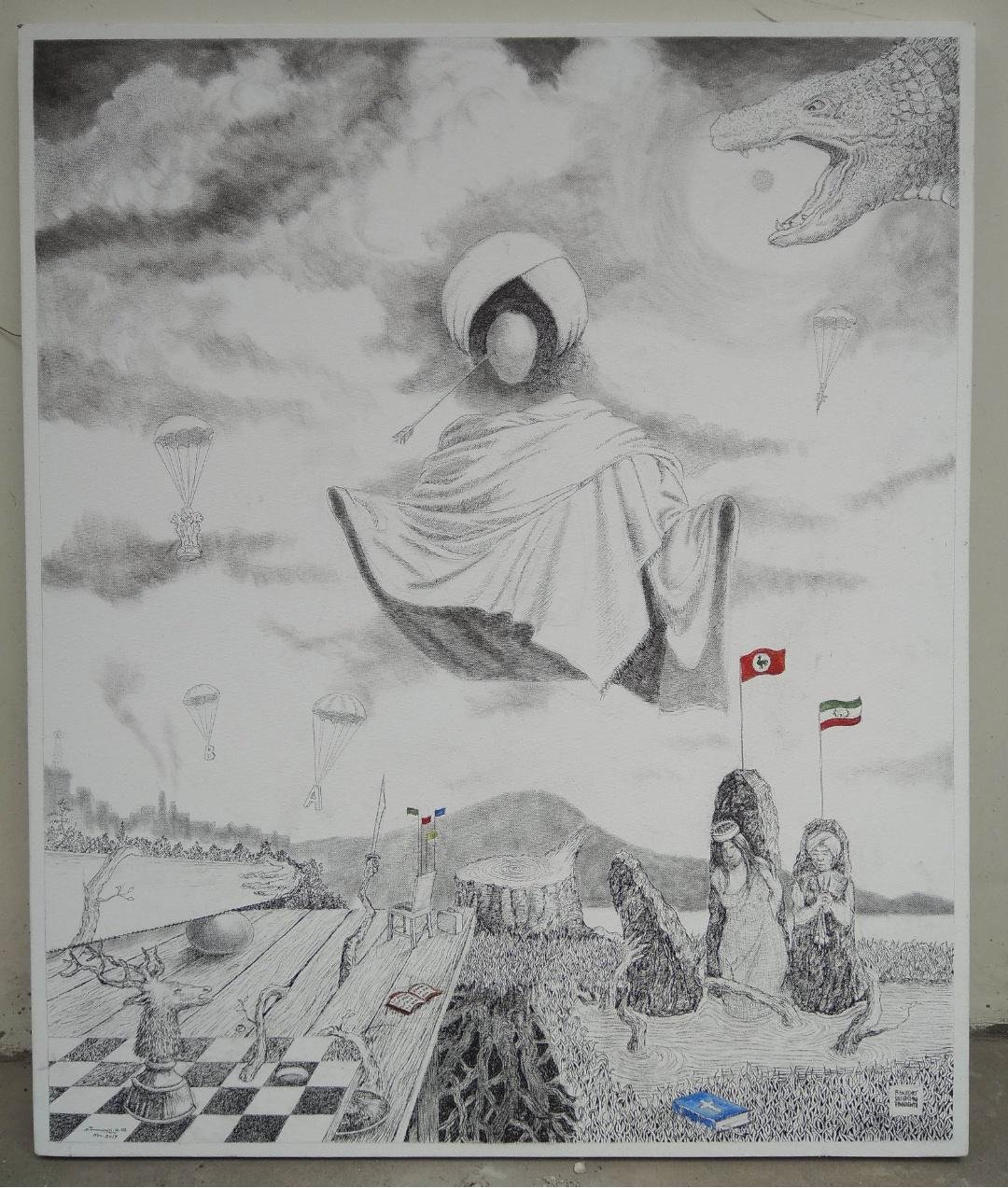
  • Untitled by Benedict S. Hynñiewta

    International Day of the World's Indigenous Peoples 🏞️🌲🌱

    Ban ïai bteng ïa ka jingrakhe jong ka Indigenous Peoples Day, kane haneng ka dei ka matti jingdro jong i Bah @benedictskhemlang

    Khublei Shibun Bah @benedictskhemlang ba phi la phah ïa kane ka dur! 😄🙏

    Ka long ka dur kaba pynmih bun ki jingpyrkhat shaphang ka imlang sahlang Khasi, ki riti ki dustur jong ngi bad ka pashat ruh ïa ka jingmut sha ka lawei ka ban nang wan.

    Sngewbha ïathuh kumno phi sngew shaphang kane ka matti jingdro ha ki comments!

    Please tell us your thoughts about the art in the comments!

    This art piece by @benedictskhemlang brings up many thoughts about contemporary Khasi society as well as Khasi belief and custom and how they are going to develop into the future.

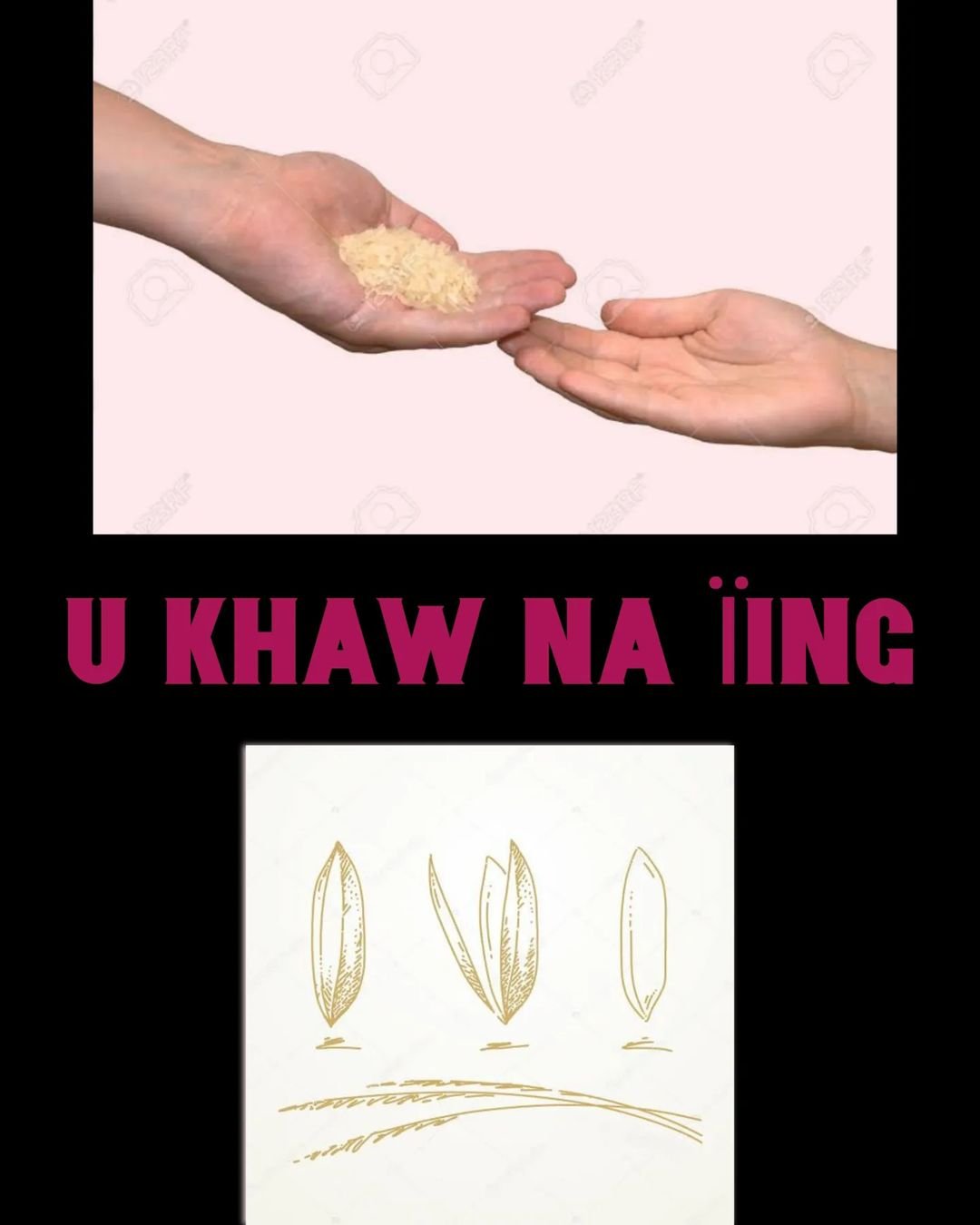
  • U Khaw na Ïing

    Contributing explanations from followers:

    1. "Ha ka jingmut i meiieid jong nga te i ong ba ki shait leh kumne khnang ban eh daw eh rngiew bad ban shai ka jingmut haba iaid ba ieng khamtam lei haba don ha lynti syngkien."

    2. "U Khaw Eh Rngiew! Ka kmie barabor haba mih ki khun ban leit jingleit jngai na la ïing ka ju pynkham bad ai hala ki khun ia une u khaw bad ha une u khaw ka shong ka jingngeit lymne ka bor ba maïan haka kmie ba une u khaw un long u nong sumar bad nong pyneh rngiew iaki khun sha kat kaba ki don haba ki jngai na la ïing jngai na la ka kmie!"

    3. "Ngi ki ba dang bat ia ka niam Khasi ngi shait thep khaw beit ha ki pla la ngi leit jan ne jngai. Ba I Mei I Pa ki shait ai ia ngi ba ngin lait na kiei kiei baroh ban bit ban biang ha ka leit ka wan ban da ban kiar u Sohkhaw Blei ia ngi. Ngam nang bha ban batai tang I ne hi."

    4. "Ha nga ka jingmut ka long ba kine ki symboh khaw ki long symboh sohkhaw Blei. Ban eh ka rngiew ka rwiang, u khaw eh khaw shan un ri un da un ker na ka lait ka thiem na u nongshun nong dusmon un pynbha ka bok ka nusib ban lait na ka tyrsaw tyrsain…"

    5. "Sha ngi ki Pnar, ka rukom leh kumtei ka mut ban eh ka bok ka nusib khnang ban poi suk wan suk sha iing. Ban da na ki nongkhap shniuh thlen. (low eh i maiń i kun)."

    6. "Ban eh ka bok ka rngiew, ym dei ban lah bha ia ka eksam, hynrei ban nym pang nym shitom, ban nym don ki jingpynwit ne jingpynthut ba kan iaid beit iaid ryntih."

    7. "Ka Kyrkhu Kyrdoh na ing na sem ba ngin poi suk poi saiñ sha ka jaka ba ngi thmu ban leit."

    8. "Ka iing kan don beit bad phi kat shaba phi leit. Kaei hi ba dei na la ka ing ka long ka ba khraw."

    9. "Batai iong pnar mo: U khoo pynkham juh ong ki heiwa wa pynkham manda lai cha jngai lane hei lai ialeh eksamin ter ter. low ni u khoo da e da ka nongrim heiwa u chim le chyien u khoo te kiap iow wiar i tiensar i sorsa i mynsien hawa lai wa wan hawa thoh wa tar. Man u kam ka dak iow pynskem yei mynsien yei pyrkhat pyrdeiñ. (There are also many reasons.. this is one of it)."

    10. "Khaw eh rngiew"

    11. "Ban pyneh rngiew"

    12. "Ban eh ka rngiew ka rwiang ha lynti syngkien."

    13. "I Mei i ju ai ia u khaw eh khaw shan ban eh ka bok ka rngiew, ban kyrshan ia ka met, ka mynsiem ban lait na ka thngan ka jingit, ban lait na ka tyrsaw haba mih na la Iing ban leh kano kano ka kam."

    "Khaw Eh Rngiew" and "Khaw Eh Khaw Shan" are a handful of rice grains given by a mother (or any member of the family) to a son or daughter (or anyone else in the family) who is about to embark on a journey, so that everything goes well without any problems. These rice grains serve as symbolic sustenance against hunger and thirst, protection from harm or ill-will and when chewed (some say only three grains) fear and apprehension (even shock from an accident) fade away.

    "Khaw Eh Rngiew" and "Khaw Eh Khaw Shan" imply the rice grains bless the one who possesses them with the strengthening of their essence/ personhood/ nature, preventing any misfortune that may befall them. It is also believed that the rice grains enhance the good fortune of a person and preserve their physical and mental health.

    Khaw Eh Rngiew" and "Khaw Eh Khaw Shan" are a handful of rice grains from home for your physical, mental and material well-being! 😃❤️🌾

    The Khasi belief in a handful of rice grains is rooted in culture and faith. Khublei Shibun @shillongftw for initiating this! 😄🙏

    Khublei Shibun ïa phi ruh baroh kiba la phah ïa ki jubab jong phi khnang ba ngin sngewthuh kham bha ïa kane ka dustur! 🙏🙏

    🟡 English explication by @speakyourroots
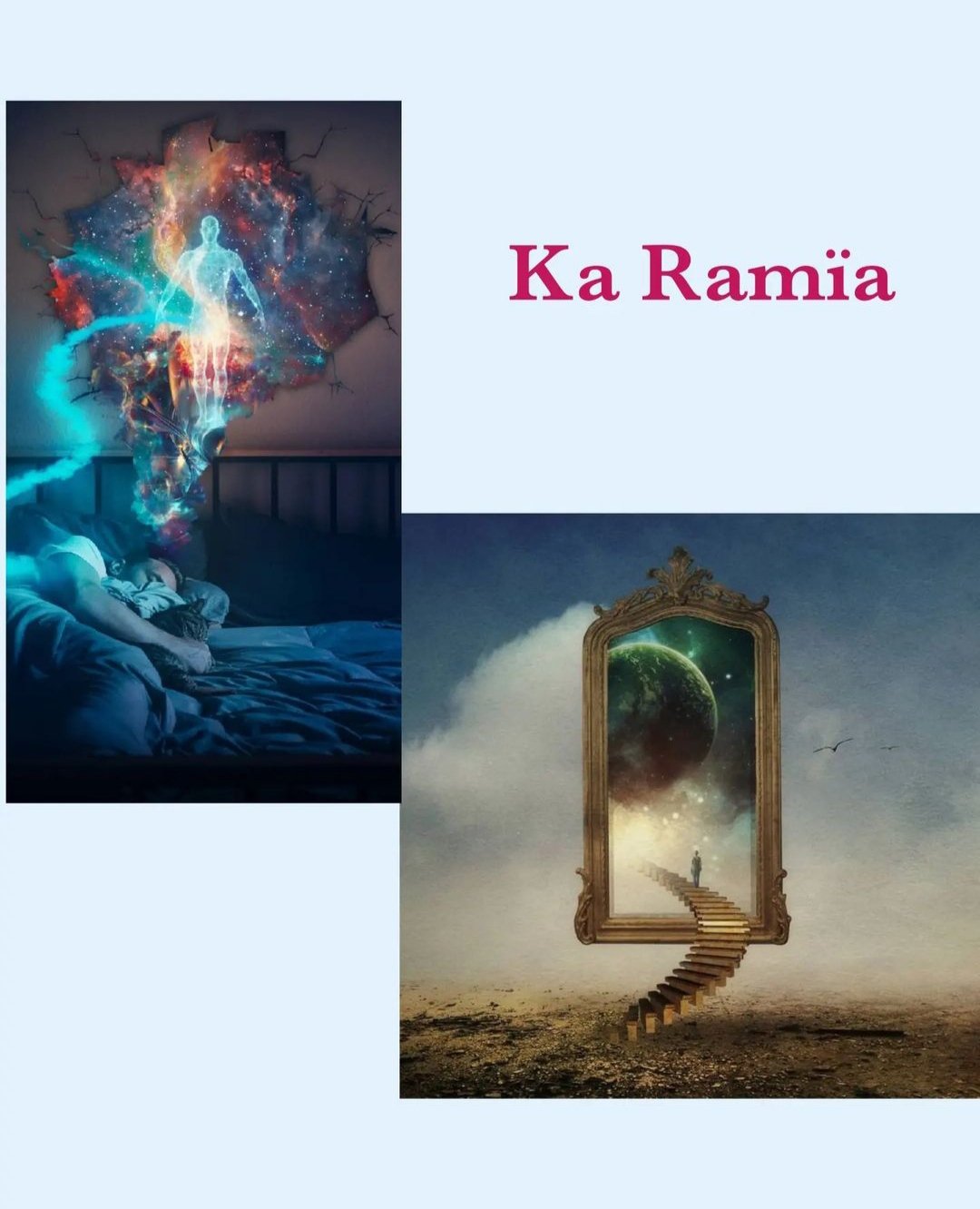
  • Ka Ramïa

    The Khasi word "Ka Ramia" may be described as a dream or a hallucination or an illusion.

    The following excerpts are from the Doctoral thesis entitled "Transformation, Tradition, and Lived Realities: Vernacular Belief Worlds of the Khasis of Northeastern India" written by Margaret Lyngdoh, University of Tartu.

    **No part of this thesis may be reproduced in any form without the consent of the author. Proper citation should be strictly adhered to when quoting any part of this research. All material for this content has been researched by Margaret Lyngdoh, Ph.D, University of Tartu.

    My research findings suggest that the "ramia" is a dream or vision world, which is inhabited by tigermen and women, ancestor spirits and the tiger deity. It is rather difficult to translate the implications of this term in a western context because the word "ramia" is also used by the Khasis to denote a kind of madness, when a person is not in his or her senses, or is not socially or personally aware of his or her surroundings. So, in the case of divine possession, for example, the person's spirit leaves the body, but the physical body remains and does its daily tasks. But if such a body, without its "rngiew", talks with someone else then the speaker does not make sense and is said to "kren ramia" (lit. 'talk ramia').

    In the Khasi context, a parallel reality is inhabited by the non–human entities and this may be comprehended only through movement into the dream/ vision state, the "ramia". Reality is not dualistically ordered or perceivable only to humans or to the dead. Reality is multiple, and variegated, dependent upon the beings who inhabit it and the purpose for which they inhabit it. The living environment is social and interactive with humans; moreover there exists a reciprocal, intentioned relationship. Human beings can apprehend alternate realities through the dreamworld ("ramia"), the world of the tigermen, the water realm of the spirit deities and the reality of the ancestors. For this to happen, for a human to access the alternate reality, a transformation is required. This is inclusive not only of the human–animal, but of the natural animal. I use the word human-animal, because in Khasi ontology, specially gifted individuals have the ability to transform into animals and deities.

    "Ka Ramïa" is an interesting and important concept of the Khasi worldview.

    Khublei Shibun @lieng_makaw for your research on this concept! 😄🙏

    What we need is to undertake in-depth research of Khasi culture and heritage in order to represent the community in the right light to the world. ✍️📚🏞️
    The importance of "searching and researching" cannot be stressed enough for all indigenous communities!

  • “Ki Mawbah”

    "KI MAWBAH"

    AN EXCERPT FROM KI DIENJAT JONG KI LONGSHUWA" FROM THE CHAPTER

    KI MAWBYNNA, KI MAWNIAM BAD KI KOR

    WRITTEN BY REV. FR. J. BACCHIARELLO, S.D.B.1974.

    Ki mawbah ki long ki mawthep shyieng jong ka kur, shisien lano, haba kata ka kur ka sngewdonbor. Ka jingheh jong u mawbah ka long kat kum ka jingheh jong ka kur. La ker kut baroh sawdong da ki maw, bad la tap na jrong da uwei u mawlyngknep ba la shah pynbiang sbak. Ïa ki mawbah ym ju don ba nud leh dusmon, namar ki Khasi ki burom bha ïa ki nongïap. Nalor kata ki tieng artat ïa ka snaïap ne ïa ki 'suidïap ba ki ju khot.

    "Mawbah" are stones that are erected as bone chambers of a clan, when the clan deems it suitable or possible to do so. The size of "Mawbah" is decided according to the size of the clan. Smaller stones form a surrounding circle which are then covered by a bigger flat stone called "u mawlyngknep", which is properly fitted as a cover. No one vandalises "Mawbah" because Khasis respect their dead and also because of the belief in spirits and ghosts.

    "Ki Mawbah" serve a significant purpose in Khasi belief 🙏🕯️ Khublei Shibun @sooki65 for sending this excerpt! 😄

    Photo credit: @sooki65
    Location: Nartiang

    English translation by @speakyourroots

  • Bam Hynroh u Bnai

    Mano ba ju kynmaw ïa ka bam hynroh u bnai? Phi ju tied pliang ne kumno? Por hyndai hynthai, ki bun na ki khasi ki ju tied pliang ban beh noh ïa kaba sniew.

    Ka por ba kah dum ia ka jingshai u bnai, ka pynlong ia U Khasi ban ong, "bam hynroh u bnai" kaba pyni ïa ka nemsniew. Kat kum ka jingbatai ki nongtymmen, ka lah ban ïasnoh ruh bad ki puriskam Khasi hyndai.

    Ka hynroh ka dei ka kynja jakoid. Ka long thoh rew bad soh-khruh. Ha ka jingbatai ki nongtymmen, ka long kaba sniew dur bha. Kumta sa ïoh kynnoh "bam hynroh" lada ïa ka Sngi ne u Bnai.

    Who recalls Ka Bam Hynroh u Bnai or the Lunar Eclipse? Have you ever participated in the frenzy beating of plates? In the olden days, many of the Khasis would beat their enamel or steel plates to ward off anything that is bad or evil.

    At the time of the lunar eclipse, the Khasis used the term, "bam hynroh u bnai" which literally means the frog/toad has consumed the moon. It also seems to be linked with the belief that an ill omen or some plague will occur. According to forefathers, it is also linked to an old story that has been narrated for ages!

    Ka hynroh is a kind of frog or toad with a distinctive feature. It has warty skin. According to the description given by forefathers, it is a very ugly frog or toad. Therefore, they connected the frog/toad to the term "bam hynroh" or "eaten by the frog/toad." It has become an expression that describes a lunar or solar eclipse.

    "Ka Bam Hynroh U Bnai" or a lunar eclipse contains cultural significance that many of us may have forgotten. Khublei Shibun @carey_lynz for sending this! 😀🙏

    "Ka Hynroh" has a gland near it's eyes which is poisonous. It has short legs, no teeth and its body is covered by ugly bumps. It is about 20 cms in length.

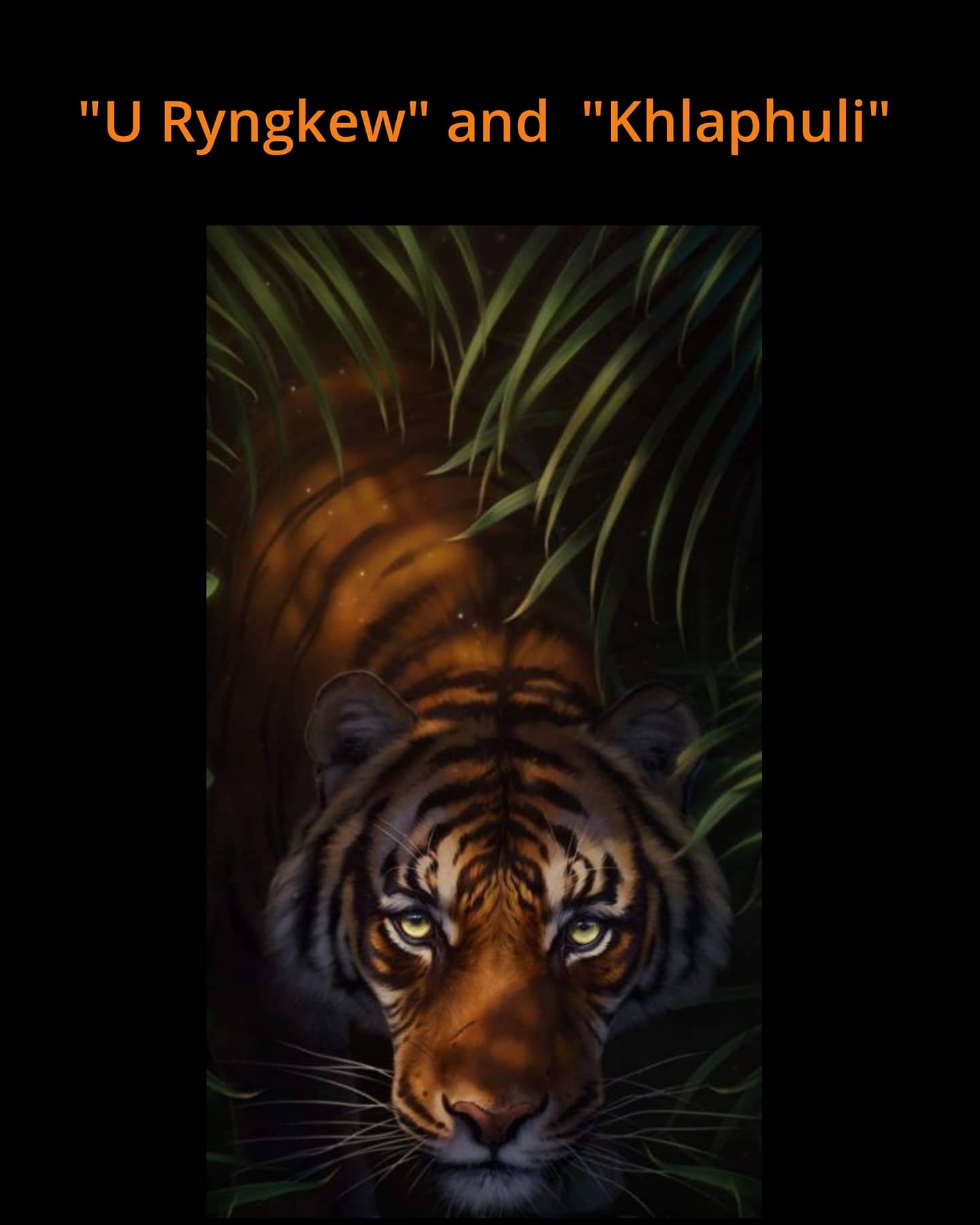
  • U Ryngkew and Khlaphuli

    The following has been quoted and summarised from Essays in Khasi Folkloristics by Dr. Desmond L. Kharmawphlang (2016).

    In Khasi belief, the sacred forests are protected by a "spiritual tutelary deity called U Ryngkew U Basa" who makes himself visible in the form of a tiger. Thus, 'U Ryngkew' is the tiger spirit who safeguards the sacred forest. After the chaos that ensued in the felling of the 'Diengiei' the gods sent 'U Ryngkew' to "stay forever in forests, mountain tops and places of wilderness revealing himself, whenever he does, as a tiger."

    Related to the significance of the tiger in Khasi myth and folklore, is the belief in "Khlaphuli" or the Weretiger. The Khlaphuli is a man or a woman who has the ability to change into a tiger with "this power being an attribute of their 'rngiew'…The Khasi belief in the 'ka rngiew' is so strong that it is regarded as an essence, a power which shapes and determines most of man's actions, thoughts and motivation, it gives shapes to his dreams and visions and charts the course of his life. It is imperishable and immutable. In the Weretiger tradition, it is the 'rngiew' that is directly responsible for men and women to possess the power to become weretigers or 'khlaphuli' as it is known in local parlance. This transformation from human to tiger is closely associated with aspects of religious and social practices."

    The belief in "U Ryngkew" and "Khlaphuli" form intrinsic aspects of Khasi spirituality and religion. They are also necessary to understand the effort to conserve our sacred groves and forests. 🏞️🏞️🌄🌄