Tag: khasibooks

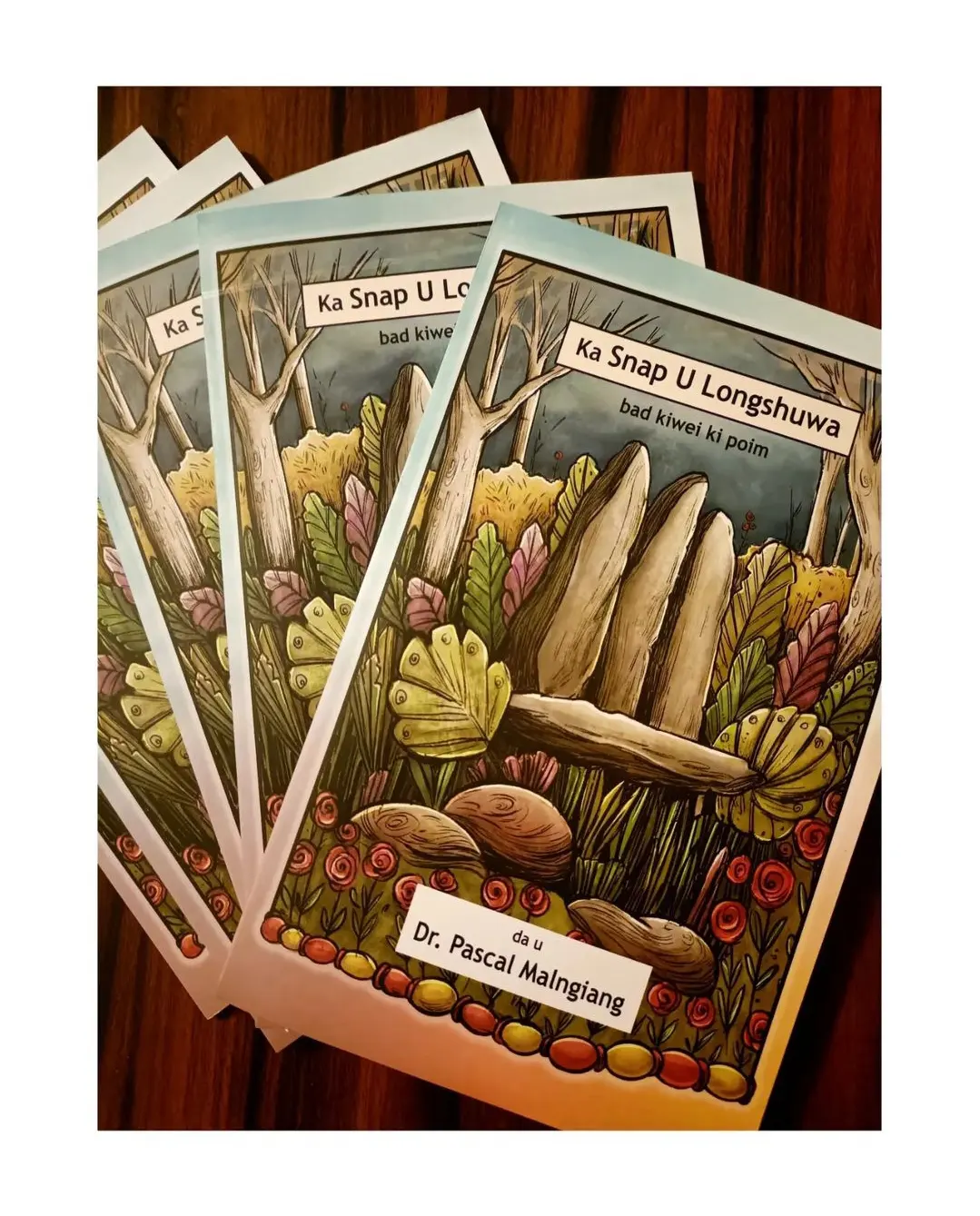
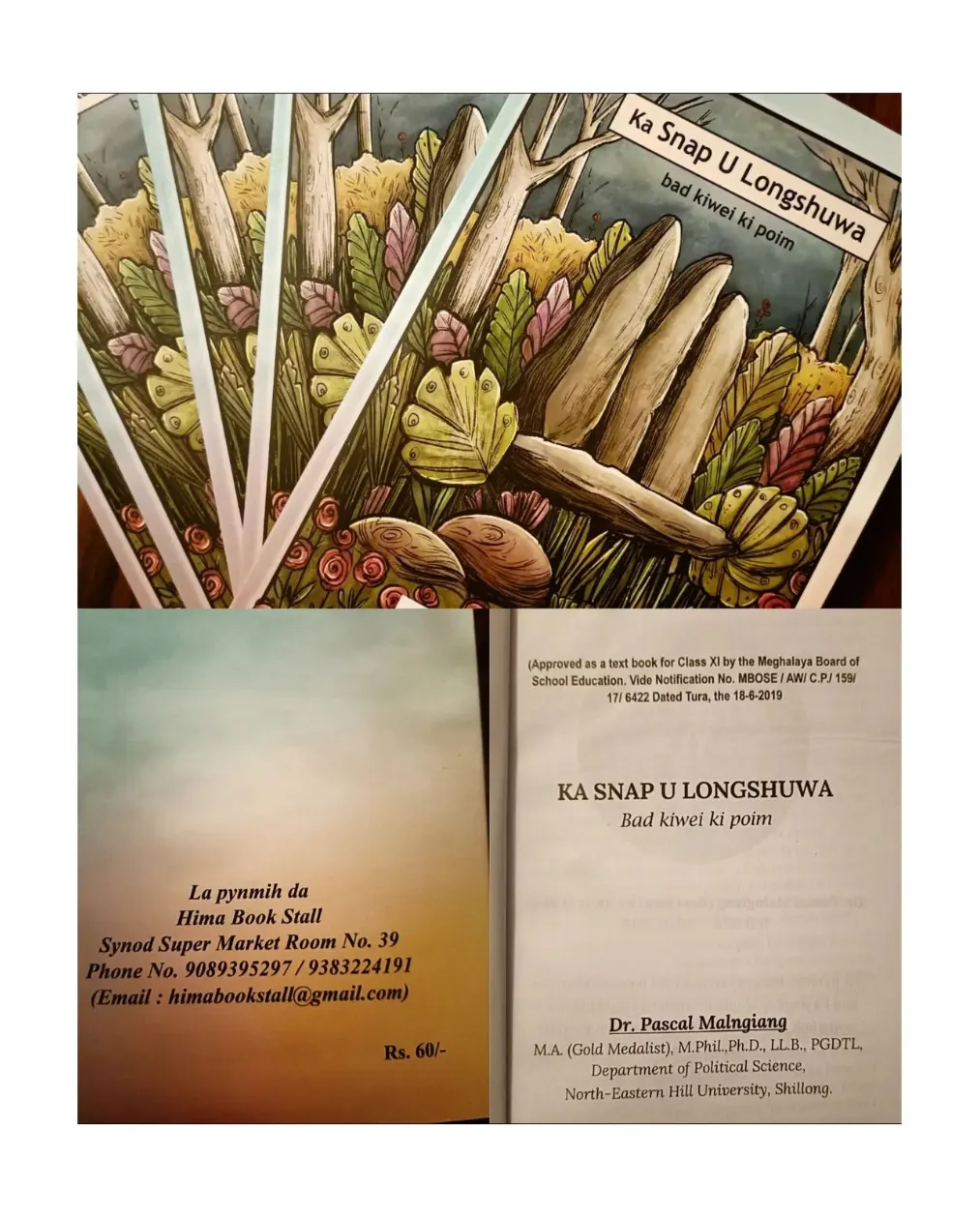
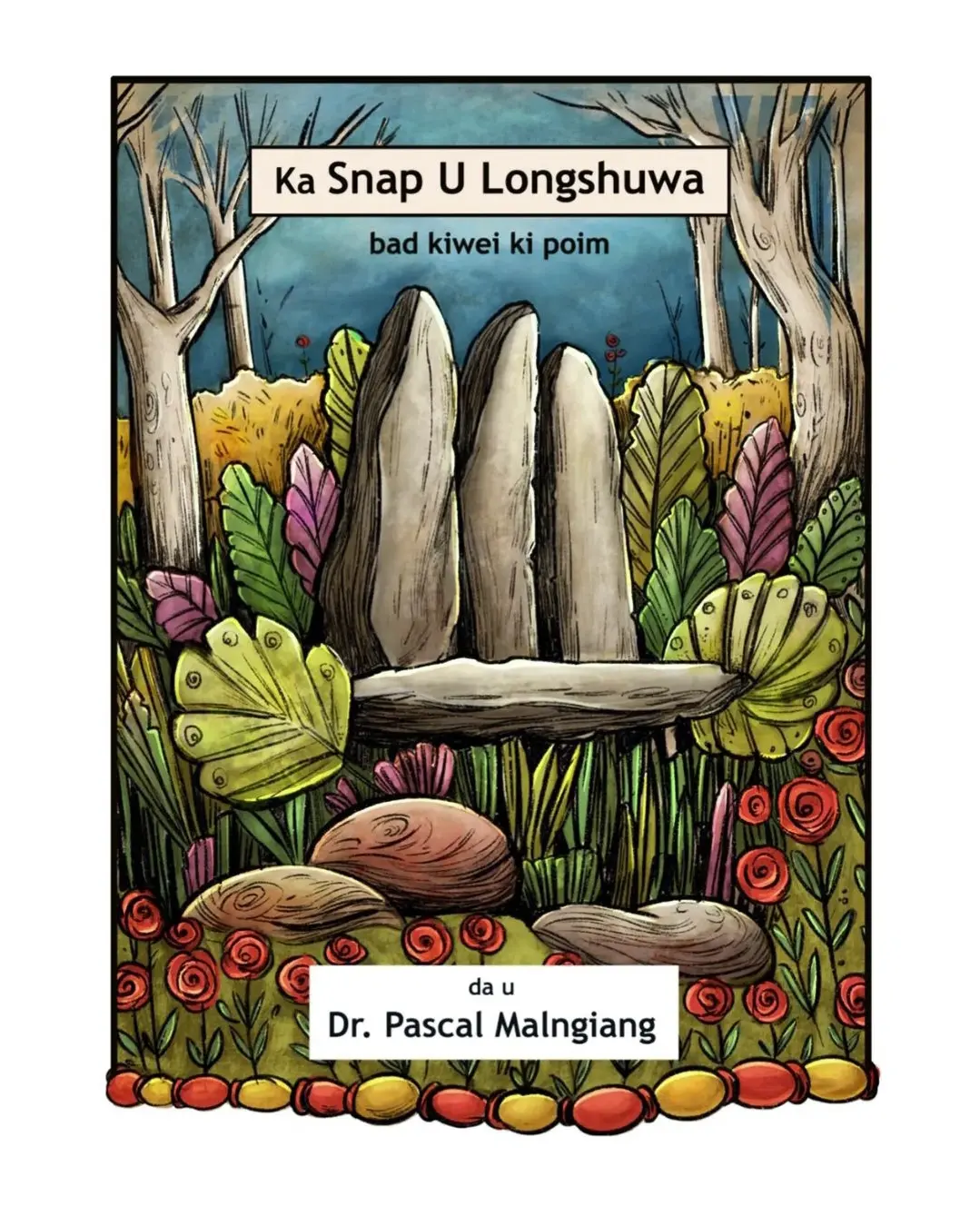
  • Ki Snap u Longshuwa bad kiwei ki poim da i Dr. Pascal Malngiang

    Khublei Shibun @mario_pathaw ba phi la phah ïa kine ki dur jong ka kot "Ki Snap U Longshuwa" ba la thoh da i Dr. Pascal Malngiang.

    Mario says: I illustrated one of my father's books "Ka Snap u Longshuwa". It has been approved as a text book for class XI by The Meghalaya Board of School Education. Published by Hima Book Stall, Synod Super Market, Motphran.

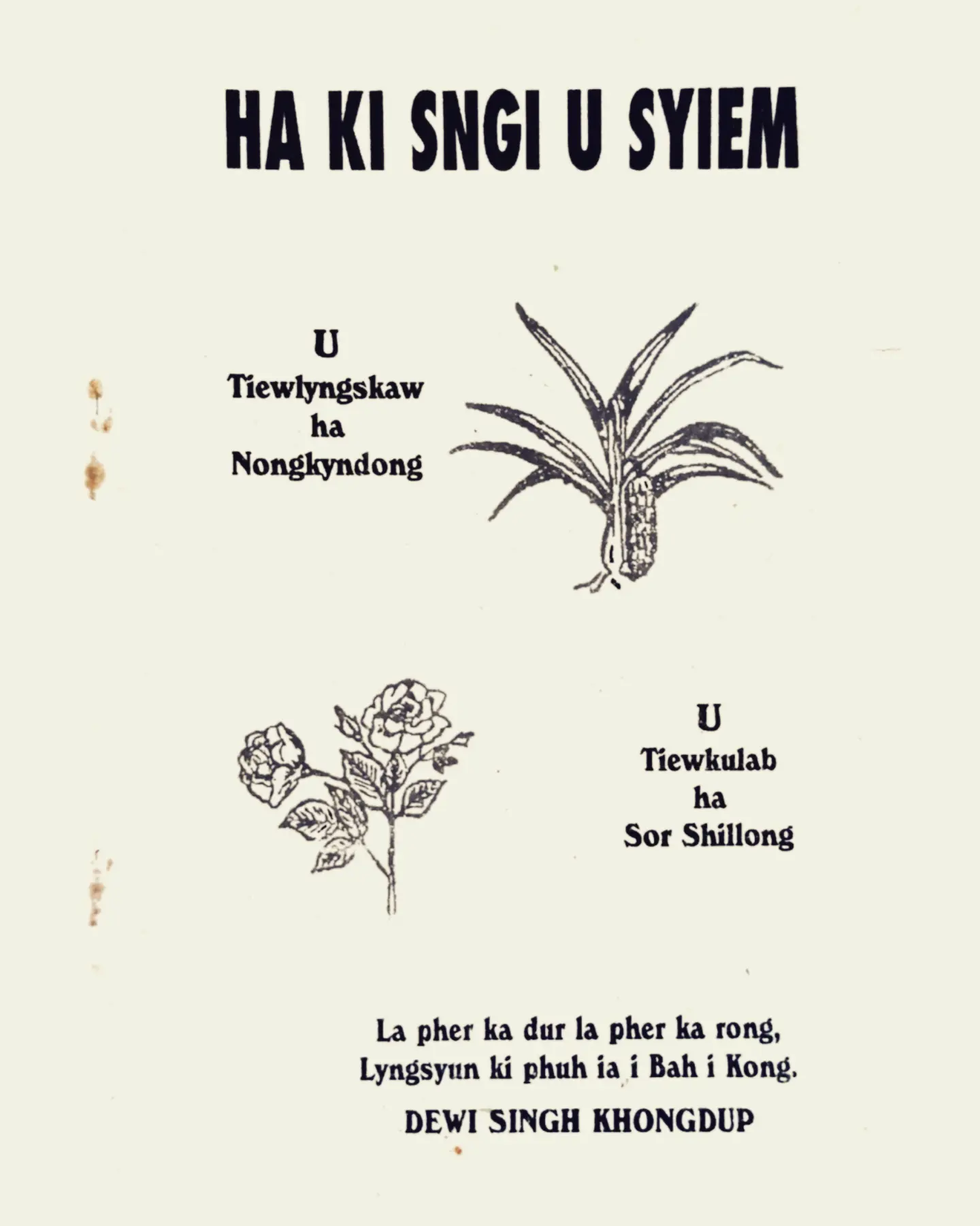
  • “U Phareng Ha Lawkyntang” da i Dewi Singh Khongdup

    Excerpt from the story "U Phareng Ha Lawkyntang" from the book Ha Ki Sngi U Syiem by Dewi Singh Khongdup

    Kumta ha kawei pat ka sngi, u Phareng u bah la ka suloi ar ktang ha la ka tyrpeng, bad u ngam soit sha khlaw ban leit thap skei. U kieng kawei ka pla ha kaba la thep jasong ka Mahad bad u buh de la ki kuli hangta. U ngam ia ka khlaw ka btap, hynrei um lap dien mrad satia; u pynieng la ki shkor bad u pynshah ia ki diang diang, mon mon, hynrei ym don dak ei ei ruh em ban pynpaw ba ki mrad ki don hajan. Tang ka shalymmen ka pah wiaw shi wiaw khlem sahngeh, bad u jyllop u ud kob shi kob halor ki tnat phaniaw. Ha ka por shiteng sngi, u la sngew thait, bad kumta u shong thait harud kawei ka wahduid kaba ki um jong ka ki khuid khlir khlir. "Ngan da pynbeit theid noh shuwa halor une u mawsiang," u kren hapoh lade; "Imat ka skei ruh ka tip ba nga wan mynta ka sngi."

    U ioh thiah kumba shi kyntien kwai ne, bad ynda u la kyndit, u la thngan. U sei ia ka jasong na ka pla, bad katno u kmen haba u lap ia ka tungrymbai ba la song lang bad u khathli bad u khababia. "U Syiem Symphup uba da kat u Syiem," u kren ha lade hi' "u tip ka bam aiu nga bang!"

    Ynda u la dep bam, u thet ia la ki kti ha kata ka wah, bad u maiñ ruh ia la ka shyntur. Namar ba u dei u Phareng, um nud satia ban dih ia ka um kaba khlem da shet. "Kane te kaban iap sliang", u ong ha ka sur kum uba la poi ha ka kutlad. "Em, ki ju ong ba ka um Khasi kaba sngur kam ju don khñiang jingpang; kumta ngan dih la ka dih ia ka; namar haba la lap ka sliang, ne haba la tyrkhong u thylliej, ka um ktieh ruh ngin iakjit", bad u dih artat ia kata ka um.

    "Phi la nang kren Khasi du pleng, Sahep!" ka sawa ka sur naei ruh um tip. U Phareng u dei u briew uba la shai la stad, bad um long uba sheptieng bieit. U phai diang diang, mon mon; u peit dien dien, phang phang, da kaba khmih lynti ba un iohi ia uta u briew uba kren ia u; hynrei um iohi iano iano. U lyngngoh ngain, bad kumta u tharai ba ki shkor jong u ki la ioh sngew bakla.

    "Phi peit lyngngoh iaei ka, Sahep?" kata ka sur ka sawa biang sa shisien. "Ha-ha-ha, u khun ka ri Bilat! To da kren seh shi kyntien, phi shu snap pynban jar jar la kum ubym pat nang akor!"

    "Kane te nga la poi shisha sha ka ri ki jingphohsniew", ong u Phareng ha ka sur lyngngoh. "Lada ngam bakla kane ka wah ka kren ia nga."

    🌲🏞️ Mano ba kynmaw ïa ka jingïathuhkhana "U Phareng Ha Lawkyntang"? 😃 Kumno ba u Phareng u rung sha 'lawkyntang bad u kynduh ïa i Ñia Risang, i Ñia Dkhoh bad i Bih Rabit. 🐇🦉🐿️

    Ka dei ka jingïathuhkhana kaba sngewtynnat bad samrkhie ruh de. Katno ka jingsngewmuja ban pule lem bad ki khynnah, wat ïa ngi kiba heh ruh ka long kaba byrngia bha. Bun na ngi, ngi ieit ïa ki khana jong i Bah Dewi Singh Khongdup bad kine jingïathuhkhana ki pyni ïa ka jingtbit jong i kum u nongthoh bad nongïathuhkhana. 📝📝

    "U Phareng Ha Lawkyntang" is a story about an English man who wanders into a sacred grove, which are regarded as sacred forests keeping alive the faith and culture of the Khasi and Pnar communities. In the sacred grove, the English man has the magical experience of meeting many colourful animal characters which keeps the reader in a cheerful mood. 😄🐇🦉🐿️

    This is an appreciation post and a tribute to another skilfull Khasi writer! 👏🙌
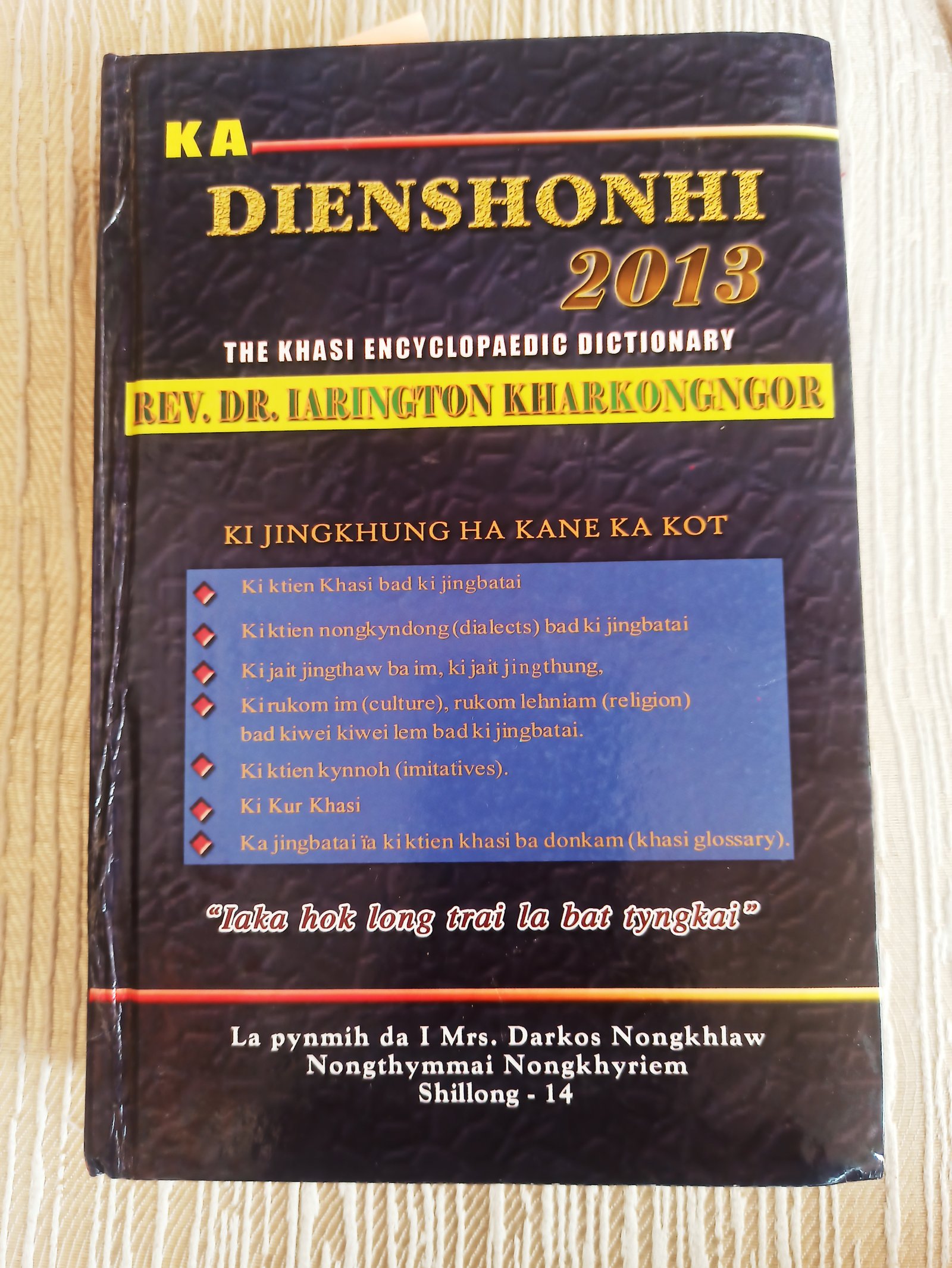
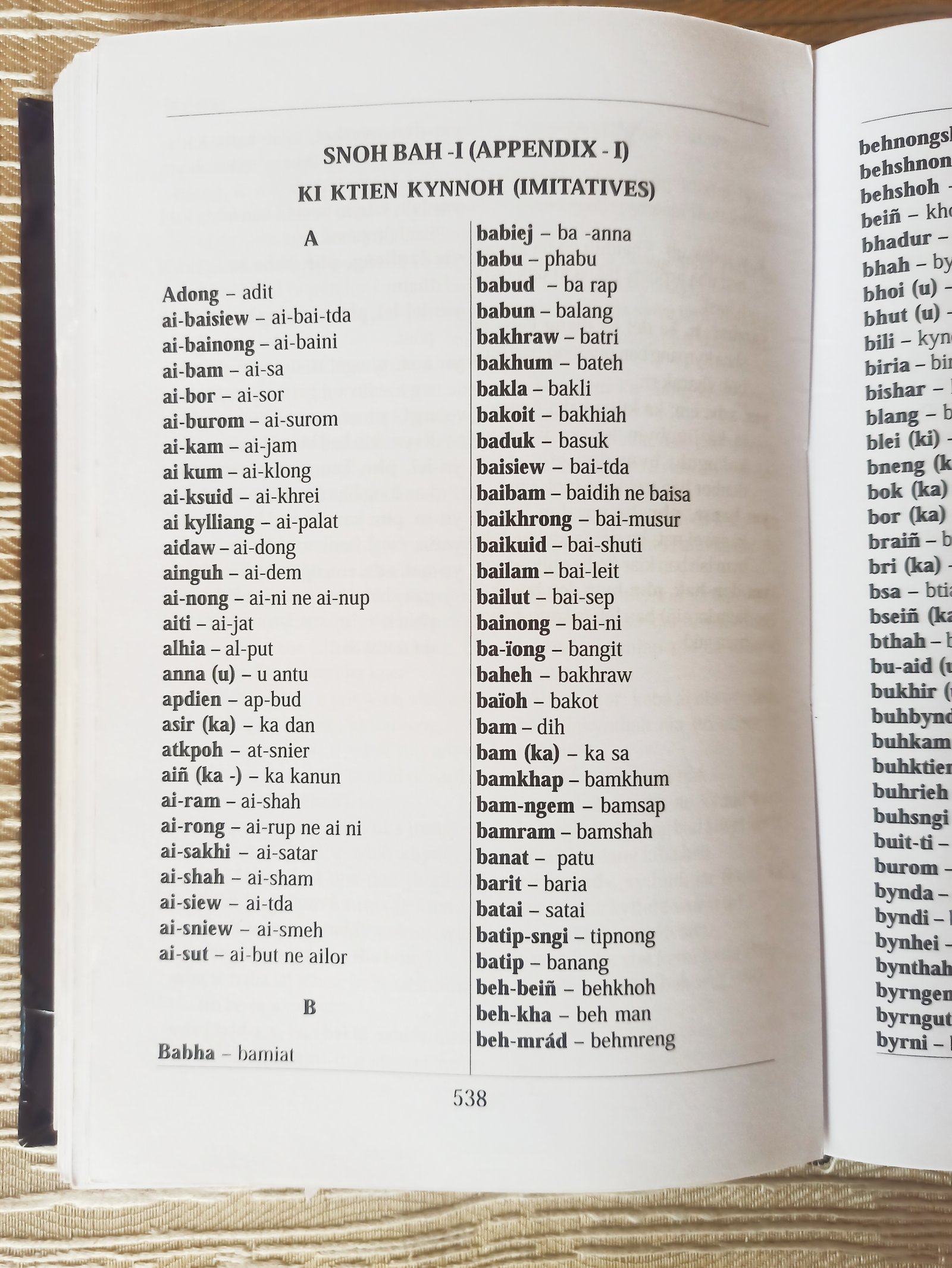
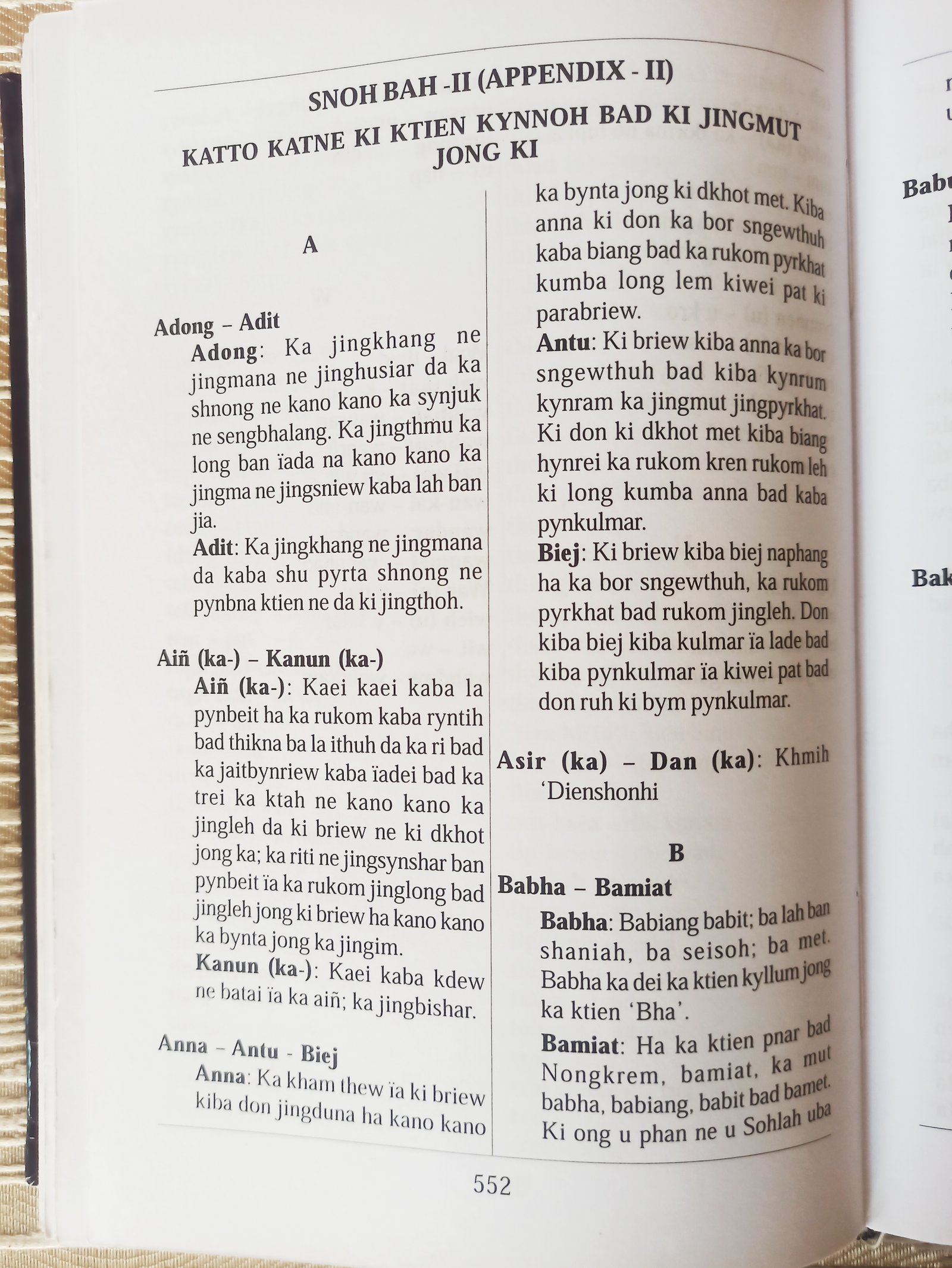
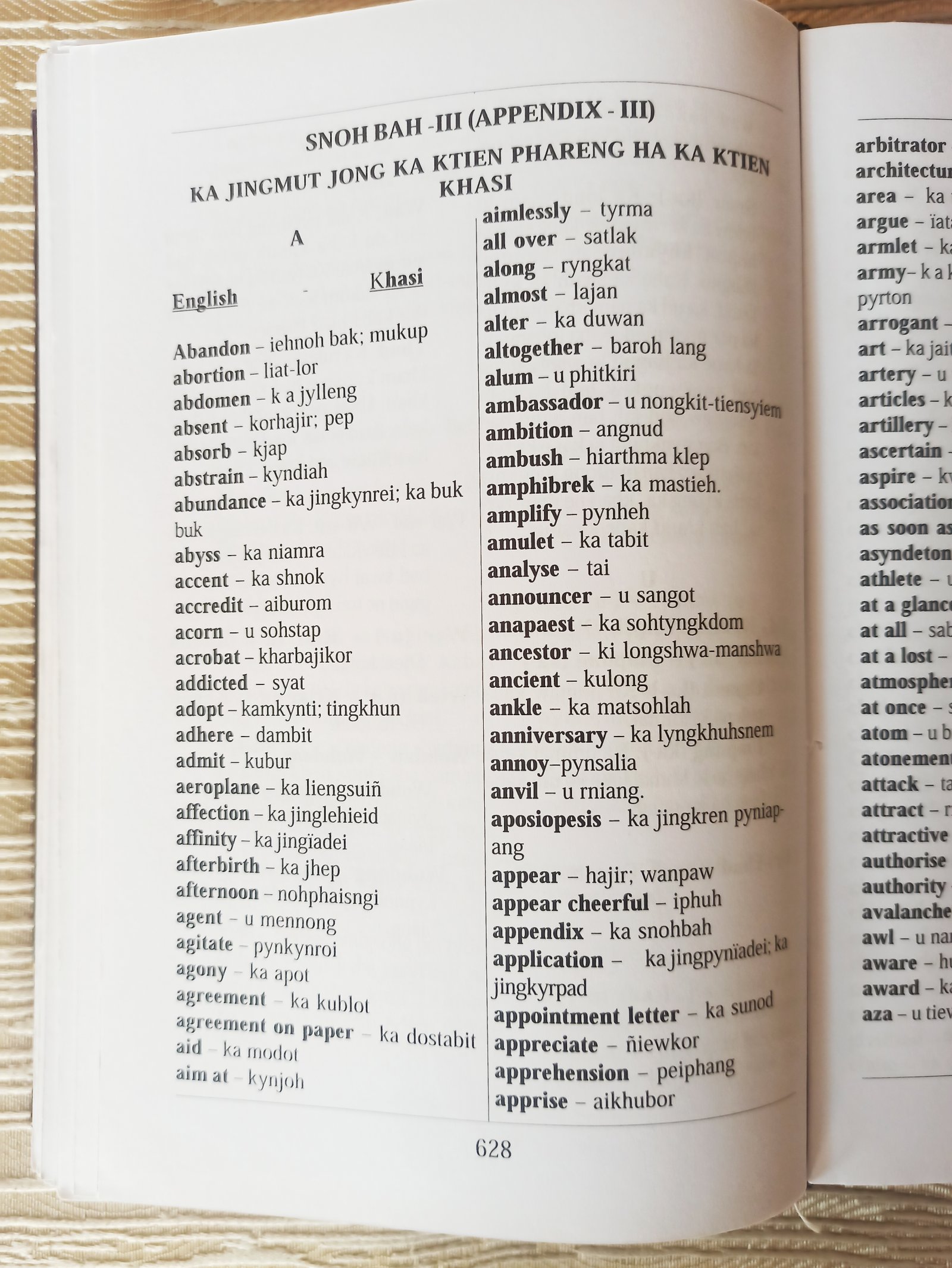
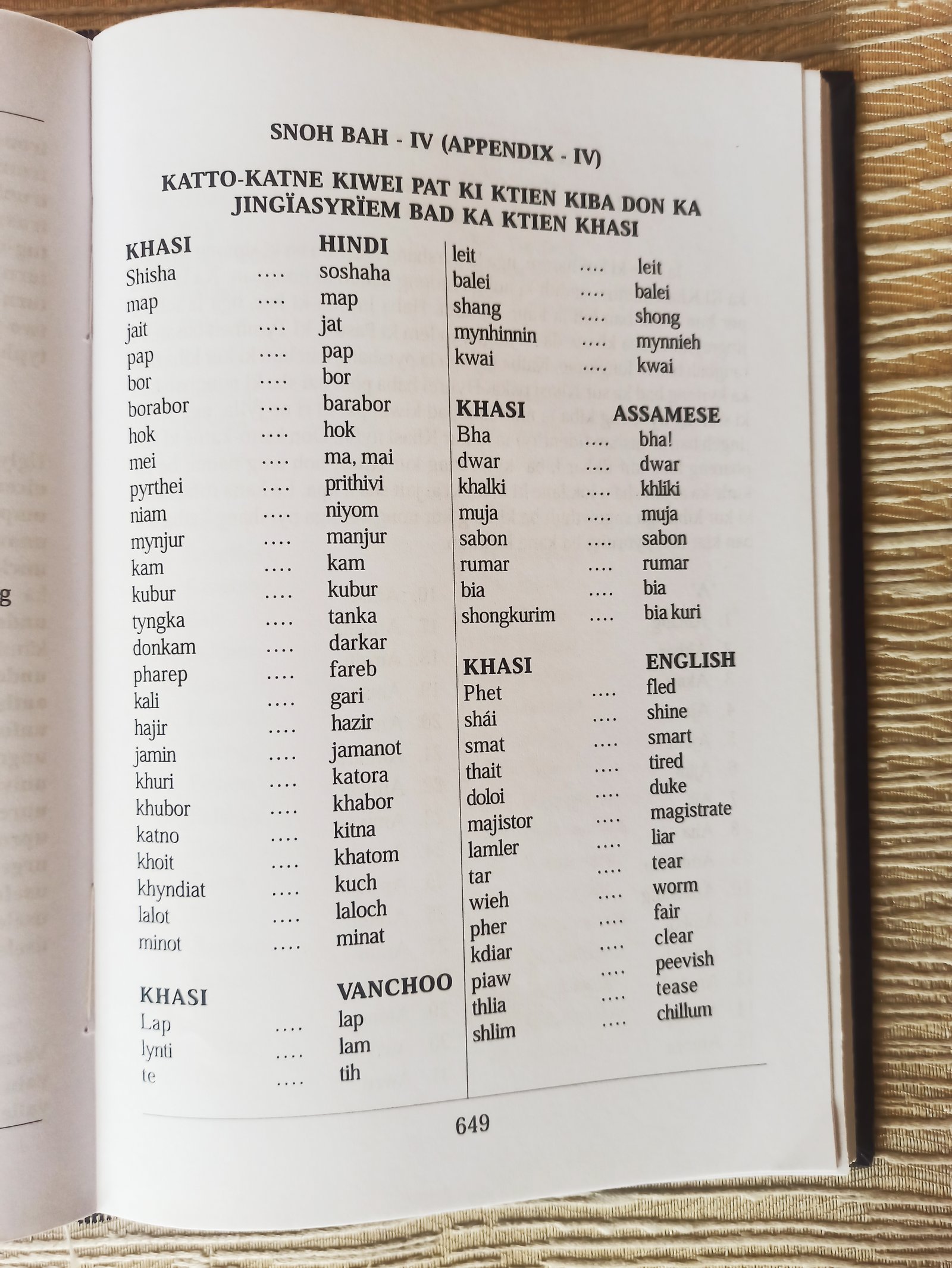
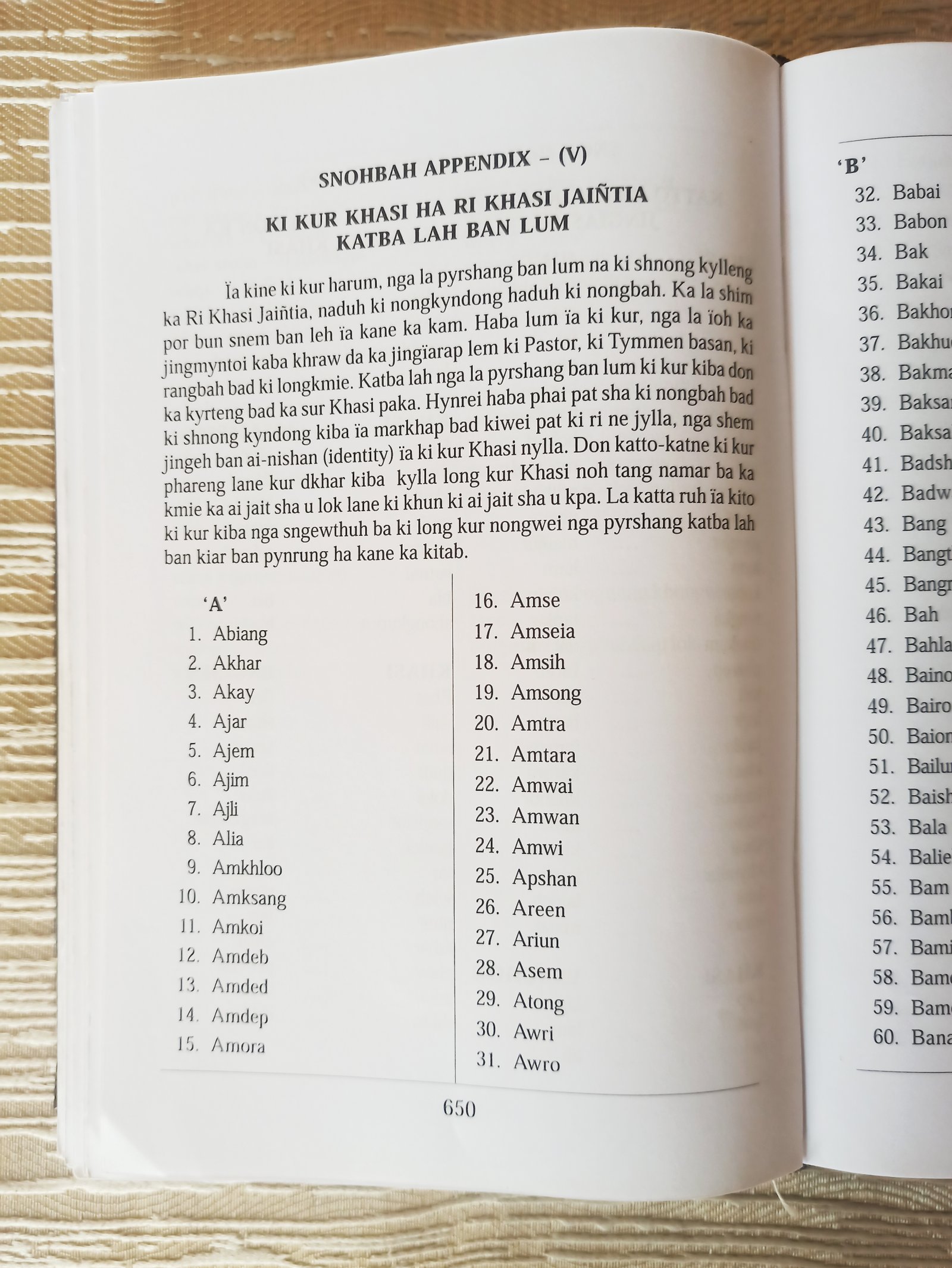
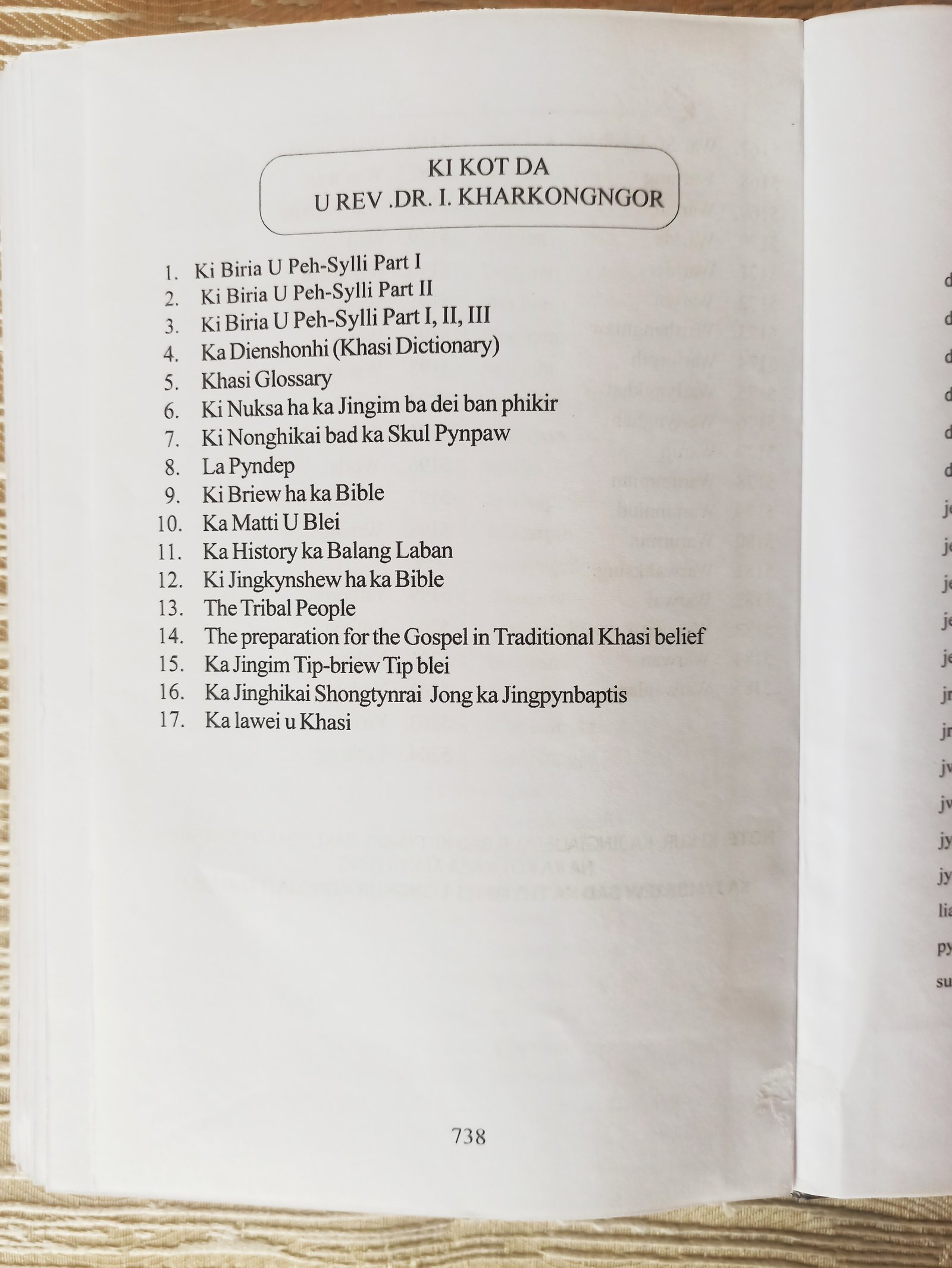
  • Ka Dienshonhi: The Khasi Encyclopaedic Dictionary by Rev. Dr. Ïarington Kharkongngor

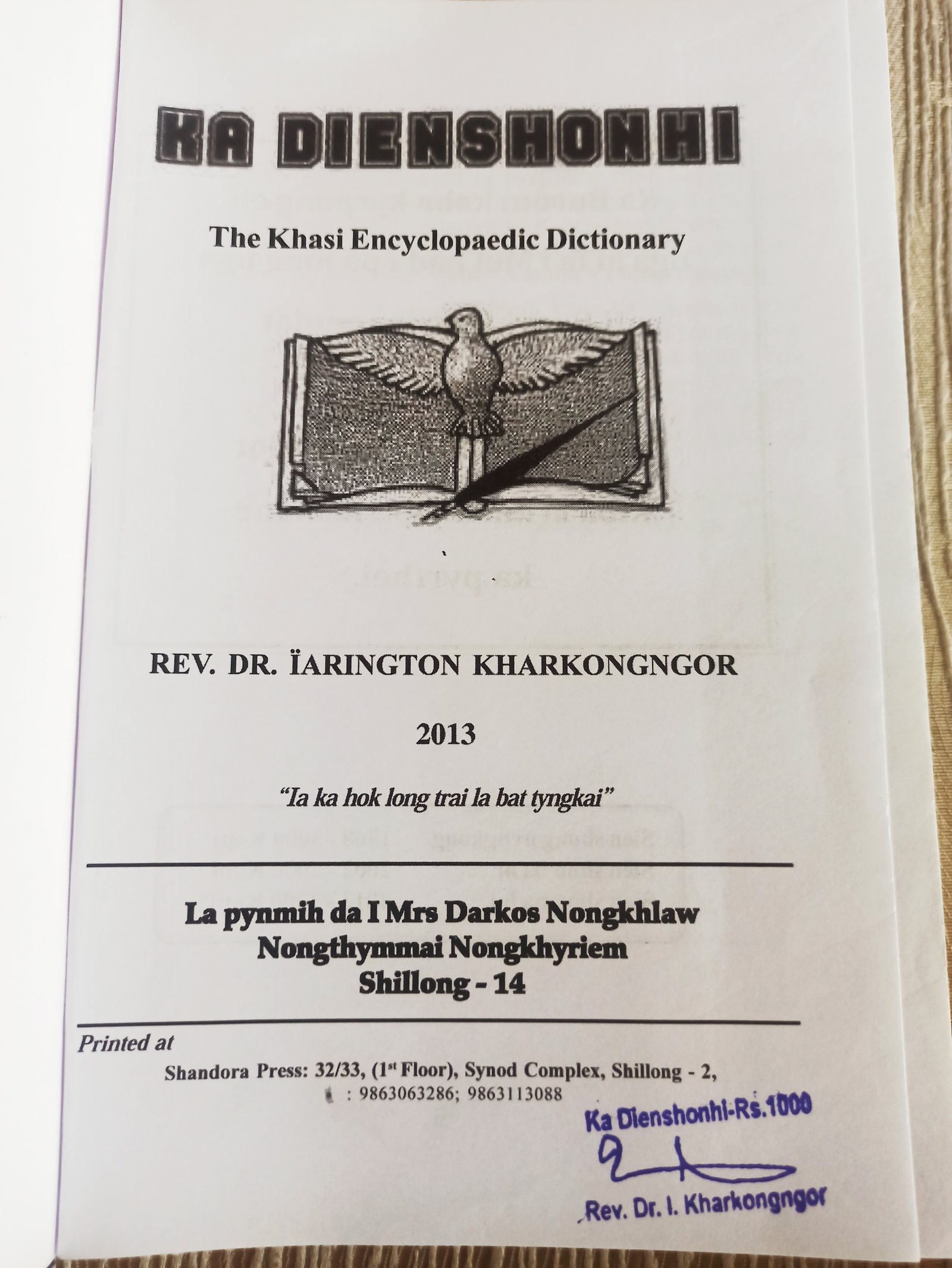
    Ka Dienshonhi: The Khasi Encyclopaedic Dictionary by Rev. Dr. Ïarington Kharkongngor is a Khasi to Khasi dictionary which is supplemented by 5 appendices as shown in the slides above. 🤓📚 This is the go-to book for many of us!

    The name of this Khasi dictionary has been coined by the author as "Dienshonhi" whose meaning is provided in the book 😃😃

    🟡 This book is sold in Ri Khasi Book Agency, Mawkhar, Shillong.

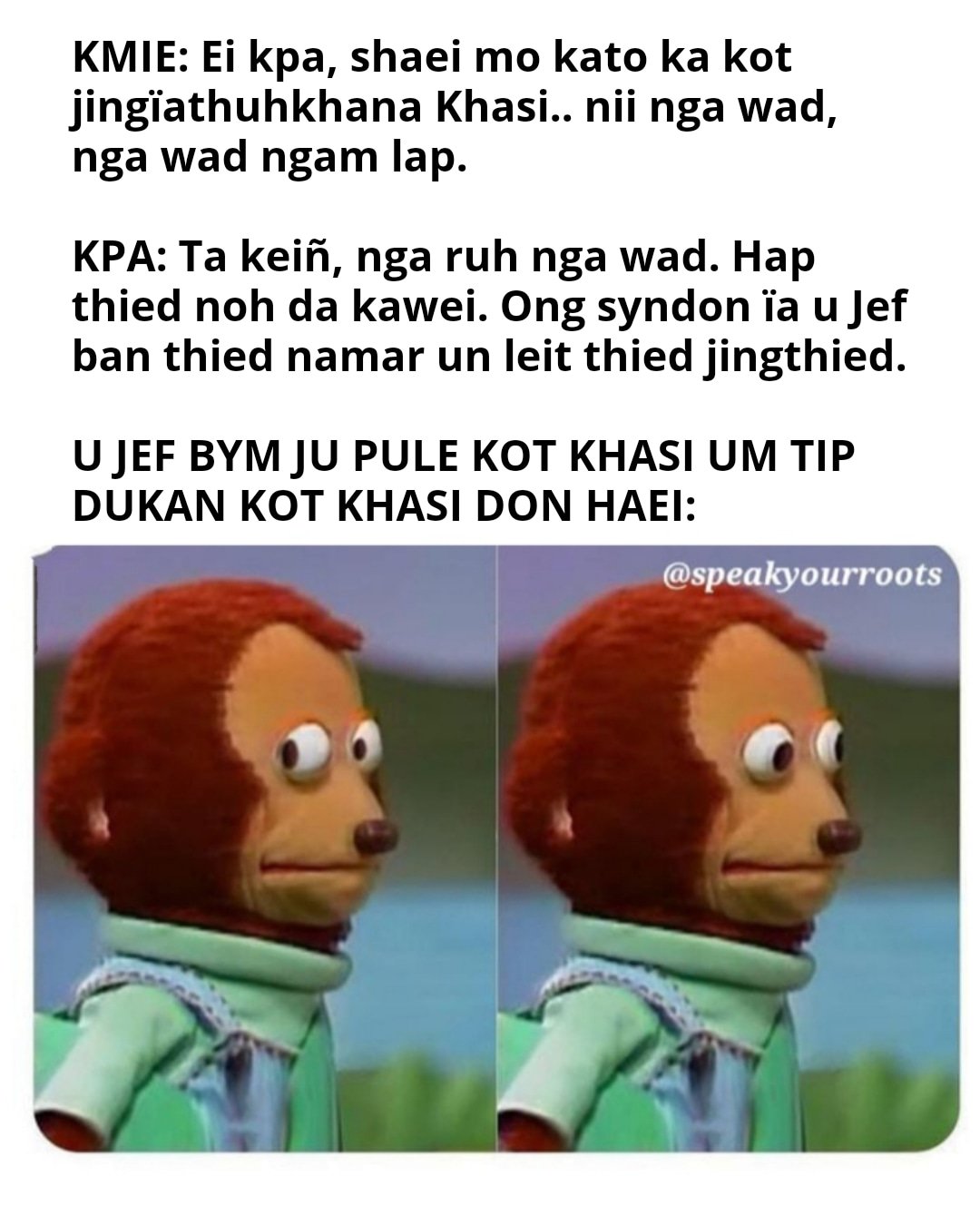
  • Dukan kot Khasi

    😄😄 Ïathuh hok, bun na ngi ngim da tip bha naei ban ïoh ki kot Khasi 😆

    Ki kot Khasi ki bun, tangba dang duna ki nongpule. 📖✍️

    We need to develop and grow the reading culture in our indigenous language otherwise our language and literature will not stand the test of time. 🕐🕔 It's happening already. Many Khasi books are out of print. We applaud those who are trying to publish old editions again!👏👏👏

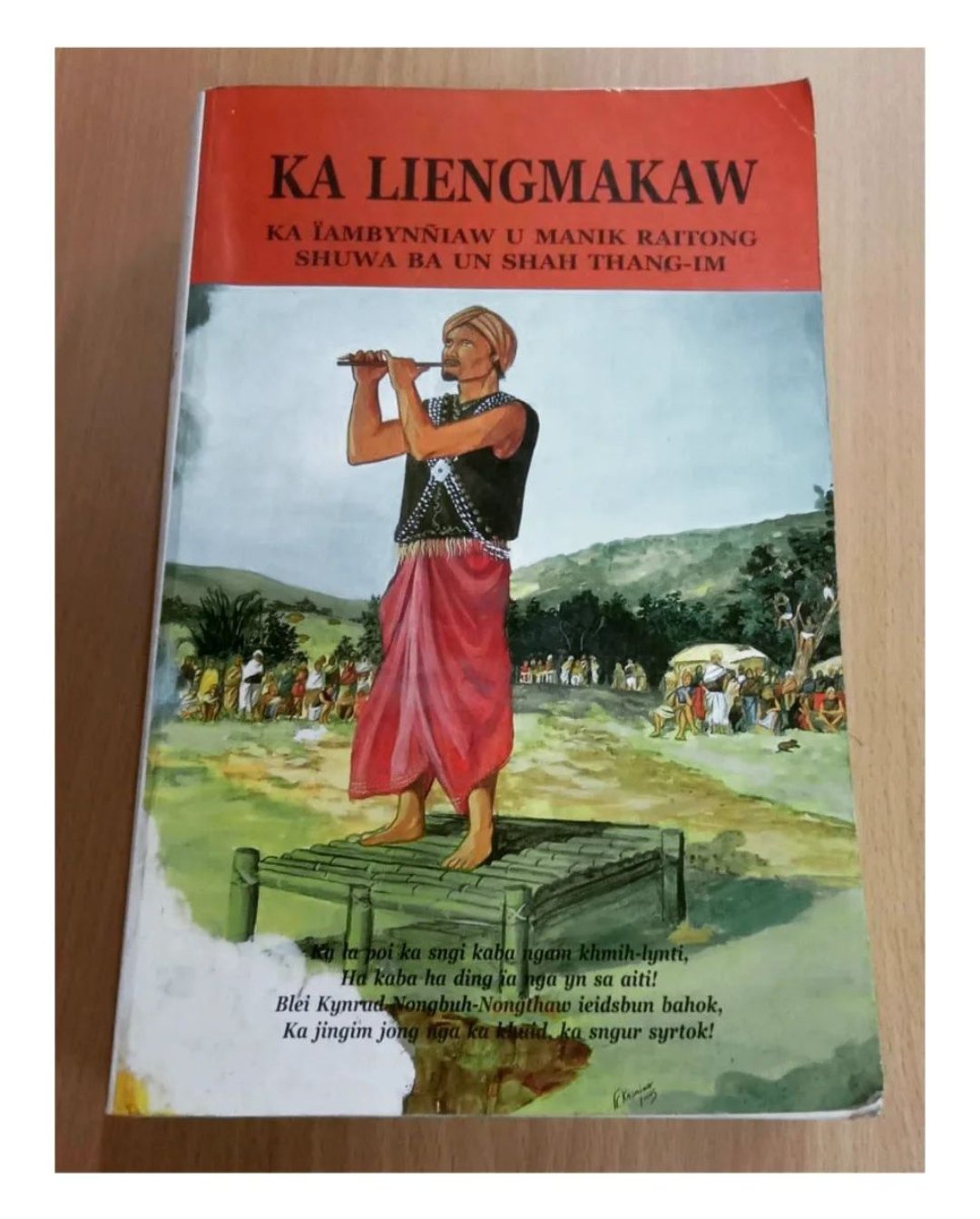
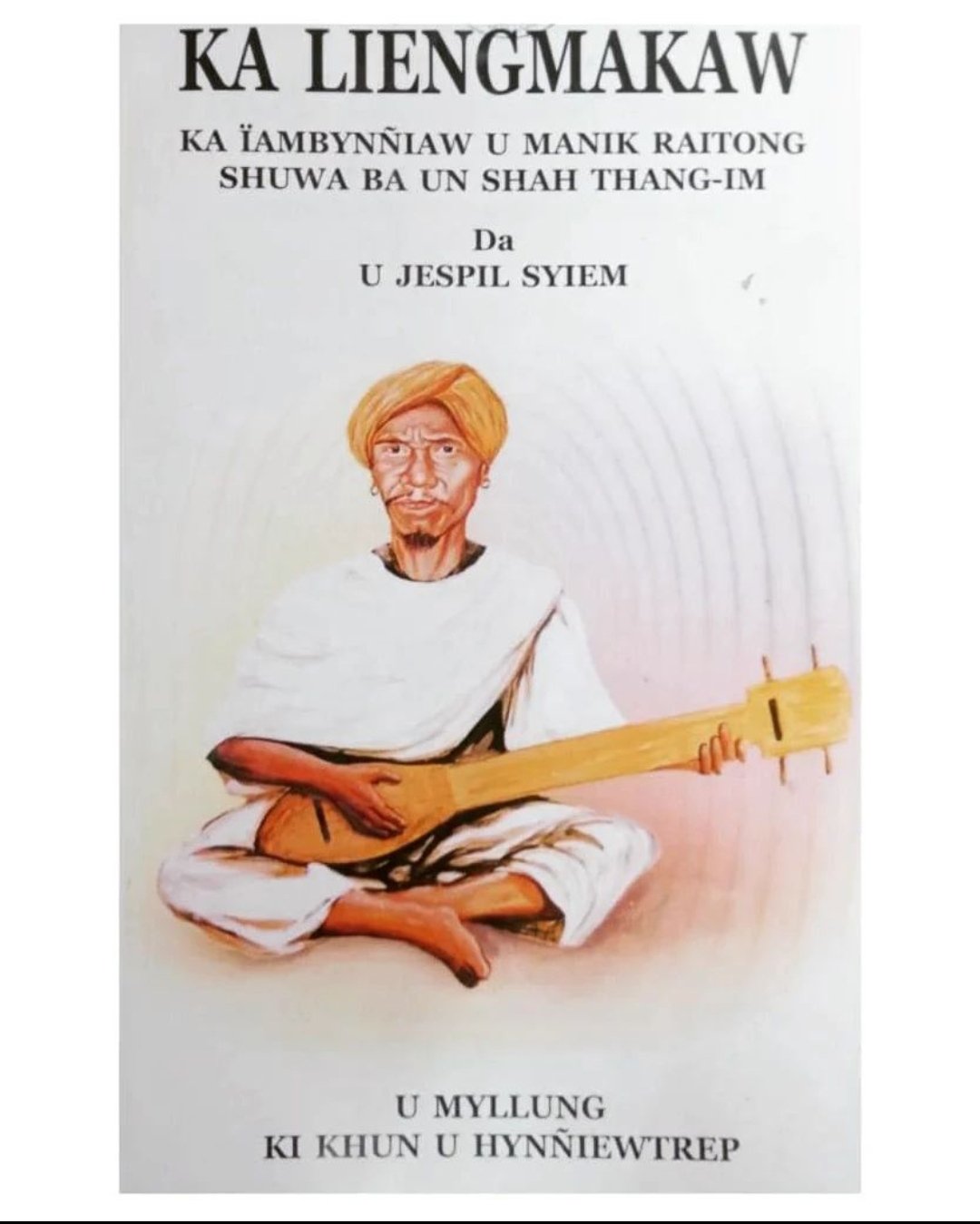
  • Ka Liengmakaw da Jespil Syiem

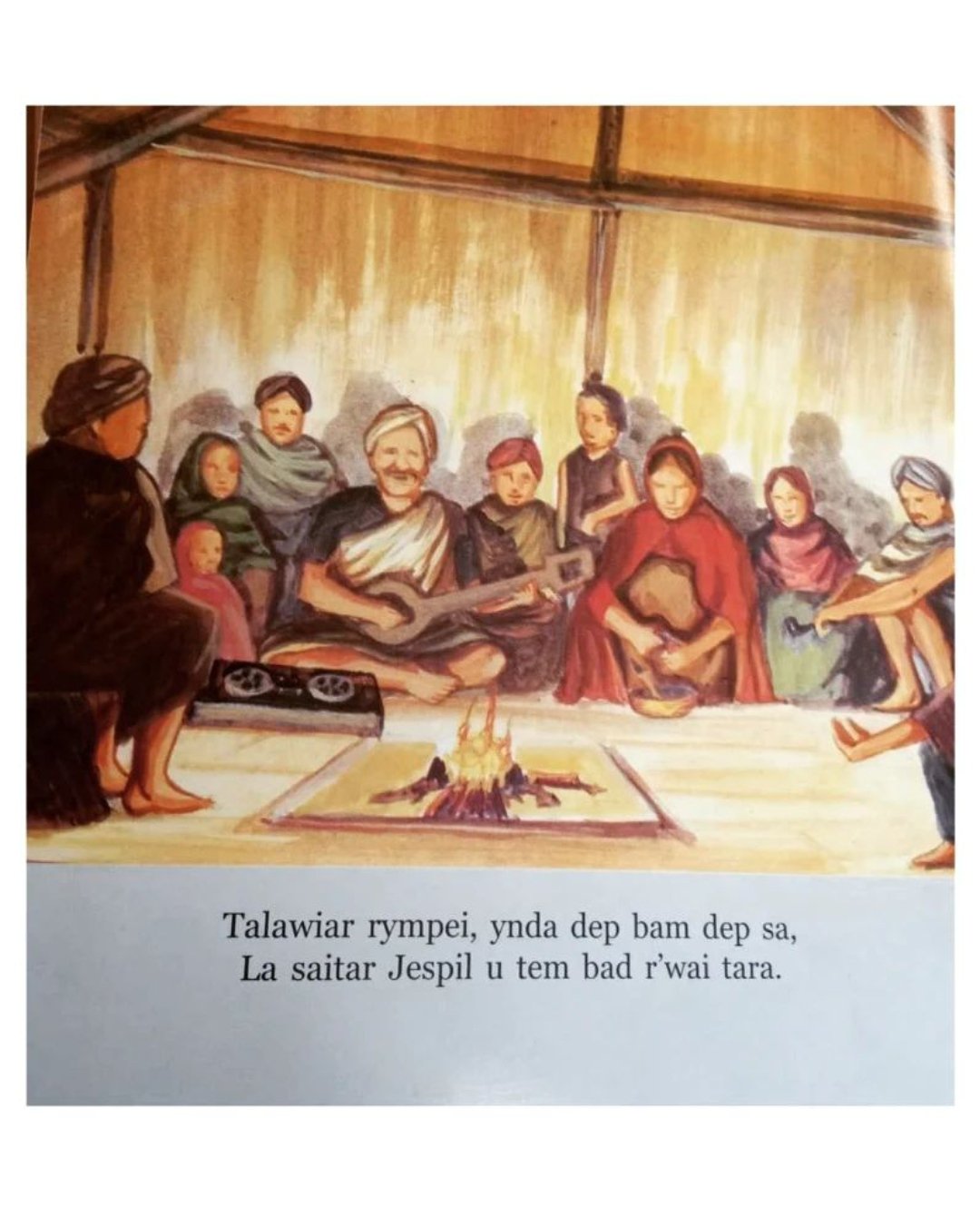
    There was once an orphaned youth U Manik by name who had no living relative in the world. He was nicknamed U Manik Raitong, meaning the lonely one, absolutely bereft of all family support. So overcome was he with the loss that had struck him early in his young life, that he roamed the village like one mad. At night, however, he would put away his sackcloth and ashes, eat, bathe and dress himself up in ceremonial garb. Then he would take up his flute, and play the most compelling dirges on it. Unknown to him, U Syiem's wife who had often heard him, became completely magnetised by the tunes that he played on his flute. In the event of U Syiem having to leave her to attend to matters of state in nearby regions, she was left all alone and was therefore lonely. Besides she had only just been married to U Syiem. One night she felt compelled to come to Manik's hut, but was denied entry. She broke open the door in order to be able to hear him better. However much he tried to send her away she refused.

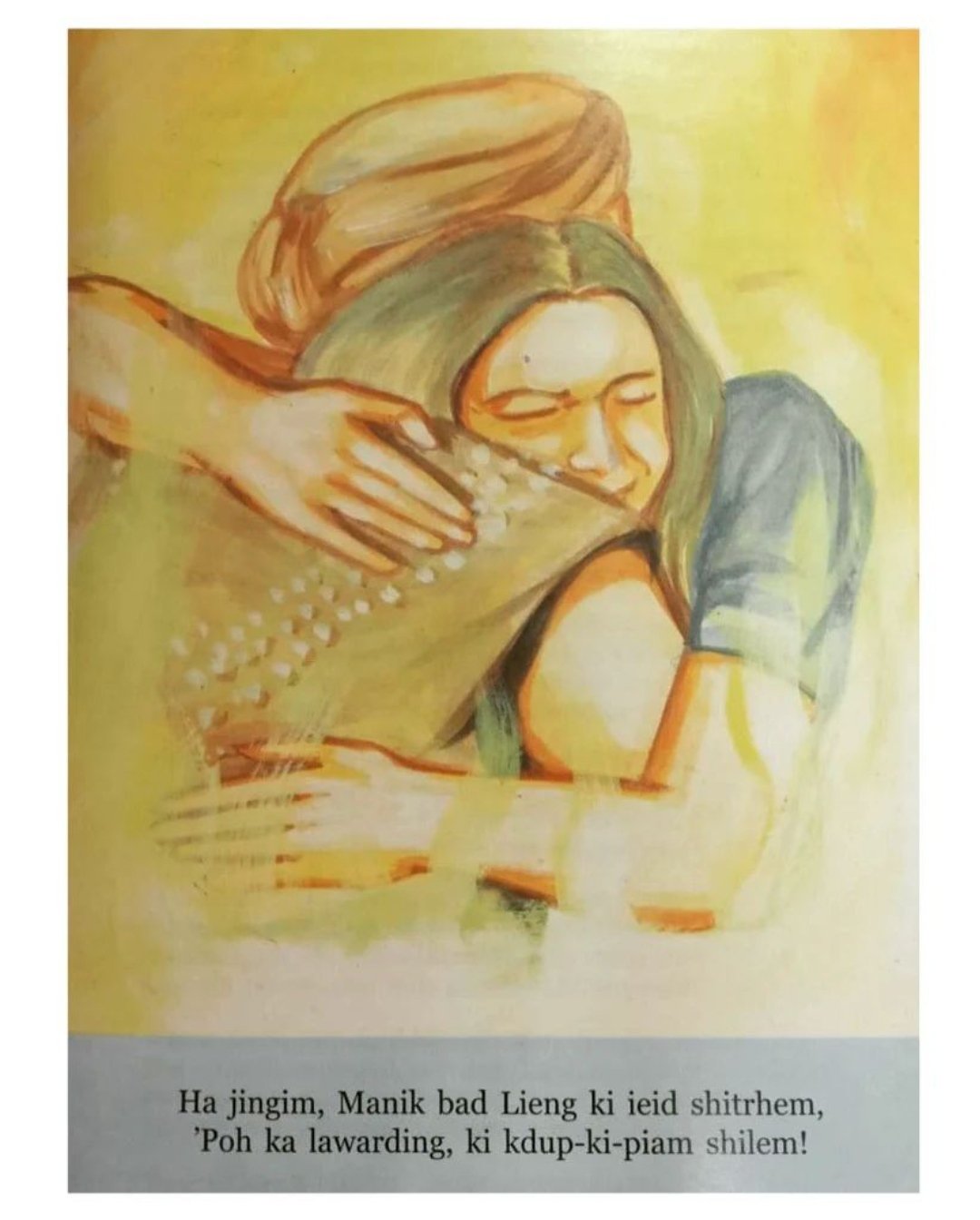
    It was thus that she came to him every night and as a result she became pregnant. However, never once did she disclose her identity to him. When U Syiem returned after long months of being away he found that Ka Lieng Makaw, his wife, had given birth to a son who was now a few months old. He was naturally angry when he found that his wife refused to disclose the identity of the father. He summoned his people and commanded all the men folk to assemble before him. Each was ordered to bring a bunch of bananas with him. On the assigned day he ordered each one of them to offer a banana to the baby boy in order to prove the boy's paternity. However, the baby boy refused each man's offer.

    Then, when U Syiem inquired if any man had been left out, general mention was made of U Manik Raitong. It was a known fact that U Manik Raitong lived a life that was no better than a dog's. U Syiem took no chances, however, and had him come to court with a bunch of bananas. When the baby boy was offered the fruit he reached for it as if familiar with U Manik Raitong. The father having been identified, it was now the turn of the people to be shocked. U Syiem's anger knew no bounds and he ordered that U Manik Raitong be beaten to death as a criminal. U Manik Raitong, however, pleaded before the king to be allowed to choose death by burning.

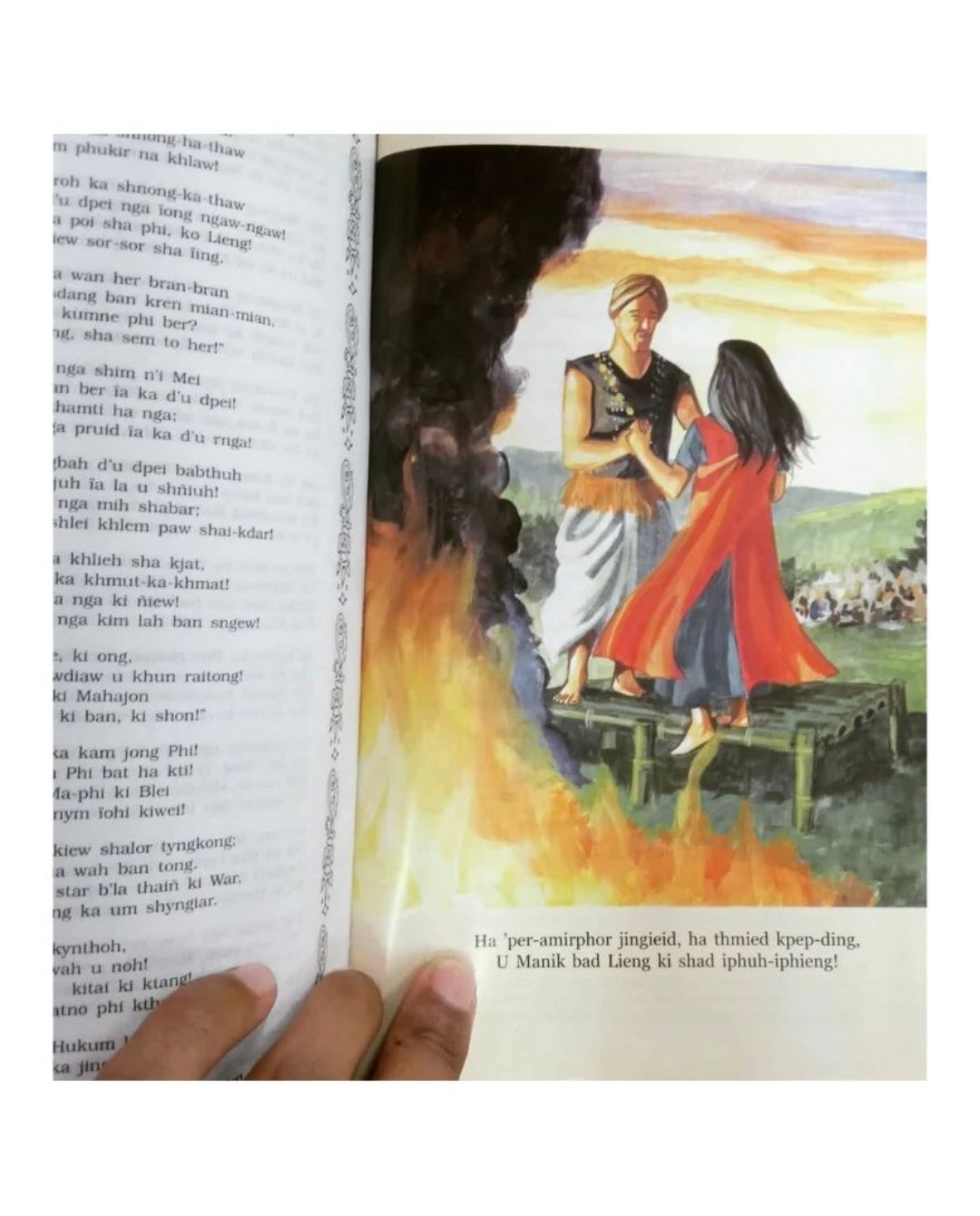
    On the assigned day U Manik Raitong dressed in all his finery, made his way backwards to the funeral pyre, all the while playing on his flute. The people had already set the pyre alight. When he reached it he walked round three times but before jumping into the burning pyre, he stuck his flute upside down into the ground. The queen too who was indeed agitated beyond control and who had also dressed up as U Manik Raitong had done, watched every development from her room. But when she saw U Manik Raitong jump into the funeral pyre she rushed after him in order to join him in death. The funeral pyre was transformed into a gushing spring of water which exists even to this day, and if one were to visit Raitong one would discover that in the place where the flute had been planted upside down there grows a cluster of bamboos, whose leaves point downwards.

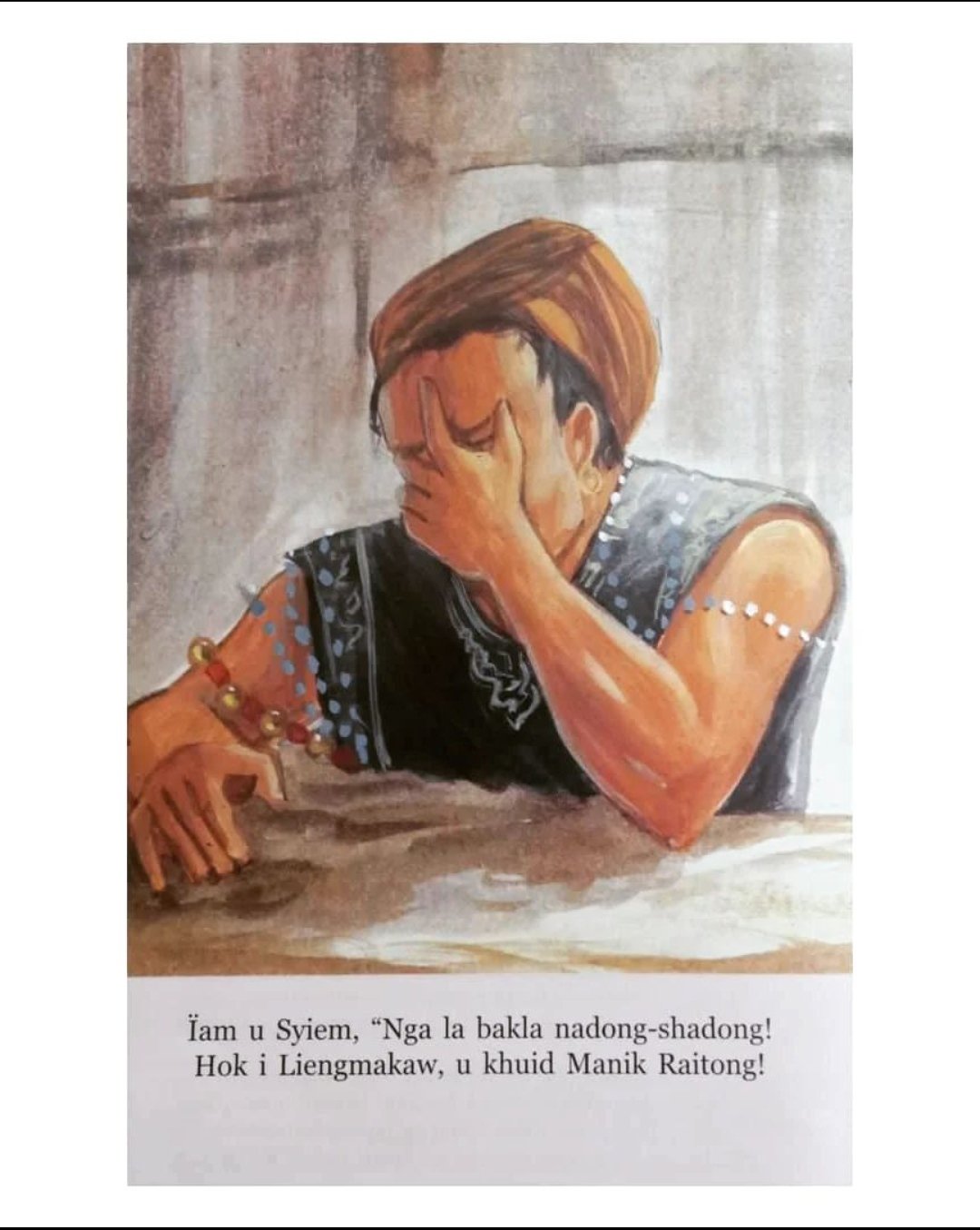
    Khublei Shibun Daohi Manar @xdtnoahjupejackllthmanar ba phi phah ïa kine ki dur jong kane ka kot 😄🙏

    U Daohi u ong: Ka kot Ka Lieng Makaw: Ka Ïam bynñiaw u Manik Raitong Shuwa Ba Un Shah Thang-Im ka dei ka jinglum lang jong ki jingrwai phawar kiba la rwai da i Bah Jespil Syiem. Kaba donkam ban tip ka long ba i Bah Syiem i khlem thoh ïa kine ki phawar, hynrei la lum lang hangne bad pynmih da ka Seng Kyrsei, jong ka Hima Raid UMden-Nongtluh, Ri Bhoi. Ïa kane ka kot la lah ban pynmih da ka jingimsngi bad jingduriap jong ka Vendrame Missiological Institute, Sacred Heart Theological College ka ba don ha Mawlai, Meghalaya.

    Kane ka kot ka batai bniah bha shaphang ka jingïam bynñiaw jong u Manik Raitong shuwa ba un shah thang-im bad ïa kane ngi lah ban sngewthuh lyngba ka jingpynwandur jong ki phawar. La thoh ïa kane ka kot ha ka rukom jong ki phawar. Ïa kine ki phawar la pynwandur da i Bah Syiem bad haba ngi pule ïa ki, nga sngew ki don ka bor ban pynmutdur ne pynpyrkhat ïa ka jinglong-jingman jong kata ka jingïam bynñiaw u bapli u Manik Raitong. Kaba myllung shuh shuh ka dei ka jingdon jong ki dur, kiba la pynwan katkum ki lynnong phawar.

    Daohi says: The book Ka Lieng Makaw — Ka Ïambynñiaw u Manik Raitong Shuwa Ba Un Shah Thang-im is a compilation of "phawar" sung by Jespil Syiem published by Seng Kyrsei, jong ka Hima Raid Umden-Nongtluh, Ri Bhoi. It is important to note that the phawar in the book have not been written by Mr. Syiem, as he has only sung and performed them. The book has also been released through the efforts of Vendrame Missiological Institute, Sacred Heart Theological College ka ba don ha Mawlai, Meghalaya.

    The book contains elaborate details of the sorrow and pain of "U Manik Raitong" before his burning and this is brought to us through the compositions of the "phawar". The story of "U Manik Raitong" and "Ka Lieng Makaw" is delivered through the singing of the "phawar". They have been composed in such a way as to express the despairing cries of "U Manik Raitong". What makes it even more evocative are the pictures that have been drawn according to the chapters of the "phawar".

    The English translation of the story is taken from "U Manik Raitong, Icon of Love and Creativity: An Appraisal" in the book The Oral Discourse in Khasi Folk Narrative by Dr. Esther Syiem.

  • Excerpt from the Introduction of “Ki Khanatang bad U Sier Lapalang” by Primrose Gatphoh (1937)

    U Primrose Gatphoh u ong:

    "Ki Puriskam, ki Purinam, ki Parom bad ki Khanatang ki don sawdong kane ka ri jong ngi, ha ki trep bad ki skum, sawdong ka lyngwiar dpei ba syaid bad ba rhem jong u khun Khasi Pnar baroh. Hynrei ka long kaba eh shibun ban lum ban lang, bad ban tai ban peh bha ïa ki shuwa ban pynsah ïa ki ha ka thoh ka tar kum ki mar kynti ka ri.

    Kam long ka kam kaba suk ban lum na kaba shu ïohsngew ka shkor, bad kaba shu kem na ka hamsaïan shaphang kiei kiei kiba ngi ju ïohsngew bad ïa kren barabor hapdeng jong ngi, kum ïa ki khlawait, ki thma, ki kut, ki kharai bad ka jingngeit ki briew ïa ki ryngkew ki basa kiba don sawdong ki lum bad ki wah jong ngi…

    Ngim lah ban ieit ïa la ka ri khlem da tip ïa ki Khanatang ki longshuwa jong ngi. Ban bud dien bad ban wad ïa ka kpait ka rukom pyrkhat hyndai, ka long ka jingsdang kaba shi kyrdan sha ka jingieit ri kaba shisha. La ki nongthoh bad ki nongïathuh ki ïapher, hynrei ki thymmei bad ki jingthmu na kiba ki la mih ki long kijuh."

    "Fairytales, fables, folktales and myths are all around our hills, in huts and homes, around the warm and fiery hearth of Khasi and Pnar families. But it is arduous to collect, to select, to sift and sieve through these stories before they are preserved in the written form as valuable heritage. It is not an easy job to gather from what is heard by the ears, and to grasp from unclear accounts that are heard from here and there, about what we usually hear and talk about among ourselves, about brave warriors, warfare and the belief in forest guardians who are present in our hills and rivers…

    We cannot love our community without knowing the myths and folktales of our ancestors. To follow and to search for the tracks of the old ways of thinking, is to begin at the first step towards a true and real love for community. Even though writers and story tellers are different, but the source and the aspirations from which they arise are the same."

    Bunsien ngim ju kham pule ïa ki "Shi Kyntien" jong ki nongthoh kaba ki ai ha kaba sdang jong ki kot jong ki. Kane ka dei na ka kot jong u Primrose Gatphoh. ✒️📖 Ki dei ki ktien kiba ai jingtip, jinghikai bad ki pynsngew ruh ïa ka jingsngew kitkhlieh na ka bynta ka ri la jong. 🏞️🌧️

    Often we do not read the introductions or the forewords given by writers at the beginning of their books. This introduction is from the book of Primrose Gatphoh. ✒️📖 These are words which give knowledge and teaching. They also reflect a sense of responsibility for the community 🌧️🏞️

    🟡 English translation by @speakyourroots

  • Namar ba ka dohnud u briew…

    "Namar ba ka dohnud u briew ka dei ka jaka kaba rit eh ha kaba ka jingsngew jong u ka shong; pynban, dei na kata ka jaka ba ka bor kaba synshar ïa ka jingim jong u kaba man ka sngi ka wan mih, bad ba kane ka bor ka pynproh ïa ka jabieng jong u haduh katta katta ba u lah ban ïohi ïa kiei kiei kiba phylla kiba don ha lyndet ka jingïohi ki khmat jong u…"

    – La shim na U Don Putit Bad U Khlieh Ka Khnap Masi (1978) ba la thoh da u Dewi Singh Khongdup

    "Because the heart of man is such a small space where his emotions dwell; yet it is from this space that the power and energy that rules over his life everyday emerges, and it is this power and energy which sharpens his brain, to the extent that he is able to see incredible and wonderful things which lie beyond the vision of his eyes…"

    -Translated from U Don Putit Bad U Khlieh Ka Khnap Masi (1978) written by Dewi Singh Khongdup

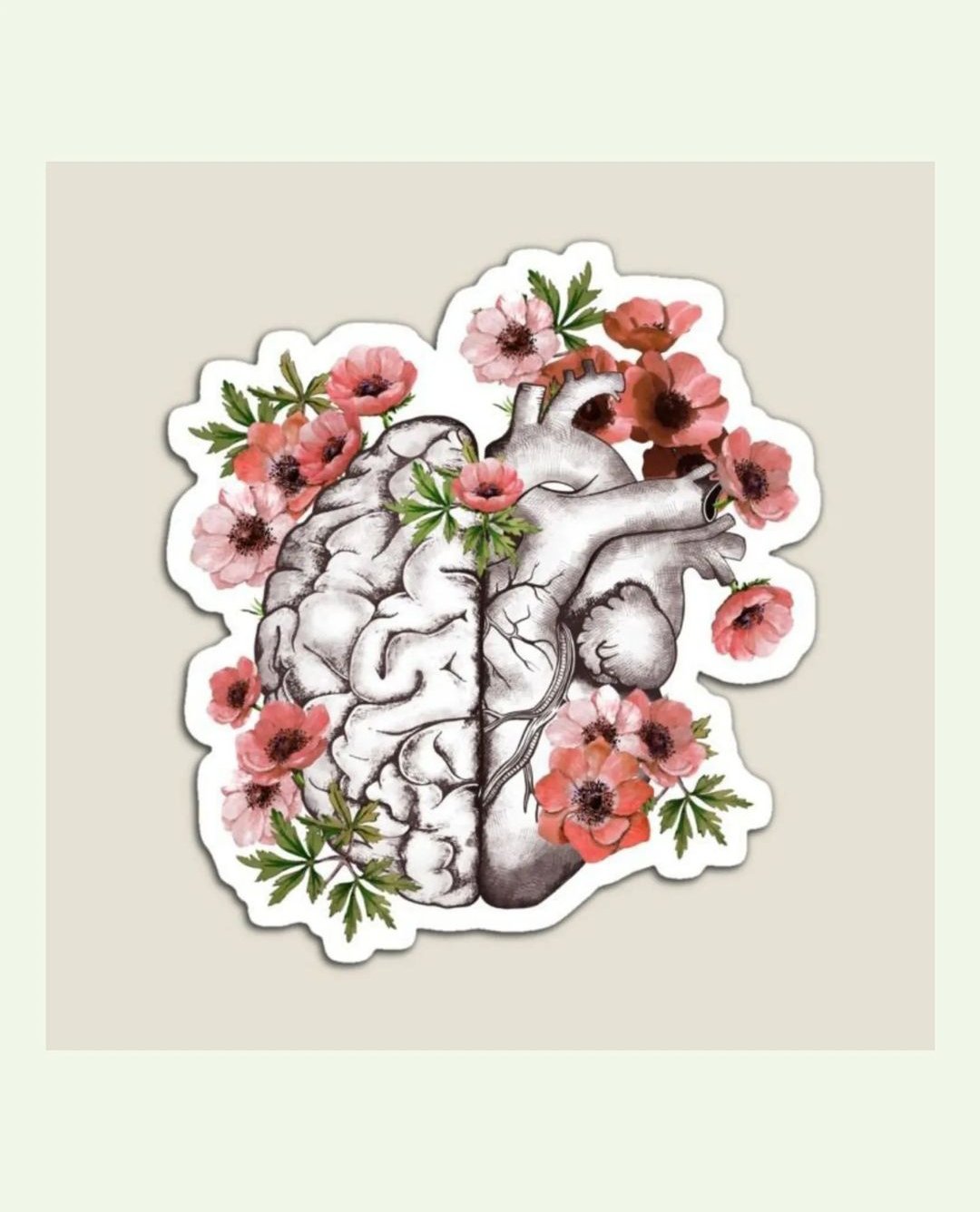
    The heart and the mind, "ka dohnud bad ka jabieng" as the passage says energise our existence. ❤️🧠

    The series of books on the character of U Don Putit by Dewi Singh Khongdup are entertaining and humourous and also contain valuable lessons for human life.