Tag: khasifolklore

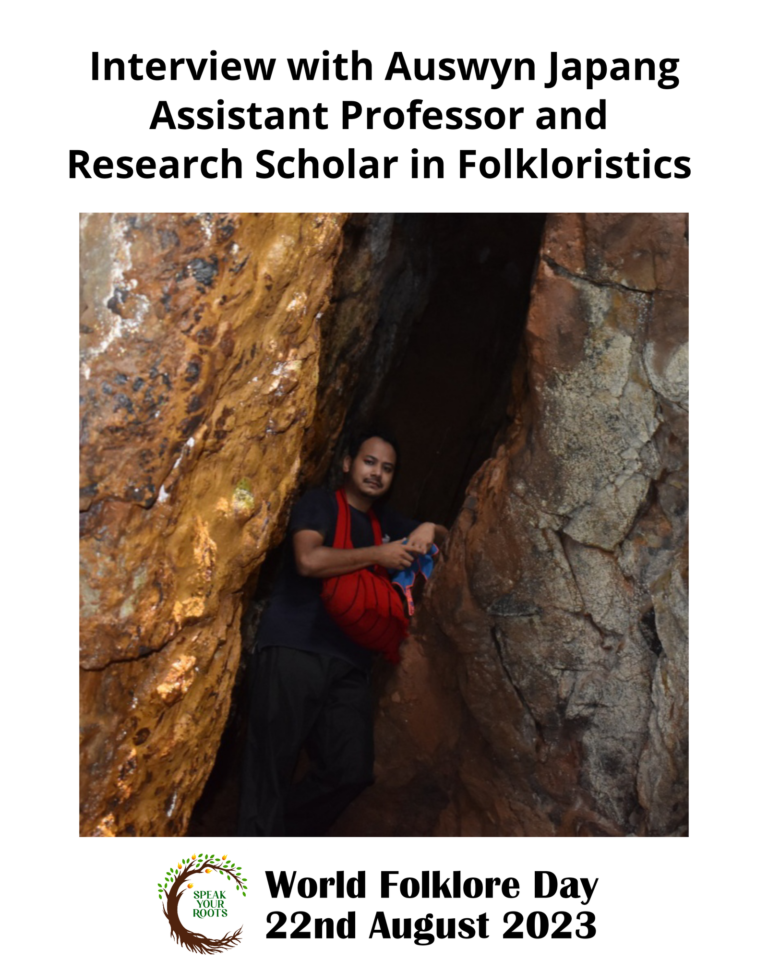
  • Interview with Auswyn Japang, Assistant Professor and Research Scholar

    1. Ka ktien "folklore" ka mut aïu?

    Folklore ka dei ka jingiasoh jong ki ar tylli ki kyntien: ‘Folk’ kaba mut ki briew – ym tang kito kiba don ha ki nongkyndong, bad ‘Lore’ kaba kdew ia ki khanatang, ki puriskam, ki purinam, bad ruh ki jingrwai ki phawar. Hynrei, ka Folklore kam kut tang katne; ka dei ruh ka jingwan lang jong ki jingmut jingpyrkhat, ki khana ba laiphewjait bad ruh ki rukom. Ka kynthup ruh ia ka kolshor bad rukom im, ki jingngeit bad kumjuh ruh ia ki jingohdur bad ki rukom shna bapher bapher. Ka kynthup ruh ia kiei kiei kiba ngi lah ban iohi bad ia kito kiba ngi shu lah ban sngap. Bad ju ong ruh ba ka Folklore ka dei ka jingstad ba khlem da hikai jong ka pyrthei.

    1. What does the word "folklore" mean?

    Folklore is a combination of two words: ‘Folk’ implying people – not necessarily just the rural population, and ‘Lore’ predominantly implying stories, myths, legends, as well as songs. However, Folklore is more than just these elements; it is the coming together of ideas, narratives, and practices. It encompasses culture and tradition, beliefs, as well as art and architecture. It includes that which can be seen and that which can only be heard. Folklore is sometimes considered as unofficial knowledge about the world.

    2. Kumno ngin kham sngewthuh jylliew ïa ki riti dustur Khasi kiba la ïoh pateng na ka ktien ka thylliej?

    Ka jingdonkam ba kongsan eh jong ka ia kaba mynta ka dei ba ngi donkam ban don ka lad ha kaba ki khun samla ki long kiba shah pynshlur bad kiba kloi ban tip shaphang ka kolshor bad ki rukom kiba long tynrai lyngba ki khana. Dang shen ruh nga sdang ia kawei ka projek ha St. Anthony’s College lyngba ka Design Innovation Centre, ha kaba ngi pyndonkam ia ki khanatang kum shi bynta na ki jingpyrshang jongngi. Lyngba kane ka projek, ki khynnah jong ngi ki ioh ban nang ki skill kiba thymmai bad ruh ki ioh ia ka jinghikai ban burom ia ki khana bad kin long kiba kloi ban wad jingtip ba kham janai na ki. Kumjuh ruh, ki don katto katne ki kot ba ngim da kham pule la ngi dei ki rangbah ne khynnah kiba lah ban ai jingmut shuh shuh shaphang ka ktien ka thylliej u Khasi.

    Ngi donkam ruh ban don ka jingpynmlien ba pynshlur ban pule kot, khamtam kito ba lah thoh khnang katkum ka jingdonkam jong ka por ka ia jong ngi khnang ba ngin sngewthuh kham bha ia ka ktien ka thylliej u Khasi. Ka jingtip bniah ia la ka kolshor ka long kaba kongsan tam, da kaba ngi shim bynta ha ki cultural fest ne kino kino ki jingrakhe kiba iadei bad ka riti ka dustur jong ngi kum u Khasi. Ha kajuh ka por ruh, ki jaka pule (naduh kiba rit tam bad ter ter) ki lah ban noh synniang ha kane ka bynta. Kine ki lah ban wanrah ia ka jingsngewjan bad jingsngew sarong ia la ka jong ka kolshor. Ki literashor kiba iadei bad ki khynnah bad ki novel ba don bad ki dur ki dar kin iarap bha.

    2. How do we deepen our understanding of Khasi orality?

    One of the greatest needs of the hour is to create a situation where young people are encouraged and excited to learn about culture and traditional values through stories. I have recently started a project at St. Anthony’s College through the Design Innovation Centre, where we use folklore as the basis for our endeavours. Through this project, our students are not only learning new skills but are also being taught to find value in narratives and are encouraged to explore them. Additionally, there are a considerable number of books that are rarely read by both adults and children which can add towards the deeper understanding of Khasi orality.

    A reading culture is needed as well, one that is tailored to the demands of the time in order to understand the conceptual idea of Khasi orality. Exposure to one’s culture remains highly necessary, with active participation in cultural festivities and celebrations being strongly encouraged. Simultaneously, academia (starting from the lowest level and so on) can contribute to this. It can foster a sense of connection and pride in one’s own culture. Children's literature and Graphic novels can truly add so much.

    3. Kiei ki mat pdeng jong ka rukom ngeit rukom pyrkhat jong ki Khasi?

    Ki phang pdeng jong ka jingpeit, jingsngewthuh bad ka jingiadei jong U Khasi bad ka pyrthei ka long halor ka bor jong ka jingiateh, kiba iaid ryngkat ha kiba bun ki bynta – bad U Blei, para briew, bad ka mariang. U Khasi um lah ban im khlem ka jingiadei bad la U Blei, kum ba u/ka kim lah ban im khlem ka iing ka sem bad ki kur ki kha. Shuh shuh, u Khasi u bym suitniew ia ka mariang bad baroh kiba ha ka u lah phet jngai noh na ki jingngeit tynrai jong ki Khasi kum naduh ka mynnor. Kine baroh ki paw shai bha haba ngi leit wad jingsngewthuh shuh shuh sha ki field (lyngba ki fieldwork). Haduh kine ki sngi, ngi lah ban shem ia ki ha ka folklore jong ki Khasi, ki jingrwai tynrai, bad ruh ki riti ki dustur. Ki snem ba nga pynleit ha ka fieldwork ka lah ailad ianga ba ngan sngewthuh ia kine baroh, bad ki pyni shai ia ka jinglong kylluid ka jingpeit, jingsngewthuh bad ka jingiadei jong U Khasi bad ka pyrthei ha kaba u im da kaba wad ia ka jingim kaba shongsuk shongsaiñ.

    3. What are the salient features of the Khasi worldview?

    The Khasi belief system centres around the strength of bonds, operating on multiple levels – with God, among humanity, and with nature. A Khasi cannot exist without a connection to God, just as he/she cannot exist without their family and clan. Moreover, a Khasi who lacks deep respect for the land and the natural world has deviated from the beliefs of their ancestors. These elements become evident when one engages with them in the field (through fieldwork). To this day, these aspects remain observable in Khasi folklore, folksongs, and religious traditions. My years in the field allowed me to observe all of these, and it speaks volumes about the inclusiveness of the Khasi worldview that yearns for harmonious existence.

    4. Kumno ki rukom ngeit rukom pyrkhat jong ki nongwei ki ktah ïa ka rukom ngeit rukom pyrkhat jong ki Khasi?

    Namar ba ka jingwad jingtip jong nga ka dei ha ki War-Khasi, ngan jubab ia kane ka jingkylli lyngba nga jingsngewthuh jong nga. Ka jingpeit, jingsngewthuh bad ka jingiadei jong ki phareng, khamtam ha ka niam ka jingngeit, ka paw ba ki don katto katne ki jingktah. Haba u Khasi u pdiang ia ki jingpeit, jingsngewthuh bad ka jingiadei jong u bad ka pyrthei kumba ki peit ki phareng, ngin shem ba ka jingiadei jong u bad la ka jong ka jaka ka hiar, watla U Blei u iai long ba kongsan ha ka jingngeit jong u. Ki khana bad ki riti ki dustur ki kylla noh bad u jngai noh na ki, teng teng lah pynjngai bad lah bthah leh klet noh. Hynrei, khyndiat eh kiba pynneh iaki. Ka jingsaphriang jong ki khanatang bad kumta ter ter ka hiar noh, bad ju iohi bha ia kane ha kiba dang kham samla. Hynrei, kito ba don ka jingieit ia la ka jong ka kolshor bad ki pyrshang ban pynneh ia ka jingpeit, jingsngewthuh bad ka jingiadei jong u Khasi bad la ka mariang hi. Kaba sngewsih ka long ba bun kiei kiei kiba dei bad ka kolshor ne ka jinglong Khasi ka paw shai ka la duna. Ngi lah ruh ban ong ba ki jingpyrshang bad ka jingshimkhia jong ki jaka pule ka ai jingkyrmen.

    4. How have foreign worldviews affected the Khasi worldview?

    Since my research has primarily focused on the War-Khasi, I will be addressing this issue from that perspective. Foreign worldviews, especially concerning religious beliefs, have exerted certain influences. When a Khasi adopts a foreign worldview, their connection to the land weakens, even though God remains central to their belief system. Belief narratives and practices related to the land become unfamiliar to them, often discouraged and even suppressed. However, a small minority strives to preserve them. The sharing of folklore diminishes as a result, a phenomenon sadly observable among the younger generation. Conversely, cultural lore is retained mainly by those who maintain a strong affinity with their own worldview. The erosion of cultural memory is evident in most cases. However, a rising trend in academic interest seems to be promising.

    5. Kumno ki tiar stad ka juk mynta bad ki kor pathai jingtip kin nang bteng ban ïarap ban pynneh ïa ki riti dustur, ki rukom ngeit rukom pyrkhat bad kiwei kiwei jong ki Khasi?

    Ki technology bad ki kor media kiba mynta ki ai ia ki lad ban leh ia ki documentation ba bun rukom ha kaba iadei bad ka Khasi folklore. Ngi lah ban leh digital recording bad archiving, pyndonkam online platforms bad databases ban pynneh pynsah ia ka folklore jong ngi bad ruh ngi lah ban thoh ban tar bad ban pynkylla ktien ia ki jingthoh jong ngi sha kiwei pat. Ngi lah ruh ban shna ki kot pule, lah ban wanrah design bad innovation, bad ter ter. Ki lad ki long kiba bun bha. Hynrei, ki snem kiba nga lah pynleit ha ka fieldwork ki kdew ba ki don katto katne ki bynta jong ka folklore jong u Khasi ba ym lah ban lym kat kum ki kor ki bor mynta bad kan long kaba bakla ban shu pynwan dur noh ia ki ha ki kot ne hapoh ki kor media bapher – donkam ban mad ban shem ia ki kumba ki long hi. Katba dang don ki nongioh kynti jong ki riti ki dustur jong ngi, kiba pynneh ban pyndep ia ki, ka folklore jong u Khasi kan neh. Watla katta ruh, ha kaba donkam, ki kor technology ba ngi don ki lah ban iarap ban pynneh ban pynsah ia ka. Ha kaba mynta, nga tip ba ki don katto katne ki projects kiba trei nylla ha kaban lum bad pynneh pynsah ia ka folklore u Khasi kaba donkam mynta mynta.

    Ha kane ka artikl, nga lah pyrshang kat ba lah ban pyni ia kiba pule ba kin sngewthuh ia ka jingdonkam ban don ha ka field ban lum ban lang ia ka folklore. Kawei de ba nga lah ban kdew ka long ki riti ki dustur ba nga thoh ha kane ka artikle ki long ka Phur Nongjri bad ka Phur Sohbar ki bym shah ban ring ne shon dur ha kano kano ruh ka rukom, namar ka field hi ka kyntu ba ym baroh ki bynta jong ka folklore u Khasi ki donkam ban shah lum shah lang lyngba ki kor media kiba mynta.

    “Lore and the Process of Tradition: Locating the Place of Narratives and Religion in Ka Phur Nongjri and Sohbar”. In Untold Narratives, Invisible Marks, Ethnographica et Folkloristica Carpathica, Ethnology and Folklore. No 23. Pp. 89-102. 2021. https://ojs.lib.unideb.hu/ethnographica/article/view/9223/9132

    5. How will technology and media continue to help in the documentation of Khasi folklore?

    Modern technology and media offer numerous incentives for the documentation of Khasi folklore. We can utilize digital recording and archiving, online platforms and databases for preserving folklore and folk traditions, transcribe and translate materials, create educational resources, develop adaptive designs and innovations, and much more. The potential is limitless. However, my years of experience in the field suggest that certain aspects of Khasi folklore defy archiving or documentation in textual or digital spaces – they must be experienced and felt in the moment. As long as custodians of folk traditions exist, who continue to articulate and practice them, Khasi folklore will endure. Yet, whenever the need arises, modern technology can assist. Presently, I am aware of a few projects that are diligently working towards documenting aspects of Khasi folklore that require immediate attention.

    In this article, I have tried my best to direct the reader’s attention on the insistence of being in the field to be part of the documentation of folklore. The fact that the practices considered in this study ‘Phur Nongjri’ and ‘Phur Sohbar’ discourages documentation, the field itself suggests that not all aspects of Khasi folklore needs or can be documented.

    “Lore and the Process of Tradition: Locating the Place of Narratives and Religion in Ka Phur Nongjri and Sohbar”. In Untold Narratives, Invisible Marks, Ethnographica et Folkloristica Carpathica, Ethnology and Folklore. No 23. Pp. 89-102. 2021. https://ojs.lib.unideb.hu/ethnographica/article/view/9223/9132

    Happy World Folklore Day!

    Today on World Folklore Day, 22nd August 2023, we have an interview with Auswyn Japang @ausjapang who is an Assistant Professor and a Research Scholar in Folkloristics 🏞️🌿

    Khublei Shibun @ausjapang for expressing your thoughts and expertise on these questions, which have been made quite comprehensive! 😄🙏

    Auswyn says about research and fieldwork: "While every now and then I do get to engage in fieldwork, this is where true folklore resides. Some fieldwork involves treks of tremendous distances and they sometimes happen late in the evening as well. Sometimes without a streetlight. And no roads. Fieldwork also demands a great deal of endurance. I had to go down a sharp decline to reach a cave of religious significance whose folklore is unknown to a great many."

    We express our appreciation and gratitude for your hard work and the gruelling experiences that you have to go through to complete your research! 🙏🙏 Kudos to all research scholars who are who are plodding day and night to preserve and document Khasi folklore and folklife!

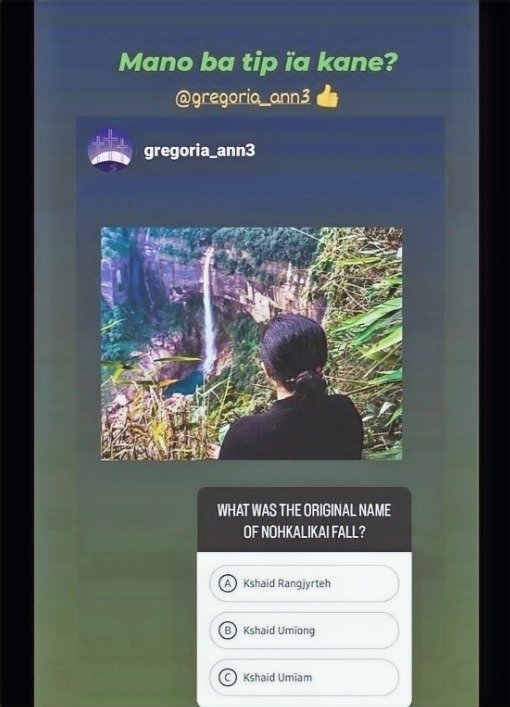
  • The original name of Nohkalikai Fall

    Ka Kshaid Nohkalikai

    Naduh hyndai kulong-kumah, hajan kawei ka shnong kaba kyrteng ka Rangjyrteh, ka tuid kawei ka wah kaba kyrteng ka Umïong. Ka tlong jong ka, ka long na shaphang Laitryngew, hynrei katba ka nangtuid arsut, katta ruh ka nang-heh nang-heh, ba bun ki shnat wahduid kiba wan ïasoh-lang bad ka, haduh ba ka kylla kum kawei ka wahbah ka baheh. Ka don kawei ka kshaid kaba ki ju khot kyrteng ka kshaid wah Umïong. Kane ka kshaid ka long ka bajrong rymphai bad ka baitynnad shibun eh, khamtam leilei ha ka por lyïur haba jur u slap. Ka jingnoh rymphum jong ka na khlieh-riat shapoh thwei, ka pynthame bad pynïap-ngiah ïa ki nongpeit haduh ba kim ngiah ban peitseh bad peit-jylliew ïa ka um kaba tuid phir-phir kumba tuid ka dut. Napoh ka thwei bajylliew jong ka, ki kiew ki sur ba sawa kynud ha ka jingbeh ka lyer, ryngkat bad ka jynhaw tdem-um kaba kiew, man la ka teng, kum u lyoh ha sahit-bneng.

    Dang hyndai-hynthai kata ka Rangjyrteh, ka la long ka shnong ka bapawnam hakhmat ki para-shnong baroh kiba ïadon markhap bad ka. Wat la ka la duh-noh, hynrei haduh mynta- mynne, ka kyrteng jong ka, ka dang sah tyngkreiñ . Ha kata ka por, ka la long ka shnong kaba bun briew. Bad ki briew ruh ki basmat-basting ha ka trei-ka-ktah, ha ka leit-ka-wan…

    .

    .

    .

    .

    Ka dohnud kmie jong ka, ka pdang hieb, bad ka lynñiar-kaw. Ka ïam, ka lympat ïalade bad ka pajut la u shñiuh. Ka rah la kawei ka wait bad ka phet kulmar kum ka balamwir. “Balei, balei” la kylli ki briew kiba wan ïabeh haba ki ïohsngew ïa ka jinglynniar, “ balei pha leh kumne?” “ Ngan nai im shuh,” ka la ong. “ Waw! u la shet u dusmon shisngi, ba un phon un shet ïa nga ba ngan bam-doh la i khun. Ngan leh aïu pat ban im khlemrain ha ka pyrthei, la suk ka tap.” La ki khroh, ki pyntngen ïa ka ruh, kam patiaw ; ka phet la ka phet bak-bak. La ki mut ban kem ruh, ym don ba shlan, namar, ka talaiñ da ka wait. Kumta ki shu ïabud lyngngoh kham na pajih, da ka jingsngewsynei kum ban jawummat. Ki kmie ki ïaphet kulmar shane shatai, ki ïapyrta la ki khun ki khun haduh ba ka shnong ka la win hi ñiak. Ka Likai pat, ka la mareh sak-sak sha khlieh-kshaid-Umiong bad ka la nohïap sham-lysham shapoh thwei.

    Naduh kata ka por, haduh kine ki sngi ki sa khot ïa kata ka kshaid “Ka Kshaid Nohkalikai.”

    Khublei Shibun @gregoria_ann3 ïa kane ka jingkylli! 😃😃 Ka jubab ka dei ka Kshaid Umïong! Bun na ngi ngim tip ïa ka jubab tipma ka don ha ka kot Ki Khanatang U Barim ba la thoh da i H. Elias S. D.B. 🏞️🏞️

    Khublei Shibun ïa phi @bee_the_wanderer @pynshngain25_ bad @donbok.rynjah.50 ba phi la phah ïa ka jubab kaba dei! 👍🙏

    This was a question posted by @gregoria_ann3 about the old name of Nohkalikai waterfall. The answer is Umïong waterfall which can be found in the book Ki Khanatang U Barim written by H. Elias S.D.B. 🏞️🏞️

    Photo credit: @gregoria_ann3

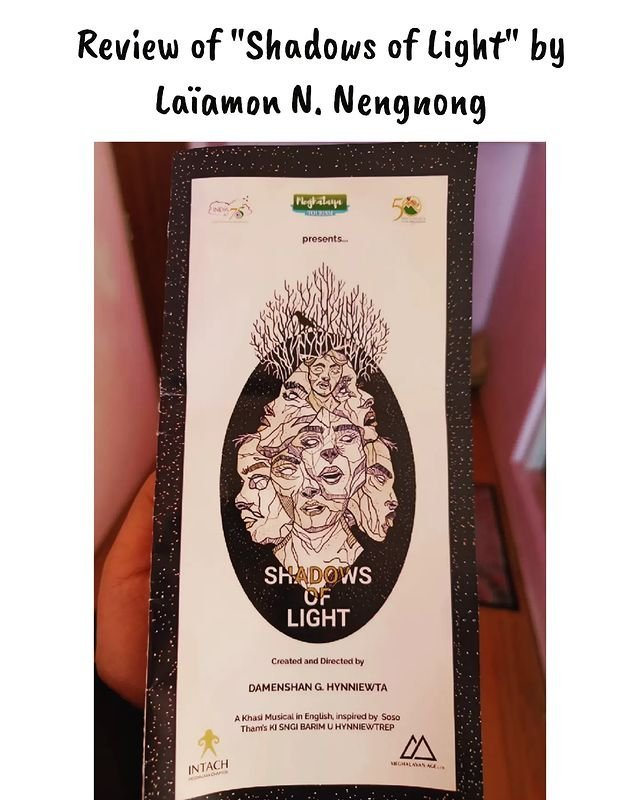
  • Review of “Shadows of light” by Laïamon N. Nengnong

    "Shadows of Light" directed and written by Damenshan Hynniewta is deftly and most intelligently created. The script, acting, music and arrangement of light and sound is unmatched. An interweaving of folklore into themes which emanate social and psychological realism, with every character standing out.

    Each theme is portrayed in nuanced and complex ways, staying true to the human condition that each legend and folktale is a mirror reflection of. The themes of love, motherhood, necromancy, in the stories of Ka Sohlyngngem, Ka Sngi bad U Bnai, U Sier Lapalang and others, showcase ingenuity of plot molding, so that the meaning is not one, but many.

    The theme of love is brought forth in the idea of forbidden love, the tenacity for beating all odds in spite of what is forbidden-the odds of family, rules of exogamous marriage in the Khasi society, and even to challenge death itself.

    Through the theme of parental love, the writer makes one re-examine the well accepted idea of unconditional love associated with it. At the same time, Hynniewta drives home the theme of purpose and fulfilment, the gendered biases and prejudice that society has on a "loose woman" from that of a man "who sows his seed everywhere" and is never made accountable for his misdeeds.

    All in all, "Shadows of Light" is a journey; one which makes the spectator reflect, contemplate, question, and even transform. It is the kind of musical that can capture the audience's attention and senses, in their entirety and I am excited for more works by Damenshan Hynniewta.

    Ka Peit Bniah ne ka Review jong ka sawangka "Shadows of Light" kaba la long ha ki tarik 13, 15 bad 17 u Kyllalyngkot 2022, ha ka Shillong International Centre for Performing Arts and Culture, SICPAC, Mawdiangdiang.

    Khublei Shibun @laia.naomi ba phi la phah ïa kane ka Peit Bniah kaba la pyrkhat sani bha! 😃🙏

    📸 @laia.naomi

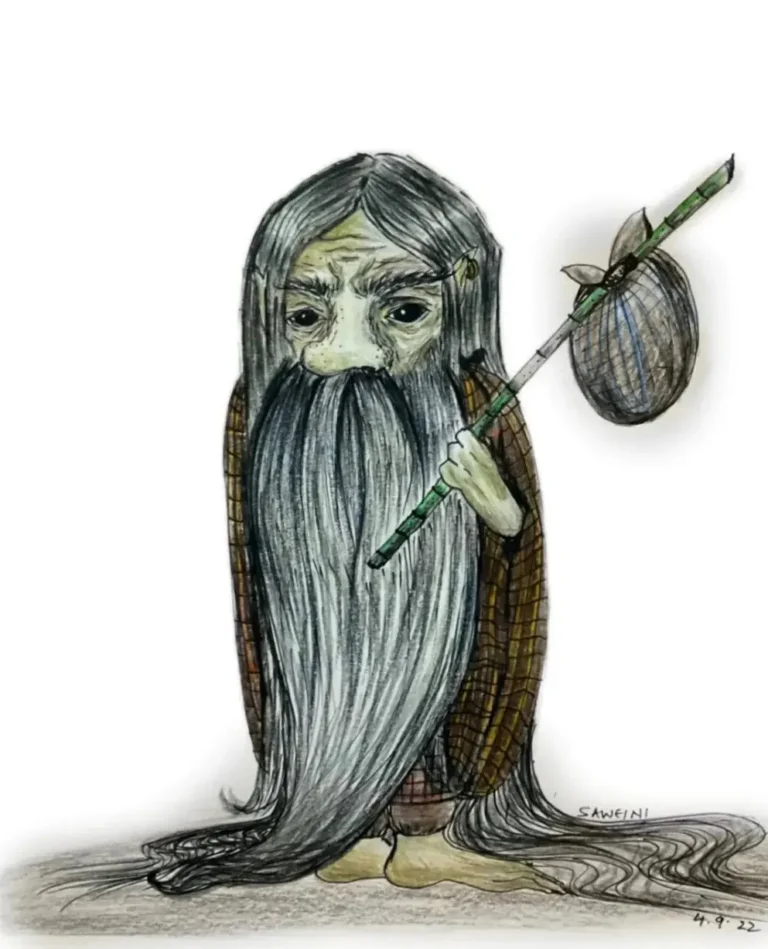
  • Ki Boit by Saweini Laloo

    Saweini says:

    Boit is a mythical character in Khasi folklore. The boit is the equivalent of the English "dwarf" and is believed to have long hair, sharp eyes and ears and menacingly sharp claws. The most striking of its features, however, are its feet! They turn backwards instead of forward like the ordinary human.

    Once, my father told me a story of a time from his childhood when most parts of Shillong were but a dense forest. He came home late one night and had to pass by an open field or "pynthor" lined with bamboos. It was eerily quiet that night and in Khasi belief, this is always an omen of the presence of some supernatural being. Sure enough, after reaching the middle of the field, he heard tiny voices singing. My father, being well acquainted with the different stories passed on by his parents and grandparents, knew exactly that he had to take cover and wait until the "boit" went their way. It was tragic to encounter them. My father hid behind some bushes and watched as one by one the boits walked their regular path, humming a strange tune. Bamboo clustered areas are believed to be the favourite haunts of such beings."

    Ngi ju ïohsngew ki khana shaphang ki boit bad bunsien ngi shait sngew ngiew sngew tieng da lah ïa sngap ki khana 😅😱 Khublei Shibun @saweini_ ba phi la phah ïa kane ka jingdro bad ka jingthoh jong phi 😄🙏

    The supernatural and horror in Khasi folklore is always engaging and also serves as great material for stories.

    🟡 Art by @saweini_

  • Sem Dieng da Treiborlang Lyngdoh Mawlong

    Treibor says:

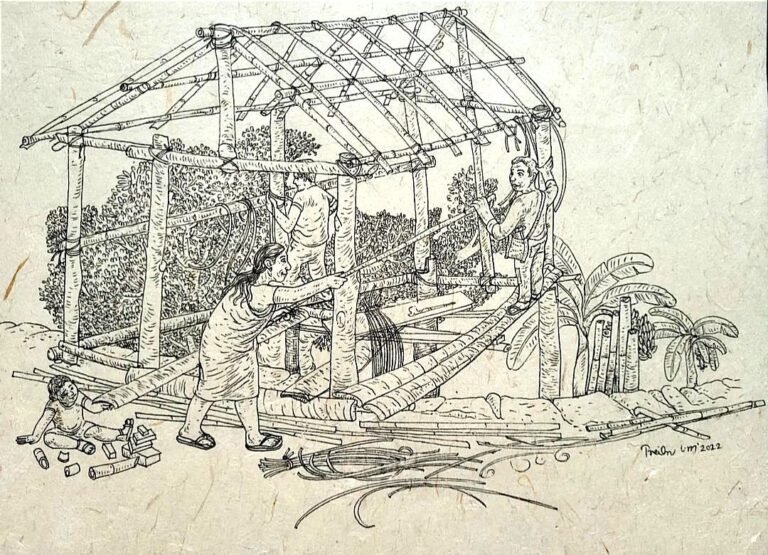
    Ka jingshon jingmut ba nyngkong jong nga ban thohdur ïa katei haneng kadei ha ka por ba dang ïa shna ïa i "cjung khoh" (ha ka ktien Maram lane "i sem di" / "sem dieng" ha ka ktien Mairang Sohna) ha shnong ha Mawbri. Ha ka por shna ngi ïa don bynta lang baroh shi ïing.

    Ine i ïing rit ba shna da ki siej, dieng tai bad ki lwar i don ha syndah ka ïing bah. Mynta ngi pyndonkam ïa kane haba buh diengïap, tiew um, bad mynta lei lah kumba lai taïew lah ïa shet ïa bam hangne khlem kynmaw shuh ïa ka kamrashet ja kaba ha ïingbah.

    Kaba pynlong ïa nga ban kynmaw ban thohdur ïa ine i trep dei ka jingsyiaid bad ka jingjuh ba i ai ïa ngi. Lada wan phai naei naei, mar synpoi lada leit ha ine i ïing nga lap ba baroh ki don hangta ha i trep. Katno ka jingsngew juh jingsngewtynnad na kata ka ïaid kjat kaba thait bad ba jngai.

    Kine ki long ki jingkynmaw kiba ktik ban pynlong ïa nga ban dro ïa ito ï ïing.

    What pressed on my mind to draw the sketch was the time when we built the "cjung khoh" (Maram dialect) in Mawbri. (In Mairang Sohna they call it "i sem di" / "sem dieng"). When this was made all of us in the family were present.

    This shed which has been made with bamboo, a kind of palm leaf and bamboo string is adjacent to the big house. Now we use it to keep wood, to heat water and now for about a week we have been cooking and eating in the shed, completely forgetting about the kitchen in the main house.

    What made me draw this shed was the memory of the warmth and comfort that it gives us. When I return from anywhere, I find that everyone else is inside the shed. It is such a happy and restful feeling when returning from a tiring and long journey on foot. These are the memories that played in my mind which inspired me to draw the sketch.

    The art of @treibor_mawlong is highly detailed and expressive depicting the folk life of Khasis. 🏞️🌾
    On this World Folklore Day, let us take a closer look at the increasing repository of visual art that is growing among Khasi artists. Let us also be observant of how they portray Khasi custom, practices and beliefs.

    🟡 Treiborlang Lyngdoh Mawlong is a visual artist with a Master's degree in Fine Arts, with Honours in Painting (2012) from Visva Bharati University, Santiniketan. Treiborlang is a recipient of a number of awards which include The Inlaks Fine Arts Award, Kala Sakshi Award in Painting, Talented Young Artist Award from NEZCC, Scholarship grant for the year 2012-2013 from Lalit Kala Akademi.

    Treiborlang has participated in exhibitions in India and abroad. He has also been published as a comic artist/ writer and illustrator for publications like Strapazin and National Book Trust.

    Currently Treiborlang is teaching Art Education at District Institute of Education and Training, Nongstoiñ.

    Khublei Shibun Bah @treibor_mawlong ba phi la shah ban pyni ïa ki jingdro dur jong phi ha ka page! 😄🙏

  • Khasi Waterlore by Margaret Lyngdoh

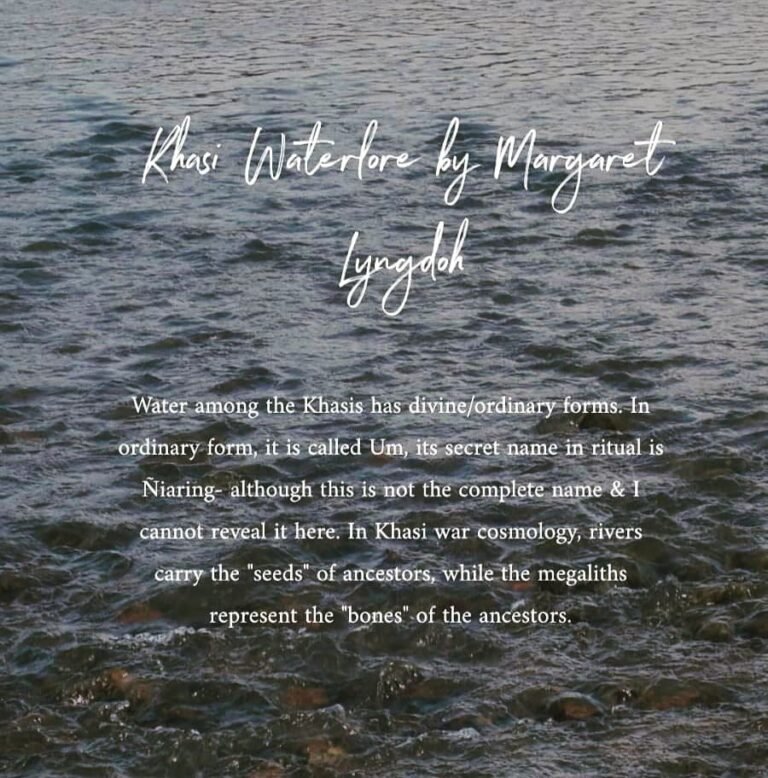
    Water among the Khasis has divine/ordinary forms. In ordinary form, it is called Um, its secret name in ritual is Ñiaring- although this is not the complete name & I cannot reveal it here. In Khasi war cosmology, rivers carry the "seeds" of ancestors, while the megaliths represent the "bones" of the ancestors

    Ha ki Khasi, ka um ka don ka jingkyntang kaba na u Blei bad ka don ruh ka jinglong kum kiwei kiwei ki jingthaw ha ka pyrthei. La khot ïa ka, ka "um" bad la khot ruh ïa ka ha ki jingleh niam kum ka 'Ñiaring”. Ha ki Khasi, ïa ka jingbatai shaphang ka jingpynlong ïa ka pyrthei la ngeit ba ki wah ki dei ki symbai jong ki longshuwa bad ki mawbynna ki dei ki shyieng jong ki longshuwa.

    Among the Nongtrai, Lyngngam, & Muliang Khasi, the divine form of water is Ñiangriang. Among Khynriam Khasi, U Sangriang Um is said to be the father of Thlen. But in northern Khasi hills, in Jhare name magic, water is Ñiaring. The following narrative is recorded from deceased hare practitioner Marcus Lapang.

    "In the olden days, the true name of water was Ñiaring. The older sister of air, Ñiaring was confined to one place by the supreme being. In her place of confinement, her sorrowful cries could be heard.

    The Council of the Supreme Being was convened and there it was decided that Ñiaring should be freed to flow into all the earth. So the Riew Ramhah, or Pantia, appointed by the gods began to clear the earth thereby making channels for Ñiaring to flow into the world. They were created solely for this task. Neither human, nor spirit, the supreme being never made any other use of them and we don't know where they are today. The Khasi lands as we know them today are so hilly & uneven because Ñiaring had to be allowed to flow out into the world. After she was freed, Ñiaring tied a Jutang or a covenant, whereby she agreed to help mankind in any way that she could and she could go where she was needed in Khasi lands.

    Ñiaring made the promise that she would cleanse and purify from illnesses, that may be caused by beings whom she contains & nurtures. In return, mankind agreed not to be cruel or violate her. Water came before Lukhmi, the spirit of paddy (rice grain). When Ñiaring became free, the sounds of her sorrow turned into music & joy as she flowed over the rocks & mountains, which then became her musical instruments. Every water body is the road, the pathway of the Ryngkew (guardian deity of a place in nature) and Basa (the deity of water). We see the water flowing by, but we never see it return. But it returns & it goes back. Ñiaring has 30 kinds of entities, including fish, which live inside her and she offered to cleanse any human being afflicted by any of the entities who live inside her.

    The Puri, or water nymph/ spirit is one of the entities belonging to Ñiaring. Ñiaring also harbours inside her, evil spirits, & other non-human entities (ki ksuid ki khrei). This is the reason why Jhare magical practioners, using Ñiaring to heal illness caught from water. It is necessary to sacrifice to Ñiaring, a female white chicken, or white she-goat in times of necessity. But this sacrifice should never be performed continuously, but only when the Jhare practitioner tells you to do so.

    "Khasi Waterlore" by Dr. Margaret Lyngdoh @lieng_makaw. Thank you so much for sending an in-depth and insightful entry! 🙏🙏😃😃

    This entry is contributed by Dr. Margaret Lyngdoh, University of Tartu. Design and layout has been done by Talilula @thelazyscribbler

    Khasi translation by @speakyourroots

    No part of this material may be reproduced in any form without the consent of the author. All material for this content has been collected through primary fieldwork.

  • Ka Syiem Jitlakhai

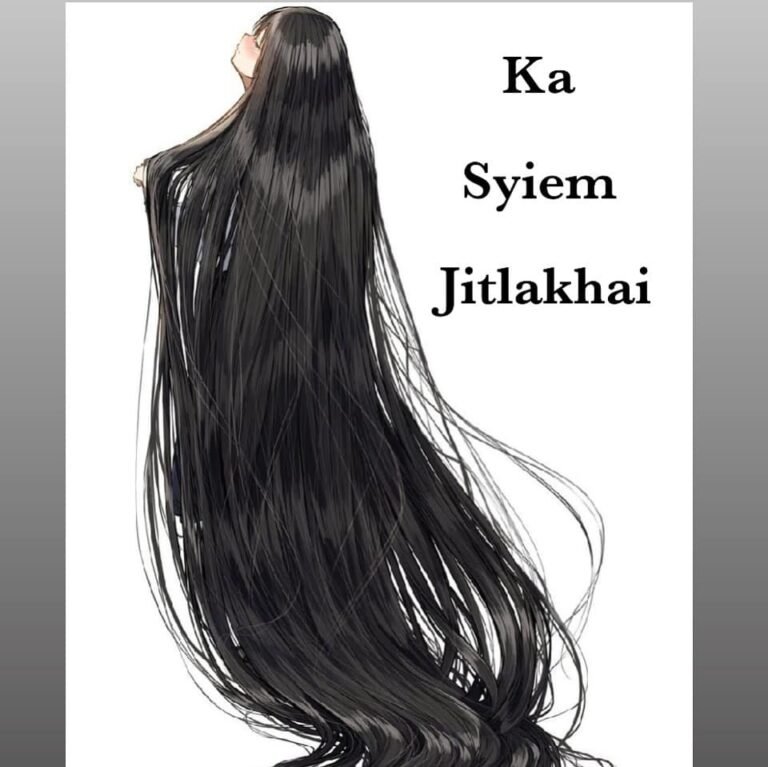
    U Maw Shyllaitbit lies to the west of the town of Mustoh and it is a huge rock that can be seen from parts of Shella District. It is believed that this was where the Queen-Goddess Jitlakhai lived along with her subjects.

    Queen Jitlakhai was an extremely beautiful woman, whose hair was golden in colour, long and enchanting. Queen Jitlakhai used to bathe in the Umbloi river and her hair being very long, flowed downstream and reached the plains. It so happened that her hair was found by a fakir. He was taken aback by the golden colour of the hair and its mind-boggling length! The fakir rolled some of the hair and took it to his king. The king was baffled and determined to find the woman to whom the hair belonged. He thus prepared an army with soldiers, elephants and tigers. The king followed the Umbloi river upwards till he reached Shella. But when he reached Shella nobody told him about where Queen Jitlakhai was. There was a deep trench between Shella and Mustoh which the King wanted to cross. The King schemed to bribe a poor man into telling him where Queen Jitlakhai lived. The man took the King to where the Queen lived.

    On seeing her subject, Queen Jitlakhai appeared and it was then that the King asked her to marry him. She refused his offer of marriage and when the King saw that she would not relent, his soldiers held her by force hoping to take her away. At that moment Queen Jitlakhai screamed and prayed. It was then that she turned into "rngai” which can be translated as an apparition or a ghost. Instantaneously her castle also turned into stone. It was from then onwards that people called this rock "Maw Shyllaitbit". To this day the appearance of a metal door can be seen on the rock. People believe that Queen Jitlakhai turned into "rngai” and no one has ever seen her since.

    "Ka Syiem Jitlakhai" is an engrossing Khasi folktale that tells the story of a queen with long golden hair. 👸

    Reference: 'Ka Jitlakhai' written by E. Weston Dkhar (1978)

  • U Sier Lapalang by Janice Pariat

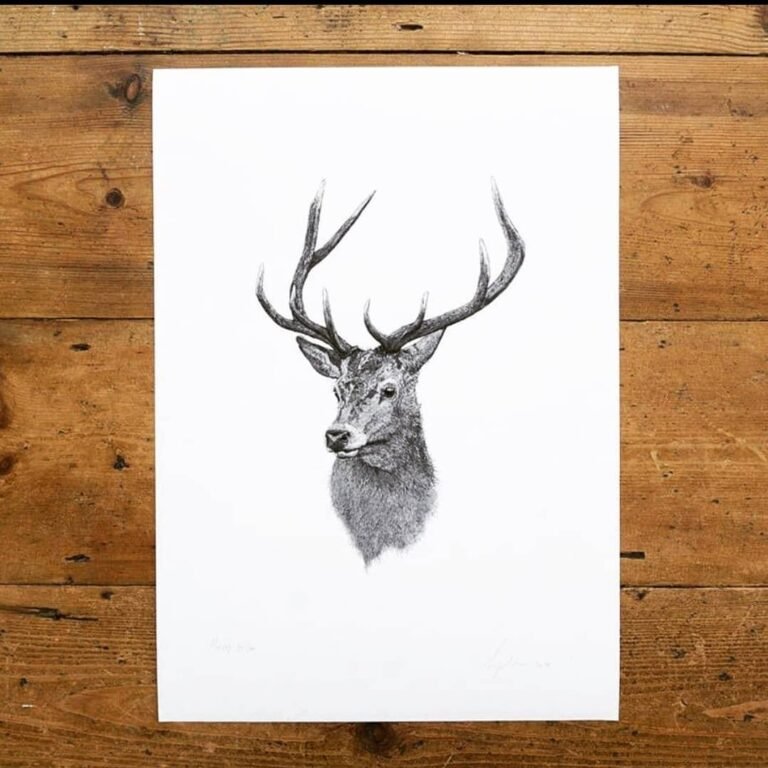
    Shall I tell you the story of Sier Lapalang? As with every folktale, there are many versions. My nanny's would be brief – "the young stag didn't listen to his mother and see what happened to him?" While others are infinitely more detailed.

    At the foothills of Ri Khasi lived Sier Lapalang, noblest animal of his race, pride of his mother's heart. He grew up protected, loved, his every whim indulged, until one day he began to grow weary of the plains, and his mother's constant counsel. He wished to explore the hills, and find there his favourite delicacies. Despite all warning, of hunters and fierce warriors, Sier Lapalang left.

    At first, all went well. He wandered deep into the strange country, relishing the cool climate, the floral treats, until one day he stood in all his glory on the slope of Shyllong Peak, at the heart of Ri Khasi.

    His dallying caught the attention of cowherds grazing their cattle nearby. A stag, a stag! they called. Soon a hunt commenced, and though Sier Lapalang was swift and strong and fled from hill to hill, there were too many hunters in pursuit. He began to tire, and slowed and stopped; then an arrow-or a thousand-pierced his chest. He was strung up, amidst triumphant cries, and taken homewards with much rejoicing.

    The story could end here, but it doesn't.

    The mother, ill with worry, leaves her home for the land of her enemies, roaming the hills, looking for her son, until she comes upon the hunting party, cheering their kill. She recognises her Sier Lapalang. And begins a lamentation so sorrowful that the world falls silent. Women swoon from the pain, men bow their heads in anguish. Not a hand is raised against her, not an arrow shot in her direction.

    The crowd of hunters stare mutely. They'd never heard such protestations of devotion and love. Their own manner of mourning for their dead was now without meaning. It is said, from her, the Khasis learned how to grieve.

    A profound and poignant retelling of the Khasi folktale "U Sier Lapalang" from poet and novelist @janicepariat ! Thank you so much Ma'am for your entry and for your interest in the page! 🙏🙏🙏

    Janice Pariat is an Indian poet and writer. She was born in Assam and grew up in Shillong, Meghalya. "Boats on Land" (Random House India, 2012) her debut collection of short stories, won the 2013 Sahitya Akademi Young Writer Award for the English language and the 2013 Crossword Book Award for fiction. Pariat is the first writer from Meghalaya to receive an award from the Sahitya Akademi for a work in English.

    Picture credit: @brillustrations

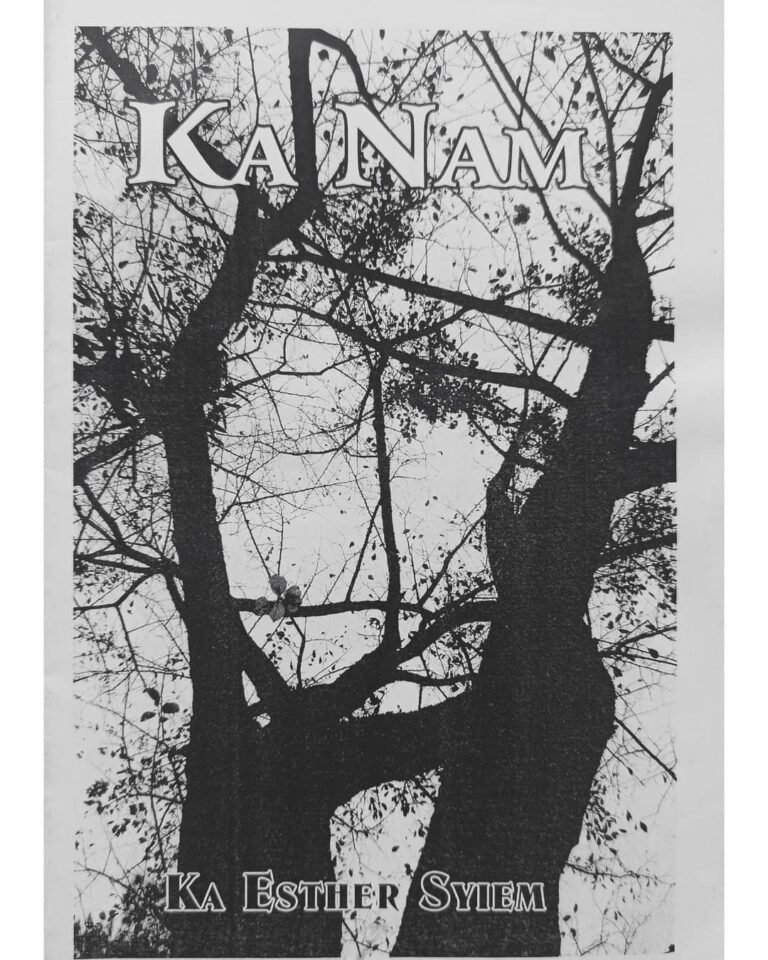
  • Ka Nam by Esther Syiem (Lamkhmat/ Foreword and dialogue excerpt)

    Ka Lam Khmat

    Ki thied ki jaw jong kane ka drama ki sam shaduh ki thymmei jong ka long rynïeng man rynieng ka jaitbynriew Khasi. Ki pud ki sam jong ka pat, ki ïar kat ban kdup lut ïa ka long briew man briew shi snieh ka pyrthei ha khrum ka beng. Ki tyngshop ki puron ki ïeng na ka bynta bun kiei kiei kiba ym lah jer lut hangne. Ka Nam bad ka kmie jong ka ruh ki ïai kha ïalade bun syrtap ha ka mynta ka jong ngi. Ki long kiei? Ïa kane nga ieh ha ka jingbishar bniah bad ka jingthew sawar jong phi baroh.

    Ha kane ka jingpyrshang barit ki don bun kiba la iarap bad kyrshan lem ïa nga. Nga ai khublei kyrpang ïa ki. Nga pynpaw ka jingsngewnguh kaba khraw ia I Kong Temsula Ao, I kong Badaplin War bad I Kong Antoinette Kharmalki ki nongai mynsiem ba rhem. Nga ai khublei ïa I Bah D. Rocker L. Nonglait bad I Kong Mumtaz B. Jyrwa kiba la kloi ban pule bniah ïa kane ka jingpyrshang barit bad ban kdew ruh ïa ki jingduna baroh.

    Nga pynpaw ka jingsngewnguh ïa u khunruit uba la ai jingmut ha ka ba thoh, bad ïa u hymmen rangbah uba la kyrshan ha kaba shon їa kane ka kot.

    Khublei Shibun

    Ka Esther Syiem

    'Moor-Ville'

    Riatsamthiah

    Shillong

    July 2006

    Ka Nam: Ko mei 'ngi ym don ba pynwit ïa nga. Ki dei tang ki jingpyrkhat jingpuson ki jong nga miet la bad sngi ki bym ailad ïa nga ba ngan ïaid pyrshah ïa ka jingïatiplem jong nga.

    Folktales in the oral tradition provide a rich literary and cultural heritage, which speaks volumes about our beliefs, values, principles as a community.

    "Ka Nam" (2007) a Khasi play by Dr. Esther Syiem is a reimagination of the Khasi folktale "Ka Nam and the Tiger".

    A reimagination is a return, a retracing, a reinterpretation, a reworking that perhaps in the case of this folktale, provides a different angle to the character of "Ka Nam". This reimagination is one that is explored for all the characters of the folktale starting from "Ka Nam". As the author states in the Foreword of the play, the life and limit of the play permeates the depth and pervades the condition of being human.

    Ka Nam is a Khasi play written by Dr. Esther Syiem, based on the Khasi folktale of Ka Nam bad u Khla. The play is well-crafted and deeply insightful of man's relationship with Nature. Most importantly, it highlights the will and independence of the human individual through the twist at the end of the play.

    The book is available at Ri Khasi Book Agency, Mawkhar, Shillong.

    Cover photograph taken by @i_a_duppy_conquerer

    Dr. Esther Syiem is a Professor in the Department of English, North-Eastern Hill University, Shillong, Meghalaya.

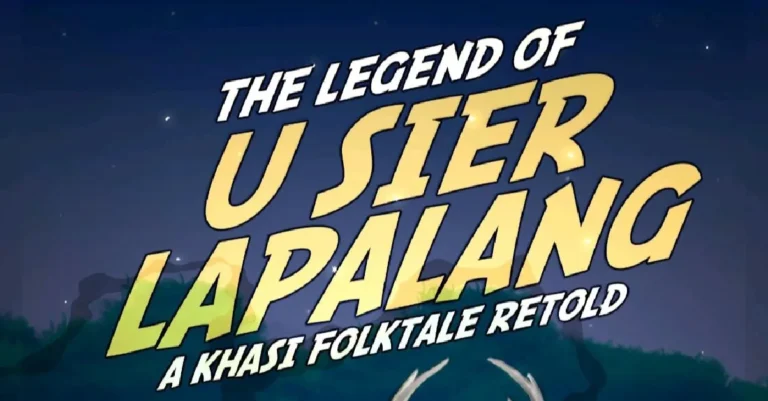
  • The Legend of U Sier Lapalang as a comic book!

    This comic book has been adapted from the Khasi folktale U Sier Lapalang by Joshua S. Rynjah. It was published by Joshua S. Rynjah and Alienleaf Studio in 2014.

    The book is available on Google Play Store as an e-book: https://play.google.com/store/books/details/The_Legend_of_U_Sier_Lapalang?id=e-y4BAAAQBAJ

    Script: Joshua S. Rynjah

    Storyboard: Joshua S. Rynjah

    Art: Alienleaf Studio

    Art Director: Joshua S. Rynjah

    Graphic Designer: Dipankar Sinha

    Post Processing: Dipankar Sinha

    Colour and Shading by: Aikindasuk D. Khongsngi and Grover Me'Gam

    Online Publishing and Marketing: Lambert Shadap and Lenin Nongsiej

    Joshua S. Rynjah is an Assistant Professor in the Department of English, St. Mary's College, Shillong.