Tag: khasifolktalesintranslation

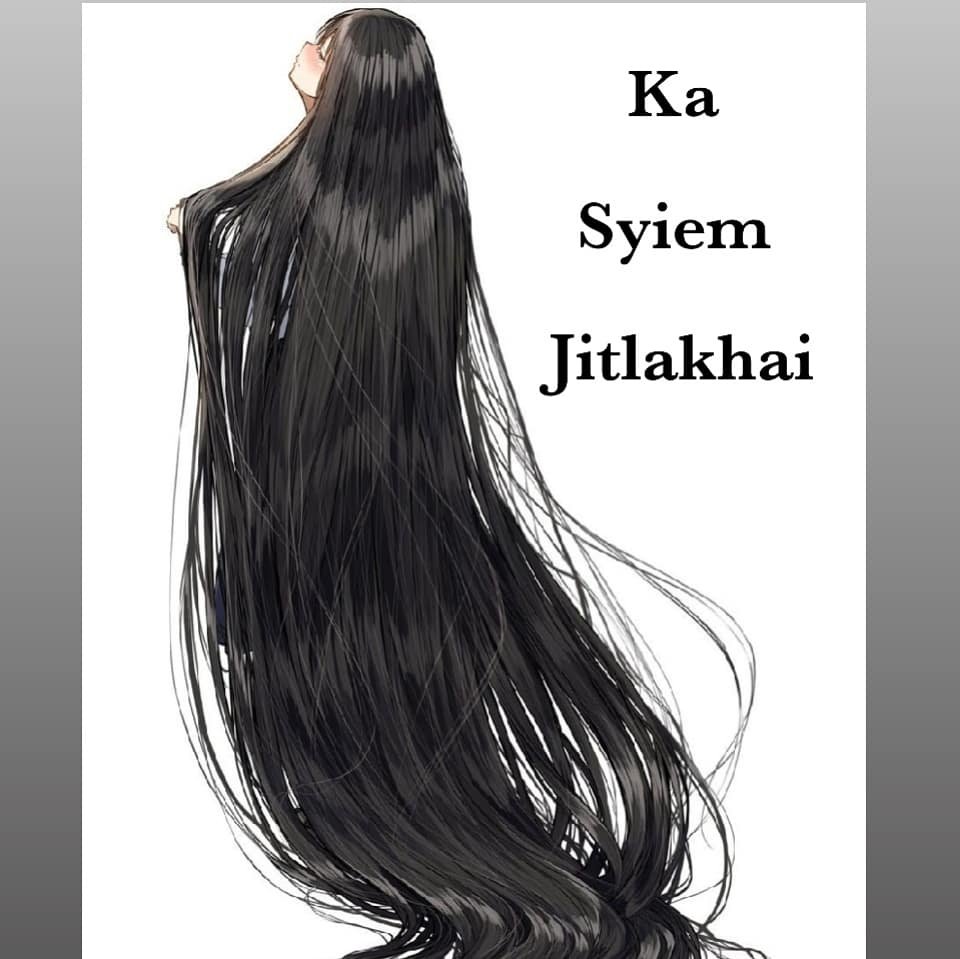
  • Ka Syiem Jitlakhai

    U Maw Shyllaitbit lies to the west of the town of Mustoh and it is a huge rock that can be seen from parts of Shella District. It is believed that this was where the Queen-Goddess Jitlakhai lived along with her subjects.

    Queen Jitlakhai was an extremely beautiful woman, whose hair was golden in colour, long and enchanting. Queen Jitlakhai used to bathe in the Umbloi river and her hair being very long, flowed downstream and reached the plains. It so happened that her hair was found by a fakir. He was taken aback by the golden colour of the hair and its mind-boggling length! The fakir rolled some of the hair and took it to his king. The king was baffled and determined to find the woman to whom the hair belonged. He thus prepared an army with soldiers, elephants and tigers. The king followed the Umbloi river upwards till he reached Shella. But when he reached Shella nobody told him about where Queen Jitlakhai was. There was a deep trench between Shella and Mustoh which the King wanted to cross. The King schemed to bribe a poor man into telling him where Queen Jitlakhai lived. The man took the King to where the Queen lived.

    On seeing her subject, Queen Jitlakhai appeared and it was then that the King asked her to marry him. She refused his offer of marriage and when the King saw that she would not relent, his soldiers held her by force hoping to take her away. At that moment Queen Jitlakhai screamed and prayed. It was then that she turned into "rngai” which can be translated as an apparition or a ghost. Instantaneously her castle also turned into stone. It was from then onwards that people called this rock "Maw Shyllaitbit". To this day the appearance of a metal door can be seen on the rock. People believe that Queen Jitlakhai turned into "rngai” and no one has ever seen her since.

    "Ka Syiem Jitlakhai" is an engrossing Khasi folktale that tells the story of a queen with long golden hair. 👸

    Reference: 'Ka Jitlakhai' written by E. Weston Dkhar (1978)
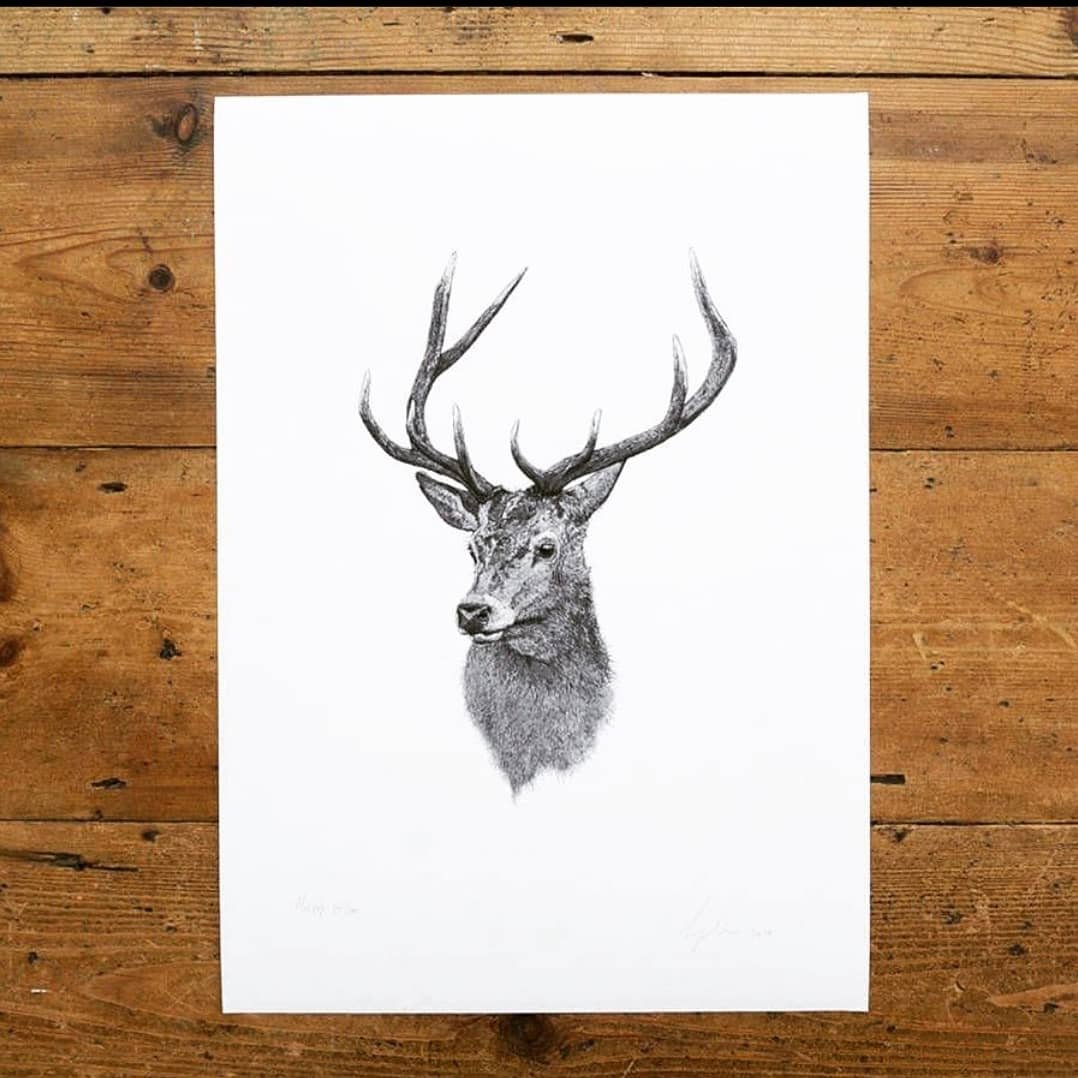
  • U Sier Lapalang by Janice Pariat

    Shall I tell you the story of Sier Lapalang? As with every folktale, there are many versions. My nanny's would be brief – "the young stag didn't listen to his mother and see what happened to him?" While others are infinitely more detailed.

    At the foothills of Ri Khasi lived Sier Lapalang, noblest animal of his race, pride of his mother's heart. He grew up protected, loved, his every whim indulged, until one day he began to grow weary of the plains, and his mother's constant counsel. He wished to explore the hills, and find there his favourite delicacies. Despite all warning, of hunters and fierce warriors, Sier Lapalang left.

    At first, all went well. He wandered deep into the strange country, relishing the cool climate, the floral treats, until one day he stood in all his glory on the slope of Shyllong Peak, at the heart of Ri Khasi.

    His dallying caught the attention of cowherds grazing their cattle nearby. A stag, a stag! they called. Soon a hunt commenced, and though Sier Lapalang was swift and strong and fled from hill to hill, there were too many hunters in pursuit. He began to tire, and slowed and stopped; then an arrow-or a thousand-pierced his chest. He was strung up, amidst triumphant cries, and taken homewards with much rejoicing.

    The story could end here, but it doesn't.

    The mother, ill with worry, leaves her home for the land of her enemies, roaming the hills, looking for her son, until she comes upon the hunting party, cheering their kill. She recognises her Sier Lapalang. And begins a lamentation so sorrowful that the world falls silent. Women swoon from the pain, men bow their heads in anguish. Not a hand is raised against her, not an arrow shot in her direction.

    The crowd of hunters stare mutely. They'd never heard such protestations of devotion and love. Their own manner of mourning for their dead was now without meaning. It is said, from her, the Khasis learned how to grieve.

    A profound and poignant retelling of the Khasi folktale "U Sier Lapalang" from poet and novelist @janicepariat ! Thank you so much Ma'am for your entry and for your interest in the page! 🙏🙏🙏

    Janice Pariat is an Indian poet and writer. She was born in Assam and grew up in Shillong, Meghalya. "Boats on Land" (Random House India, 2012) her debut collection of short stories, won the 2013 Sahitya Akademi Young Writer Award for the English language and the 2013 Crossword Book Award for fiction. Pariat is the first writer from Meghalaya to receive an award from the Sahitya Akademi for a work in English.

    Picture credit: @brillustrations

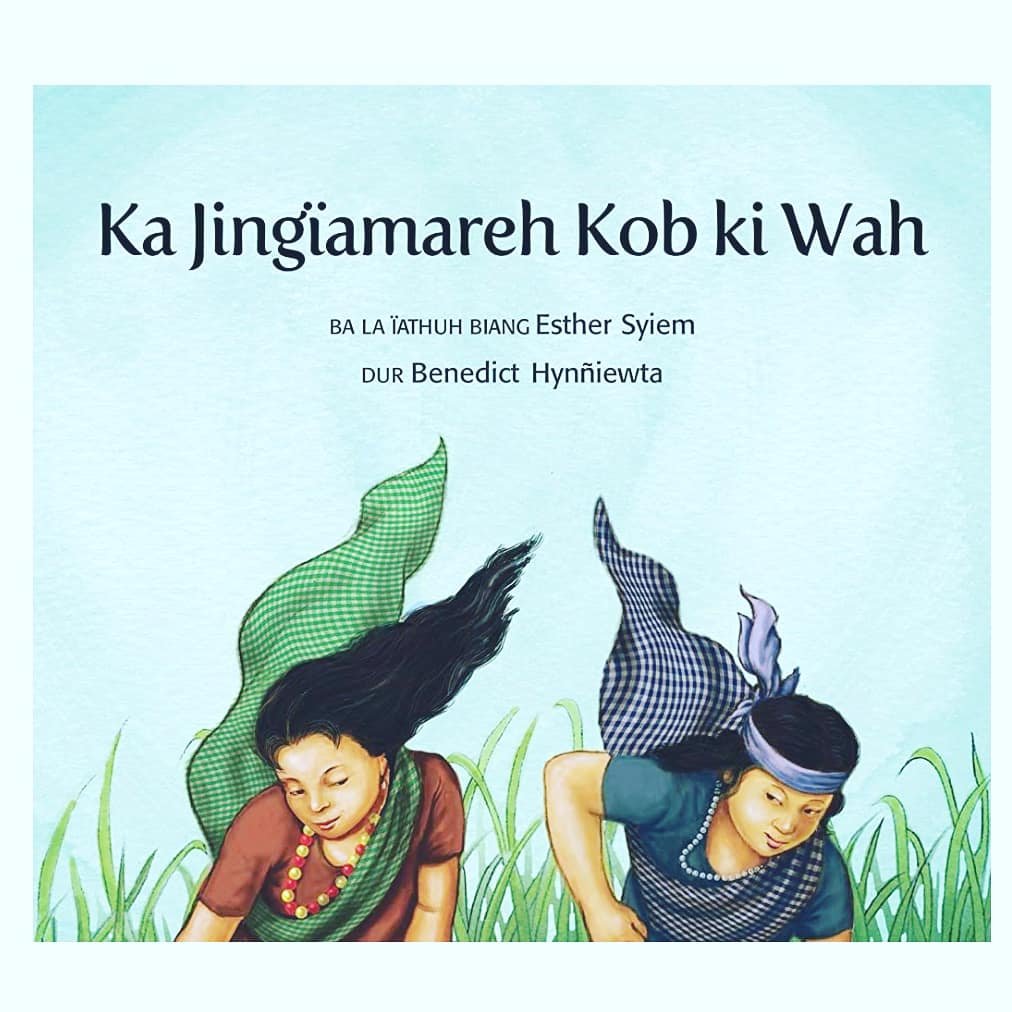
  • Ka Jingïamareh Kob ki Wah da Esther Syiem

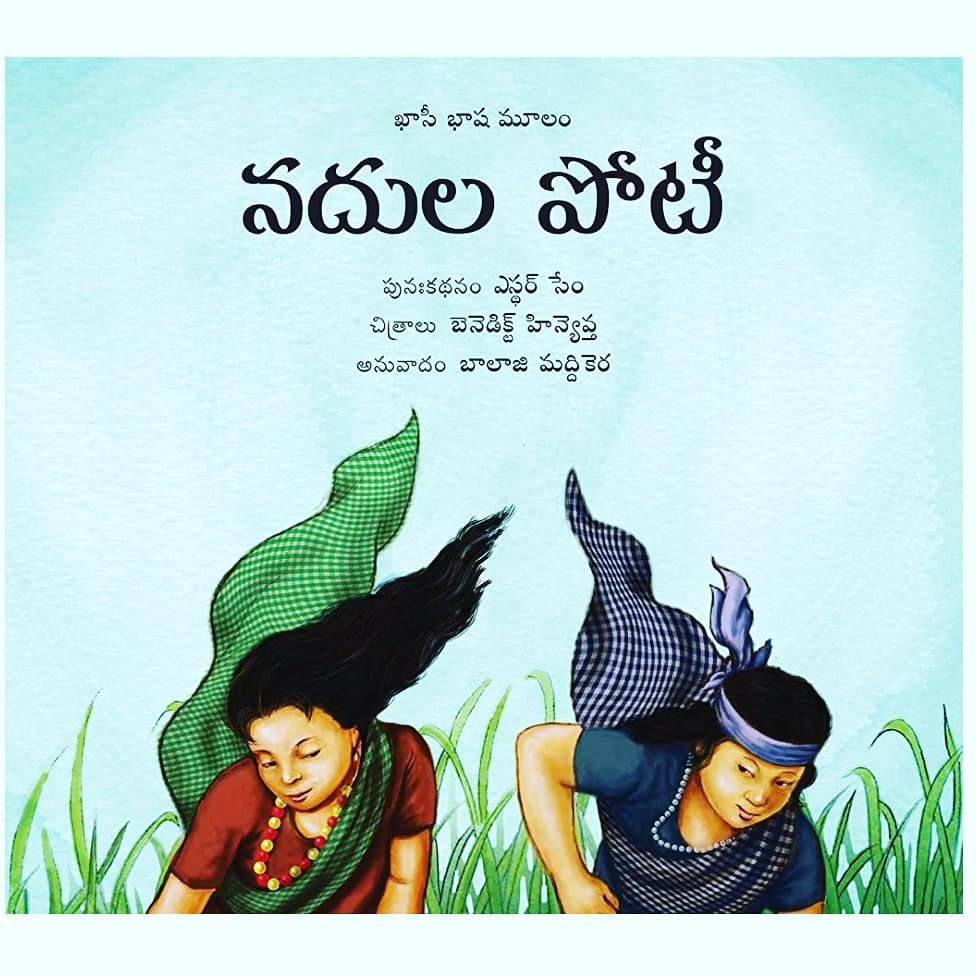
    Ka Jingïamareh Kob ki Wah , ba la ïathuh da Esther Syiem, Dur: Benedict Hynñiewta

    Ka Ïew bad ka Ngot ki ju sngewtynnad ban ïalehkai ha u lum hajrong. Ha kawel ka sngi, ka Ïew kaba kham shlur, ka la peit ïa ka jingshat ka sngi ha ki them shajngai bah bad ka la khot ïa ka Ngot, ka para kaba ju sngewtynnad ban shong mutdur, pyrkhat marwei, sha ka jingïakob mareh. Ha ka shi khyllipmat ka Ïew ka la kylla sha ka wah kaba kynthih ïa ki lum ki wah ban poi kloi shathie. Ka Ngot kam banse shuh ban bud lang… Mano ban jop?

    La ïathuh ïa kane ka khana pateng da ka nongthoh bad u artis, kiba ïoh mynsiem na ka mariang kaba dap da kiei kiei kiba jyrngam bad ba itynnad ha Meghalaya. Kane ka khana ka sngewban bang ïathuh ïa ki jnit ki jnat jong ka jingïamareh kob, katba ki jingdro pat ki tbeh sha kata ka jingïamareh na ki lum sha ki them.

    Ka Jingïamareh Kob ki Wah sien shon banygngkong eh ha ka ktien Khasi ïa kum kane ka kot dur.

    Ka nongthoh, Esther Syiem, ka hikai English Literature ha ka skulbah North-Eastern Hill University, Shillong. La palat shiphew snem eiei ba kane ka nongthoh ka la pyrshang ban wad bad plait bha ïa ki khana pynriewspah jaitbynriew jong ki Khasi. Ka dei ka nongthoh kaba thoh lang ha ka Khasi bad ka Phareng, ka nongthoh poitri kaba pawnam. Ka la pynmih ar tylli ki kitab poitri, ka drama Khasi, ka kot shaphang kine ki khana bad kiwei de ki ese.

    U Benedict Hynñiewta u dei u artis uba la pass na Visva Bharati University, Santiniketan, West Bengal. Ïa ki dur jong u, la lah pyni ha ki exhibition ha Ri India baroh kawei. U sngewtynnad ban put bisli bad u don bynta ruh bad ka folk fusion music group.

    .

    .

    .

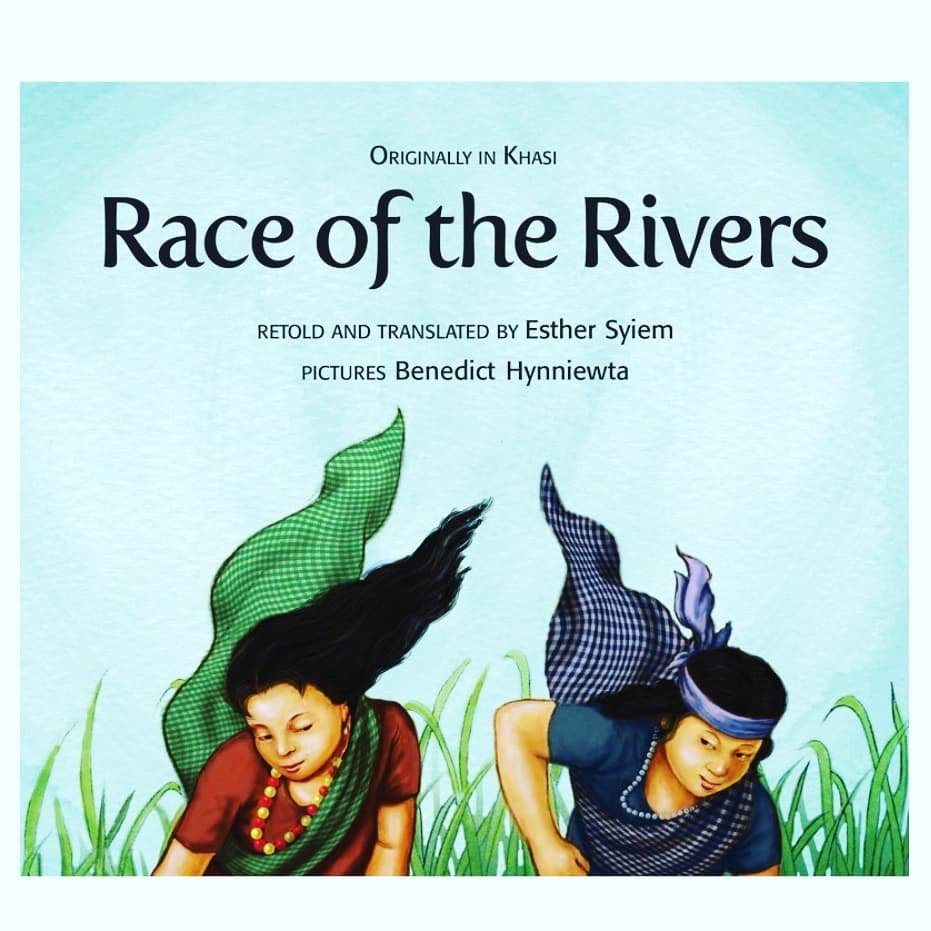
    Originally in Khasi Race of the Rivers, Retold and Translated by Esther Syiem, Pictures: Benedict Hynniewta

    Ka Ïew and Ka Ngot love to play on the hilltop. One day, the adventurous Ka Ïew looks at the sun shining down on the distant, sun drenched plains and challenges her quiet sister to a race. In a flash Ka Ïew becomes a river, ready to rush downhill, and Ka Ngot has no choice but to join her… Who will reach first?

    This well known Khasi folktale is brought to life by a writer and an artist, both intimately connected to and inspired by Meghalaya's varied, lush landscape. The evocative text delights in detail, while luminous illustrations flow alongside, taking the reader on a mood-filled journey from the hills to the plains.

    Race of the Rivers has also been published by Tulika in Khasi, in which it was originally written. It is the first ever picture book for children in that language.

    Writer Esther Syiem teaches English Literature at the North Eastern Hill University, Shillong. She has been involved in the study of Khasi folk literature for more than a decade now. A bilingual writer and established poet, some of her publications include two collections of poetry, Oral Scriptings and Of Wit and Wisdom of Follies and Frailties, and a play in Khasi, Ka Nam.

    Artist Benedict Hynniewta is an alumnus of Visva Bharati University, Santiniketan, West Bengal. Benedict's art has been displayed in exhibitions across India. Currently, he teaches painting in North-Eastern Hill University, Shillong. He loves to play the bamboo flute and is also part of a folk fusion music group.

    Ka Jingïamareh Kob ki Wah the Khasi folktale of the rivers Umngot and Umiew, retold and translated into English by Dr. Esther Syiem and illustrated by @benedictskhemlang

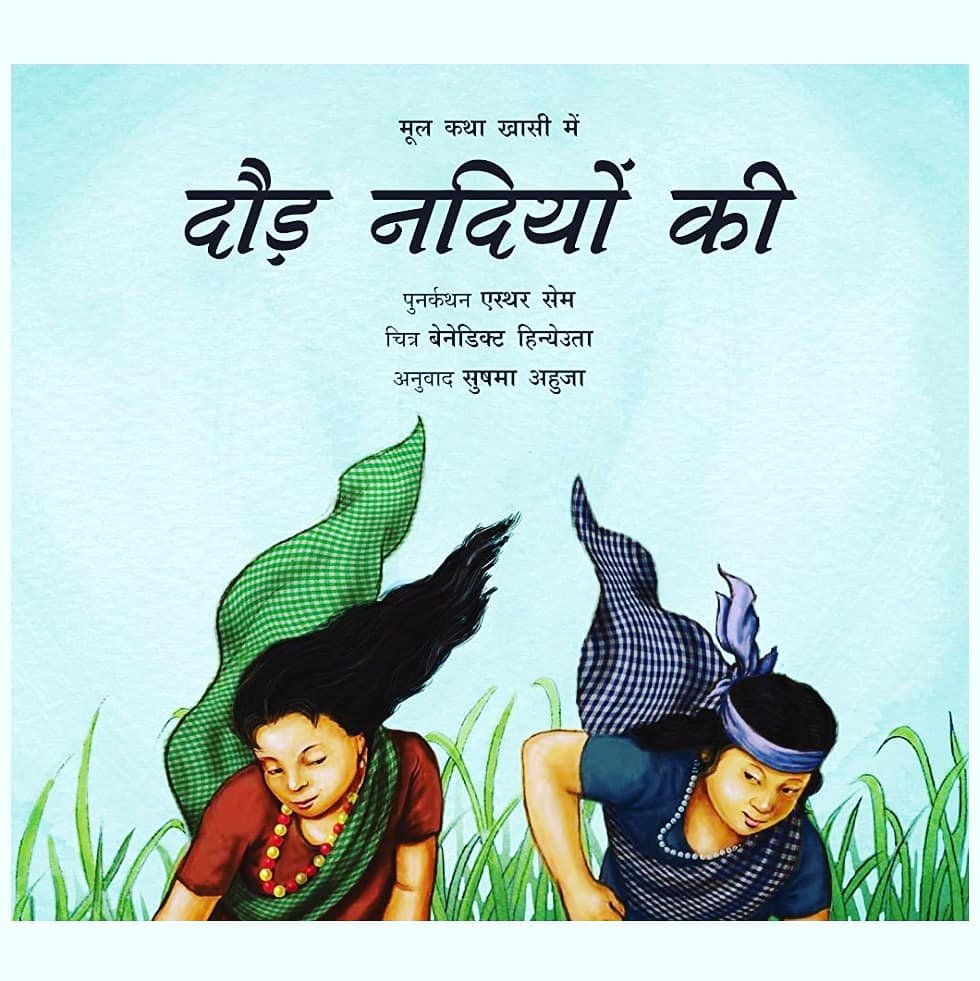
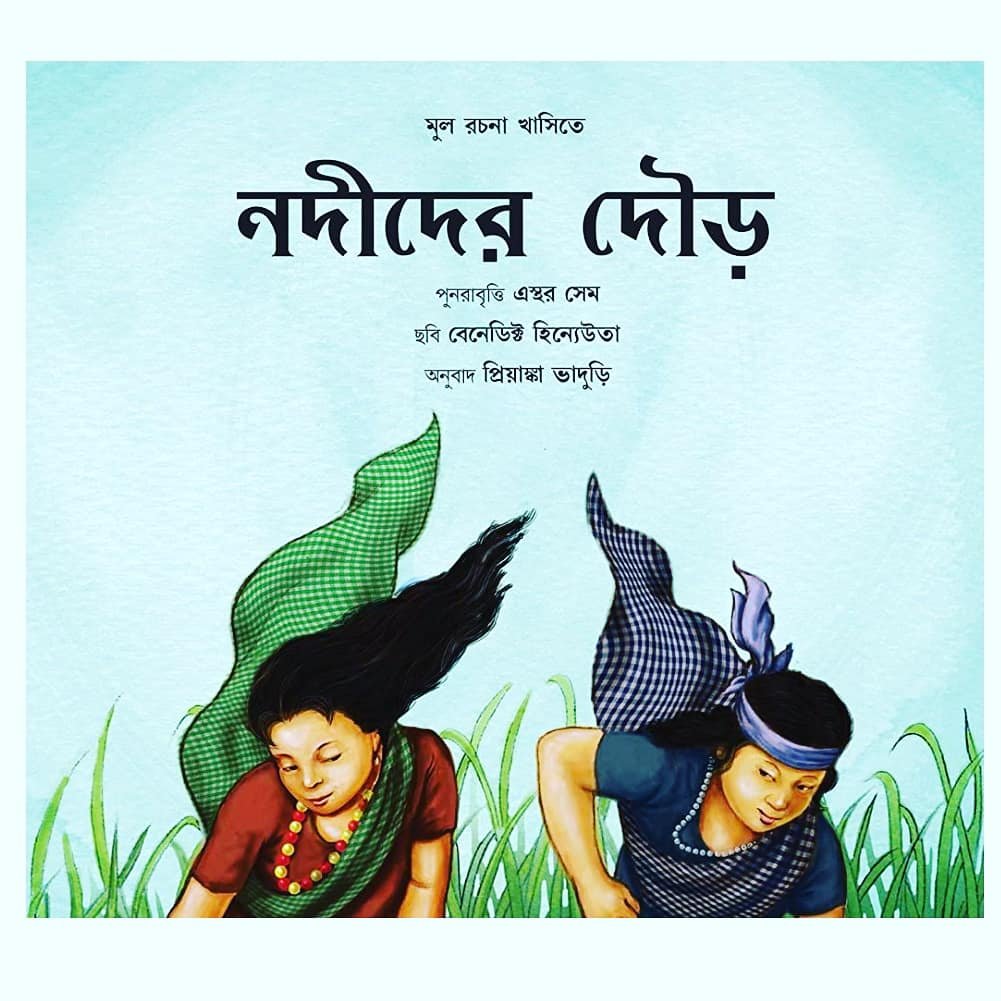
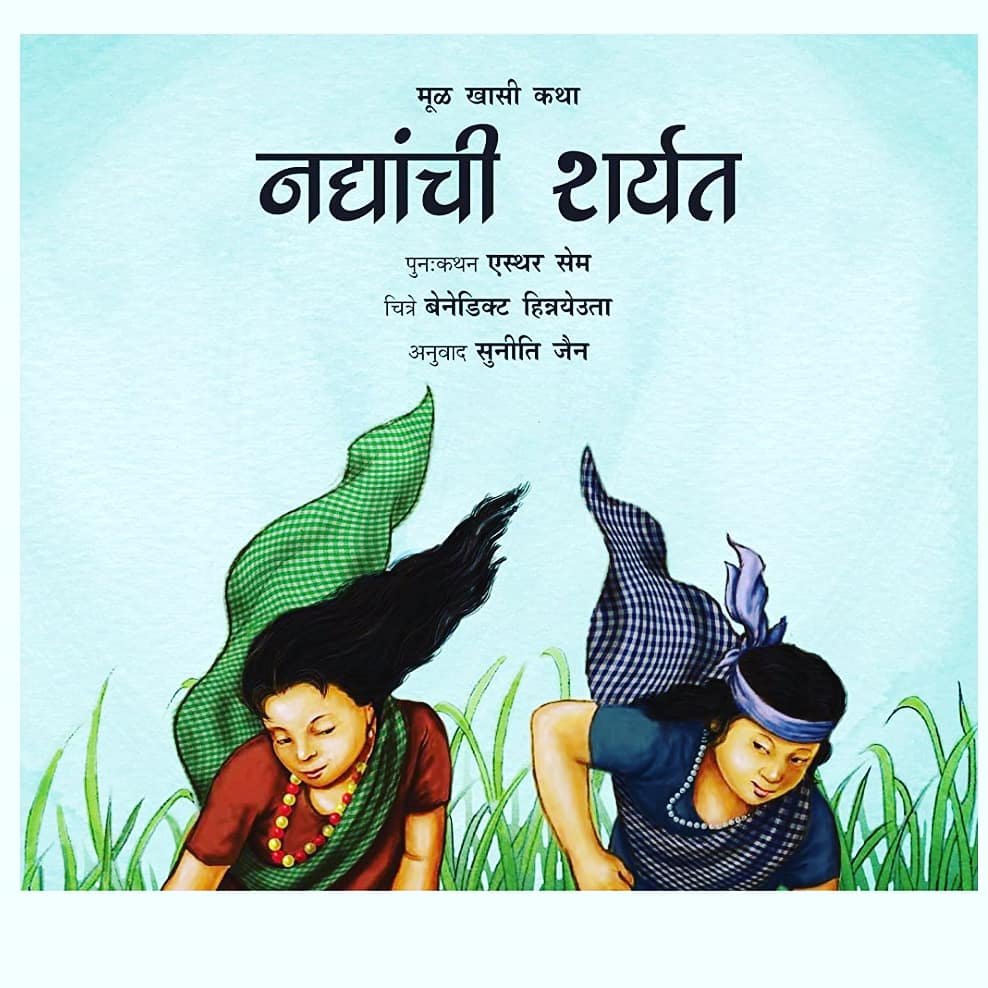
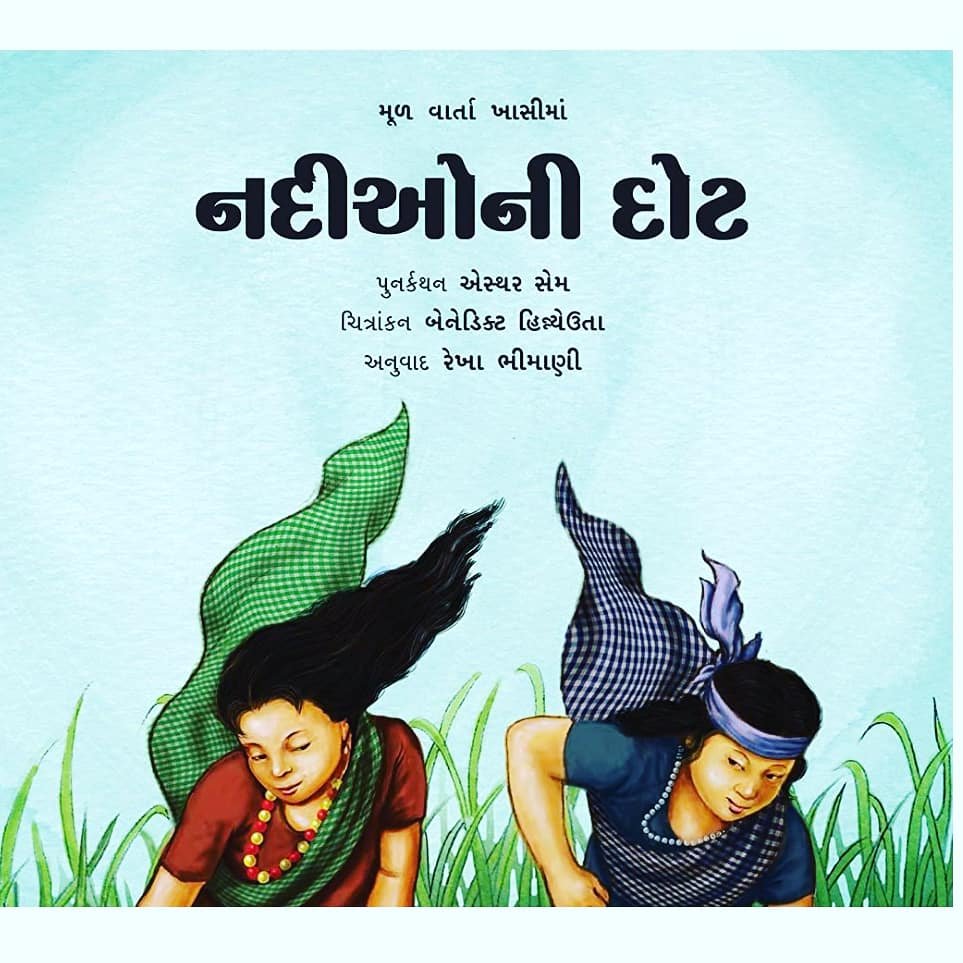
    This book has been translated into different Indian languages including Hindi, Bengali, Tamil, Gujarati and Marathi. It is a perfect book for children! 🌻🌻🌻

    Both Dr. Esther Syiem and Benedict Skhemlang Hynñiewta teach in North-Eastern Hill University, Shillong, Meghalaya.

    The book is available at tulikabooks.com and amazon.in