Tag: khasihistory

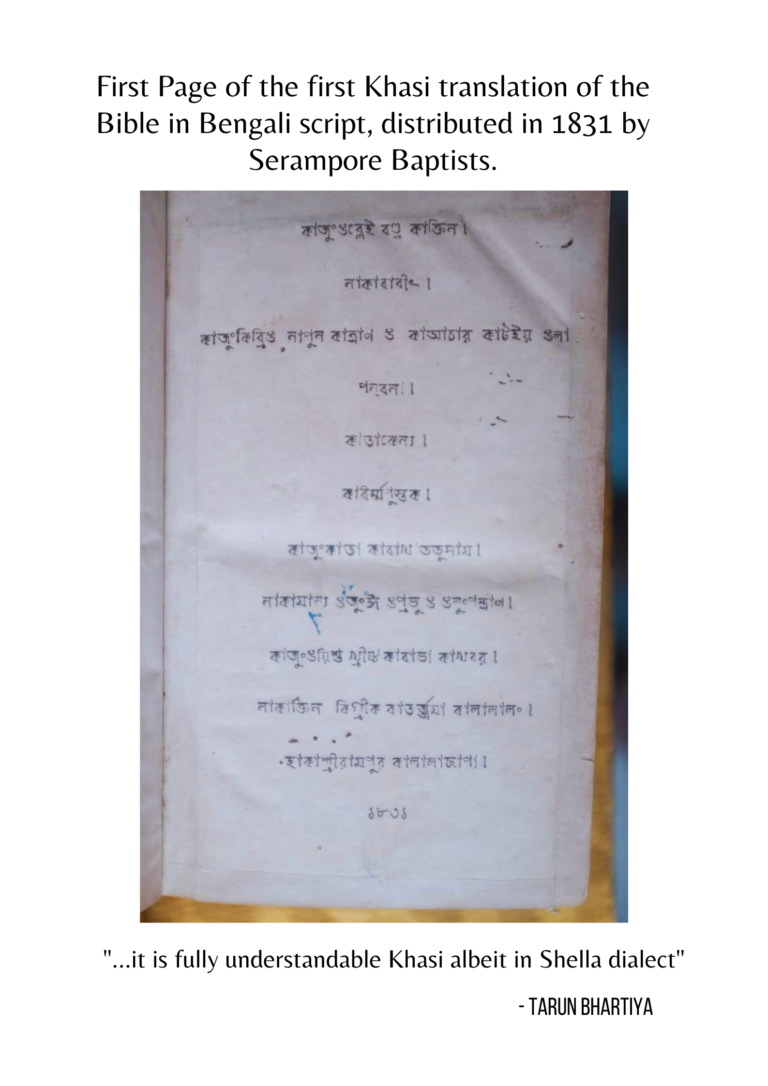
  • First Page of the first Khasi translation of the Bible in Bengali script, distributed in 1831 by Serampore Baptists.

    Thank you @tarunbhartiya for an informative and interesting contribution on the first Khasi translation of the Bible in the Bengali script! 🙏🙏 And what's more, there was a Khasi woman who helped William Carey in translating the Bible! 😃😃

    In @tarunbhartiya 's own words:

    "I so desperately want to know the name of the Khasi Lady – wife of the rajah/ chieftain who impressed Dr. William Carey with her intelligence and helped him translate the New Testament into Khasi. What was she doing in Calcutta/ Serampore in 1810s? How did she learn English? Was she literate (most probably yes)? Did William Carey talk to her about the Christian faith? Did she meet Krishna Pal who was planning to come to Pandua?"

    These and so many other questions arise when we read about the journey of the translations of the Bible into Khasi.

    You can read more in the following links:

    🟡https://theshillongtimes.com/2023/06/22/colonialism-and-mission/

    🟡https://www.placefortruth.org/blog/krishna-pal-the-first-baptist-convert-in-india

    🟡https://cherrapunjee.com/welsh-influence-in-cherrapunjee/

    🟡https://www.loc.gov/item/02014074/

    🟡https://books.google.co.in/books/about/Welsh_Missionaries_and_British_Imperiali.html?id=3JV6zQEACAAJ&redir_esc=y

    🟡https://books.google.co.in/books/about/The_History_of_the_Welsh_Calvinistic_Met.html?id=i6hGAQAAMAAJ&redir_esc=y

    🟡https://raiot.in/how-to-not-to-remember-thomas-jones/

    🟡https://raiot.in/was-thomas-jones-the-father-of-khasi-alphabet/

    🟡 Photographs are from the photographic project called "Unaddressed Picture Postcards from Khasi Jaintia Hills" by Tarun Bhartiya.

    https://indianexpress.com/article/lifestyle/art-and-culture/a-new-series-of-picture-postcards-explores-conversion-among-the-khasi-people-7575007/lite/

    #khasibible #khasitranslation #khasialphabet #williamcarey #thomasjones #khasichristian #khasihistory #speakyourroots #speakyourrootschallenge #talklocal

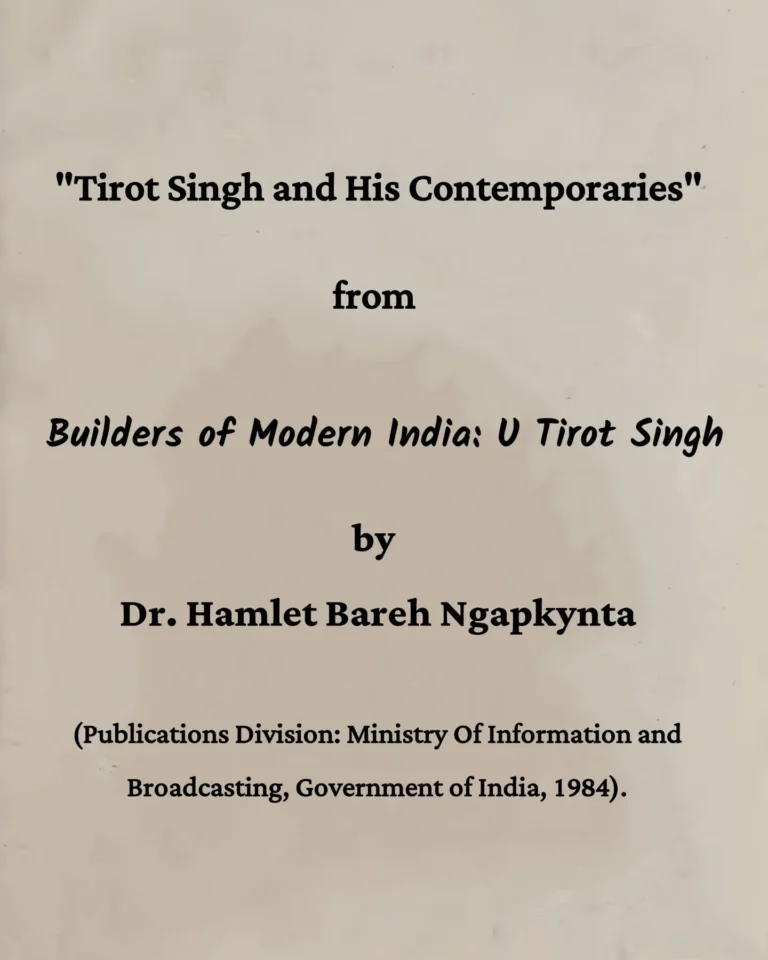
  • U Tirot Sing and his contemporaries by Dr. Hamlet Bareh Ngapkynta

    Mynta ka sngi ka 17 tarik u Naitung kaba dei ka lyngkhuh sngi ïap jong u Syiem Tirot Sing ngin pule ïa ka lynnong "Tirot Singh and His Contemporaries" kaba la sot na ka kot 𝘉𝘶𝘪𝘭𝘥𝘦𝘳𝘴 𝘰𝘧 𝘔𝘰𝘥𝘦𝘳𝘯 𝘐𝘯𝘥𝘪𝘢: 𝘜 𝘛𝘪𝘳𝘰𝘵 𝘚𝘪𝘯𝘨𝘩 (1984) ba la thoh da i Dr. Hamlet Bareh Ngapkynta.

    Kane ka lynnong ka batai shaphang kiwei pat ki syiem kiba im ha kajuh ka por bad u Syiem Tirot Sing bad kumno ba don na ki kiba la ai jingïarap ïa u ha ka jingïaleh pyrshah ïa ka sorkar Phareng.

    Ka long kaba sngewtynnat bad sngewbynnud ruh ban tip shaphang ki hima jong ki Syiem Khasi-Jaiñtia ha kito ki por, ba ki pud jong ki, ki poi shaduh ka jylla Assam shatei bad shaduh ka ri Bangladesh shathie.

    .

    .

    .

    .

    .

    Today the 17th of July, which is Tirot Sing Day, we read the chapter "Tirot Singh and His Contemporaries" from the book 𝘉𝘶𝘪𝘭𝘥𝘦𝘳𝘴 𝘰𝘧 𝘔𝘰𝘥𝘦𝘳𝘯 𝘐𝘯𝘥𝘪𝘢: 𝘜 𝘛𝘪𝘳𝘰𝘵 𝘚𝘪𝘯𝘨𝘩 (1984) written by Dr Hamlet Bareh Ngapkynta.

    This chapter talks about the other kings who were living at the same time with u Syiem Tirot Sing and how they lent their help and support to him during the resistance against the British empire.

    It is interesting and also sad to know about the kingdoms of the Khasi-Jaiñtia kings in those days, which extended to the state of Assam in the north and the country of Bangladesh in the south.

  • Interview with Naphibahun Lyngdoh, Archaeologist

    Celebrating International Day of the World's Indigenous Peoples, 9th August 2022

    1. What do you think is special about the history of the Khasis?/ Ha ka jingsngew jong phi kaei kaba kyrpang ne kynsai shaphang ka histori jong ki Khasi?

    Ka histori jong ngi ki Khasi ka long shisha kaba riewspah bad kaba kyrpang ha kiba bun ki liang. Haba ngi peit kylleng sawdong ngi lah ban ïohi ki jingtei jong ki mynbarim kiba bun rukom, naduh ki mawbynna-mawbyrsiew, ki jingkieng jyrmi, ki lynti hat, lynti rim, ki ïew rim bad kumta ter ter. Ka jingstad bad jingshemphang jong ki, ka pyni ruh ha ka jingynneh pynsah ïa ka Mei Mariang da kaba buh ia ki 'law kyntang. Kine ki pyni bad batai ia ngi ia ka histori kaba kyrpang jong ki Khasi. Ngi lah ruh ban ïohi ka jingkynsai ka histori jong ngi na ki riti-ki dustur, ka sap-ka phong, ka put-ka tem, ka shad-ka mastieh, ka riam-ka beit, ki khana-ki puriskam, bad kumta ter ter.

    The history of the Khasis is one that is special and truly rich in many aspects. When we look around, we see the rich architectural legacy of our ancestors, from the Megalithic culture (mawbynna-mawbyrsiew), the living root bridges, market routes, old roads, old markets and so on. Their intelligence and wisdom is seen in their ability to sustain and preserve the environment through the setting up of " 'law kyntang" or sacred groves. The uniqueness of our history is also showcased in our tradition and custom, our talent and skill, our music, our dances, our attire, our myths and folklore, etc.

    2. In your research, what have you found about the role of indigenous women in the preservation and transmission of traditional knowledge?/ Ha ka kam wad bniah jong phi, phi lap aïu shaphang ka bynta kaba ki kynthei Khasi ki sei bor ha ka jingpynneh bad pynsaphriang ïa ka jingstad jingshemphang bad jingtip ïa la ka riti ka dustur?

    Ha ka jingleit wad bniah jong nga sha ki shnong kiba pher bapher, nga lah shem bun ki riew kynthei kiba da ka buit ka sap jong ki, ki lah pynneh pynsah ïa ka riti ka dustur u Khasi. Kum ban shu ai nuksa, ka jingshna khiew ha ri Khasi-Jaiñtia lah sdang nyngkong eh ha Larnai kaba dei kawei na ki shnong ha Jaiñtia Hills, naduh ki spah snem mynshwa. Ha ka jingleit jong nga sha kane ka shnong, nga shem ba dei tang ki kynthei naduh kiba rit haduh kiba heh, kiba shna ia ki khiew ranei.

    In my research in different villages, I had found that women, through their intelligence and resourcefulness have been able to preserve our customs and traditions. For instance, the art of pottery making in the Khasi and Jaiñtia Hills was first started centuries ago in Larnai, a village in Jaiñtia Hills. When I went to the village, I found that not only older women but even young girls were involved in the making of the black earthen wares called khiew ranei.

    Haba nga leit pat sha ka shnong Mawsahew, nga shem ïa kawei ka sap bniah kaba dei ka jingthaiñ ki pla ïarong na u sla sohtrun bad kumba ngi tip ha ki por mynshwa, ha pyrthei baroh kawei ka dei tang ka Mawsahew bad ha Philippines ba ki pynmih ïa u ksai na u sla sohtrun (pinatex). Ha kane ka bynta ruh, nga shem ba bun na ki nong shna ïa kine ki pla
    ïarong kidei ki kynthei.

    When I had gone to Mawsahew, a village in Sohra, I came across a particular skili that is unique to our region and that was the weaving of ïarong bags from the fiber extracted from pineapple leaves. As we know, since time immemorial it was only in Mawsahew village and the Philippines that the skill of spinning thread from the fiber extracted from pineapple leaves (pinatex) had been practiced. Here too, I found that many of the weavers of the ïarong bags were women.

    Sha Umden, kaba dei kawei na ki shnong ka ka thaiñ Ri Bhoi, nga shem ïa ka jingthaiñ jong ki riam tynrai ki Khasi na u khniang ryndia bad hangne ruh bun na kiba trei ïa kane ka kam ki dei ki kynthei. Na ki nuksa kiba la kdew haneng, ngi lah ban ïohi ba ki kynthei ki sei ïa la i buit i bor bad ka sap ban pynneh pynsah bad pynsaphriang ïa ka jingstad bad ki riti ka dustur u Khasi. Hynrei kumban shu ong noh, ka jingpynneh ïa ka deiriti kaba riewspah jong ngi ka nym da urlong khlem ka jingiatrei lang shynrang bad kynthei.

    In Umden, a village in Ri Bhoi, I saw that the weaving of our traditional Khasi attire from the eri silkworm is done mostly by the women. From these examples cited above, we see that women have made use of their intelligence, strength and skill to preserve and spread Khasi wisdom, custom and tradition. However, the preservation of our rich culture will not be possible without the combined efforts of both men and women.

    3. What do you have to say to students who want to pursue their studies in History and Archaeology? / Phi don ban ong aïu ïa ki samla kiba kwah ban pule ha ki shlem jong ka History bad Archaeology?

    Nga ai mynsiem ïa kito kiba don shisha ïa ka jingthrang ban pule Archaeology khamtam ïa kito kiba don ïa ka jingthmu ban wad bniah ïa ka Histori jong ki Khasi naduh ki por ba rim-ba jah.

    As we all know, there is a dearth in research on the history of our people and region so I heartily encourage those who have a passion to study Archaeology to pursue research on Khasi history, dating back to undocumented times and ages so that they can contribute to the society as a whole.

    4. Please suggest books on Khasi history that we can read./ Sngewbha ai jingmut ïa ki kot aïu ba ngin pule shaphang ka histori Khasi?

    • A K Nongkynrih- Khasi Society of Meghalaya

    • David Roy- A Khasi Remembered

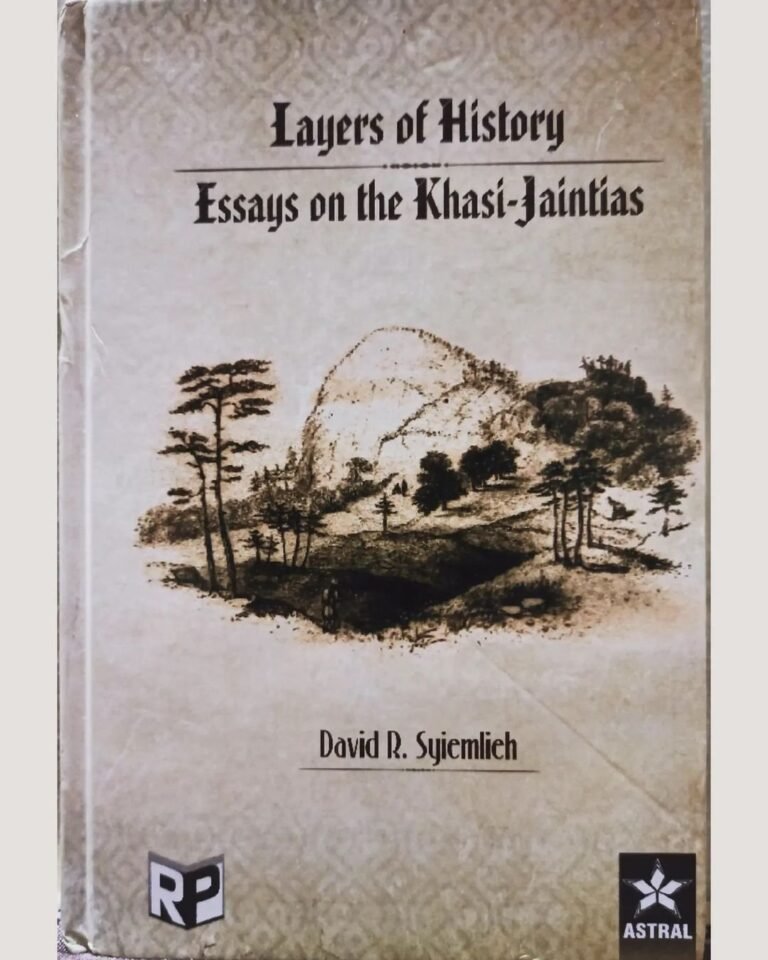
    • David Syiemlieh- Layers of History: Essays on the Khasi Jaiñtias

    • Hamlet Bareh- The History and Culture of the Khasi People

    • J N Chowdhury- The Khasi Canvas

    • P R T Gurdon- The Khasis

    • Shobhan Lamare- Jaiñtia Oral Narratives

    • Soumen Sen- Social and State Formation in Khasi and Jaiñtias Hills

    Ban rakhe ïa ka International Day of the World's Indigenous Peoples, ka Speak Your Roots ka la ïoh ban kren bad i @naphi_lyngdoh iba dei i Archaeologist. Ka kam wad bniah jong i ka la pynshai ïa bun ki phang jong ka histori bad jymbriew Khasi. ✍️🪖🛠️🏞️

    La thmu ban kren bad i kum iwei na ki kynthei iba trei ïa ka kam wad bniah shaphang ka jaitbynriew ban pynshai shuh shuh ia ka phangpdeng mynta ka sngi kaba dei "The Role of Indigenous Women in the Preservation and Transmission of Traditional Knowledge".

    Khublei Shibun @naphi_lyngdoh ba phi la pynsngew ïa ki jingmut bad jingthmu jong phi lyngba kane ka jingïakren! 🙏😄

    To celebrate International Day of the World's Indigenous Peoples, Speak Your Roots had the opportunity to talk with @naphi_lyngdoh who through her archaeological research has illuminated many areas of Khasi history and culture. 🪖🛠️🏞️✍️

    It is hoped that the talk with her as one of the women who is well-versed about the Khasi past will enlighten us about this year's theme "The Role of Indigenous Women in the Preservation and Transmission of Traditional Knowledge". 🙏😄

    🟡 Naphibahun Lyngdoh, is a Shillong based Archaeologist with interest in Ethnoarchaeology and Digital Archaeology.

    Her research focuses on abandoned settlements, megalithic culture and the ethnoarchaeology of this region. She is a recipient of the Nehru Trust for the Indian Collections at the Victoria and Albert Museum Award, 2019 for her research on the Megaliths of Mookyndur. Her research has been published in national and international journals.

    Congratulations Naphibahun and keep up the good work!!

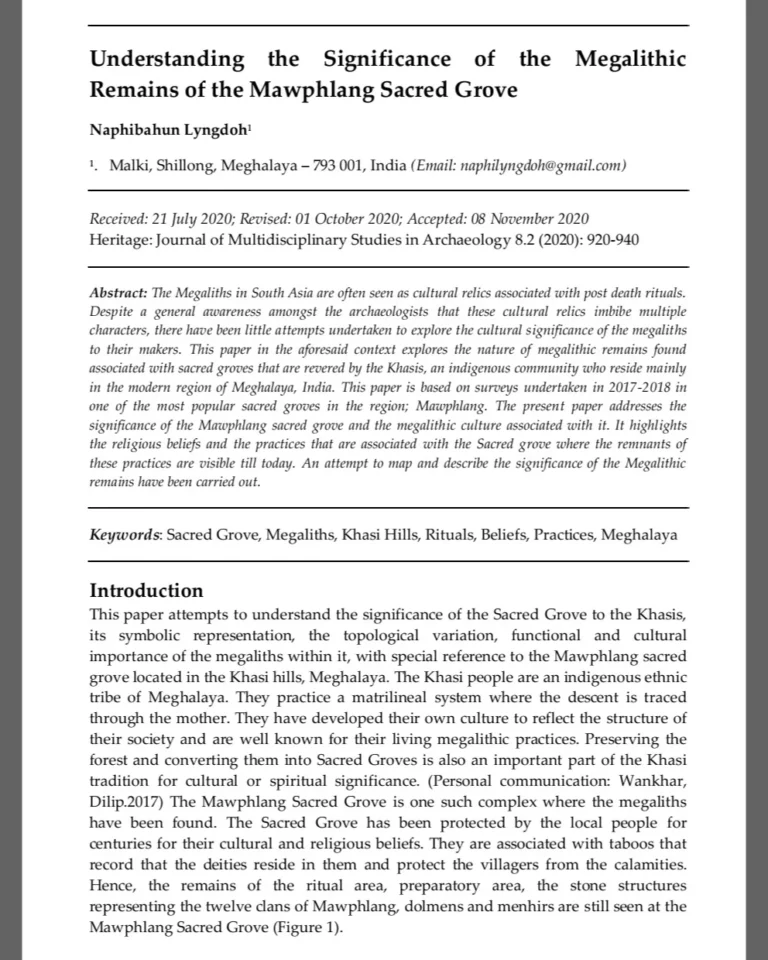
  • Understanding the Significance of the Megalithic Remains of the Mawphlang Sacred Grove by N. Lyngdoh

    The research article by @naphi_lyngdoh entitled:
    "Understanding the Significance of the Megalithic Remains of the Mawphlang Sacred Grove" has been published in Heritage: Journal of Multidisciplinary Studies in Archaeology 8.2 (2020): 920-940 📝⛏️⚒️📏

    🟡 Please click on the link below to read the research article

    http://www.heritageuniversityofkerala.com/CurrentIssue.aspx?VID=82

    🟡 No part of this article may be reproduced in any form without the consent of the author. If used for citing in research, proper acknowledgement and citation which is accepted should be adhered to. All material for this content has been researched by @naphi_lyngdoh

    The article is a wonderful and interesting read on the megalith culture of the world famous Mawphlang Sacred Grove. Congratulations on your hard work. We wish you more success in the future! 👏👏

    Ngi sngew kmen bad sngew sarong ba ki khun samla jong ngi ki la khih la ksar ban nang pynïar ïa ka jingtip shaphang ka histori bad ka jymbriew la jong 😄🙏

    Naphibahun Lyngdoh is continuing with her research and work. She has completed her Master's in Archaeology and Bachelor's in History. Naphibahun is an alumna of St. Mary's College, Shillong, Meghalaya.

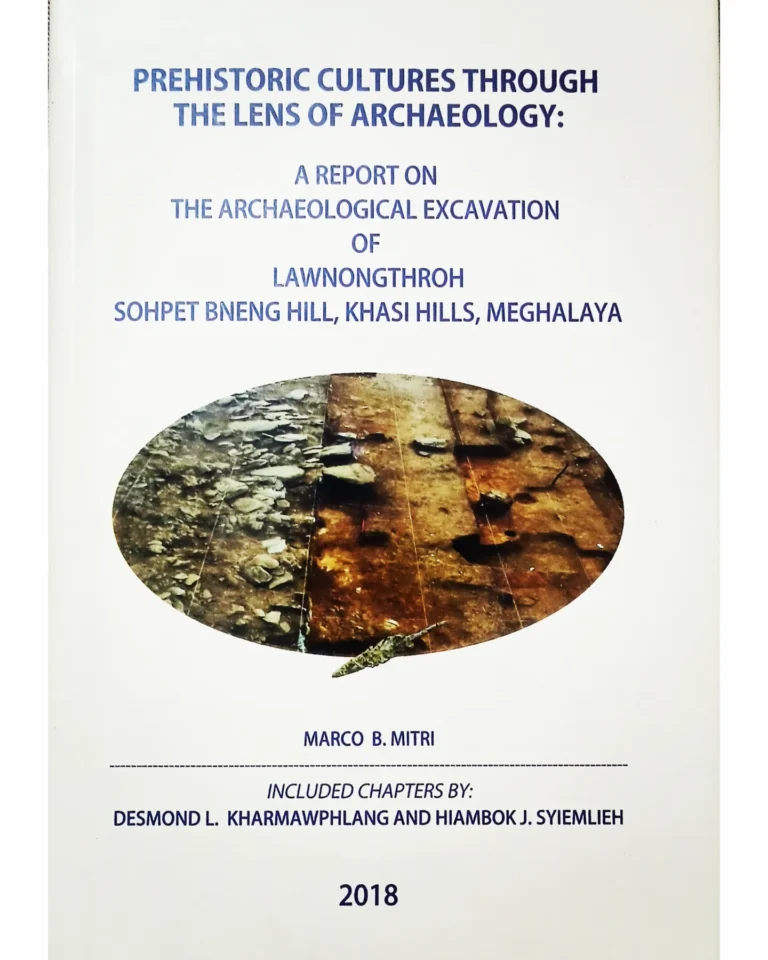
  • Prehistoric Cultures Through The Lens Of Archaeology: Marco B. Mitri (Excerpt)

    Chapter – 6 The Ethno-archaeology of Sohpet Bneng Hill

    While pursuing historical research with an archaeological approach, the contemporary traditional mode of life can contribute greatly in providing analogy about the ones in the past, since archaeological interpretation basically depends and ultimately rests on analogy. The significance of ethnology in archaeology can be understood from the remarks made by some archaeologists that archaeological reconstruction is an analogy with or without ethnological recourse In order to understand the material culture preserved in traditional practices, ethnoarchaeology? tries to study the possible correlation between the material culture of the people on one side and the unobservable social relations or spiritual life on the other. Thus the material data can be used to integrate knowledge to other non-material or intangible facets of the society which are reflected and embedded in tradition through an approach called folk archaeology! Archaeology can therefore contribute directly towards historical reconstruction when conventional historical sources are lacking or when other forms of preserved traditions require substantial support. By doing so, the mythical notion about the ancient ways of life, particularly the lifestyle of the pre-historic people is significantly reduced.

    Applying "Direct Historical Analogy" when there is temporal continuity between the archaeological culture and the ethnographic culture, the folk narrative of U Sohpet Bneng can become part and parcel of ethno archacological research, not as a partial and fragmentary record of the past, but as true elements that can be rescued from the clouding fantasy and helped to blend the two interacting modes of representing the past by using different accounts of the same events and objects.

    Inspired by the folk narrative, a systematic archaeological survey and exploration of the entire hill range around the areas close to Sohpet Bneng peak is conducted to gain empirical data from the area. During the course of exploration, which started in year 2003, the archaeological site of Lawnongthroh* which lies at the foot of the peak and along the ridge of Sohpet Bneng hill is discovered. Archaeological evidences of different cultural periods are observed at the site which stretched to more than a kilometer along the ridge.

    The site of Lawnongthroh is named after a village which is located in the northern slopes of Sohpet Bneng hill in the Ri-Bhoi district of Khasi hills, Meghalaya. On the ridge of the hill's northern slope that extends approximately 1.5 Kms in length and spread between 50-60 Meters in width, archaeological evidences like the Megalithic monuments, secondary burial Cist, cremation mound, Iron smelting area and wheel-made potsherds are found. Subsequent exploration of the ridge led to the discovery of 11 numbers of stone implements of Neolithic origin from the surface of a site which falls in one of the village's locality called Lum Mawbuh on the northern part of the village.

    According to informant the archaeological evidences recorded on the western slope of the ridge are associated with an ancient deserted settlement called, Mawbuh which lies a kilometer north of the present Lawnongthroh village. The source also added that it was the inhabitants of the Mawbuh village who were the first people to initiate religious ceremonies at the Lum Sohpet Breng peak. The ridge top of Lawnongthroh on the other hand, was an uninhabited area then and known to the inhabitants of ancient Mawbuh village by the name

    Synner, known for being an ancient route where the procession rested for a night before the ceremony at the apex of U Lum Sohpet Bneng.

    After the abandonment of the ancient Mawbuh settlement, there was a lull phase of human occupation on the hill till the appearance of the present village of Lawnongthroh which came into existence on the ridge only 30 years ago. These new occupants who formed the present village came in at different times from other nearby villages and also from distant places of Khasi hills to farm and cultivate on the ridge and its hill slopes. The reoccupation of the site after a long interval of abandonment is an important feature to help understand The settlement system on this hill and can also offer strong analogy on the pattern of human occupation of the area in archaeological past and an important pointer to the antiquity of settlement, giving the hill a unique character of being an area attraction. Archaeological findings from this area which are associated with different cultural periods of the past are clear evidence of human occupation pattern on the ridge and its surrounding slopes.

    Prehistoric Cultures Through The Lens Of Archaeology: A Report On The Archaeological Excavation Of Lawnongthroh, Sohpet Bneng, Khasi Hills, Meghalaya (2018) by Dr. Marco Babit Mitri is a wonderful treasure which documents the archaeological efforts in Lawnongthroh, Sohpet Bneng Hill.

    The book merges archaeology, geography, history and cultural studies to build a vivid understanding of life in the area. 📝⛏️⚒️📏📐📚

    The post shows excerpts from Chapter 6 which focusses on "The Ethnoarchaeology of Sohpet Bneng Hill" 🏞️🌄

    Dr. Mitri has lead an intensive research of the site and reading the book piques the imagination as one reads of Neolithic sites and stone artifacts in the Khasi and Jaiñtia Hills.

    Dr. Mitri is an Associate Professor at Union Christian College, Meghalaya. Dr. Mitri specialises in the fields of Archaeology and Prehistory.

  • An excerpt from”The History and Culture of the Khasi People”

    In this chapter entitled "Source of History" the author says that an effort has been made to write about the history of the Khasi people from the materials that they could gather, to "present a detailed account of both the political and cultural life from its earliest beginnings to the present day."

    Under the category of foreign accounts, the author says: Classical sources like the account of the Greek, Roman and Chinese starting from the 5th Century BC referring to Assam in general, indirectly allude to important socio-ecomomic and cultural conditions of the Khasi during the early period. Qazim's mention of fruits like citron, lime, lemon pineapple, orange, etc. produced from Assam in the medieval age refers to the cultivation of these fruits by the Khasi people who have grown them through generations till the present day.

    Mention of iron smelting, work in gold, silver and copper in Assam, in the early and mediaeval period refers to similar Khasi enterprises (of which we have evidence). On the proper basis of identification, we can make use of the foreign accounts and classical sources.

    References:

    1 Qazim was one of the earliest Muslim travellers to Assam.

    2 P. C. Choudhury, The History of the People of Assam to the 12th Century. A.D. and Ka Ryngi, Vol II, No. 1 and Vol II, No. 2.

    This is a great book you have to read! Thank you Miss @indariwarjri for the reminder! 🤗🤗

  • Primary Education in the Khasi and Jaintia Hills: Its Socio-Cultural Roots and Early History (1993)

    Here is an excerpt from the Introduction of the book Primary Education in the Khasi and Jaintia Hills: Its Socio-Cultural Roots and Early History (1993) written by E. Weston Dkhar. Dkhar is a prolific author of several books focusing on Khasi folklore and history.

    E. Weston Dkhar says: "Documents and maps indicate that the Khasi territory once extended to the Brahmaputra to the North and the greater part of the Surma Valley to the South. Kamakhya hills, where the Kamakhya temple stands, was known to the Khasis as "U Lum ka Meikha" or "The Grand Aunt's Hillock' (to mark the boundary) and many of the towns in the Kamrup District, Nowgong & District and Sylhet District like Kiew-hati (modern spelling Gauhati or Guwahati) meaning, "to ride on the elephant" or "to begin the journey by riding on elephant": Bordwar, Padwa, Jaintiapur, Shati (Chuttack), Shella-bari (Sylhet) and others were once the principal towns of the Khasis or their chief trading centres. The Lake Shati where the town of Chuttack stands belonged to Ka Shati, the wife of U Khang of Mustoh village, the founder of that village sixteen generations from hence."

    The excerpt discusses the borders of Khasi territory that stretched from the Brahmaputra river in the north to the Surma Valley in the south. The Surma River is a major river in Bangladesh, part of the Surma-Meghna River System. It starts when the Barak River (as it is known in Manipur) from Northeast India, divides at the Bangladesh border into the Surma and the Kushiyara rivers.

    Nowgong District is what we know as Nagaon District. Sylhet district was established on 3rd January 1782, and until 1878 it was part of Bengal province. In that year, Sylhet was included in the newly created Assam Province, and it remained as part of Assam up to 1947.

    It is intriguing to know that Khasi territory was much larger than we know it today. We definitely need to find out more about this! If anyone knows more please feel free to tell us in the comments section 😃😃

    Additional source: Wikipedia

  • Sawdong ka Lyngwiar Dpei

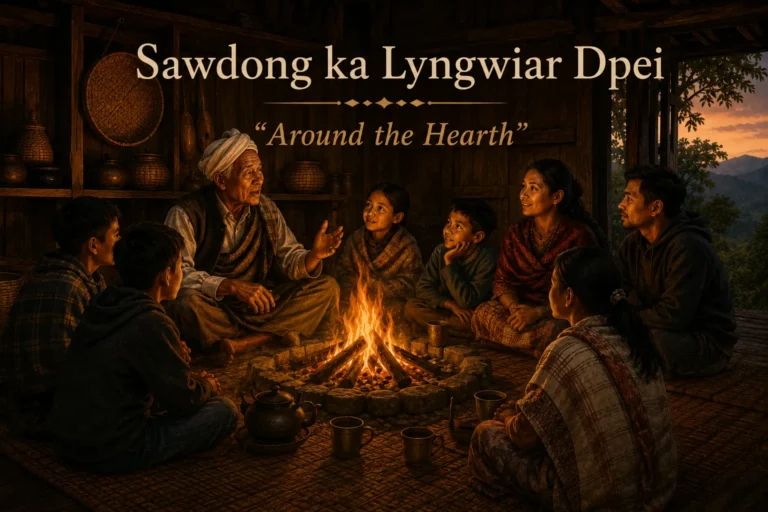
    "Sawdong ka Lyngwiar Dpei" or "Around the Hearth"

    "Sawdong Ka Lyngwiar Dpei" ka dei ka jingong ne ki kyntien kiba ngi ju pyndonkam ban batai ïa ka por kyrpang ha man ki thliew ïing jong ka jaitbynriew Khasi ha kaba baroh shi ïing shi sem ki ju ïa shong harud ding, ban ïa sngap ban ïa khana. Dei ha kane ka por ba ki khanatang bad ki puriskam u mynbarim ki khie im lyngba ki riew rangbah ne ki riew tymmen kiba dei ki nongkren nongkhana. Ha kane ka por ruh, ki tymmen ki ju shim ïa ka kabu ksiar ban sneng ban kraw, khamtam eh ïa ki khun ki ksiew ki ban dang san ki ban dang samla, namar ba baroh shi ïing shi sem ki ïa don lang ha kane ka por.

    Katba ngi dang jam sha ka ïa jong ka pyrthei stad pyrthei thymmai, kata ka ding lane ka lyngwiar dpei jong ka ïing kum ban shu ong noh ka lah sang ban jah noh namar bun na ngi, ngi la ïa tei da ki ïing ki ban ïahap bad ki por mynta, kumba ngi ïohi ha ki phlim, ha ki TV, ki magazine bad kumta ter ter. Kuma, ngi la hap ban shu mutdur noh ïa kata ka ding lyngba ki dur ne haba ïohsngew ha ki khana. Te kumno ngin pynim ban pynneh biang ïa kata ka ding kaba la sdang ban duh noh-Ka ding kaba wanrah ïa ka jingsngew shngaiñ, sngew shongshit haba ngi sngap ïa ki khanatang, ki puriskam bad ki jingsneng-jingkraw kiba shongñia, kiba shong nongrim bad lehse bun na ngi, ngi lah duh noh ïa ka da kaba im tynneng kum ki nongwei.

    Hooid lehse ngi dang lah ban pynim ïa kane ka ding jong ka lyngwiar dpei kaba dei ka rukom tynrai jong ngi da kaba ïalum shi ïing shi sem, shi paralok ban ïa kren ïa phylliew jingmut shaphang ka jymbriew, ka histori bad ka ktien ka thylliej. Ngi hap ban shim ïa kane ka sienjam wat lada dei tang harud ka miej bamja, haba ïa shong dih sha, haba ïa shong pyllun ïa ka shawla ne ha kano kano ka por wat lada kam don shuh kata ka ding ne ka lyngwiar dpei, hynrei kan ïai rhem hapoh jong ngi lada ngi pynneh ïa ka rukom ïathuhkhana bad ïa sneng ïa kraw ha ki por kyrpang kiba sngewbit ha man la ki longïing.

    Ma ngi hi shimet ngi dei kita ki lyngwiar dpei ki ban pynpaw ïa ka jingstad bad jingshemphang jong ki longshuwa-manshuwa jong ngi.

    "Sawdong ka Lyngwiar Dpei" or "Around the Hearth" are words that are used to describe the time in a Khasi family when family members would sit around the hearth, the flames giving them warmth and light. It is at this time that stories are told, our oral tradition becomes alive, from the words and expressions of an elder of the family.

    As we move into the first quarter of the 21st century, the physical hearth has gone absent from our modern homes and we are left to imagine the embrace of the warm flames of a hearth from pictures or from books. How do we recreate that atmosphere, that feeling of being together almost as one breath and one mind as we listen to folktales, legends, myths and ponder on teachings which contain truths that we may have lost in our rush into globalisation?

    Perhaps we can recreate the hearth by gathering our family and friends to talk about our culture, history and language. Because we need to revive the interest and love for what is our own, for what we belong to. We may not have our physical hearth but we can create a symbolic "lyngwiar dpei" by talking, by listening, by reading, by understanding with clear hearts and minds. A clear heart and mind with a need to know who I am and what am I going to become?

    In a way, we are the hearth, we are the "lyngwiar dpei", we are a walking talking hearth who emanate the light of our ancestors' knowledge and wisdom.

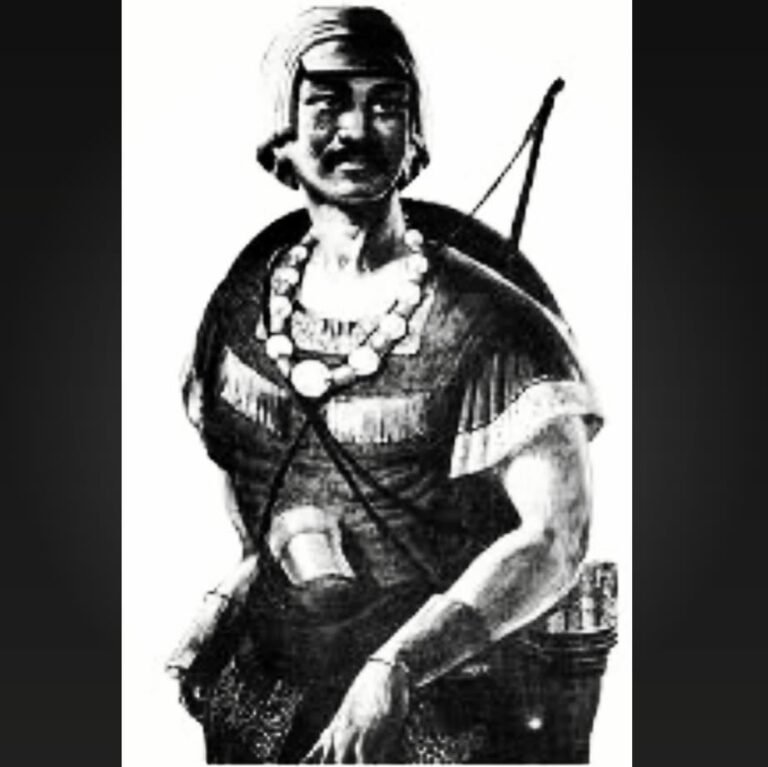
  • Ka Phan Nonglait by Tony Slong

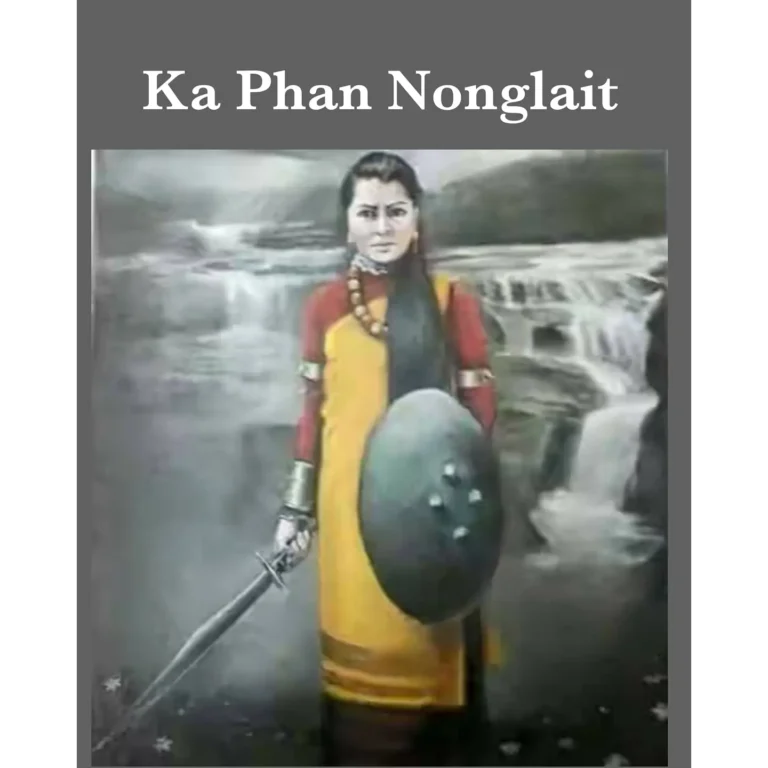
    Ka Phan Nonglait is one of the Khasi women freedom fighters and is considered one of the bravest women of that time. Most women were either raped, molested or ill-treated by the British soldiers. This made Ka Phan Nonglait and some women from Hima Khatsawphra to take matters into their own hands with the help of Mon Bhut. With his help Ka Phan Nonglait was able to trap the British soldiers by offering them alcohol. When they were inebriated, she took all the weapons of the soldiers and threw them into one of the rock holes in the Nongrmai falls (now known as Phan Nonglait Falls). Due to this act, she is remembered in the stories that have been retold for generations. Then U Mon Bhut along with other soldiers killed 32 British soldiers. This was in the year 1829.

    In Ka Jait Nonglait: Ka Thymmei bad ki Dienjat written by T. Daniel Stone Lyngdoh Nonglait, the historical contexts of the Nonglait Clan has been given. Since ours is a society that relies on oral narratives, I have heard of the valour and bravery of ka Phan Nonglait. It has intrigued me to do further research upon this narrative. Yet, there is more to be unearthed. From the British perspective, the only record made was on U Mon Bhut who fought gallantly against the British. He was U Tirot Sing's most trusted general. The records about the Nongkhlaw incident were said to be the first spark that led to the war of the Khasis against the British. Among those killed, two British officers named Lieutenant Bedingfeld and Lieutenant Burlton were killed. In a letter to Lamb by David Scott, dated 10th April 1829, he mentioned that this fateful incident happened either on the 4th or 5th of April, 1829. This incident shook the Britishers and was recorded in the memoir of the Late David Scott, esq.

    On this Independence Day we remember Ka Phan Nonglait as the first Khasi woman freedom fighter. The achievements of Khasi women who fought against the British are often not recorded by history. Ka Phan Nonglait is remembered as one of those freedom fighters who have made a mark on Khasi history.

    This entry has been contributed by @carey_lynz Thank you so much! 🙏🙏 Our gratitude also goes to @tonyslong 😃🙏

    🟡 Picture 1: Painting of Ka Phan Nonglait by @tonyslong

    🟡 Picture 2: http://wikimapia.org/21065891/Phan-Nonglait-Falls-Nongrmai

    🟡 Picture 3: Ka Jait Lyngdoh Nonglait: Ka Thymmei bad ki Dienjat written by T. Daniel Stone Lyndoh Nonglait.

    🟡 Picture 4: A Memoir of the Late David Scott, Esq. written by Major Adam White (1831, 1st edition)

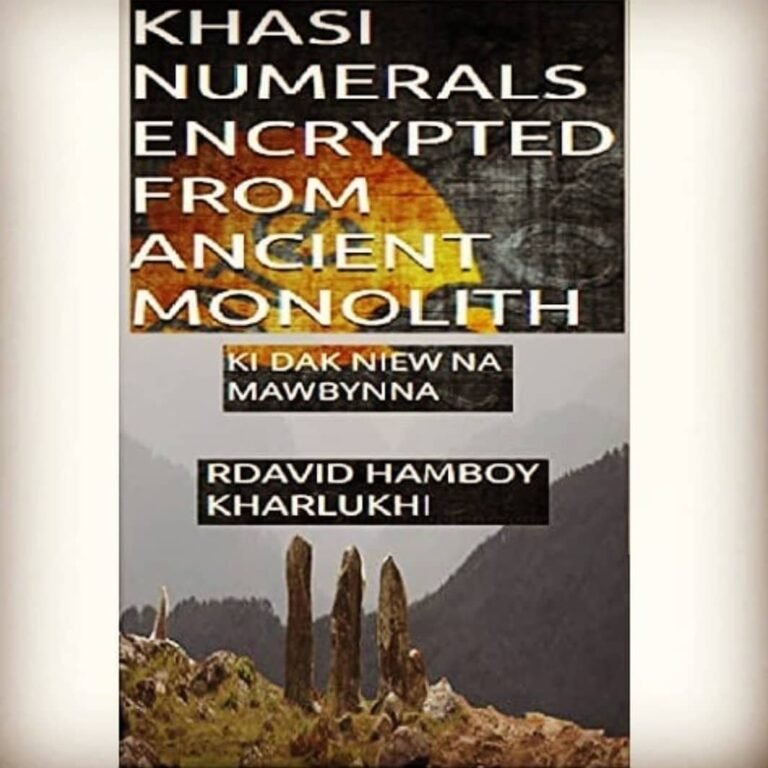
  • Ki Dak Ñiew na Mawbynna by R.David Hamboy Kharlukhi

    1. Jylliew nga poi sha thwei Jingtip buh nam ki longshuwa,

    Ki mawbynna ba sah kynmmaw naduh ki thwei u mynbarim;

    Ba khlem pat sep ba dang shongdor, Ki neh kyrpang ki ieng hi triang.

    Nangno ngi sdang hangno ngi poi, ia ngi Jingtip ki ai;

    2. Nod, wei ar lai haduh shiphewkhub ki ieng kum ki sabut.

    U dak kyrwoh jingkhein ban pynbiang lut naduh suda haduh shiphewkhup;

    ki nang pynbiang ia shihali, shikuri ban thew ban woh ha iew ha hat,

    Khlem artatien ki dei spah bah bakhraw naduh u mynbarim.

    3. Ha lawkyntang bad lawlyngdoh ki ieng sakhi;

    Naduh na Nongjri shathie shaduh sha Nartiang Shatei.

    Ha Phyllaw shad bad kper pynngnad ki mawbynna ba itynnad:

    Ki khynnah rit ki ialehkai khlem poi pyrkhat ei ei.

    4. U Marphalangki man la ki por u thung a mawbynna ban sah kynmaw;

    U ñiew bad lum kyrpang ki mawbynna ha lad dap briew,

    Manla ki por ngi tih bad lum jingtip riti dustur u ñi u kong:

    Khaddei la dep ban pynurlong I'u dak ñiew naduh myndai kulong.

    5. "Nod" U mawbynna shongthait ba par ha sla kjat khyndew

    "Wei" U mawbynna ba kiew shaphrang u Khun phrangsngi ka Ri

    " Ar" Ki mawbynna shijur ki ieng sakhi i-a roi ka par ki paidbynriew Khasi

    " Lai" Ki mawbyrseiw rympei longing ki ieng ban kiew shaphrang khlem kyrtiang dien

    "Saw" Ki Mawbynna U Kpa Ka Kmie bad ar sakhi ki Khun kum shikynhun

    "San" Ki Mawbynna Longkni longsan khlem noh shiliang synshar ia kur ki man

    "Hynriew" u mawbynna tip briew tip Blei ba sdang ban san Rangbah bad talain stieh

    "Hynñiew" Ki mawbynna hynñiew pateng ba snoh kti lang ban iai pynbha imlang sah lang

    "Phra" Ki mawbynna jong ki Hima sawdong ki pud ki ker bad ki iada

    "Khyndai" Ki mawbynna sah jingkynmmaw jong ki pateng longshuwa manshuwa

    "Shiphew" Ki mawbynna shongthait ba dap pura ka kamai hok jong ki rta

    6. Ki dak ñiew khasi ba ioh nongkynti na ki mawbynna;

    Ki dei ki spah dak maian ba buh ki longshuwa manshuwa;

    Namar ka "ia" ka juk Sati Ksiar la dap pura;

    Ia ki dak ñiew la dei ban ri bad sumar bha.

    "Ki Dak Ñiew Na Mawbynna” by R. D. H. Kharlukhi @davidkharlukhi is an original Khasi poem.

    This beautiful and well-crafted poem brings together Khasi numbers and the different kinds of "mawbynna" (monoliths) that Khasi and Pnar culture possess, to create an ingenious symbolism. It is a significant effort to create an awareness of the deep, inextricable bond between man and nature. Most importantly, the poem highlights the lessons encrypted in nature which many of us do not perceive.

    Thank you to Mr. R. D. H. Kharlukhi @davidkharlukhi for giving the permission to post his poem! This poem is available on amazon.in.