La don ha kawei ka shnong uwei u samla uba jaipdeh shibun. U kpa jong u, u long u mahajon bah ha kata ka shnong; hynrei ynda u la ïohi ïa ki rukom lut phut u khun jong u, u la ai ïa u shihajar tyngka bad u ong ïa u ba un leit khaii sha ki ri kiba jngai. Une u samla u la poi ha kawei ka shnong bad u leit sah ha kawei ka ïing basa. Hangne u la ïohi ïa ki para shong basa ba ki la pynshitom ïa kawei ka khnai kaba ki set hapoh ka ruh nar. Uta u samla u la sngew synei shibun ïa ka khnai bad u la ong ïa ki ba un ai shispah tyngka lada ki pyllait noh ïa kata ka khnai. Kita ki briew ki nang ïa tharai ba u shu kren kai hynrei ynda ki la ïohi shisha ba u mut ban siewspah ïa ka khnai ki ïa rkhie beiñ ïa ka jingbieit jong u bad ki ïa pyllait noh ynda u la siew ïa ki kumba u la kular. Kata ka khnai ka tang shu lait napoh ruh ka la ainguh ïa uta u nongpyllait im jong ka bad ka kular ban long ka mraw jong u katba u dang im ka ong artad ba lano ma ka sngi ka lah ban wan shat kylliang ka bok ba kan ïoh lad sa ma ka ban ïarap ïa u ynda u poi ha kano kano ka khim.
Kum lashai uta u briew u la mih na kata ka shnong bad u la leit poi harud kawei ka wah. Hangta u lap ïa ki nongtong jar ba ki ker kut ia uwei u ksih da la ka jar. Ynda u la ngat u ksih hapoh jar u la kyrpad kat lah kat ïaï ïa ki ba kin pyllait noh ïa u: hynrei kim sngap ïa u haduh ba un da siew pat shispah tyngka sa na ka bynta u ksih. Ynda u ksih u la lait na ka tyrsim jong ka jingïap u ruh u la kular ban bud ban shakri ïa uta u briew katba u dang im. Uta u samla u la leit poi sa ha kawei pat ka shnong bad hangne u lap la ki briew khrui ki ïeng ban pynsalia ïa kawei ka khlieng kaba ki la ngat da kawei ka shangkhawiah. Ïa kane ka khlieng ruh u la pyllait da kaba siew tyngka bad ka ruh ka la bud ïa u.
Ha kawei pat ka shnong u la lap sa ïa ki briew kine ki ïabah la ki diengtangon bad ki ïabeh ïa uwei u bseiñ uba heh. Ïa une u bseiñ ruh u la pyllait im kumjuh da kaba siew tyngka. Une u bseiñ uba la don ha tmier ka jingïap u la pynpaw ka jingsngewnguh kaba khraw ïa u nongpyllait im jong u. Ynda u la kular ban long mraw jong une u briew u la ïawer ïa u ban leit kai sha ïing ki kmie ki kpa jong u, u ong artat ba kin ym pep ban pynpaw kum ka dak ka jingainguh ïa ka mynsiem basbun jong u da kaba ai eiei kaba kordor ïa u. Uta u samla u la sngew ma her ban leit rung shapoh ka krem jong ki bseiñ. Hynrei uta u bseiñ u la ong ba ym donkam ban tieng ei ei. U ong ba u long u khun marwei jong u kpa bad ka kmie jong u bad ba ki la thep lut ïa ka mynsiem ha u. Ynda u la kren shngaiñ eh une u khun bseiñ uta u briew u la kohnguh ban leit. Hynrei shuwa ba kin leit u khun bseiñ u la bthah ïa u briew ba lada ka kmie jong u kan tyrwa ei ei ïa u, u dei ban pan tang ka sati kaba ka deng ha la u tdong.
Kumta baroh lang ki la ïa leit bad tad shu poi uta u briew bad kita ki mrad jong u, u la ïohsngew sa tang ka pyrsad bad byrngem na kita ki bseiñ kaba la sngew triem her. Uta u briew u la kïuh that bad la ka thap phet. Hynrei ynda kita ki bseiñ ki la ïamih napoh thliew bad la sngewthuh na la u khun ba u la lait im da ka jingleh isynei jong uta u briew na ka shla ka bym tip shuh ki shu jem jai jai bad ki khroh ia uta u briew bad ki lok jong u ba kin ïaleit peit kai ïa ka ïing ka sem jong ki. Ki ïa bud ïa kita ki bseiñ bad ki la ïapar napoh thliew. Hynrei katba ki nang ïangam shapoh ramew kata ka thliew ka nangheh nangheh bad khadduh, ki la poi ha kaba i kum ka ïing kaba phyrnai khrek bad kaba dap da ki mar ksiar ki mar kordor suda. Ki kynja jingbam ruh kine ki bym tip skit shuh haduh la i kumba la lum lut ïa ka khleiñ jong ka mariang hapoh kata ka ïing poh ramew. Kita ki bseiñ ki la pynbam khawai ïa uta u briew bad ïa kita ki mrad jong u da kita ki jingbam. Ynda la dep kita ki men bseiñ ki la pynpaw ïa ka jingsngewnguh ïa uta u briew namar ki jingpyllait im jong u; bad ki ong ban ai ïa u kano kano kaba u mon ban pan na ki.
Kumba la bthah ïa u da uta u khun bseiñ, uta u briew u la pan da kata ka sati kaba na u tdong jong ka bseiñ kmie. Kita ki bseiñ ki la shaïong hi ngaiñ u tad shu pan da ka sati. Ka la ong ka kmie bseiñ ia u, "Ko hep khun bynriew, phi la pan ka jingpan kaba eh shibun: namar kane ka sati ka dei ka synjat shong kurim jong ngi. Hynrei haba phi la pyllait kat ïa ka jingim u khun thep mynsiem jong ngi, phi la dei hok keiñ ban bat ïa ka naduh mynta. Ngin pyndeng kein ïa ka ha ka tiduh jong phi bad kynmaw ba la phi kwah eiei ha ka pyrthei ne lada haba phi don ha kano kano ka khim, phi dei tang ban shim nam ha kane ka sati bad phin ïoh shisyndon ïa la jingkwah bad phin lait ruh na kano kano ka jingkhim. Ngin pynong tang kane kawei ïaphi: wat khlad ha ban da lei lei na kane ka sati; namar, ha kata ka sngi ba phin khlad na ka, jynjar bakhraw kan ngat ha phi."
Uta u nongkhaii, ryngkat bad ki lok jong u, u la mih na ïing jong ki bseiñ bad u la leit poi ha kliar jong uwei u lum uba don hapdeng ka ri kaba dap da ki them bad ki wah kiba itynnad. Hangne ki syntiew ki phuh man la u bnai baroh shisnem bad ki sim man ka jaid ki wan poi na kylleng ka pyrthei ban pyndap ia ka bneng da ki sur u jingrwai bathiang jong ki. Ynda u la shong ha kliar jong une u lum, une u samla u la sei la ka sati bad u la ong "Ha ka kyrteng ka nam jong ka sati sharyngkuid kaba nga ioh na u dong jong ka seiñ pun, ai ba kan long halor une u lum kyndiang ka ïing dulan paki kaba itynnad tam ha ka pyrthei". Ha ka shikhyllipmat ka mih hangta da ka ïing kaba thaba khrek bad ithiang sat ban peit. U la ong pat ban ïoh da ki mraw shynrang bad kynthei kiba la pynriam bha bad ban pyndap ïa ka ïing da ki jingbam kiba bang tam ha pyrthei. Tang mar kumta, ka ïing ka la dap da ki shakri shakor kiba i phuli i phieng bha bad ki kudam baroh ki dap da u khaw u kba bad ki jingbam kiba kordor tam ha ka pyrthei.
Khadduh eh, u la shim nam biang da kata ka sati ban wan poi da ka thei sotti kaba bhabriew tam ha ka pyrthei ban long ka tnga jong u. Mar kumta shu wan mih da ka thei samla kaba la dap thew bha ban peit naduh khlieh haduh kjat, ka jingriam ruh kaba la i ïadei dur bha bad ka rynïeng ka briew, ha ka phuh mat ha ka rkhie rymmuiñ i kum ban shu pyndap ïa kata ka jaka baroh da ka jingsngewbha bad kmen suda. Kata ka samla ka la long ka tnga jong uta u briew, bad ki la ïa shong suk shong saiñ haduh shibnai khlem da jia ei ei ka ban pynkhuslai ïa ki.
Hynrei ynda la dap shibnai une u riewbha bok u la sngew salia ban shu shong bad u la ong ia la ka lok ba un leit beh mrad noh bad un leit jah na ling haduh shitaïew. Ka tnga jong u ka la khang la u katba lah, hynrei um sngap. Ynda u la lah khreh lah khrum baroh u la mih na ïing, u da ïalam ïa kita ki mrad kiba u la lah siewspah bad baroh ki shakri shakor jong u. Hynrei shuwa ba un mih na ïing, u la ong ïa ka ba kan ym khuslai eiei, namar un ai pynbat ha ka ïa ka sati jadu kaba u la ïoh na ka tdong jong u bseiñ, bad lada kan shu shim nam ha kata ka sati, kan ïada ïa ka na ki jingma baroh bad kan ïoh ruh kat kaba ka kwah ha ka pyrthei.
Harud bad sawdong ïa une u lum ha uba la mih kata ka ïing jadu, don kawei ka wah bah. Ha shiliang kane ka wah, hapoh khlaw shajngai bah, la don u majikor uba shong marwei ha ka ïing trep. Une u majikor u la sngewthuh da kaba peit thuh ïa ka jingmih kynsan jong kane ka ïing bad ïa ka rukom jong kiba shong ha ka, ba ka don ka borjadu aïu re aïu kaba lah ban thaw kat kane ka kam phylla. U la tip, ruh, da la ki jingkhan myntro ba ka don ka sati kaba phylla ha ka pyrthei hynrei kaba eh than ïa uno uno u briew ban ïoh namar ba la ai bat ïa ka ha ki thlen ki rakot. Namarkata u ju leit syntiat man ka sngi ïa u trai jong kane ka ïing bad ha kawei ka por u la ïohi ïa ka sati kaba phylla kaba u deng ha la ka tiduh. Ynda une u briew u la leit beh mrad, une u majikor u la pynkylla dur ïalade kum u pukirblei bad u la leit khrong khaw na ka tnga jong u, bad u la kylli shaphang u tnga jong ka bad balei u shu iehnoh ïa ka marwei kum ha kata ka jaka kaba kynjah. Kane ka briew kaba lui lui ka la ïathuh ïa u shaphang ka jingleit beh mrad u tnga jong ka bad shaphang kata ka sati kaba phylla kaba u la pyndeng ha ka kti jong ka.
Uta u majikor u la leh kum uba kwah eh ban da khmih thuh bha ïa ka sati kaba pher kum kata haduh ba ka la kum sei bloit ia kata ka sati. Hangta hi uta u majikor ruh u knieh bad phet bak. U la mareh haduh ba u la poi sha shiliang kata ka wah. Hangta u la shim nam ia kata ka sati bad u la ong ban pynkynriah noh shapoh khlaw ha ka jaka ba shong ma u ia kata ka ïing. Mar kumta, kata ïing ka shu her kynsan na uta u lum bad ka la poi ha ka jaka shong uta u majikor, bak sha shiliang wah. Ynda kata ïing ka la poi sha shiliang wah kane ka briew kaba bieit ka la pan biang ia kata ka sati. Uta u majikor u ong pynban ba u la ïoh bat ma u ïa kaj ingim jong ka bad ka jong u tnga jong ka bad ba sah sa tang kawei ka lad ïa ka ban pynslem la ki sngi ha ka pyrthei bad kata ka long tang da kaba keiñnoh ban pyrkhat shaphang u tnga jong ka bad da kaba kohnguh ban ïa poi kurim bad u. Kata ka briew ka la lynñiar kat lah kat ïai, ka phut ia la u shñiuh, bad ka tim ïa une u dusmon u beiman; hynrei u pat u shu rkhie ia ka bad u ong. "Ngan ap ha ban da thanda ka mynsiem jong phi: phin phet shaei pat na ka kti jong nga"
Uta u nongleit beh mrad u la wan phai na khlaw ynda bun sngi bad khlem ïoh siat kawei ka mrad ruh. U la wan phai bad ka thait ka jrem ka bym lah ong shuh. Ynda u la poi ha ka jaka ba ju don ka ïing jong u ka kliar lum ka la jyrngam kum mynshuwa, hynrei ka ïing bad ka tnga jong u kim don shuh. Ka khnai, ka khlieng, u ksih bad u bseiñ ki la ïa pynlong dorbar bad ynda ki la ïa pyrkhat slem ki la ong ba kin siew kylliang ïa ka jinglehsbun jong u da kaba ki wad bad pynpoi biang ïa ka ïing jong u bad ka tnga jong u. Nyngkong eh ka her bak ka khlieng ban leit ingoh shano ka la kah ka ïing bad kata ka briew. Jngai eh ka her namar kam shym wan poi haduh ban da sep hi ngaiñ ka sngi. Ynda ka wan phai ka ïathuh ïa la u kynrad bad ïa la ki lok ba ka leit poi haduh kata ka ïing bad ba kata ka ïing ka la poi sha kawei pat ka hima kaba jngai bah nangta. Ka ïathuh ruh ïa kaba ka la ïohi bad ïohsngew bad baroh shaphang uta u majikor bad ki jingbyrngem byrsit jong u ia kata ka thei, Hynrei ka khlieng ka la ong. "Un nym lah haduh ban da iap ban pynkohguh ïa ka ban ïapoi kha bad u.
Baroh shimiet ki la ïa pyrkhat kumno ban ïoh pat ïa kata ka sati na uta u majikor namar ka khlieng ka la ïohi ba u deng ïa ka ha la ka kti. Kum lashai mynstep, ka khnai, ka khlieng, u ksih bad u bseiñ ki la ïamih ban leit wad ïa kata ka sati. Ynda ki la laid bunsngi ki la ïapoi ha kata ka khlaw ha kaba don kata ka ïing bad ki la syntiat ïa ka ïaid ka ïeng jong uta u briew baroh shi janmiet ha kata ka sngi kaba ki ïapoi. Ynda miet ka khnai ka la pong thliew bad ka la nang ap peit syntiat na ita i thliew ïa ki kam jong u shuwa ba un thiah. Shuwa ba un thiah ka khnai ka la ïohi ba u loit ïa ka sati na la ka kti bad u kbum khop hapoh shyntur. Ka khnai ka la ap haduh ba un da ïohthiah. Ynda ka la ïohi ba u la ïohthiah bha ka la par sor bad ynda ka la shong halor ka syngkhlieh ka la pynphai mian mian ïa la u tong bad ynda ka la pynrung hapoh thliew khmut ka la tynruh kynsan shaduh shapoh eh. Mar kumta uta u briew a synriah bhuk bad hamar ba u synriah ka mih boit ka sati napoh shyntur jong u bad ka sied shajan thliew ba ka la lah pong ka khnai. Hangta ka mareh bran haduh ka sati, ka tang shu la shim ïa ka, ka mih pynstet na ka thliew sha khyndew.
U ksih, ka khlieng bad u bseiñ ki nang ïa ap shabar kata ka thliew katba ka khnai ka dang trei kam hapoh. Ka jingsngewbha jong ki ka long kaba khraw shibun eh ynda ki ïohi ba ka wan phai bad ka sati ha ka shyntur jong ka bad ba ka buit jong ka la lah haduh katta ia ka buit thok jong u majikor. Kum lashai ki la ïa kut lang ba ka khlieng kan rieh, ïa ka sati ha ka shyntur jong ka bad ba kan her stet katba lah sha u kynrad. Ka khlieng ka la dait ia ka sati ha ka shyntur jong ka. Hynrei hamar ba ka poi hapdeng kawei ka wah ka la kum ang ïa ka shyntur bad kata ka sati ka la hap plom hapdeng ka thwei kaba heh bad jylliew shibun. Ka tad shu hap ha um u dohkha uba heh u la kynrup bad u nguid ïa ka sati. Ka khlieng ka la leit phai sha la ki lok bad ka la ïathuh ia ki ïa kane ka jingjia ba sniew bok. Hangta ki la ïa pyrkhat kumno ban ïaleh ban ïoh pat ïa ka sati. Ki la ïakut ba u ksih un pynmih ïa ki dohkha baroh sha sla um haduh ban da lap ïa kata kaba nguid ïa kata ka sati; u bseiñ un tyrsuh bad khura ïa ki dohkha napoh ka krem da ka tong khnang ba kin mih sha madan ba un ïoh kem u ksih; tat shu pynmih u ksih ïa ka dohkha ha sla um ka khlieng kan rong ïa ki sha ryngkew, bad ka khnai tad shu poi sha ryngkew; kan puid ïa ka kpoh bad ka snier jong ki ban dup lap ïa ka sati.
Kum lashai mynstep ki la ïa sdang ia la ka kam. U ksih u la sei bun spah tylli ki dohkha, hynrei um shym lap satia ïa kata ka sati hapoh kpoh jong kano kano ka dohkha. Lajan lut baroh ki khabah ha kata ka thwei; sah sa tang uwei uba heh tam, ïa une u dohkha u ksih u la ïaleh baroh shisngi bad haba khatduh u ïoh pyniap ïa u bad u la ring ïa u sha ryngkew. Ynda ka khnai ka la puid ïa ka snier jong u, ki la lap hangta ïa ka sati bad ka jingkmen jong ki hangta ka bym lah ong shuh. Ka khnai kam ai shuh ba kan rah ka khlieng, kum mynshuwa ïa ka sati: hynrei ka la ong ba kan kbum ïoh ka hap da kaba ka khlieng kan rong ïa ka khnai ha ki tyrsim jong ka sha u kynrad jong ki. Ki la poi suk pat sha u da kaba her. Hangta ka khnai ka la khlei ïa ka sati ha khmat jong u bad mano ba lah ban ong haduh katno ka jingkmen jong uta briew ynda u la ïoh pat ïa la ka sati da ka jingleh shitom jong ki lok kiba u la siewspah bad leh sbun. Khlem da pynslem shuh uta u briew u la shim nam da kata ka sati bad ha ka shikhyllipmat hi pynpoi biang ïa ka ling bad ka tnga jong u ryngkat bad ki shakri jong u baroh.
Nangta u la shim nam biang da kata ka sati bad u la ong ba ïa uta u majikor ban bret sha kata ka wah ba un ïap jyllop hangta bad ban bam ki dohkha ïa u. U ksuid jong kata ka wah u la leit shim ïa uta u majikor na u ñiuh trong bad u la rong ïa u haduh sahit bneng bad nangta u la pynhap ïa u hamar pdeng kata ka thwei ha kaba ka sati ka la hap. Ynda la pynkynriah noh kumne ïa uta u majikor uta u briew bad ka tnga jong u ki la ïashong suk shong saiñ ha kata ka ïing jadu halor uta u lum. Ki la kha bun ngut ki khun shynrang bad kynthei. Kata ka khnai, ka khlieng, u ksih bad u bseiñ ki la shong ïa sah ryngkat bad ki bun snem. Bad ynda ka samoi jingim pyrthei ka la wai la pynkynriah ïa ki baroh sha kata ka ri jadu kaba don sha lyndet ka wah jingiap bad hangta ki jynjar bad khuslai jong kane ka pyrthei bad ka doh kam lah ktah shuh ïa ki.
.
.
.
There was once a young man who was very lazy. So his father, who was a wealthy trader, decided to give him 1000 rupees so that he would also learn to trade and do business. The young man left home and stayed at an inn. There he saw people pestering a rat in a cage. The man felt sorry for the rat and said that he would pay a hundred rupees if they set it free. The people thought he was joking but when they saw the money he was willing to pay laughed at his stupidity and let the rat go. The rat who was spared from death vowed that it would be the man's slave as long as it was alive and that one day it would be able to return the good he did.
The next day the man came upon a river and there he found fishermen who had caught an otter. The man begged them to let go of the otter but they didn't listen to him until he gave them one hundred rupees. Again the otter was so grateful that he vowed to serve the man as long as he was alive. When the young man reached another village, people were pestering a vulture who had fallen into a trap. With the vulture too, the young man paid money for its freedom and the vulture vowed to follow him.
In another place the man found that people were carrying clubs and wooden sticks, chasing a big snake. With this snake too, the man paid money so people would leave it alone. The snake was so happy to be alive that he too promised the man to be his slave. He also offered to take the man to his parents' home, saying that they would definitely give him something valuable in return for their son's life. The young man was horrified at the thought of going to the snakes' cave but the young snake said that he should not be scared because the snake was his parents' only child and that they loved him deeply. The man's fear subsided a little after hearing what the snake said. Before going however, the snake told the man that if his mother offered him anything, that he should ask for the ring she wore on her tail.
When the man and his beasts reached the snake's cave, he could hear angry hissing from the snake's parents. He became so terrified that he began to tremble and was going to run away. But when the snake's parents came to know what the man had done for their son all their hissing stopped and they immediately coaxed him and his friends to come to their home. So as they followed the snakes into the earth they had to crawl into a hole. But as they proceeded the hole became bigger and bigger until they reached a home that was glittering with precious stones and gold. The abundance of food too seemed that all the riches of nature were in that place. The snakes gave the man and his beasts the food to eat. When they had finished, the snakes expressed their gratitude for saving their son and said that he could ask for anything he wanted from them.
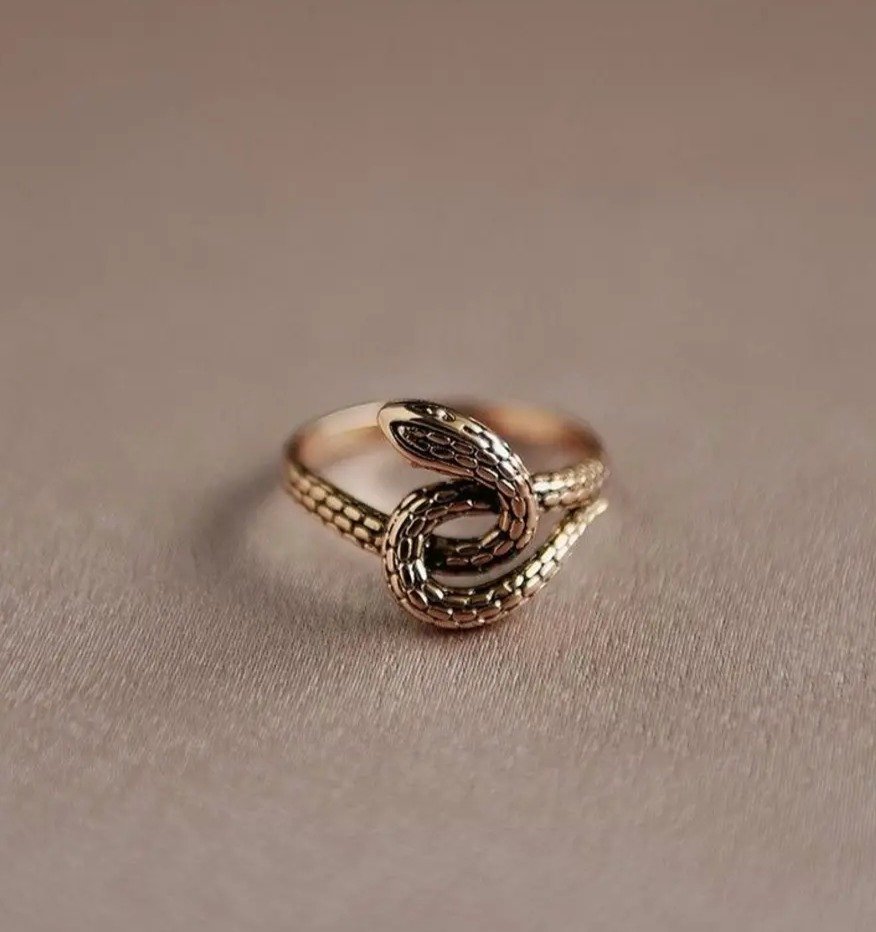
As instructed by the young snake, the man asked for the ring that the mother snake wore on her tail. On hearing this, they were shocked and didn't know why he asked for the ring. The mother snake then said that what the man asked for was a hard request to grant because the ring was their wedding ring. But because he had saved their son's life, he had the right to possess it , thereafter. She added that they would make him wear it in his little finger and if he wanted anything or was in a crisis, he only had to take the name of the ring and he would get what he wanted or the crisis would be lifted. Finally, they said that he should never part with the ring because on the day that he does, untold suffering and hardship would befall on him.
When the man and his beasts left, they came upon a beautiful hill surrounded by bountiful valleys and flowing rivers. There were flowers which bloomed every month throughout the year and birds of all kinds from all over the world came to fill the place with their songs. As he sat on the hill the man took the name of the sharyngkuid ring and asked for a the most beautiful mansion in the world on the hill. In an instant there appeared before him a mansion that glistened in beauty. He then asked for male and female slaves and also for the most delicious food in all the world. In a second all this appeared in the mansion in abundance.
Finally, the man asked for a beautiful woman who would be his wife. In that moment, there appeared a gorgeous woman with clothes that suited her stature and bearing, her face smiling and happy, almost as if her beauty and joy would fill up the whole place. So this woman became the man's wife and they lived happily for a month with no worries troubling them. The man became tired of sitting at home and decided to go hunting and told his wife that he would be gone for a week. His wife told him not to go but he did not listen. When he was ready he took with him the beasts he saved and his slaves. But before leaving, the man told his wife not to worry because he would give her the magical ring that he got from the snake and that if she took its name, the ring would protect her and she would also get whatever she wanted.
Flowing around the hill where the mansion stood was a big river. Across the river, deep in the forest lived a magician. The magician had understood that there was something out of the ordinary that had happened with the appearance of the mansion and the people living in it. He also knew that there existed an enchanted ring in the world which was extremely difficult for any human to possess because it was given to snakes and demons to possess. So everyday the magician would spy on the mansion and its owners and he noticed that the man wore the enchanted ring on his little finger. When the man had gone hunting, the magician transformed himself into a fakir and begged for rice from the man's wife. Slyly he asked her about her husband and why he left her alone in such a place. The woman in her innocence told him that her husband had gone hunting and she also told him about the enchanted ring that he gave her to wear.
The magician behaved as if he wanted to see the mysterious ring and in the instant the man's wife took it out, he snatched it from her and ran off. The magician ran till he crossed the river. There he took the name of the Sharyngkuid ring saying that the mansion should appear where he was along with everything in it. In an instant the mansion came to where he was and the man's wife came out asking for the ring. The magician said instead that he now had the power to control her life and now the only way to survive was that she become his wife. The woman screamed and pulled her hair in despair but the magician only laughed and said that he would wait till she calmed down because she will realise there is no way out for her.
The man returned without any kill, feeling extremely fatigued. When he reached the place the mansion had vanished. The rat, the vulture, the otter and the snake met together to think about how to help their master and to repay him for the good he did for them. And so they decided to find his lost wife and mansion. The vulture took on the responsibility to fly and search for the mansion. It flew far and finally reached the place where the mansion now stood. When it returned the sun had already set and it told them that the mansion was now in a different hima which was far away from where they were. The vulture also told them what it had seen and heard, the threats of the magician to their master's wife.
The four beasts thought all night of how to get back the ring from the magician because the vulture saw that he wore it on his finger. The next day they left to find the mansion. After many days they reached the mansion and began to spy on the magician's activities the whole evening. The rat burrowed a hole and saw that the magician put the ring into his mouth before he slept. Waiting till he fell asleep, the rat climbed up on his pillow and inserted its tail into his nose and with one swift move the rat made the magician sneeze which sent the ring flying to the ground near the hole the rat had burrowed. The rat then ran to the ring, took it and left through the hole.
The otter, the vulture and the snake were waiting outside for the rat. They were delighted to see the ring in the rat's mouth and that the wile of the rat was greater than the wiles of the magician. It was decided that the vulture would carry the ring in its mouth and fly to their master with it. But as luck would have it, the ring fell into a deep and wide pool. In that instant a huge fish swallowed the ring. The vulture returned to its friends and told them what had happened. It was decided that the otter would rake up the fishes from the water, the snake would also take out fish from the underwater caves so that the otter could catch them. Once they were out of the water the vulture would catch the fish and the rat would cut open the bellies of the fish till they found the ring.
The next day they started with their work with the otter throwing up hundreds of fish but the ring could not be found. The fish in the pool had almost finished but there was one big fish left and when they could capture it, lo and behold, they found the ring. Their joy could not be contained. The rat did not allow the vulture to keep the ring in its mouth anymore but decided to keep the ring in its own mouth while the vulture held it by its talons. Once they reached their master he was so happy that the ring was procured by the hard work of his friends whom he had saved once. Without wasting time, he took the name of the ring and in a moment the mansion, his wife and their servants were back with him.
Once again the man took the name of the ring saying that the magician be taken to the river, that he drown in it and be eaten by the fish. The demon of the river took the magician by the hair on his head, swung him to the sky and threw him into the pool where the ring fell. The man and his wife lived in peace thereafter and had many sons and daughters. The rat, the vulture, the otter and the snake lived with them for many years. When they finally died, they were taken to the magical realm which was beyond the river of death, where the suffering and trouble of the world and the flesh could touch them no more.
"Ka Sati Sharyngkuid" or "The Sharyngkuid ring" appears in U Mawpun Jingtip compiled by Denzille Bareh and published in 1956.
English translation by @speakyourroots
No part of the English translation may be reproduced in any form without the consent of the author. All material for this content has been researched and translated by @speakyourroots