Tag: khasilife

  • Excerpt from “Ka Um Bad Ki Deiriti ha ka Meirisawkun” (2008)

    Ki kyntien na Ka Um Bad Ki Deiriti ha ka Meirisawkun (2008) ba thoh da i Dr. Dondor Giri Nongkhlaw.

    Words from Ka Um Bad Ki Deiriti ha ka Meirisawkun (Water and Culture In The Environment) (2008) by Dr. Dondor Giri Nongkhlaw.

    Haiñ – Temperature

    Ri Shriaw – Desert

    Kreiding – Volcano

    Yanroh – Pollution

    Saiñ Umtli – Condensation

    Hap Brum – Precipitation

    Chamet Am – Liquid waste

    Chamet Tylli – Solid waste

    Here is the third list of unique words from the book Ka Um Bad Ki Deiriti ha ka Meirisawkun by Dr. Dondor Giri Nongkhlaw. 🌊🌀

    Dr. Dondor Giri Nongkhlaw is a Geomorphologist who has written several Khasi books focussing on the elements of the environment and their bond with Khasi life and culture.

    Kaba sngewtynnat ka long ba i Dr. Nongkhlaw i la thaw ïa kine ki kyntien da kaba shim bad bynrap na ki ktien Khasi-Pnar kiba bun jong ngi, ban pynman bad pynroi ïa kine ki kyntien kiba ngin pyndonkam ha ka jingpule Science bad Geography. 🙏👏

    What is good is that Dr. Nongkhlaw has coined these words by taking from the various Khasi-Pnar dialects that are there, to establish and add them to the language, so we can use them in the study of Science and Geography. 🙏👏


  • Searching for “U Star” by Lapdiang Syiem

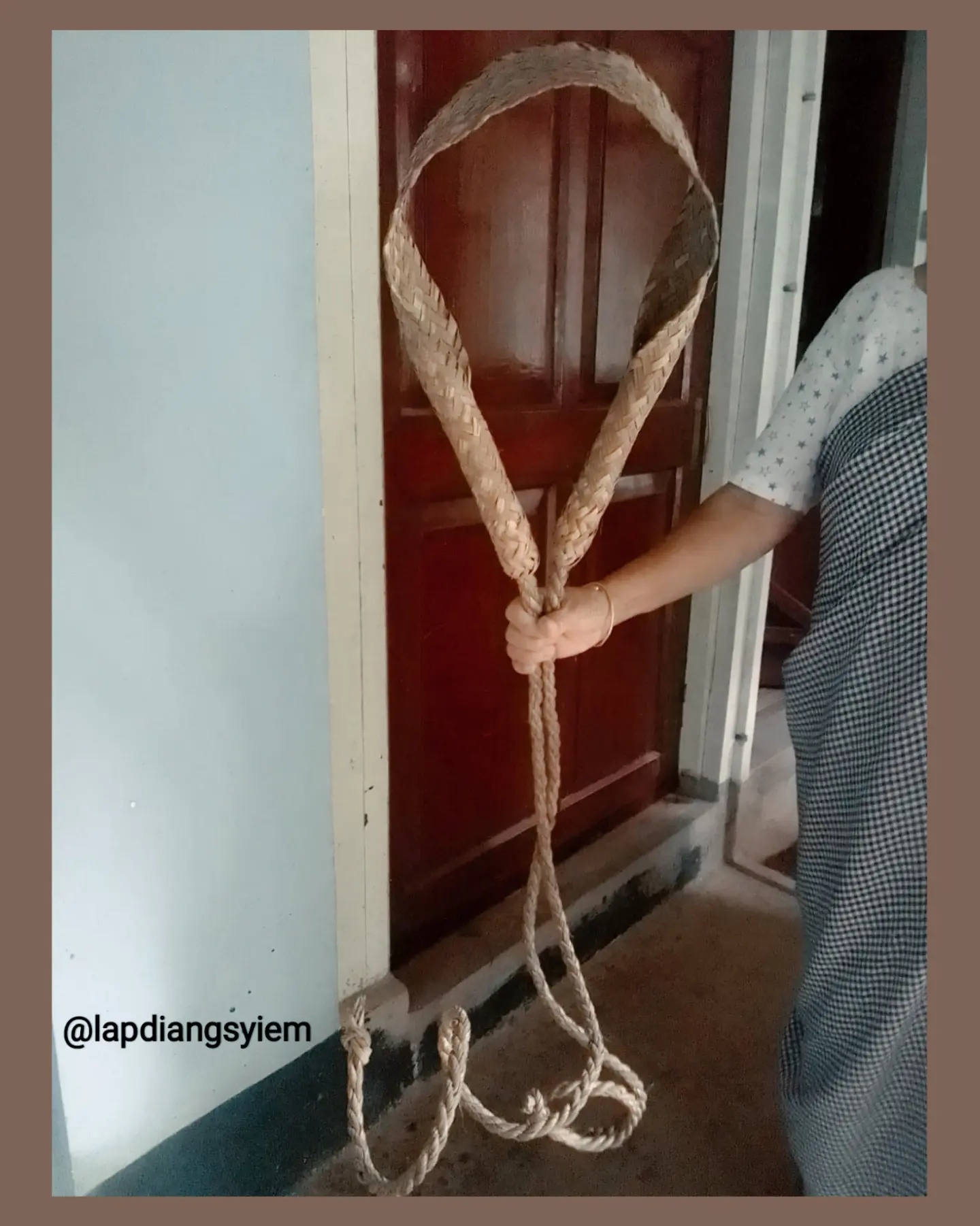
    We were looking to find u star for a new performance we were working on and our first instinct was to look for it in Ïewduh. The lady who was supposed to get it for us told us that there weren't anymore star available that were made from bamboo/ cane/ the natural twine da u thri..ngi ïa wad ïa u star ba thaiñ da u siej ne da u thri. The ones that were available were now mostly made of plastic. We also looked for it in a village called Nongpiur but again what was available was only made of plastic.

    Finally an aunt of mine told us you could still find u star siej in Smit. When I shared the story to more people, Junisha Khongwir told me that they still used it in her shnong (village) and she had used it that week itself to carry water. Careen Langstieh also informed me that recently she also found it in Ïew Mawngap.

    I wonder if in the future the plastic one will slowly replace the natural one. It would be unfortunate if that will be the case. U star siej can be polished with ka umphñiang bam (mustard oil) to keep it supple. It is used as a type of sling or a holder around ka khoh (conical basket) so that it can be easily slung across the back.

    I finally found this old star I needed for the performance from Mei Mei (my aunt) who, after hearing that it was not easy to find u star siej resolved to preserve the one she had lest it was lost…And my mother has also been on the lookout since recently letting me know that she found one in Mawtawar.

    "U Star" is the cane head strap that is wound around ka khoh, the conical cane basket, to carry an array of things. It is tragic that the production of cane star is diminishing in the face of the plastic one which probably lasts longer.

    Khublei Shibun @lapdiangsyiem for sending us something about your experience. Khublei Shibun for also using traditional Khasi utilities for your powerful performances! 😀🙏

  • Ki kmie mynta, ki kmie mynshuwa

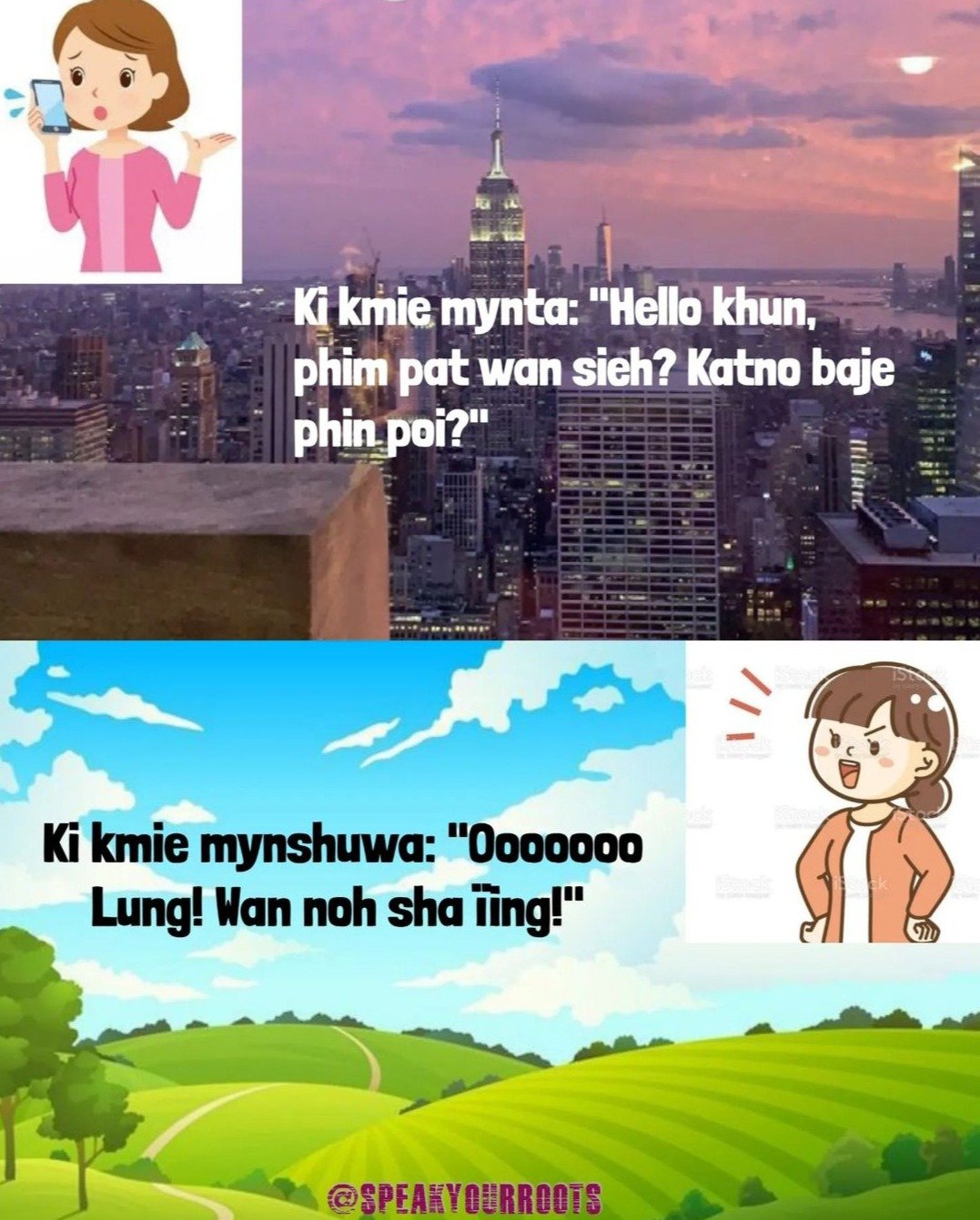
    Phi shait kynmaw kumno mynshuwa haba dang ïa lehkai shi khrui, da lah dei ka por ban dih sha ne ban bam ja i Mei in shu pyrta beit? 😄😂😆 Ka sawa ka sur i Mei ha ka suiñbneng janmiet, lyngba ki siej ba kaweh hir hir 🥺❤️ Mynta te ym ju ïohsngew shuh ki ban pyrta khun kumto.

    Do you remember before how when we were playing with other children, our mothers would call us home for tea or dinner? 😆😄😂 Mother's voice would echo across the evening sky, through bamboo stirring in the breeze 🥺❤️ Nowadays we don't hear mothers calling like that anymore.

  • Ka Um Bad Ki Deiriti haka Meirisawkun, Part 2

    Ki kyntien na Ka Um Bad Ki Deiriti ha ka Meirisawkun (2008) ba thoh da i Dr. Dondor Giri Nongkhlaw.

    Words from Ka Um Bad Ki Deiriti ha ka Meirisawkun (Water and Culture In The Environment) (2008) by Dr. Dondor Giri Nongkhlaw.

    Desert – Ri Shriaw

    Condensation – Saiñ umtli

    Chlorophyll – Bseng jyrngam

    Water table – Thar shong um

    Run off – Tuid wut

    Watershed – Domphiahslap

    Precipitation – Hap brum

    Here is the second list of unique words from the book Ka Um Bad Ki Deiriti ha ka Meirisawkun by Dr. Dondor Giri Nongkhlaw. 🌊🌊🌀🌀

    Dr. Dondor Giri Nongkhlaw is a Geomorphologist who has written several Khasi books focussing on the elements of the environment and their bond with Khasi life and culture.

  • “Ka Um Bad Ki Deiriti ha ka Meirisawkun” by Dr. Dondor Giri Nongkhlaw (2008)

    Ki kyntien na Ka Um Bad Ki Deiriti ha ka Meirisawkun (2008) ba thoh da i Dr. Dondor Giri Nongkhlaw.

    Words from Ka Um Bad Ki Deiriti ha ka Meirisawkun (Water and Culture On The Environment) (2008) by Dr. Dondor Giri Nongkhlaw.

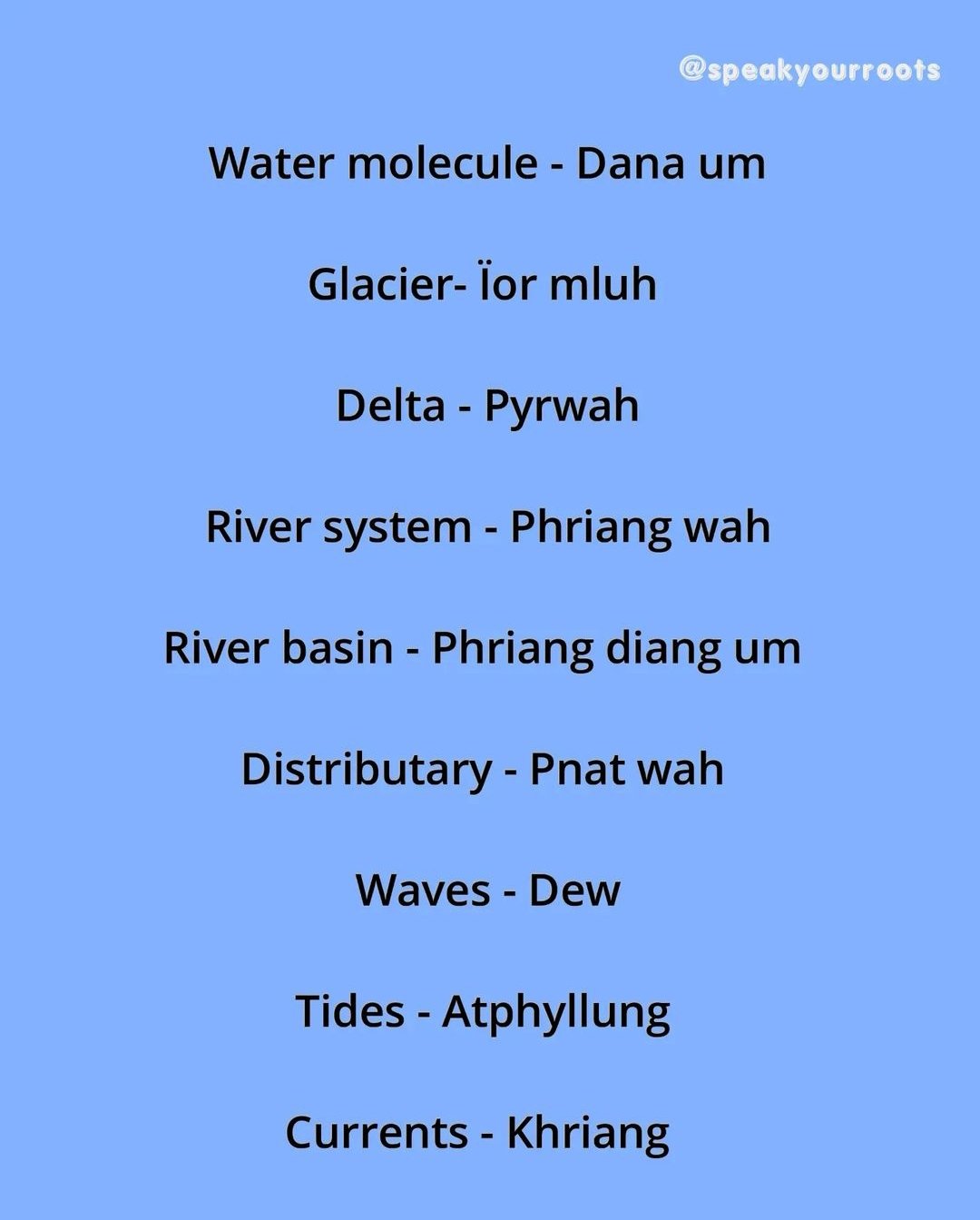
    Water molecule – Dana um

    Glacier – Ïor mluh

    Delta – Pyrwah

    River system – Phriang wah

    River basin – Phriang diang um

    Distributary – Pnat wah

    Waves – Dew

    Tides – Atphyllung

    Currents – Khriang

    These are some really interesting and unique words from the book Ka Um Bad Ki Deiriti ha ka Meirisawkun by Dr. Dondor Giri Nongkhlaw. 🌊🌊🌀🌀

    Dr. Dondor Giri Nongkhlaw is a Geomorphologist who has written several Khasi books focussing on the elements of the environment and their bond with Khasi life and culture.

  • Ka shawla ha ka por tlang

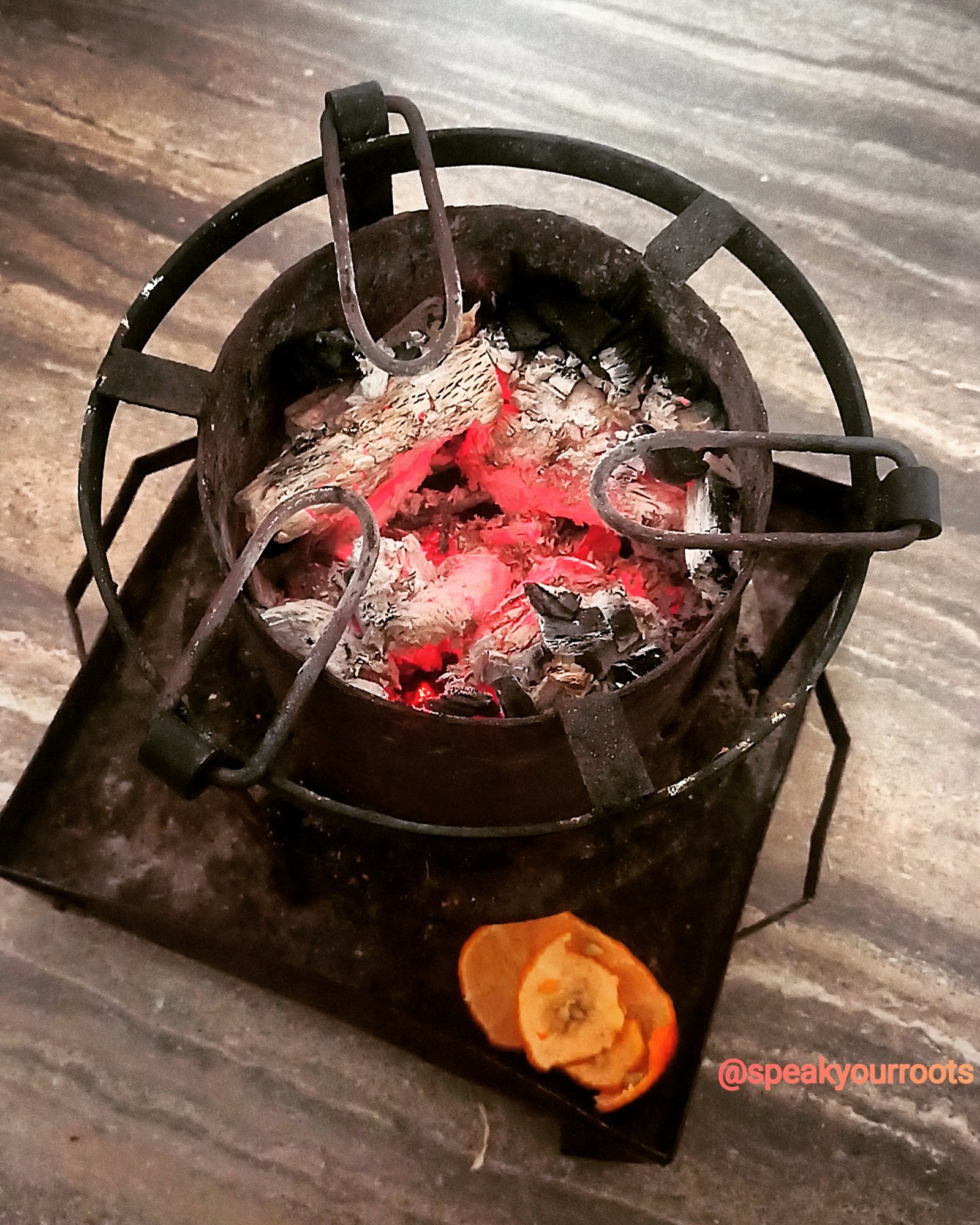
    Ha kum kine ki por tlang, ka syaid hi ka shawla ban syaid ding. Ka dei ka jingïohi ïa u rnga ba u saw, ba u rhem ruh kaba pynsyaid ïa ngi. Katno ka jingïaknieh ban shong sawdong ïa ka shawla ban ïoh pyaw ding; tang ba syaid ka dur khmat bad ki kti ruh lah sngew im 😄😂 Da ïoh sa ban shong ban bam sawdong ka shawla lei lei, sa bad ki jingïathuhkhana ba bun jait…❤️

    Kine ki dei ki rukom im jong ngi ki Khasi kiba iwei pa iwei na ngi ngi tip bad kynmaw bha. Ym lah ban ïoh ne ban kylliang da kiwei kiwei pat ki rukom ha ka pyrthei…ka jingsma jong ka lyer tlang, ka jingsma jong u rnga ba khluit, ka jingsieng jong ka tungrymbai ba shet ha shawla, ka jingiwbih jong ka syrwa tyrso bad dohsñiang 😋😋😋 Nga lah thngan ja biang!! 😂😂

    During the cold of winter, it is the heat of the Khasi "shawla" that is the best in giving warmth. Just the sight of the red fiery charcoal is enough to make us feel warm and cosy. How we fight for a spot to sit around the "shawla" to feel the heat; even if only the face and hands are warm, one feels alive 😄😂

    A bonus is getting to sit and eat around the "shawla" and add to that listening and telling stories of all kinds…❤️ This Khasi way of life is something we remember and know very well. It cannot be replaced by other ways in the world…the smell of winter air, the smell of hot charcoal, the aroma of boiling "tungrymbai" over the "shawla", the delicious smell of pork and mustard leaves boiling in a soup 😋😋😋
    I'm getting hungry again!! 😂😂

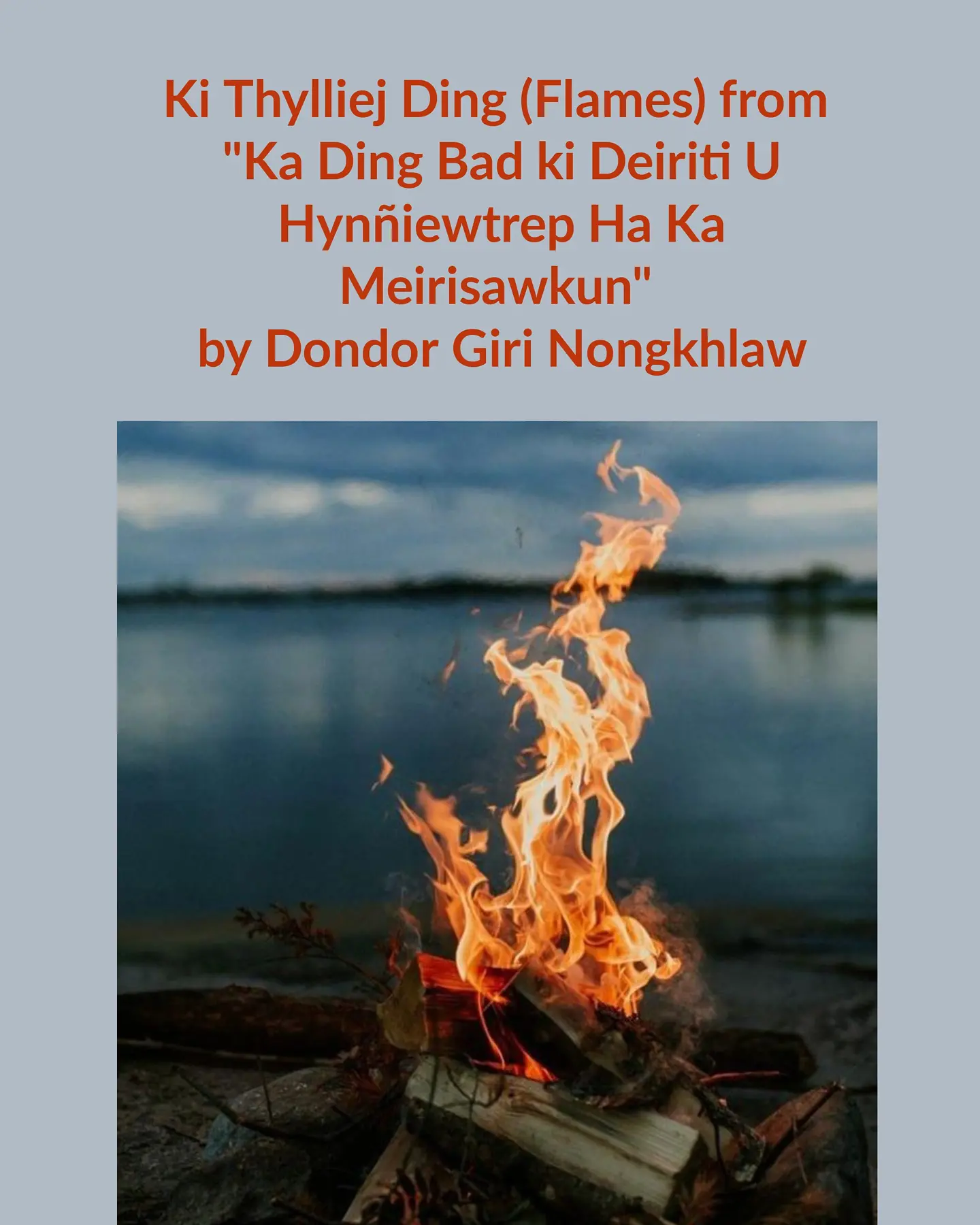
  • Ki Thylliej Ding (Flames) from “Ka Ding Bad ki Deiriti U Hynñiewtrep Ha Ka Meirisawkun”

    Ki Thylliej Ding

    Haba ka ding ka meh bad pyning ïa ki tyllaw ka pynmih ïa ka jingkhaleh kaba ki ong ki thylliej ding. Kine ki thylliej ding ki don lai rukom ki rukom khaleh ba la tip kum ka pyning, ka lap lap bad ka jliah.

    Ka Pyning: Kane ka long u thylliej ding ba pyning ïa ki tyllaw. Ka dei ka bording banyngkong ba pyning ïa ki tyllaw.

    Ka Laplap: Kane ka long ka bynta ba ar jong ki thylliej ding kaba ai lad ïa ka pyning ban ïaineh ding ha ki tyllaw.

    Ka Jliah: Ka long ka bynta ba ha khlieh duh jong ka ding kaba shuiñ ïa ka lyer na trai khiew ba shet jingshet bad ka long ka bynta kaba lah ban pur ding sha kiwei ki tyllaw.

    Types of Flames

    When a fire alights and touches a firebrand, it grows in degree and produces what we call flames. Flames have three ways in which they function and intensify. These are Ka Pyning, Ka Laplap and Ka Jliah.

    Ka Pyning is the first flame that burns a firebrand.

    Ka Laplap is the second part of a flame which allows Ka Pyning to sustain the fire in the wood.

    Ka Jliah is the topmost part of a flame which touches the air, which strikes the bottom of the pot while cooking. Ka Jliah is also the part of the flame that will spread the fire to other pieces of wood.

    Have you ever stared into a fire? How it is made up of so many flames…the element which gave many civilisations the thrust to empower themselves 🔥🔥🔥

    Dr. Dondor Giri Nongkhlaw is a Geomorphologist who has written several books in Khasi which discuss the elements of the environment and their strong bond with Khasi life and culture.

    🟡 English translation by @speakyourroots