Tag: khasiphilosophy

  • Kamai їa ka hok

    Sngewbha ai ia ka jingsngewthuh jong phi shaphang ka jingong "Kamai ïa ka hok"

    @mebatei_l_khongsit:

    Ha jingsngewthuh jong nga kamut ba kumba ngi kamai ïa ka pisa, ngi trei shitom, ngi kynshew kyndiap ban ïoh eiei ha ka jingim ba man ka sngi, kumta ruh ngi dei ban kamai їa ka hok bad nga ngeit ba kata ka hok kaba ngi kamai ka dei ka spah ba ngi kynshew ha khmat u Blei bad nga ngeit ba kata ka hok ba ngi kamai ngi kynshew katba dang im, da kata ngin thied ïa ka jingsuk bad u Blei ynda ngi la leit noh nangne.

    @wansaaaka:

    "Kamai ia ka hok" ka thew ym ïa kaba kamai da ka pisa, hynrei ïa kaei kaei kaba u briew u im ha ka pyrthei lyngba ka jingim tip briew tip blei, ka tip kur tip kha bad ka trei hok trei shitom khnang ban im parum pareh im shongprah shongshang.

    @kakhadduh:

    Ka kamai ba ïoh na ka jingtrei shitom, jingtrei hok ym da ki lad ba sniew ba smeh.

    @amy_grace_7:

    "Kamai ïa ka hok" kamut ba ngi hap ban trei hok trei shitom їa kano kano ka kam bad ka bainong ba ngi ïoh kadei ban mih beit tang na ka umsyep jong ngi ym da kaba tuh bam klop na kiwei. Haba ngi kamai ïa ka hok ngi ïoh jingsuk ruh ha mynsiem bad ngi їohthiah suk mynmiet.

    @cheryl_aqualina:

    Kane ka dei ka jingong ba nga hi nga da sngewtynnad shisha. "Kamai ïa ka hok"' earn your right, nga tharai ngi baroh ngi don la ka jong ka jingsngewthuh halor kane. Nga la kynduh ïa ki briew ba mut ba kane ka long ba ai hukum ïa ki ban leh da kino kino ki kam ba kin ïoh kamai, khlem da pyrkhat ba kine kam ki dei ki ba bha ne ba sniew. Nga la kynduh ruh ïa ki briew ba pyrkhat ba kane ka mut ban shu trei shitom beit bad ban hun ïa kaei khyndiat ba phi ïoh. Ïa nga, nga pyrkhat ba kane ka mut ba nga dei ban trei ïa ka kam kaba ïahap ïa ka jingnang jingstad jong nga, ba ngam dei ban shim ïa kaei kaba dei jong kiwei bad ruh ba ngam dei ban hun ban ïoh kamai bym їahap їa ka jingtrei shitom jong nga.

    The Khasi word "hok" can be understood as honesty, righteousness and being just and trustworthy. A person who is marked by dignity and integrity, arising from the firm grounding of principles and values. "Kamai Ïa Ka Hok' is one of three Khasi precepts (the others being "Tip Briew Tip Blei and Tip Kur Tip Kha") that emphasises on living with integrity or to elaborate, a clear conscience. This integrity and clear conscience is had by the act of earning with the word "kamai". Thus, man has to earn and reap dignity, integrity and a clear conscience through his day to day life, his words and actions towards others. This conscious effort will cause the earning of a life of purpose, free from the stress or guilt of any wrong doing.

    Khublei Shikhohtyndaw @mebatei_l_khongsti@amy_grace_7 @wansaaaka @kakhadduh @cheryl_aqualina ïa ki jingbatai jong phi ïa kine ki kyntien! 😃🙏

    Ka dei kane ka jingnoh synñiang jong ngi sha ka page ka ban nang pynroi ïa ka jingsngewthuh shaphang ki riti ki dustur bad ki jinghikai rukom im jong ngi ki Khasi.

    The explanations sent by followers of the page is a testament to the communitarian effort that sustains the page. This will help in the documentation of the Khasi oral tradition and an understanding of Khasi philosophy and worldview. 🙏🙏

    🟡 English explication by @speakyourroots
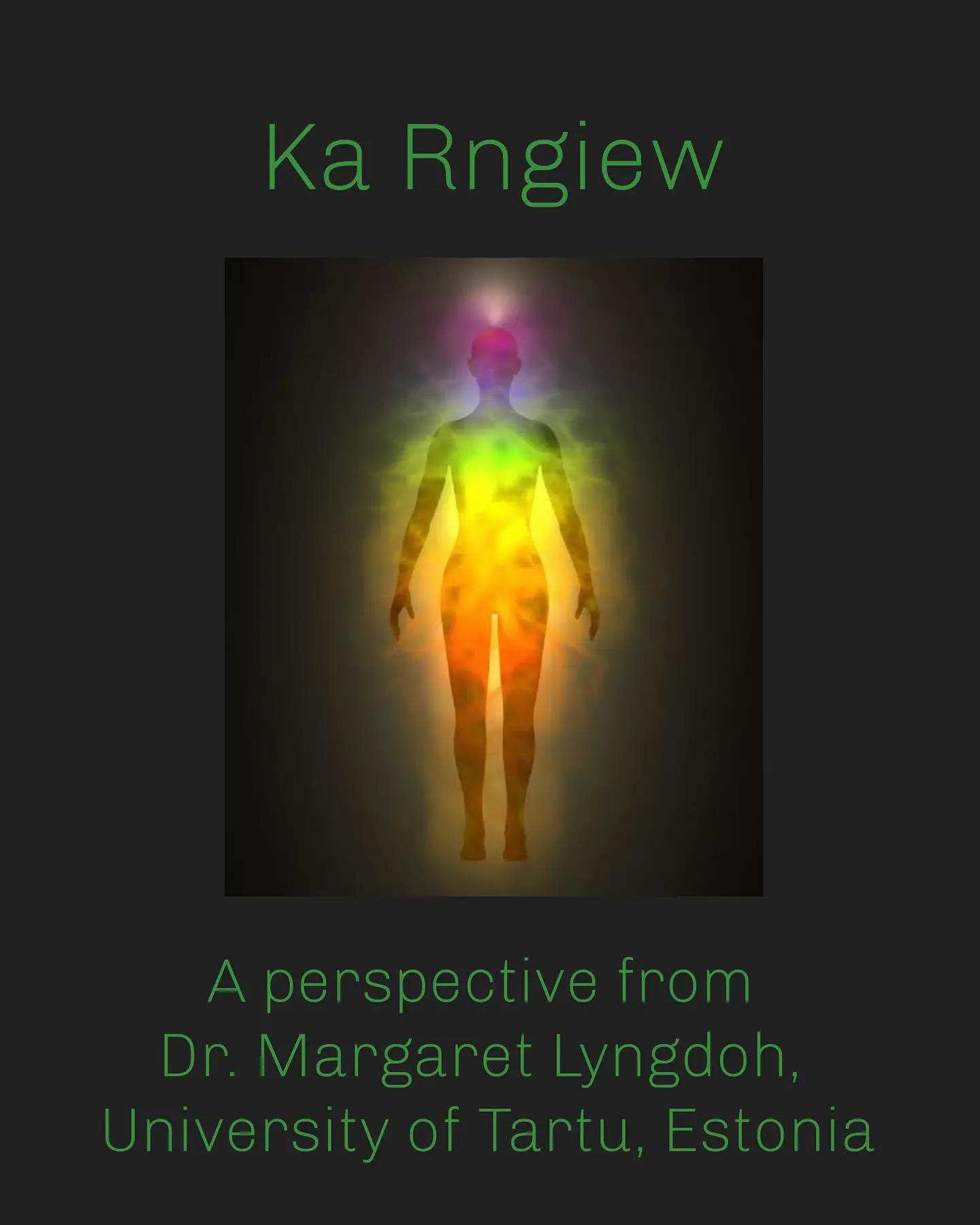
  • Ka Rngiew: A perspective from Dr. Margaret Lyngdoh, University of Tartu, Estonia

    In the Christian worldview, a person is made of the body, mind, and soul. In the traditional Khasi perspective, a person is made up of met, mynsiem, and rngiew. While met is the body, mynsiem is breath. Rngiew is what invests a body with personhood and it stays with a person through life. It is the quality that allows a person to remain impervious to the evil eye or ka sabuit. Thus the term longbriew means the nature of being "human" or the nature of an entity who is endowed with rngiew.

    There is no English word to approximate this Khasi concept. In its simplest explanation, rngiew is what makes a person human. Further, the Khasi word for breath, mynsiem has been adapted to fit the Western idea of the "soul" or even, "spirit". I cite, Lyngdoh, Margaret (2021). "Landscapes of Enchantment and their Usage: A Critical Case-Study from the Khasi Ethnic Community, Northeast India'' in Graham Harvey and Opinderjit Kaur Takhar (Ed.). "Religion and Senses of Place'' UK: Equinox Publications. (Religion and The Senses) [forthcoming]:

    A being is made up of Ka met (lit. body). ka mynsiem (lit. breath) and ka rngiew. To ‘be' a human being (longbriew), the Supreme Being must clothe the being with a rngiew. I will quote my interlocutor, Sweetymon Rynjah on this, "Ka Rgiew ka dei ka bor maia ba kynja Blei, ba u Blei u la pynkup, pynphong ia u briew ha ka jingwan longbriew jong u' (20 November 2015)".

    I paraphrase: The Rngiew is an ability that is god-like, that the Supreme Being clothes or invests a being with when he/she comes out of the womb initially divine, and then whatever he/she acquires or achieves in a lifetime is dependent on him-/her-self. The rngiew stays with a person through life and is reflected in the person's being and stature. If their (jinglong mynsiem) personality, spirit, essence, strength of character, nature, principles, moral fortitude etc. are in line with, 'Ka tip briew ka tip blei and ka tip hok tip sot' (lit. living a good life in accordance with the Covenant decreed by the Supreme Being), then their rngiew is strong and protects them from those who desire ill or harm to befall upon them.

    All humans and non-humans have rngiew. Ryngkew or guardian deities, have rngiew. This gives a sense of agency to a human or non-human entity. But clans also have rngiew, and in different contexts this can mean different things. But a strong rngiew of a clan can protect a clan from extinction. When we refer to the clan in this context, we use the words “longkur longkha". But rngiew is always a strong, positive quality that remains with humans, places, non-humans (like ancestors and guardian deities) all their lifetime. The first ancestress, Iawbei also has rngiew, especially because they have to look after the well being of a clan and further it's progress and prosperity. Even though we live in a state of rapid transitions, we cannot forget these core Khasi indigenous concepts because this is an essential part of our longbriew manbriew!

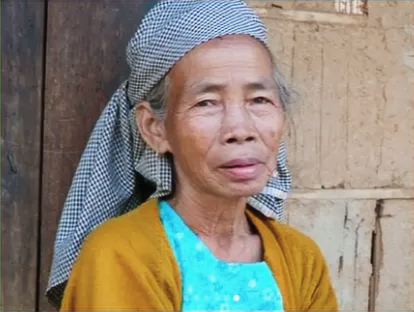
    In the photo is Kre Makri, who is a Khruk, a female weretiger, from Raid Nonglyngdoh, Ri Bhoi. Her rngiew transforms into a tiger and roams around in the alternate reality, Ramïa, where notable ancestors also live. She said that while the male weretiger or sansaram (lit. five clawed) has the function of holding on the laws of the ryngkew, the female weretiger, ka khruk, has the sacred function of holding of the rngiew of the clan. The photo was taken by me and this was in the winter of 2012.

    Dr. Margaret Lyngdoh @lieng_makaw gives us what she has found in her research from the approach of Folkloristics about "Ka Rngiew", showing us that it is a far reaching concept which sheds light on the well-being of the individual, the clan and our worldview as Khasi-Jaiñtia society. Thank you @lieng_makaw ! 😀🙏

    The post on "Ka Rngiew" posted on the 5th of August 2021, garnered a lot of attention and also counter-reaction that has proved fruitful in our understanding of this unique Khasi concept. The expression and discussion of different points of view is something that is important for indigenous culture to thrive.

    No part of this material may be reproduced in any form without the consent of the author. All material for this content has been collected through primary fieldwork.