Tag: khasistories

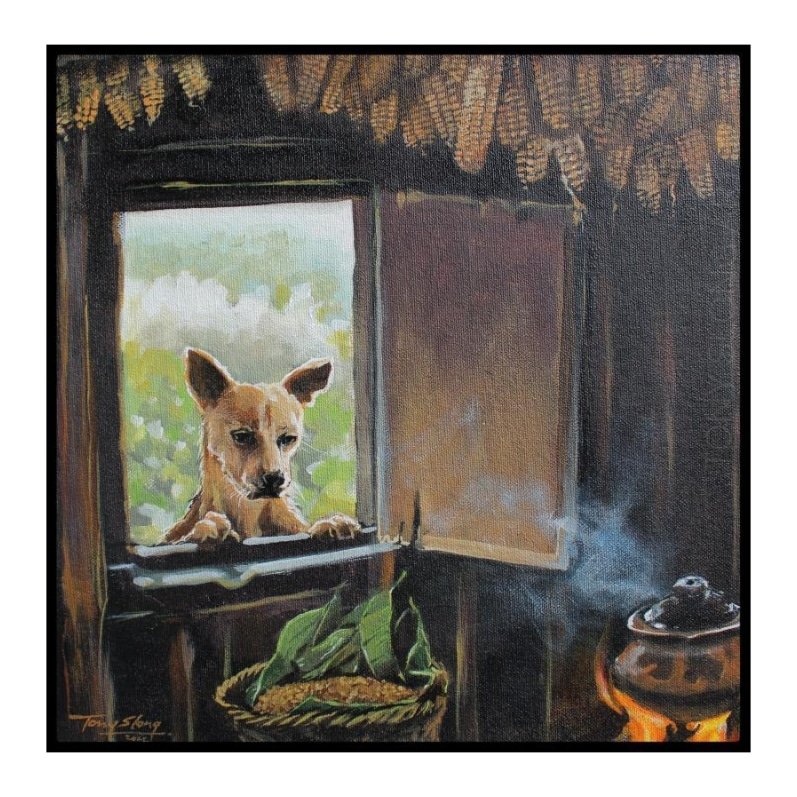
  • U ksew ha ïew luri lura by Tony Slong

    World Folklore Day 2023 🏞️🌿

    Kane ka matti jingdro da i @tonyslong ka pyni ïa u ksew ha ka khyllipmat ba u lap ïa ka tungrymbai shuwa ba un rah ban die ïa ka kumba la ïathuh ha ka khanaparom "Ka Ïew Luri Lura jong u Laiphew Mrad". 🐶😄

    Khublei Shibun @tonyslong ba phi la phah ïa kane ka dur kaba pynmutdur ha ngi ïa kane ka khanaparom! 🙏🙏

    .

    .

    .

    This painting by @tonyslong depicts the dog from the well-known Khasi folktale "Ka Ïew Luri Lura jong u Laiphew Mrad".

    In the story the dog attempts to sell tungrymbai or fermented soyabean in the animal market but it ends up being trampled upon by the other animals because they could not bear the smell of tungrymbai 😅😅🐶🐶 It is said that it is because of this incident that the dog came to live with man.

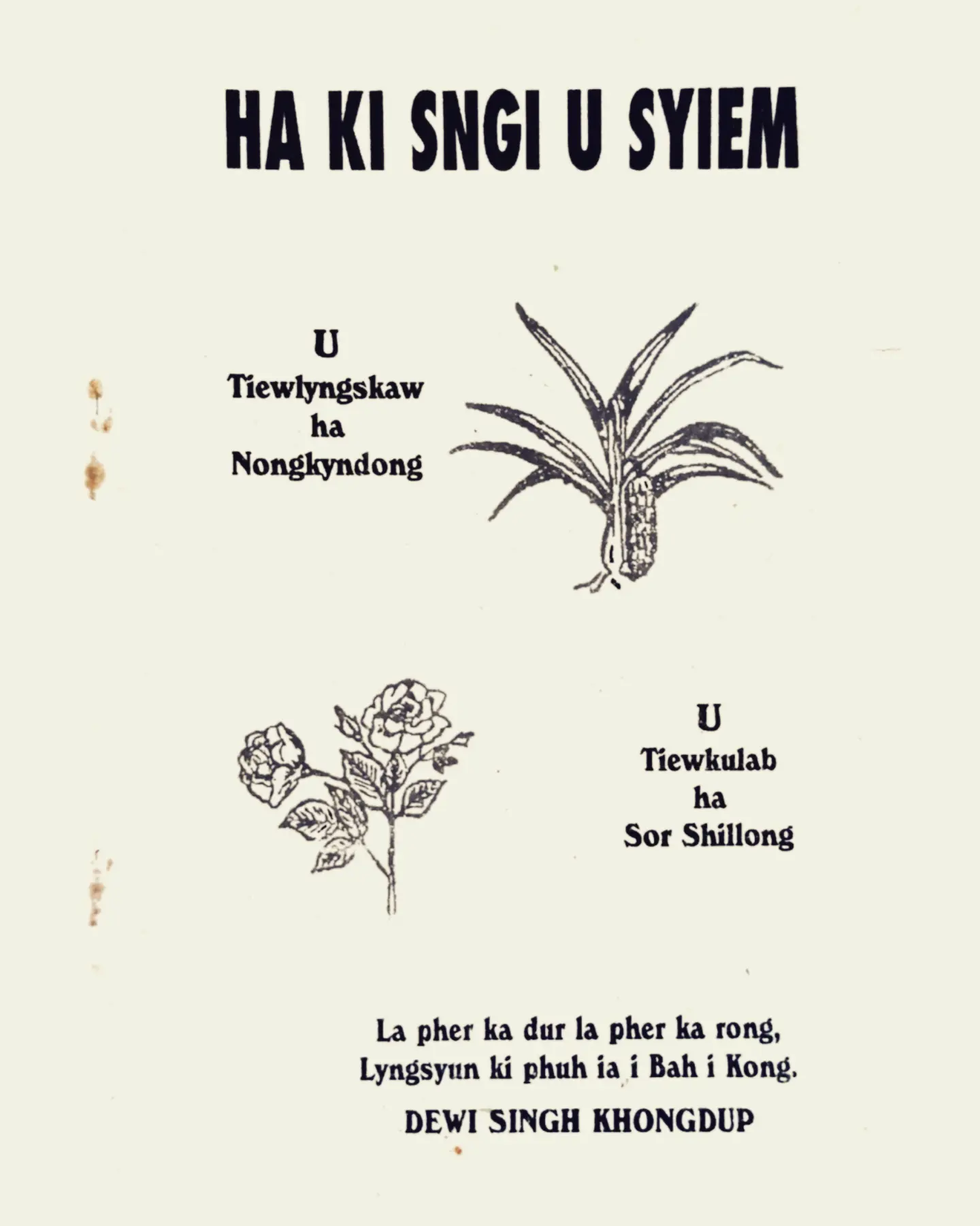
  • “U Phareng Ha Lawkyntang” da i Dewi Singh Khongdup

    Excerpt from the story "U Phareng Ha Lawkyntang" from the book Ha Ki Sngi U Syiem by Dewi Singh Khongdup

    Kumta ha kawei pat ka sngi, u Phareng u bah la ka suloi ar ktang ha la ka tyrpeng, bad u ngam soit sha khlaw ban leit thap skei. U kieng kawei ka pla ha kaba la thep jasong ka Mahad bad u buh de la ki kuli hangta. U ngam ia ka khlaw ka btap, hynrei um lap dien mrad satia; u pynieng la ki shkor bad u pynshah ia ki diang diang, mon mon, hynrei ym don dak ei ei ruh em ban pynpaw ba ki mrad ki don hajan. Tang ka shalymmen ka pah wiaw shi wiaw khlem sahngeh, bad u jyllop u ud kob shi kob halor ki tnat phaniaw. Ha ka por shiteng sngi, u la sngew thait, bad kumta u shong thait harud kawei ka wahduid kaba ki um jong ka ki khuid khlir khlir. "Ngan da pynbeit theid noh shuwa halor une u mawsiang," u kren hapoh lade; "Imat ka skei ruh ka tip ba nga wan mynta ka sngi."

    U ioh thiah kumba shi kyntien kwai ne, bad ynda u la kyndit, u la thngan. U sei ia ka jasong na ka pla, bad katno u kmen haba u lap ia ka tungrymbai ba la song lang bad u khathli bad u khababia. "U Syiem Symphup uba da kat u Syiem," u kren ha lade hi' "u tip ka bam aiu nga bang!"

    Ynda u la dep bam, u thet ia la ki kti ha kata ka wah, bad u maiñ ruh ia la ka shyntur. Namar ba u dei u Phareng, um nud satia ban dih ia ka um kaba khlem da shet. "Kane te kaban iap sliang", u ong ha ka sur kum uba la poi ha ka kutlad. "Em, ki ju ong ba ka um Khasi kaba sngur kam ju don khñiang jingpang; kumta ngan dih la ka dih ia ka; namar haba la lap ka sliang, ne haba la tyrkhong u thylliej, ka um ktieh ruh ngin iakjit", bad u dih artat ia kata ka um.

    "Phi la nang kren Khasi du pleng, Sahep!" ka sawa ka sur naei ruh um tip. U Phareng u dei u briew uba la shai la stad, bad um long uba sheptieng bieit. U phai diang diang, mon mon; u peit dien dien, phang phang, da kaba khmih lynti ba un iohi ia uta u briew uba kren ia u; hynrei um iohi iano iano. U lyngngoh ngain, bad kumta u tharai ba ki shkor jong u ki la ioh sngew bakla.

    "Phi peit lyngngoh iaei ka, Sahep?" kata ka sur ka sawa biang sa shisien. "Ha-ha-ha, u khun ka ri Bilat! To da kren seh shi kyntien, phi shu snap pynban jar jar la kum ubym pat nang akor!"

    "Kane te nga la poi shisha sha ka ri ki jingphohsniew", ong u Phareng ha ka sur lyngngoh. "Lada ngam bakla kane ka wah ka kren ia nga."

    🌲🏞️ Mano ba kynmaw ïa ka jingïathuhkhana "U Phareng Ha Lawkyntang"? 😃 Kumno ba u Phareng u rung sha 'lawkyntang bad u kynduh ïa i Ñia Risang, i Ñia Dkhoh bad i Bih Rabit. 🐇🦉🐿️

    Ka dei ka jingïathuhkhana kaba sngewtynnat bad samrkhie ruh de. Katno ka jingsngewmuja ban pule lem bad ki khynnah, wat ïa ngi kiba heh ruh ka long kaba byrngia bha. Bun na ngi, ngi ieit ïa ki khana jong i Bah Dewi Singh Khongdup bad kine jingïathuhkhana ki pyni ïa ka jingtbit jong i kum u nongthoh bad nongïathuhkhana. 📝📝

    "U Phareng Ha Lawkyntang" is a story about an English man who wanders into a sacred grove, which are regarded as sacred forests keeping alive the faith and culture of the Khasi and Pnar communities. In the sacred grove, the English man has the magical experience of meeting many colourful animal characters which keeps the reader in a cheerful mood. 😄🐇🦉🐿️

    This is an appreciation post and a tribute to another skilfull Khasi writer! 👏🙌

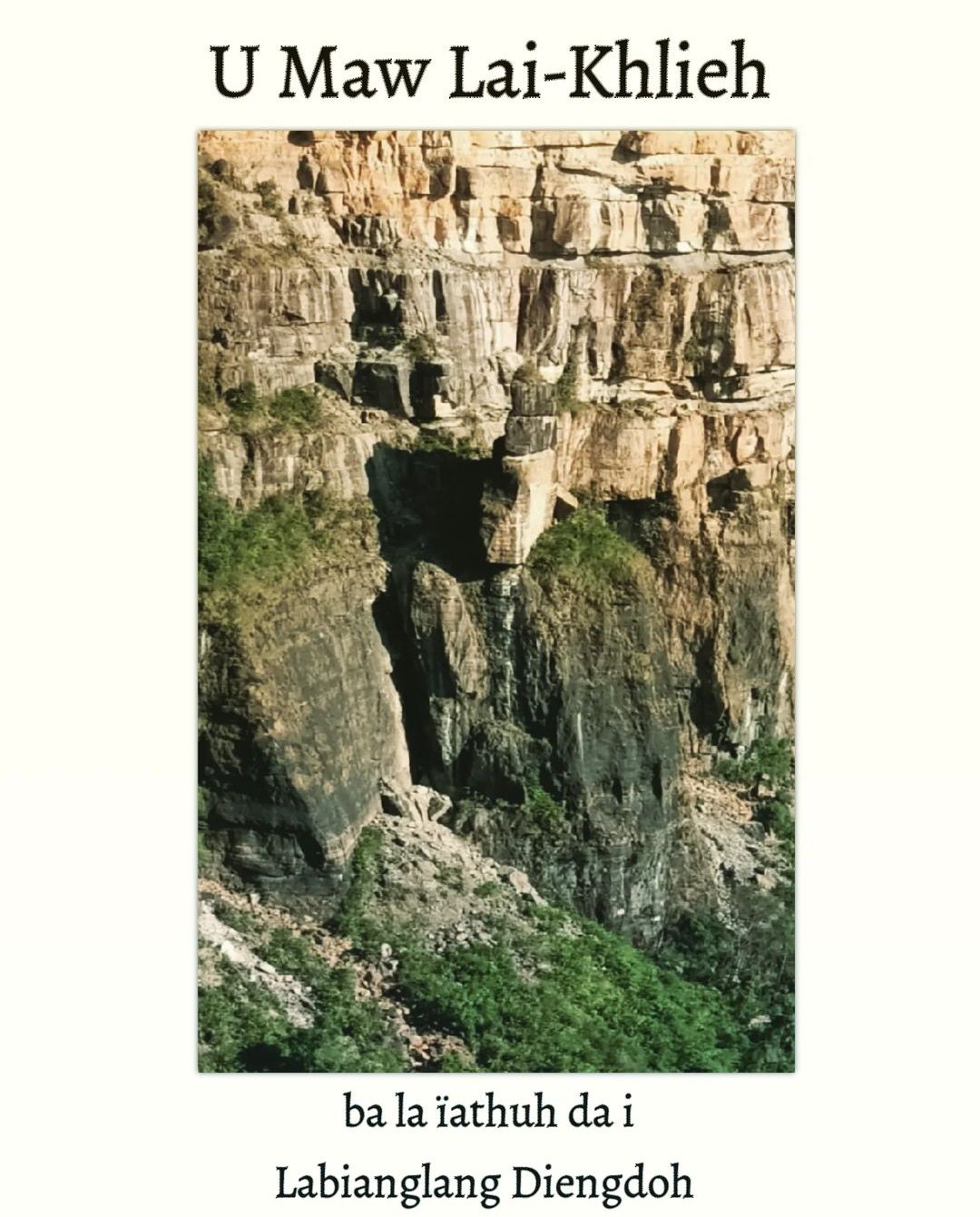
  • U Maw Lai-Khlieh told by Labianglang Diengdoh

    U Maw Lai-Khlieh

    ba la ïathuh da i

    Labianglang Diengdoh

    Mynba dang lung ka sngi u bai, ha ka por ba ki briew ki dang hok, dang shida, la don kawei ka shnong kaba paw nam ha ka akor ba bha bad ha ka jingjur u slap. Ym tang ha ka akor, ka burom hynrei na ka ruh la mih bun ki simpah, ki simsong, ki kaitor, ki myllung, ki mawbynna. Ka don ruh ha ka shibun ki puriskam, ki purinam, ki khanatang ki ba dang iai kynud haduh mynta mynne ha ki lum-ki wah, ki khlaw-ki btap kum ka Noh-Ka Likai, U Khoh Ramhah bad kumta ter-ter. Kata ka shnong kaba don am kadei ka Shnong Sobra. Napdeng kine ki khana kiba lah paw, lah bna hapdeng jong ngi u khun Khasi-khara bad kiwei de ki jaitbynriew, dang don kiwei pat ki khana ki ba don ha lyndet jong ki ia ka jingjia ba sngew triem bad ba sngew ngiew ban sngap. Ka wei napdeng kita ki khana kaba ngi la iohsngew pateng kadei shaphang U Maw-Lai Khlieh.

    U 'Maw-Lai Khlieh', u dei u wei na ki maw u ba don ha shiteng jong ka 'Riat-Mawiew' kaba don ha shnong Sohra. Ia une u maw ngi lah ban iohi narud surok, na u lum jngoh kulai lane u lum jingkhmih kulai. Lah ban iohi ruh na ka 'law-kyntang jong ka Hima Syiem Sohra (Madan Shad Seng-Khasi). Katkum ka jingiathuh jong ki longkpa-longkni, ki tymmen hyndai, ba ha uta u Maw-Lai Khlieh la don u Paia Ksiar bad u don la ka pharshi sha lyndet jong u.

    Ha ka por ba ki phareng ki dang synshar ia ka ri jong ngi baroh kawei, la ong ba ha kawei ka sngi, ar ngut ki shipai phareng ki la leit ban iaid kai pyngngad sha kata ka Riat Mawiew ban leit jngoh kai ia uta u maw. Hadien ba ki la poi ha kata ka jaka bad haba ki dang jngoh ban peit kai ia uta u Maw-Lai Khlieh, uwei u shipai u la iohi ba don ka jingthaba bapher na uta u maw. Kata ka jingthaba ka la kthik ia ka mynsiem jong u ban kwah ban hiar bad ban peit ba kadei kaei kata ka jingthaba. Kumta, khlem da artatien bad khlem da sngap ia ka jingkhang jong uta uwei pat u shipai, u la hiar bad u khlem da wan phai shuh. Uta u paralok jong u, haba u lah iohi ba um shim la wan phai shuh u lah her bran-bran ban leit iathuh sha ka sorkar phareng ia kaei kaba la jia.

    Ka Sorkar phareng marsien tip ia kata ka jingjia, ka la phah wad bniah ia kaei kata ka jingthaba kaba mih na uta u maw. Ka la phah ia ki briew jong ka ba kin wad bad kylli na ki trai shnong shaphang uta u maw. Ynda ki la ioh jingtip ba ha uta u maw la don uta u Paia Ksiar, mar-mar khlem pynslem ia ka por ka la phah sa ia lai ngut ki shipai ban hiar bad ka da kyntu ruh ba kin da tih dyngkhong ia uta u Paia Ksiar. Kumta, kita ki phareng ki la hiar bad marsynpoi ha uta u maw, la wan mih uwei u bsein uba don lai tylli ki khlieh bad u ta u bsein u la bam ia arngut kita ki shipai phareng. U ta u shipai u ba la lait phet im, u la kiew pynsted shalor bad u la phet ban leit iathuh ia kaei kaba la jia bad iohi.

    Ka Sorkar Phareng, hadien jong kata ka jingjia, ka la wad da ka buit-ka bor ba kumno kan ioh ban pyniap ia uta u bsein. Kumta ka la phah pynap da ka sapoh, ka kyiad, u buiam, da kaba pyrkhat ba uta u bsein un bam, un buaid bad ba kin iohi ban pyniap ia u da ka basuk. Ha ka step kaba bud ynda ki shipai ki la hiar ban leit ban pyniap ia uta u bsein, ki la lyngngoh ngain hadien ba ki iohi ba ka bam ka dih ka lah lut hynrei kim shim la lap satia ia u bsein. Kita ki shipai phareng ki la pyrkhat ba uta u bsein u la iap bad kumta ki la sdang ban tih ia uta u Paia Ksiar. Katba ki dang tih kynsan-kynsan uta u bsein u la mih biang bad u la bam duh noh syndon ia ki.

    Ka Sorkar Phareng haba ka lah ioh jingtip ia kata ka jingjia, sa shisien ka la kyntu biang ia ki briew jong ka ba kin wad jingtip na ki trai shnong da kumno pat ban ioh lad ban pyniap ia uta u bsein u ba don lai tylli ki khlieh. Ka Sorkar Phareng hadien ka jingwad bniah ka ba jur ka la ioh jingtip ba uta u dei u 'lei lum uba ju wan ha ka dur jong u bsein ban iada ia ka jingsniew ne ka jingshah pynjulor jong uta u Paia Ksiar namar wei ba la tih ia uta u Paia Ksiar, uta u Maw-Lai Khlieh ruh yn twa yn kyllon bad ka pyrthei ruh kan sa wai. Kumta ka sorkar Phareng kam banse bad shu ieh shrah noh ia ka jingkwah rhah jong ka ia uta u Paia Ksiar.

    Kumta, kane khana ka shu sahkut noh tang hangne bad haduh mynta mynne dang don ki ba dang ngeit ba uta u Paia Ksiar u dang neh haduh mynta lem bad uta u bsein u ba ker ba da ia u, ha uta u Maw-Lai Khlieh.

    When the sun and the moon were still young and when mankind was honest and simple in his ways, there was a town which was well-known for its refined manners and also for the heavy rain which fell there. There also arose from this town musicians, artists, poets and individuals of integrity. The town possessed an array of legends, folktales and myths which continue to echo in its rivers and streams, in its forests and groves like Ka Nohkalikai and U Khoh Ramhah and others. This well-known town is the town of Sohra. From these stories of the Khasi community which tell of gruesome events which have been heard, there are other stories terrifying to listen to. One of these stories is the story about U Maw-Lai Khlieh or the three headed stone.

    U Maw-Lai Khlieh is a boulder which stands midway on Ka Riat Mawiew which is a gorge in Sohra. One can see the boulder from a hill called U Lum Jngoh Kulai or Lum Jingkhmih Kulai. This boulder can also be seen from the sacred grove of Ka Hima Syiem Sohra (Madan Shad Seng Khasi). According to what has been told by forefathers and elders there was U Paia Ksiar or a golden pillar in U Maw Lai-Khlieh and there is a fable behind it too. When the Khasi Hills were ruled by the British, it is said that one day when two English soldiers went for a relaxing walk to Ka Riat Mawiew in order to see U Maw Lai-Khlieh, one of the soldiers noticed something like a glitter coming from the boulder. Without waiting for anything and not listening to the protestations of the other soldier, this soldier left and did not come back.

    When the soldier realized that his friend was not going to return, he raced to inform the British administration of what had happened.

    Once the British administration came to know of the incident, it ordered an investigation into what was glittering from the boulder. It sent people to find out about the boulder from the natives. When they came to know that there was a golden pillar in the boulder, the British sent three more soldiers with the order to extract the golden pillar. When the soldiers reached the boulder a snake with three heads slithered out of the stone. The snake then ate two of the soldiers while the remaining soldier scurried up the stone, horrified by what had happened and relating all that he had seen to his officers.

    After this incident, the British administration planned to take strong measures to kill the three headed snake. It sent some soldiers to place sapoh or rice grains mixed with yeast along with some kyiad or alcohol, with the hope that the snake would eat these and become sedated, so as to allow them to kill it. The next morning when the soldiers go down to the boulder to kill the snake, they were shocked to see that the rice and alcohol had disappeared but they could not find the snake. The soldiers assumed that the snake had died and began to dig up the golden pillar. At that moment, the snake emerged suddenly and ate all of them.

    When the British administration came to know of what happened it tried again to find out from the people about ways in which they could kill the three headed snake. After a thorough search for information, it was told to the British that the three headed snake was the guardian spirit of the hill, who appeared in the form of a snake to protect the golden pillar from being destroyed because if it was dug up, the three headed boulder would fall and that would be the end of the world. Thus, left without any options the British government abandoned its greedy plan to possess the golden pillar.

    The story ends in this wat and there are still many who believe that there is a golden pillar protected by a snake in the three headed boulder.

    "U Maw Lai-Khlieh" ka dei ka jingïathuhkhana kaba la phah da i @the_lostsoul_dreamer ✒️🗣️ Khublei Shibun ïa kane ka jingïathuhkhana kaba sngewtynnat! 😄🙏

    "U Maw Lai-Khlieh" is another story which has been handed down from generations and here it has been retold by @the_lostsoul_dreamer

    📸 @the_lostsoul_dreamer

    🟡 English translation by @speakyourroots
  • Excerpt from the Introduction of “Ki Khanatang bad U Sier Lapalang” by Primrose Gatphoh (1937)

    U Primrose Gatphoh u ong:

    "Ki Puriskam, ki Purinam, ki Parom bad ki Khanatang ki don sawdong kane ka ri jong ngi, ha ki trep bad ki skum, sawdong ka lyngwiar dpei ba syaid bad ba rhem jong u khun Khasi Pnar baroh. Hynrei ka long kaba eh shibun ban lum ban lang, bad ban tai ban peh bha ïa ki shuwa ban pynsah ïa ki ha ka thoh ka tar kum ki mar kynti ka ri.

    Kam long ka kam kaba suk ban lum na kaba shu ïohsngew ka shkor, bad kaba shu kem na ka hamsaïan shaphang kiei kiei kiba ngi ju ïohsngew bad ïa kren barabor hapdeng jong ngi, kum ïa ki khlawait, ki thma, ki kut, ki kharai bad ka jingngeit ki briew ïa ki ryngkew ki basa kiba don sawdong ki lum bad ki wah jong ngi…

    Ngim lah ban ieit ïa la ka ri khlem da tip ïa ki Khanatang ki longshuwa jong ngi. Ban bud dien bad ban wad ïa ka kpait ka rukom pyrkhat hyndai, ka long ka jingsdang kaba shi kyrdan sha ka jingieit ri kaba shisha. La ki nongthoh bad ki nongïathuh ki ïapher, hynrei ki thymmei bad ki jingthmu na kiba ki la mih ki long kijuh."

    "Fairytales, fables, folktales and myths are all around our hills, in huts and homes, around the warm and fiery hearth of Khasi and Pnar families. But it is arduous to collect, to select, to sift and sieve through these stories before they are preserved in the written form as valuable heritage. It is not an easy job to gather from what is heard by the ears, and to grasp from unclear accounts that are heard from here and there, about what we usually hear and talk about among ourselves, about brave warriors, warfare and the belief in forest guardians who are present in our hills and rivers…

    We cannot love our community without knowing the myths and folktales of our ancestors. To follow and to search for the tracks of the old ways of thinking, is to begin at the first step towards a true and real love for community. Even though writers and story tellers are different, but the source and the aspirations from which they arise are the same."

    Bunsien ngim ju kham pule ïa ki "Shi Kyntien" jong ki nongthoh kaba ki ai ha kaba sdang jong ki kot jong ki. Kane ka dei na ka kot jong u Primrose Gatphoh. ✒️📖 Ki dei ki ktien kiba ai jingtip, jinghikai bad ki pynsngew ruh ïa ka jingsngew kitkhlieh na ka bynta ka ri la jong. 🏞️🌧️

    Often we do not read the introductions or the forewords given by writers at the beginning of their books. This introduction is from the book of Primrose Gatphoh. ✒️📖 These are words which give knowledge and teaching. They also reflect a sense of responsibility for the community 🌧️🏞️

    🟡 English translation by @speakyourroots
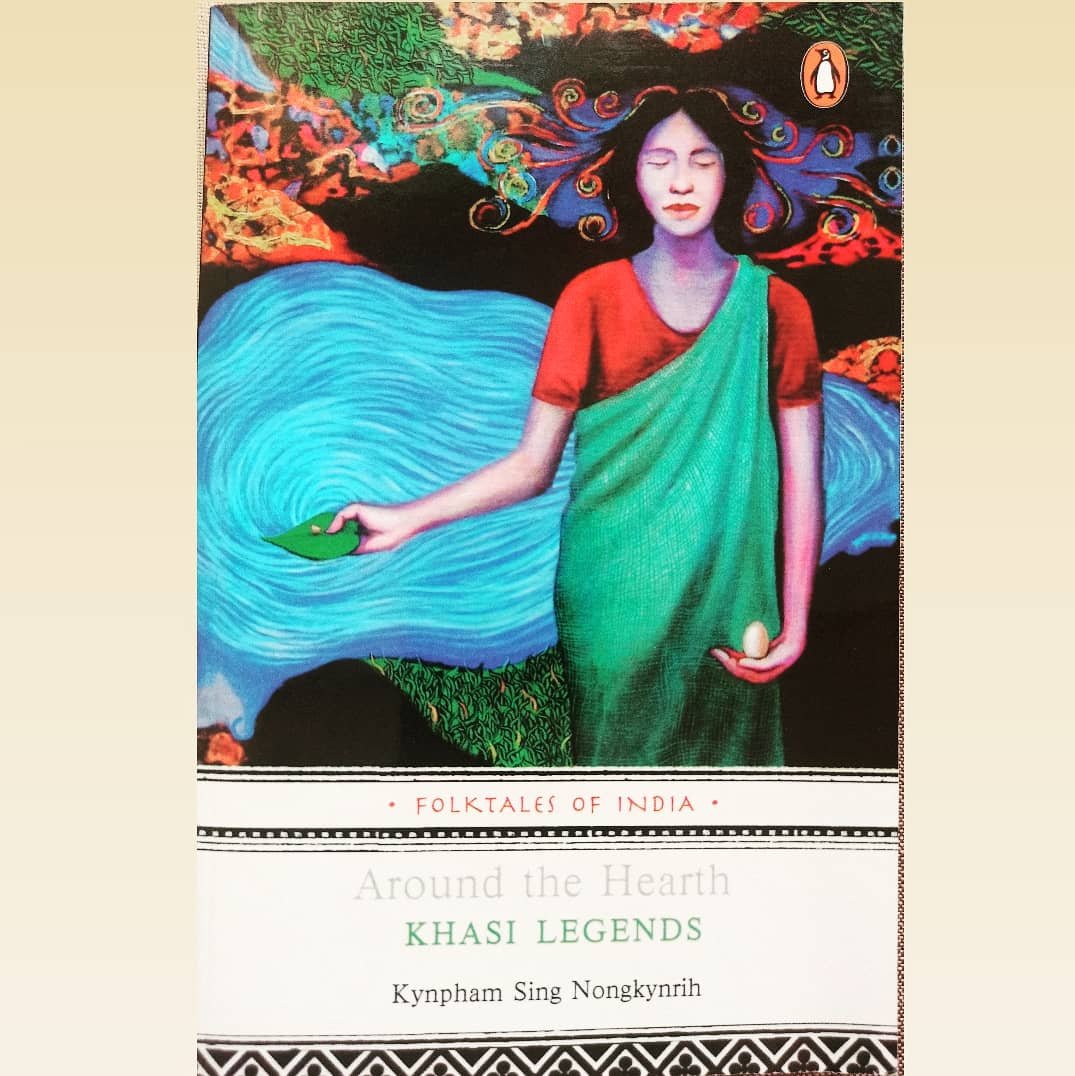
  • Around the Hearth: Khasi Legends (Folktales of India) by Kynpham Sing Nongkynrih

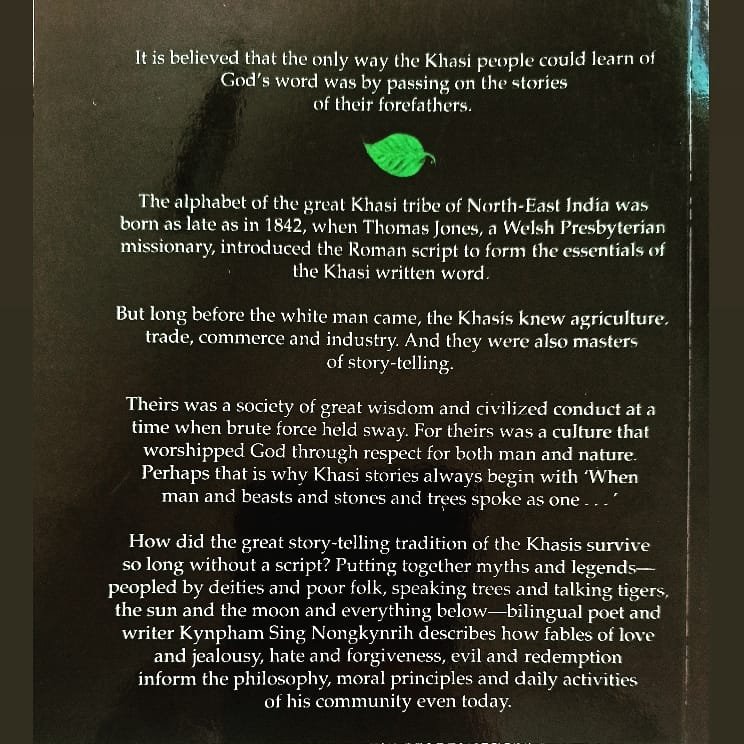
    The back cover of Around the Hearth: Khasi Legends (Folktales of India) reads thus:

    "It is believed that the only way the Khasi people could learn of God’s word was by passing on the stories of their forefathers. The alphabet of the great Khasi tribe of North-East India was born as late as in 1842, when Thomas Jones, a Welsh Presbyterian missionary, introduced the Roman script to form the essentials of the Khasi written word. But long before the white man came, the Khasis knew agriculture. trade, commerce and industry. And they were also masters of story-telling.

    Theirs was a society of great wisdom and civilized conduct at a time when brute force held sway. For theirs was a culture that worshipped God through respect for both man and nature. Perhaps that is why Khasi stories always begin with ‘When man and beasts and stones and trees spoke as one…'

    How did the great story-telling tradition of the Khasis survive so long without a script? Putting together myths and legends peopled by deities and poor folk, speaking trees and talking tigers, the sun and the moon and everything below—bilingual poet and writer Kynpham Sing Nongkynrih describes how fables of love and jealousy, hate and forgiveness, evil and redemption inform the philosophy, moral principles and daily activities of his community even today."

    Around the Hearth: Khasi Legends (Folktales of India) written by Kynpham Sing Nongkynrih (2007) is an important and significant book which documents Khasi folktales in English. With the publication of this book, the Khasi oral tradition can now reach a larger audience in India and all over the world.

    Published by: Penguin Books India

    Cover painting: @benedictskhemlang

    Illustrations: Pankaj Thapa

    👉The book is available online on amazon.in