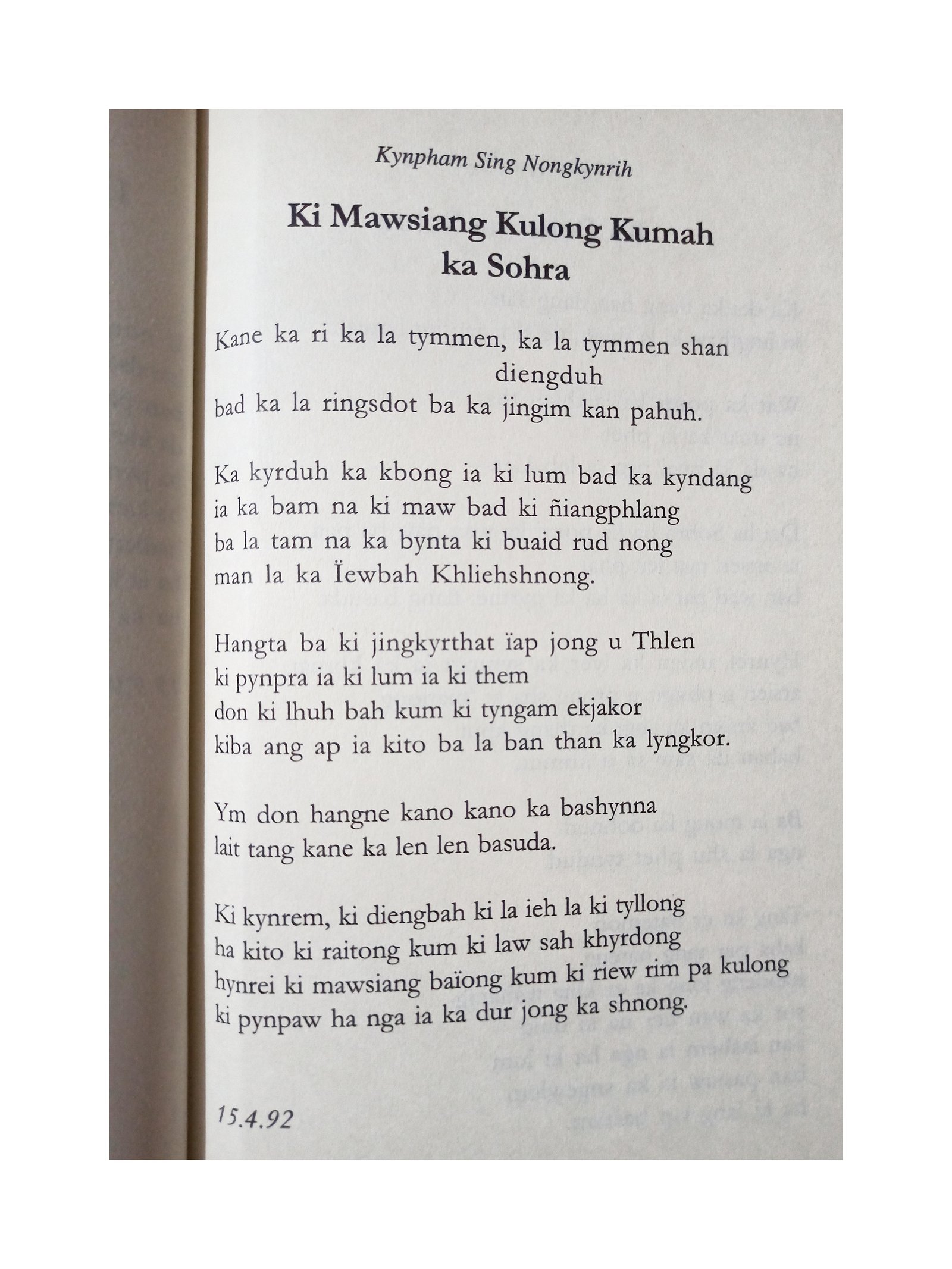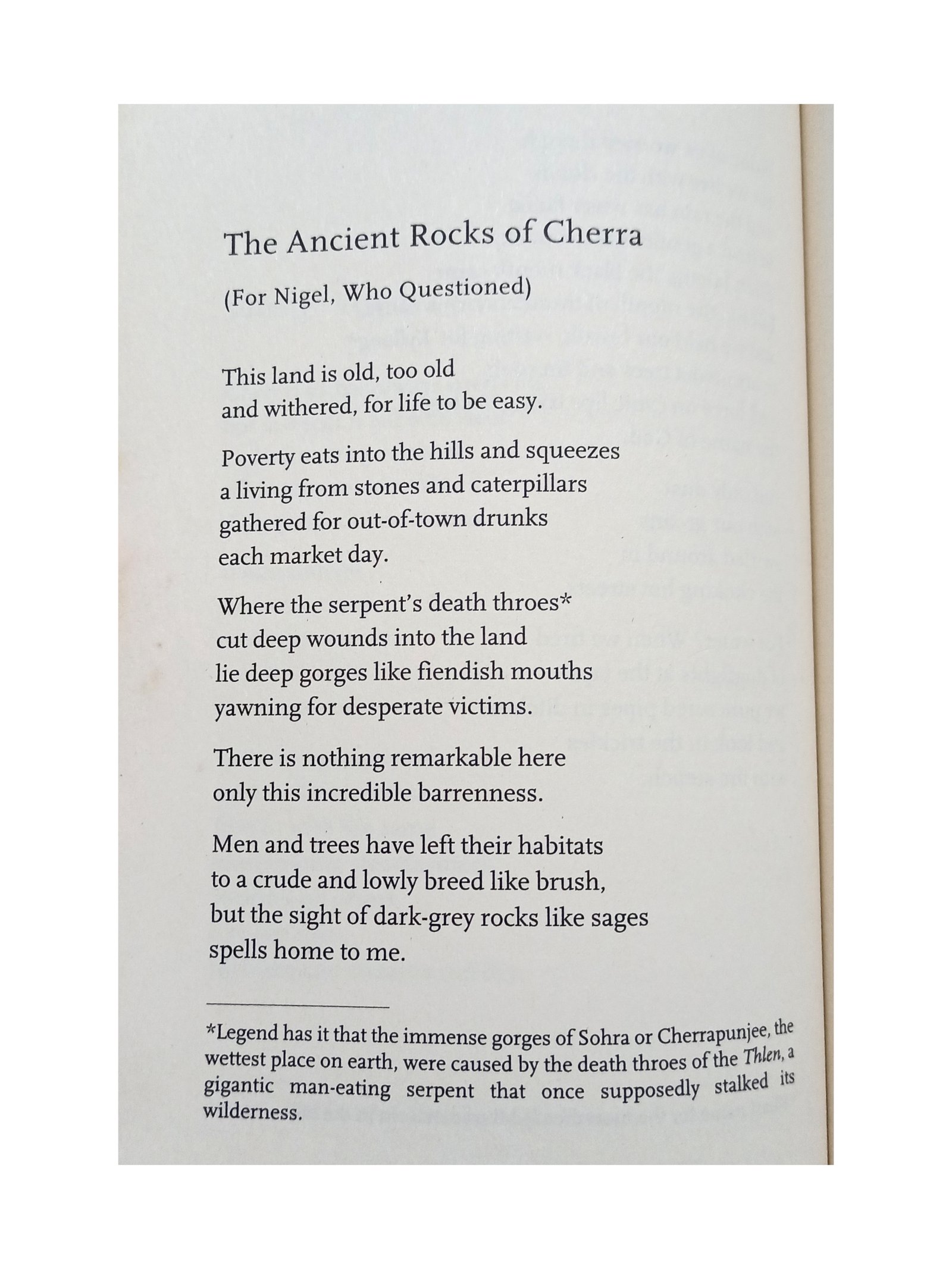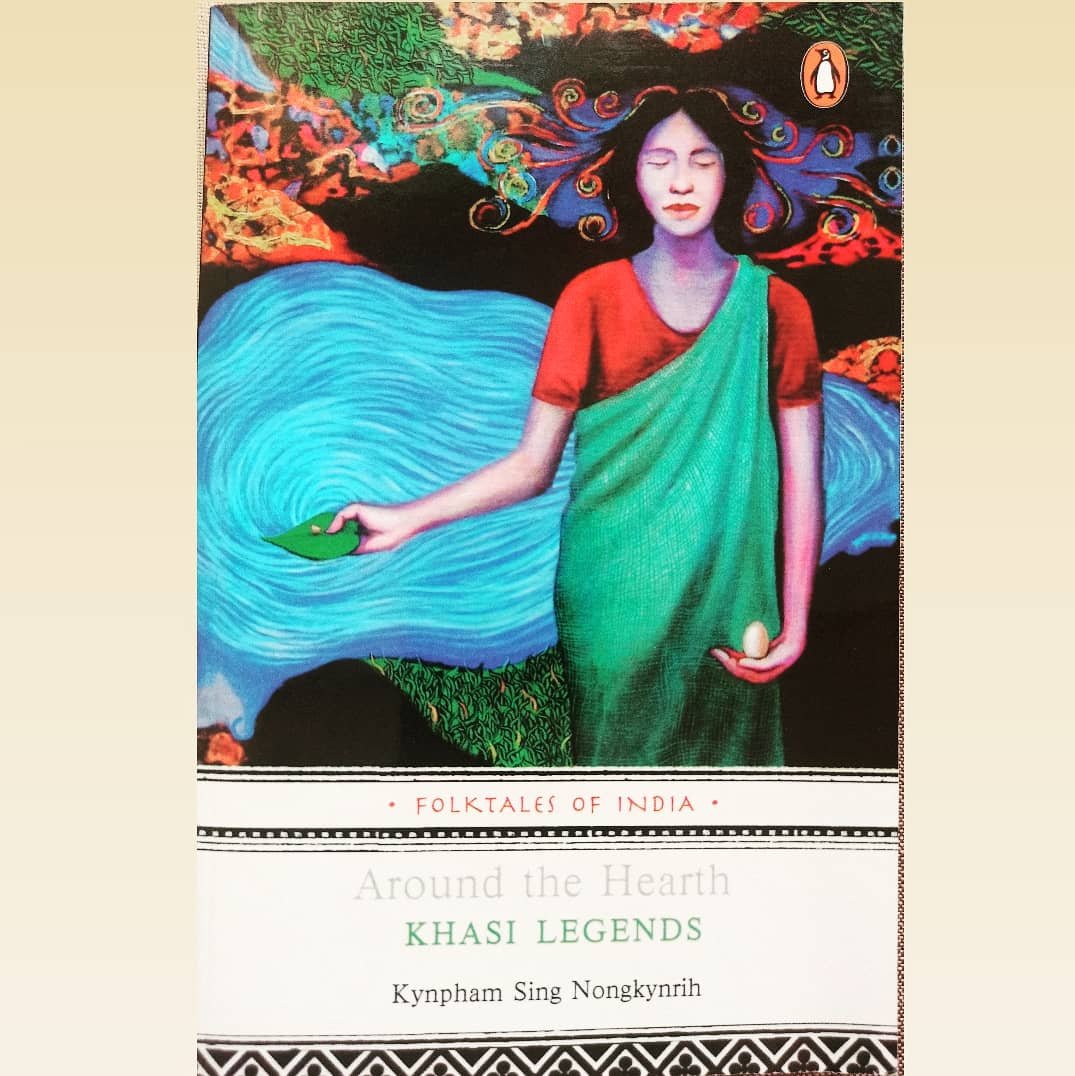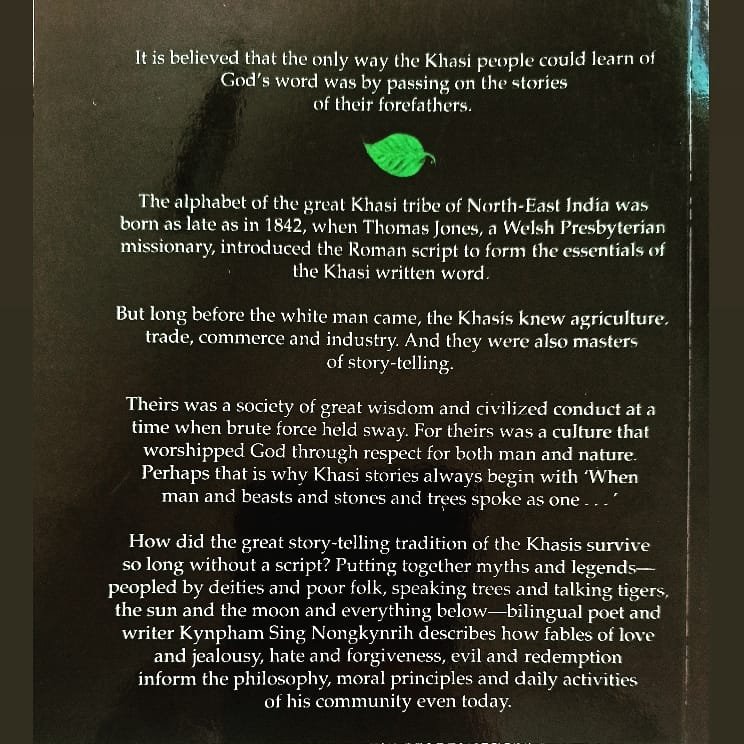
The following excerpt is from U Khasi Hyndai (1959) written by Rash Moon Roy Nongrum
43. La don bun jait ki ktien ha kane ka Ri Khasi Ri Pnar jong ngi ba ngi ia kren hapdeng jong ngi bad ngim lah ban ia sngewthuh lut baroh ia ki ktien ba ki ia kren na kawei ka jaka ha kawei ka jaka.
44. Na ka bynta ka jingbha ko jingbit jong ngi, U Pa Blei Trai Kynrad, U Nongthaw, U Nongbuh, U la pynmih ia kawei ka kynthei briew kaba la iathuh kyrteng ialade Ka Sohra. Kata Ka Sohra ka la wan poi ha lew Mawshohdoh. Kane ka shnong Mawshohdoh kaba don shi mail artet na Sohrarim.
45. Kata Ka Sohra ka la kren tiak tiak, shliak shliak, ha ka sur ktien kaba jem jai jai. Ym don ba tip nangno ka wan poi hangta ha Shnong Mawshohdoh. Ka hikai ia ki briew baroh ban nang kren ia ka ktien Sohra. Ka riam ka beit ka kup ka sem ruh thabdiab kum ka nongsohra paka kaba mynta.
46. Baroh ki para ba ia shong hangta ha Mawshohdoh ki la ia sngewbha bad sngewtynnad ban ia bud bad ban ia kren ka ktien kum kata Ka Sohra.
Kata ka kynthei briew Ka Sohra ka la thaw la ka ïng ka sem bad ke la ker kper shaduh ki them ki phud wah ba leit hap haduh ka wah bah. Ka Nongrim
Sohra ruh ka sah kyrteng haduh mynta.
Naduh kata ka por ia ka Wah bah baroh shilynter ruh ki la khot Wah Sohra. Kata ka kyrteng Wah Sohra ruh ka la neh la sah kyrteng haduh mynta.
47. Ki Sohra kiba la mih na Mawshohdoh mian pa mian ki la wan poi arsut pa arsut haduh ba kin da wan poi ha kane ka shnong Sohra kaba mynta, kaba dei Ka Sohra Thymmai. Ka Sohrarim te dei kaba la don la barim barim.
48. Ki Sohra kiba la mih na Mawshohdoh ki la nang pynroi pynroi ia ka ktien Sohra. Haduh mynta ia ka ktien Sobra ki khot ka ktien Khasi paka.
49. Ka ktien Sohra kaba hikai ban kren tang da ki ktien kiba don akor suda, lada ha ka iaid ka ieng ka ktien ka thyllieid dei ban kren tang da ka Akor kaba bha.
50. Ka ktien Sohra ka hikai ban long kiba jemnud ha ka mynsiem ban nym long kiba bitar kiba khong khong.
Ka ktien Sohra ka hikai ban nym kren ka ktien kaba iwtung lano lano lane iano iano.
Ka ktien Sohra ka bikai ban tip ba ka Hok ka long kaba halor tam eh. Ka Hok ka jop ha kaba kut haba da iaineh ha ka Hok.
Ka ktien Sohra ka hikai ban mane ban nguh ngon ban dem khrup tang ha la U Blei U Trai Kynrad U Nongthaw U Nongbuh ia lade.
Ka ktien Sohra ka hikai ban mane ban burom la ki Kmie ki Kpa ki nongpun ki nongkha, ki nongpynsan pynrangbah.
Ki Kmie ki Kpa ki long ki Mei Ïawbei Pa Thawlang.
51. Baroh kiba mynta ki iathoh ki ia pule ruh tang ha ka ktien Sohra. Ka ktien Sohra kan sa phriang kylleng baroh ka Ri Khasi Ri Pnar. Hangta ngin sa long tylli baroh kawei ka Ri Khasi Ri Pnar.
52. Ka Sohra ka shu jah noh haba ki briew ki la nang ban kren ia ka ktien Sohra. Ym don ba tip ba ka poi shano.
53. U Khasi Hyndai um ju don ka ngeit bieit, namar ba u tip ba tang U Pa Blei Trai Kynrad hi, U long U Nongthaw U Nongbuh. Marwei hi U la thaw ia ki symbai bynriew. Nalor nangta ki thang ia ka met iap, kim ju tep hapoh thliew
ia kiba iap, kiba tip ban thang ia ka met iap ruh dei tang ki briew. Namarkata ki ksuid ki tieng ki khaweit ia u Khasi Hyndai namar ba ka jingngeit bieit kam don ha uba hyndai u Khasi. U Khasi Hyndai u ong ba ka Hok ka long kaba kor tam bad kaba halor tam, namar ba uba hok um tieng iano iano ruh. U Khasi Hyndai u ong ba ka Hok ka jop ha kaba kut. Namarkata u Khasi Hyndai u ieng skhem tang ha ka Hok. U Khasi Hyndai uba ieit la ka Riti Khasi kaba neh ha ka Hok. U Khasi Hyndai uba kynshi uba isih eh ia ke Raibi kaba sniew eh.
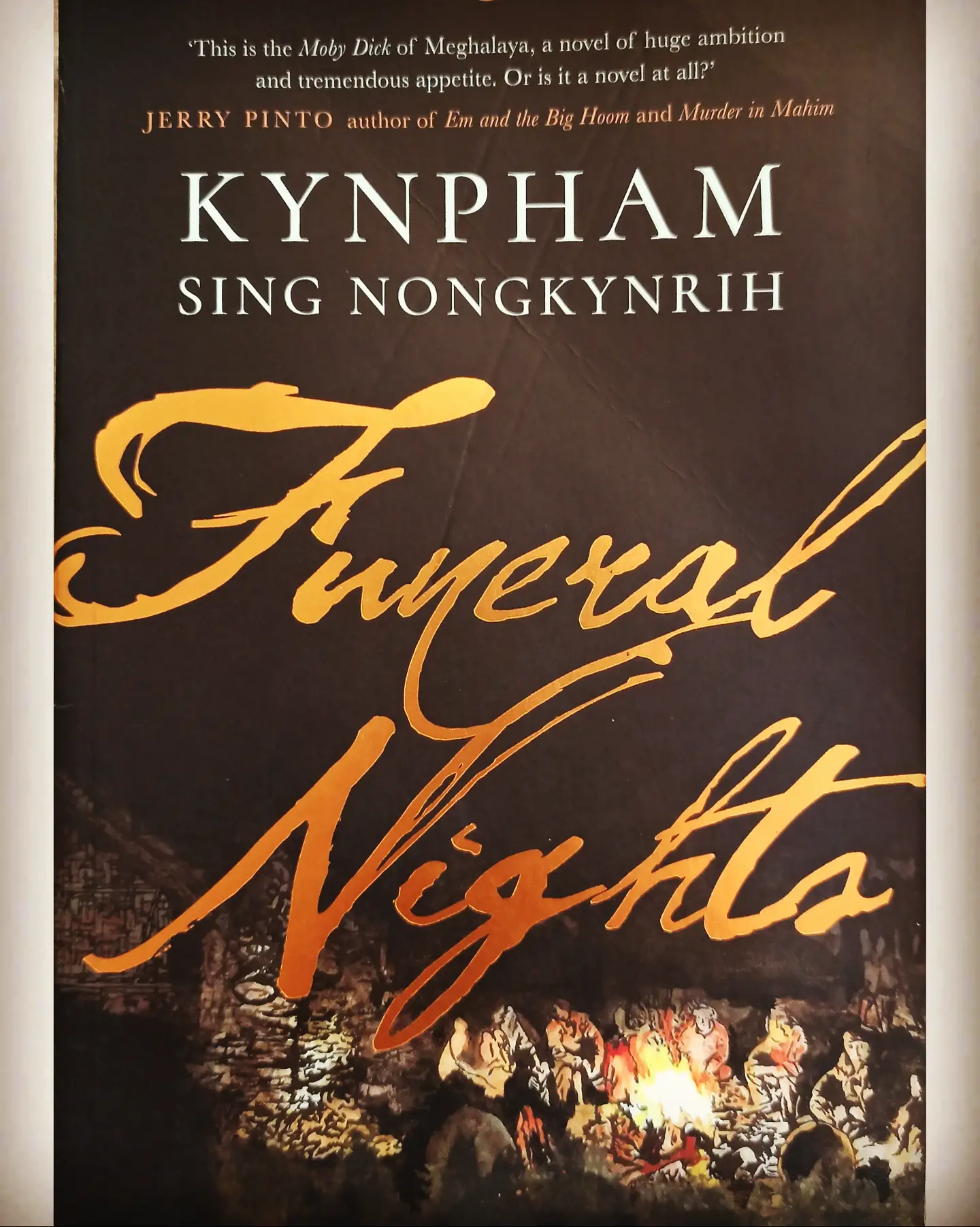
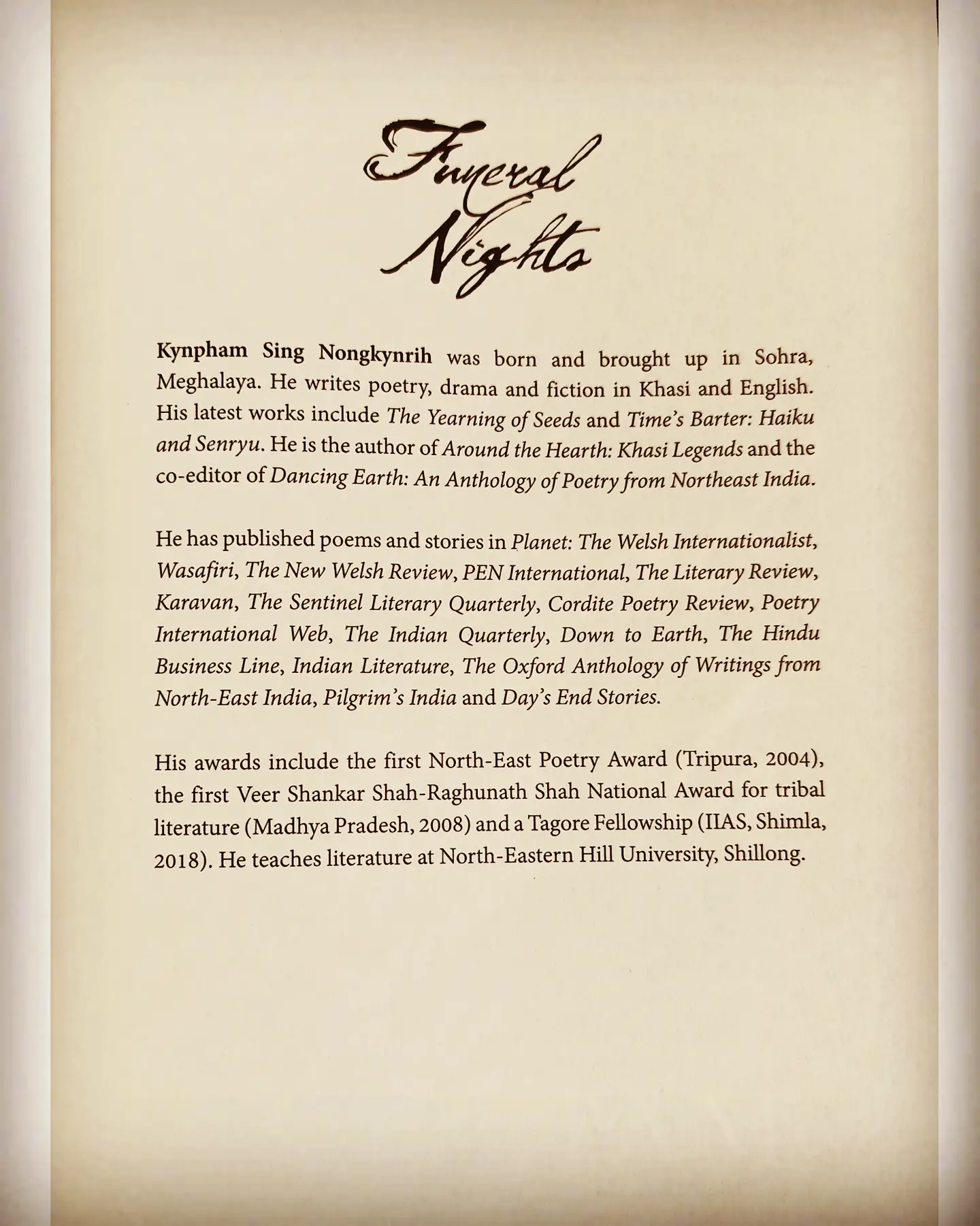
The following excerpt is from Funeral Nights (2021) by Kynpham Sing Nongkynrih
At around this time, there was a fierce dispute between the people of Mawphu from the Khathynriew Shnong province and the people of Laitïam, in the south-east. The people of Laitïam were backed by two other villages, Ryngud and Sohbar. Both claimed ownership of a large tract of land bordering the heavily wooded River Umïong that extended up to another river called Risaw, north of Umïong. Soon, a protracted war broke out. The Mawphus killed the warrior leader of the Laitïams, called U Dei, near a place known as Nongsawlia; however, the LaitÏams retaliated and killed the Mawphus' warrior leader, called U Sohmen, not too far from where Dei had fallen. These places came to be known as Pomudei and Pomsohmen, that is, the hacking-of-Dei and the hacking-of-Sohmen. At this juncture, the founding clans of the new settlement of Sohra intervened. They talked to both parties about how futile and destructive the war had already been, and offered the idea of merging all their villages into a single hima, or state, comprising the provinces of Khatar Shnong, Khathynriew Shnong and Ki Lai Shnong–the three villages of Laitïam, Ryngud and Sohbar. The warring parties readily agreed, and a new state was born out of the war.
The founding clans now began to look for a syiem, a king, who would be wholly responsible for the day-to-day administration. But nobody wanted a king from one of the other clans. They did not want to grant that kind of power and prominence to one who was not their own. It was when they were sitting in an open dorbar (council), trying to find a ruler, that a gentlewoman of divine grace mysteriously appeared out of nowhere and declared in front of the founding clans that her children would be the kings of the new state. When asked for her name, she said, 'Sohra, and when asked for her purpose, she said, 'My purpose is to teach grace and good manners to the people'.
From that time, the new settlement was known as Sohra (for the settlement itself), Hima Sohra (for the state of Sohra) and Ri Sohra (for the country of Sohra). The names were given in honour of the mysterious woman, who, true to her word, tutored the people in the ways of civilised living and refined manners. It is for this reason that the community regards Sohra as the birthplace of Khasi etiquette and good conduct–'ka akor Sohra', a kind of savoir-vivre.
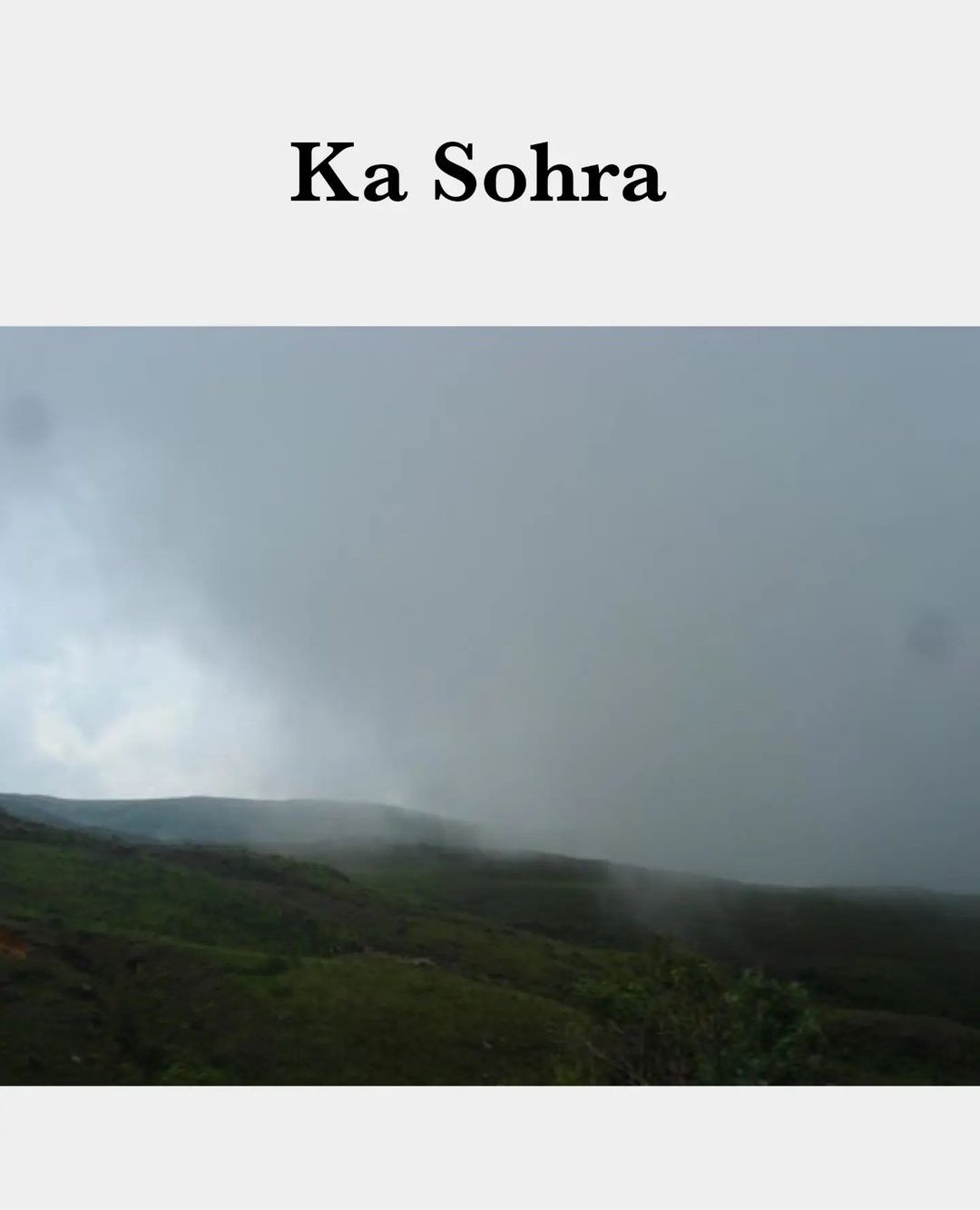
But though the woman was accepted as divine, or at least as an agent of divine intervention, nobody thought of asking her what her name meant. It was only much later that people realised that she had chosen a name to reflect the most typical feature of the Sohra landscape. Since it is the wettest place on earth (I am sticking to this assertion because, although Mawsynram, the other East Khasi Hills village, has recorded higher precipitation now and then, the matter is far from settled–rain being a notoriously whimsical thing) and has a gently sloping tableland overlooking the plains of Bangladesh, Sohra has no topsoil. All of its topsoil has been washed away, either to the fertile and heavily forested gorges at the foot of the tableland, known as Ri War (where the War people live in their bountiful jungle farms), or to the plains of Sylhet, which are transformed every summer by the pelting rain of Sohra into a gigantic inland ocean. It follows then that Sohra is a place where nothing grows. And that is the meaning of Sohra: fruitless. In a way, the name completely justifies the description of the place as the wettest desert on earth.
These two excerpts are about "Sohra": the origin of the name "Sohra" and the origin of the Sohra Khasi which is now spoken as the standard Khasi. Besides that the two exceerpts talk about the teaching of Khasi grace and manners which are valuable lessons for our children today! Very interesting! 👍👍
Picture credit: https://www.tripadvisor.com/LocationPhotoDirectLink-g668046-i84372639-Sohra_East_Khasi_Hills_District_Meghalaya.html