Tag: mawbynna

  • U Mar Phalyngki

    SOSO THAM WEEK 12th December – 18th December 2023

    Khublei Shibun @xdtnoahjupejackllthmanar na ka bynta ka poim ha ka English, ka jingthoh ha ka Pnar bad Khasi bad ïa ki dur kiba itynnat! 😄🙏

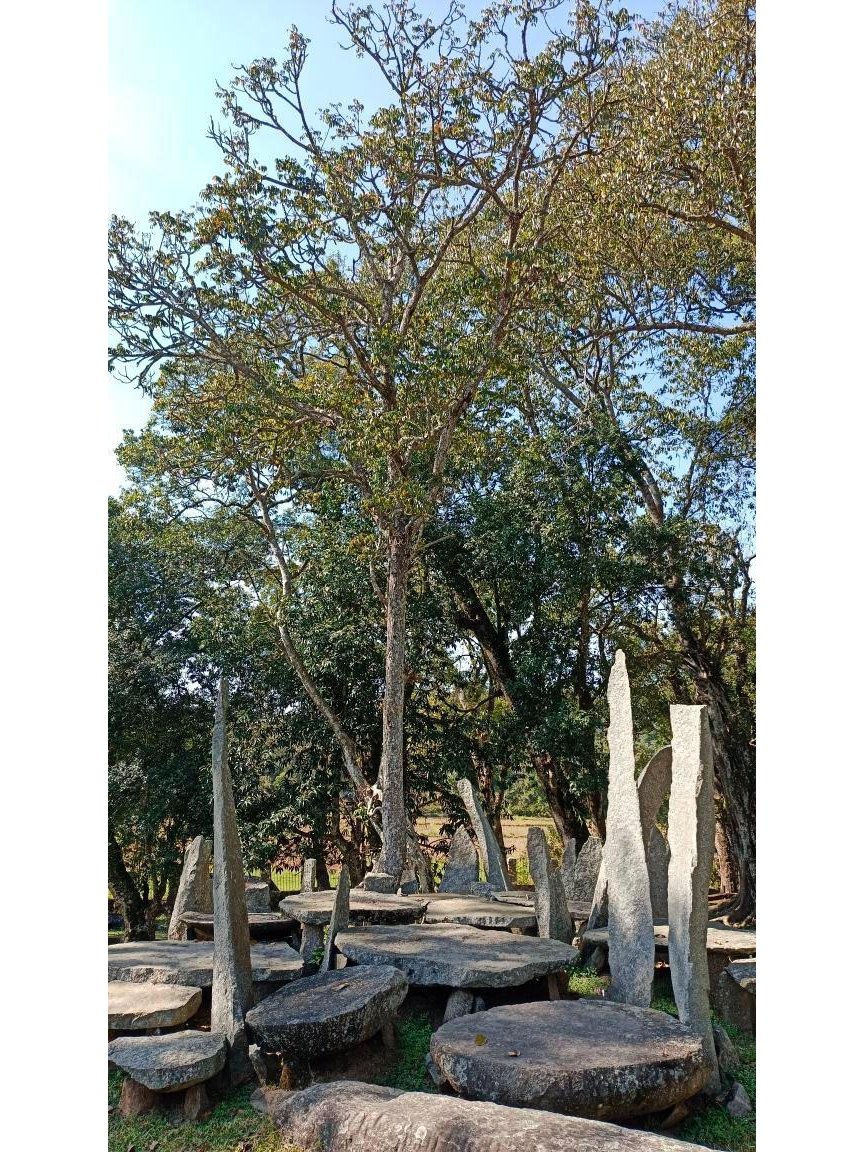
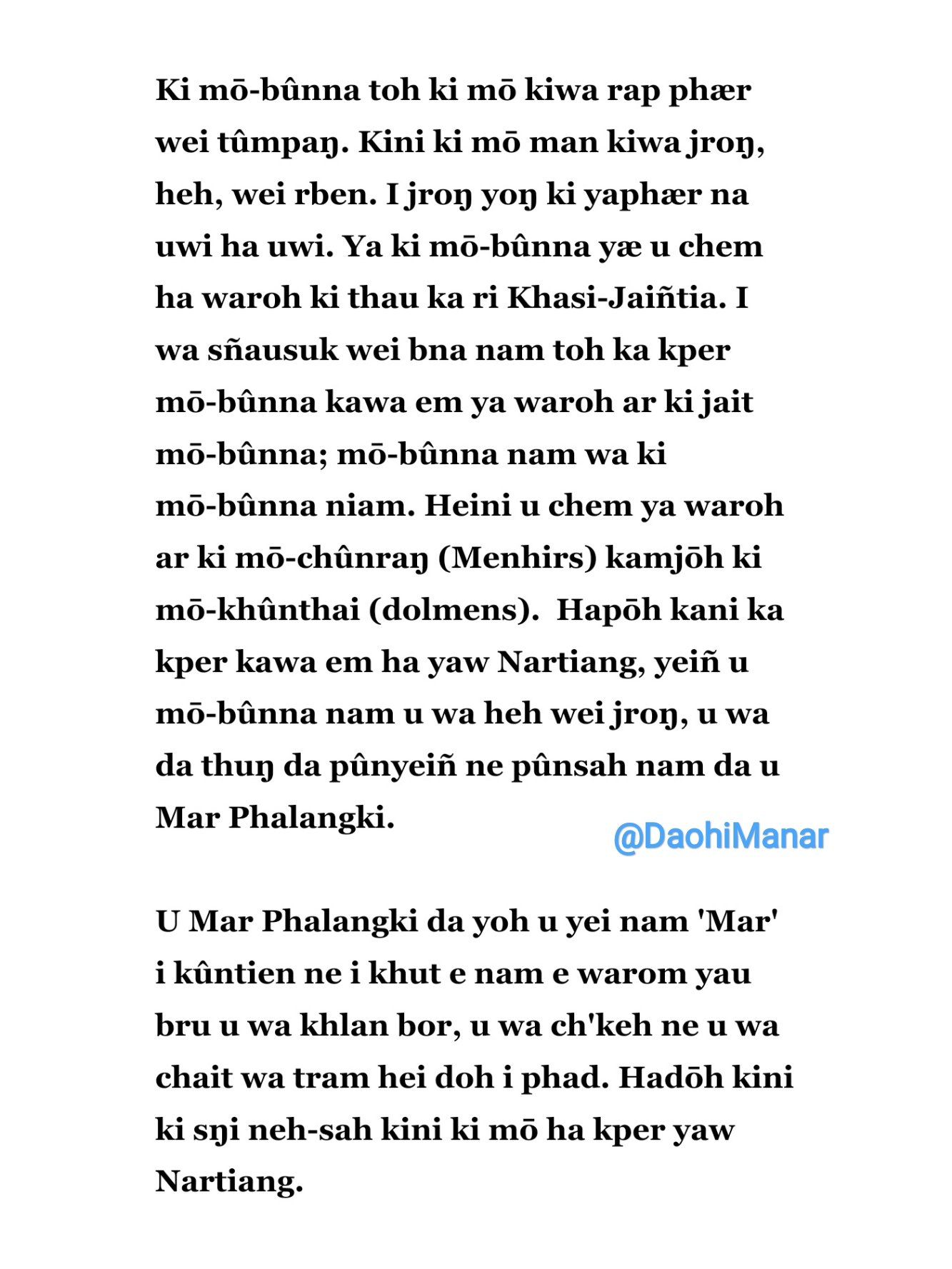
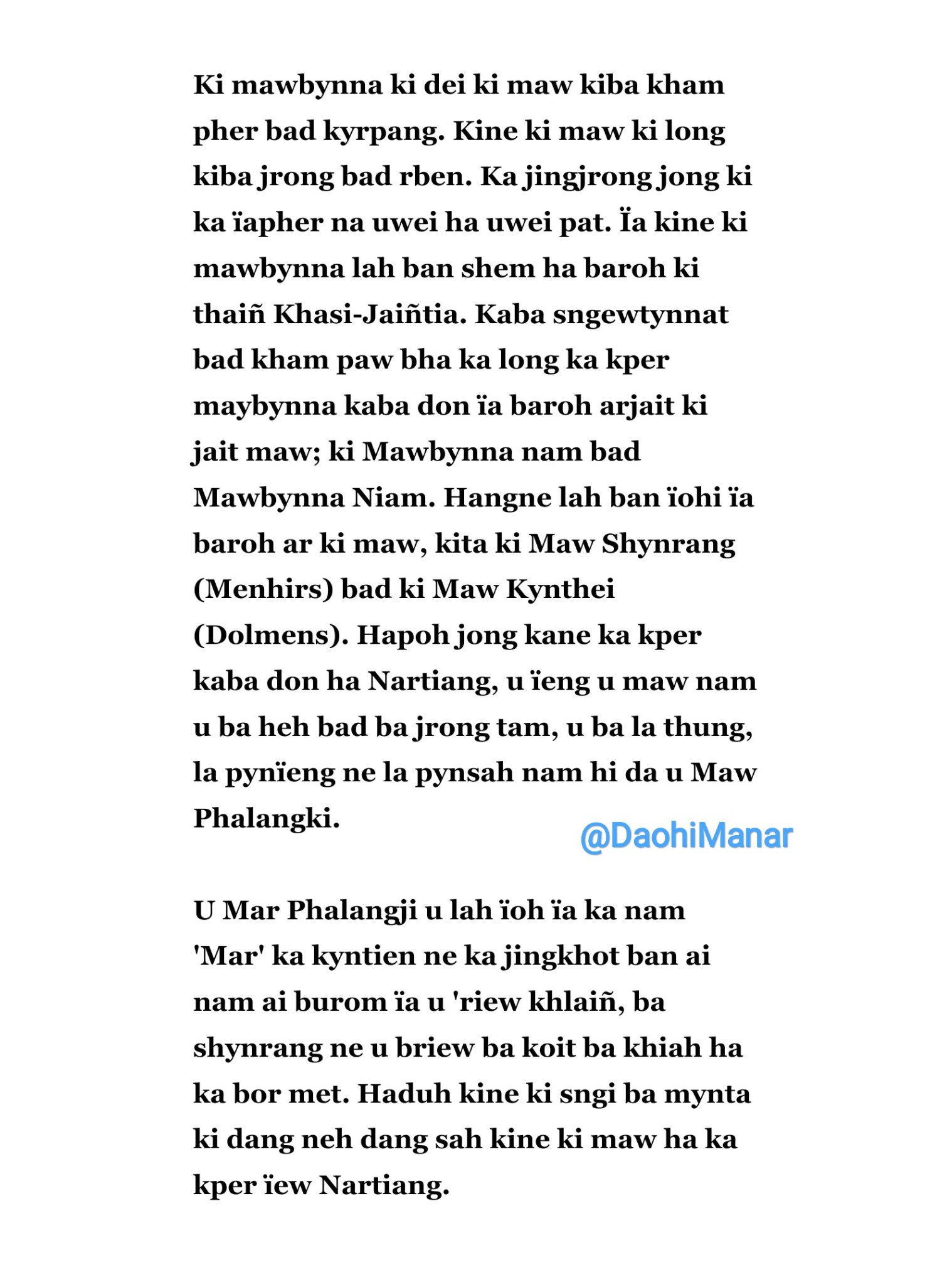
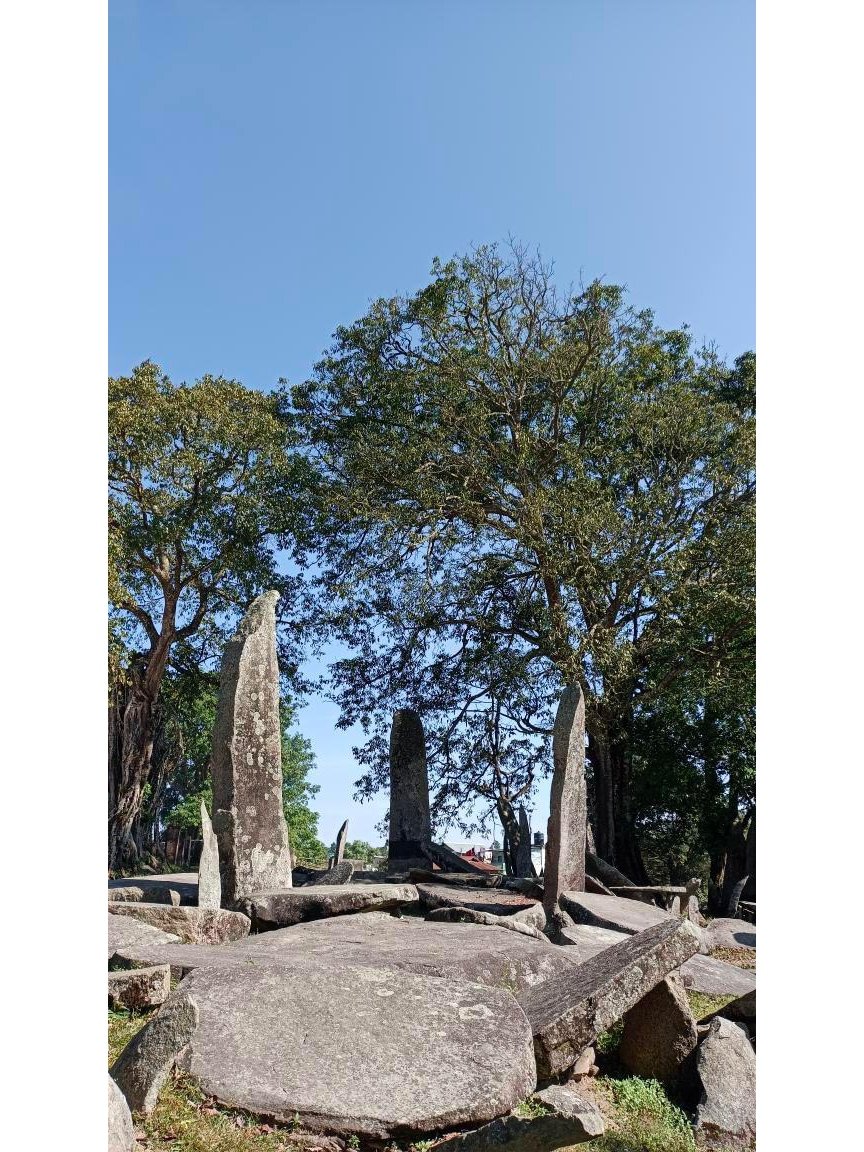
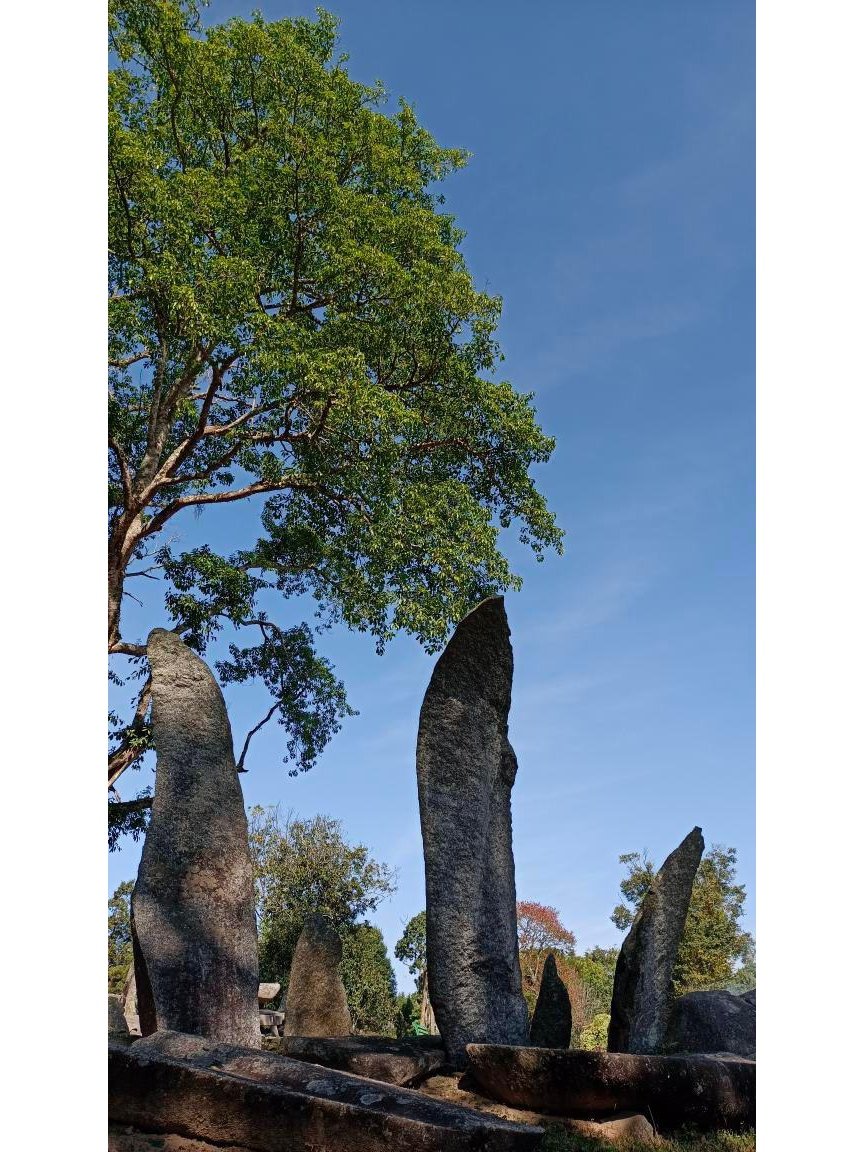
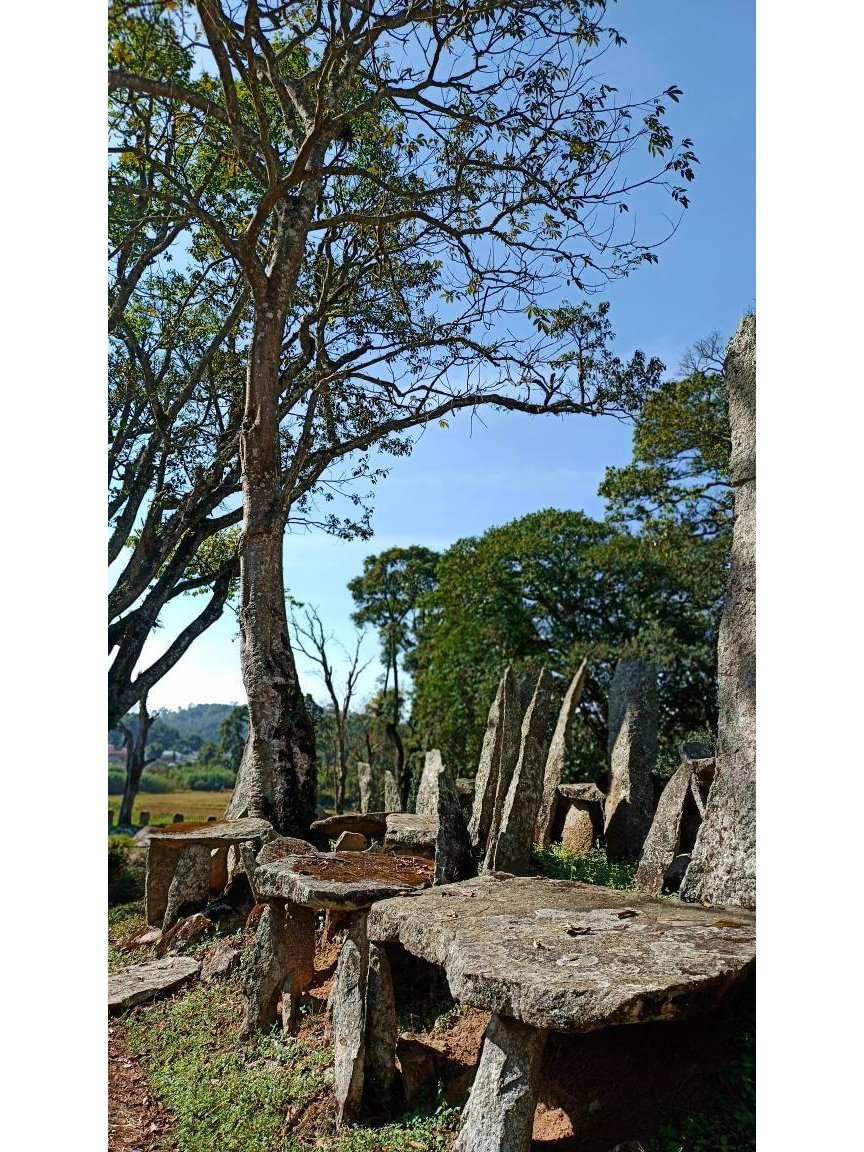
    Kane ka post ka dei shaphang u Mar Phalyngki uba dei uwei na ki rangbah shipai jong u Syiem Jaiñtia bad ruh shaphang ki mawbynna ha Nartiang kiba pawnam. Kat kum ka jingïathuhkhana U Mar Phalyngki u la pynïeng ïa u maw Mooi Iong Syiem uba 8 mitar bad uba dei ruh uwei na ki mawbynna ha ka ïew Nartiang uba jrong tam ha ka pyrthei.

    According to local legend, the tallest monolith in the cluster, Moo Iong Syiem which is eight metres long, was erected by U Mar Phalyngki. Phalyngki was a trusted lieutenant of a Jaintia king. He erected the monolith to commemorate his victory in battle. The Monoliths were erected approximately during 1500 AD. and 1835 AD. (Source: https://www.google.com/amp/s/timesofindia.indiatimes.com/city/shillong/nartiang-monoliths-in-meghalaya-are-tallest-in-the-world/amp_articleshow/64837454.cms)

    🟡 Khasi and Pnar write up by @xdtnoahjupejackllthmanar

    🟡 Photo credit @xdtnoahjupejackllthmanar

    #nartiang #mawbynnanartiang #nartiangmonoliths #marphalyngki #jaiñtiakingdom #jaiñtiakings #khasiculture #khasimonoliths #monolithculture #speakyourroots #speakyourrootschallenge #talklocal
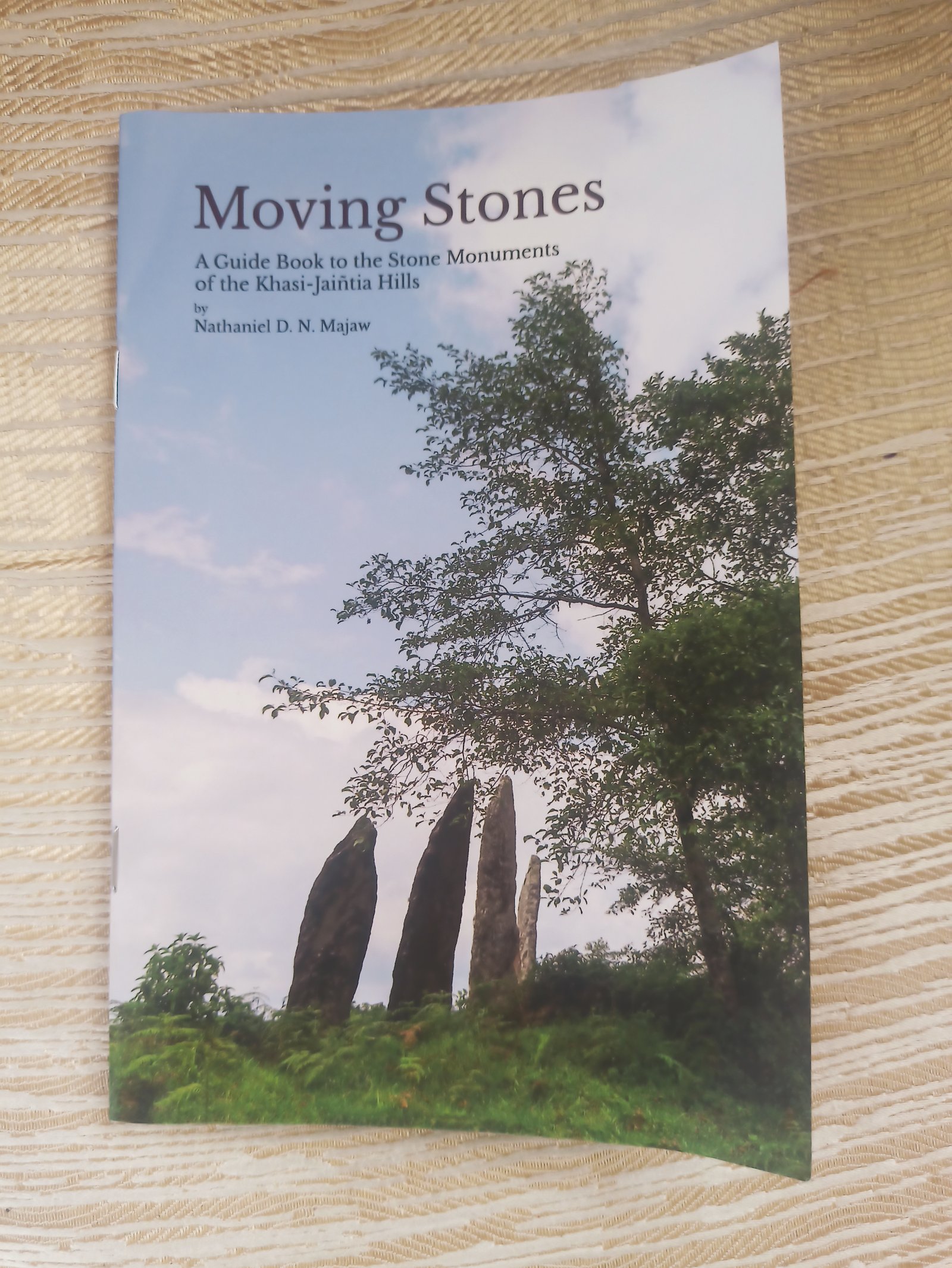
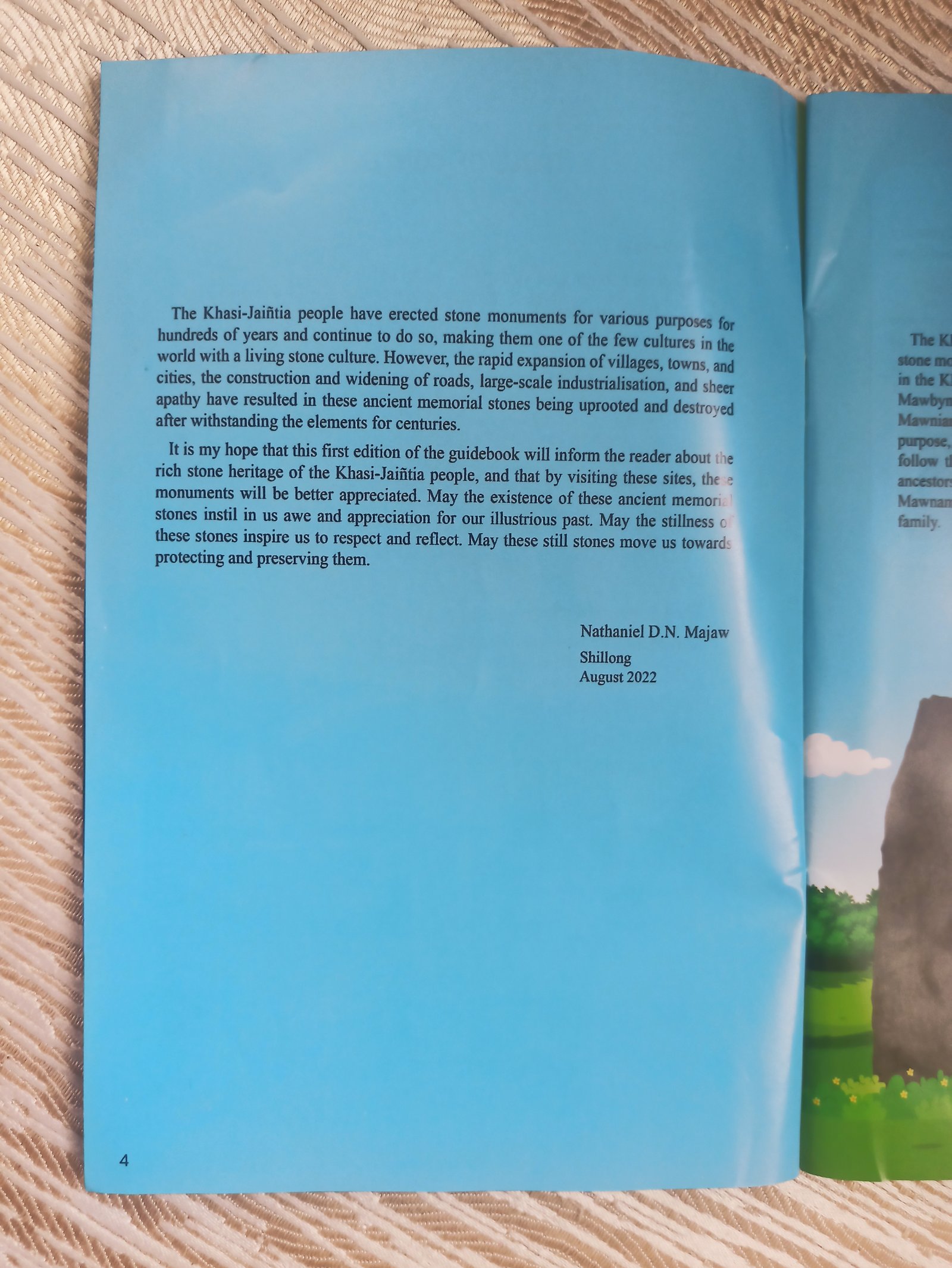
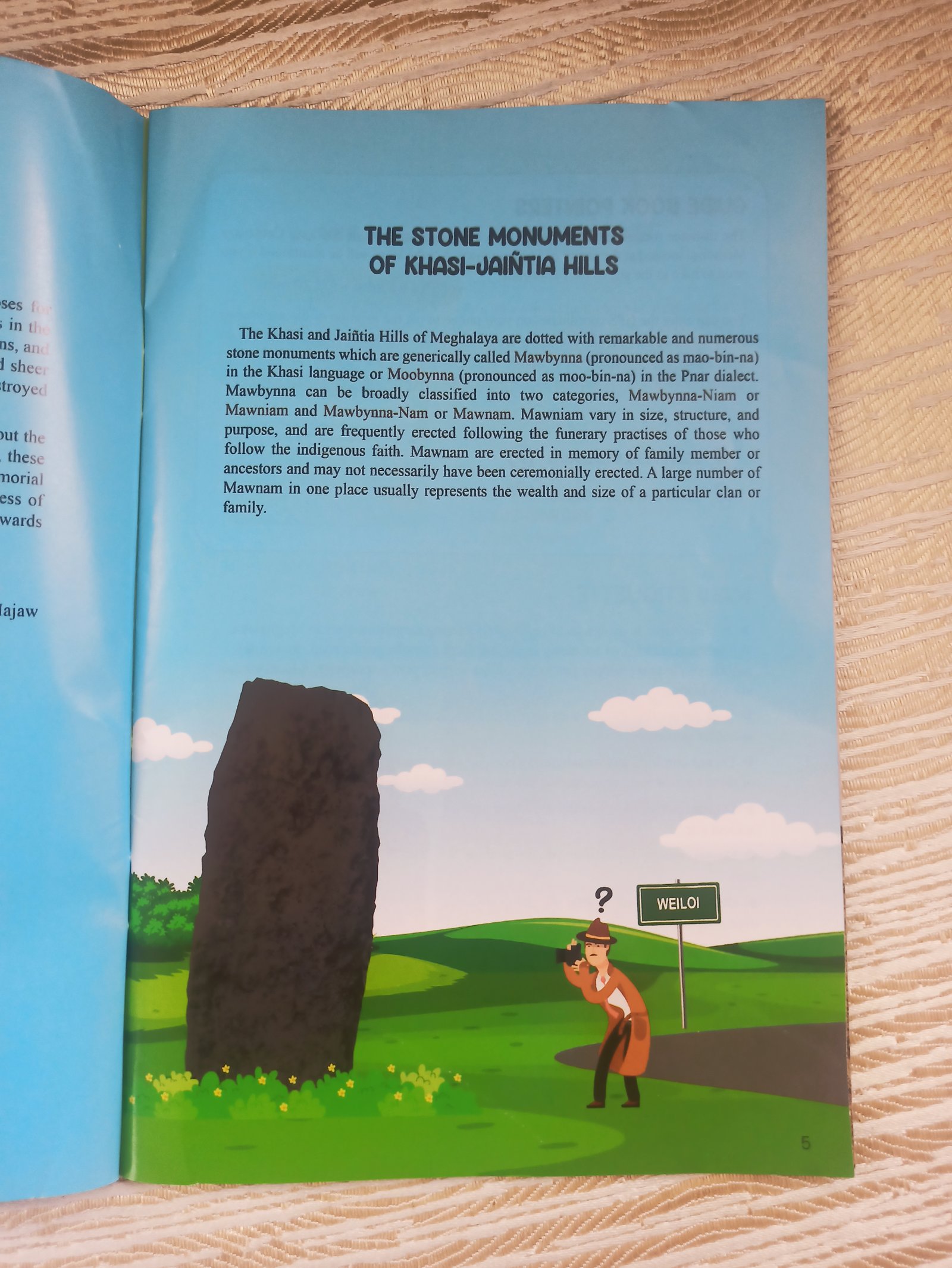
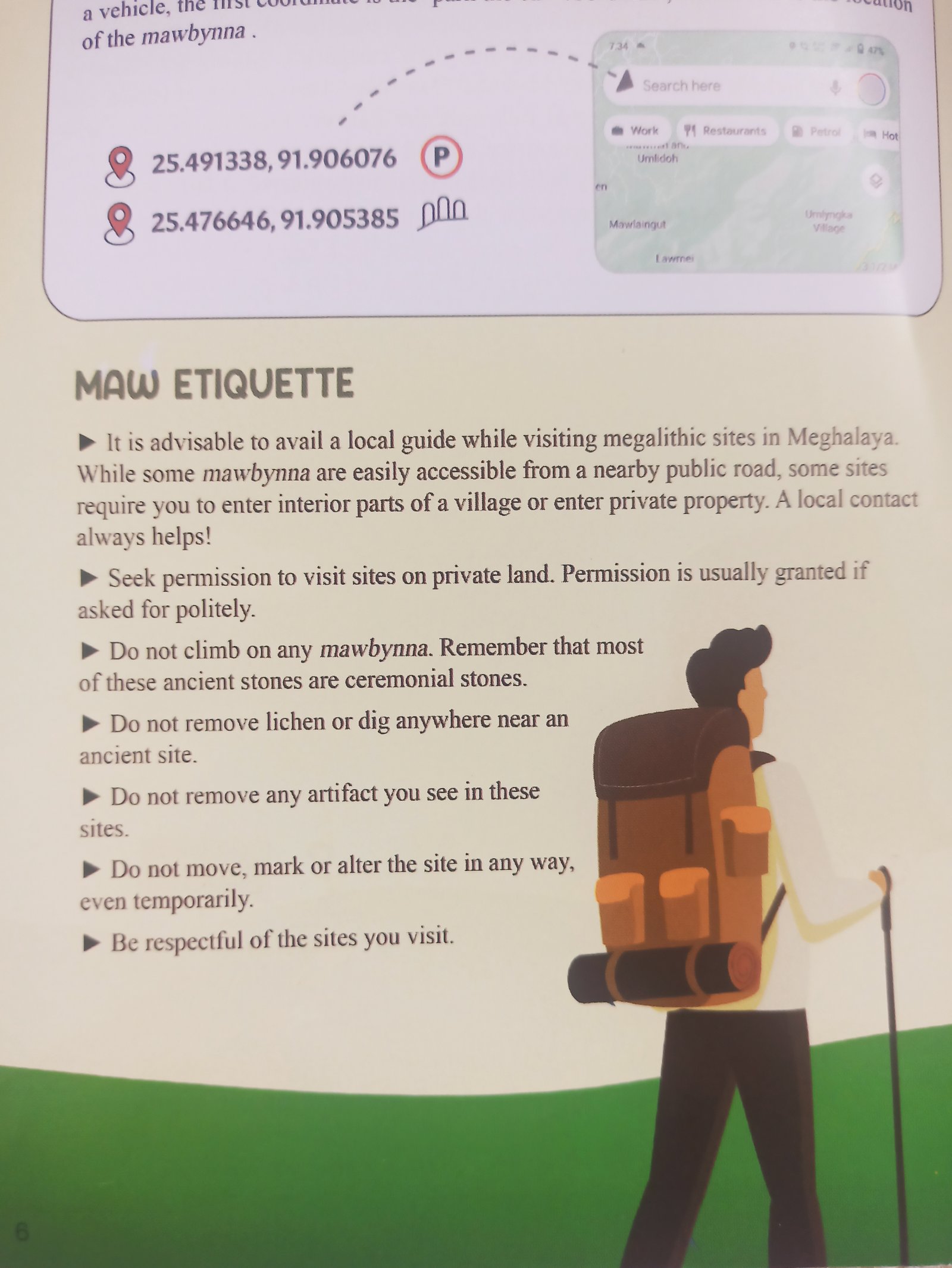
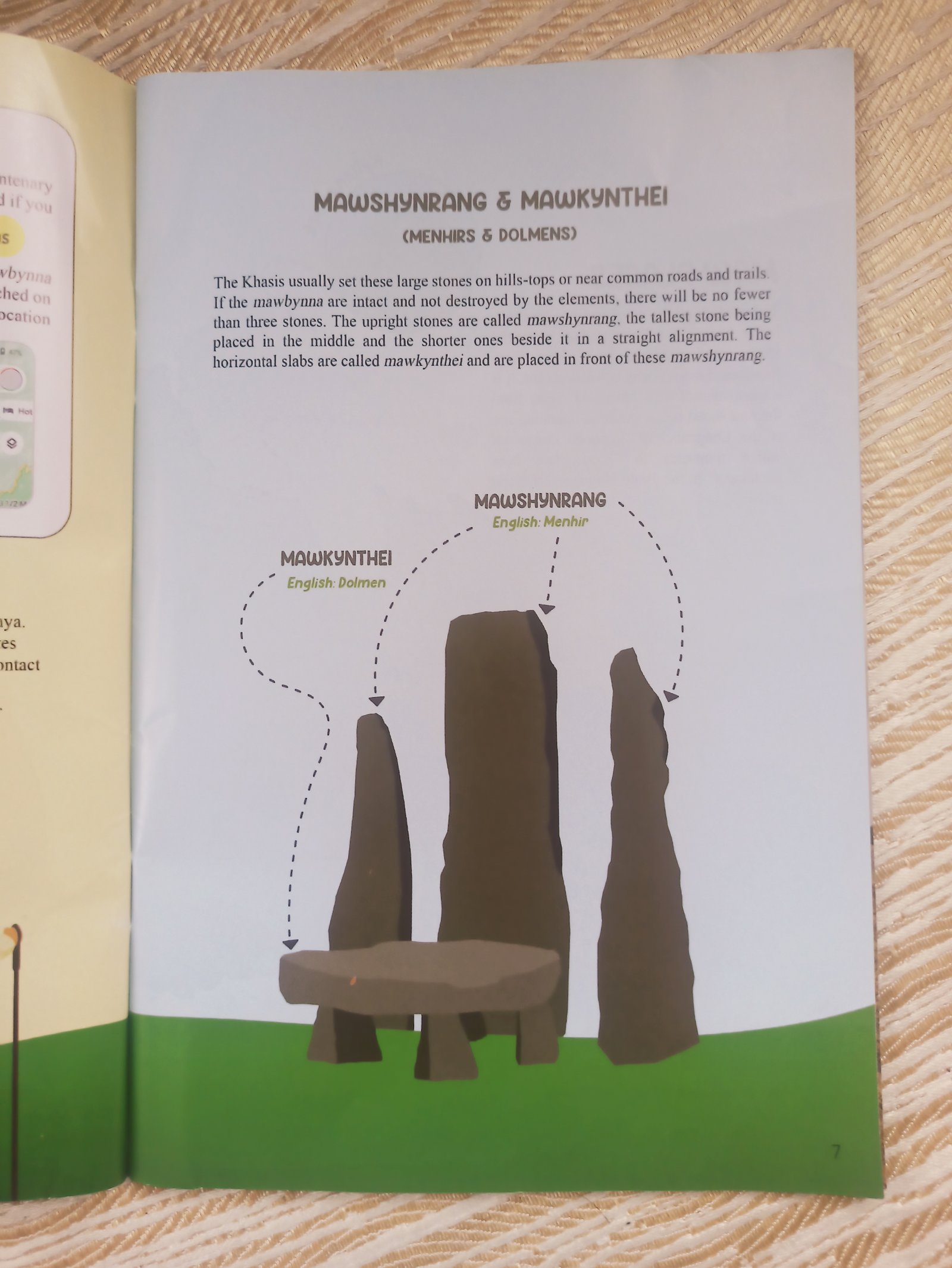
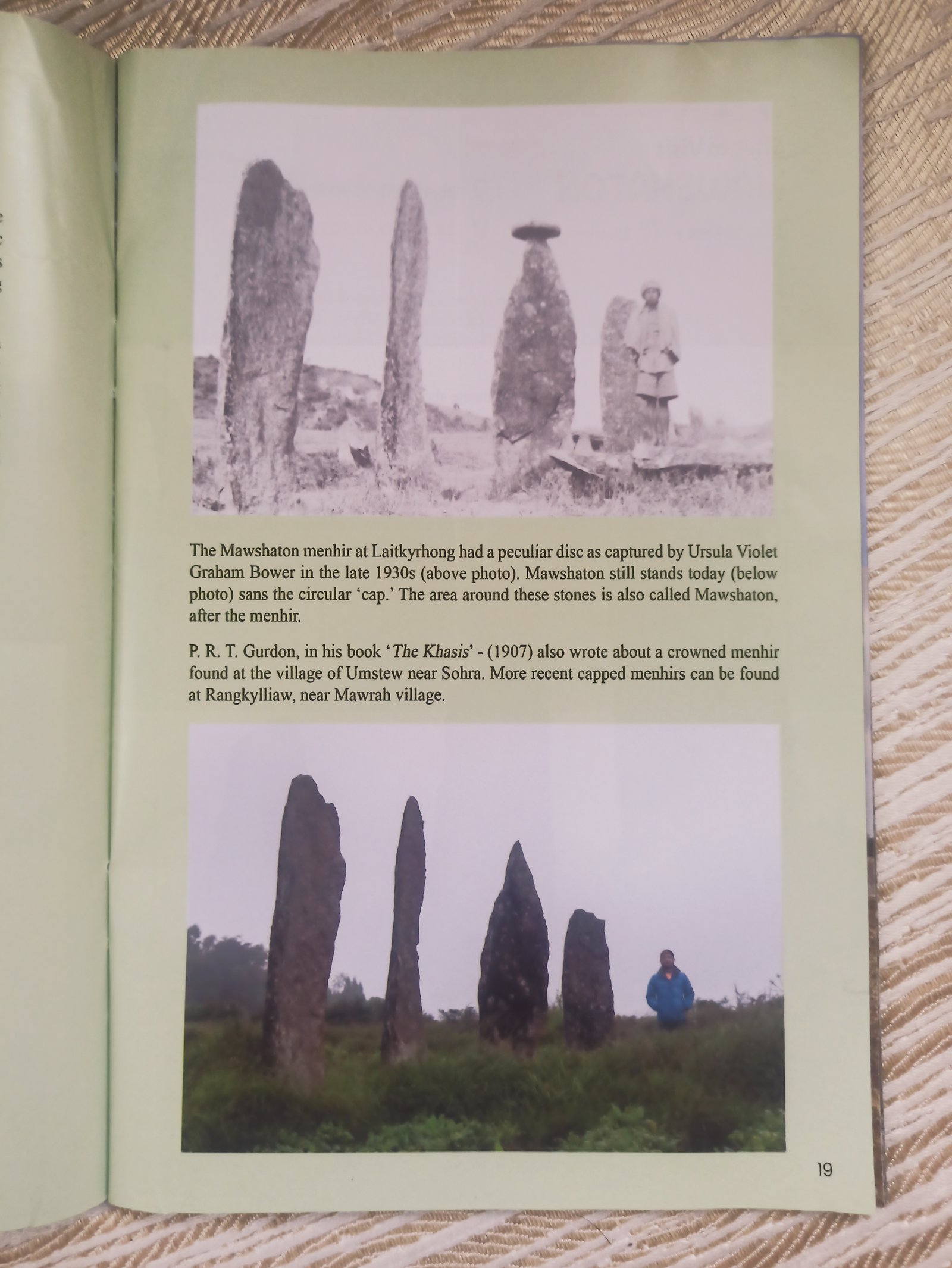
  • “Moving Stones: A Guide to the Stone Monuments of the Khasi-Jaiñtia Hills” by Nathaniel Majaw

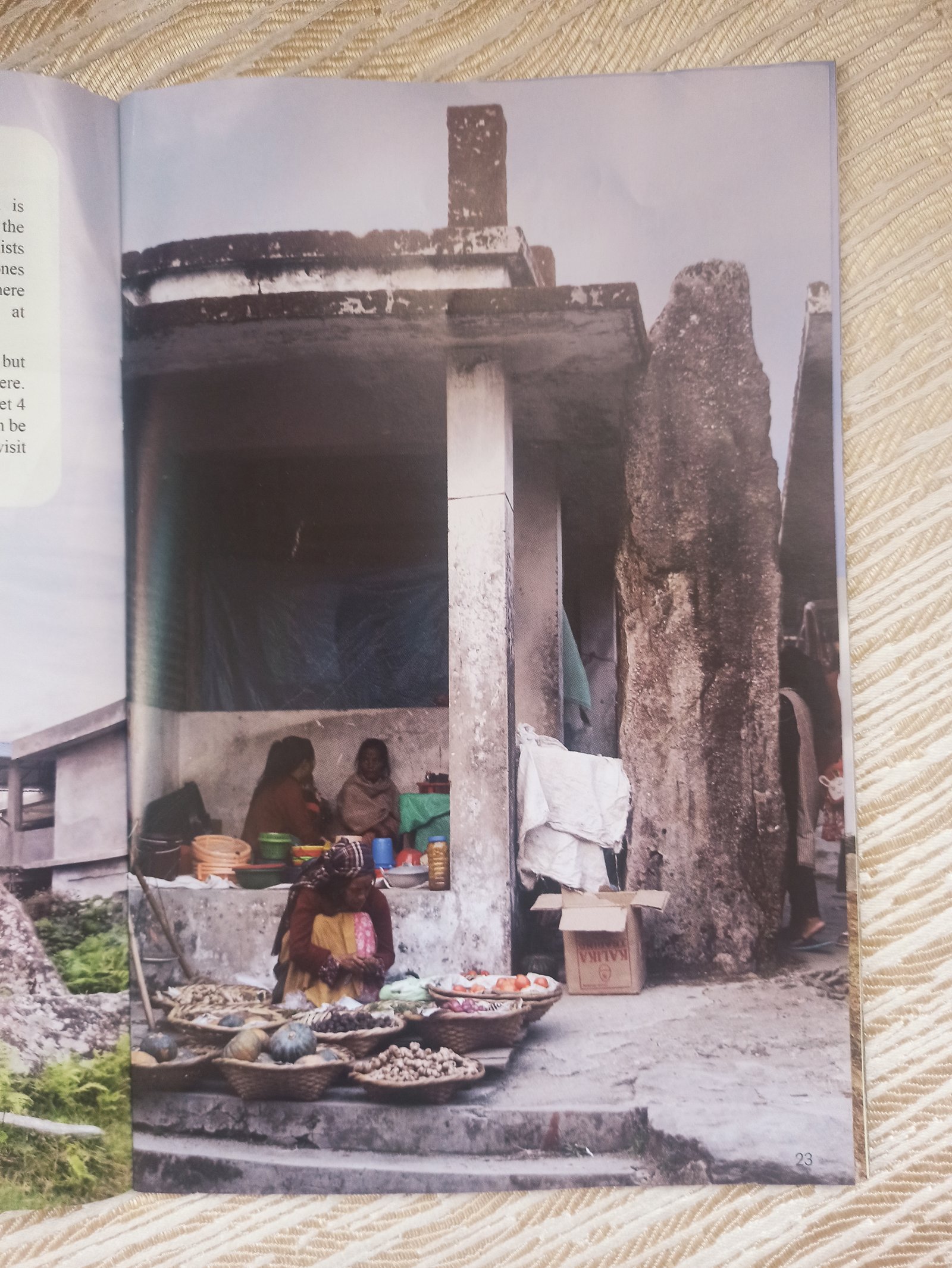
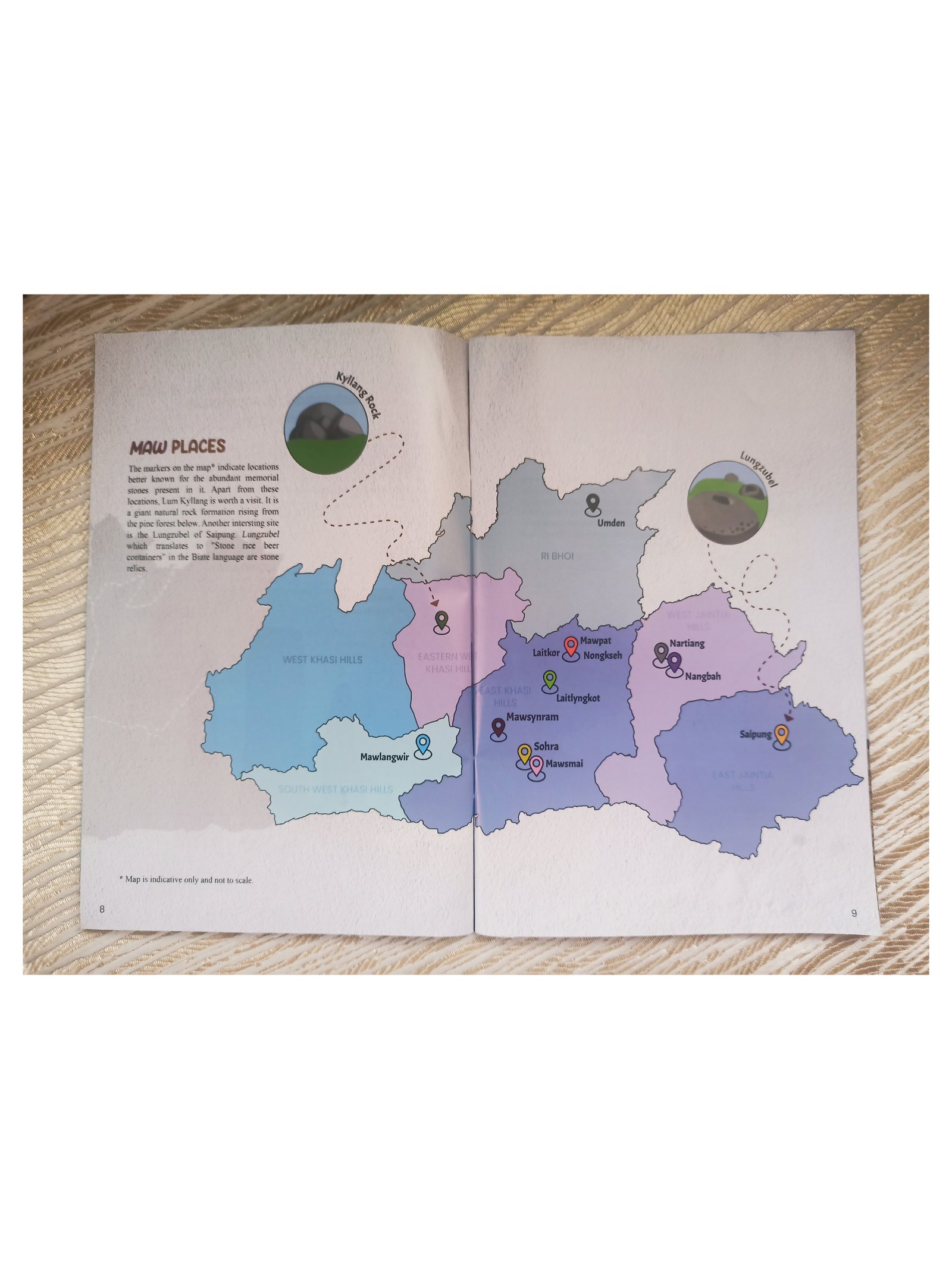
    These are some snippets from Moving Stones: A Guide to the Stone Monuments of the Khasi and Jaiñtia Hills by @nathanielmajaw 🏞️🌲🪨Congratulations on your book!

    This is a handy book to have for anyone who wants to explore the varieties of mawbynna, that are etched into our history and culture.

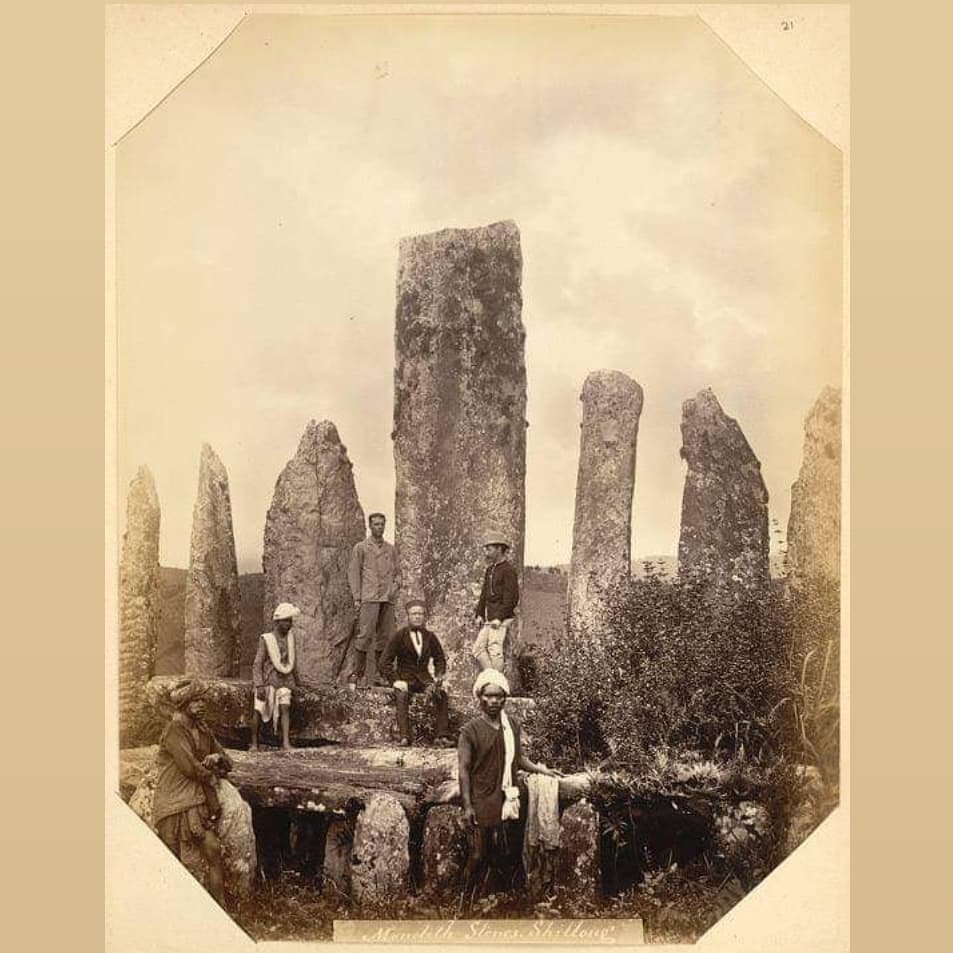
  • “Monolith Stones Shillong” as shown in Jean Baptiste Oscar Mallitte’s 1870s photograph

    Nathaniel Majaw says:

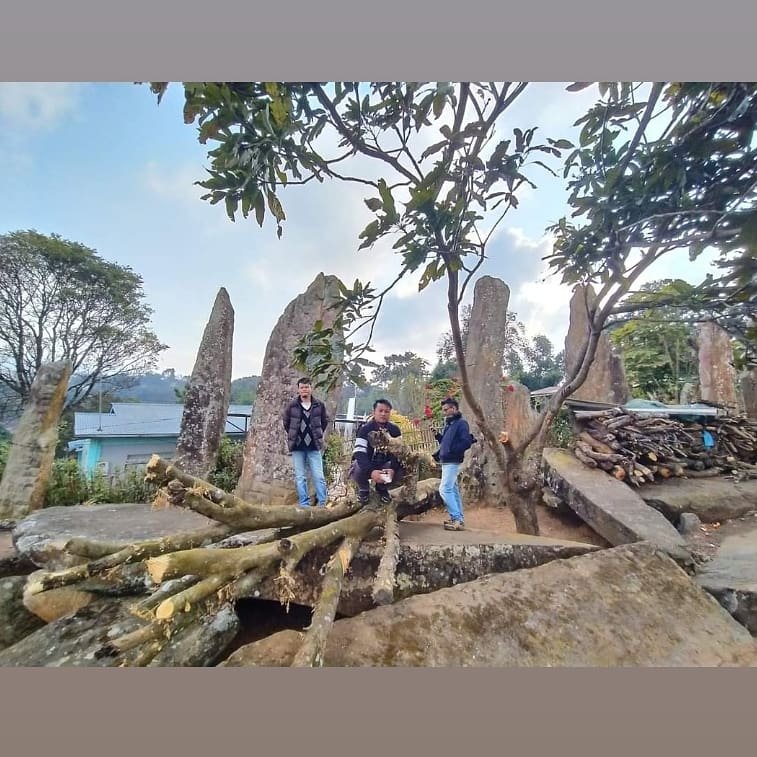
    We finally located the magnificent stones as shown in Jean Baptiste Oscar Mallitte's 1870s photo "Monolith Stones Shillong". These memorial stones are tucked away in a quaint property in the beautiful and peaceful Nongkseh Rim.

    The Khasi "Mawbynna" or monoliths/ megaliths are markers of history, culture, tradition and religion. Writers see language and literature emanate from them; indeed they are a repository of the past, present and future.

    Many monoliths and megaliths were destroyed in the great Assam earthquake of 12th June 1897. Thus, it is such a great joy to find these structures still standing after so many years.

    Congratulations to @nathanielmajaw and his team on finding these particular megaliths. 👋👋👋 These pictures were posted on Twitter on the 4th of February 2021. Thank you for giving permission to post these pictures! 🙏🙏🙏

  • Ki Dak Ñiew na Mawbynna by R.David Hamboy Kharlukhi

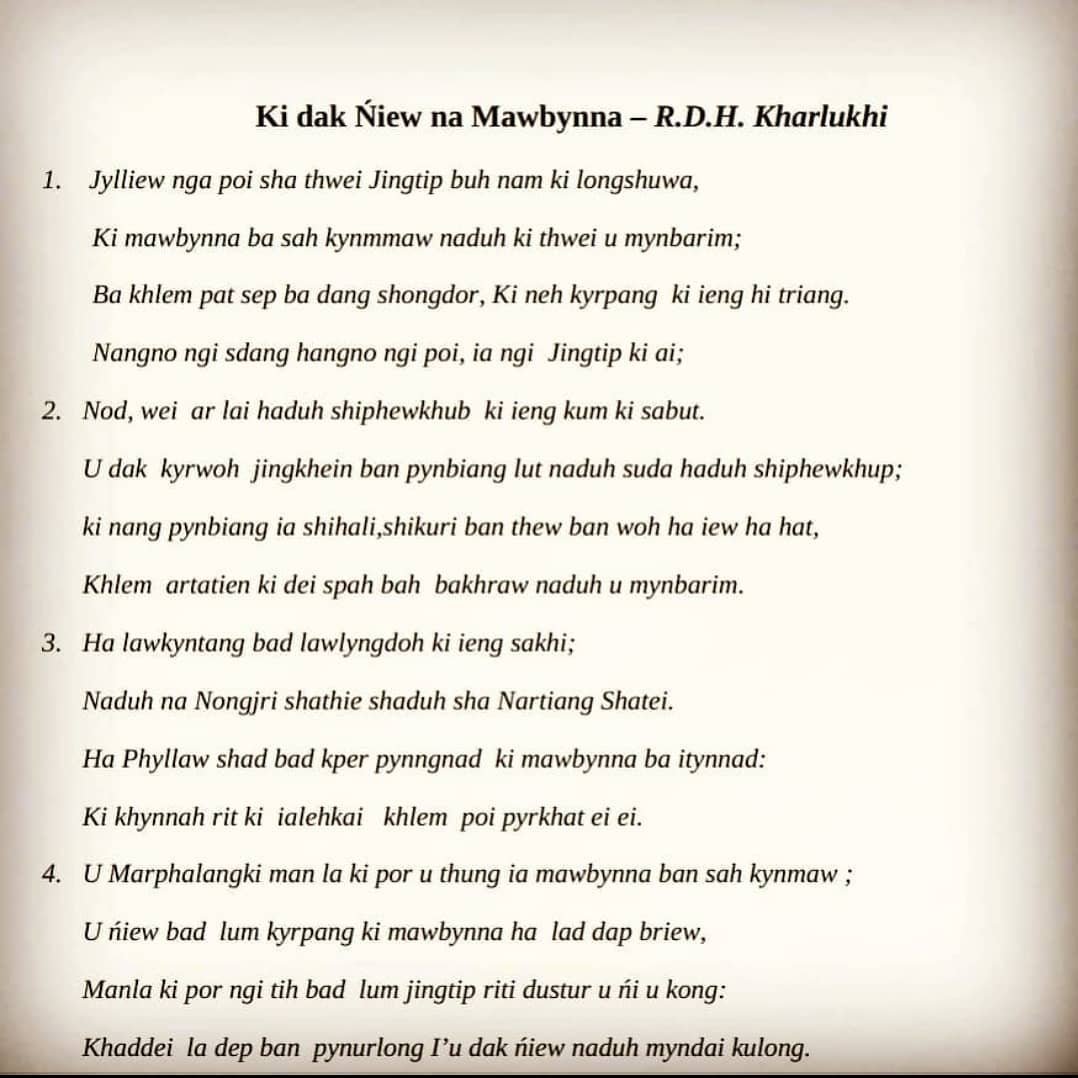
    1. Jylliew nga poi sha thwei Jingtip buh nam ki longshuwa,

    Ki mawbynna ba sah kynmmaw naduh ki thwei u mynbarim;

    Ba khlem pat sep ba dang shongdor, Ki neh kyrpang ki ieng hi triang.

    Nangno ngi sdang hangno ngi poi, ia ngi Jingtip ki ai;

    2. Nod, wei ar lai haduh shiphewkhub ki ieng kum ki sabut.

    U dak kyrwoh jingkhein ban pynbiang lut naduh suda haduh shiphewkhup;

    ki nang pynbiang ia shihali, shikuri ban thew ban woh ha iew ha hat,

    Khlem artatien ki dei spah bah bakhraw naduh u mynbarim.

    3. Ha lawkyntang bad lawlyngdoh ki ieng sakhi;

    Naduh na Nongjri shathie shaduh sha Nartiang Shatei.

    Ha Phyllaw shad bad kper pynngnad ki mawbynna ba itynnad:

    Ki khynnah rit ki ialehkai khlem poi pyrkhat ei ei.

    4. U Marphalangki man la ki por u thung a mawbynna ban sah kynmaw;

    U ñiew bad lum kyrpang ki mawbynna ha lad dap briew,

    Manla ki por ngi tih bad lum jingtip riti dustur u ñi u kong:

    Khaddei la dep ban pynurlong I'u dak ñiew naduh myndai kulong.

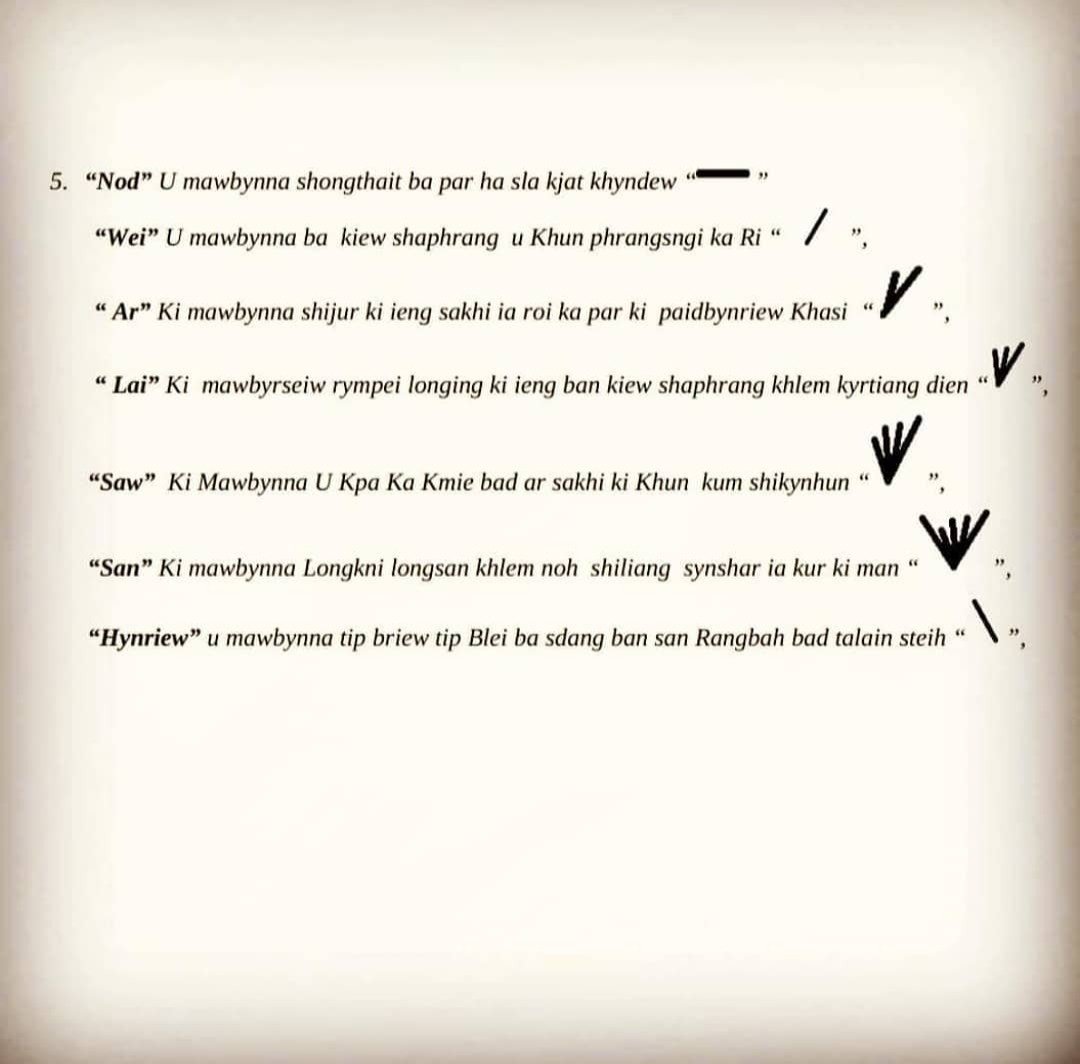
    5. "Nod" U mawbynna shongthait ba par ha sla kjat khyndew

    "Wei" U mawbynna ba kiew shaphrang u Khun phrangsngi ka Ri

    " Ar" Ki mawbynna shijur ki ieng sakhi i-a roi ka par ki paidbynriew Khasi

    " Lai" Ki mawbyrseiw rympei longing ki ieng ban kiew shaphrang khlem kyrtiang dien

    "Saw" Ki Mawbynna U Kpa Ka Kmie bad ar sakhi ki Khun kum shikynhun

    "San" Ki Mawbynna Longkni longsan khlem noh shiliang synshar ia kur ki man

    "Hynriew" u mawbynna tip briew tip Blei ba sdang ban san Rangbah bad talain stieh

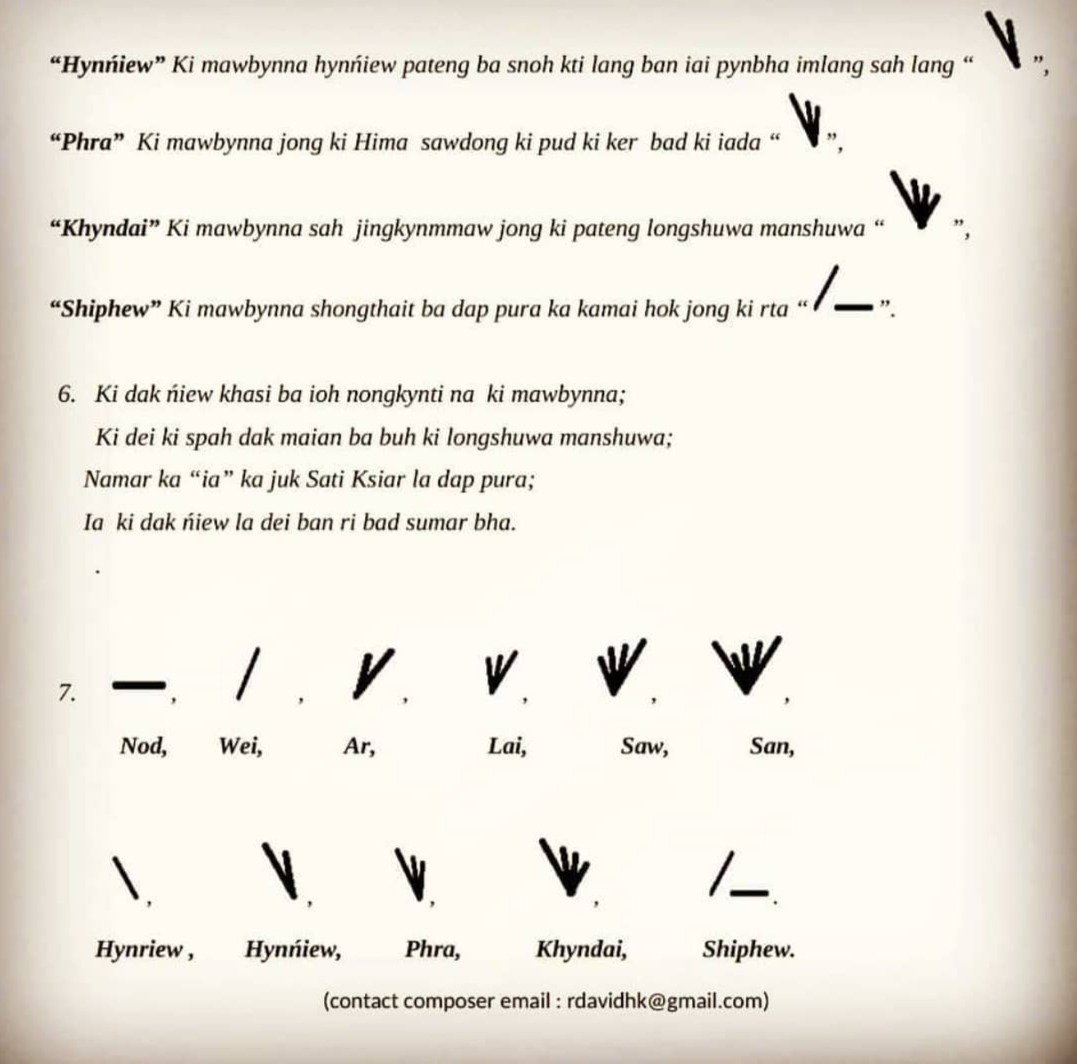
    "Hynñiew" Ki mawbynna hynñiew pateng ba snoh kti lang ban iai pynbha imlang sah lang

    "Phra" Ki mawbynna jong ki Hima sawdong ki pud ki ker bad ki iada

    "Khyndai" Ki mawbynna sah jingkynmmaw jong ki pateng longshuwa manshuwa

    "Shiphew" Ki mawbynna shongthait ba dap pura ka kamai hok jong ki rta

    6. Ki dak ñiew khasi ba ioh nongkynti na ki mawbynna;

    Ki dei ki spah dak maian ba buh ki longshuwa manshuwa;

    Namar ka "ia" ka juk Sati Ksiar la dap pura;

    Ia ki dak ñiew la dei ban ri bad sumar bha.

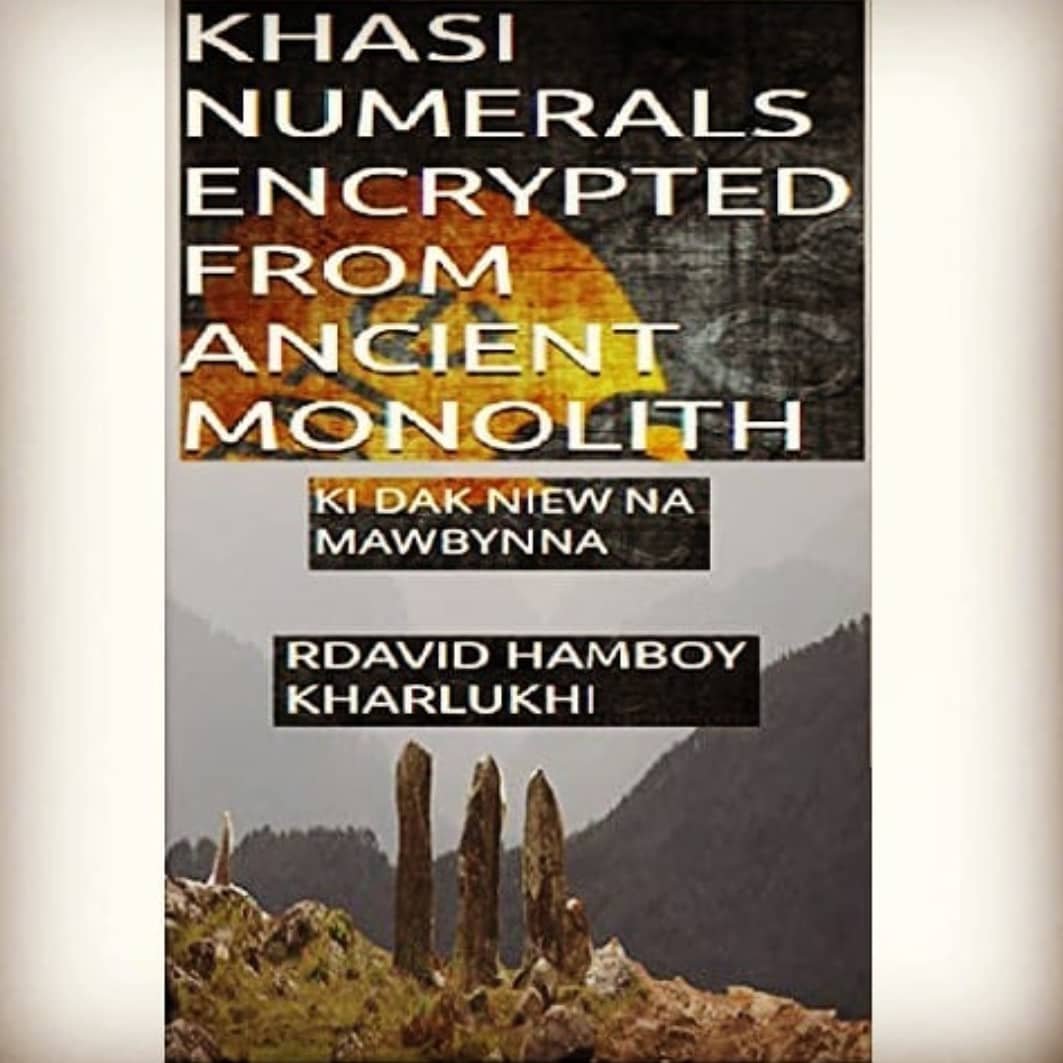
    "Ki Dak Ñiew Na Mawbynna” by R. D. H. Kharlukhi @davidkharlukhi is an original Khasi poem.

    This beautiful and well-crafted poem brings together Khasi numbers and the different kinds of "mawbynna" (monoliths) that Khasi and Pnar culture possess, to create an ingenious symbolism. It is a significant effort to create an awareness of the deep, inextricable bond between man and nature. Most importantly, the poem highlights the lessons encrypted in nature which many of us do not perceive.

    Thank you to Mr. R. D. H. Kharlukhi @davidkharlukhi for giving the permission to post his poem! This poem is available on amazon.in.

  • “Mawbynna” by Esther Syiem

    You appear

    to have withstood

    time’s duress

    as you watch

    over a world

    of plastic clutter.

    Your sense of time

    is forbidding,

    but you keep intact

    our self respect.

    You have shut yourself

    in an aura

    that is yours alone.

    Your changelessness

    in flux

    is the only surety

    against the inquisition

    that assails you.

    You are the keeper

    of our past.

    Vertical guardians

    overseeing horizontal quiet –

    wayside offerings,

    arrested in a moment,

    away from passing history.

    Your commodity

    is your soul

    held still, in the

    imbroglio of time,

    as you provide

    shelter and rest

    for wayfarers,

    drawn by your etchings

    in their souls.

    This poem appears in Oral Scriptings: Poems by Esther Syiem (2005) published by Writers Workshop, Kolkata. Dr. Esther Syiem is a Professor in the Department of English, North-Eastern Hill University, Shillong.