Tag: pnartribe

  • Siah Siam

    "Siah siam" toh i ktien Phar i wa jooh ong i manda sñiaw hun jrut palat i mynsien haduh wym yïe de u batai. Em i por wa sñiaw siah siam næ wa bang ware i bam haduh wa sñiaw kamwa da psiah chadooh u klong nood. Teiñ teiñ ong i siah siam næ hawa ïoh u klam pynhiar jhar ïa kiwon kiwon kiwa da pynjaw mynsien ïa i chawa palat.

    "Siah Siam" ka dei ka rukom ong ki Pnar haba ka don ka jingsngewhun jrut ka mynsiem haduh bym lah shuh ban batai. Ki ong ïa kine ki kyntien lada ka bang palat ka bam kumba ka lah rung shaduh u dohnud. Teng teng pat ki ju ong siah siam haba ïoh ban kren ban ai nia ïa kino kino kiba la pynjew pynsngewsih ïa ka mynsiem shaba palat.

    "Siah Siam" is a Phar phrase that is generally used to describe the feeling of absolute satisfaction and contentment. It is also used to express the joy that one would feel after having a delectable meal or snack that reaches the satiety point of maximum measure. Many also use it to express the great satisfaction obtained when they get to express their feelings to someone who has angered and saddened them.

    "Siah Siam" is a Pnar phrase which means to feel great satisfaction! Thank you @anumanda for sending this and Shiny for the English translation 😃😃

    Khasi translation by @speakyourroots
  • Beiñ kiwa beiñ

    "Beiñ kiwa beiñ.

    Roh kiwa roh.

    Ïei їong kiwi,

    ym їe i u pyntoh."

    "Let those who criticise, criticise.

    Let those who praise, praise.

    Other people's opinions,

    cannot be catered to."

    Here's what may be described as a Pnar quote or chant sent by @laloorisa 😎😎😎 (translated by @speakyourroots)

    The lines urge us not to let people's words, either praise or criticism, affect us. Lest we fall prey to pride or feelings of inadequacy. We should just march to the beat of our own drum and do what makes us happy! 🌬️🌬️🌻🌼🌾

    Ham pynsñiaw ai ki! Wat pynsngew eh ia ki!

  • U Wah Sdai/ Sdie

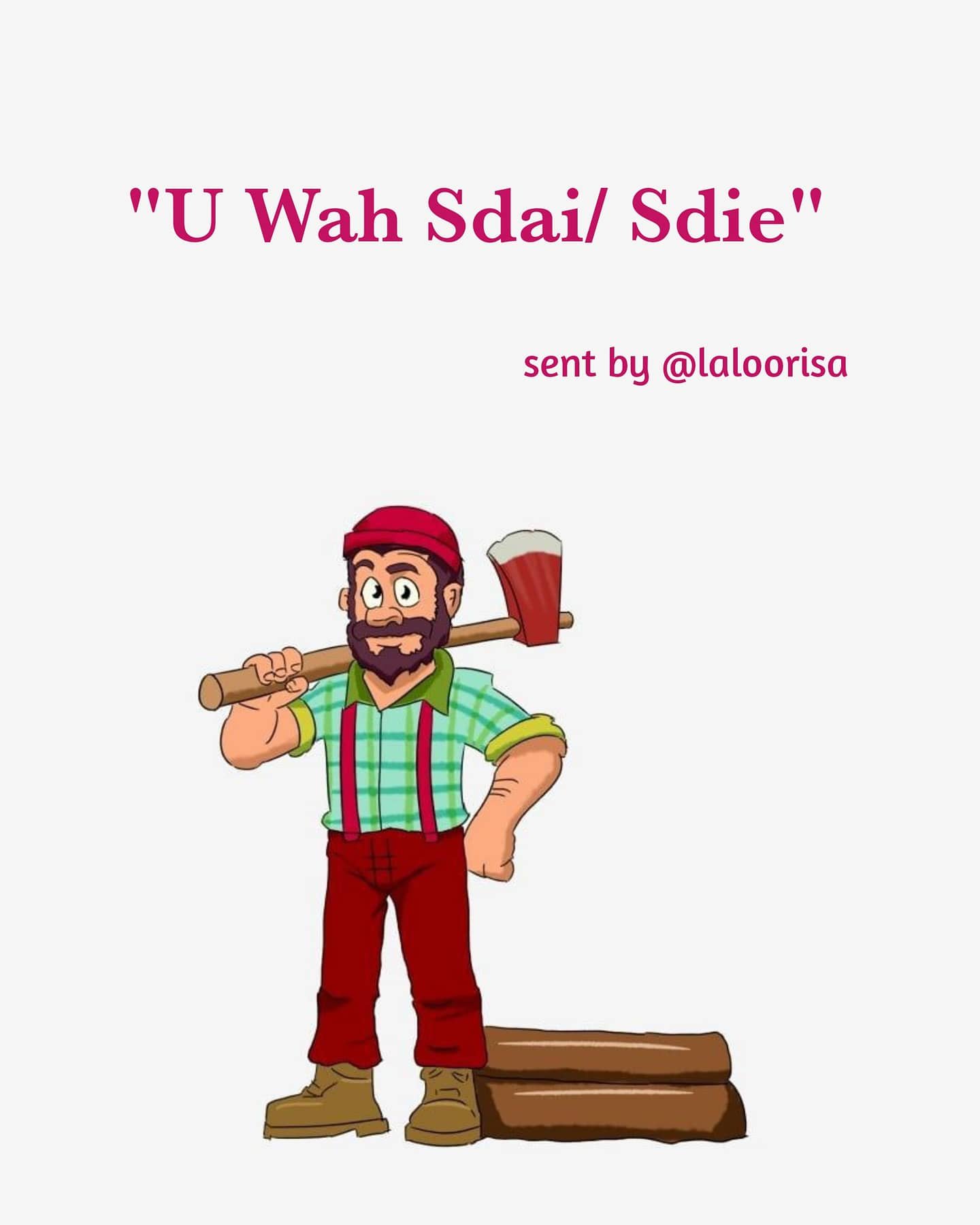
    "U Wah sdai/sdie" u dei nongrep na shnong Jowai, uba trei shitom hynrei uba klet biej. Ha kawei ka sngi, u thlieh dieng baroh shisngi. Hadien katto katne por, u shong thait bad u bam kwai. Ynda u la mut ban bteng biang їa la ka kam, um lap shuh ïa u sdie jong u. U la pyrshang ban kynmaw hangno ba u la buh їa u ruh, um lah kynmaw satia. Khatduh ki paralok kiba їa trei lang bad u haba ki їohi ba u їai wad kumne kim banse ban kylli, "Phi wad aїu kumto naduh mynne khlem lap shuh?" "Nga wad їa u sdie" u la jubab. "Phi khlem їohi hangno nga la buh?" Kita ki paralok ki la їa rkhie їa u bapli namar u sdie jong u, une lydui ha ka tyrpeng jong u hi. Namar ba kane ka wan jia barabor ha une u paralok, na kata ka daw u sa ioh їa ka kyrteng sin kum "U Wah sdai/ sdie". Na kane, їa kum kine ki briew kiba klet biej khamtam haba ki klet jaka buh їa kano kano ka tiar, ka sa kylla long ka rukom ban khot їa ki da ka kyrteng sin "U Wah sdai/sdie".

    There once was a farmer from Jowai who was hard working but quite forgetful. One day he had been cutting wood for a long time. So he sat down to rest and have some kwai. When he stood up to continue with his work, he couldn't find his axe. He couldn't remember where he kept it, even though he tried hard to remember where he left it. Finally, when his friends saw him searching, they asked him what he was looking for. He replied that he was searching for his axe. "Did you see where I left it?" he asked. His friends burst out laughing because the poor man did not realise that his axe was hanging from his shoulder. So because of his forgetfulness being a regular occurrence, his friends gave him the name of "Wah sdai/ sdie". For this reason those who easily forget where they keep things, are given the name "Wah sdai/ sdie".

    "Wah" means to hang something.

    "Sdai" (Pnar) and "Sdie" (Khasi) means axe.

    The Pnar nickname "U Wah Sdai/ Sdie" 🪓🪓 Another story about a nickname sent by @laloorisa 😄😄

    Khublei Chibun wa phah phi kini ki pyrtuit siñ! You've become our regular supplier of them! 😂😂

  • U Swet Titiaw

    Have you ever met a person who says no but they actually mean yes? If you offer them something they refuse and act as if they don't want it but in reality they do. In the Pnar language, they have a name for people like this. They call them "Swet Titiaw".

    The story goes that "U Swet Titiaw" is a farmer from Jowai. He has a peculiar quality and that is when people ask him something he acts as if he doesn't want to answer or when they offer him something he refuses but in his heart he wants to answer and he wants to accept the offer.

    In Pnar they say: "Leh u kam u wym bien tangwa napoh napoh kwah u naduh mynsien. Neite i daw haduh katni leh ia ki bru wa man kam o juh sin ki ki dei pyrtuid u 'Swet Titiaw'."

    "U ong tae ym bien ym bien

    tangwa ki kti ner ner nei dien.”

    "He will say no, no but his hands

    are already open from behind.”

    The Pnar nickname "U Swet Titiaw" sent by @laloorisa 😅😅😂😂 Thank you for your entry!

    "U Swet Titiaw" is quite the satiric nickname for someone who says no but actually means yes…🤡🤡

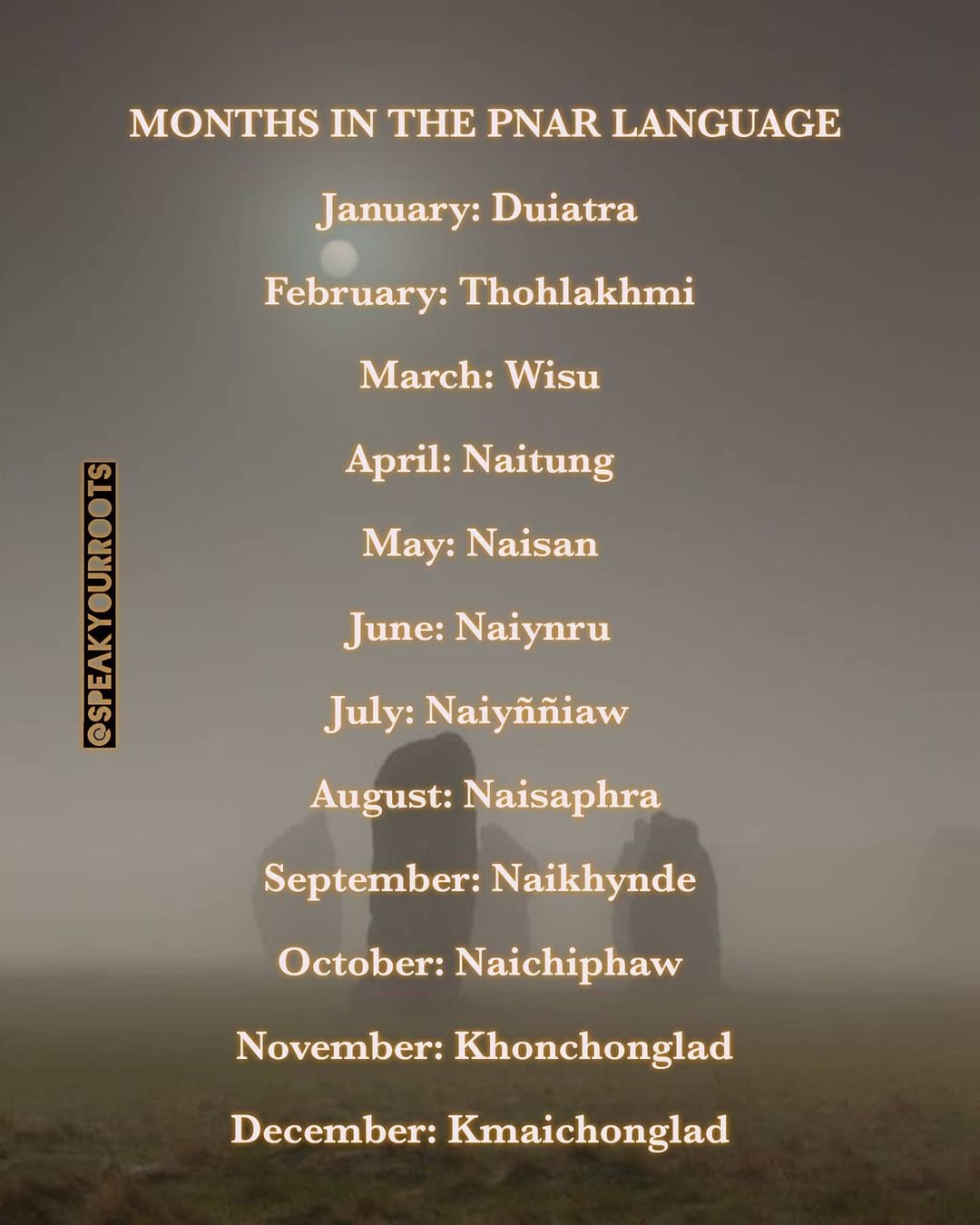
  • Months of the year in the Pnar language

    January: Duiatra

    February: Thohlakhmi

    March: Wisu

    April: Naitung

    May: Naisan

    June: Naiynru

    July: Naiyññiaw

    August: Naisaphra

    September: Naikhynde

    October: Naichiphaw

    November: Khonchonglad

    December: Kmaichonglad

    These are the months of the year in the Pnar language. 📆📆 The Pnar/ Jaiñtia language is mostly spoken in the Jaiñtia Hills District of Meghalaya.