Tag: shillong

  • Ki Puriskam ne ki Khanatang?

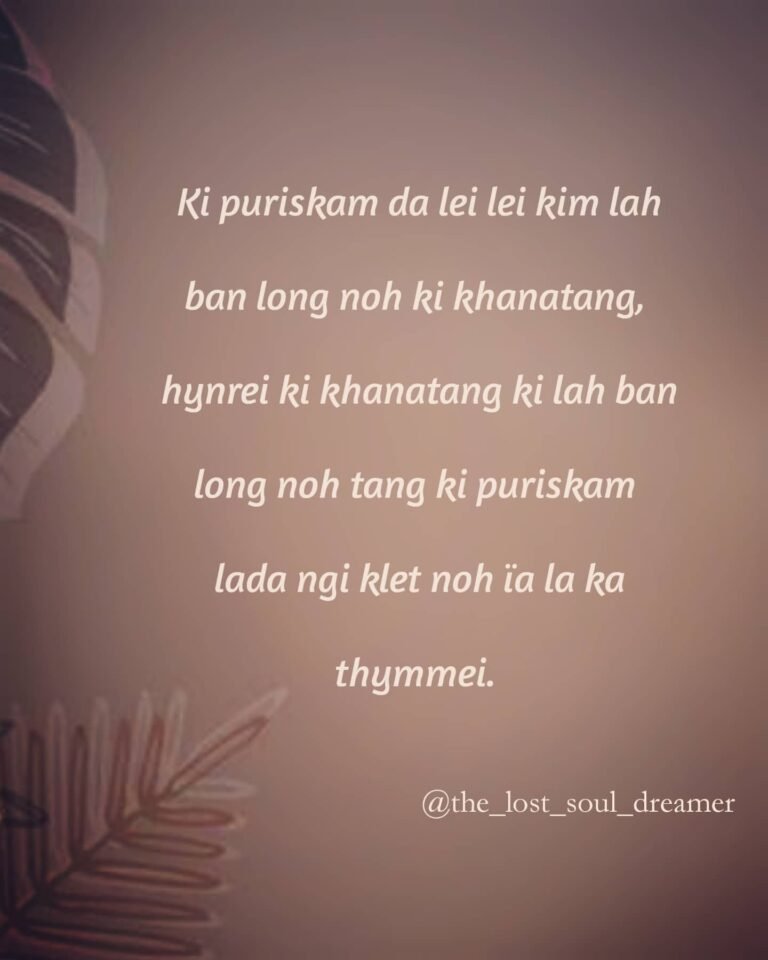
    Ki Puriskam da lei lei kim lah ban long noh ki

    Khanatang, hynrei ki Khanatang Ki lah ban long noh

    tang ki Puriskam lada ngi klet noh ia la ka thymmei.

    A fable will never be able to take on

    the character of a myth,

    but a myth may be reduced to only a fable

    if we forget the source of our being.

    Ki Puriskam ne ki Khanatang? A fable or a folktale? Maybe both have something to teach us πŸ’šπŸ’šπŸ’šπŸ’š Thank you @__khatduh__03 ! Thank you @the_lost_soul_dreamer for these words of wisdom! ✨✨✨

    A myth, a folktale, a legend or a fable all have important lessons to teach us.

  • Janor

    The Khasi word "Janor" means the mind and its reasoning power. In colloquial conversation it may refer to the brain. The actual word for brain is "Jabieng".

    Covid times conversation: a guy was frustrated trying to explain vaccination and said: "Uuuuu, ka janor ba kot tang shi peris! Ba lah ong ruh sa katno ban ong biang, ban iada ialade, ka iada ia kiwei ruh!”

    Rough translation: "Uuuuu, a brain that has the depth of a saucer! I've said that it will protect you and it will protect others too!”

    "Janor" sent by @longnamkharpuri πŸ˜‚πŸ˜‚πŸ˜‚ The "Janor" is inside the "Maloi" and so is the "Jabieng". Thank you for bringing this up in the "Maloi" comments! πŸ’€πŸ’€πŸ’€

    Loving the analogy between the mind and the saucer! 🀣🀣

  • Thomas Jones Day

    Reverend Thomas Jones kum kpa ki dak thoh khasi,

    Dak a, b, k, d ba ngi nang dei ba

    phi hikai Γ―a ngi.

    -Daohi Manar

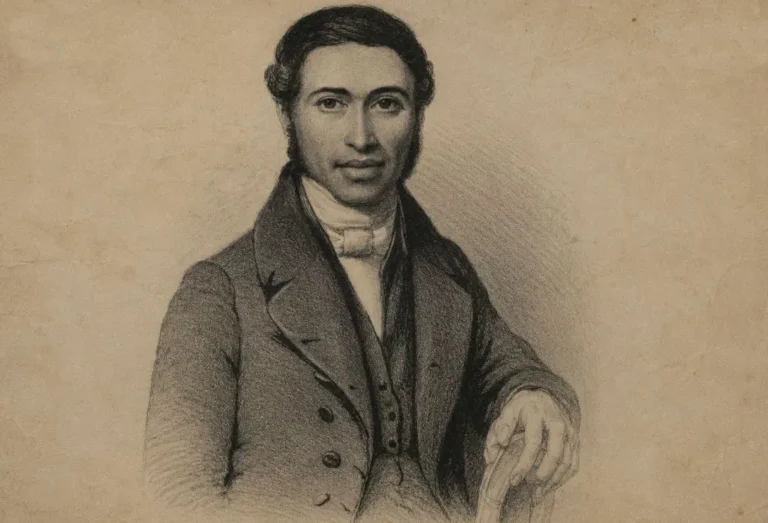
    The 22nd of June, the day that marks the arrival of Thomas Jones in Sohra is commemorated as Thomas Jones Day in Meghalaya. Thank you @xdtnoahjupejackllthmanar for sending this!

    Thomas Jones was a Welsh Christian missionary, who worked among the Khasi people of Meghalaya and Assam in India and of Bangladesh. He recorded the Khasi language in Roman script and the inscription on his gravestone calls him "The founding father of the Khasi Alphabet and literature".

  • Phok

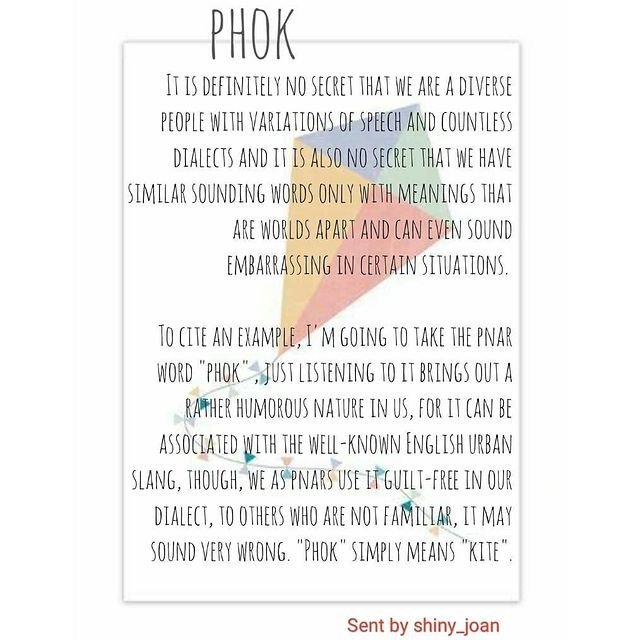
    It is definitely no secret that we are a diverse people with variations of speech and countless dialects and it is also no secret that we have similar sounding words only with meanings that are worlds apart and can even sound embarrassing in certain situations. To cite an example, I’m going to take the pnar word "Phok". Just listening to it brings out a rather humorous nature in us, for it can be associated with the well-known English urban slang, though, we as Pnars use it guilt-free in our dialect, to others who are not familiar, it may sound very wrong. '"Phok" simply means "kite”.

    The word "Phok" in the Pnar language means "Kite". Thank you @shiny_joan for sending this! πŸ˜„πŸ˜„

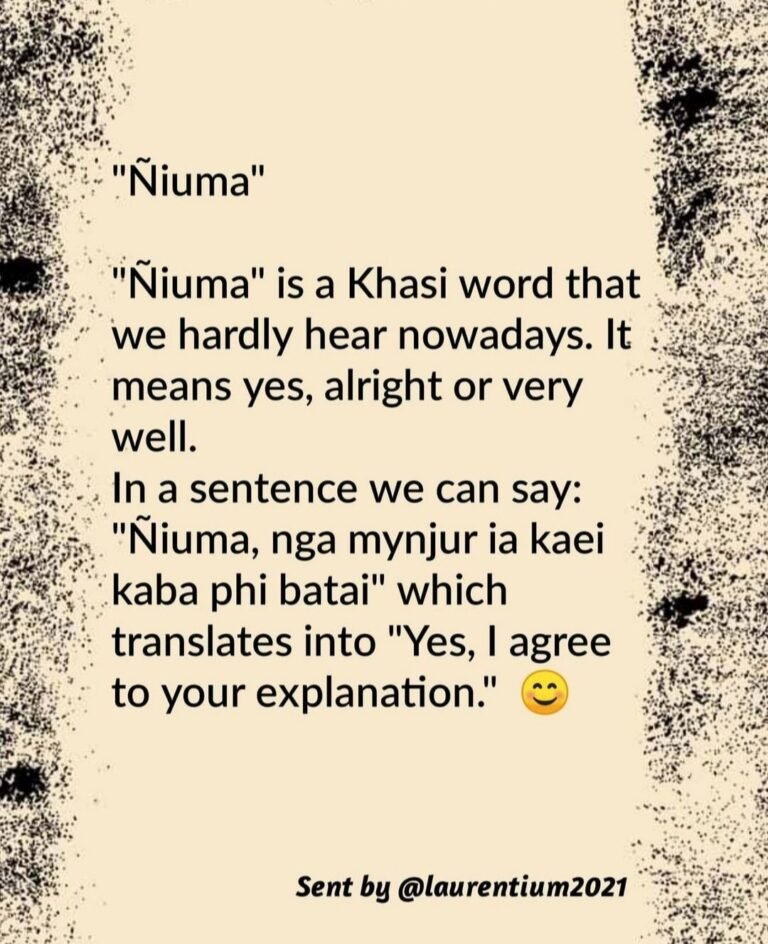
  • Γ‘iuma

    Ka ktien "Γ‘iuma" ka dei ka ktien kaba pyndonkam haba mut ban ong ym lei lei ne koit. Kum haba ong β€œΓ‘iuma, nga mynjur Γ―a kaei kaba phi batai".

    Γ‘iuma is a Khasi word that we hardly hear nowadays. It means yes, alright or very well. In a sentence we can say: β€œΓ‘iuma, nga mynjur Γ―a kaei kaba phi batai" which translates into "Yes, I agree to your explanation."

    Γ‘iuma" sent by @laurentium2021 πŸ˜„ Thank you!

  • Ieid Thep Mynsiem

    The Khasi phrase "ieid thep mynsiem” translates to a love which literally keeps someone safe in one's very own soul. It is a phrase used to describe familial love, love amongst the closest of friends, or even lovers.

    "Ieid thep mynsiem" sent by @laia.naomi πŸ’œπŸ’œπŸ’œ Khublei Shibun!

  • Laiphew

    The connotation or the Khasi term "Laiphew" which literally means thirty, as a limit ordinal is without a successor and it is a marker of a process of constitution of a community. It is not just a representation of the number 30, but it is supposed to be an idiolect of 'all types'. For example, "Laiphew Syiem'' means many chiefs; "Laiphew Mrad" means many animals. Philosophically speaking the Khasi concept of all and many as a generic concept is simultaneously concrete and general. Concept of numbers to instantiate all or many are place markers within the structure of all or many, which is simultaneously predicative and impredicative. Such predicative and impredicative application of linguistic concepts in describing the constitution of Khasi society is a narrative construction of Khasi selfhood.

    "Laiphew" sent by @manbha.syiemlieh Thank you! An extremely interesting entry! πŸ˜„πŸ˜„

    Idiolect: the language or speech pattern of one individual at a particular period of life.

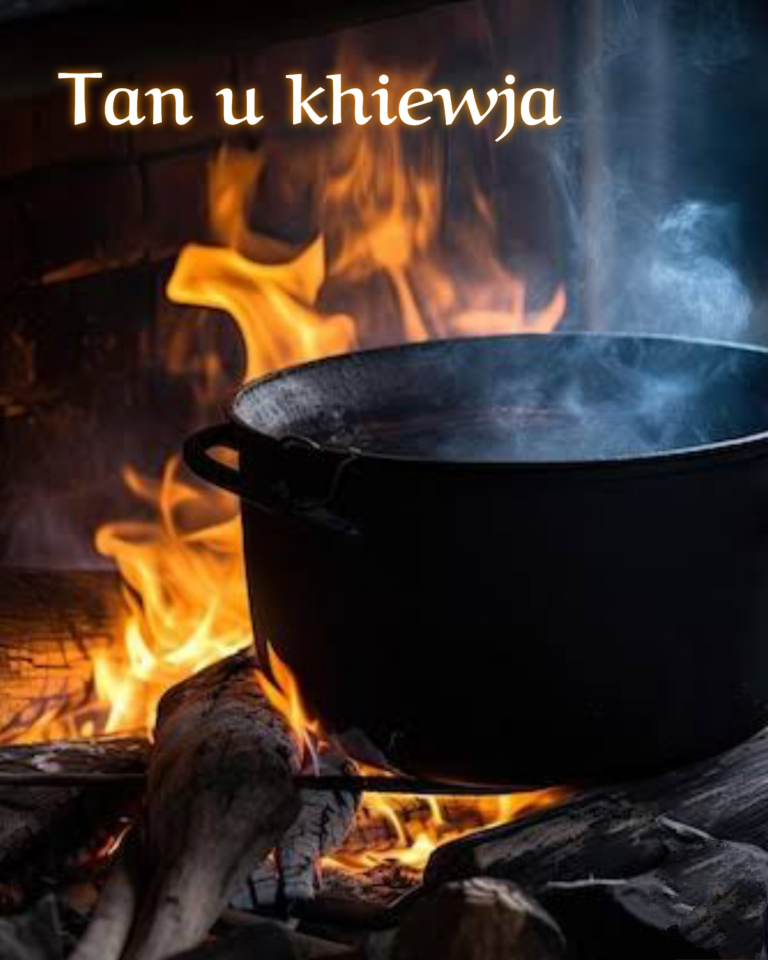
  • Tan u khiewja

    There is a real phenomenon known as the "return trip effect". It may be said to be caused by the human weakness of perceiving time. Sometimes our sense of how much time has passed is influenced by our surroundings, our mood or the amount of attention we spend on something.

    We have all made that one trip to an unfamiliar place right? It feels like forever when we are going to it, but on the return trip back home, the journey feels shorter.

    The Khasis describe this phenomenon as "Tan u khiewja". Literally, it is translated as the pull of the rice pot. The rice pot is synonymous with the warmth of the hearth, the centre of home and family. Thus, this metaphorical idiom expresses the pull of home or of the hearth, where one finds love and joy after returning from somewhere.

    Khublei Shibun @a_pocketful_of_plums for sending this!πŸ”₯πŸ”₯

    Acknowledgement for this post is also given to Dr. Ellerine Diengdoh, Assistant Professor, Department of English, St. Mary's College, Shillong.