
Tag: speakvourroots

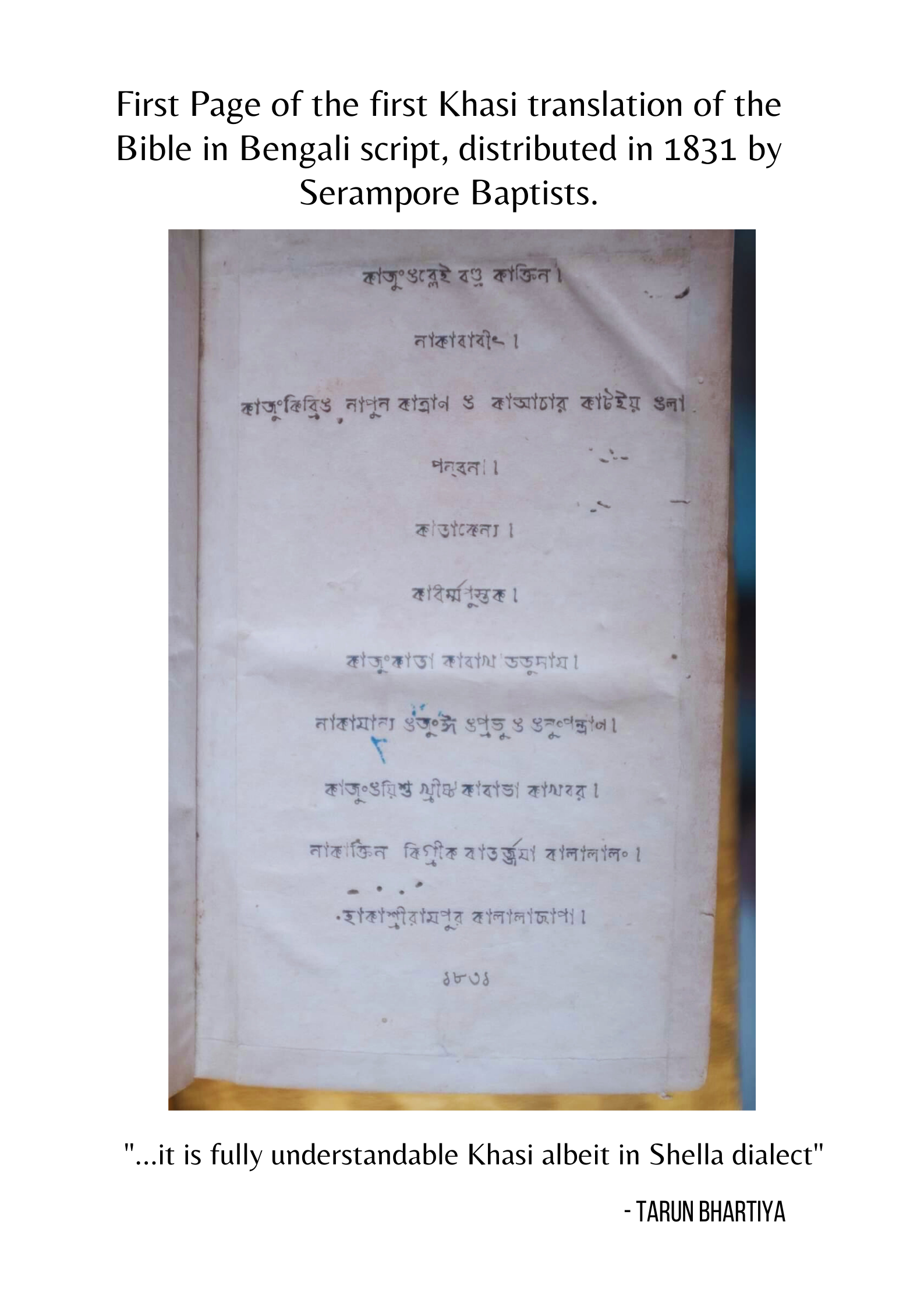
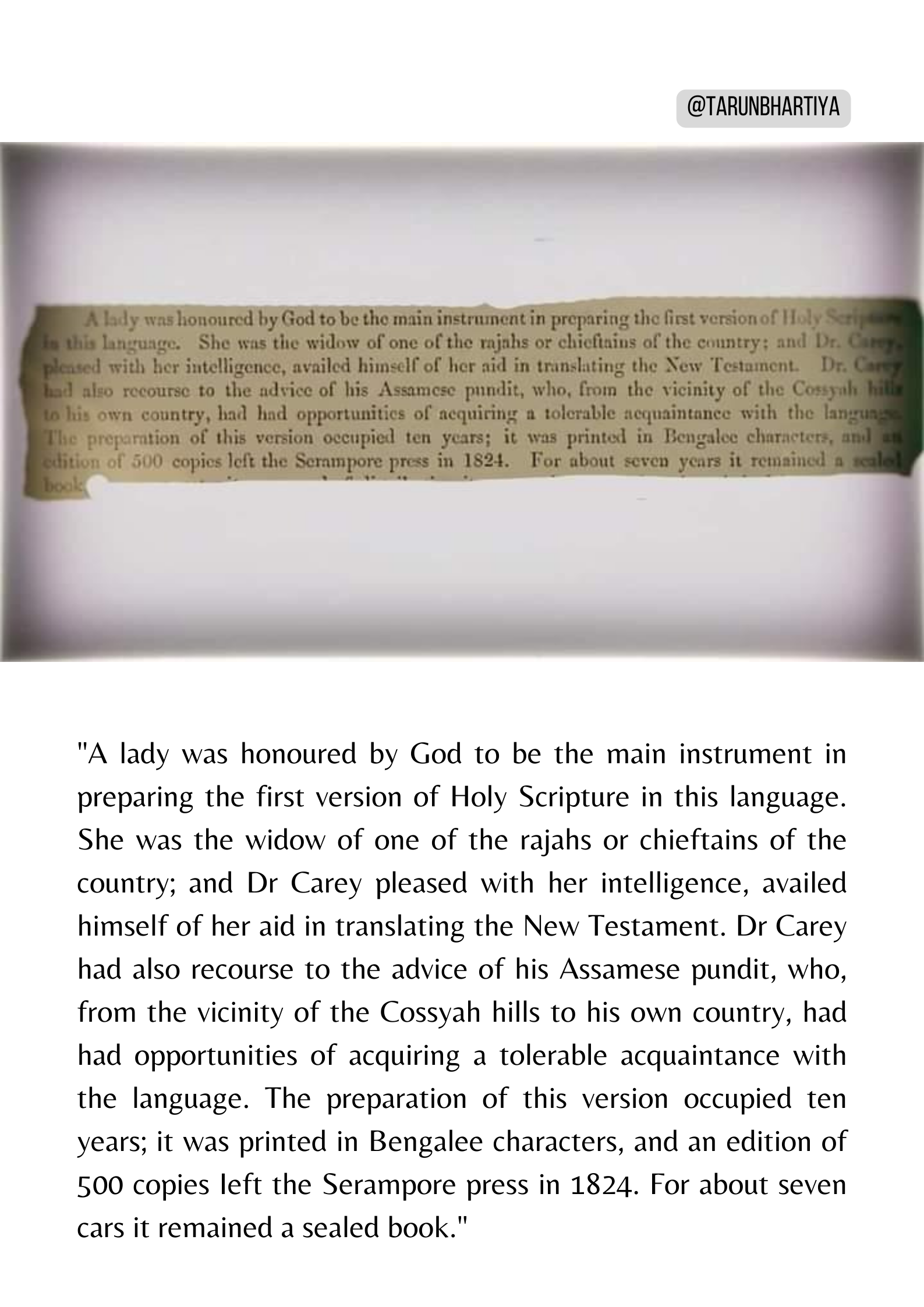
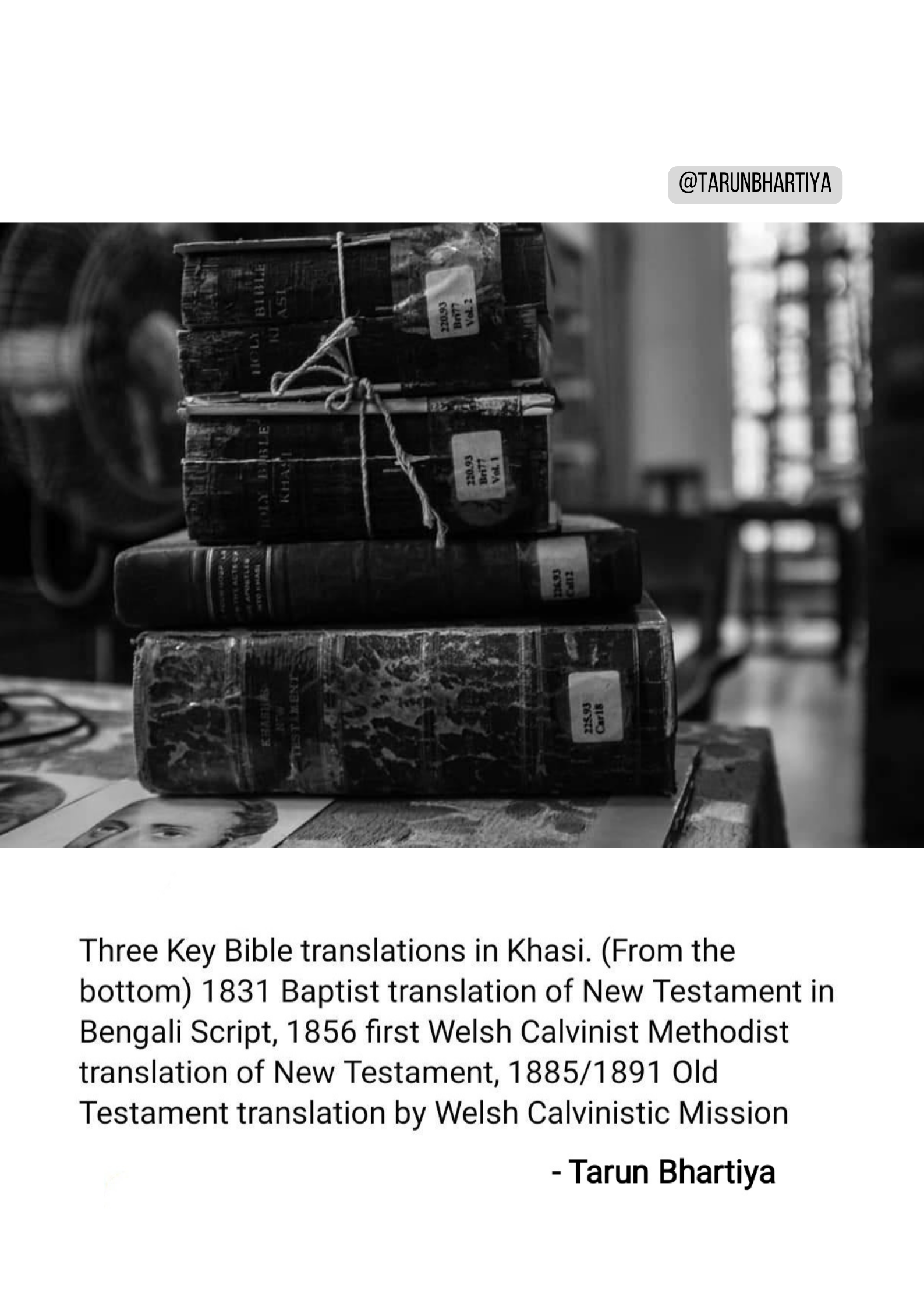
  • First Page of the first Khasi translation of the Bible in Bengali script, distributed in 1831 by Serampore Baptists.

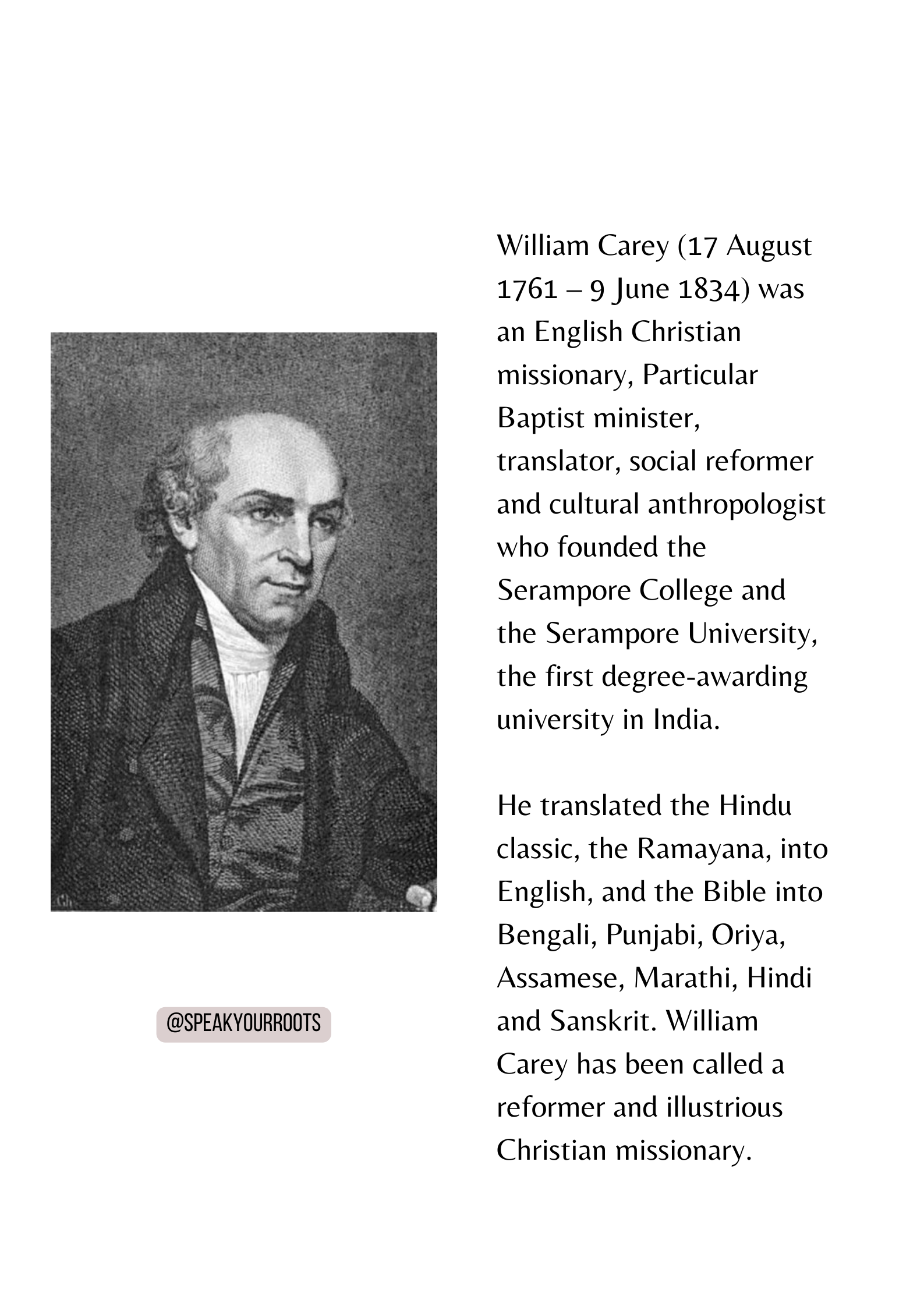
    Thank you @tarunbhartiya for an informative and interesting contribution on the first Khasi translation of the Bible in the Bengali script! 🙏🙏 And what's more, there was a Khasi woman who helped William Carey in translating the Bible! 😃😃

    In @tarunbhartiya 's own words:

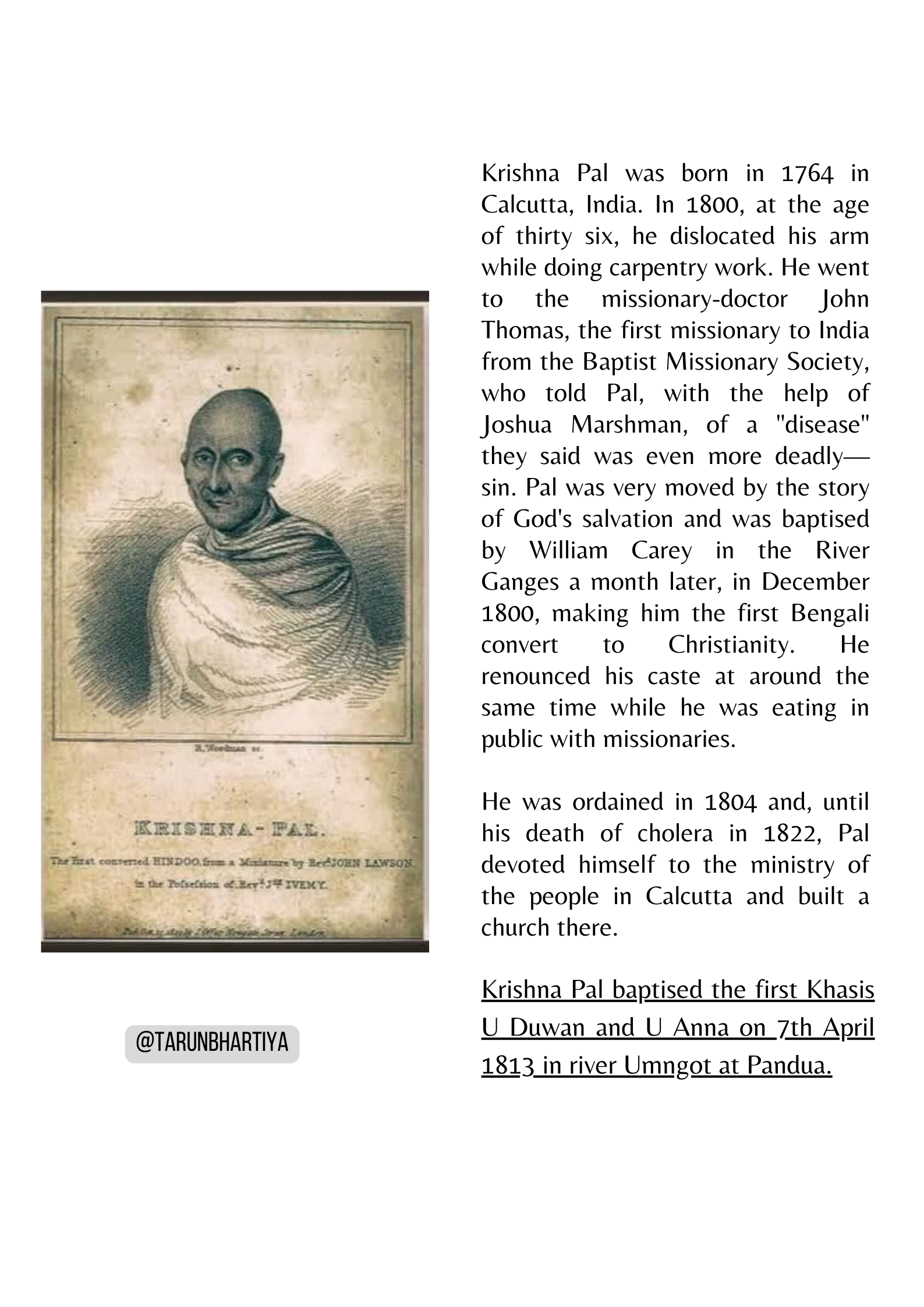
    "I so desperately want to know the name of the Khasi Lady – wife of the rajah/ chieftain who impressed Dr. William Carey with her intelligence and helped him translate the New Testament into Khasi. What was she doing in Calcutta/ Serampore in 1810s? How did she learn English? Was she literate (most probably yes)? Did William Carey talk to her about the Christian faith? Did she meet Krishna Pal who was planning to come to Pandua?"

    These and so many other questions arise when we read about the journey of the translations of the Bible into Khasi.

    You can read more in the following links:

    🟡https://theshillongtimes.com/2023/06/22/colonialism-and-mission/

    🟡https://www.placefortruth.org/blog/krishna-pal-the-first-baptist-convert-in-india

    🟡https://cherrapunjee.com/welsh-influence-in-cherrapunjee/

    🟡https://www.loc.gov/item/02014074/

    🟡https://books.google.co.in/books/about/Welsh_Missionaries_and_British_Imperiali.html?id=3JV6zQEACAAJ&redir_esc=y

    🟡https://books.google.co.in/books/about/The_History_of_the_Welsh_Calvinistic_Met.html?id=i6hGAQAAMAAJ&redir_esc=y

    🟡https://raiot.in/how-to-not-to-remember-thomas-jones/

    🟡https://raiot.in/was-thomas-jones-the-father-of-khasi-alphabet/

    🟡 Photographs are from the photographic project called "Unaddressed Picture Postcards from Khasi Jaintia Hills" by Tarun Bhartiya.

    https://indianexpress.com/article/lifestyle/art-and-culture/a-new-series-of-picture-postcards-explores-conversion-among-the-khasi-people-7575007/lite/

    #khasibible #khasitranslation #khasialphabet #williamcarey #thomasjones #khasichristian #khasihistory #speakyourroots #speakyourrootschallenge #talklocal
  • Nga ïaid hapdeng ka kper syntiew da i Mebatei L. Khongsti

    Nga ïaid hapdeng ka kper syntiew,

    Ïa phi nga khmih lynti,

    La jingiwbih ba bun ki wan,

    Nga kynmaw tang ïaphi.

    Man ka sienjam haba ïaid,

    Suki suki nga ïuh,

    Dohnud dik dik tang i ïaphi

    Thar shiah ruh ym sngew shuh.

    Haba ïaphi nga ïa kynduh,

    Ïanga phi kdup phi snoh,

    Jingieit janai ruh phi ïai ai,

    Phim klet khamtam ban doh.

    Jadu aïu sha ba phi don,

    Ba pynrah ïa mynsiem,

    Phi pynlong ba ngan shad mastieh

    Ka ong ka men tieng thliem.

    Ka poitri shoh jingieit ba phah da i @mebatei_l_khongsti 😄🤭🥳🥳 Dei ban phah kum kine keiñ ban kham ïa shongshit! 😁

    Khublei Shibun @mebatei_l_khongsti ba phi la phah ïa kine ki symboh pyrkhat jong phi 📝

  • How do we translate the word “ethical” into Khasi?

    The word "ethics" (noun) deals with what is good or bad; a set of moral principles or a system of moral values. So "ethical" (adjective) would mean something that is based on a knowledge and understanding of moral values and principles.

    Thus, translated into Khasi the word "ethical" would perhaps be "Kaei kaei kaba ïeng ha ka nongrim jong ka jingtip bad jingshemphang jong ka akor longbriew manbriew bad ka hok ka sot."

    Here is an attempt to translate the word "ethical" into Khasi. This may be superficial so we welcome others to contribute your thoughts on this. 😊😊

    Khublei Shibun @sohphohkhasi for asking the question and Khublei Shibun @meiithei @bawanshwa_syiemlieh @wallam__ @carey_lynz @a_pocketful_of_plums @occyliana_ for your responses! 🙏🙏

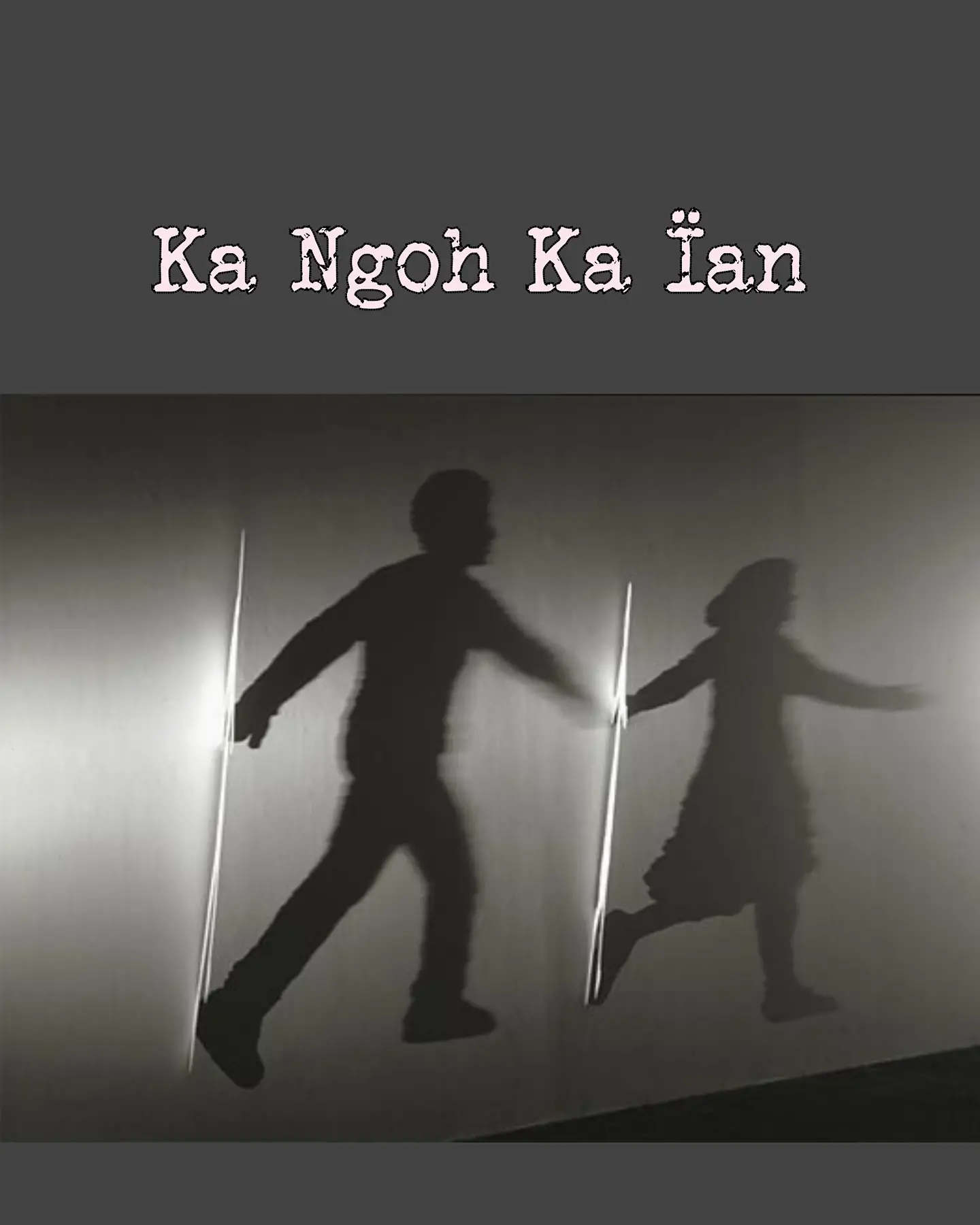
  • Ka Ngoh ka Ïan

    "Ka ngoh ka ïan" ka mut ka syrngiew briew; ka dur ka dar ha bym ïohi shuh ïa ka ïaid ka ïeng la slem ne haba khlem wan rung wan jngoh shuh ha ïing la bun snem.

    "Ka ngoh ka ïan" means the shadow of a person; when a person has not been seen out and about for a long time or someone who has not visited for many years.

    Subsequently, the word "ïan" implies a reduction, a lessening, a degradation or a weakening of power. So "ka ngoh ka ïan" refers to the reduction or the lessening of how much a person is seen or heard from, to the point that he is reduced to a mere shadow.

    In terms of the word "syrngiew", when we haven't seen someone in a long time we say: "Ani…ka syrngiew ruh khlem ïohi shuh lah slem" which means "Oh my…even his shadow has not been seen in so long".

    "Ka Ngoh ka Ïan" describes someone who has not been seen or heard from in a long time. These words eloquently capture a kind of loss or absence.

    Tag that friend who has become ka ngoh ka ïan 😄😂

    🟡 Source: Ka Dienshonhi: The Khasi Encyclopaedic Dictionary by Rev. Dr. Ïarington Kharkongor.

    🟡 English translation and explication by @speakyourroots

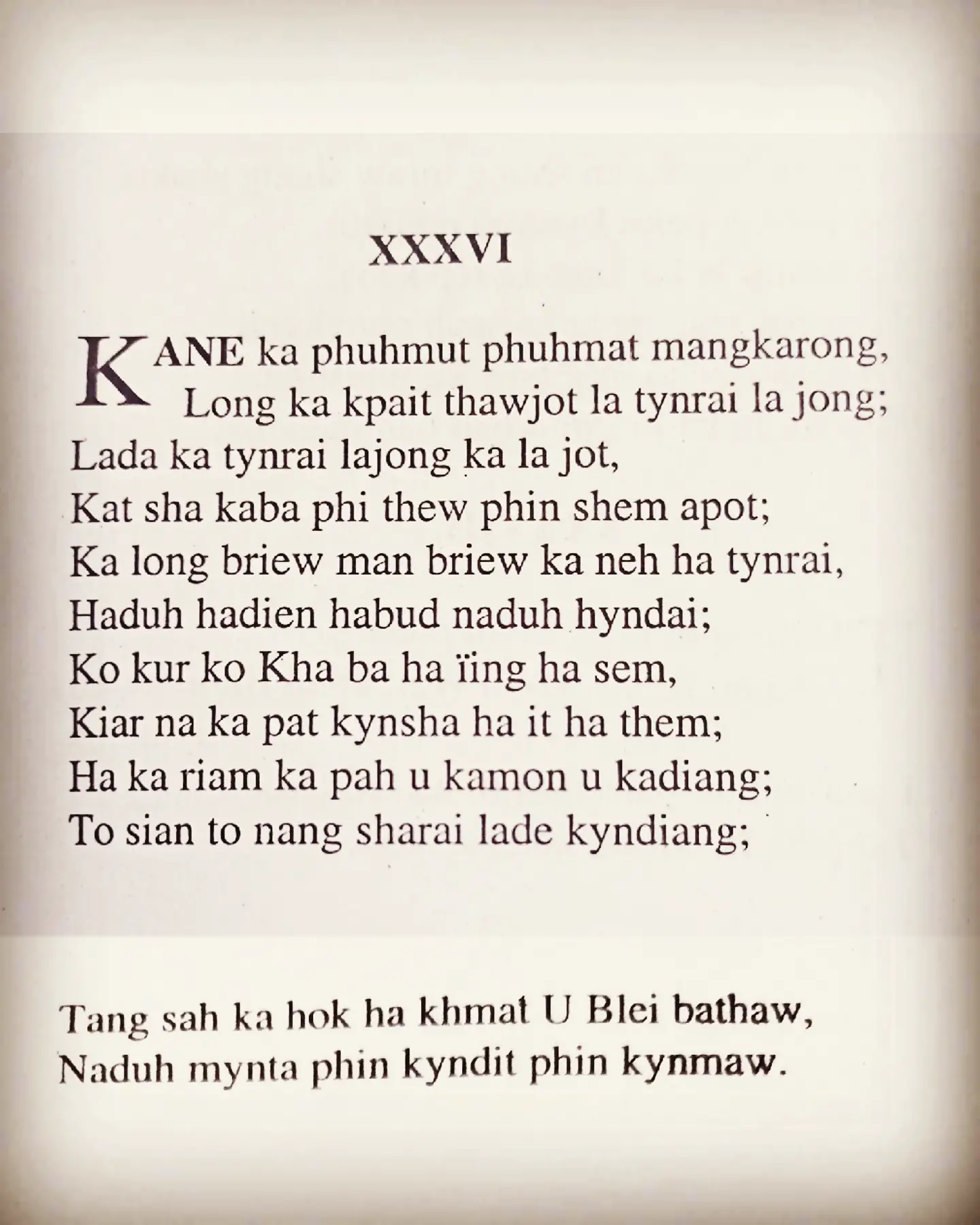
  • Ka Jingsneng Tymmen Shaphang ka Akor Khasi ha ka Rukom Rwai Phawar”, Part I (1902) & Part Il (1903)

    Kane ka phuhmut phuhmat mangkarong,

    Long ka kpait thawjot la tynrai la jong;

    Lada ka tynrai lajong ka la jot,

    Kat sha kaba phi thew phin shem apot;

    Ka long briew man briew ka neh ha tynrai

    Haduh hadien habud naduh hyndai;

    Ko kur ko Kha ba ha ïing ha sem,

    Kiar na ka pat kynsha ha it ha them;

    Ha ka riam ka pah u kamon u kadiang;

    To sian to nang sharai lade kyndiang;

    Tang sah ka hok ha khmat U Blei bathaw,

    Naduh mynta phin kyndit phin kynmaw.

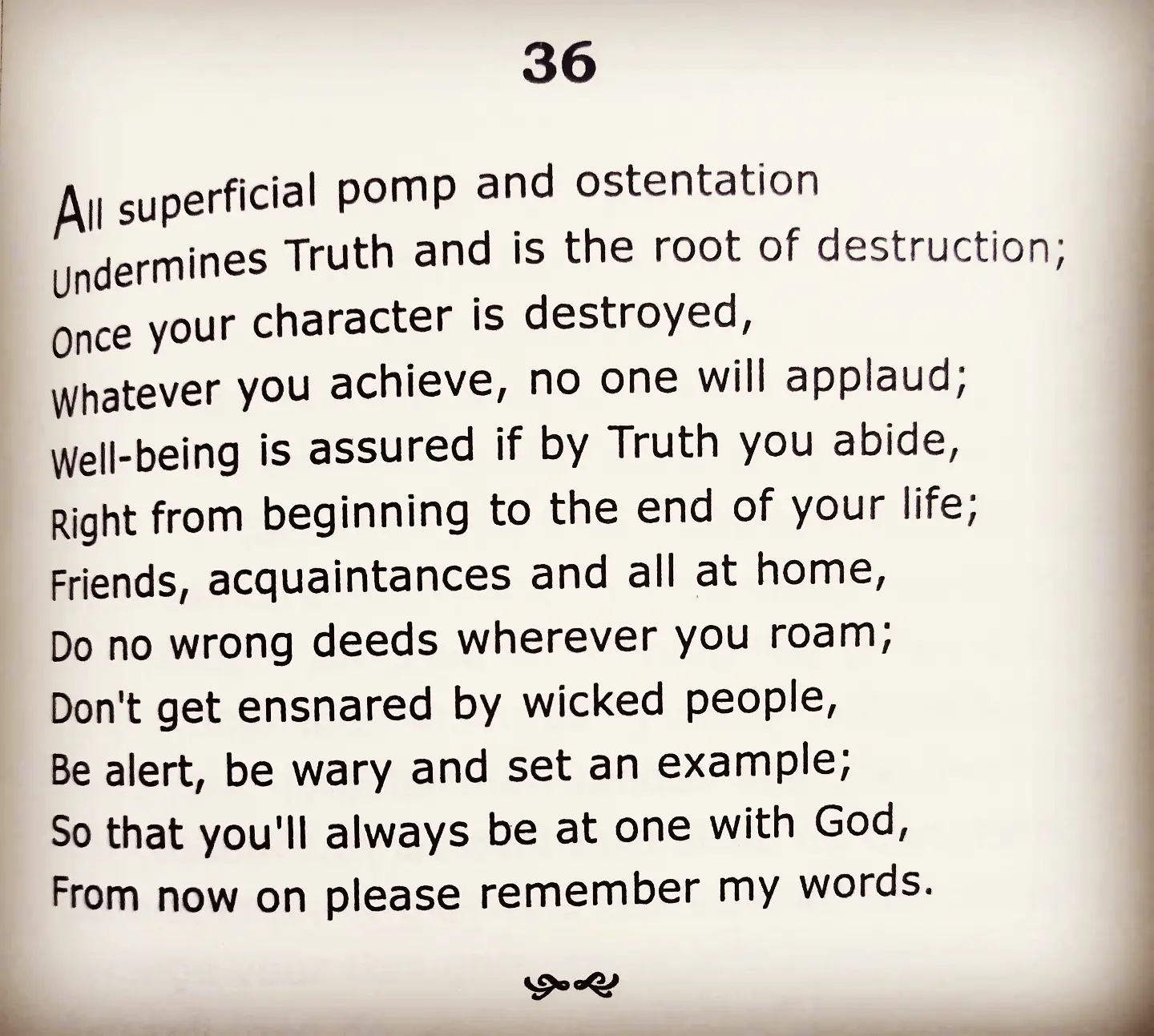
    All superficial pomp and ostentation

    undermines Truth and is the root of destruction;

    Once your character is destroyed,

    Whatever you achieve, no one will applaud;

    Well-being is assured if by Truth you abide,

    Right from beginning to the end of your life;

    Friends, acquaintances and all at home,

    Do no wrong deeds wherever you roam;

    Don't get ensnared by wicked people,

    Be alert, be wary and set an example;

    So that you'll always be at one with God,

    From now on please remember my words.

    Ka Jingsneng Tymmen Shaphang ka Akor Khasi ha ka Rukom Rwai Phawar, Part I (1902) & Part Il (1903) by Radhon Sing Berry Kharwanlang is a unique collection of valuable lessons and teaching on how to live a good and moral life. 📝✒️

    The teachings are given in the form of "phawar” where two lines follow the same rhyme scheme, that is, aa bb.

    Both Part | and Part II have been translated into English by Bijoya Sawian @sawianbijoya in her book The Teachings of Elders: Ka Jingsneng Tymmen, Parts I and II (1997).

    Slide 1: Ka Jingsneng Tymmen Shaphang ka Akor Khasi ha ka Rukom Rwai Phawar, Part I (1902)

    Slide 2: The Teachings of Elders: Ka Jingsneng Tymmen, Parts | and II (1997).

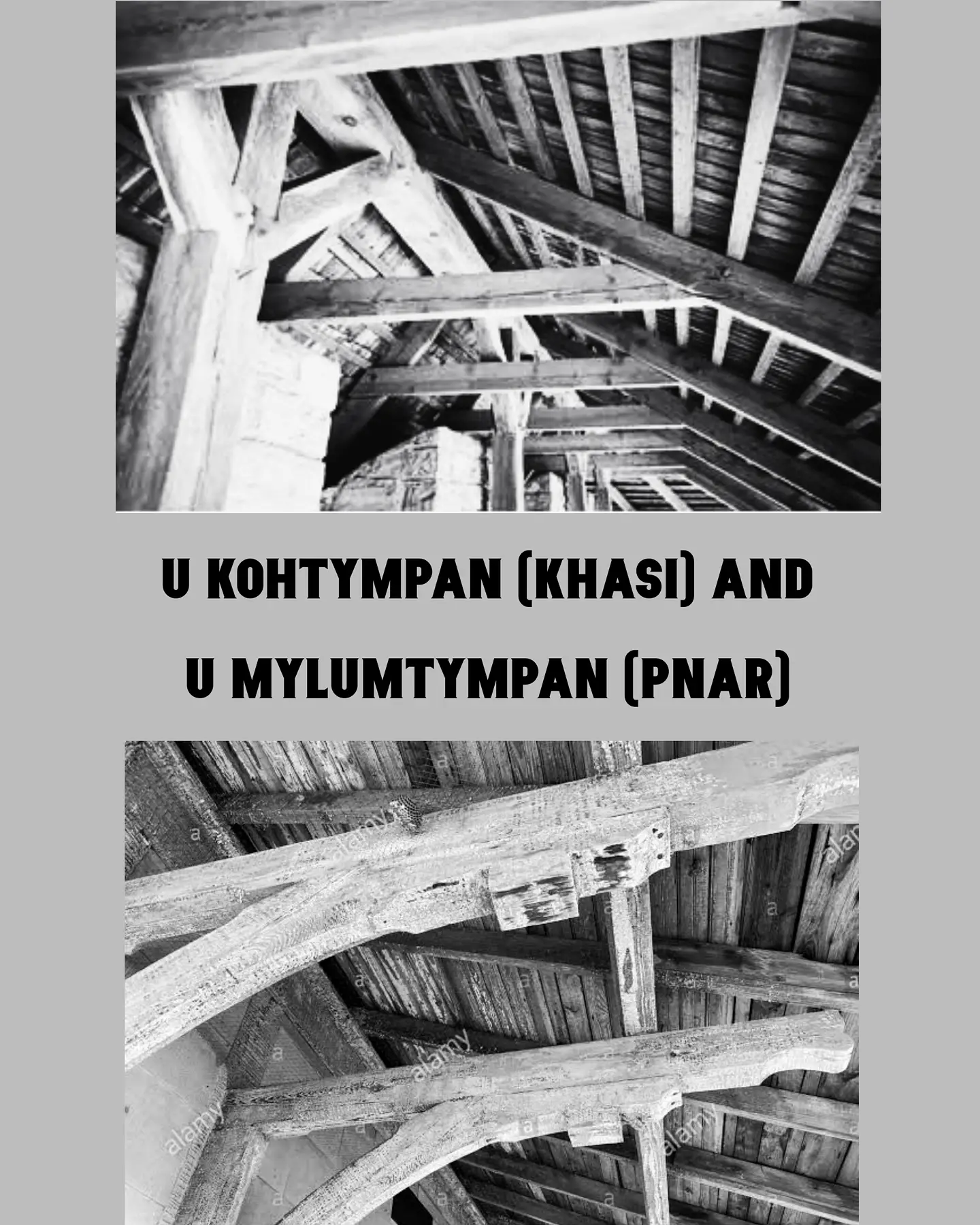
  • “U Kohtympan” (Khasi) and “U Mylumtympan” (Pnar)

    The meaning of "U Kohtympan" (Khasi) and "U Mylumtympan" (Pnar) is not easy to find as the word is not listed in the popular dictionaries that are available. What has been understood is that the word in the literal sense refers to someone who hides in the "tympan ïing" or the rafters of a house. This meaning is usually used from time to time to scare disobedient children by saying that Kohtympan or Mylumtympan will carry them away to a distant place if they continue to be disobedient and stubborn.

    Deriving from this, the Khasi phrase "pyntieng kohtympan" means making someone afraid or fearful based on something unfounded with no factual truth, thereby creating panic. Further, "kohtympan" (which has been used in songs too) in particular, is elaborated to mean something hidden, unseen and unknown, thus leading to the fear of the unknown. The word perhaps is also used in the sense of challenges, difficulties or problems faced by someone.

    "U Kohtympan" (Khasi) and "U Mylumtympan" (Pnar) is taken to mean something hidden and unseen leading to unfounded fear. Thank you @indariwarjri @laloorisa @a_pocketful_of_plums and @vancouvershullai for helping us understand the meaning of these words! 😃🤓