Tag: speakyourroots

  • U Sangot

    "U Sangot" u dei u nong pyrta shnong na kliar na them haba don kano kano ka jingjia ha shong ban pyntip paitbah. Kum haba don ka jingïapbriew ha shong, ki jingïalang dorbar bad kumta ter ter. U sangot u pyrta beit da ka tyngam lajong khlem kano kano ka jingïarap ki kor ki bor.

    Ha shong jong ngi mynshwa nga kynmaw u sdang kumne ko shong, (u sngap shwa tok) ko thaw, to ïa sngap…”

    "U Sangot" is a Khasi version of a town crier. "U Sangot" is a person employed to make public announcements in the streets or the marketplace of a town. We hear "U Sangot" when there are deaths or "dorbar" meetings and so on. He states his announcements in a loud booming voice without the help of microphones and speakers.

    "U Sangot will always start with "Ko shnong, (pause) ko thaw, to sngap…”

    "U Sangot" is a Khasi town crier who has a characteristic way of declaring his announcements. We might not hear "U Sangot" so much in Shillong but the practice is definitely still prevalent in smaller towns and villages. 🔊🔊🔊🔊 Thank you @same_omega for sending this entry!

    If you know more about "U Sangot" please share in the comments section!

  • The different kinds of rain in Khasi

    " 'lapbah" is heavy rain

    " 'lap bñiup bñiup" is a drizzle

    " 'lapkyrtiah" is a rain storm with strong wind

    " 'lap praw" is a sudden shower

    " 'lap mynsaw" is sudden rain in the midst of a bright and sunny day. This rain causes the rapid flooding of rivers.

    " 'lapbehmrad" is rain that comes at the beginning of Spring. It is said that this rain helps hunters to identify the tracks of animals.

    " 'lapshiliang" is rain that falls only in certain areas.

    " 'lap Sohra" is the heaviest rain in the world that falls in Sohra (Cherrapunji).

    Belonging to the place with the heaviest rainfall in the world, the Khasis have different names for different kinds of rain 🌦️🌧️⛈️🌨️🌩️

  • Ñiangkongwieng khlem snier

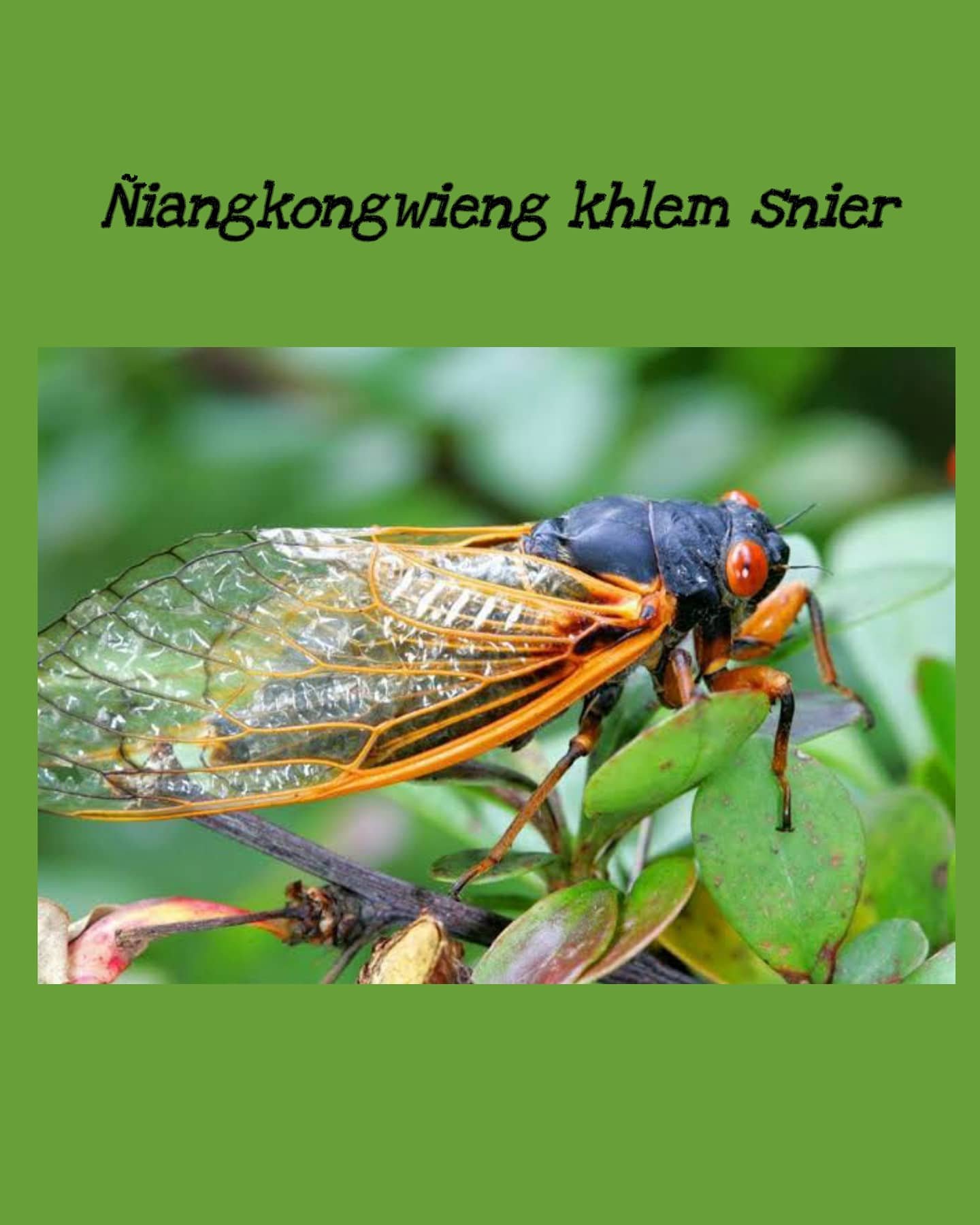
    Ka jingong Khasi "ñiangkongwieng khlem snier" ka ring jingmut na ka jingpah kaba mih na ka kpoh jong ka ñiangkongwieng kaba dap da ka lyer, hynrei kaba lah ban pah baroh shi sngi. Kane ka jingong ka thew ïa u briew uba heh tang ka tyngam bad ka khlem kam; u briew uba put ronsing ïalade tangba ubym larkam eiei ruh.

    In Khasi "Ñiangkongwieng" is the cicada and "Snier" are the intestines. The phrase above describes the cicada's body, in particular the abdomen because they breathe through "Spiracles" which are small holes in the abdomen. These spiracles are responsible for the sound of the cicada.

    This Khasi phrase focuses on the loud sound emanating from the porous abdomen of the cicada, to describe a person who is a big talker but never accomplishes anything. He likes to blow his own trumpet but in reality, he is useless and has no substance.

    "Ñiangkongwieng khlem snier" is a Khasi phrase which describes a big talker, whose arrogance is as loud as his voice when he talks of himself. 🗣️🗣️

  • U Niang Raja

    In the past, in the Jaiñtia Hills there was the Kingdom of Sutnga. Besides the Kingdom of Sutnga, there was also the smaller kingdom known as the Kingdom of Madur Maskut which was ruled over by the Malngiang kings. The Malngiang king was Mailong Raja. Mailong Raja had a brother called Niang Raja who was a most trusted aid and adviser to the king. Niang Raja was also strong and brave, being extremely skilled in the art of warfare.

    The King of Sutnga was afraid of Niang Raja's prowess and wanted to kill him. A group of his soldiers had captured Niang Raja, cut his body into pieces and threw it into a gorge but the next day, Niang Raja was seen walking as if nothing had happened to him. Nobody knew the secret to Niang Raja coming back to life and this disturbed the King of Sutnga. Finally, after much deliberation, his ministers and him devised a plan to lure Niang Raja by using a beautiful woman. Thus, a search was undertaken to find the most beautiful maiden in the land. When they found her, the King of Sutnga promised that if she was able to discover the secret of Niang Raja then she would be gifted with money and her family would also be gifted with land. The maiden was dressed in the finest silk and gold, so that she would catch the attention of Niang Raja.

    Sure enough, one day when Niang Raja was in the market, he saw the beautiful maiden and was besotted by her. He sent his men to ask her who she was and where she came from but she would not tell them. Finally, Niang Raja talked to her himself, praising her beauty and as they talked he fell in love with her. Consequently, Niang Raja and the woman were married and she fulfilled all her duties as wife to a prince. Niang Raja loved his wife deeply and trusted her completely. She started to notice that he never took a bath at home and would go on long walks that stretched for hours.

    One day, she told him of her fear that he walked around with no attendants or soldiers with him. She then started to weep inconsolably. Seeing his wife in distress, Niang Raja told her that he went on his walks so that he could bathe in the river and when he did he would take out his intestines to wash them and dry them on the rocks. He told her that his power and the secret of his life lay in his intestines. So, with the knowledge of Niang Raja's secret, the men of the King of Sutnga waited for Niang Raja to arrive at the river. This would be Niang Raja's last bath. While the prince was in the river, they chopped his intestines, killing Ning Raja in the water instantly. Thus, with Niang Raja out of the way the King of Sutnga conquered Madur Maskut and the kingdom came to be known as Sutnga-Madur Maskut.

    The story of U Niang Raja tells of ambition, intrigue, the supernatural and betrayal. The events of the story capture the imagination and we are engrossed by the secrets of the past.

    Reference: 'Khasi Myths, Legends and Folktales' by Bijoya Sawian (2010).
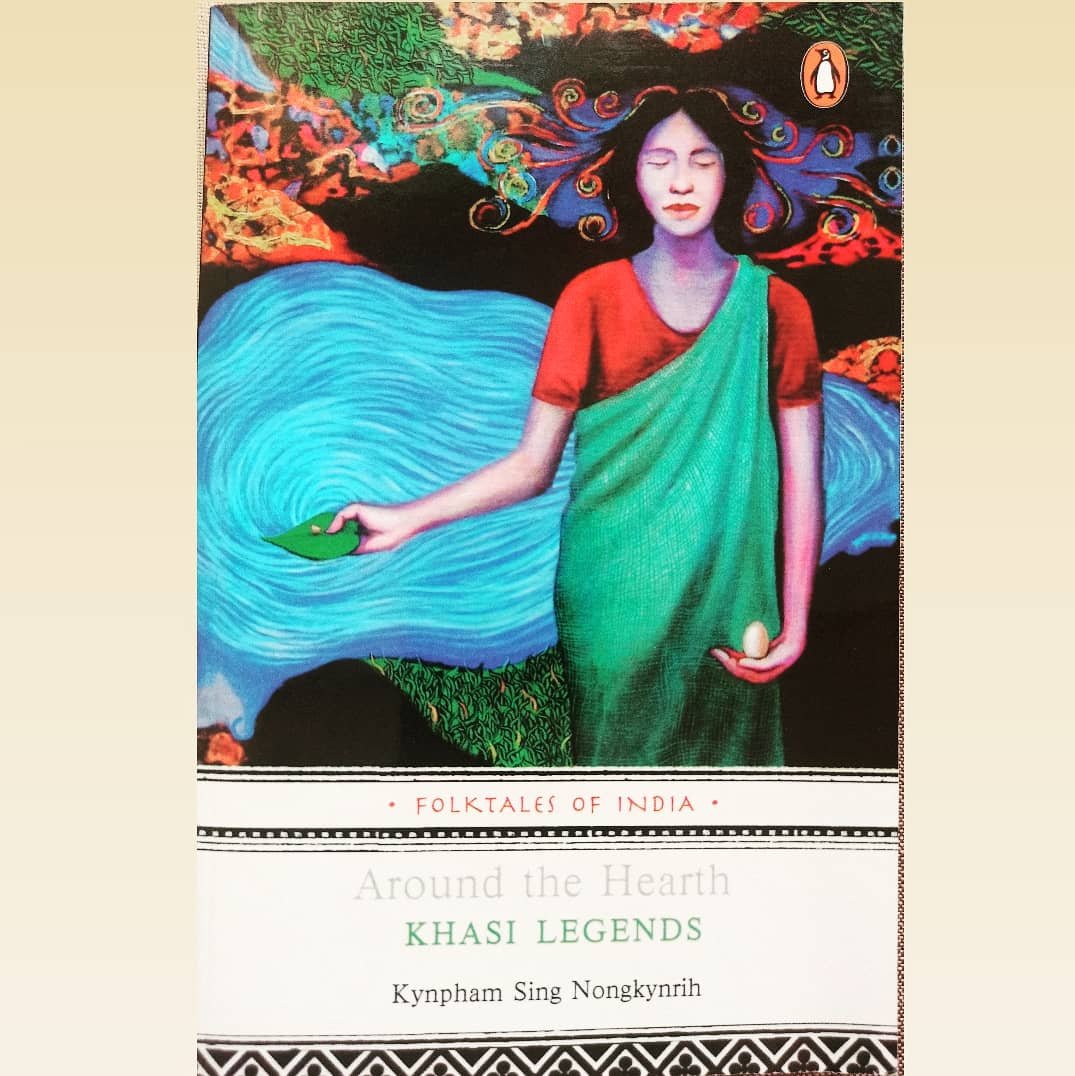
  • Around the Hearth: Khasi Legends (Folktales of India) by Kynpham Sing Nongkynrih

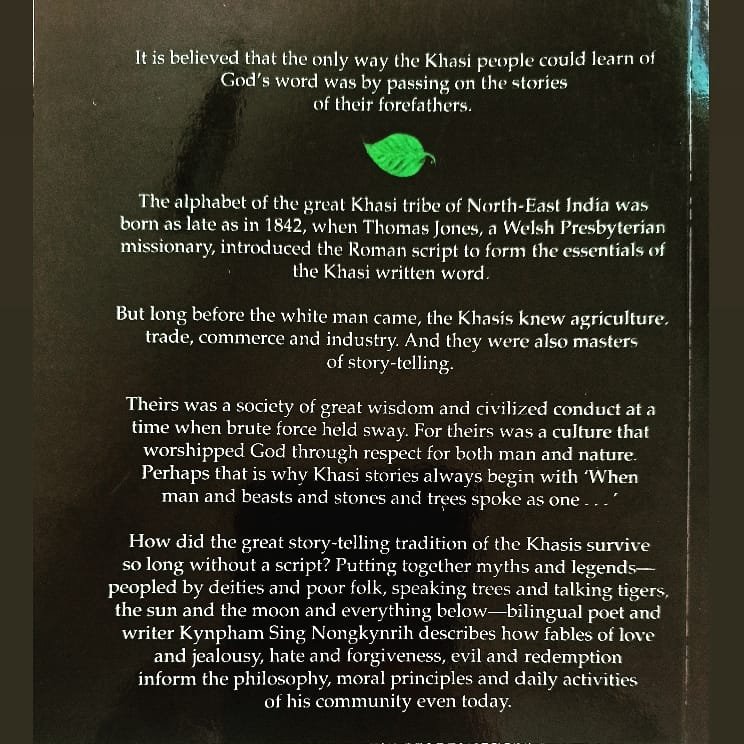
    The back cover of Around the Hearth: Khasi Legends (Folktales of India) reads thus:

    "It is believed that the only way the Khasi people could learn of God’s word was by passing on the stories of their forefathers. The alphabet of the great Khasi tribe of North-East India was born as late as in 1842, when Thomas Jones, a Welsh Presbyterian missionary, introduced the Roman script to form the essentials of the Khasi written word. But long before the white man came, the Khasis knew agriculture. trade, commerce and industry. And they were also masters of story-telling.

    Theirs was a society of great wisdom and civilized conduct at a time when brute force held sway. For theirs was a culture that worshipped God through respect for both man and nature. Perhaps that is why Khasi stories always begin with ‘When man and beasts and stones and trees spoke as one…'

    How did the great story-telling tradition of the Khasis survive so long without a script? Putting together myths and legends peopled by deities and poor folk, speaking trees and talking tigers, the sun and the moon and everything below—bilingual poet and writer Kynpham Sing Nongkynrih describes how fables of love and jealousy, hate and forgiveness, evil and redemption inform the philosophy, moral principles and daily activities of his community even today."

    Around the Hearth: Khasi Legends (Folktales of India) written by Kynpham Sing Nongkynrih (2007) is an important and significant book which documents Khasi folktales in English. With the publication of this book, the Khasi oral tradition can now reach a larger audience in India and all over the world.

    Published by: Penguin Books India

    Cover painting: @benedictskhemlang

    Illustrations: Pankaj Thapa

    👉The book is available online on amazon.in

  • U miaw wa synñiam dakharang

    U miaw wa synñiam dakharang" is a Pnar phrase to describe men who are very good at making romantic advances towards women.

    "Miaw" means cat, "dakharang" is fish that has been smoked and "synñiam" may be translated as an opportunist waiting for the right time. The phrase describes the cat who has been waiting for the right time to steal the fish.

    Imat ki long thik kum u miaw ba pyrshang ban tuh dakharang haba ki pyrshang ban pynbiej kynthei, na kata ka daw ki sa khot ia ki da kata ka kyrteng.

    The men resemble the cat in its eager attempt to get the fish, in the way they woo women. That's why they have been given this nickname.

    "U miaw wa synñiam dakharang" is a Pnar phrase used to describe men who are expert "wooers" of women 😅😅😂😂 This post is dedicated to all you Don Juans and Zorros! 🤭😜

    Thank you @laloorisa for sending this! 😁😁

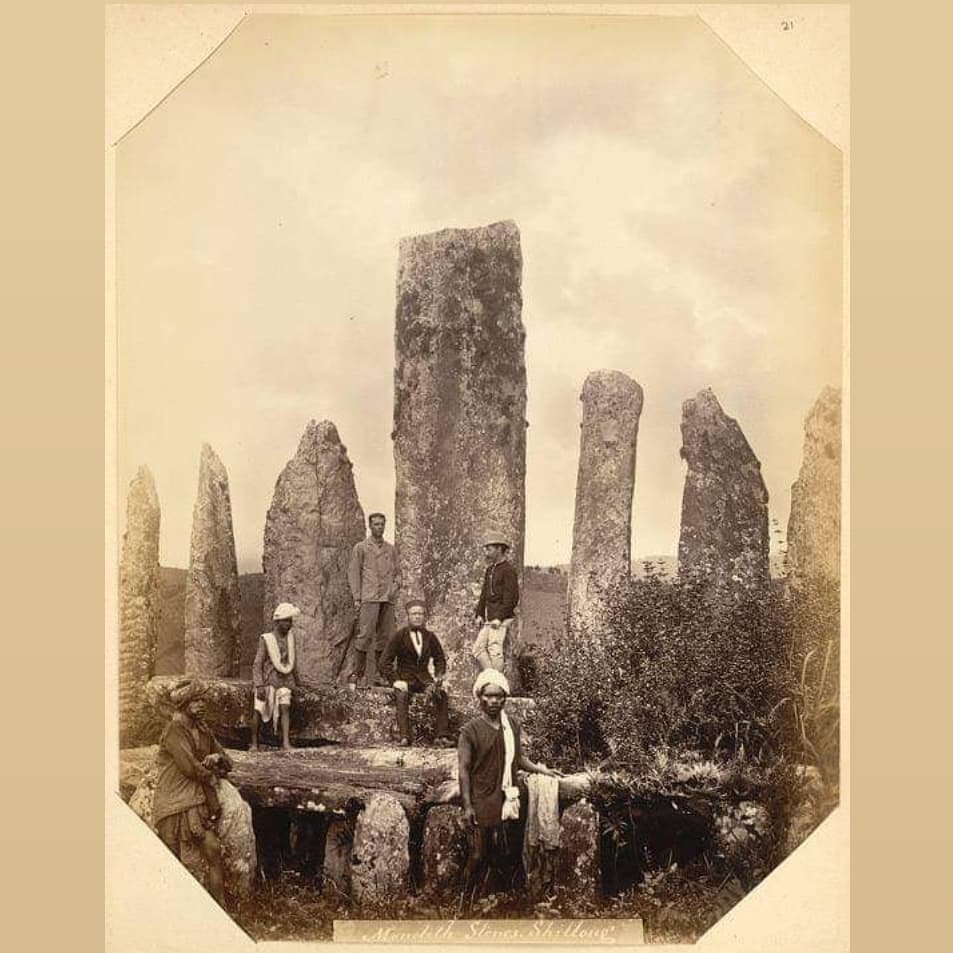
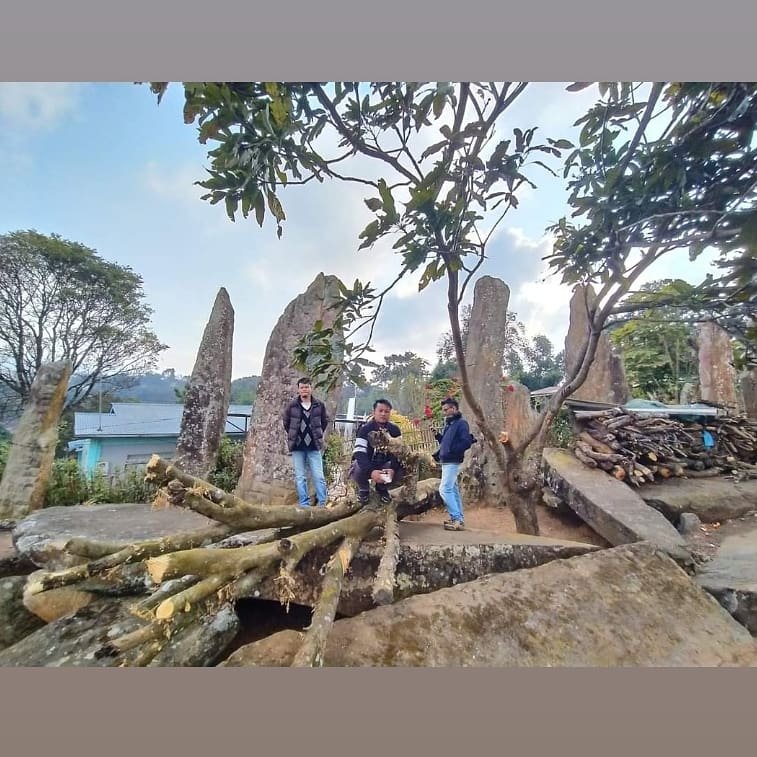
  • “Monolith Stones Shillong” as shown in Jean Baptiste Oscar Mallitte’s 1870s photograph

    Nathaniel Majaw says:

    We finally located the magnificent stones as shown in Jean Baptiste Oscar Mallitte's 1870s photo "Monolith Stones Shillong". These memorial stones are tucked away in a quaint property in the beautiful and peaceful Nongkseh Rim.

    The Khasi "Mawbynna" or monoliths/ megaliths are markers of history, culture, tradition and religion. Writers see language and literature emanate from them; indeed they are a repository of the past, present and future.

    Many monoliths and megaliths were destroyed in the great Assam earthquake of 12th June 1897. Thus, it is such a great joy to find these structures still standing after so many years.

    Congratulations to @nathanielmajaw and his team on finding these particular megaliths. 👋👋👋 These pictures were posted on Twitter on the 4th of February 2021. Thank you for giving permission to post these pictures! 🙏🙏🙏

  • Ka Choh Jamalung (The Call of the Cicada)

    This is the tune and the lyrics to the chanting song "Choh Jamalung" (The Call of the Cicada) performed by @esra_syiem . The tune is endearing and draws in a nostalgia for those crisp village evenings. 🌤️🌲

    This chanting song is sung by children at dusk as described in the post. It is popular in Raid Nongtluh of Ri Bhoi District, Meghalaya. Thank you @esra_syiem for sending this unique entry! 😃😃

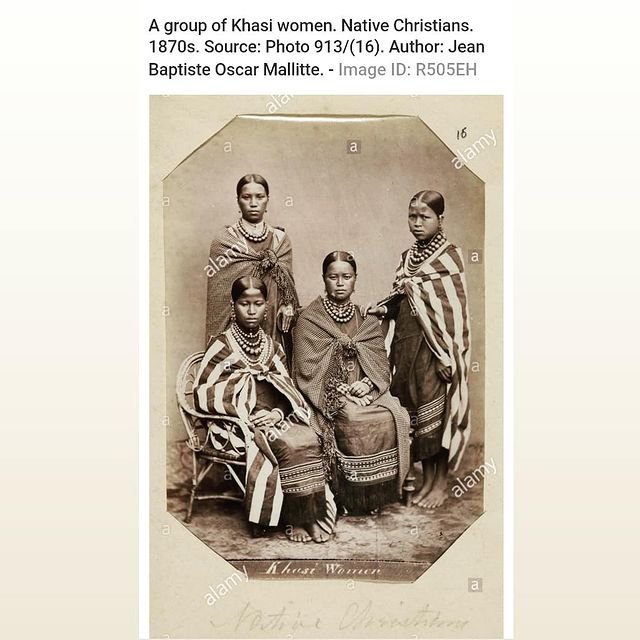
  • A group of Khasi women

    A group of Khasi women. Native Christians.

    1870s. Source: Photo 913/(16). Author: Jean

    Baptiste Oscar Mallitte. – Image ID: R505EH

    This is a striking and regal picture of four Khasi women taken by Jean Baptiste Oscar Mallitte during the 1870s. The title states they are "Native Christians", who are perhaps a mother and her daughters? 😃😃

    Ladies, please notice the simple yet sleek middle-parted hair, the layers of gorgeous "paila" (traditional coral and gold necklace), the traditional ear loop earrings, the "jaiñkup" (traditional shawl) of two women seems to be the "ryndia thoh rew stem" (eri silk shawl), the "nara" (traditional silk jaiñsem) with the beautiful intricate weaving at the bottom and those long tassels 😍😍😍😍 ❤️❤️❤️

    If designers could recreate this look, it would be sensational!! 🔥🔥🔥

    Does anyone know the name of the striped "jaiñkup" of the other two ladies? Also what is the traditional name of those lovely earrings?

    Source: Google

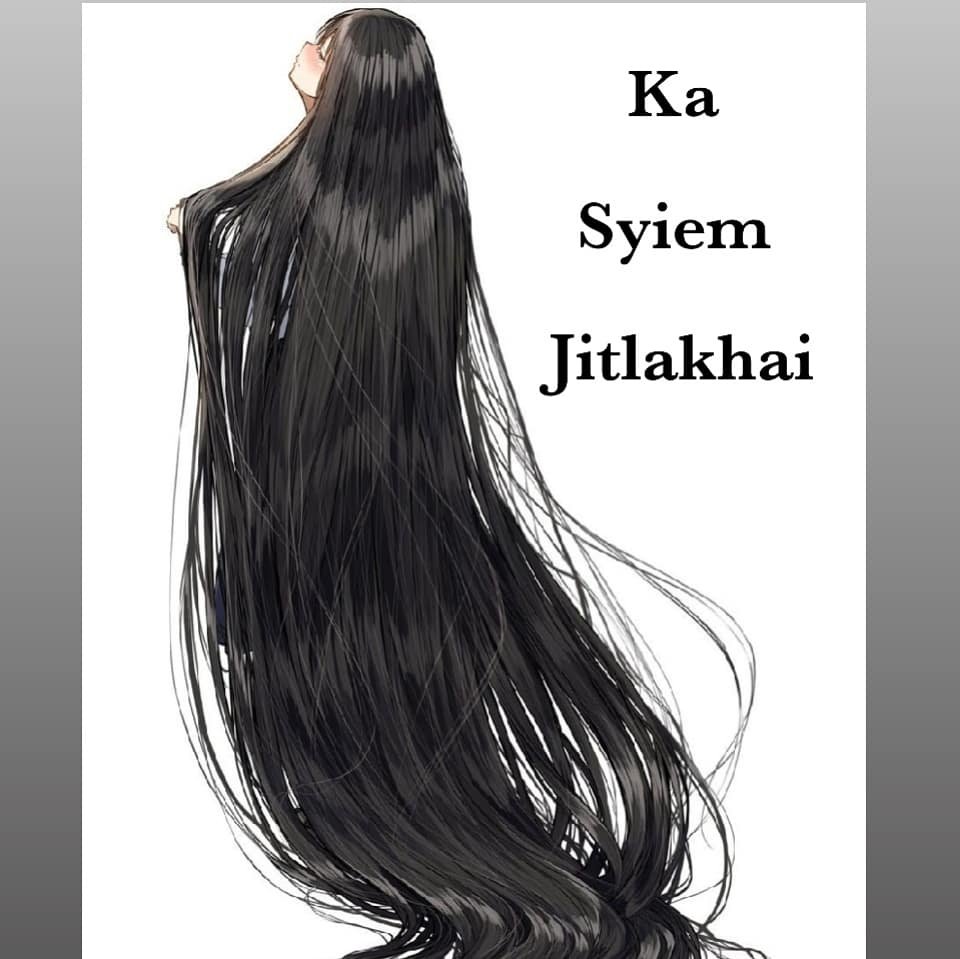
  • Ka Syiem Jitlakhai

    U Maw Shyllaitbit lies to the west of the town of Mustoh and it is a huge rock that can be seen from parts of Shella District. It is believed that this was where the Queen-Goddess Jitlakhai lived along with her subjects.

    Queen Jitlakhai was an extremely beautiful woman, whose hair was golden in colour, long and enchanting. Queen Jitlakhai used to bathe in the Umbloi river and her hair being very long, flowed downstream and reached the plains. It so happened that her hair was found by a fakir. He was taken aback by the golden colour of the hair and its mind-boggling length! The fakir rolled some of the hair and took it to his king. The king was baffled and determined to find the woman to whom the hair belonged. He thus prepared an army with soldiers, elephants and tigers. The king followed the Umbloi river upwards till he reached Shella. But when he reached Shella nobody told him about where Queen Jitlakhai was. There was a deep trench between Shella and Mustoh which the King wanted to cross. The King schemed to bribe a poor man into telling him where Queen Jitlakhai lived. The man took the King to where the Queen lived.

    On seeing her subject, Queen Jitlakhai appeared and it was then that the King asked her to marry him. She refused his offer of marriage and when the King saw that she would not relent, his soldiers held her by force hoping to take her away. At that moment Queen Jitlakhai screamed and prayed. It was then that she turned into "rngai” which can be translated as an apparition or a ghost. Instantaneously her castle also turned into stone. It was from then onwards that people called this rock "Maw Shyllaitbit". To this day the appearance of a metal door can be seen on the rock. People believe that Queen Jitlakhai turned into "rngai” and no one has ever seen her since.

    "Ka Syiem Jitlakhai" is an engrossing Khasi folktale that tells the story of a queen with long golden hair. 👸

    Reference: 'Ka Jitlakhai' written by E. Weston Dkhar (1978)