Tag: speakyourroots

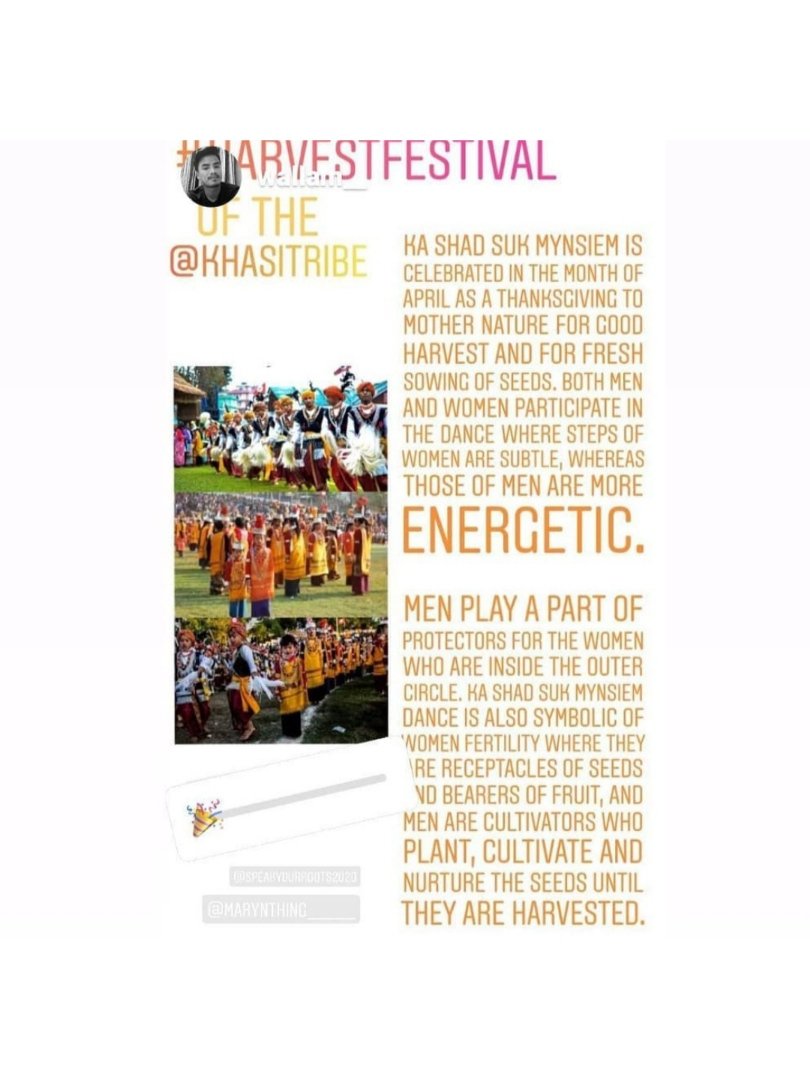
  • Ka Shad Suk Mynsiem

    Wallam says:

    Ka Shad Suk Mynsiem is celebrated in the month of April as a thanksgiving to mother nature for good harvest and for fresh sowing of seeds. Both men and women participate in the dance where the steps of women are subtle, whereas those of men are more energetic. Men play a part of protectors for the women who are inside the outer circle. Ka Shad Suk Mynsiem dance is also symbolic of women's fertility where they are receptacles of seeds and bearers of fruit, and men are cultivators who plant, cultivate and nurture the seeds until they are harvested.

    Ka Shad Suk Mynsiem sent by @wallam__ Khublei Shibun!

  • Laiphew

    The connotation or the Khasi term "Laiphew" which literally means thirty, as a limit ordinal is without a successor and it is a marker of a process of constitution of a community. It is not just a representation of the number 30, but it is supposed to be an idiolect of 'all types'. For example, "Laiphew Syiem'' means many chiefs; "Laiphew Mrad" means many animals. Philosophically speaking the Khasi concept of all and many as a generic concept is simultaneously concrete and general. Concept of numbers to instantiate all or many are place markers within the structure of all or many, which is simultaneously predicative and impredicative. Such predicative and impredicative application of linguistic concepts in describing the constitution of Khasi society is a narrative construction of Khasi selfhood.

    "Laiphew" sent by @manbha.syiemlieh Thank you! An extremely interesting entry! 😄😄

    Idiolect: the language or speech pattern of one individual at a particular period of life.

  • “Mawbynna” by Esther Syiem

    You appear

    to have withstood

    time’s duress

    as you watch

    over a world

    of plastic clutter.

    Your sense of time

    is forbidding,

    but you keep intact

    our self respect.

    You have shut yourself

    in an aura

    that is yours alone.

    Your changelessness

    in flux

    is the only surety

    against the inquisition

    that assails you.

    You are the keeper

    of our past.

    Vertical guardians

    overseeing horizontal quiet –

    wayside offerings,

    arrested in a moment,

    away from passing history.

    Your commodity

    is your soul

    held still, in the

    imbroglio of time,

    as you provide

    shelter and rest

    for wayfarers,

    drawn by your etchings

    in their souls.

    This poem appears in Oral Scriptings: Poems by Esther Syiem (2005) published by Writers Workshop, Kolkata. Dr. Esther Syiem is a Professor in the Department of English, North-Eastern Hill University, Shillong.

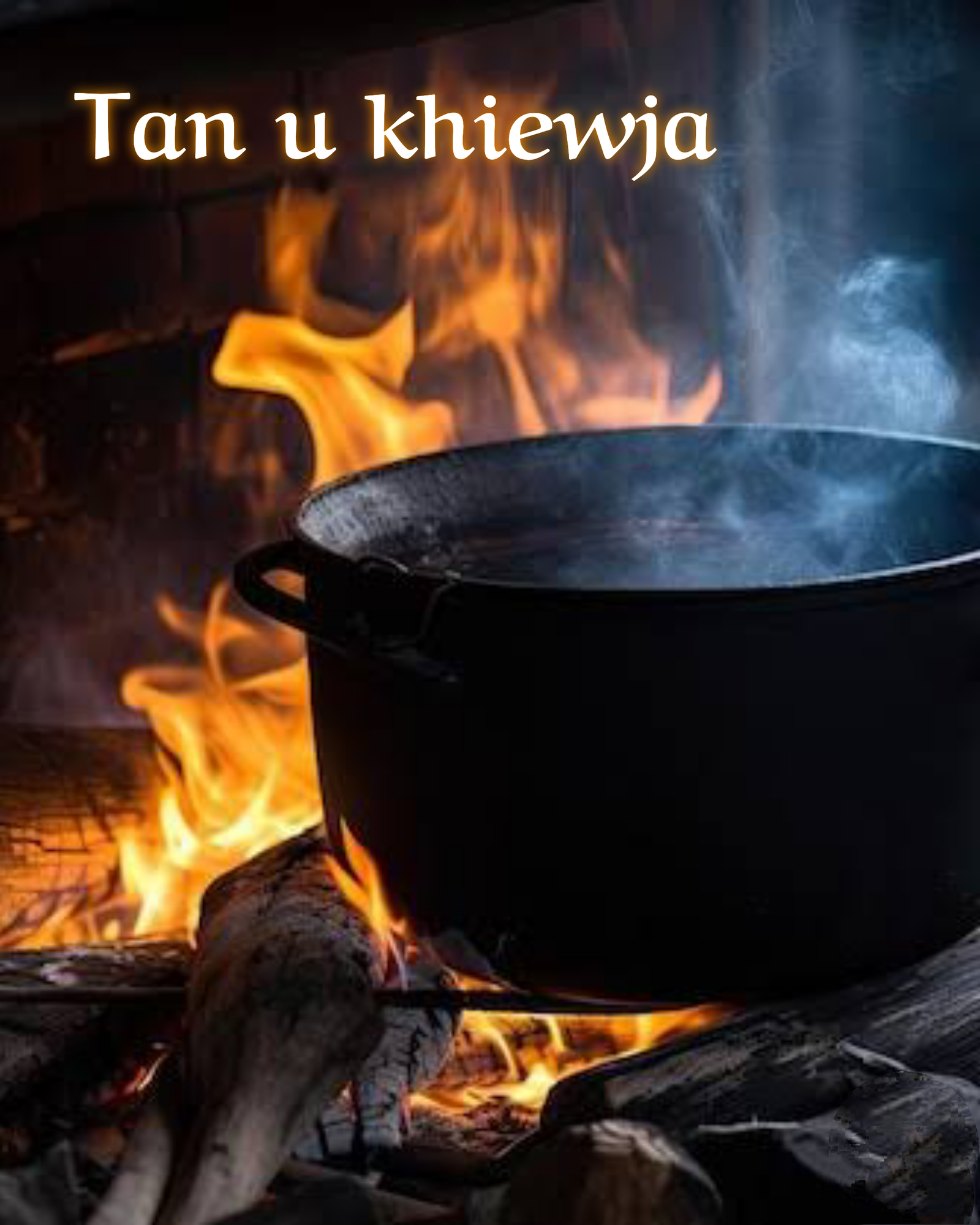
  • Tan u khiewja

    There is a real phenomenon known as the "return trip effect". It may be said to be caused by the human weakness of perceiving time. Sometimes our sense of how much time has passed is influenced by our surroundings, our mood or the amount of attention we spend on something.

    We have all made that one trip to an unfamiliar place right? It feels like forever when we are going to it, but on the return trip back home, the journey feels shorter.

    The Khasis describe this phenomenon as "Tan u khiewja". Literally, it is translated as the pull of the rice pot. The rice pot is synonymous with the warmth of the hearth, the centre of home and family. Thus, this metaphorical idiom expresses the pull of home or of the hearth, where one finds love and joy after returning from somewhere.

    Khublei Shibun @a_pocketful_of_plums for sending this!🔥🔥

    Acknowledgement for this post is also given to Dr. Ellerine Diengdoh, Assistant Professor, Department of English, St. Mary's College, Shillong.

  • The Languages of Meghalaya

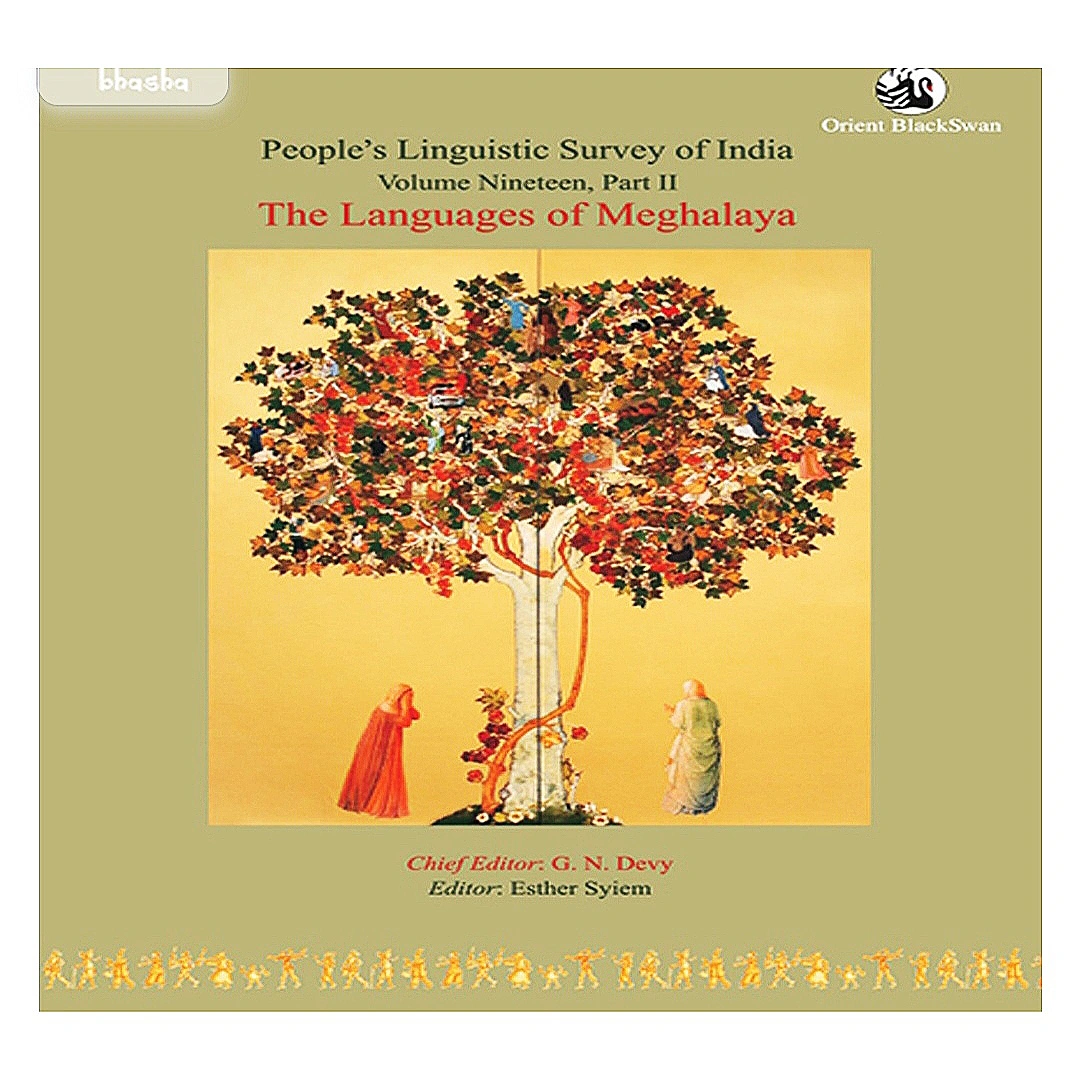
    The Languages of Meghalaya: People's Linguistic Survey of India. Volume Nineteen, Part Il.

    Chief Editor: G. N. Devy and Editor: Esther Syiem.

    Published by Orient Black Swan, 2018.

    This is a good book on the indigenous languages of Meghalaya, edited by Dr. Esther Syiem, Professor, Department of English, North-Eastern Hill University, Shillong.

    There are many doubts and questions about the languages and dialects in our state Meghalaya, especially regarding the Khasi and Pnar languages. Hopefully this book will clarify our doubts! The book is available online on amazon.in

    This book has also been translated into Khasi and this translated edition is available in Ri Khasi Book Agency, Mawkhar, Shillong.

  • International Mother Language Day Poems

    La Akor Burom Ngin Kyntiew,

    Ban lai Pynphuh Pynphieng La Jaidbynriew:

    Ngin lai Sumar La Ka Ktien Lajong,

    la Ka Ruh Hi Ngin Ri Kyndong.

    by @bawanshwa_syiemlieh

    La ka ktien lajong ngin niewkor

    Ba ha ka long ka spah kordon,

    Ban pynsah nam baroh shyrta;

    la ka ktien nongmei nongpa

    Shirta ia ka ngim dei ban klet:

    La shibun jingeh kin wan tyllep

    la ktien lajong gin sngewsarong

    La ha sor ne ha nongkyndong.

    by Darisha Marweiñ

    Ka Ktien Khasi khara;

    Ka Ktien khasi paka

    Ka Ktien burom ki longshuwa

    Ka dei ka ktien sohra.

    Ka ktien nongmei nongpa

    B’la kren ha nigl inaduh mynshue

    Ka 'tien sneng 'tien kyntu

    Ban neh ban sah ha jingim ba bha

    by Battilang Kharkongor @battie626

    Wat la ngi nang ka

    ktien nongwei,

    Ngim dei ban klet

    ka ktien i mei i pa:

    Kunmaw ko khun

    khasi khara han

    burom ka ktien

    nongmei nongpa.

    by Pynbianglin Thabah @thabahpynbianglin

    "Shano ngin phet?

    Ko kmie baieid

    La lut ki ummat

    Kiba ju shlei ai jingim,

    Naba pha iam sngewsih

    Jingleh u briew

    Uba kam ba u ieid

    Thep mynsiem ia pha ko Ri.

    Pha plie ia la ka mynsiem

    Pha kyrkhu kyrdoh

    la u khun bynriew,

    Khlem suit niew

    U kam ei ka pyrthei

    Kaba theh ki jingai ei

    Ha man ki kti jong u.

    Mynta marwel

    Pha shong

    Kajingbitar

    Ka rhem kum thylliej ding,

    Ah ka a pot

    Shano ngin phet

    La ka khyndew kan khih win?

    By @wordyramblings

    "Ka Ktien Khasi Jong Ngi"

    Ha sla pyrthei la kha ia nga,

    Nga san longbriew, nga im pura;

    Ryngkat jingieid i mei i pa,

    Ha la ka ktien ba ngan kren bha.

    Ym tang ban kren kumta la biang,

    Hynrei ban thoh te ba nan nang;

    Kumta jingstad sawdong ka phriang,

    A-B, ka jinghikai ka sdang.

    Ka ktien khasi shisha ba ïar,

    Ha ri khynriam bad ha ri pnar;

    "'Sohra'- Ka ïeng 'tien salonsar,

    Ban ïa biang lang, ban ym kulmar.

    U Thomas Jones na ri sepngi,

    U la wanlam dak thoh khasi;

    la jait bynriew ban lam lynti,

    Ban ym sah dum bynriew khasi.

    l'u la tip haduh kine ki sngi,

    Kum u kpa ki dak thoh khasi;

    Khlem don ma u ba prat lynti,

    Ngi lah sah dum ha la ka ri.

    By Labianglang Diengdoh

  • U ñiang ryndia

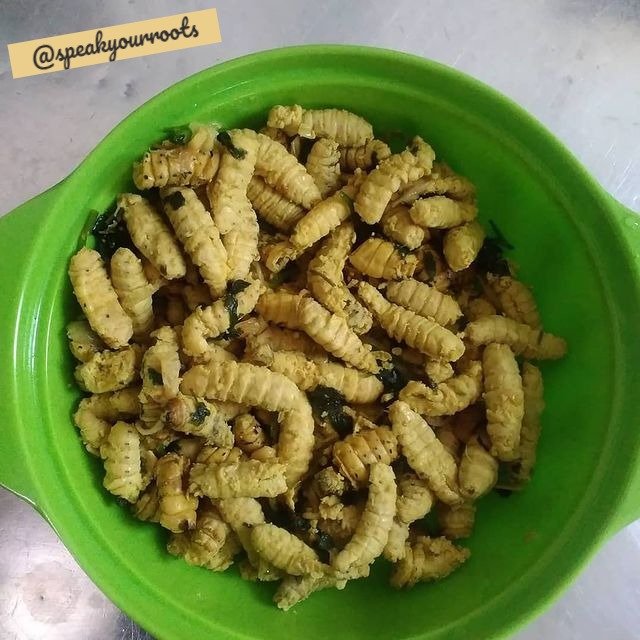
    "U ñiang ryndia" or the mulberry worm is a Jaiñtia delicacy that many might cringe to see. But for those who have the taste buds for it, u ñiang ryndia conjures a distinctive native feel.

    As a simple meal it can be boiled and then mixed with onion, ginger and salt.

    It can also be made into a more elaborate curry with onion, garlic, neiiong/ naiiong (black sesame/ black til), turmeric and then garnished with garlic leaves and coriander.

    U ñiang ryndia is available in the summer months!

  • “May our roots…”

    May our roots be strong.

    The roots of our heart.

    The roots of our mind.

    May our roots be true.

    The roots of what we see.

    The roots of what we say.

    May our roots endure.

    The roots of what we touch.

    The roots of where we walk.

    -@speakyourroots

  • “Ki Arngut Shipara” da Garmylo Pdang

    The younger took one with a prayer

    Lord make me an instrument of your peace

    "Shim bahbah, to jied hi ma phi," ong u hynmen

    Ki don ki ba stang, ki don ki ba rben.

    "Haduh katno baje phin shong hangne?" nga shu kylli

    Haduh ban da lut ong u hynmen

    "Ngi hap ban die lut, la da ka miet kan ap slem

    Lym kumta, ka pisa ban thied khaw, kam dap, ba u rem."

    "Phi shong phi sah ha ei?" Nga kylli biang

    Ha Wahingdoh u hymen u jubab

    "Ani ka jngai balei phi wan die shane?"

    "Ba bun ki khynnah riewspah ba pule."

    "Ko hep," u ong u hymen, "hatei to khie leit tyrwa,"

    "Hatei ha jan jingkhang ka dukan ja

    Wat peit shapoh ba ioh mai ki briew

    Da husiar ar tad ioh hap ka pisa."

    Slimmed they stood next to the restaurant

    Bookmarks were on their hands

    A black hat on the eldest' head

    On the younger, a sweater that's red

    Their faces shone the Bosco Square

    Amidst the gloomy, happy faces of the students' there

    Two rupees for one, and 5 for three

    To the younger child crying they gave one for free

    Their pants torn and hair unkempt

    On the younger's sweater, his mom's jainsem

    The pure floral tradition scent

    Their mom bought long before the season of sullen.

    Ko bah, "shim kawei seh tang ar tyngka

    To shim seh bah", u barit u ban

    "Lada phi shim, ngin ai san! san tyngka

    To shim ban bah," u hymen run u ban

    "Ap shwa khyndiat nga kwah ban ia kren," nga ong

    "Em bahbah," u hymen u ong, "don bun ba dang sah

    "Tang san minit, ka por, dei ba kordor bahbah,

    Tang san minit, nga kular," bad ha dew bilat ngi shong.

    "Phi leit skul ne em?" Nga sdang kylli

    Ki nguh ka khlieh, bapli ki rangli

    "Ani balei, ka jia aiu ia phi

    Ngim don ka pisa ban siew ka skul fee."

    U pa u trei kaei, nga kum lorni

    Ngim tip, lah lai snem mynta, u ieh ia ngi

    I mei pat i trei jingtrei aiu?

    I mei i thiah ha iing ba i ioh pang TB.

    Garmylo says:

    "The poem is based on a real experience with the two boys (who are brothers) who were selling bookmarks at Don Bosco Square in Laitumkhrah, Shillong. It's about how we often forget to look at the other side of us, which is the spirit of humanity. We are so busy with the clanging of the world that our sights are limited to "The Us, We and I".

    "Ki Arngut Shipara" is original bilingual poem by @_gar_my.lopdang . Thank you for this touching poem! ❤️

    It is a narrative poem about two brothers who at a very young age become bread earners for their family. This is because their mother had been diagnosed with TB and their father on knowing about it, left her and the two sons.
  • Tana

    "Tana" is a Pnar word which means "handkerchief". Nowadays it is not used by everyone. It is the older generation who used it and it is mainly confined to jowai, Meghalaya. The Pnar word that is now commonly used for handkerchief is "rumar". "Rumar" in Pnar and "rumal" in Khasi are borrowed words from the Hindi language.

    Thank you @shiny_joan !