Tag: speakyourroots

  • Musings on Thomas Jones Day by Naomi C. Nonglait, Ph.D.

    I remember my father told me once that he used to write in the Bengali Script. I never understood why he had to write in a script of another language. By then I was learning to read and write in my own Khasi language. It was only years later that I understood this change.

    Rev. William Carey and Alexander Lish had used the Bengali Script for the Khasi Language. It was one of the most challenging and colossal task of their time. However, Thomas Jones felt the need to change the Bengali Script to the Roman Script. It was with much thought that he realised that most of the Khasis could not understand even a paragraph of translation. Since this was the case, he started with the Roman script to create the sounds of the Khasi language which was much less complex as compared to the Bengali Script.

    We have to be reminded here that what Thomas Jones had done in the past did not go without harsh criticism. He was criticised from many quarters especially from the officer-in-charge of the East India Company. The Khasis were also apprehensive and not happy with the change since they were used to the Bengali Script. It can also be understood that the Khasis had a lot of trading with the Bengalis, so maybe knowing the Bengali language and script was advantageous to them. However, this did not deter Thomas Jones to give up on his dream. There were others such as Dr. Duff, Jacob Tomlin and William Lewin (Majaw 38) who wholeheartedly supported him. This brought up many questions to my mind. One of them being how much support would we give to change? If it was not because of Thomas Jones' vision, the spoken word would not have gained the permanence given by ink and paper. Not that I am undermining the oral tradition, but because of the lack of storytellers and the dying art of storytelling, I realize that without the alphabet, I would not have been able to go back, to remember again those stories that intrigued me as a child.

    Source:

    • U Thomas Jones Bad Ka Pyrthei Saitsobpen by S. S. Majaw (2011)

    Suggested Reading:

    • Anne Jones (1812-1845) Ka Missionary Kynthei Kaba Nyngkong Ha Ri Khasi Jaintia by Dr. B. Ps. Toi

    • Welsh Missionaries and British Imperialism: The Empire of Clouds in North-East India by Andrew J. May (2012)

    Khublei Shibun @carey_lynzba phi la phah ïa ki jingpuson bad ki jingpule sani jong phi shaphang ka histori jong ki dak thoh Khasi kiba la pynmih da u Rev. Thomas Jones. 😄🙏

    Thank you @carey_lynz for sending your thoughts and research on the history of the Khasi alphabet established by Rev. Thomas Jones. 😄🙏

  • U Sohñiamtra Lyiur/ The Summer Orange

    I Kongrit i rah ki jaiñ ban sait sha wah. Ka Lasubon ka bud ïa i katba ki rong thwei lyiur ka bneng ki her. I Kongrit i kyrjaw, ka Lasubon ka wieh kjat ha ki maw hapoh ka um. Shi lynnong ki siej ki padai ha ka khriang ka lyer bad ki thoh syrngiew ha u phlang. Ka Lasubon ka bam sohñiamtra bad ka 'er pyngngad na wah ka nang pynbang pynthiang ïa u. Ka Lasubon ka ïaid sha kita ki siej, katba i Kongrit i ïohi ba la ngam u sohñiamtra shapoh um.

    Mynta ka sngi kaba dei ka 22 tarik u Jylliew, ka dei ka Thomas Jones Day. Ban kynmaw ïa ka jingwan jong ki dak thoh hapdeng jong ngi ki Khasi, la sah dak da ka jingïathuhkhana lyngkot.

    "U Sohñiamtra Lyiur" ka dei ka jingïathuhkhana lyngkot ne ka microfiction. Ki microfiction ki dei ki jingïathuhkhana kiba don 50-300 tylli ki kyntien. Kane ka jingïathuhkhana ka don 95 tylli ki kyntien.

    🟡 Sngewbha sa ïathuh ka mut aïu kane ka jingïathuhkhana ha ki comments! 😃😄 Phi sngewthuh kumno ïa ka?

    🟡 Kumno ngin pynkylla sha ka Khasi ïa ka kyntien "microfiction"? Ngi lah ban ong "ka jingïathuhkhana rit-ria"?

    Today the 21st of June is Thomas Jones Day. Thomas Jones was a Welsh Presbyterian missionary who established the Khasi alphabet. We commemorate the arrival of the written word in the Khasi community by posting a piece of microfiction.

    "U Sohñiamtra Lyiur" or "The Summer Orange" is microfiction of 95 words.

    🟡 Please tell us your interpretation of the story in the comments! 😃😄

  • “Ka Jingsneng Tymmen Shaphang ka Akor Khasi ha ka Rukom Rwai Phawar”, Part I (1902) & Part II (1903)

    Da thew la jingkren jingïaid bad jingleh,

    Ba kan long kum ka jingkynshew ba neh;

    Wat ju leh than ka kamai kajih,

    Wat ju lut phut ha ka bam ha ka dih;

    Ba ïoh ka hap lynnong ka jingshipa,

    Ba ïoh ïap lum thadlad khlem kur khlem kha,

    Wat ïalir lorni ïa ka kam kiwei,

    Ba ïoh shet khongpong lade ka pyrthei;

    To im sngi tang ïa la ka jong ka hok,

    Ba la phi im phi ïap ruh kan don bok;

    Kano kano ka ktien ruh wat ïalir,

    Kano kano ka kam ruh wat bukhir;

    Wat pynshong ñiangkuhiw la ka dohnud,

    Ho shynrang kynthei, ho khynraw khyllud!

    Always with discretion talk and act,

    It's an investment that remains intact;

    Do not overspend and your earnings deplete,

    In drink and food, too, be discreet;

    An extravagant life leads to penury,

    You'll die alone without people and money;

    Do not interfere in others' lives,

    It does no good, trouble multiplies;

    Concentrate on a life that's good and true,

    Good fortune will always be there with you;

    Never be too inquisitive and too prying,

    Never meddle and be too interfering;

    Always keep your innocent hearts pure as a pearl

    All ye budding youth, ye boys and girls.

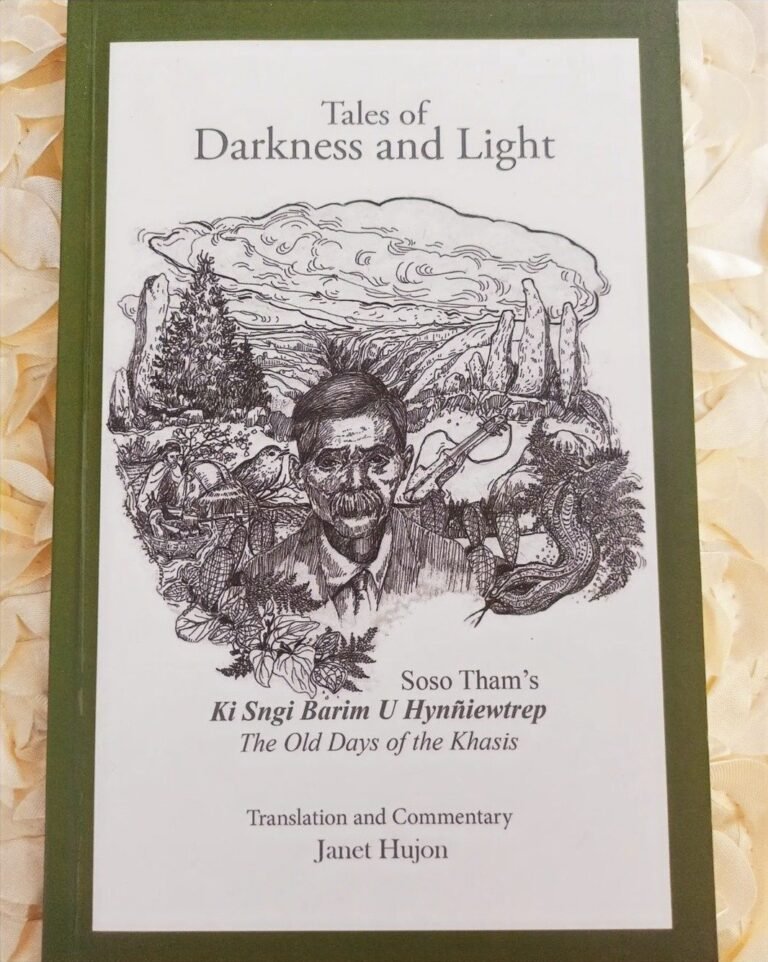
    Ka Jingsneng Tymmen Shaphang ka Akor Khasi ha ka Rukom Rwai Phawar, Part I (1902) & Part II (1903) by Radhon Sing Berry Kharwanlang is a unique collection of valuable lessons and teaching on how to live a good and moral life. 📝📄📙

    The teachings are given in the form of "phawar" where two lines follow the same rhyme scheme, that is, aa bb.

    Both Part I and Part II have been translated into English by Bijoya Sawian @sawianbijoya in her book The Teachings of Elders: Ka Jingsneng Tymmen, Parts I and II (1997).

    Picture 1: Ka Jingsneng Tymmen Shaphang ka Akor Khasi ha ka Rukom Rwai Phawar, Part I (1902)

    Picture 2: The Teachings of Elders: Ka Jingsneng Tymmen, Parts I and II (1997).

  • International Mother Language Day 2023

    Sa shisien mynta u snem 2023 ngin ïa rakhe ïa ka International Mother Language Day ha ka 21 tarik u Rymphang! Ba ngin kyntiew bad sumar syndong ïa la ka ktien ka thylliej ka dei kaei kaei kaba donkam bha ban leh ha kum kine ki sngi ki por. 🆎🅰️🅱️

    Ha kane ka kynti, ka Speak Your Roots ka ïa snoh kti lang bad ka Big FM 98.3 Shillong, ryngkat bad ka jingkyrshan jong ka Northeast India Audio Visual Archive @neindiaarchive !! 😃😃

    Sngewbha shim bynta ha kine ki jingïakob ba kan shongshit kane ka jingpyrshang jong ngi ban pynneh bad pynsan ïa ka ktien Khasi-Pnar. Kin don ki jingïakren ba kit jingmut ruh bad ki nongthoh poitri bad ki kaitor ba pher ba pher! 📖✒️🎶🎵

    Khublei Shibun @kennytalang ba phi la pynwandur ïa kane ka video! 🙏🙏

  • Discover Bridges: Footprints Left by Our Forefathers Part I

    U Khasi and Bridges

    The Mei Mariang posed multiple challenges to U Khasi. Therefore, to overcome these challenges, U Khasi used his understanding of nature to tame nature for his use without destroying it. Therefore, the story of building bridges over the many rivers and rivulets is one to be told. Bridges go by different names depending on the place that they're built in. In the War-Jaintia areas, a bridge goes by the name "ka lywu." While in Pnar it is called "ka yingkieiñ." Interestingly, it's also known as "ka pyrnon" in the Maharam and Nongspung areas. The Bhoi Mawdem areas call it "ka dongki."

    U Mawpun

    Mawpun or mopun as the Pars call it, is a bridge that connects both sides of the river. The stone used to make this bridge depends on the place. In Umtisong, Nartiang, they use granite or mawnar as it is the hardest material found in that area. The same can be found in Thadlaskein. These bridges dot many areas in the hills like Wahlyngkhat (Langkyrdem area), Sohra, Umroi, Weilyngkut and even in Golf links.

    Ka Jingkieng Khilon

    Beautifully engineered, this kind of bridge can be found in the David Scott Trail, Wahumiong, Umrakam, Wahkhilon, Sohra and Them Kubin. U Mawshabi is the stone that holds the arch in the middle of the bridge or jingkieng khilon.

    Ka Jingkieng Mawlyngknep

    This bridge is so called because it is made of mawshutwait or mawnar. These slabs of stones are placed on three or four stone pillars. The famous bridge made of such stone is in Umïaknieh near Amlarem. Similar bridges are also found in Thlumuwi and Syndai.

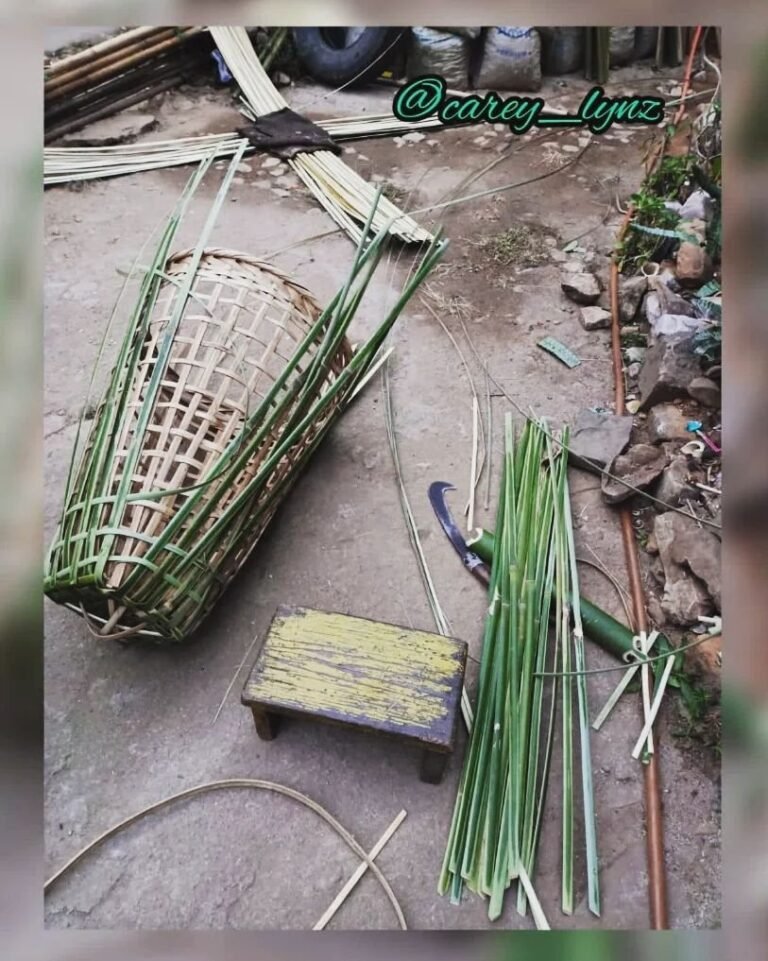
    "Discover Bridges: Footprints Left by Our Forefathers Part I" by @carey_lynz

    In a land with a myriad rivers, there are also a myriad bridges. These bridges have been built since time immemorial and showcase the knowledge and engineering skill of our ancestors. 😃😃 Thank you @carey_lynz for another significant entry! 🙏🙏

  • Ingkhong Shyllangmat

    Ingkhong-shyllang-mat (noun) U dei briew uba la shah khi lainuid bad shah kynthah dieng tyllaw ding na shyllangmat namar ka pap ka sang kaba u la leh ha shnong ha thaw bad kim ju shah ïa u ban shong ha shnong.

    Ka Dienshonhi: The Khasi Encyclopaedic Dictionary

    Ingkhongshyllangmat (noun; adjective) A a person who has no allegiance to one's own people; a traitor.

    – Ki nongialam ingkhongshyllangmat; traitorous leaders.

    As a verb ingkhong shyllangmat is to betray.

    – Ani, baroh ki la ingkhongshyllangmat ïa la ka ri!

    – Goodness! Everyone betrayed their country!

    Learner's Khasi Dictionary with English-Khasi Index

    Ha kato la kylli ïa ka jingmut jong ka ktien "ingkhong shyllangmat". Khublei Shibun ïa baroh ki jubab kiba phi lah phah 🙏🙏 Ki jubab ki la ïarap ban nang sngewthuh ïa kane ka rukom ong.

    Hangtei haneng la ai ïa artylli ki jingbatai ïa kane ka ktien. Kyrmen ba ngin kham sngewthuh shai lyngba kine 👍 Ka ktien "ingkhong shyllangmat" ka kit ha ka ka jingmut kaba khia kumba phi i haneng bad ka dei ruh ka jingkynnoh kaba eh bad khor bha ïano ïano.

    The Khasi word "ingkhong shyllangmat" has both a literal and symbolic meaning behind it as is seen from the two references cited above. It is a harsh punishment and a strong accusation against someone.

  • Ki Puriskam ne ki Khanatang?

    Ki Puriskam da lei lei kim lah ban long noh ki

    Khanatang, hynrei ki Khanatang Ki lah ban long noh

    tang ki Puriskam lada ngi klet noh ia la ka thymmei.

    A fable will never be able to take on

    the character of a myth,

    but a myth may be reduced to only a fable

    if we forget the source of our being.

    Ki Puriskam ne ki Khanatang? A fable or a folktale? Maybe both have something to teach us 💚💚💚💚 Thank you @__khatduh__03 ! Thank you @the_lost_soul_dreamer for these words of wisdom! ✨✨✨

    A myth, a folktale, a legend or a fable all have important lessons to teach us.

  • Different kinds of stories

    On the 27th of September 2021, a question was asked about the difference between Khanatang, Puriskam-Purinam and other forms of Khasi stories.

    These are the responses:

    Folktales are Ki Khanaparom

    Myths are Ki Khanatang

    Legends are Ki Khanapateng

    Fairytales and Fables are Ki Puriskam-Purinam

    It may be noted that these may have different names in different dialects.

    Understanding our oral tradition requires that we understand the different types of stories that our forefathers put forth, to articulate a history and a culture. 🌲🌾🍂

    Khublei Shibun @lieng_makaw and @lurstepkharlyngz for your responses! 🙏🙏

    If anyone wants to add more, please feel free to mention them in the comments section.

  • “Ka Jingsneng Tymmen Shaphang ka Akor Khasi ha ka Rukom Rwai Phawar”, Part I (1902) & Part II (1903)

    Wat ju pynmlien ban kham wad phoi kynsha,

    Ba ka jingthmu baroh ruh ka bashla;

    Wat ju mlien khong-khong wat ju mlien iriang,

    Ba ïoh shun ei u kamon kadiang,

    To long ba jemnud to long ba pasiang,

    Ba kiwei ruh ïa phi kin long kylliang;

    Ha ka ktien, ha ka kam, wat ju laplah,

    Ïoh ba hangta ha shen kum kylla prah;

    Ha kano kano ruh to kham tyngkan,

    Wat madei thala ïoh ngat thit pynban.

    Don't sulk and be moody without any cause,

    All good intentions and aims will surely be lost;

    Don't be irritable and easily ired,

    You'll make enemies wherever you are;

    Be gentle and helpful, good-natured and kind,

    Others will pay you back some time;

    In word and deed don't be in a hurry,

    Everything goes wrong and topsy turvy;

    In whatever you do, whatever you think,

    Be not in a rush for you'll suffer and sink.

    Ïa katei ka dkhot kaba 24 la shim na ka Ka Jingsneng Tymmen Part I.

    Ka Jingsneng Tymmen Shaphang ka Akor Khasi ha ka Rukom Rwai Phawar, Part I (1902) & Part II (1903) by Radhon Sing Berry Kharwanlang is a unique collection of valuable lessons and teaching on how to live a good and moral life. 😄🌲😌

    The teachings are given in the form of "phawar” where two lines follow the same rhyme scheme, that is, aa bb.

    Both Part I and Part Il have been translated into English by Bijoya Sawian @sawianbijoya in her book "The Teachings of Elders: Ka Jingsneng Tymmen, Parts I and II" (1997).

    Slide 1: Ka Jingsneng Tymmen Shaphang ka Akor Khasi ha ka Rukom Rwai Phawar, Part I (1902)

    Slide 2: The Teachings of Elders: Ka Jingsneng Tymmen, Parts I and II (1997).

  • Jingtmang La Shnong da i Ibakor Shisha Kharmujai

    Na sor ngan leit sha shnong lajong

    Ban peit ki kha ban peit ki man

    Ban bam sohkymphor ban bam sohphan

    Ban khwai dohkha ban khwai dohtham

    Ngan kiew diengkwai ngan kheit tympew

    Ngan lum latyrpad ngan mad jajew

    Ngan kiew ki thied ngan kam ki maw

    Ban poi sha kshaid ban poi sha thmaw.

    Watla ka eh ban pyllait por

    Ba teh ki kam ki jam ha sor

    Mynsiem jong nga ka khmih lynti

    Ki kha ki man bangan iohi

    Jingsarong jingkmen bym lah nujor

    Banga ngam dei ka khun nongsor

    Tang lait sha shnong ngan phet bran bran

    Shuti ba la lang ban pyndonkam

    Jingieid kan teh rasong iangi

    Katba nang iaid ki snem ki sngi.

    -Ibakor Shisha Kharmujai

    "Jingtmang la shnong" is an original Khasi poem by @ibakorshisha 😄🏞️

    The poem speaks of the homesick feeling that assails one when one is far away from their village. Country life with its beauty and simple joy is something that one cannot have in the city ❤️❤️🌾🌱

    Khublei Shibun @ibakorshisha ïa ka poitri jong phi kaba kren shaphang ka jingim ha nongkyndong, ka jingim ka sngewtynnat shisha!!