Tag: talklocal

  • “Ban siew kylliang” da i Kyrshan W. Mawlong

    Ban siew kylliang shisha ngim lah

    Da lei lei ruh ïa phi

    Mynsiem phim hun kum u Rangbah

    Phi wad ki lad lynti.

    Mynsiem basbun ki paw ha phi

    La jingeh khia ki ban

    Na ki phim ai lad ba kin tan

    Ban shu iehnoh ïa ngi.

    Ki riat ki ram ki krem phi rung

    Ïalade hi kheiñ duh

    Ki shiah ba nep ia phi ki dung

    Katta phi hem shuh shuh.

    La buit la bor katba don ei

    Da mynsiem ieit phi bet

    Katno phi kmen ba kam la dep

    Dak thoh Khasi phi sei.

    -Kyrshan W Mawlong

    An original Khasi poem on Thomas Jones by @kyrshan_611 📝📝 Khublei Shibun @kyrshan_611 for sending the poem! 😄🙏

  • Ha ki thapniang basyaid i piam da i Kyrshan W. Mawlong

    Ha ki thapniang basyaid i piam

    Watla im pynpaw eh

    Jingieit i theh ba palat liam

    Dei i Pa baieid eh.

    – Kyrshan W Mawlong

    A Father's Day poem from @kyrshan_611 😄😄 But Father's Day should be everyday!

    Khublei Shibun @kyrshan_611 ! 🙏🙏

  • Nga ïaid hapdeng ka kper syntiew da i Mebatei L. Khongsti

    Nga ïaid hapdeng ka kper syntiew,

    Ïa phi nga khmih lynti,

    La jingiwbih ba bun ki wan,

    Nga kynmaw tang ïaphi.

    Man ka sienjam haba ïaid,

    Suki suki nga ïuh,

    Dohnud dik dik tang i ïaphi

    Thar shiah ruh ym sngew shuh.

    Haba ïaphi nga ïa kynduh,

    Ïanga phi kdup phi snoh,

    Jingieit janai ruh phi ïai ai,

    Phim klet khamtam ban doh.

    Jadu aïu sha ba phi don,

    Ba pynrah ïa mynsiem,

    Phi pynlong ba ngan shad mastieh

    Ka ong ka men tieng thliem.

    Ka poitri shoh jingieit ba phah da i @mebatei_l_khongsti 😄🤭🥳🥳 Dei ban phah kum kine keiñ ban kham ïa shongshit! 😁

    Khublei Shibun @mebatei_l_khongsti ba phi la phah ïa kine ki symboh pyrkhat jong phi 📝

  • Ja Khonbo

    Pnar explanation:

    Ha Jaiñtia hi waroh kawi ym jooh em u leh ki ya ka ni ka li e Ja Khonbo. Kani toh ka rakom ki pnar wa sah ha Jwai næ du ki Jwai wa pynjooh ya ini i rakom li e Ja Khonbo.

    I rakom li e "Ja Khonbo" toh i rakom, iwa, da i ja jooh lai e sñiawbha ki wahaïung wahasem, ki lok ki jor ïa ka manbei hadien wada kha khon ko. Ini man i kam chi wynta na i pyn-eh bok pyn-eh rngu ya ka bei wa ya'i khon wa dang kha.

    Ki waheh nachua sikai ki u pynmlien u li e jakhonbo da'iwa u li e da iwon iwon i wada chet kynsaai næ i wa bang dooh. Ki waheh nachua leh da pynjooh ki da'iwa u song lang ha'itæ i jakhonbo toh ka "pylleiñ chet", "i jadoh", i "dohseiñ" wa i "dohsyiar chet sngat", "dai chet sngat" wa kiwi kiwi.

    Khasi explanation:

    Ïa ka rukom ai "Ja Khonbo" ym ju leh ha ka ri Jaiñtia baroh kawei. Kane ka dei ka rukom jong ki Pnar kiba sah ha Jowai, ki dei ma ki kiba pynmlien bad pynjuh ïa kane ka rukom.

    Ka rukom leit ai "Ja Khonbo" ka dei ka rukom ha kaba ki bahaïing bahasem, ki lok ki jor ki ai sngewbha da ka ja ïa ka longkmie kaba kha khun. Kane ka long shi bynta na ka pyneh bok pyneh rngiew ïa ka kmie bad i khun ba dang kha. Ka ktien "Khonbo" ka mut khyllung.

    Kiba rangbah naduh mynshuwa ki la hikai ban pynmlien ïa ka leit ai "Ja Khonbo" da kano kano kaba la shet kynsai bad kaba bang duh. Kiba rangbah ki la pynmlien ruh ban song lang ha ka Ja Khonbo da ka pylleng phon, ka jadoh, ka dohsniang neiïong bad ka dohsyiar kylla, u dai sboh neiïong bad kiwei kiwei.

    English explanation:

    The custom of "Ja Khonbo" is not prevalent all over the Jaiñtia Hills. This custom is practiced only in the town of Jowai and it is the people of Jowai who have established this custom.

    In the custom of "Ja Khonbo" the relatives and friends gift rice that has been cooked well, especially for a mother who has birthed a child. This is part and parcel to strengthen the good fortune and fortify the essence of the mother and her child. The word "Ja" means rice and the word "Khonbo" means baby.

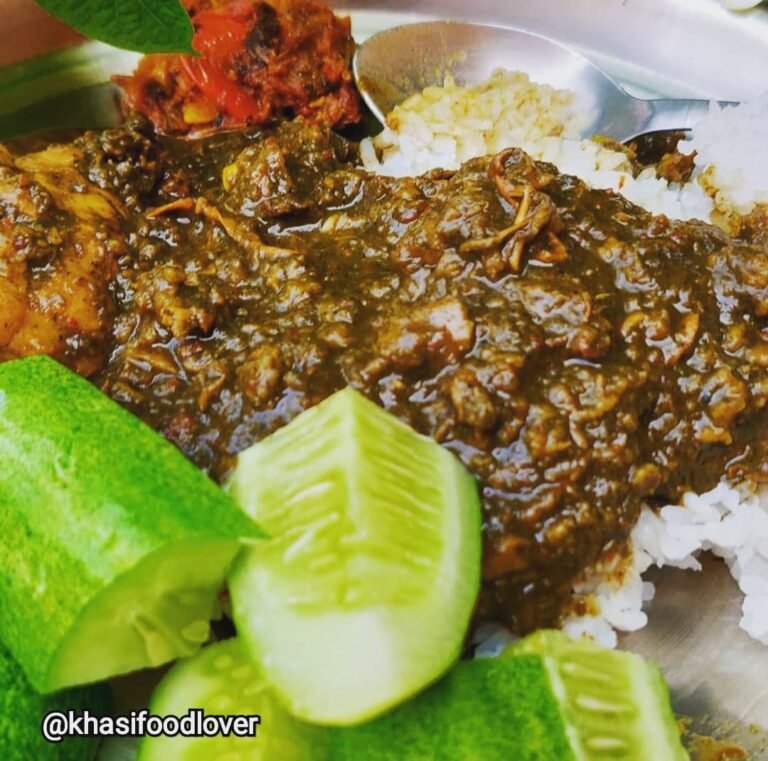
    Elders have taught that only the most special and most delicious food are to be given as "Ja Khonbo". Elders have also taught that boiled eggs, jadoh (rice cooked with meat), dohsniang neiïong (pork cooked with black sesame), chicken curry, dai sboh neiïong (dal cooked with black sesame) and others are included in "Ja Khonbo".

    "Ja Khonbo" is a custom practiced by the Pnar people of Jowai. It is a wonderful custom that expresses care for a mother and welcomes a child into the world. 🤱🧑‍🍼👼 🙏

    Khublei Chiboon Anvil ya i e jingmut yong phi hawa thaw ya kani ka post! 😄🙏

    🟡 Source: Anvil Ritre Laloo

    🟡 Khasi and English translation by @speakyourroots

  • U Slap

    U slap haba u hap ha sla khyndew u hap syngngeit bad hap lynsher. Ha ki jaka bym don phlang ne kino kino ki jynthung, u slap u don ka bor kaba khlaiñ ban ksam bad pynmong ïa ka khyndew. Mar ïa slap ki symboh khyndew ne shyiap ki shah kynting kumba Iai haduh san inshi na sla khyndew shalor bad shah bret sharud na ka jaka ba kine ki symboh ki don mynshuwa. La ïoh jingkheiñ da ki riewstad ba u lapbah u lah ban pynkynriah jaka ïa ki symboh khyndew symboh shyiap haduh shispah ton ha ka shi akar ha ka shikynta.

    When rain falls on the earth it falls in a forceful beating or grinding motion. In a place with no grass or plants, rain has the strong power to punch through and pound the soil. The instant it rains, soil or sand are thrown up about three to five inches from the ground and then they fall on a different place from where they were. Scientists have discovered that heavy rain can move 100 tons of soil from one acre in one hour.

    Haba u slap u hap halor ka khyndew bym don jynthung ki symboh khyndew symboh shyiap bani bin bin ki set noh ïa ki thliew ki syar (pores) jong ka syrtap khyndew syrtap maw. Ka umslap ba bun ka tuid noh wut tang nalor sla khyndew bad tang khyndiat eh ka ngam shapoh ñiamra. Ïa kane ka jingtuid umslap nalor ki jaka bym don ne duna jynthung la khot "ka tuid wut" (run off) katba ïa ka jingtuid umslap ha sla khyndew ha baroh ki jaka ba don khlaw ne bym don khlaw la khot "ka tuid lor" (overland flow).

    Kane ka tuid wut bad tuid lor jong ka umslap ki long ki bor bashyrkhei ban khrud bad pynkhoi ïa ka sla khyndew.

    When rain falls on a place that is empty of plants, the fine soil or sand that is moved by the rain covers and blocks the pores of the earth and of rocks. Most of the rain water flows quickly over the ground and only a little seeps through into the earth. This flow of rain water in a place where there is less or no vegetation is called run off, while the rain water that flows in a forested area or a non-forested area is called overland flow.

    Run off and overland flow of rain water are dangerous forces which scrub and erode the top soil.

    U slap bad ka rukom hap jong u…Sngewtynnat ban pule ïa kane ka jingthoh ha ka kot i Dr. Dondor Giri Nongkhlaw. 🌦️🌧️

    Rain and the way it falls…It is always a good idea to read books written by Dr. Dondor Giri Nongkhlaw. 🌦️🌧️

    Dr. Dondor Giri Nongkhlaw is a Geomorphologist who has written several Khasi books focussing on the elements of the environment and their bond with Khasi life and culture.

    🟡 English translation by @speakyourroots

  • U Pumaloi ne u pizza

    😄😄 Ka dei ka jingshisha ba wat ma ngi kiba lah ïa samla, lah rangbah ruh ngi bang da kiwei ki jait jingbam. Tangba ki jingbam Khasi jong ngi ki dei kiba bha shikatdei, ki long kiba bsa bad tei ïa ka met.

    "Pu maloi" is another kind of steamed rice cake of the Khasi and Pnar people. It is generally eaten with tea or dipped in tea. ☕🍚

    Slow food is carefully prepared using traditional cooking methods and organic ingredients. It is produced or prepared in accordance with local culinary traditions, typically using high-quality locally sourced ingredients.

    Please tell us your favourite indigenous food or snacks! 😋😋

  • Kyntem ñiuhmat

    Ka ktien Khasi "kyntem ñiuhmat" ka mut haba ïa u briew uba i jaipdeh ne haba ka jingjaituh la ithuh na ka jingnoh bad jinghiar u ñuihmat shapoh khyndew. Lah ban ong ruh ba ka "kyntem ñiuhmat" ka pynwan ïa ka jingnoh jaituh jong ka dur bad ka met baroh kawei. Kam don ka jingsngew smat sngew sting bad kam don ka jingkyntu nalade ban leh eiei.

    The Khasi phrase "kyntem ñiuhmat" refers to instances when the laziness and indolence of a person is evident in the downward bend of the eyebrows or in long drooping eyelashes. It may be said that "kyntem ñiuhmat" creates an image of a lethargic and sluggish person. There is no spring of activity and there is also no motivation to do anything.

    "Kyntem ñiuhmat" is a Khasi description of a facial expression that we have all made 😄😅 Hopefully "kyntem ñiuhmat" is only a temporary phase 😜

    Ha ka Khasi ngi lah ban ong: "U la kyntem ñiuhmat haba u la ïohi ïa ka lyngkha ka bym pat dep puh."

    🟡 English translation by @speakyourroots

  • Ka Dienshonhi

    Ka kyntien "Dienshonhi" ka thew ïa ka "Dak-Thoh-La-Jong". Da lah phiah ïa ka, ka long kumne harum:

    Ka kyntien "Dien" ka mut ïa kano-kano kaba paw haba la ïuh ne kano-kano ka jingpynsah dak ïa kiba bud nadien khnang ba kin lait na ka jingshah ïalam bakla. Ka kyntien “Shon” ka wan na kaba pynskhem ban nym jah ka dien na kaba shim nuksa na ka dien ban dang ïai pynmih dien shuh. Ka kyntien “Hi” ka thew ïa uno-uno ne kano-kano kaba pynmih dien namar kata, ka wan ka ktien “Dien-Shon-Hi”.

    The Khasi word "Dienshonhi" refers to "Dak-Thoh-La-Jong" which may be translated as that which is written by oneself. When it is broken up it means as follows:

    The word "Dien" means something that is seen or formed like a footprint or any other imprint or a sign that is placed to help people not get lost. The word "Shon" means to press down on something to leave a permanent imprint. Thus "shon" will strengthen that which is imprinted, to avoid it being lost. "Shon" will also take the example of the imprint to produce more imprints in the future. The word "Hi" refers to anything or anyone who produces an imprint. Thus, the word "Dien-Shon-Hi" is coined.

    Ka Dienshonhi: The Khasi Encyclopaedic Dictionary by Rev. Dr. Iarington Kharkongngor

    Ka kyntien "Dienshonhi" ka dei ka kyntien kaba la sot bad pynsaiñ dur na laitylli ki kyntien, kita ka "Dien", "Shon" bad "Hi". La pynïamir jingmut ïa kine lai ban long kawei ka kyntien, khnang ban pynshynna ïa ka jingmut jong ka kyntien nongwei kaba long "Dictionary". Namar kata, ngi lah ban ong ba ka kyntien "Dienshonhi" ka long ka kyntien ïamir, ka kyntien saiñ ne kaba ki ong ha ka ktien nongwei "coinage".

    The word "Dienshonhi" is a word that has been coined from three words, that is, "Dien", "Shon" and "Hi". The three words have been blended and brought together to express one meaning, so as to make clear the meaning of the English word "Dictionary". Thus, we can say that the word "Dienshonhi" is a coined word or coinage.

    Coining new words is one sure way for a language to grow! 😃🗣️🗣️📝 Two Khasi words in the post above which have been coined to explain the meaning of the English word "coinage" are 🟢 "kyntien ïamir" and 🟢 "kyntien saiñ".

    #kyntienïamir #kyntiensaiñ

    La ha ka kren ne ka thoh, ngi lah ban pynwandur bad saiñ dur ïa ki kyntien ki ban pynroi bad pynïar ïa ka ktien Khasi 🙏😃🗣️📝

    🟡 Source: Rev. Dr. Ïarington Kharkongor

    🟡 Translation and further elaboration by @speakyourroots

  • Lets learn them!

    Syngket ne Taphah ka dei ka riat kaba noh arsut da pynïeng; shám-shám riat; lum mawsiang/ Precipice

    Mikhli ne Milai ka dei ban pynïakhlehlang/ to mix up

    Halai Halai ka mut suki-suki ne mian-pa-mian/ slowly-slowly or by and by

    Kyrwiang ne Phái war ka mut ban phai sawdong/ to turn around

    Ngi hap ban ïa leh ban kren ne ban thoh da ki kyntien ki ban pynïar ïa ka ktien Khasi. Ki symboh kiba kynshew man ka sngi kin kyrbah ïa ka jingmut bad jingleh jong ngi 😄🙏

    Here are some Khasi words which we can try to use everyday. Grain collected everyday will sustain our thoughts and actions 🌾🌬️

  • Ka lyngknot, ka borti bad ka mok

    Da stai katno katno ruh, m don shuh ha pyrthel kum ka lyngknot, ka borti bad ka mok. Kumno kumto klet noh sa ïa u sohprew bad u mawshut met! 😂 🧖🧽🧼🪒🪥

    I can hear my grandmother calling me from the bathroom: "Bih heh wan shut met ïa nga!" 😂😂