Tag: talklocal

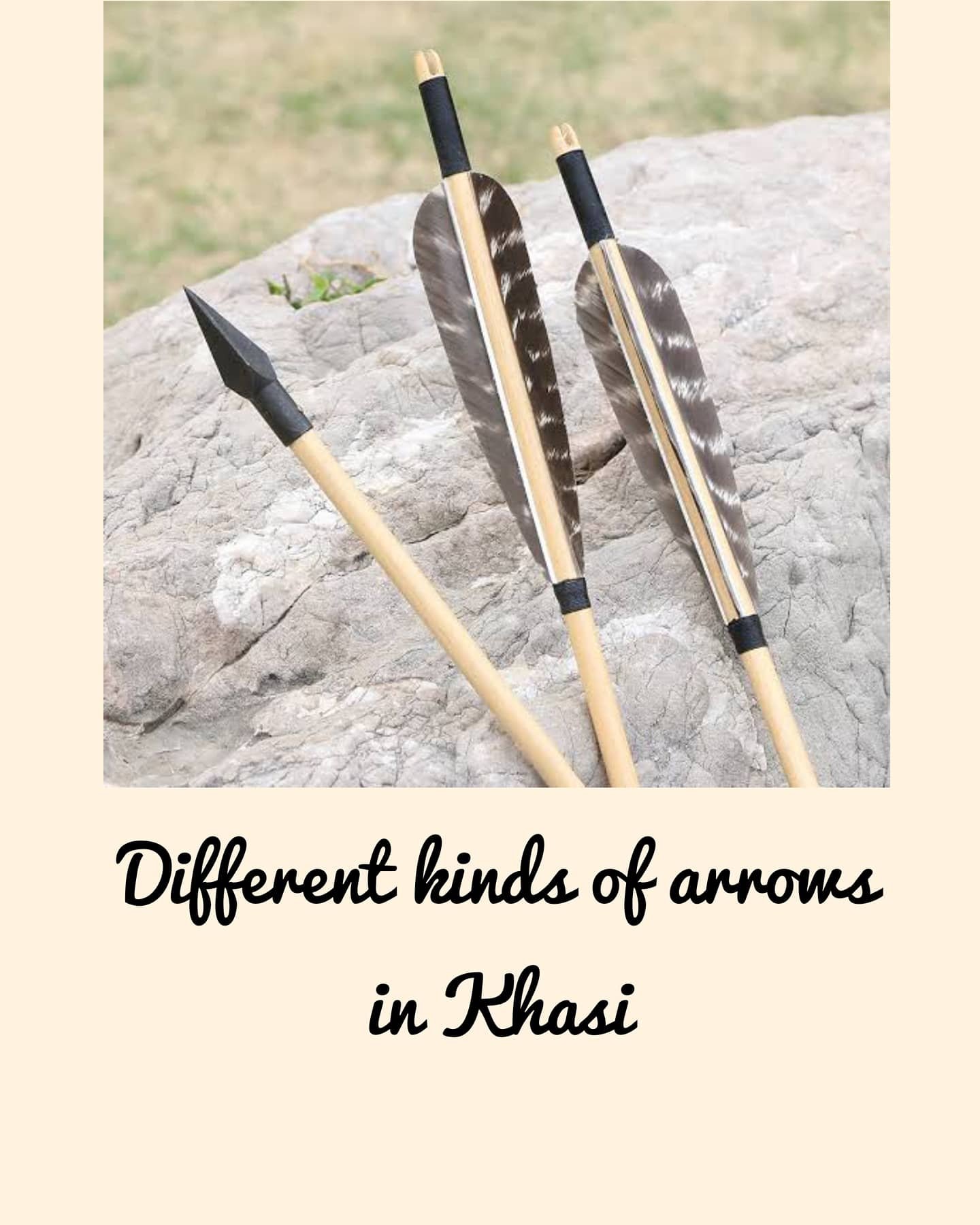
  • Different kinds of arrows in Khasi

    "U 'nam-ïong" u dei u khnam ba don dak ïong ha ki sner jong u (An arrow with a black mark on its feathers/fletching).

    "U 'namlang" u dei u khnam 'langtylli; u khnam kdait (An arrow made from a kind of reed).

    "U 'namphiah" u dei u khnam shiliang sner bad bunsien la ju pyndonkam da ki khynnah (An arrow having feathers/ fletching only on one side and is mainly used by children).

    "U 'namphong" u dei u jait khah uba la ju pyndonkam kum u khnam na ka bynta ban siat sim (Reed that is used as an arrow when shooting birds).

    "U 'namtabla" u dei u khnam pynbúd uba dei ha ka met jong u mrad. Ïa uno uno u briew uba ïoh pynban khnam kumta bad ynda ki la ïoh ïa ka mrad ki ai ka siang tyrpeng ïa u (The arrow that triggers the pursuit of a hunt. The person who is responsible for this is prized with the shoulder blade of the animal).

    "U 'namthang" u dei u khnam bym don sop ba la shu syang pynrkhiang haduh ban da eh bha tnaw. (An arrow without an arrowhead which has only been dry-roasted over a fire till it is very hard).

    "U 'namtohrih" u dei u jait phlang uba long kum u khnam (a kind of grass or reed which is like an arrow and can be used as one).

    "U 'nampliang" u dei u khnam sngáb; u khnam sop. U sngáb u dei u kynja jingpynwoh ha u khnam. La ju pyndonkam bunsien tang ha ka thma bad kaba siat mrad (An arrow with a bard; an arrow with an arrowhead, which is used only during wars and animal hunts).

    "U 'nampur" u dei u khnam sner (A feathered arrow).

    U 'namsop u dei u khnam uba ka dur jong u sop ka long kum ka khoh. La ju pyndonkam ha kaba ïa siat thong. (An arrow whose arrowhead resembles the cone-shaped "khoh". It is used during archery competitions).

    "U 'namtympem" u dei uwei na ki lai tylli ki khnam ba siat na ka kpep ha ka por thang briew. Ïa uba nyngkong ki siat shaphang shatei; ïa uba ar sha sepngi bad ïa uba lai pat shathie. Kane ka rukom ka long ban beh ïa ki ksuid kiba wan thap ban pynbakla lynti ïa ka mynsiem u nongïap. (One of the three arrows shot from the funeral pyre. The first arrow is shot towards the north, the second arrow is shot towards the west and the third arrow is shot towards the south. This protects the spirit of the deceased from being led astray).

    Arrows form an important part of many tribal cultures. They are used for hunting, in games and competitions and during wars. Here are different names of arrows in Khasi! ⬆️↗️➡️↘️⬇️⬅️↖️↪️↩️

    🟡 Source: Rev. Dr. Ïarington Kharkongor

    🟡 English translation by @speakyourroots

  • Ka wait tyngkrong

    Ka wait tyngkrong ka dei ka wait kaba pyndait da ki artylli ki kjat ha lyngkdong kum ban kyrshan haba ot doh. Ngi ju shong ha ka mula ne ha ka lyngknot haba ngi ot doh ha ka wait tyngkrong. (from Rev. Dr. Ïarington Kharkongor)

    "Ka wait tyngkrong" is a large Khasi traditional kitchen knife which stands on two legs at a 45 degree angle that is used to cut meat. One sits on a mula (traditional woven stool) or lyngknot (low wooden stool) to cut meat on the wait tyngkrong.

    Ka Wait Tyngkrong" is a very handy large bladed kitchen knife used by Khasis and Pnars. We can sit comfortably and cut meat accordingly dropping the pieces into a large aluminium/ steel dabor (a large aluminium/steel basin).

    Khublei Shibun @ethnic_food_quest for sending this! 🥩🍗🍖

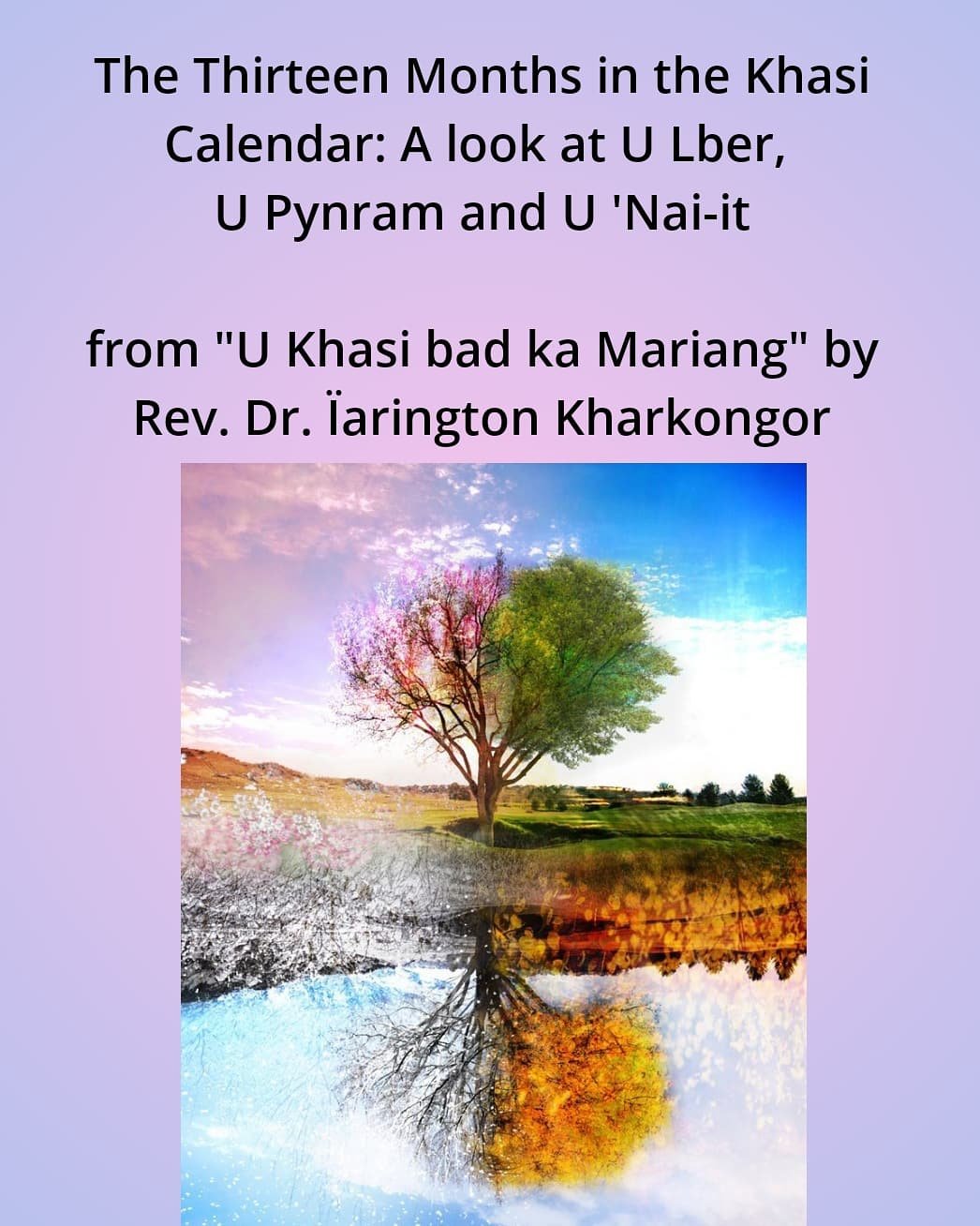
  • The Thirteen Months in the Khasi Calendar: A look at U Lber, U Pynram and U ‘Nai-it

    Ki nongrep Khasi ki kheiñ ba don khatlai (13) bnai ha ka shi snem. Baroh ki bnai ki don arphew phra (28) sngi lait noh ha ka Snem Ryngkoh (leap year), kata man ka saw snem don arphew khyndai sngi ha u Rymphang. Ka kyrteng ki bnai ki long: U Kyllalyngkot ne Kyllalyngkhot, U Rymphang, U Lber bad U Pynram, U Ïaïong, U Jymmang, U Jylliew, U 'Naitung, U 'Nailur, U 'Nailar, U 'Nai-it, U Risaw, U 'Naiwieng bad U Nohprah. Baroh kitei ki bnai ki don la ka jong ka jong ka dor bad ka jingmut. Ki nongrep haba ki ai kyrteng ïa kitei ki bnai, ki don ka jingmut ban pynïadei ïa ka rukom rep bad ka mariang.

    U Lber bad u Pynram

    U Lber, u bnai uba lai jong ka snem, u dei u bnai pyrem. Ha une u bai don ar tylli ki kyrteng – u Lber bad u Pynram. Baroh ar kine ki kyrteng ki don mar khatsaw sngi; kata ka mut naduh ba mih haduh ba pyllun bnai u dei u Lber bad naduh ba pyllun bnai haduh ba sep bnai u dei u Pynram. Haba kheiñ lang ïa ki sngi jong u Lber bad Pynram ki long arphew phra. Ar taïew na ki-ka taïew kaba nyngkong bad ka taïew kaba ar, ki hap ha u Lber, bad ar taïew pat, uba lai bad uba saw, ki hap ha u Pynram. Baroh saw tylli ki taïew ki ïaryngkat sngi kawei ïa kawei pat.

    U 'Nai-it

    U 'Nai-it u dei u bnai uba shiphew jong ka snem, u dei u bnai uba ar jong ka Synrai. Une u bnai u don saw taïew lane arphew phra sngi. Une u bnai u wan long kyrteng na ka jingpah u kbeit bad kiwei pat ki jait sim kiba her ha suiñ bneng. Ha une u bnai haba u kbeit u swait ha suiñ bneng ban kem sim ne kem khnai u ju pah "it it-it it". U long u bnai ba ki sim laiphew jait ki sngewtynnat ban her suwari ha suiñ bneng ban kem khnai ne khñiang. Baroh ki jait khñiang, ki dkhiew bad kiwei pat ki kynja ba im ki sngewtynnat ban paw pyrthei ha une u bnai. Ki ïa mih na la ki jong ki jong ki trep ban ïalehkai bad rynsied sngewbha ha sla khyndew namar ka bneng ka la rang itynnat bad u kba u la sang saw doh.

    Khasi farmers calculate that there are thirteen (13) months in a year. All the months have 28 days except for a leap year. The names of the months are: U Kyllalyngkot or Kyllalyngkhot, U Rymphang, U Lber bad U Pynram, U Ïaïong , U Jymmang, U Jylliew, U 'Naitung, U 'Nailur, U 'Nailar, U 'Nai-it, U Risaw, U 'Naiwieng and U Nohprah. All these months have their own value and meaning. When farmers give names to these months, there is a connection between agricultural activities and the environment.

    U Lber and U Pynram

    U Lber (which may be March) is the third month of the year which is a Spring (Pyrem) month. In this month there are two names – U Lber and U Pynram. Both have fourteen days each; meaning from the new moon to the full moon is U Lber and from the full moon to the waning crescent is U Pynram. When calculated the total number of days is twenty-eight. The first two weeks belong to U Lber and the third and last weeks belong to U Pynram. All four weeks follow the same day pattern.

    U 'Nai-it

    U 'Nai-it is the tenth month of the year and it is the second month of Autumn. This month has four weeks or twenty-eight days. This month gets its name from the chirping of a bird called u kbeit (which the Khasi dictionary calls "a kind of hawk") and other kinds of birds. During this month u kbeit while hunting smaller birds and rats makes an "it it-it it" sound. Different types of birds go around flying everywhere during this month to hunt rats and insects. Many kinds of insects, ants and others like to emerge during this time. Animals and insects enjoy this time of the year as the weather is sunny and paddy also begins to redden.

    The Khasi way of calculating the number of months is very interesting! 😀😀 It goes hand in hand with the phases of the moon 🌕🌓🌔🌖🌘

    🟡 English translation by @speakyourroots
  • Ïing Trep Khasi

    Oh gosh! Our first meme!🥳 Tell us in the comments section what else can we find inside ka ïing trep?

  • The Calculation of Days and Months according to the Khasis

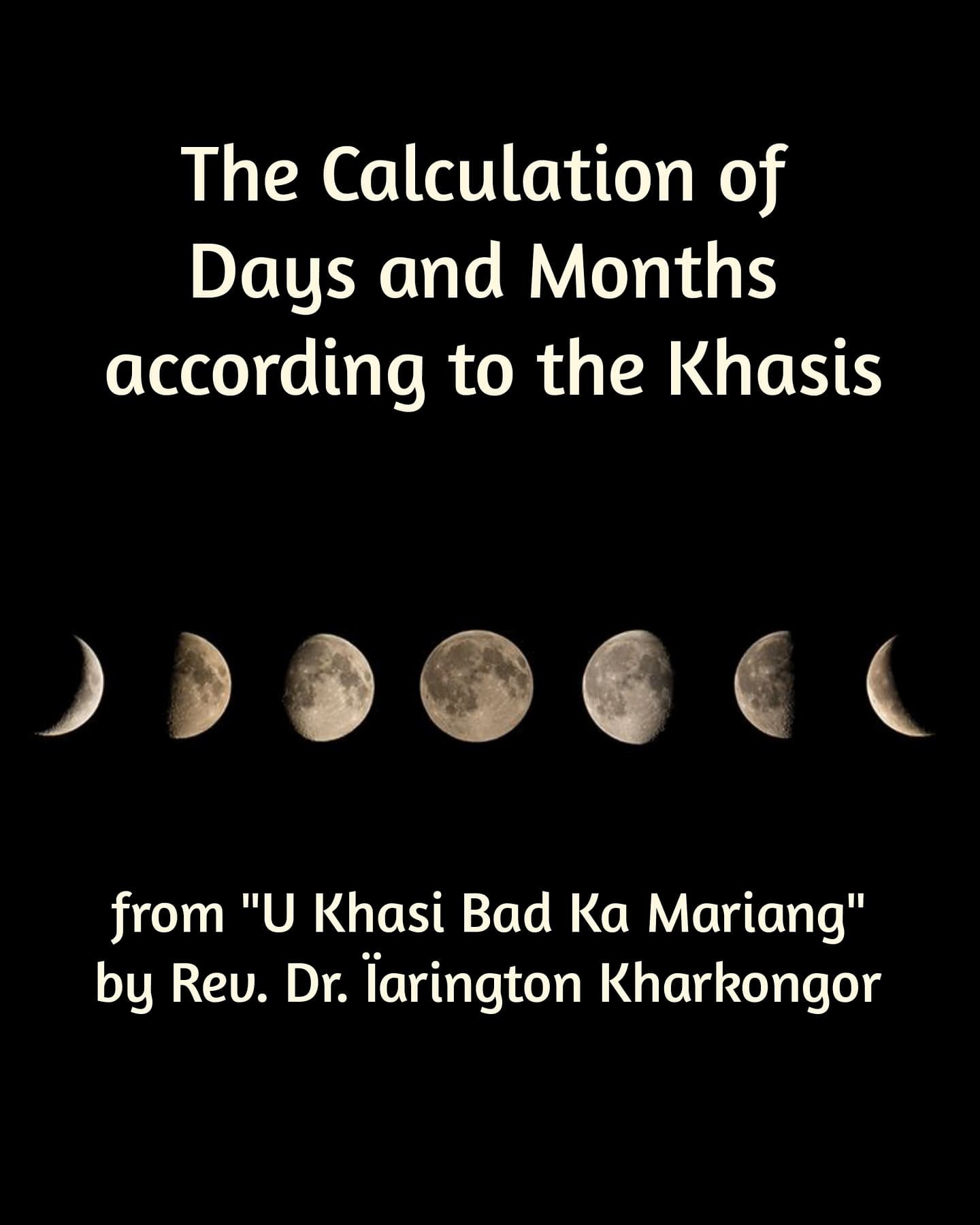
    Ka rukom kheiñ tarik u Khasi ka long ba u Khasi u kheiñ ïa ka jingsdang bad jingkut bnai na ka jingmih bad jingsep u bnai ha sahit bneng (moon calendar).

    Haba u Khasi u ong "Lung bnai" ka mut ka taïew kaba nyngkong; haba u ong "Pyllun Bnai" ne "U 'Nai Khatsaw Synñia" ka mut ka taïew kaba ar; haba u ong "Ngen Bnai" ka mut ka taïew kaba lai bad haba u ong "Sep Bnai'" ka mut la kut bnai. U Khasi khamtam u nongrep u sngewthuh ba don tang arphew hynñiew sngi shiteng ne arphew phra sngi (27½ ne 28) ha ka shi bnai.

    The way in which the Khasis calculate days or months is by looking at the phases of the moon, from the beginning to the end (moon calendar).

    When the Khasis say "Lung Bnai" this refers to the first week; when they say "Pyllun Bnai'" or "U 'Nai Khatsaw Synnia" this means the second week; then "Ngen Bnai" refers to the third week and finally, "Sep Bai" means the end of the month. Especially the farmers, they understand and calculate that a month has 27½ or 28 days.

    It's a full moon today guys! 🌕 The September full "harvest" moon is here so enjoy the "Pyllun Bnai" while it lasts 💛🤍💛🤍

  • Ïa Ngam Um

    Ha ki por hyndai, haba don ka jingïakajia majia hapdeng ki arliang mamla kaba ma kaba lah ban kad ne khih ka hima ban rai ryngkew, ki ïapynhiar noh da ka ngam-um ha khmat u Syiem bad ki myntri korbar-ri baroh. Ki mamla ki sei la ki ksih bad ka liang jong uta uba kan slem, ka jop. Ym ju don shuh ka ïaphoi ïapeit pyllew khmat namar ki kheiñ ba ka long ka rai blei. Ïa kito ki briew kiba ïangam um ki khot ki ksih bad ka ju don ruh ka ïapung ïathong da ka tyngka ne ka ksiar para nongïaleh ne hapdeng ki arliang mamla bad kat uba jop u ïoh ïa ka.

    In the olden days, when there was a quarrel between two parties which could lead to a dangerous situation, even to division or unrest in a kingdom, in order to reach an agreement or compromise, a competition called "Ïa Ngam Um" would be held. "Ïa Ngam Um'' was a competition where divers would hold their breath under water and the one who could hold his breath the longest would be the winner. After the winner was declared, there was no offense taken, no anger or grudge held as the result of the competition was taken as a divine resolution. The competitors were called "ksih" which is the Khasi word for otter and the ksih or two parties would bet on money or gold, which the winner would claim as his prize.

    "Ïa Ngam Um" was a competition whose results ended all dispute. 🏊🏊 What a great way to end discord!

    🟡 Sources: Rev. Dr. Ïarington Kharkongor and Primrose Gatphoh

    🟡 English translation by @speakyourroots

  • The Pnar Alphabet

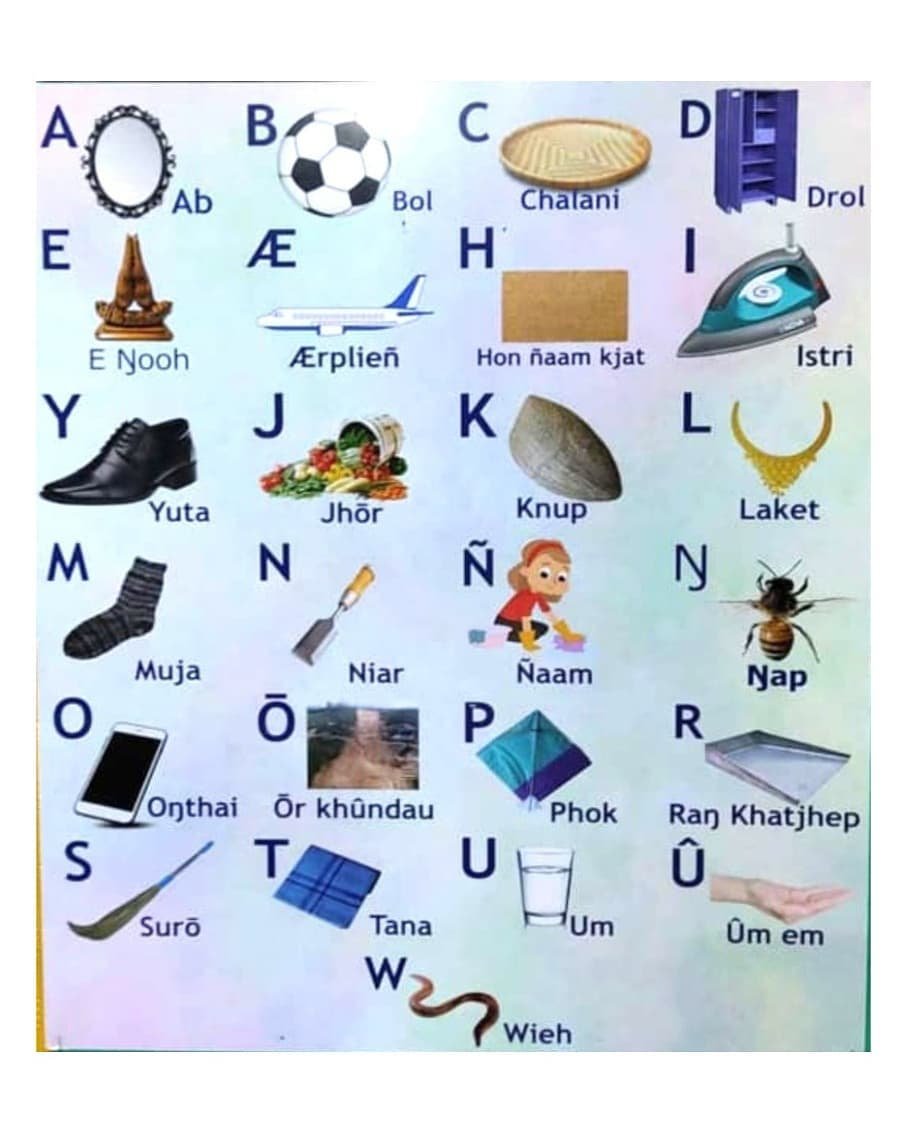
    Aa Ari! (Ani in Khasi)

    Bb Bol (Bol in Khasi)

    Cc Chalani (Pdung in Khasi)

    Dd Dieñ (Dieng in Khasi)

    Ee E ngooh (Ai nguh in Khasi)

    Ӕӕ Ӕrplieñ (Liengsuiñ in Khasi)

    Hh Hati (Hati in Khasi)

    li Istri (Istri in Khasi)

    Yy Yuta Juti in Khasi)

    Ji Jhōr (hur in Khasi)

    Kk Khai kyoh (Jyrhoh in Khasi)

    Li Lieñ (Lieng in Khasi)

    Mm Muja (Muja in Khasi)

    Nn Neini (Nangne in Khasi)

    Ññ Ñaam (Niad in Khasi)

    Ŋŋ Ŋap (Ngap in Khasi)

    Oo Oꞑthai (Phone in Khasi)

    Ōō Ōr khûndau (Twa khyndew in Khasi)

    Pp Phok (Kot kudi in Khasi)

    Rr Raᶇ Khatjhep (Tin khatñuit in Khasi)

    Ss Surō (Synsar in Khasi)

    Tt Tana (Rumal in Khasi)

    Uu Um (Um in Khasi)

    Ȗȗ Ȗem (Ym don in Khasi)

    Ww Wieh (Wieh in Khasi)

    The need for a Pnar alphabet has been felt for a long time. The Jaiñtia Hills Autonomous District Council (JHADC) released the Jaiñtia Phonetic Alphabet on the 25th of March 2021. (https://wyrta.com/pdiang-ka-dorbar-ka-jhadc-ya-ki-dak-thoh-pnar/)

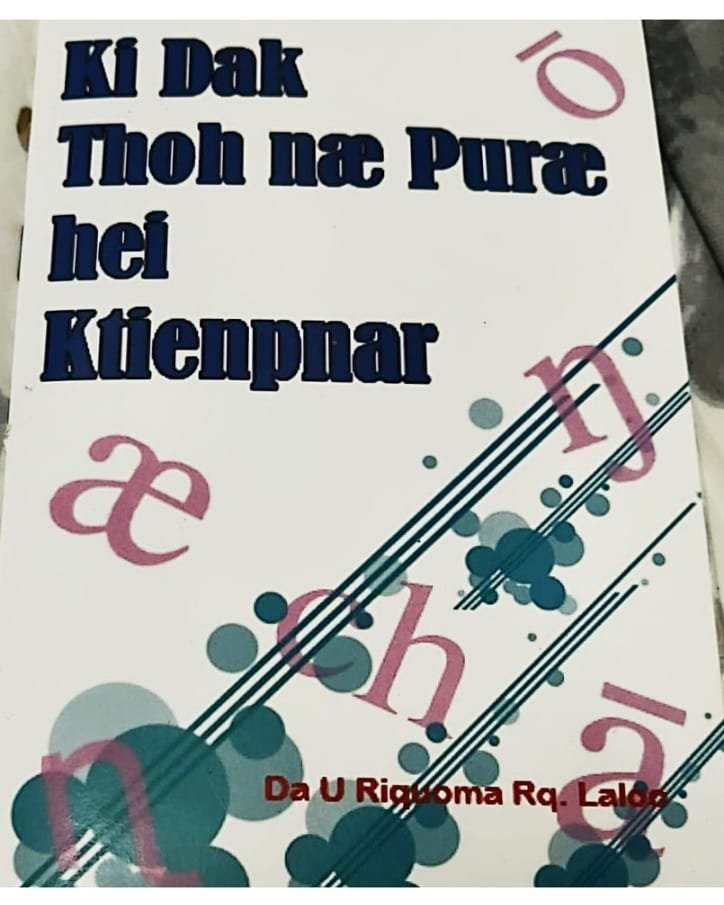
    The two books are:

    🟡 Ki Dak Thoh næ Puræ Hei Ktien Pnar by Riquoma Rq. Laloo.

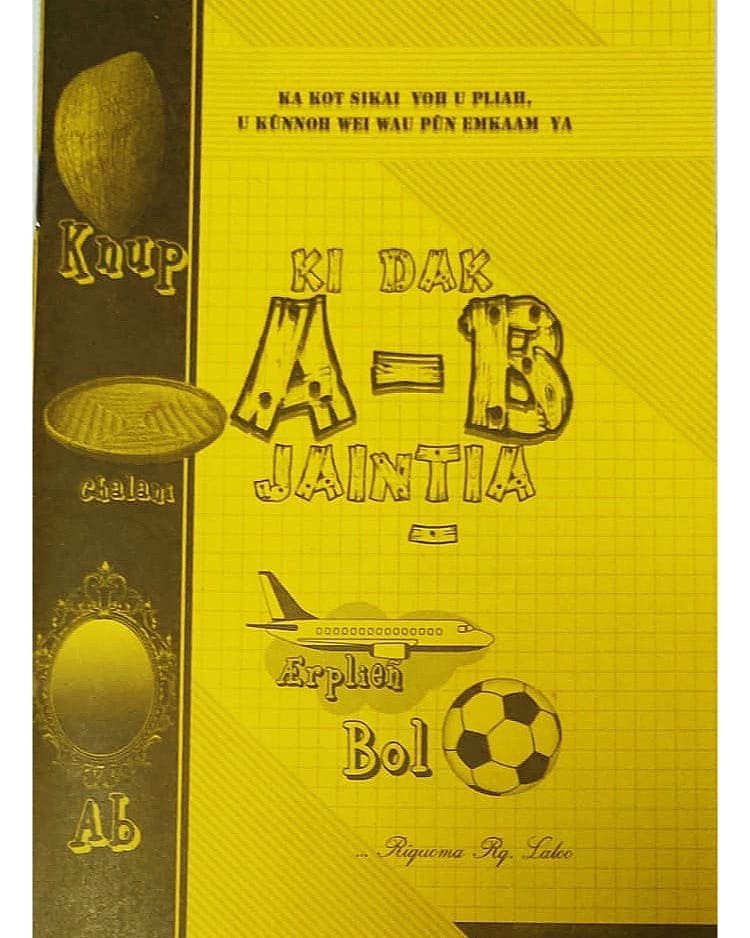
    🟡 Ka Kot Sikai Yoh U Pliah u Kûnnoh Wei Wau Pûn Emkaam Ya Ki Dak A-B Jaiñtia by Riquoma Rq. Laloo.

    🟡 Picture of alphabets with illustrations is from Ka Kot Sikai Yoh U Pliah u Kûnnoh Wei Wau Pûn Emkaam Ya Ki Dak A-B Jaiñtia by Riquoma Rq. Laloo.

    You can watch a video on YouTube for the correct pronunciation of the letters at this link: https://youtu.be/q49RFIfCZH0

    We would like to congratulate Riquoma Rq. Laloo for publishing these valuable books. If anyone is interested in purchasing the books please DM us. Thank you Riquoma Rq. Laloo for sending the pictures of the books! 🙏🙏

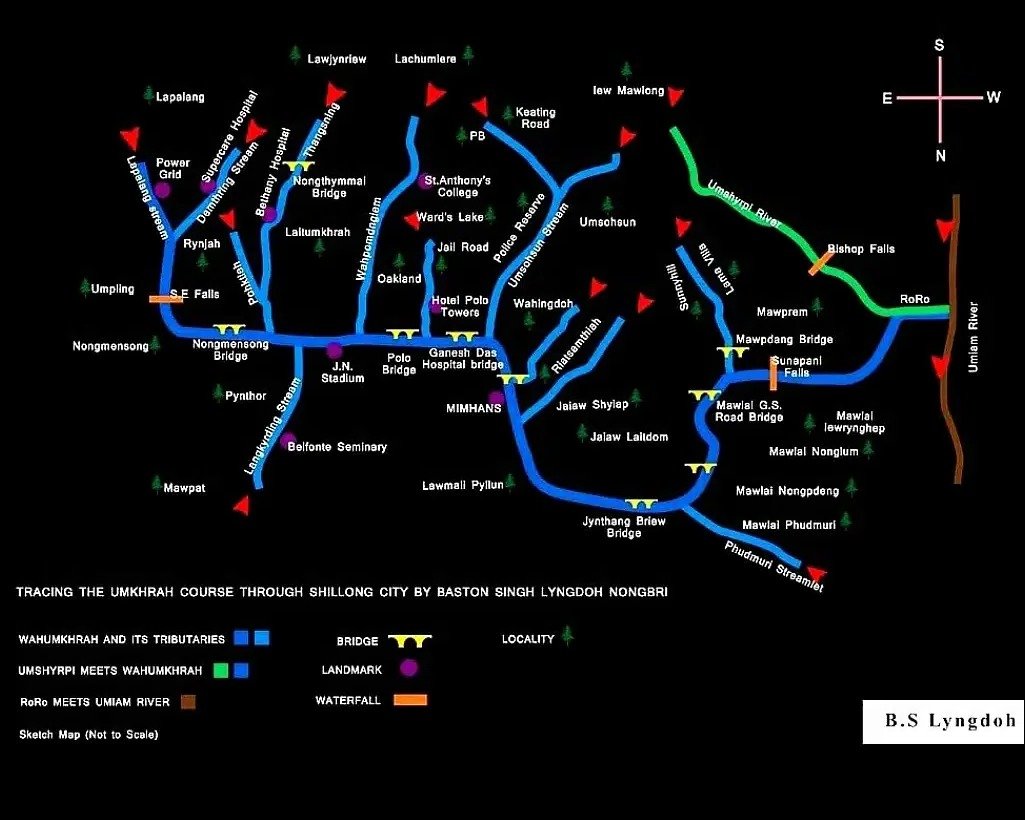
  • Tracing the course of Wah Umkhrah through Shillong city by Baston Singh Lyngdoh

    This map showing the course of Wah Umkhrah has been drawn by Baston Singh Lyngdoh as part of the creative research for the production "Ngan Hiar Sha Wah" (I'm Going Down to the River) by Lapdiang Syiem and team under REFUNCTION 2020-2021 awarded by Goethe Institut/Max Mueller Bhavan, New Delhi.

    No part of this work may be reproduced in any form without the permission of the author. All material for this content has been researched by Baston Singh Lyngdoh.

    The tributaries of Ka Wah Umkhrah as shown by Baston Singh Lyngdoh (from left in the map) in "Ngan Hiar Sha Wah" are as follows:

    Wah Lapalang

    Urkaliar

    S.E. Falls

    Wah Demthring

    Wah Pohktieh

    Wah Thangsning

    Wah Pomdngiem

    Ward's Lake

    Umsohsun

    Wahingdoh

    Wah Golflink

    Polo

    Wah Mawpdang

    Wah Kdait

    Wah Langkyrding

    Wah Phudmawri

    Wah Roro

    Ka Wah Umkhrah is mostly an eyesore to us but imagine what it could be like if it was pristine and clear, like in the days of our grandparents! 🌅🌅 Please zoom to take a clearer look at the tributaries of Ka Wah Umkhrah.

    Khublei Shibun Baston S. Lyngdoh, @lapdiangsyiem and team for your tremendous work with highlighting the importance of Ka Wah Umkhrah! 🙏🙏

    Umkhrah River is one of the major perennial rivers originating from the foothill of Shillong peak and flows across the Shillong city from Northeast to Northwest direction and passes through some heavily congested localities viz. Nongthymmai, Rynjah, Lapalang, Umpling, Umkaliar, Nongmynsong, Polo, Wahingdoh, Jaiaw, Mawlai and Mawpdang areas. On its way the river is joined by many streams/drains which pass through some localities viz Nongrah-Poktieh, part of Mawlynrei, Nongrim hills, Laitumkhrah, Lachumiere.The Umkhrah River joins with Umshyrpi River at the northwest direction of Shillong city to form the Wah Ro-Ro. The Wah Ro-Ro finally discharges itself into the Umiam River, which is the main source of water to Umiam reservoir. (From https://megspcb.gov.in)

  • Ka Ngoh ka Ïan

    "Ka ngoh ka ïan" ka mut ka syrngiew briew; ka dur ka dar ha bym ïohi shuh ïa ka ïaid ka ïeng la slem ne haba khlem wan rung wan jngoh shuh ha ïing la bun snem.

    "Ka ngoh ka ïan" means the shadow of a person; when a person has not been seen out and about for a long time or someone who has not visited for many years.

    Subsequently, the word "ïan" implies a reduction, a lessening, a degradation or a weakening of power. So "ka ngoh ka ïan" refers to the reduction or the lessening of how much a person is seen or heard from, to the point that he is reduced to a mere shadow.

    In terms of the word "syrngiew", when we haven't seen someone in a long time we say: "Ani…ka syrngiew ruh khlem ïohi shuh lah slem" which means "Oh my…even his shadow has not been seen in so long".

    "Ka Ngoh ka Ïan" describes someone who has not been seen or heard from in a long time. These words eloquently capture a kind of loss or absence.

    Tag that friend who has become ka ngoh ka ïan 😄😂

    🟡 Source: Ka Dienshonhi: The Khasi Encyclopaedic Dictionary by Rev. Dr. Ïarington Kharkongor.

    🟡 English translation and explication by @speakyourroots

  • Primary Education in the Khasi and Jaintia Hills: Its Socio-Cultural Roots and Early History (1993)

    Here is an excerpt from the Introduction of the book Primary Education in the Khasi and Jaintia Hills: Its Socio-Cultural Roots and Early History (1993) written by E. Weston Dkhar. Dkhar is a prolific author of several books focusing on Khasi folklore and history.

    E. Weston Dkhar says: "Documents and maps indicate that the Khasi territory once extended to the Brahmaputra to the North and the greater part of the Surma Valley to the South. Kamakhya hills, where the Kamakhya temple stands, was known to the Khasis as "U Lum ka Meikha" or "The Grand Aunt's Hillock' (to mark the boundary) and many of the towns in the Kamrup District, Nowgong & District and Sylhet District like Kiew-hati (modern spelling Gauhati or Guwahati) meaning, "to ride on the elephant" or "to begin the journey by riding on elephant": Bordwar, Padwa, Jaintiapur, Shati (Chuttack), Shella-bari (Sylhet) and others were once the principal towns of the Khasis or their chief trading centres. The Lake Shati where the town of Chuttack stands belonged to Ka Shati, the wife of U Khang of Mustoh village, the founder of that village sixteen generations from hence."

    The excerpt discusses the borders of Khasi territory that stretched from the Brahmaputra river in the north to the Surma Valley in the south. The Surma River is a major river in Bangladesh, part of the Surma-Meghna River System. It starts when the Barak River (as it is known in Manipur) from Northeast India, divides at the Bangladesh border into the Surma and the Kushiyara rivers.

    Nowgong District is what we know as Nagaon District. Sylhet district was established on 3rd January 1782, and until 1878 it was part of Bengal province. In that year, Sylhet was included in the newly created Assam Province, and it remained as part of Assam up to 1947.

    It is intriguing to know that Khasi territory was much larger than we know it today. We definitely need to find out more about this! If anyone knows more please feel free to tell us in the comments section 😃😃

    Additional source: Wikipedia