Tag: tirotsing

  • U Tirot Sing and his contemporaries by Dr. Hamlet Bareh Ngapkynta

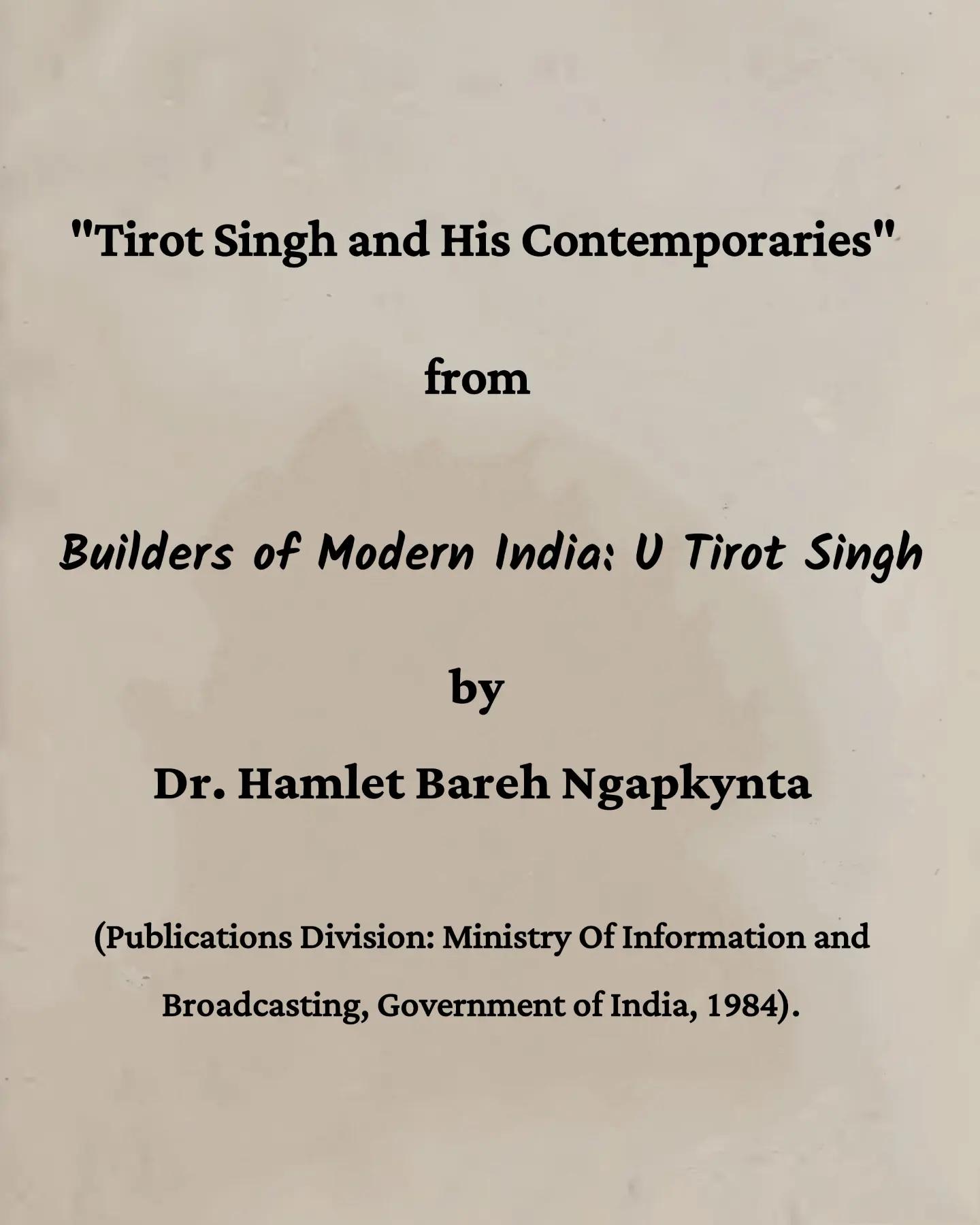
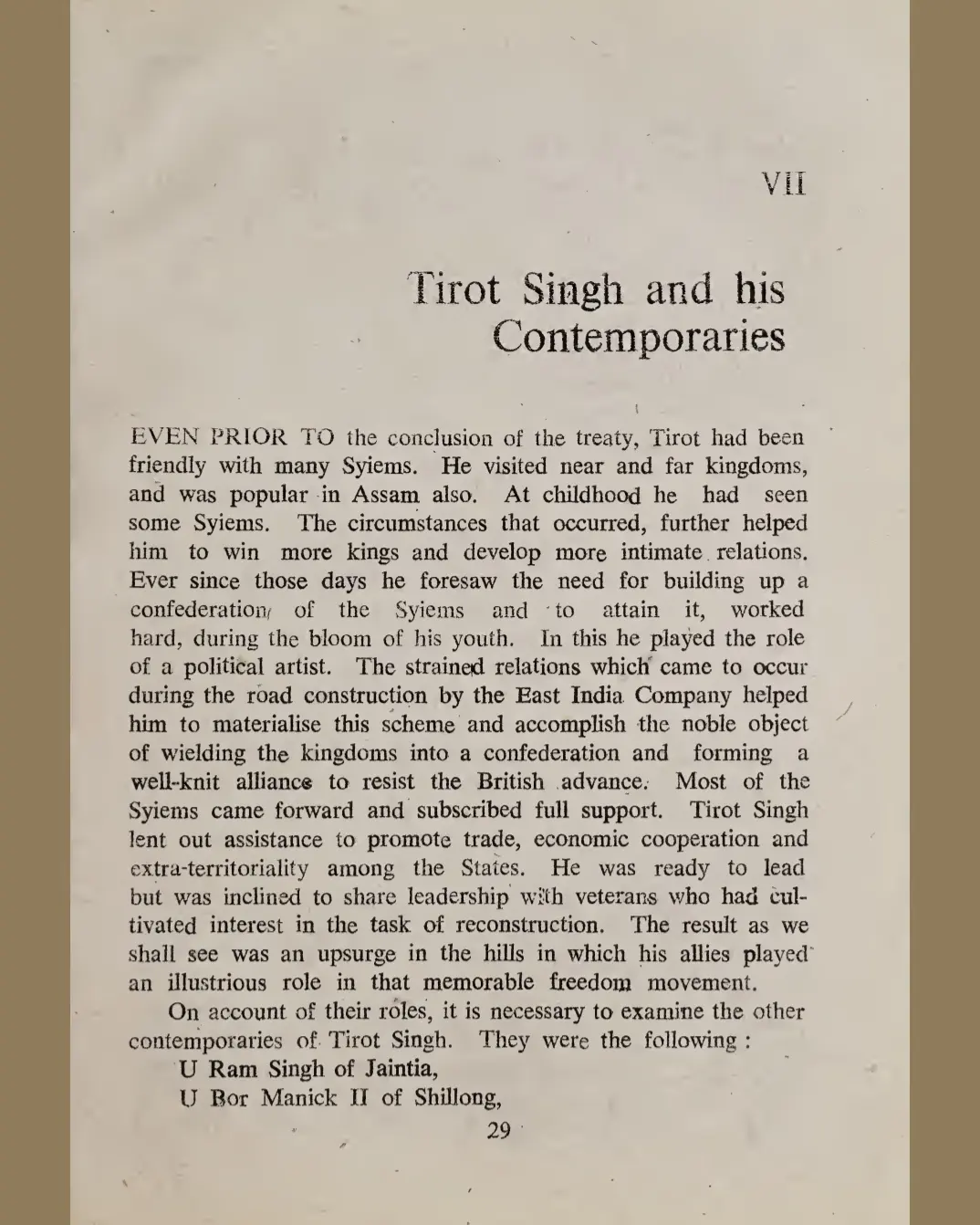
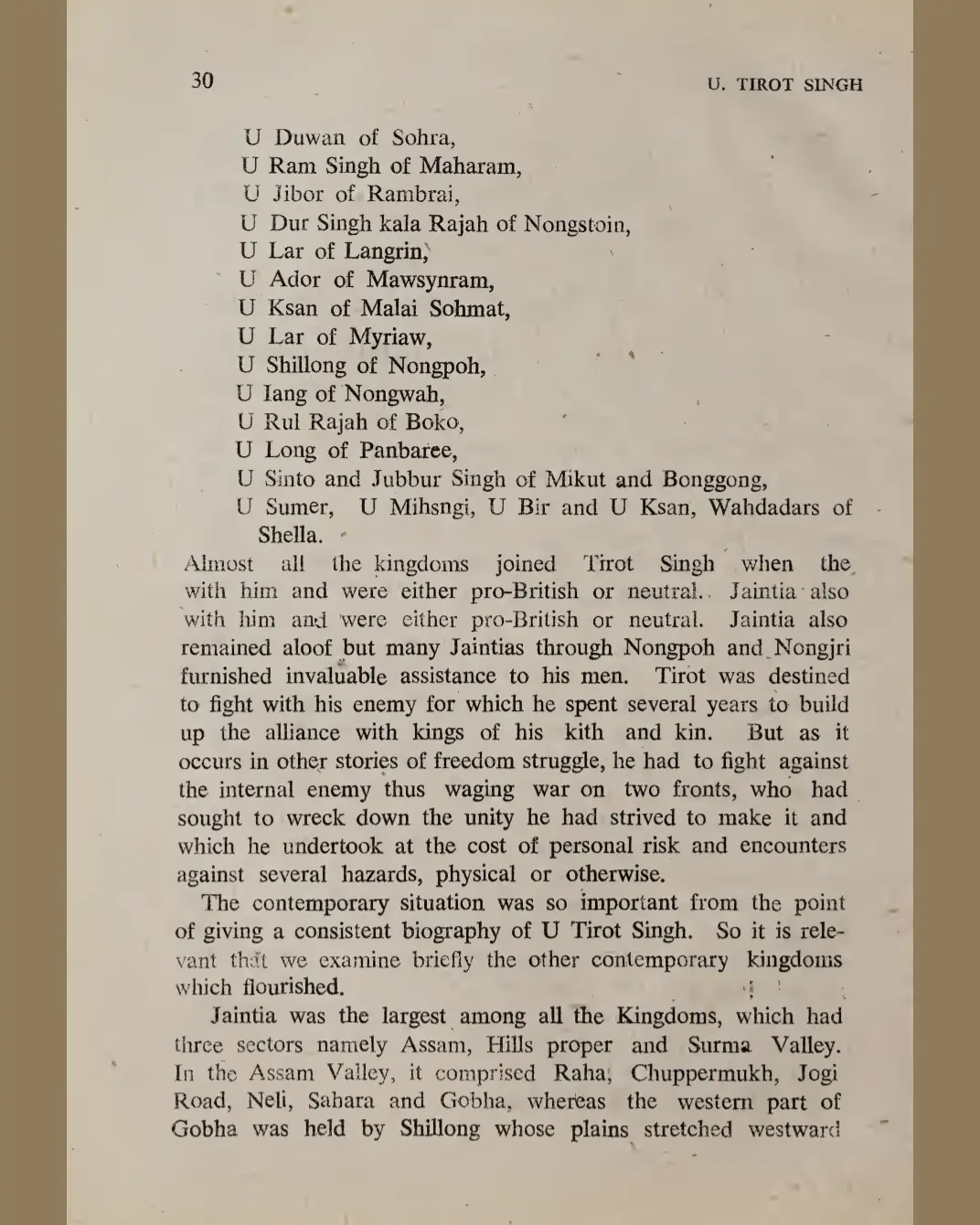
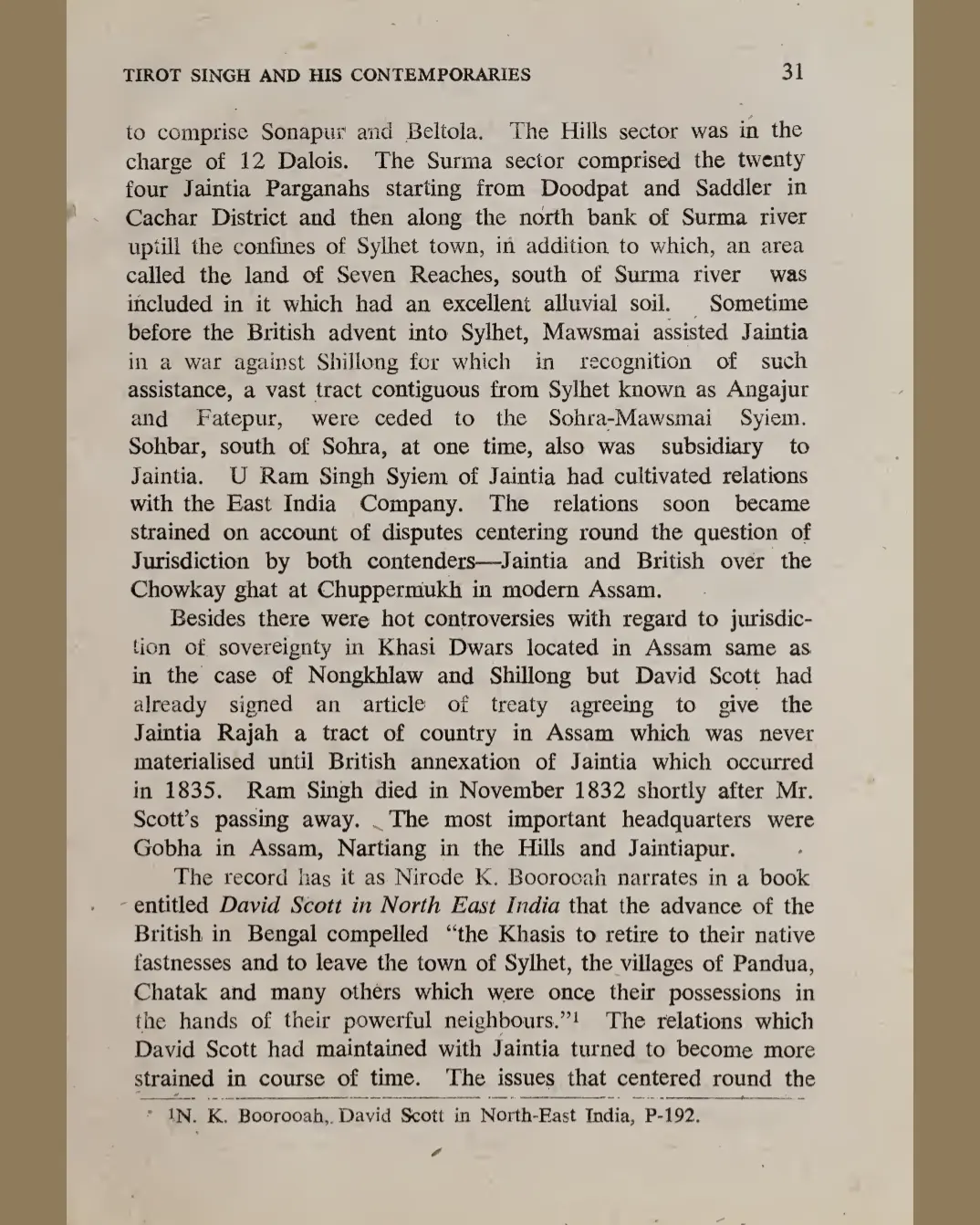
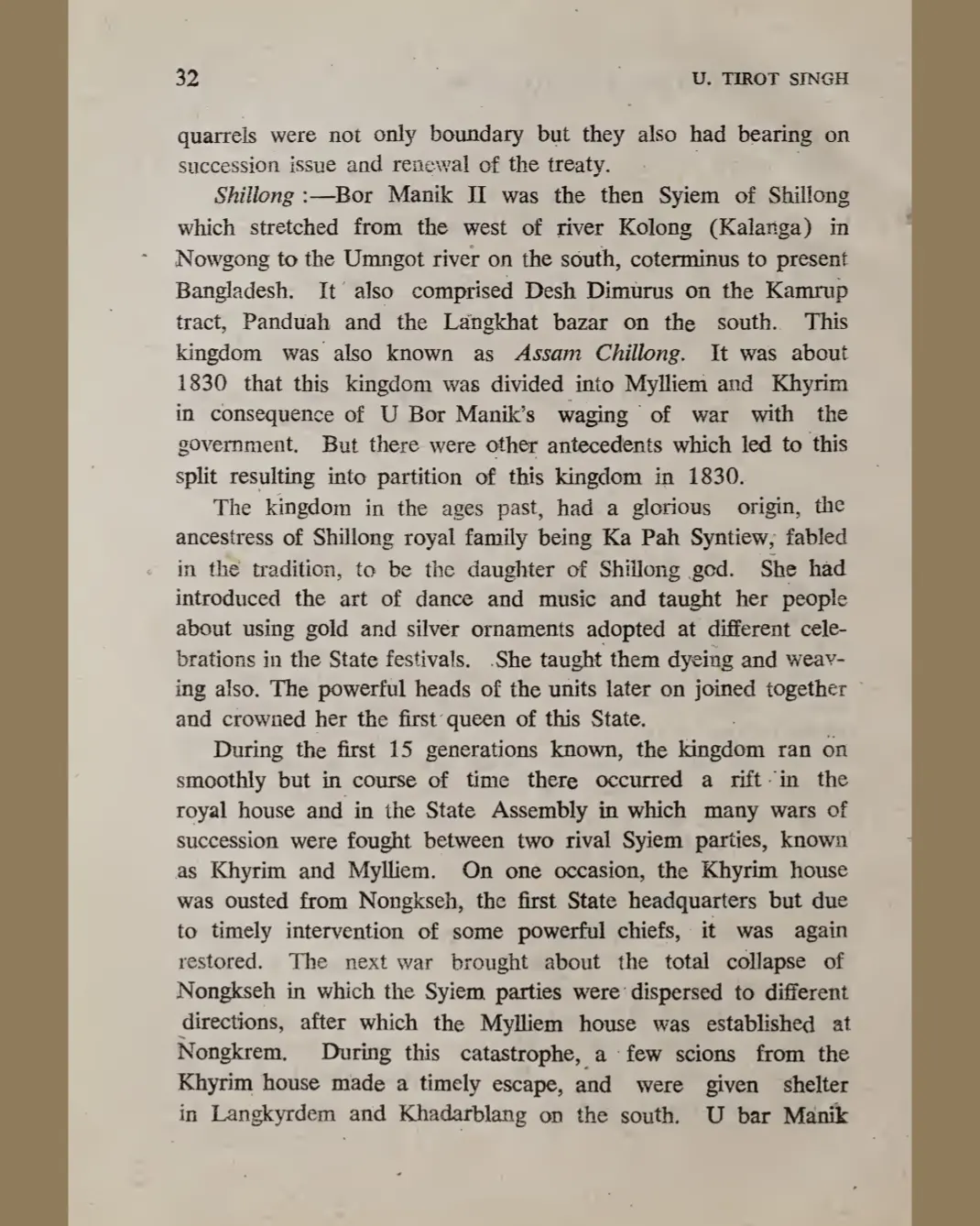
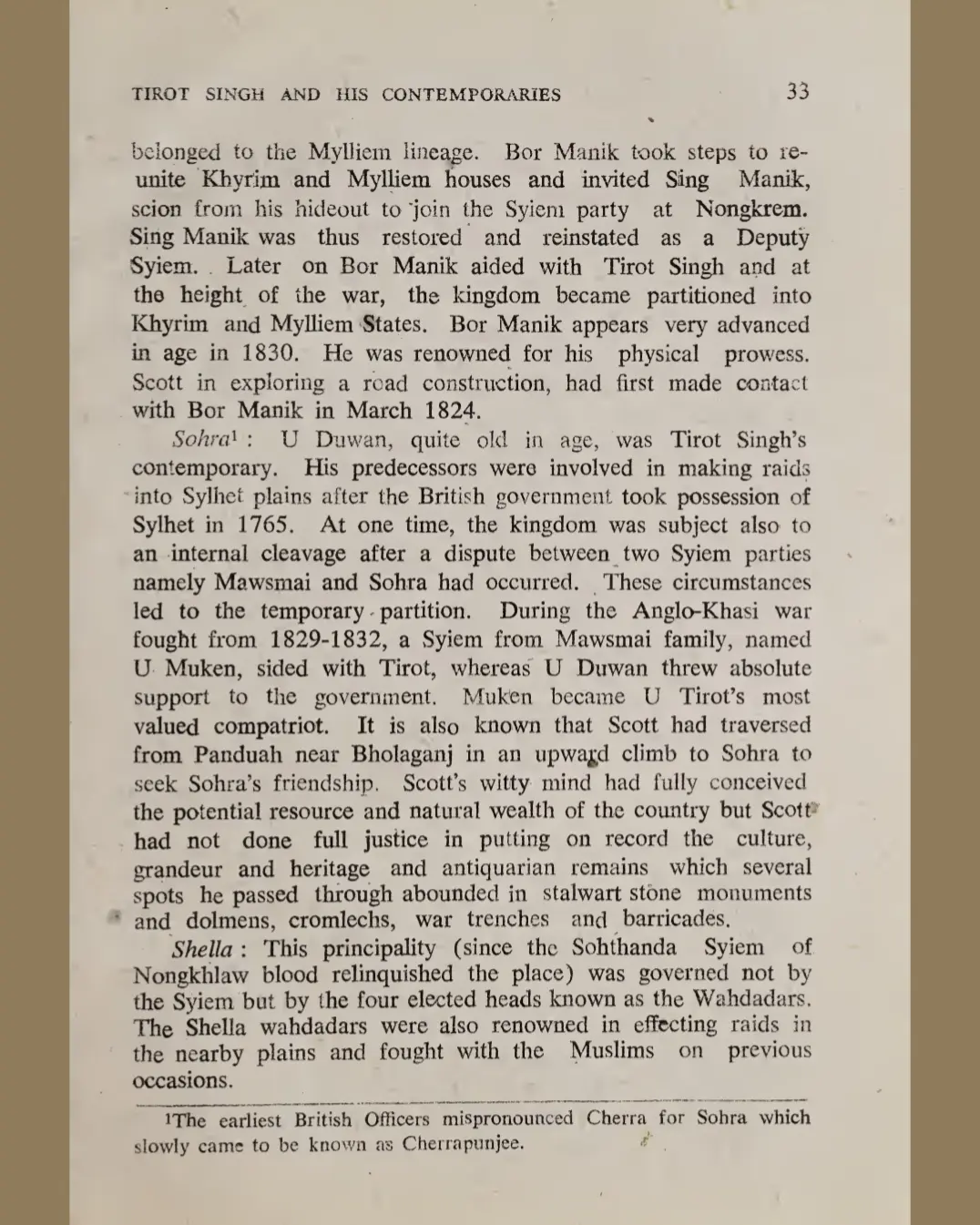
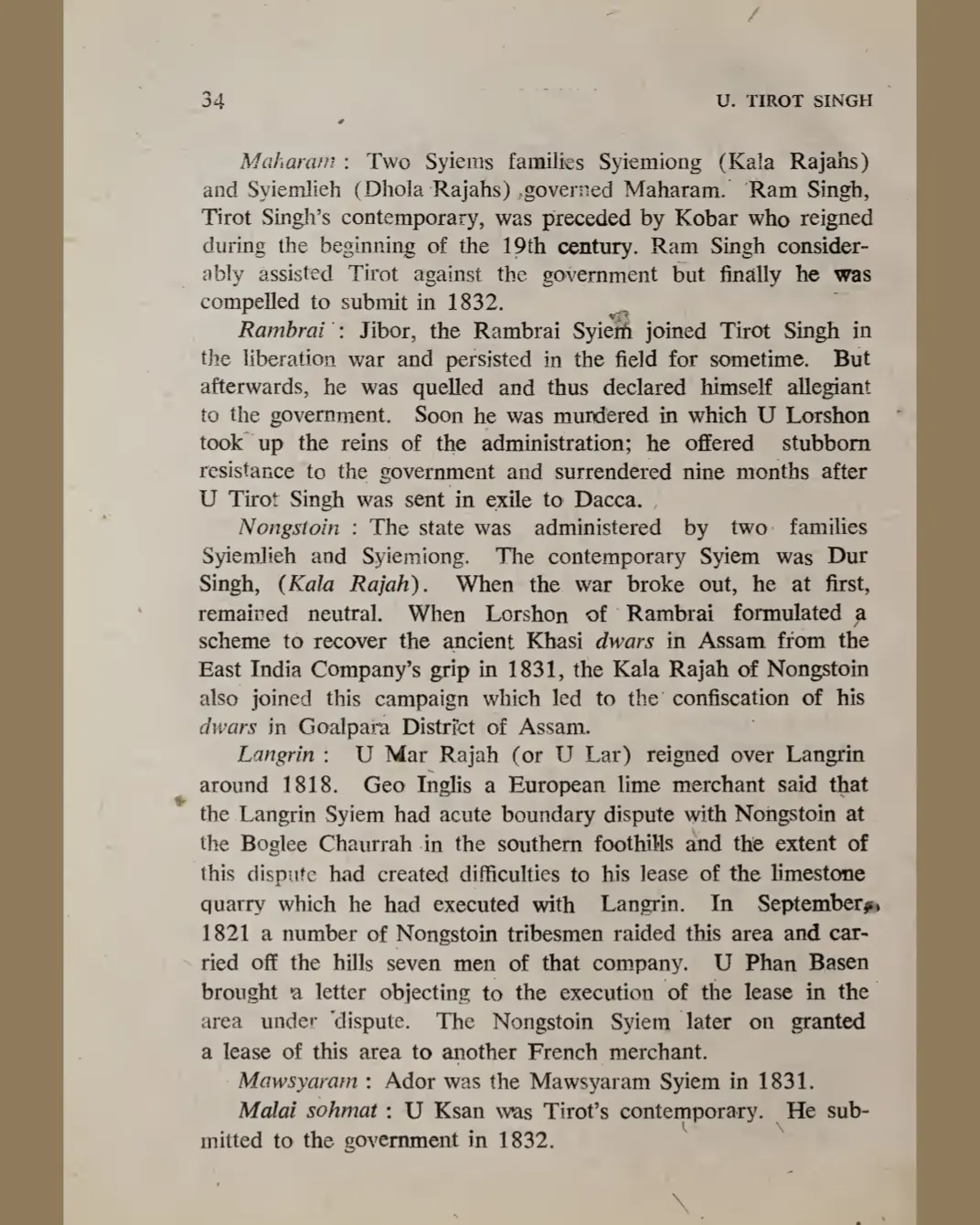
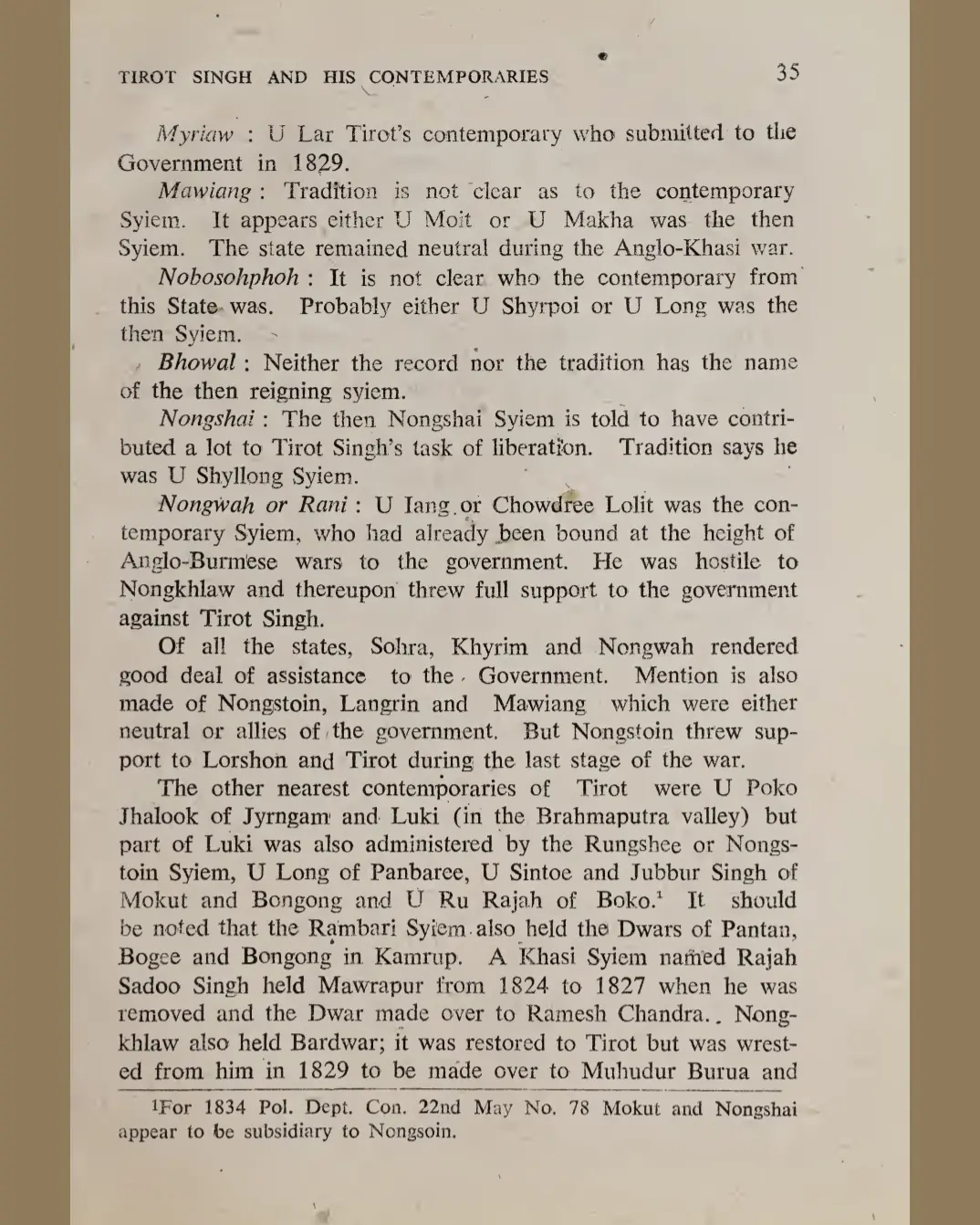
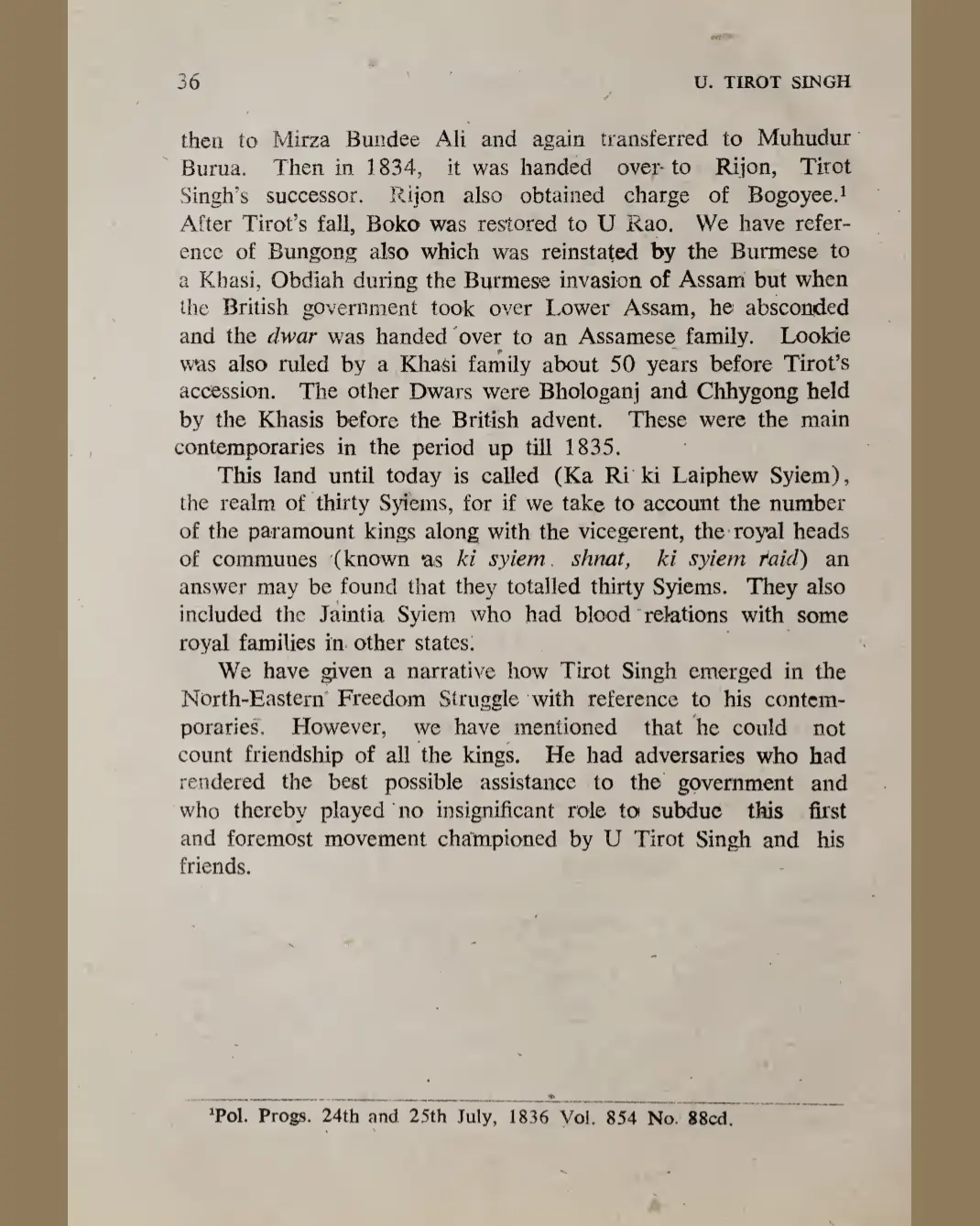
    Mynta ka sngi ka 17 tarik u Naitung kaba dei ka lyngkhuh sngi Γ―ap jong u Syiem Tirot Sing ngin pule Γ―a ka lynnong "Tirot Singh and His Contemporaries" kaba la sot na ka kot π˜‰π˜Άπ˜ͺ𝘭π˜₯𝘦𝘳𝘴 𝘰𝘧 π˜”π˜°π˜₯𝘦𝘳𝘯 𝘐𝘯π˜₯π˜ͺ𝘒: 𝘜 π˜›π˜ͺ𝘳𝘰𝘡 𝘚π˜ͺ𝘯𝘨𝘩 (1984) ba la thoh da i Dr. Hamlet Bareh Ngapkynta.

    Kane ka lynnong ka batai shaphang kiwei pat ki syiem kiba im ha kajuh ka por bad u Syiem Tirot Sing bad kumno ba don na ki kiba la ai jingΓ―arap Γ―a u ha ka jingΓ―aleh pyrshah Γ―a ka sorkar Phareng.

    Ka long kaba sngewtynnat bad sngewbynnud ruh ban tip shaphang ki hima jong ki Syiem Khasi-JaiΓ±tia ha kito ki por, ba ki pud jong ki, ki poi shaduh ka jylla Assam shatei bad shaduh ka ri Bangladesh shathie.

    .

    .

    .

    .

    .

    Today the 17th of July, which is Tirot Sing Day, we read the chapter "Tirot Singh and His Contemporaries" from the book π˜‰π˜Άπ˜ͺ𝘭π˜₯𝘦𝘳𝘴 𝘰𝘧 π˜”π˜°π˜₯𝘦𝘳𝘯 𝘐𝘯π˜₯π˜ͺ𝘒: 𝘜 π˜›π˜ͺ𝘳𝘰𝘡 𝘚π˜ͺ𝘯𝘨𝘩 (1984) written by Dr Hamlet Bareh Ngapkynta.

    This chapter talks about the other kings who were living at the same time with u Syiem Tirot Sing and how they lent their help and support to him during the resistance against the British empire.

    It is interesting and also sad to know about the kingdoms of the Khasi-JaiΓ±tia kings in those days, which extended to the state of Assam in the north and the country of Bangladesh in the south.
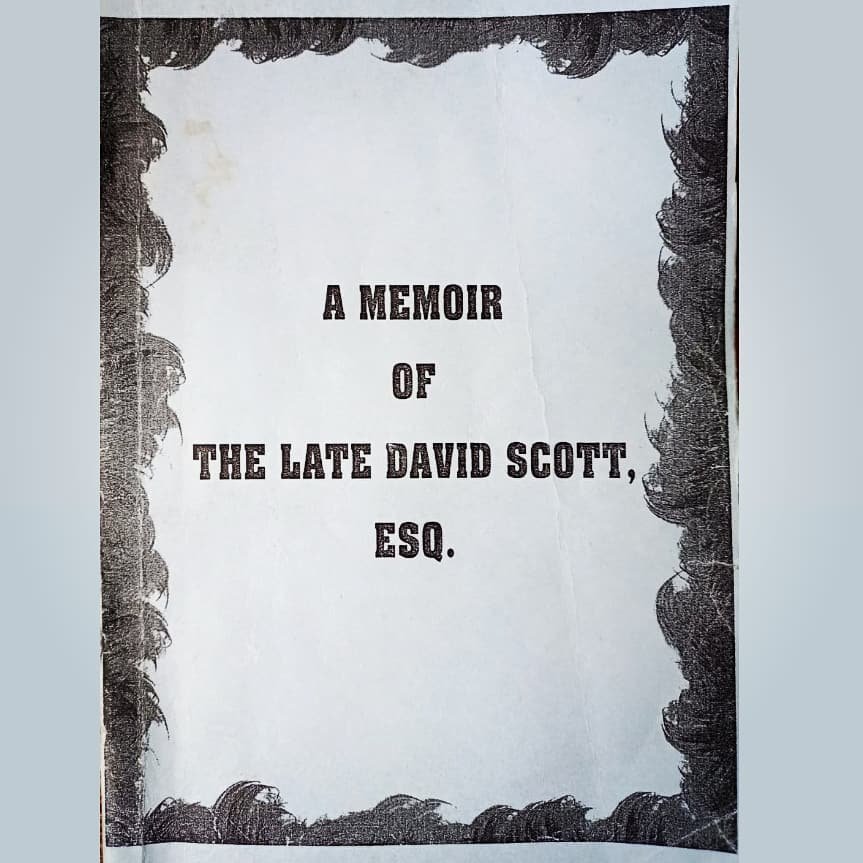
  • A Glimpse of Tirot Sing: “A Memoir of the Late David Scott, Esq.” written by Major Adam White (1831)

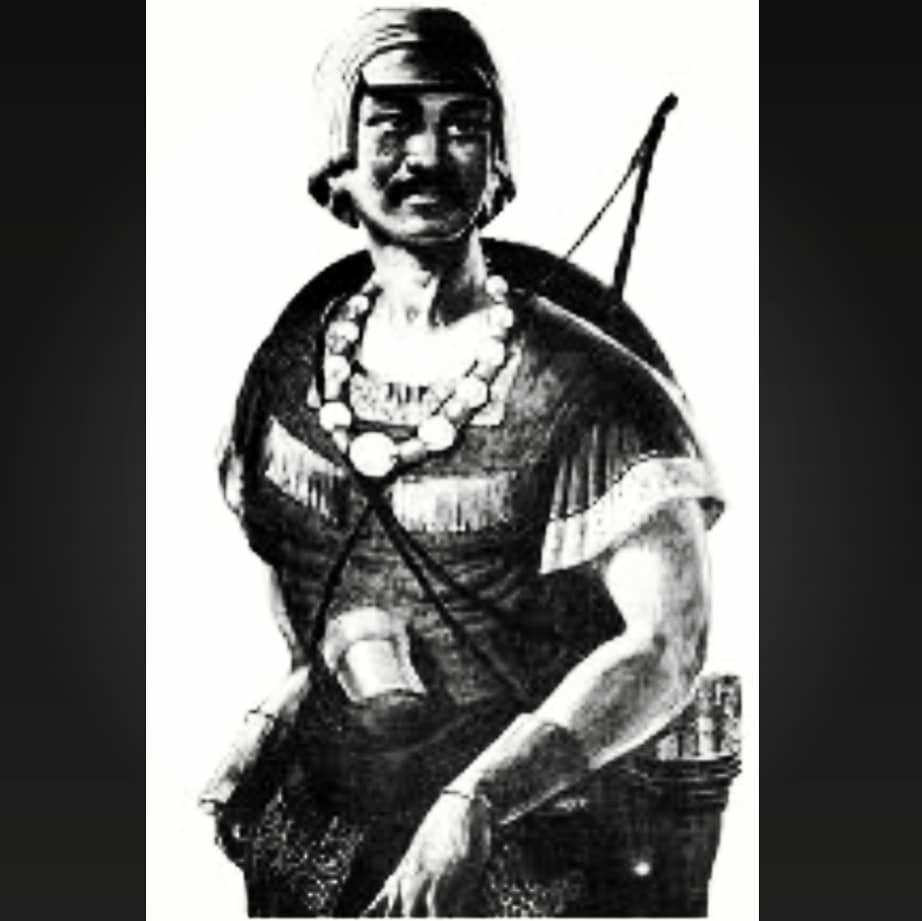
    On the occasion of the death anniversary of U Tirot Sing, the 17th of July, here is "A Glimpse of History–U Tirot Sing Syiem" sent by @carey_lynz

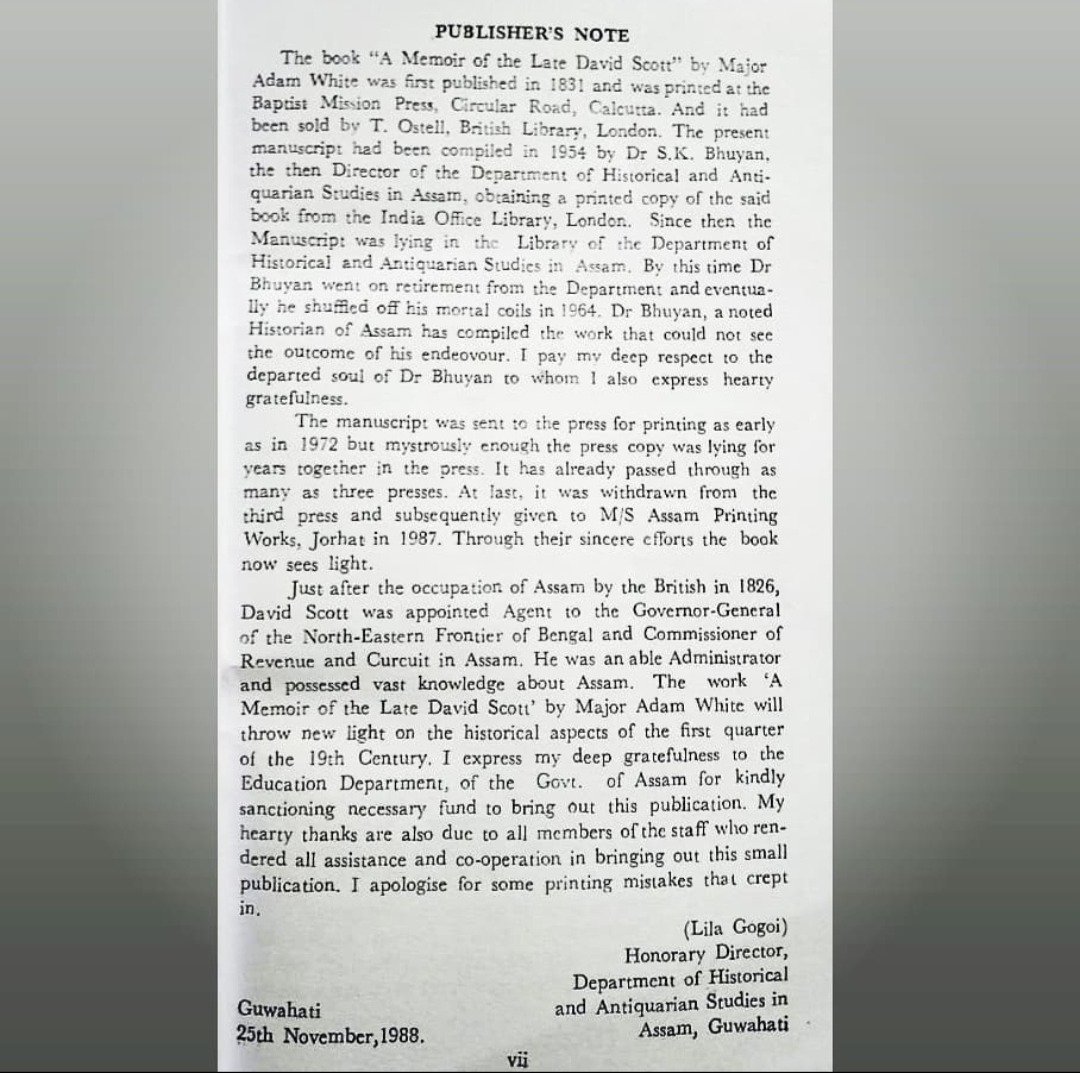
    In the book A Memoir of the Late David Scott, Esq., written by Major Adam White (1831, 1st edition), White narrates how David Scott took intense interest in the newly discovered region that is, the North East Frontier. White narrates how he had personally witnessed the "Cassya states" (Khasi States) and the beautiful hills which reminded him of the South of Scotland. At this time, the territory under Hima Nongkhlaw was not under British control. It so happened that Tirot Sing wanted to rent some areas in Assam from the Assamese Raja. David Scott said that he would be happy to oblige, if Tirot Sing would allow the British passage through his territory to go to Sylhet.

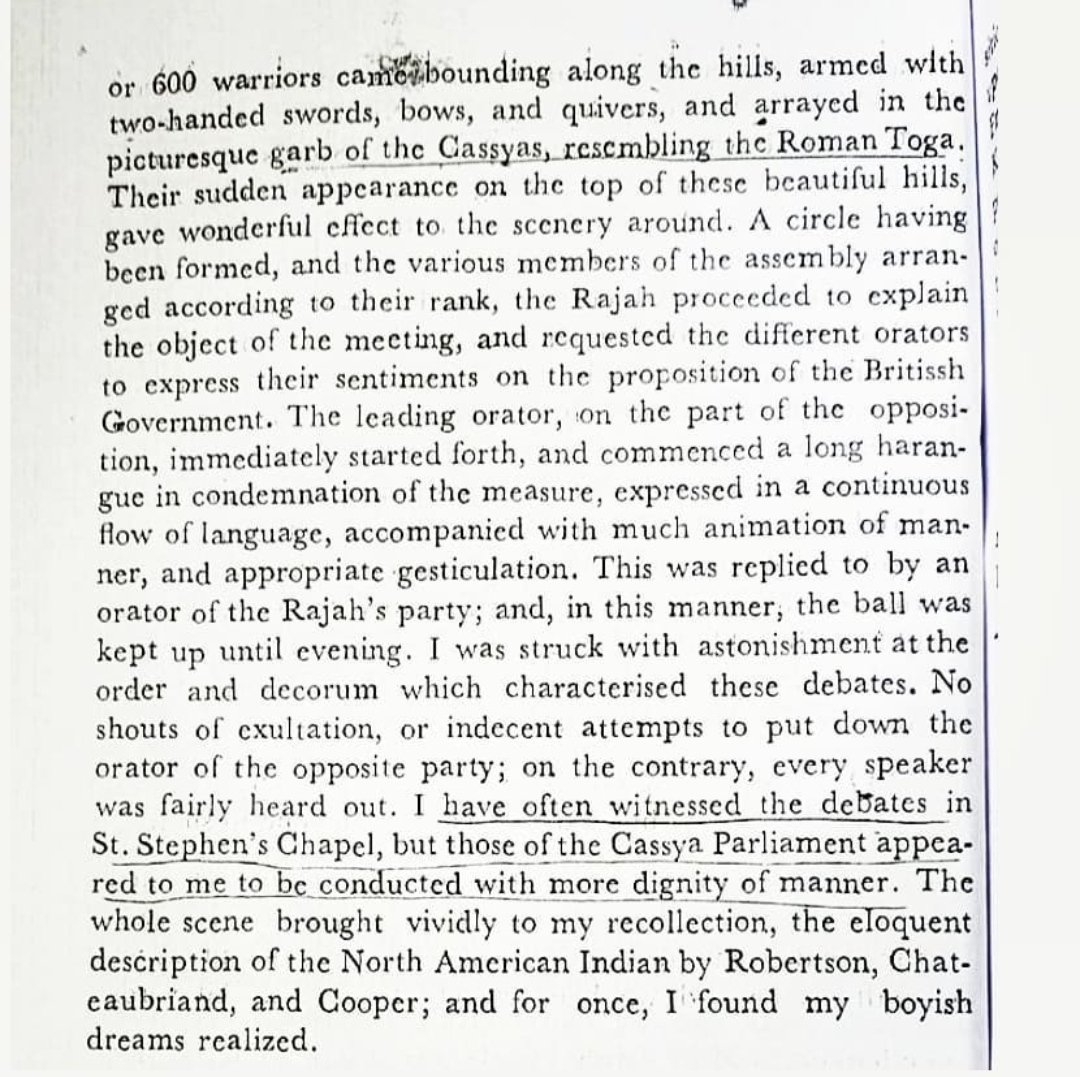
    This led Tirot Sing to call for an Assembly in order to discuss Scott's request. The British witnessed a very impressive meeting in Nongkhlaw. The Assembly sat in a circle according to their ranks. What struck the Britishers was the "order and decorum of the debators". There was respect for the opponent in the debate and the orator of each party was given a fair chance to speak. This continued for a long time. Growing impatient, David Scott sent a "dozen of bottles of rum" to the Assembly in the hope that the debate would end but the rum was returned.

    From these events, we come to know how the Khasis were a people who honoured each others' word and respected each others' opinion. Therefore, as we commemorate the life of U Tirot Sing Syiem, may we remember the value and power of our words like our forefathers before us. Lest we forget, let's remind ourselves of who we truly are.

    The above-mentioned events have been summarised from the book written by Major Adam White. The contributor, Dr. Naomi C. Nonglait is an Assistant Professor in the Department of English, St. Mary's College, Shillong.

    Picture 1: Google, Picture 2, 3 and 4 sent by @carey_lynz