Category: Art

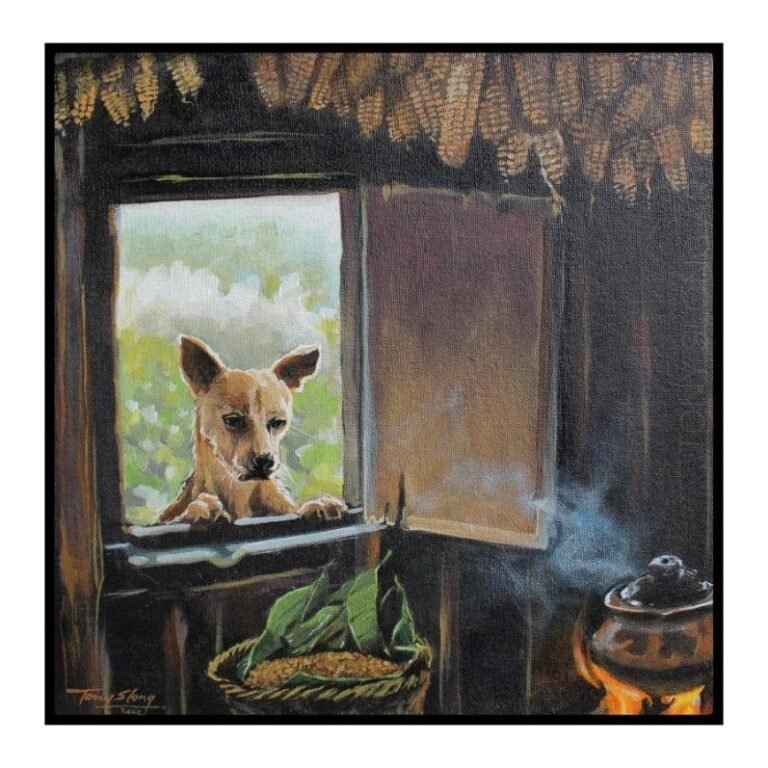
  • U ksew ha ïew luri lura by Tony Slong

    World Folklore Day 2023 🏞️🌿

    Kane ka matti jingdro da i @tonyslong ka pyni ïa u ksew ha ka khyllipmat ba u lap ïa ka tungrymbai shuwa ba un rah ban die ïa ka kumba la ïathuh ha ka khanaparom "Ka Ïew Luri Lura jong u Laiphew Mrad". 🐶😄

    Khublei Shibun @tonyslong ba phi la phah ïa kane ka dur kaba pynmutdur ha ngi ïa kane ka khanaparom! 🙏🙏

    .

    .

    .

    This painting by @tonyslong depicts the dog from the well-known Khasi folktale "Ka Ïew Luri Lura jong u Laiphew Mrad".

    In the story the dog attempts to sell tungrymbai or fermented soyabean in the animal market but it ends up being trampled upon by the other animals because they could not bear the smell of tungrymbai 😅😅🐶🐶 It is said that it is because of this incident that the dog came to live with man.

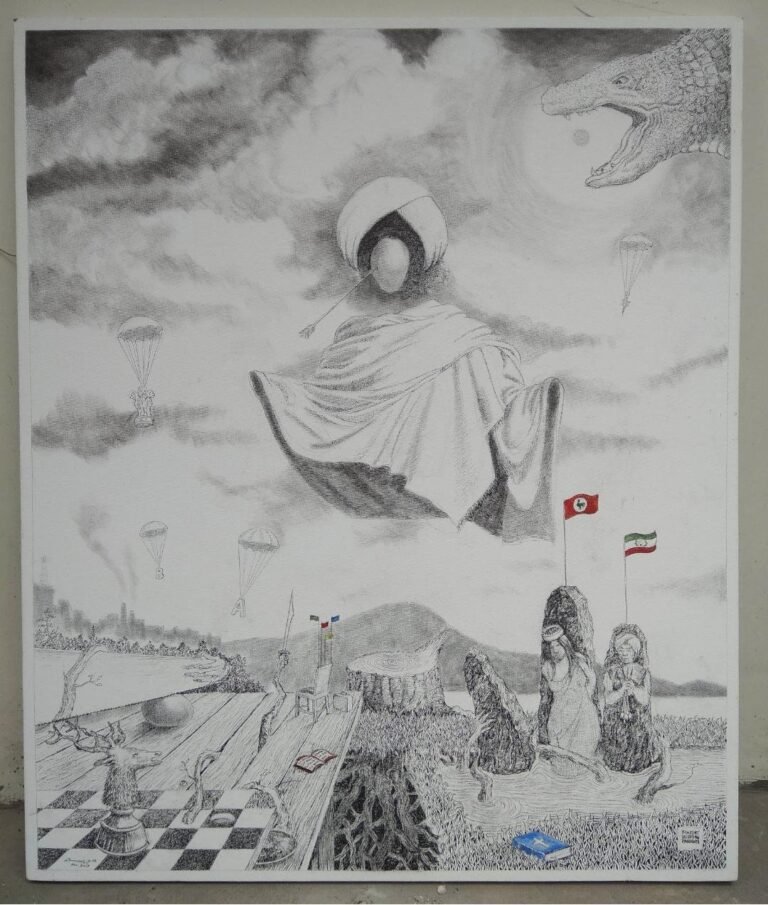
  • Untitled by Benedict S. Hynñiewta

    International Day of the World's Indigenous Peoples 🏞️🌲🌱

    Ban ïai bteng ïa ka jingrakhe jong ka Indigenous Peoples Day, kane haneng ka dei ka matti jingdro jong i Bah @benedictskhemlang

    Khublei Shibun Bah @benedictskhemlang ba phi la phah ïa kane ka dur! 😄🙏

    Ka long ka dur kaba pynmih bun ki jingpyrkhat shaphang ka imlang sahlang Khasi, ki riti ki dustur jong ngi bad ka pashat ruh ïa ka jingmut sha ka lawei ka ban nang wan.

    Sngewbha ïathuh kumno phi sngew shaphang kane ka matti jingdro ha ki comments!

    Please tell us your thoughts about the art in the comments!

    This art piece by @benedictskhemlang brings up many thoughts about contemporary Khasi society as well as Khasi belief and custom and how they are going to develop into the future.

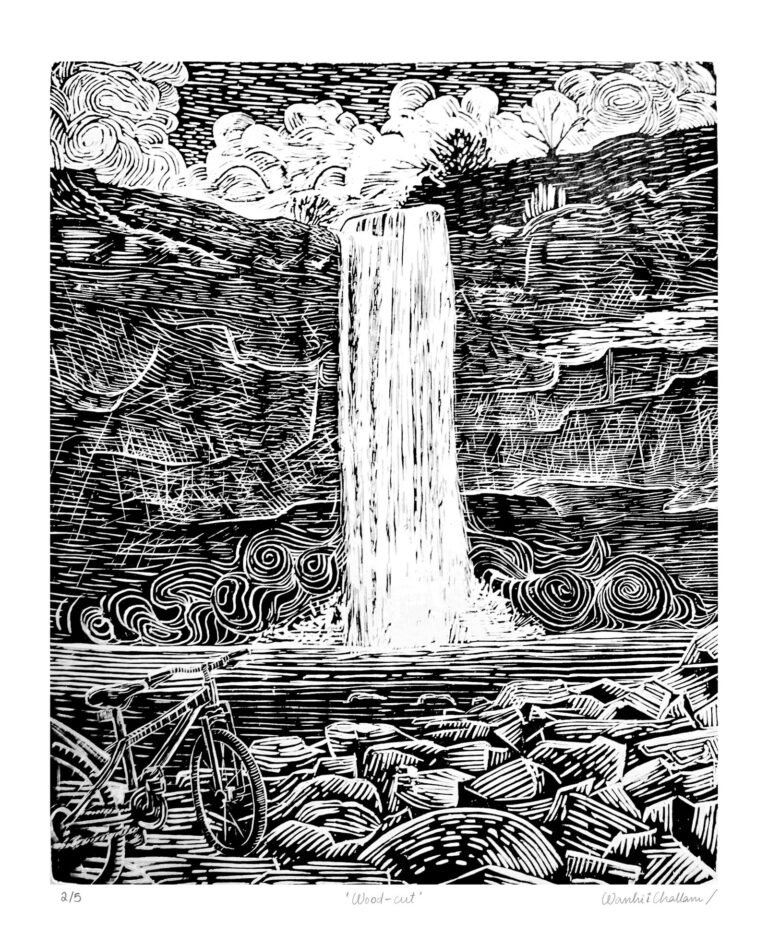
  • Woodcut of Phe Phe Falls by Wanhi-i Challam

    International Day of the World's Indigenous Peoples 2023 🌱🌲

    Contribution by @wanhii.psd 😃

    Title – "Untitled"

    Medium – Woodcut

    Editions – 5

    Year – 2023

    Size – 19'5'' x 24'

    Artist – Wanhi-i Challam

    He says: "This is a woodcut of a waterfall near by my home town – 'PHE PHE falls'. I chose to be very spontaneous with this one. Initially, it was intended to be just a simple, realistic landscape woodcut. However, as I worked on it, I chose to have some freedom in the techniques of cutting the wood and to allow the composition to evolve organically as I worked on it. I allowed the wood to guide me and fused the original form of the waterfall with my personal interpretation. I find it very meditative to work this way, not strictly following the realistic image of the waterfall, but instead capturing the emotions and feeling the rhythm of the waterfall with all its force, aggressiveness, daring, serenity, and stillness, while still conveying a sense of calmness and beauty."

    Khublei Shibun @wanhii.psd ba phi la phah ïa kane ka jingshna oh dur kaba itynnat! 🏞️

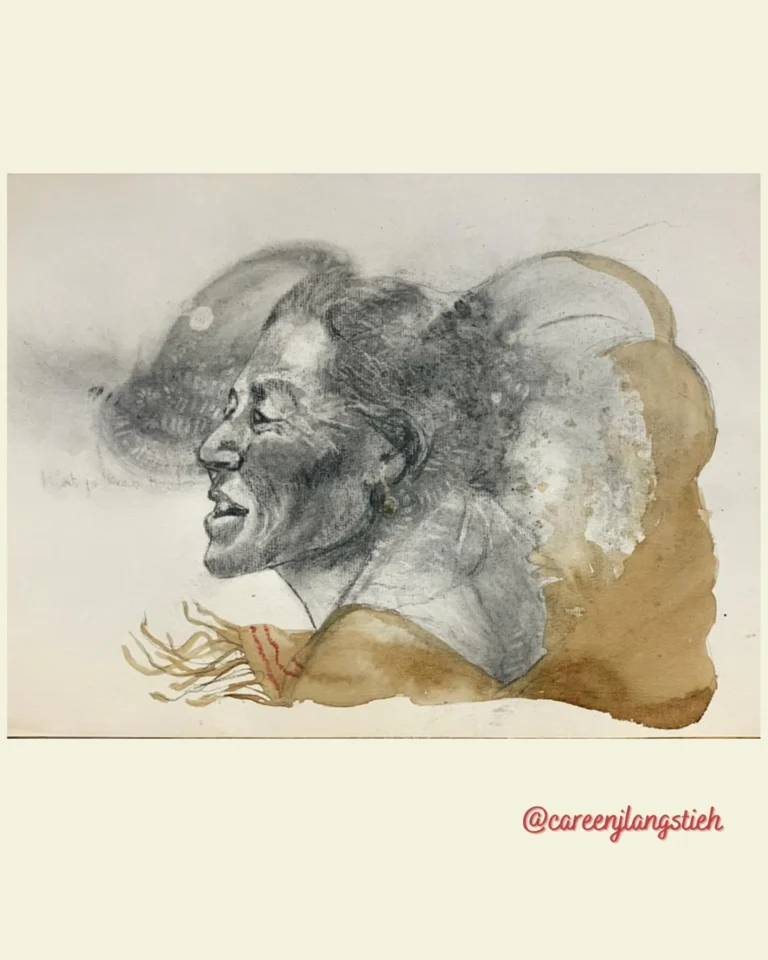
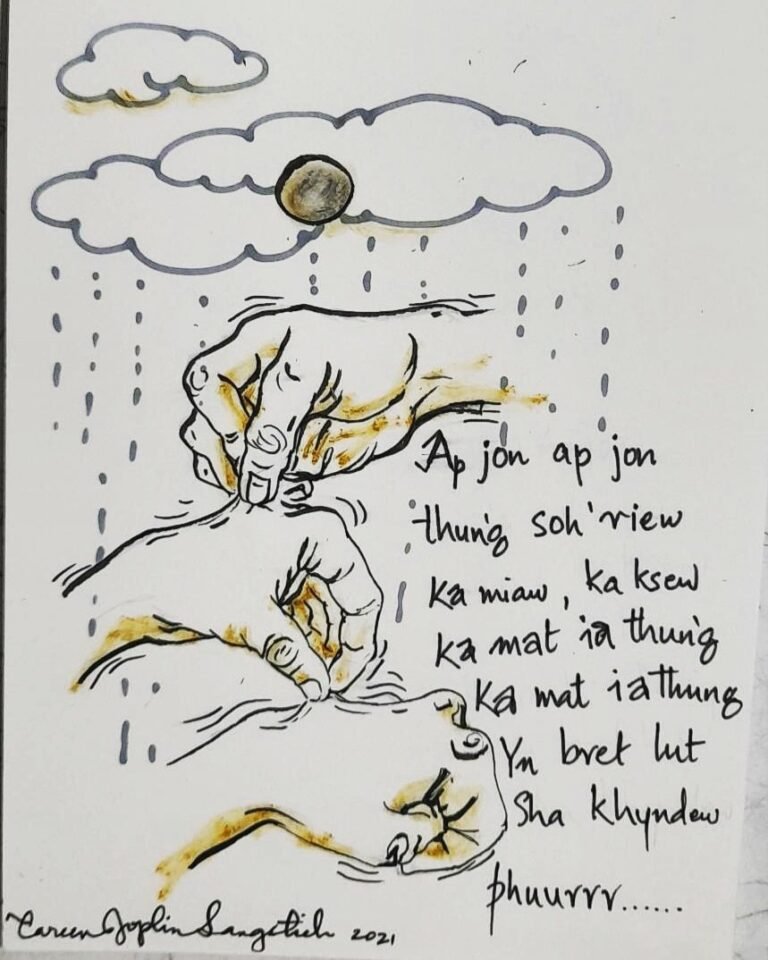
  • Ka Ktien by Careen J. Langstieh

    International Day of the World's Indigenous Peoples 2023

    Khublei Shibun Kong @careenjoplinlangstieh na ka bynta ka jingdro dur rnga kaba itynnat bad ka jingthoh kaba pynpuson shaphang ka ktien kaba ngi khlei man la ka sngi ha ki parabriew. 😄🙏

    Thank you Kong @careenjoplinlangstieh for this thought-provoking charcoal art and also your grandmother's teachings on the power of the spoken word. The belief in the value and effect of the spoken word is well-held by the Khasi community. 😄🙏

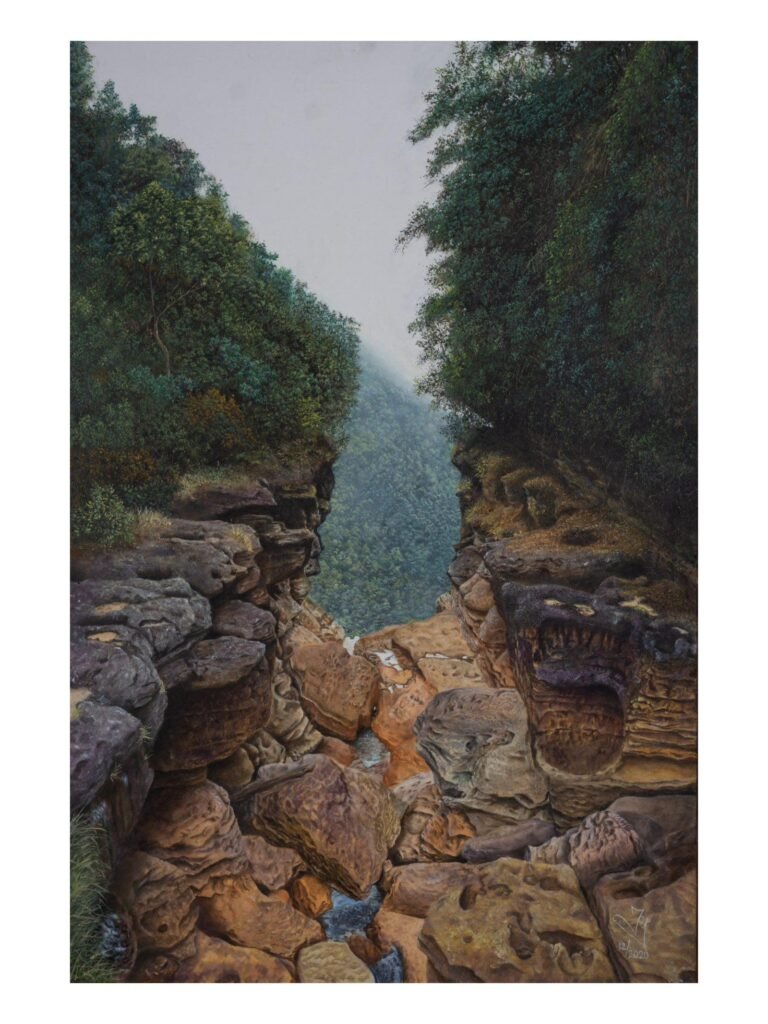
  • The head of Nohkalikai Falls by Coops Kharlukhi

    International Day of the World's Indigenous Peoples 2023 🌱🍃

    Kane ka dei ka matti jingdro jong i Bah @coops_kharlukhi jong ka khlieh jong ka kshaid Nohkalikai. Khublei Shibun Bah ba phi la phah ïa kane ka dur kaba shoh jingmut shisha! 😄🙏

    This painting is of the head of the Nohkalikai waterfall, named after Ka Likai who as is told in the folktale, jumped from the waterfall after tragedy struck her life.

    He says: "Most people see the waterfall from the front. They see how beautiful it is. However when looking at the mouth of the waterfall, one does not see beauty but one feels fear. The stones and boulders on the sides too, are symbolic of the obstacles and tragedy which mark Likai's life. There is fear at the mouth of the waterfall but Likai overcame her fear and sorrow when she jumped."

    What an interesting perspective Bah Coops!

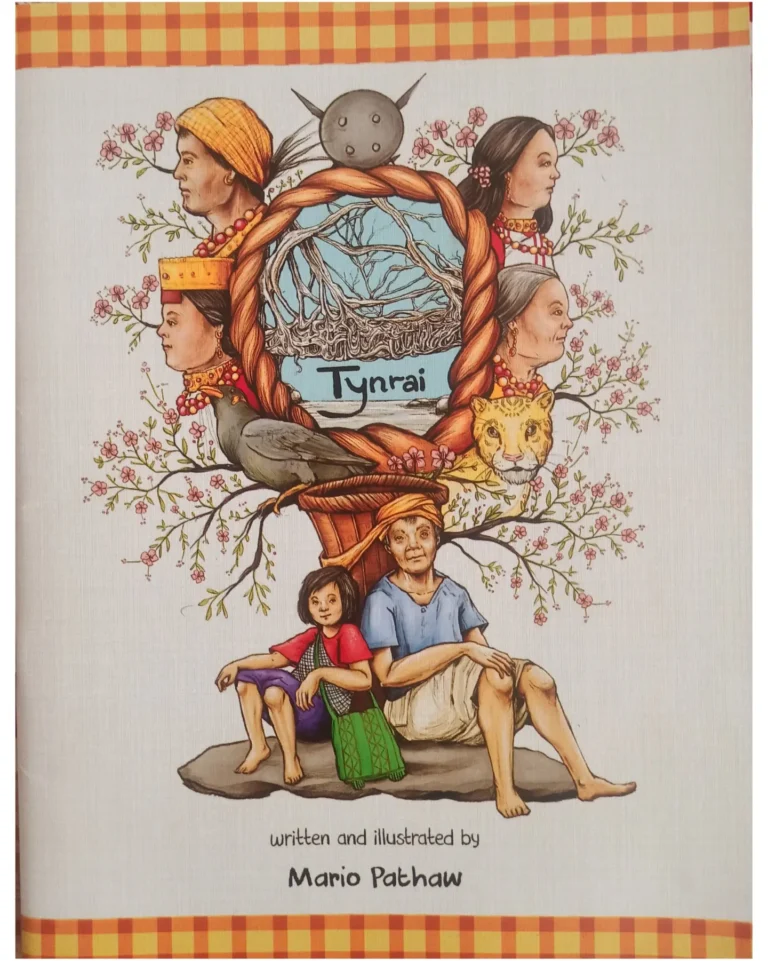
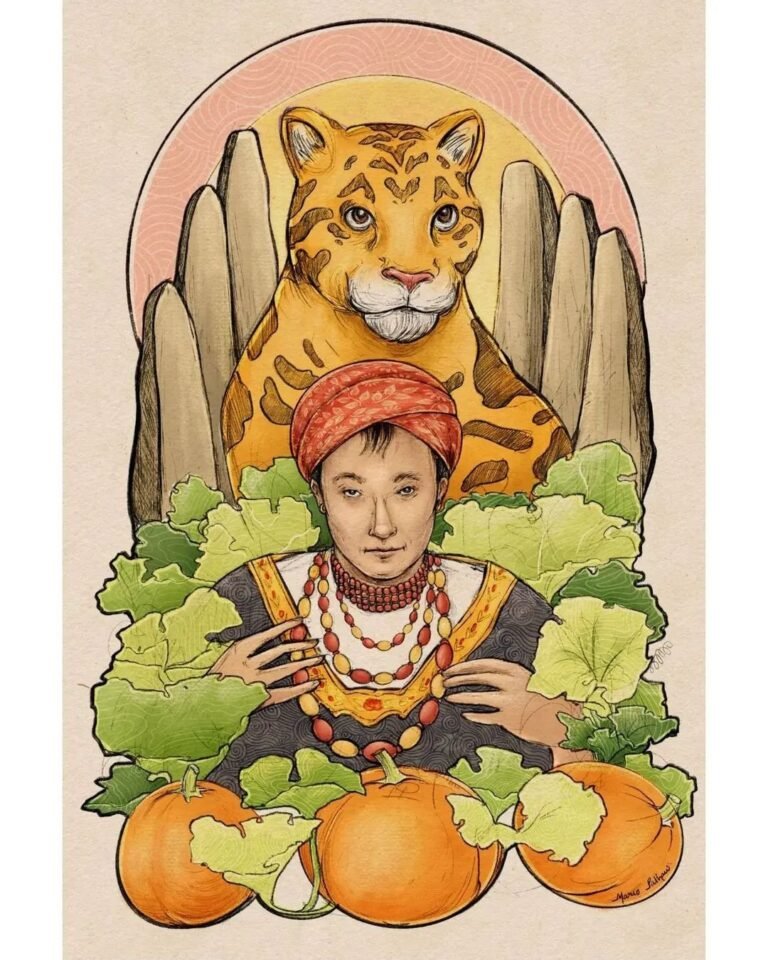
  • Tynrai by Mario Pathaw

    Tynrai

    "Tynrai" is a Khasi term which means "Roots".

    This is a story written and illustrated by Pascal Mario Kmenlang Pathaw (Mario Pathaw).

    Mario says:

    It talks about the need of living in harmony with nature. The living root bridge of Nohwet, Meghalaya is the prime source of inspiration for this concept and the graphic novel takes shape in the form of a conversation between a grandfather and his granddaughter. The grandfather uses a tale as a tool to mentor her in preserving the living Root bridge. This tale also has bits and parcels of the indigenous practices, social structure, folk creatures and beliefs of the Khasi tribe.

    This is a work of fiction. Names, characters, business, events and incidents are the products of the author's imagination. Any resemblance to actual persons, living or dead, or actual events is purely coincidental.

    Tynrai (Roots) written and illustrated by @mario_pathaw (2022) is an English graphic novel which tells a story by fusing indigenous Khasi practices, focussing on the living root bridge with other aspects of Khasi folklore. Mario Pathaw's characteristic art lends depth and beauty to the narrative, drawing from the Khasi cultural imagination, echoing preservation and sustainability 🌲🏞️

    Ka jingaikhublei ïa phi @mario_pathaw ïa kane ka jingpynwandur kaba shynna bad shoh jingmut 😃👏 Nang kiew shaphrang ha ka kam ka jam bad ka sap ka phong jong phi!

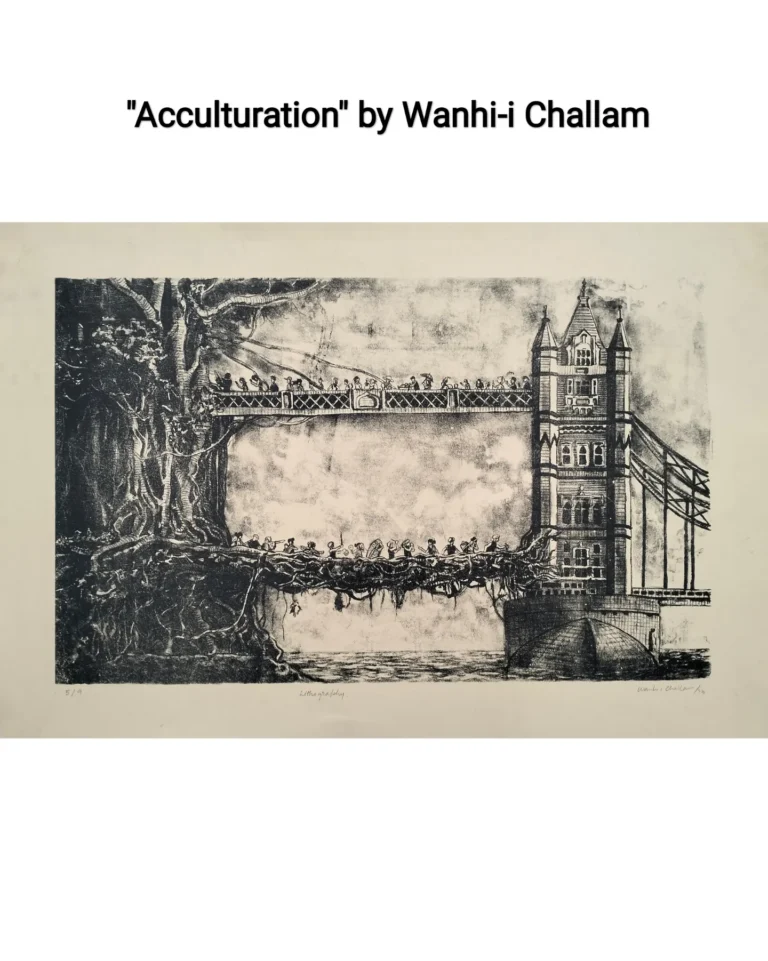
  • Acculturation by Wanhi-i Challam

    "Acculturation" is a lithography print by artist Wanhi-i Challam

    He says:

    The work is a lithography print that explores the effects of cultural assimilation and acculturation on the traditional values, language, religion, plants, animals, and ethnic values of the Khasi people. The print depicts two bridges – the root bridge of Nongriat representing Khasi origins, the relationship between Khasi culture and nature, metaphorically it also represents the "tangnoob tangjri" (as it is believed from the folklores that the Khasi people descend to earth through the golden ladder) and the Tower Bridge of the UK representing Western culture and lifestyle and the other cultures of the world, and also the effect that the Britishers brought on the Khasi culture and tradition when they ruled India. Bridges symbolize connections and, in this case, it symbolizes the connection between two different cultures and the impact of one on the other. There is no significant reason behind why I chose those two bridges specifically, instead I chose them because I found the structure and appearance interesting and used just as a representation of my idea.

    Joining the two bridges through this composition I try to portray how the Khasi people have adapted to Western culture and other cultures by adopting their lifestyle, values, religion, and language. If observed closely one can see the details where the indigenous people tread towards the tower bridge wearing their cultural dress, moving in the order from the most elderly folks, younger generation and then to the youngest daughter. As they move forward entering the tower bridge, some carry indigenous items and crafts with them, others perform cultural dance, and activities. When coming back from the tower bridge to the root bridge, everyone is dressed in western fashion, the order of their movement is random, the first person carries with him a chainsaw, symbolizing the harm caused to nature due to the demands of urbanisation and civilisation. Some are looking down at their phones as they walk back, while others carry with them the luxuries the western culture offers.

    Society brings people of different cultures together, and for them to live in harmony, it is crucial to have practices that facilitate such harmonious living. In fact, history shows that adopting elements from other cultures has always been present from generation to generation. It has happened in the past and is happening in the present, with or without our consciousness and it will continue to happen in the future too and we can't help to change that because the world is constantly changing. Each generation develops new lifestyles, technology grows exponentially, knowledge doubles, and culture also changes. Acculturation and assimilation will always occur, and nothing stays the same.

    But should we neglect the importance, values and essence of our own culture? To me the loss of culture, cultural practices and tradition is the loss of identity and origin and that is concerning if we don't even know about our origin and about our own people. The Khasi culture emphasizes a deep respect for nature and a strong sense of place and belonging, which aligns with modern notions of nature conservation and sustainable use of natural resources. From a philosopher point of view there are infinite ways to live our life, and yes, we can choose any path we want.

    However, our culture's perspective on life is one of the most compelling and admirable ways of living. It is crucial to be aware of how much we are influenced by other cultures and adopt their ways of life, but we should strive to preserve the essential values and essence of our own culture that have been passed down through generations.

    The beauty and significance of "Acculturation" by Wanhi-i Challam is deep and multi-layered, embodying crucial lessons for the Khasi-Pnar community.

    Khublei Shibun @wanhii.psd ba phi la ai lad ban post ïa kane ka kam jong phi kaba itynnat bad kaba kit jingmut haduh katta katta 😄🙏

    Wanhi- i Challam is an artist from Jowai, Meghalaya. Currently, he is pursuing his Bachelor of Fine Arts at Kala Bhavana, Visva Bharati in the Graphics Arts/ Print Making Department.

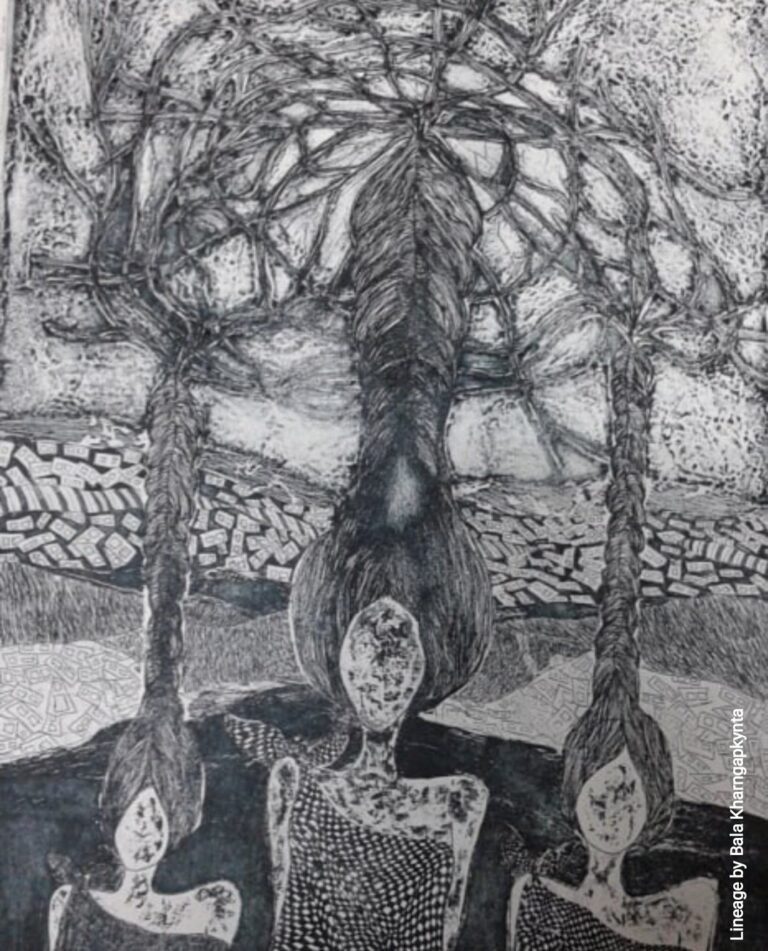
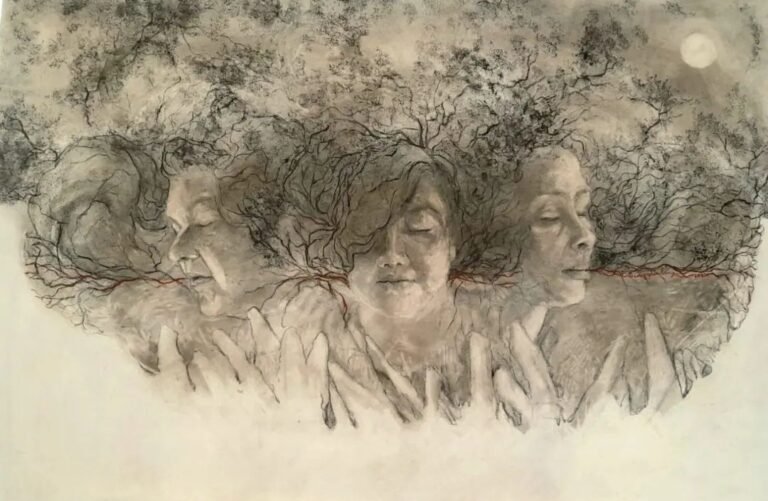
  • Lineage by Bala Kharngapkynta

    "Lineage" is an original art piece by Bala Kharngapkynta. This piece speaks of Khasi matriliny and how it affects her.

    She says:

    My works explore the relationships in a matrilineal society. Coming from such a background and being the youngest daughter in the family plays an important role in my work. In our society the mother plays an important role in the family as the children inherit her surname and expand the clan but the head of the family is always the father.

    It is the general notion that the youngest daughter, that is the khatduh has it easy because she stands to inherit the majority of the family assets but with this comes great responsibility. Being a khatduh is not an easy journey. In most cases we even lose the opportunity to explore and be independent because we carry the title of khatduh consciously or subconsciously. Shared responsibilities with all daughters is common but in most cases it is the khatduh alone who carries the main load.

    In this piece there are three women, they represent myself, my mother and my sister. My mother being the matriarch who leads us in the centre and imparting important tasks to the two of us.

    Khublei Shibun @bala_kharngapkynta ba phi la ai lad ban sah dak ïa kane ka jingoh dur jong phi! ❤️😄🙏

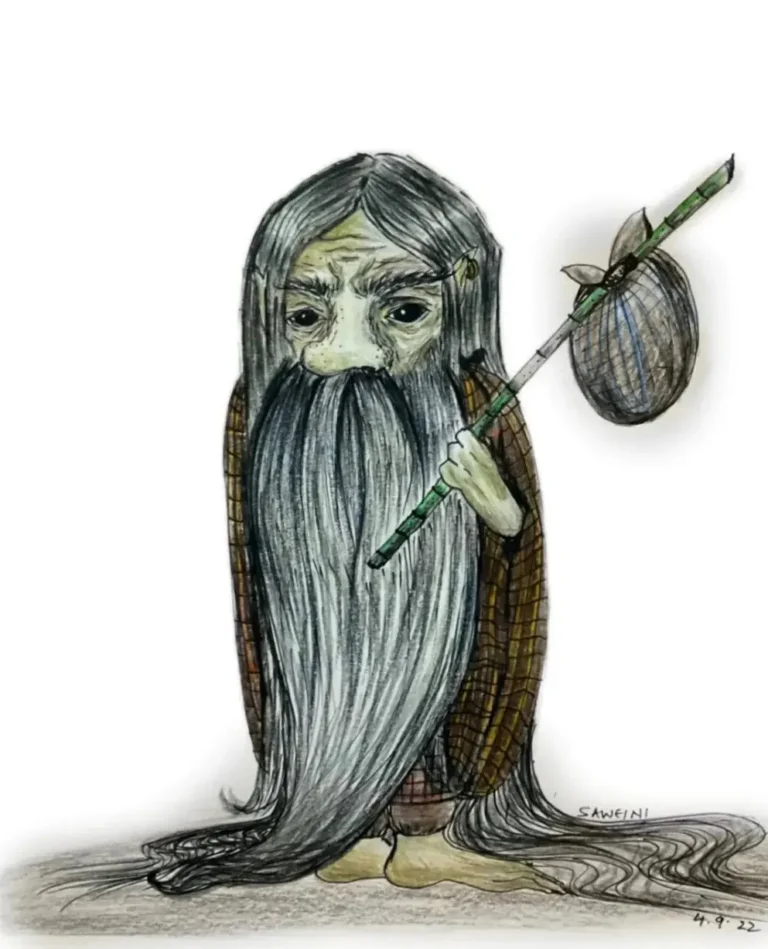
  • Ki Boit by Saweini Laloo

    Saweini says:

    Boit is a mythical character in Khasi folklore. The boit is the equivalent of the English "dwarf" and is believed to have long hair, sharp eyes and ears and menacingly sharp claws. The most striking of its features, however, are its feet! They turn backwards instead of forward like the ordinary human.

    Once, my father told me a story of a time from his childhood when most parts of Shillong were but a dense forest. He came home late one night and had to pass by an open field or "pynthor" lined with bamboos. It was eerily quiet that night and in Khasi belief, this is always an omen of the presence of some supernatural being. Sure enough, after reaching the middle of the field, he heard tiny voices singing. My father, being well acquainted with the different stories passed on by his parents and grandparents, knew exactly that he had to take cover and wait until the "boit" went their way. It was tragic to encounter them. My father hid behind some bushes and watched as one by one the boits walked their regular path, humming a strange tune. Bamboo clustered areas are believed to be the favourite haunts of such beings."

    Ngi ju ïohsngew ki khana shaphang ki boit bad bunsien ngi shait sngew ngiew sngew tieng da lah ïa sngap ki khana 😅😱 Khublei Shibun @saweini_ ba phi la phah ïa kane ka jingdro bad ka jingthoh jong phi 😄🙏

    The supernatural and horror in Khasi folklore is always engaging and also serves as great material for stories.

    🟡 Art by @saweini_

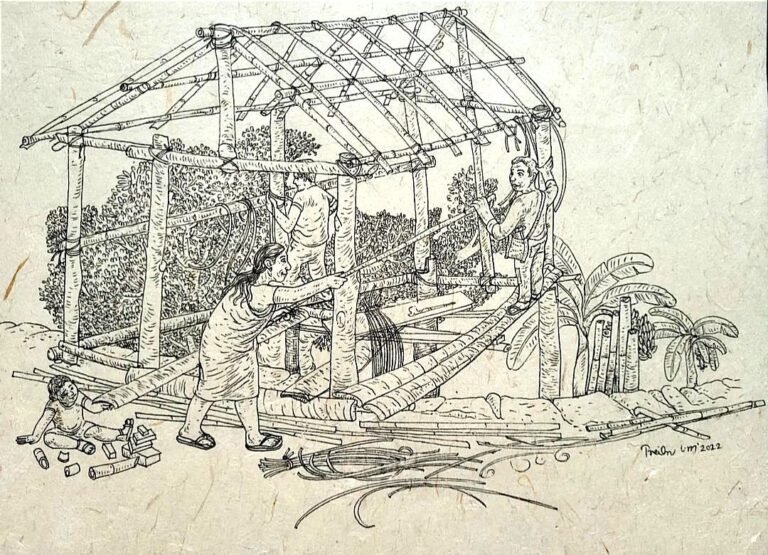
  • Sem Dieng da Treiborlang Lyngdoh Mawlong

    Treibor says:

    Ka jingshon jingmut ba nyngkong jong nga ban thohdur ïa katei haneng kadei ha ka por ba dang ïa shna ïa i "cjung khoh" (ha ka ktien Maram lane "i sem di" / "sem dieng" ha ka ktien Mairang Sohna) ha shnong ha Mawbri. Ha ka por shna ngi ïa don bynta lang baroh shi ïing.

    Ine i ïing rit ba shna da ki siej, dieng tai bad ki lwar i don ha syndah ka ïing bah. Mynta ngi pyndonkam ïa kane haba buh diengïap, tiew um, bad mynta lei lah kumba lai taïew lah ïa shet ïa bam hangne khlem kynmaw shuh ïa ka kamrashet ja kaba ha ïingbah.

    Kaba pynlong ïa nga ban kynmaw ban thohdur ïa ine i trep dei ka jingsyiaid bad ka jingjuh ba i ai ïa ngi. Lada wan phai naei naei, mar synpoi lada leit ha ine i ïing nga lap ba baroh ki don hangta ha i trep. Katno ka jingsngew juh jingsngewtynnad na kata ka ïaid kjat kaba thait bad ba jngai.

    Kine ki long ki jingkynmaw kiba ktik ban pynlong ïa nga ban dro ïa ito ï ïing.

    What pressed on my mind to draw the sketch was the time when we built the "cjung khoh" (Maram dialect) in Mawbri. (In Mairang Sohna they call it "i sem di" / "sem dieng"). When this was made all of us in the family were present.

    This shed which has been made with bamboo, a kind of palm leaf and bamboo string is adjacent to the big house. Now we use it to keep wood, to heat water and now for about a week we have been cooking and eating in the shed, completely forgetting about the kitchen in the main house.

    What made me draw this shed was the memory of the warmth and comfort that it gives us. When I return from anywhere, I find that everyone else is inside the shed. It is such a happy and restful feeling when returning from a tiring and long journey on foot. These are the memories that played in my mind which inspired me to draw the sketch.

    The art of @treibor_mawlong is highly detailed and expressive depicting the folk life of Khasis. 🏞️🌾
    On this World Folklore Day, let us take a closer look at the increasing repository of visual art that is growing among Khasi artists. Let us also be observant of how they portray Khasi custom, practices and beliefs.

    🟡 Treiborlang Lyngdoh Mawlong is a visual artist with a Master's degree in Fine Arts, with Honours in Painting (2012) from Visva Bharati University, Santiniketan. Treiborlang is a recipient of a number of awards which include The Inlaks Fine Arts Award, Kala Sakshi Award in Painting, Talented Young Artist Award from NEZCC, Scholarship grant for the year 2012-2013 from Lalit Kala Akademi.

    Treiborlang has participated in exhibitions in India and abroad. He has also been published as a comic artist/ writer and illustrator for publications like Strapazin and National Book Trust.

    Currently Treiborlang is teaching Art Education at District Institute of Education and Training, Nongstoiñ.

    Khublei Shibun Bah @treibor_mawlong ba phi la shah ban pyni ïa ki jingdro dur jong phi ha ka page! 😄🙏