Category: Books

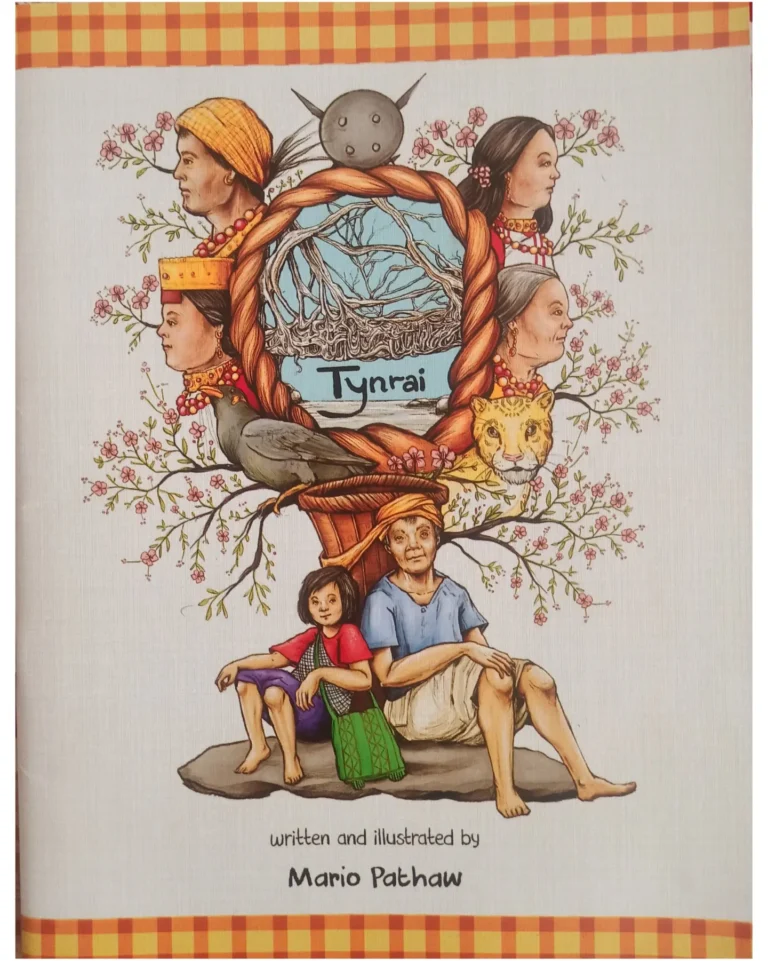
  • Tynrai by Mario Pathaw

    Tynrai

    "Tynrai" is a Khasi term which means "Roots".

    This is a story written and illustrated by Pascal Mario Kmenlang Pathaw (Mario Pathaw).

    Mario says:

    It talks about the need of living in harmony with nature. The living root bridge of Nohwet, Meghalaya is the prime source of inspiration for this concept and the graphic novel takes shape in the form of a conversation between a grandfather and his granddaughter. The grandfather uses a tale as a tool to mentor her in preserving the living Root bridge. This tale also has bits and parcels of the indigenous practices, social structure, folk creatures and beliefs of the Khasi tribe.

    This is a work of fiction. Names, characters, business, events and incidents are the products of the author's imagination. Any resemblance to actual persons, living or dead, or actual events is purely coincidental.

    Tynrai (Roots) written and illustrated by @mario_pathaw (2022) is an English graphic novel which tells a story by fusing indigenous Khasi practices, focussing on the living root bridge with other aspects of Khasi folklore. Mario Pathaw's characteristic art lends depth and beauty to the narrative, drawing from the Khasi cultural imagination, echoing preservation and sustainability 🌲🏞️

    Ka jingaikhublei ïa phi @mario_pathaw ïa kane ka jingpynwandur kaba shynna bad shoh jingmut 😃👏 Nang kiew shaphrang ha ka kam ka jam bad ka sap ka phong jong phi!

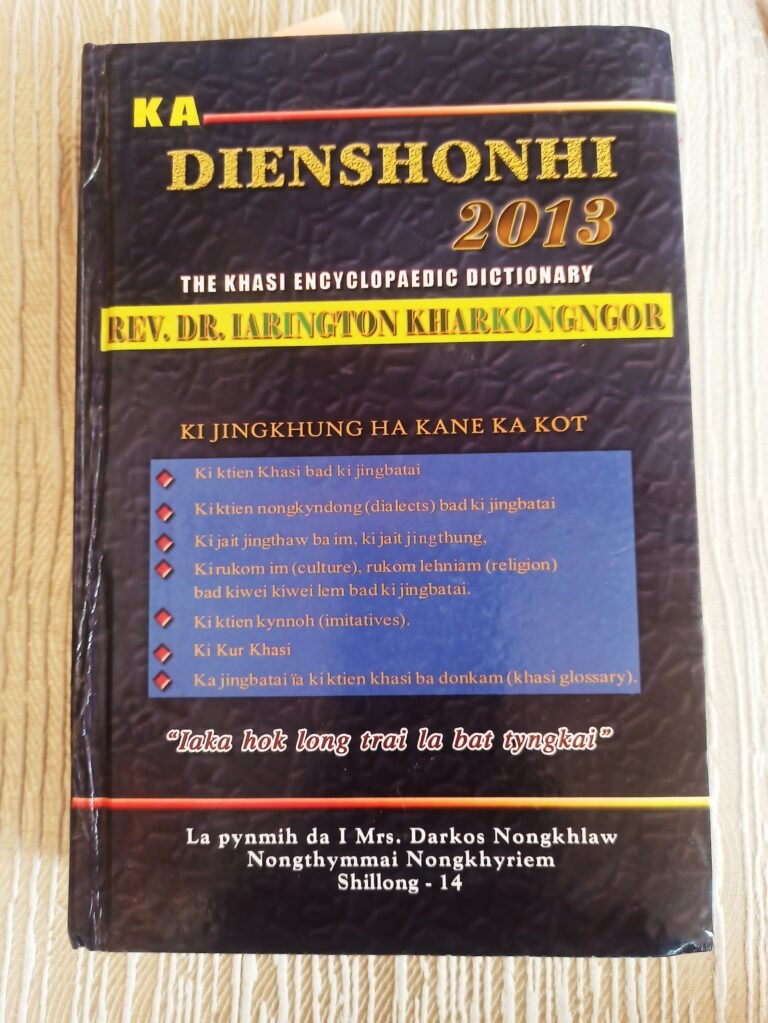
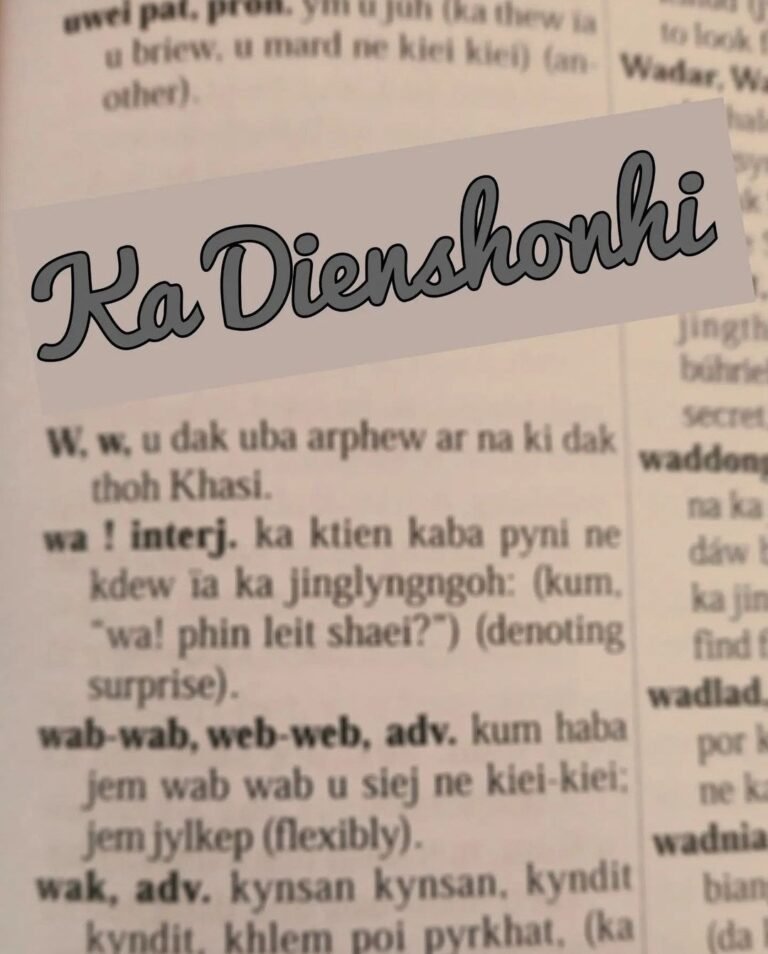
  • Ka Dienshonhi: The Khasi Encyclopaedic Dictionary by Rev. Dr. Ïarington Kharkongngor

    Ka Dienshonhi: The Khasi Encyclopaedic Dictionary by Rev. Dr. Ïarington Kharkongngor is a Khasi to Khasi dictionary which is supplemented by 5 appendices as shown in the slides above. 🤓📚 This is the go-to book for many of us!

    The name of this Khasi dictionary has been coined by the author as "Dienshonhi" whose meaning is provided in the book 😃😃

    🟡 This book is sold in Ri Khasi Book Agency, Mawkhar, Shillong.

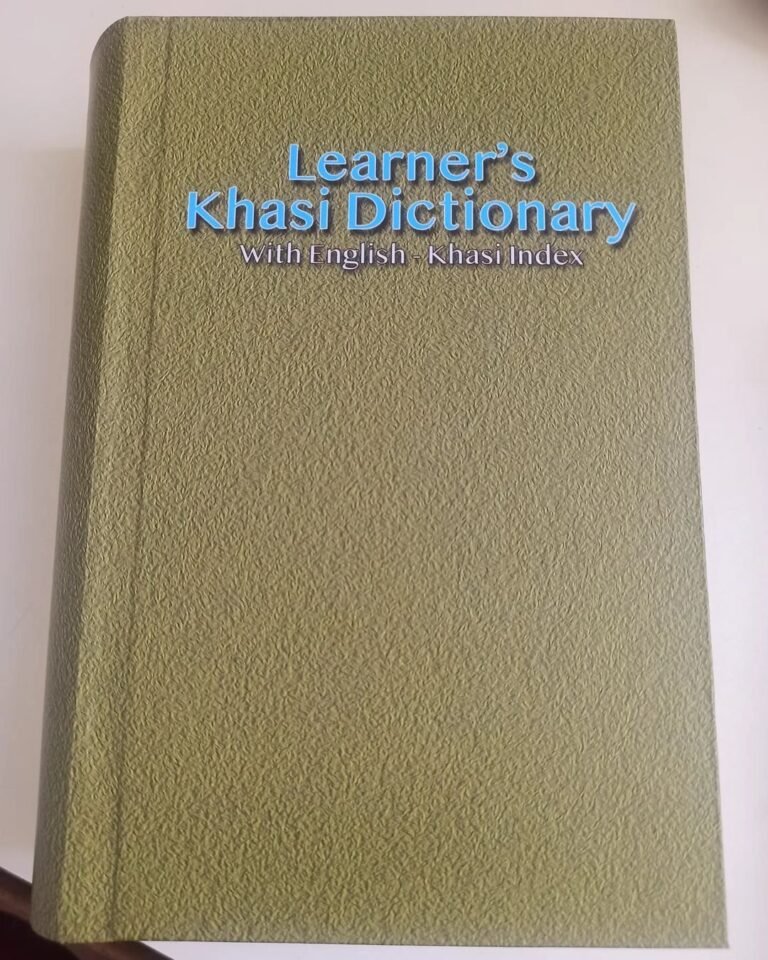
  • Learner’s Khasi Dictionary With English-Khasi Index

    The is the Learner's Khasi Dictionary (With English-Khasi Index) compiled and edited by U'. V. Joseph, SDB with Associate Editors: Devasia Vazhayil, SDB and Augustine Koottala, SDB and published by Vendrame Institute Publications, Mawlai, Shillong, 2021.

    This is another Khasi dictionary that we should add to our library because it has a vast collection of Khasi words whose meaning is explained in Khasi as well as English! 😃😃 In addition to this, there is an English to Khasi section!

    This dictionary will be beneficial for native Khasi speakers and non-native speakers too 👍👍 This dictionary was also the prize for the International Mother Language Day contests of 2022.

    🟡 The dictionary is sold in Don Bosco Book Shop next to St. Anthony's School in Laitumkhrah.

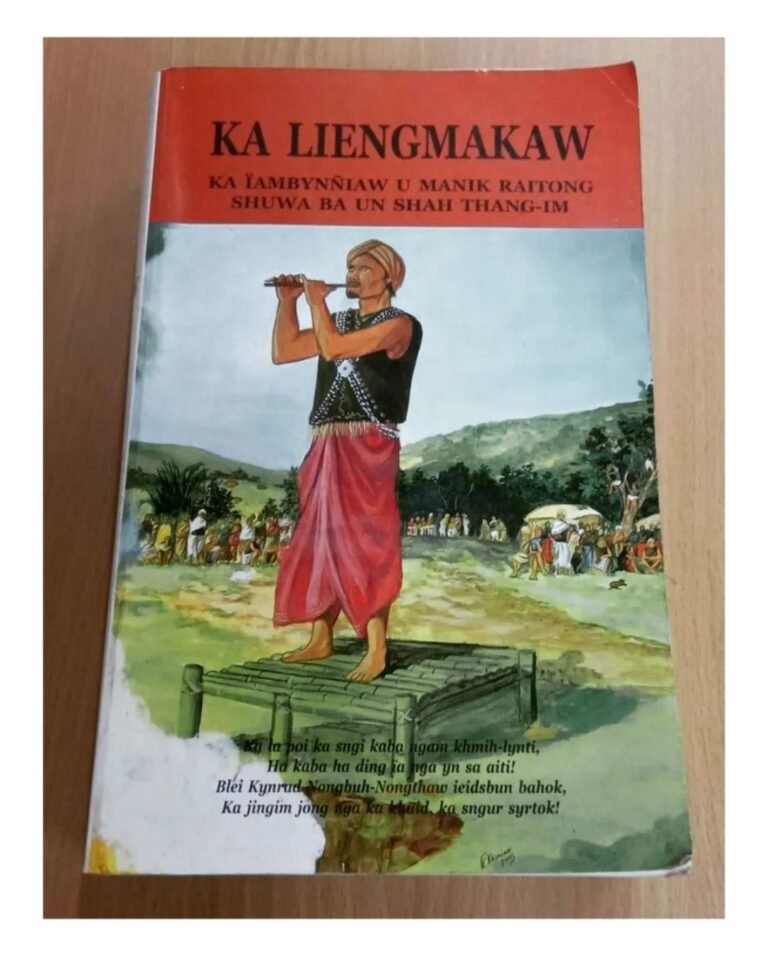
  • Ka Liengmakaw da Jespil Syiem

    There was once an orphaned youth U Manik by name who had no living relative in the world. He was nicknamed U Manik Raitong, meaning the lonely one, absolutely bereft of all family support. So overcome was he with the loss that had struck him early in his young life, that he roamed the village like one mad. At night, however, he would put away his sackcloth and ashes, eat, bathe and dress himself up in ceremonial garb. Then he would take up his flute, and play the most compelling dirges on it. Unknown to him, U Syiem's wife who had often heard him, became completely magnetised by the tunes that he played on his flute. In the event of U Syiem having to leave her to attend to matters of state in nearby regions, she was left all alone and was therefore lonely. Besides she had only just been married to U Syiem. One night she felt compelled to come to Manik's hut, but was denied entry. She broke open the door in order to be able to hear him better. However much he tried to send her away she refused.

    It was thus that she came to him every night and as a result she became pregnant. However, never once did she disclose her identity to him. When U Syiem returned after long months of being away he found that Ka Lieng Makaw, his wife, had given birth to a son who was now a few months old. He was naturally angry when he found that his wife refused to disclose the identity of the father. He summoned his people and commanded all the men folk to assemble before him. Each was ordered to bring a bunch of bananas with him. On the assigned day he ordered each one of them to offer a banana to the baby boy in order to prove the boy's paternity. However, the baby boy refused each man's offer.

    Then, when U Syiem inquired if any man had been left out, general mention was made of U Manik Raitong. It was a known fact that U Manik Raitong lived a life that was no better than a dog's. U Syiem took no chances, however, and had him come to court with a bunch of bananas. When the baby boy was offered the fruit he reached for it as if familiar with U Manik Raitong. The father having been identified, it was now the turn of the people to be shocked. U Syiem's anger knew no bounds and he ordered that U Manik Raitong be beaten to death as a criminal. U Manik Raitong, however, pleaded before the king to be allowed to choose death by burning.

    On the assigned day U Manik Raitong dressed in all his finery, made his way backwards to the funeral pyre, all the while playing on his flute. The people had already set the pyre alight. When he reached it he walked round three times but before jumping into the burning pyre, he stuck his flute upside down into the ground. The queen too who was indeed agitated beyond control and who had also dressed up as U Manik Raitong had done, watched every development from her room. But when she saw U Manik Raitong jump into the funeral pyre she rushed after him in order to join him in death. The funeral pyre was transformed into a gushing spring of water which exists even to this day, and if one were to visit Raitong one would discover that in the place where the flute had been planted upside down there grows a cluster of bamboos, whose leaves point downwards.

    Khublei Shibun Daohi Manar @xdtnoahjupejackllthmanar ba phi phah ïa kine ki dur jong kane ka kot 😄🙏

    U Daohi u ong: Ka kot Ka Lieng Makaw: Ka Ïam bynñiaw u Manik Raitong Shuwa Ba Un Shah Thang-Im ka dei ka jinglum lang jong ki jingrwai phawar kiba la rwai da i Bah Jespil Syiem. Kaba donkam ban tip ka long ba i Bah Syiem i khlem thoh ïa kine ki phawar, hynrei la lum lang hangne bad pynmih da ka Seng Kyrsei, jong ka Hima Raid UMden-Nongtluh, Ri Bhoi. Ïa kane ka kot la lah ban pynmih da ka jingimsngi bad jingduriap jong ka Vendrame Missiological Institute, Sacred Heart Theological College ka ba don ha Mawlai, Meghalaya.

    Kane ka kot ka batai bniah bha shaphang ka jingïam bynñiaw jong u Manik Raitong shuwa ba un shah thang-im bad ïa kane ngi lah ban sngewthuh lyngba ka jingpynwandur jong ki phawar. La thoh ïa kane ka kot ha ka rukom jong ki phawar. Ïa kine ki phawar la pynwandur da i Bah Syiem bad haba ngi pule ïa ki, nga sngew ki don ka bor ban pynmutdur ne pynpyrkhat ïa ka jinglong-jingman jong kata ka jingïam bynñiaw u bapli u Manik Raitong. Kaba myllung shuh shuh ka dei ka jingdon jong ki dur, kiba la pynwan katkum ki lynnong phawar.

    Daohi says: The book Ka Lieng Makaw — Ka Ïambynñiaw u Manik Raitong Shuwa Ba Un Shah Thang-im is a compilation of "phawar" sung by Jespil Syiem published by Seng Kyrsei, jong ka Hima Raid Umden-Nongtluh, Ri Bhoi. It is important to note that the phawar in the book have not been written by Mr. Syiem, as he has only sung and performed them. The book has also been released through the efforts of Vendrame Missiological Institute, Sacred Heart Theological College ka ba don ha Mawlai, Meghalaya.

    The book contains elaborate details of the sorrow and pain of "U Manik Raitong" before his burning and this is brought to us through the compositions of the "phawar". The story of "U Manik Raitong" and "Ka Lieng Makaw" is delivered through the singing of the "phawar". They have been composed in such a way as to express the despairing cries of "U Manik Raitong". What makes it even more evocative are the pictures that have been drawn according to the chapters of the "phawar".

    The English translation of the story is taken from "U Manik Raitong, Icon of Love and Creativity: An Appraisal" in the book The Oral Discourse in Khasi Folk Narrative by Dr. Esther Syiem.

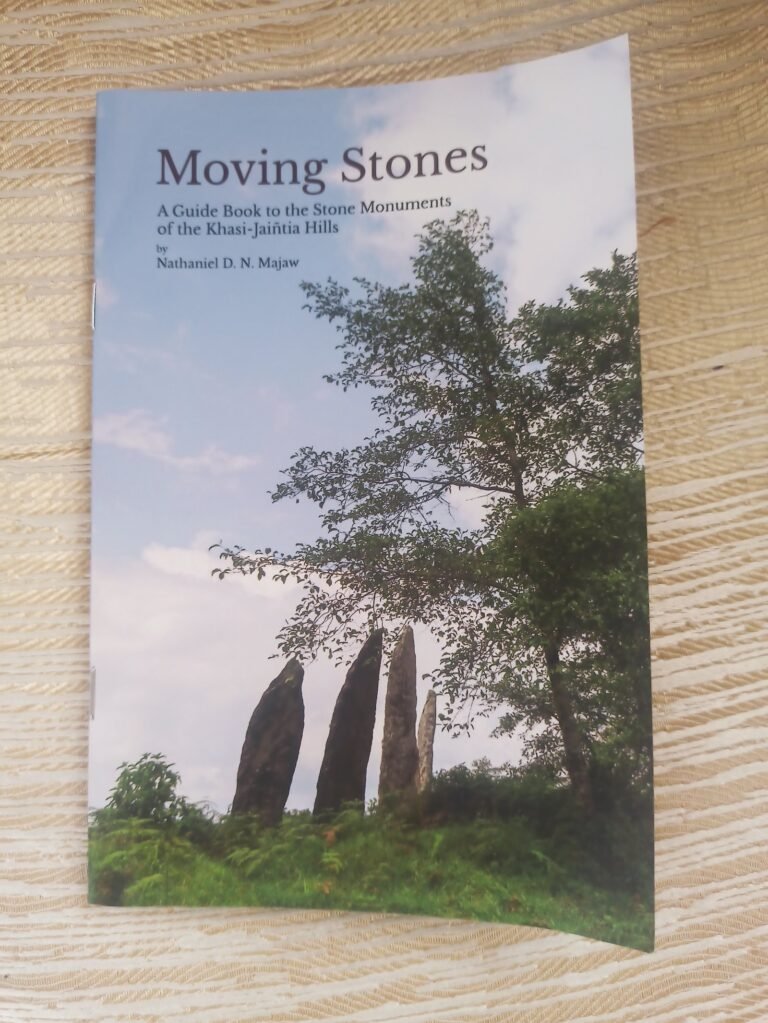
  • “Moving Stones: A Guide to the Stone Monuments of the Khasi-Jaiñtia Hills” by Nathaniel Majaw

    These are some snippets from Moving Stones: A Guide to the Stone Monuments of the Khasi and Jaiñtia Hills by @nathanielmajaw 🏞️🌲🪨Congratulations on your book!

    This is a handy book to have for anyone who wants to explore the varieties of mawbynna, that are etched into our history and culture.

  • Ka Dienshonhi

    Ka kyntien "Dienshonhi" ka thew ïa ka "Dak-Thoh-La-Jong". Da lah phiah ïa ka, ka long kumne harum:

    Ka kyntien "Dien" ka mut ïa kano-kano kaba paw haba la ïuh ne kano-kano ka jingpynsah dak ïa kiba bud nadien khnang ba kin lait na ka jingshah ïalam bakla. Ka kyntien “Shon” ka wan na kaba pynskhem ban nym jah ka dien na kaba shim nuksa na ka dien ban dang ïai pynmih dien shuh. Ka kyntien “Hi” ka thew ïa uno-uno ne kano-kano kaba pynmih dien namar kata, ka wan ka ktien “Dien-Shon-Hi”.

    The Khasi word "Dienshonhi" refers to "Dak-Thoh-La-Jong" which may be translated as that which is written by oneself. When it is broken up it means as follows:

    The word "Dien" means something that is seen or formed like a footprint or any other imprint or a sign that is placed to help people not get lost. The word "Shon" means to press down on something to leave a permanent imprint. Thus "shon" will strengthen that which is imprinted, to avoid it being lost. "Shon" will also take the example of the imprint to produce more imprints in the future. The word "Hi" refers to anything or anyone who produces an imprint. Thus, the word "Dien-Shon-Hi" is coined.

    Ka Dienshonhi: The Khasi Encyclopaedic Dictionary by Rev. Dr. Iarington Kharkongngor

    Ka kyntien "Dienshonhi" ka dei ka kyntien kaba la sot bad pynsaiñ dur na laitylli ki kyntien, kita ka "Dien", "Shon" bad "Hi". La pynïamir jingmut ïa kine lai ban long kawei ka kyntien, khnang ban pynshynna ïa ka jingmut jong ka kyntien nongwei kaba long "Dictionary". Namar kata, ngi lah ban ong ba ka kyntien "Dienshonhi" ka long ka kyntien ïamir, ka kyntien saiñ ne kaba ki ong ha ka ktien nongwei "coinage".

    The word "Dienshonhi" is a word that has been coined from three words, that is, "Dien", "Shon" and "Hi". The three words have been blended and brought together to express one meaning, so as to make clear the meaning of the English word "Dictionary". Thus, we can say that the word "Dienshonhi" is a coined word or coinage.

    Coining new words is one sure way for a language to grow! 😃🗣️🗣️📝 Two Khasi words in the post above which have been coined to explain the meaning of the English word "coinage" are 🟢 "kyntien ïamir" and 🟢 "kyntien saiñ".

    #kyntienïamir #kyntiensaiñ

    La ha ka kren ne ka thoh, ngi lah ban pynwandur bad saiñ dur ïa ki kyntien ki ban pynroi bad pynïar ïa ka ktien Khasi 🙏😃🗣️📝

    🟡 Source: Rev. Dr. Ïarington Kharkongor

    🟡 Translation and further elaboration by @speakyourroots

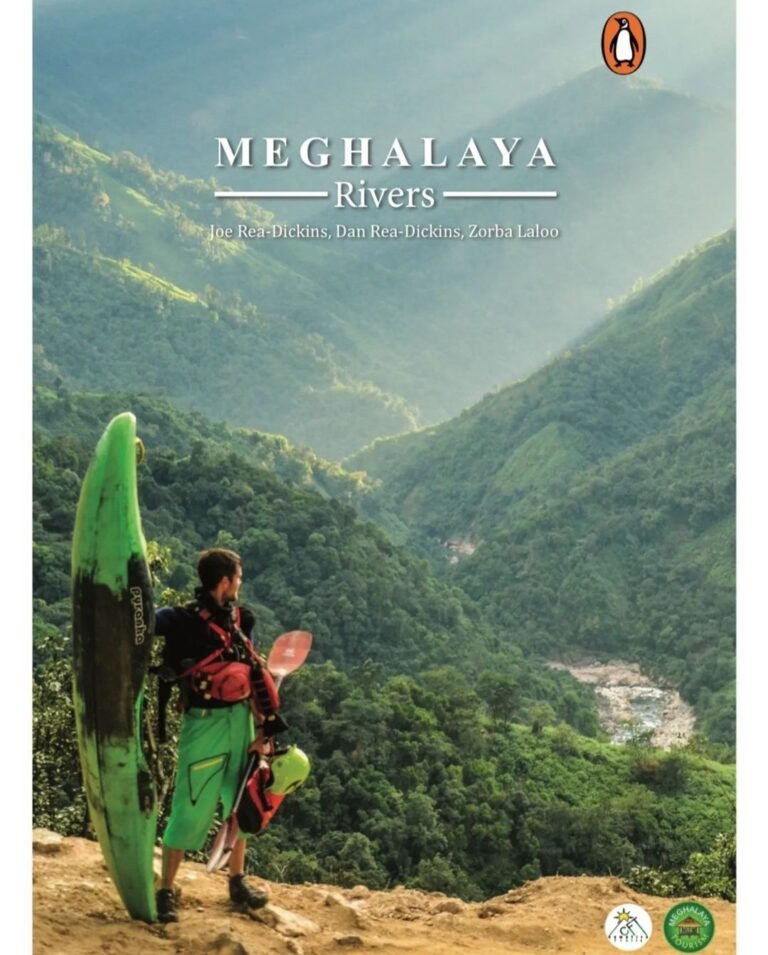
  • Meghalaya Rivers by Joe Rea-Dickins, Dan Rea-Dickins and Zorba Laloo

    'This book does justice to the fabulous find that Meghalaya is for the global whitewater community. This is pretty much the best guidebook I have ever seen and it indeed has lived up to and beyond what I expected with this book.

    -Shalabh Gahlaut, pioneer of Indian whitewater

    'This guidebook is an awesome resource which has put Meghalaya on the whitewater world map. It is colourful, detailed and well-researched – both in content and photos. It is the Lonely Planet for whitewater in Meghalaya!'

    -Anvesh Singh Thapa, Expeditions India.

    'Good river guidebooks are a joy. They excite the reader with the possible, explain and describe the probable. They tell histories, both natural and personal. They inform and entice their readers without giving it all away. This guide to Meghalaya's whitewater satisfies all these prerequisites, and does it in colour with engaging maps too. It's enough to send any whitewater enthusiast to this tropical paddling paradise.

    -Roman Dial, author of Packrafting! An Introduction and How-to Guide

    'The' "must-get" guidebook for anyone going to Meghalaya. This guide is simply the best tool to discover the rivers of this magical whitewater territory that is Meghalaya. Culture, flora, fauna, medical hazards, history and rivers, of course–it is all in there!'

    -Philippe Doux, publisher, Kayak Session magazine

    Praise and Reviews for "Meghalaya Rivers"

    A joy of a guidebook; on the rivers, it tells you just enough so as to leave you that feeling of exploring and off the rivers, it answers the questions you will want to ask. Add to this anecdotes, descriptions of descents, tales of terror and exhilaration and sections on the botany, geology, geography, wildlife and culture folktales of Meghalaya and you have the complete works.'

    -Dave Manby, pioneer of whitewater exploration

    'Much more than just your typical kayak guidebook: an immersion in Indian culture with many interesting and useful facts both on and off the river. These three individuals have worked very hard finding and documenting these river gems. The knowledge they have in the area is unmatched by anyone and I am stoked to see all their work put together in this epic guidebook of Meghalaya.'

    -Aniol Serrasolses, 2016 kayak world champion

    Author Profile: Zorba Laloo

    After his studies in Shillong and Darjeeling, Zorba worked with independent documentary film-makers for the BBC, National Geographic, and other leading Indian and European television. He was researcher and cameraman for the "Darjeeling Himalayan Railway", a documentary that received an award from the Royal Television Society, UK, in 2010. As a crew member for the Swiss-owned expedition company Ribexpeditions, he completed several source-to-sea expeditions under the tutelage of seasoned leaders. Inspired by rivers, he started paddling in Meghalaya and Northeast India with friends for sport and exploration. They were the first in India, and among the first in Asia, to start using packrafts. In 2012, he received the 'Golden Paddle Award' from the American Packrafting Association for his contribution in promoting paddlesports and river conservation. Disappointed by the lack of opportunities for students to experience the outdoors in Meghalaya, Zorba co-founded Campfire Trails, which has, to date, catered to almost 2000 students. Campfire Trails also works closely with villages to help design and develop sustainable eco-rural tourism projects, for which, it received the NEDFi Award for social entrepreneurship in 2015.

    Author Profile:

    Dan Rea-Dickins Dan has worked as a river guide in Scotland, Kenya, Uganda, Iceland and Switzerland. He has some notable descents to his name, the first and only descent of Charnia Falls in Kenya, being a safety kayaker and photographer for the first commercial rafting descent of the Murchison section of the White Nile and he also crossed Iceland by traversing the Vatnajökull glacier and packrafting the Jökulsá á Fjöllum river. Dan achieved all of this in between seasons in India. He has now shifted his focus and is training to be a paramedic in Liverpool, enjoying regular laps on the rivers of North Wales during his time off.

    Author Profile:

    Joe Rea-Dickins At age eighteen, Joe headed to India to work as a journalist for the New Indian Express, and with that his love affair with India began. After a second gap year, Joe moved to Aberystwyth, a secluded Welsh town to study international politics. In his second year of studies he was selected for the British Universities Kayak Expedition team and travelled to Venezuela for his first taste of expedition kayaking. In the years since graduating from university, Joe has spent almost as much time in South Asia as he has in Europe. Joe has raised money for women's education in Northern Pakistan through the release of two British-made kayak films "High" and "Too High'. He has worked in Delhi as a video editor for the Outdoor Journal, India's first international active-lifestyle and adventure magazine. Joe shot, edited and directed "The All India Kayak Expedition", a six-month rolling expedition to explore many un-paddled rivers in India. In 2016, Joe was part of a team that kayaked the Panjshir river in Afghanistan. They paddled around 130 km of whitewater and since the trip, he has raised awareness about the unique and often-misunderstood region. Now in the UK, Joe runs an aerial-photography business while formulating grand plans for more exploratory trips to far-flung locations.

    About the book:

    East India is the small culturally rich hill state of Meghalaya. Meghalaya receives the heaviest rainfall anywhere on Earth and all this water creates rivers that are some of the steepest and most powerful on the planet. Its rivers are steeped in a folklore that was shared over campfires and hearths back in a time when its people had no written word. These rivers are the bedrock of folklore and are surrounded by diverse natural beauty. This wild frontier has recently caught the attention of whitewater paddlers from all over the world. Six years of research by international and local paddlers has culminated into this one-of-a-kind book. More than just a guidebook, Meghalaya Rivers shares previously unpublished folk stories, personal accounts from river descents, detailed maps, insights into the unique culture, history, flora, fauna, environment and geography of this enchanting part of the globe. Not only is this book full of breathtaking photography from some of the most difficult-to-reach corners of Meghalaya, it is also packed with all the information needed to take you to these wild places. Now all you need to do is go and see them for yourself.

    "Meghalaya Rivers" (2018) is a valuable book that everyone of us should have! 🏞️

    Khublei Shibun @z.meghalaya for sending this! 😄🙏

    Ki um ki wah ka ri Khasi ki long ki jingai ba kordor bad ba kyrhai jong ka mariang kiba la pynphuh bad pynim ïa ka jymbriew, ki riti ki dustur, ki khanatang, ki khanaparom bad ka rukom im jong ka jaitbynriew hi baroh kawei.

    Ki dei ki kot kum ka "Meghalaya Rivers" kiba la pyni sha ka pyrthei ïa ka jingriewspah jong ka mariang ha ka ri Khasi. Ki dei kine ki thied jingim kiba ngi dei ban ri ban sumar na ka bynta ka mynta bad ka lawei ruh kumjuh. Kumba la lam lynti ha ka kot, ngi dei ban sngewthuh ïa ka jingkynsai jong ki um ki wah jong ngi. Ka shong ha ngi ban pyrshang katba lah ban pynman pynneh ïa ki ym tang kum ki jingitynnad jong ka mariang, hynrei kum ki jingmyntoi kiban kyrshan ïa ki shnong ki thaw ha kiba kine ki wah ki tuid.

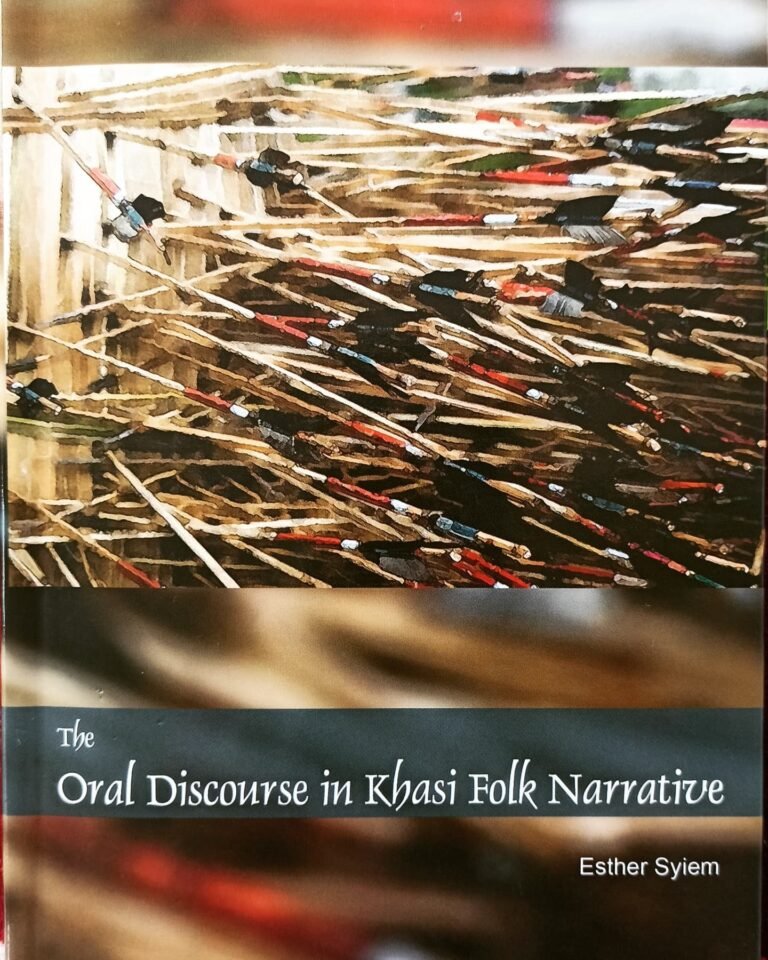
  • The Oral Discourse in Khasi Folk Narrative by Esther Syiem

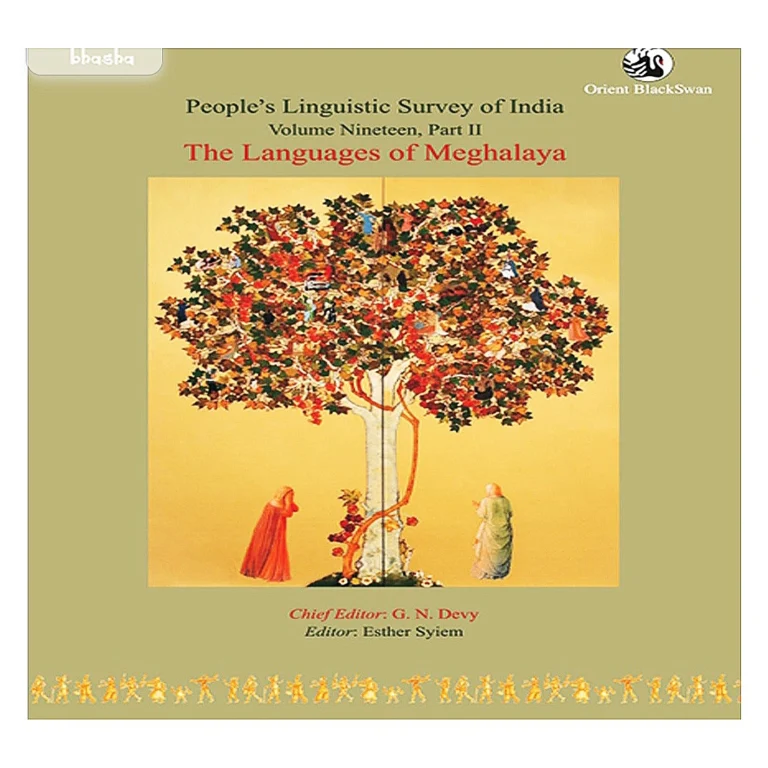
    The Oral Discourse in Khasi Folk Narrative by Dr. Esther Syiem @meiithei (2011) offers analysis and insight into Khasi orality. The book discusses the Khasi world view, showing how the oral tradition thrived in the past and how it is still a powerful presence among the Khasi community in the twenty-first century.

    This book will especially be beneficial for researchers and anyone wanting to know and understand the Khasi oral tradition in an in-depth way.

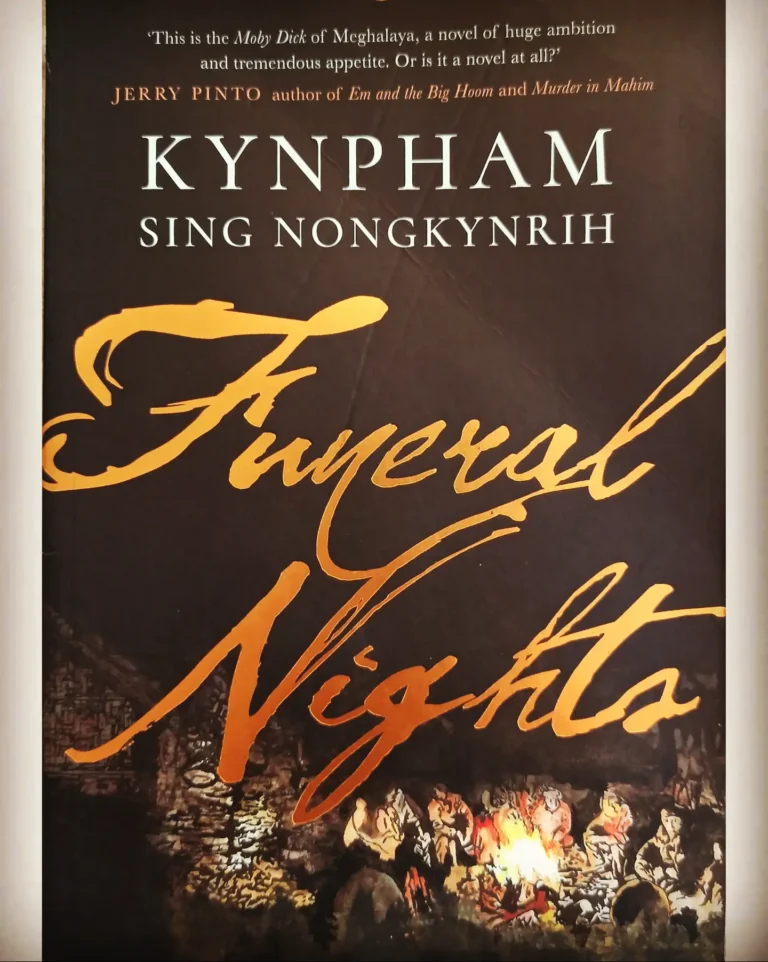
  • “Funeral Nights” by Kynpham Sing Nongkynrih

    Funeral Nights by Kynpham Sing Nongkynrih has been receiving wonderful reviews by writers as well as readers 😀😀

    The book is based on "Ka Phor Sorat" which is a funeral ceremony which was performed in the village of Nongshyrkon. We are so excited to read this book! It is available on amazon.in

    Dr. Kynpham Sing Nongkynrih is currently a Professor in the Department of English, North-Eastern Hill University, Shillong.

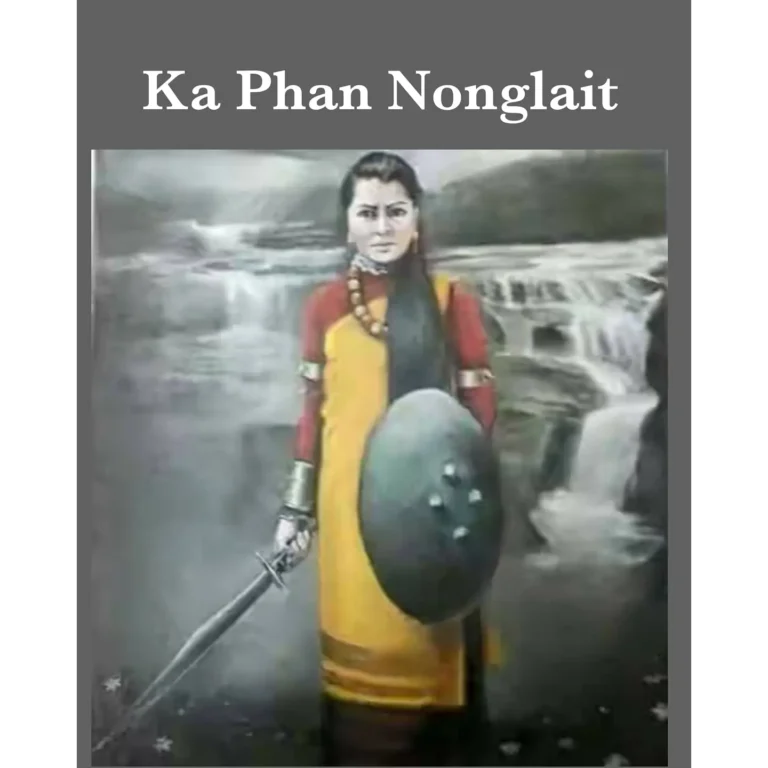
  • Ka Phan Nonglait by Tony Slong

    Ka Phan Nonglait is one of the Khasi women freedom fighters and is considered one of the bravest women of that time. Most women were either raped, molested or ill-treated by the British soldiers. This made Ka Phan Nonglait and some women from Hima Khatsawphra to take matters into their own hands with the help of Mon Bhut. With his help Ka Phan Nonglait was able to trap the British soldiers by offering them alcohol. When they were inebriated, she took all the weapons of the soldiers and threw them into one of the rock holes in the Nongrmai falls (now known as Phan Nonglait Falls). Due to this act, she is remembered in the stories that have been retold for generations. Then U Mon Bhut along with other soldiers killed 32 British soldiers. This was in the year 1829.

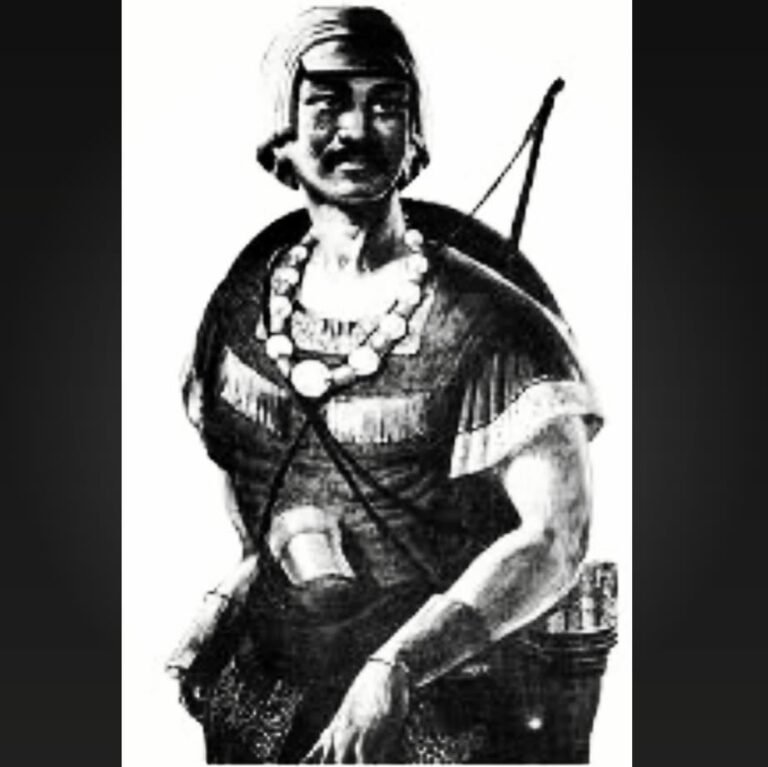
    In Ka Jait Nonglait: Ka Thymmei bad ki Dienjat written by T. Daniel Stone Lyngdoh Nonglait, the historical contexts of the Nonglait Clan has been given. Since ours is a society that relies on oral narratives, I have heard of the valour and bravery of ka Phan Nonglait. It has intrigued me to do further research upon this narrative. Yet, there is more to be unearthed. From the British perspective, the only record made was on U Mon Bhut who fought gallantly against the British. He was U Tirot Sing's most trusted general. The records about the Nongkhlaw incident were said to be the first spark that led to the war of the Khasis against the British. Among those killed, two British officers named Lieutenant Bedingfeld and Lieutenant Burlton were killed. In a letter to Lamb by David Scott, dated 10th April 1829, he mentioned that this fateful incident happened either on the 4th or 5th of April, 1829. This incident shook the Britishers and was recorded in the memoir of the Late David Scott, esq.

    On this Independence Day we remember Ka Phan Nonglait as the first Khasi woman freedom fighter. The achievements of Khasi women who fought against the British are often not recorded by history. Ka Phan Nonglait is remembered as one of those freedom fighters who have made a mark on Khasi history.

    This entry has been contributed by @carey_lynz Thank you so much! 🙏🙏 Our gratitude also goes to @tonyslong 😃🙏

    🟡 Picture 1: Painting of Ka Phan Nonglait by @tonyslong

    🟡 Picture 2: http://wikimapia.org/21065891/Phan-Nonglait-Falls-Nongrmai

    🟡 Picture 3: Ka Jait Lyngdoh Nonglait: Ka Thymmei bad ki Dienjat written by T. Daniel Stone Lyndoh Nonglait.

    🟡 Picture 4: A Memoir of the Late David Scott, Esq. written by Major Adam White (1831, 1st edition)