Category: Books

  • Around the Hearth: Khasi Legends (Folktales of India) by Kynpham Sing Nongkynrih

    The back cover of Around the Hearth: Khasi Legends (Folktales of India) reads thus:

    "It is believed that the only way the Khasi people could learn of God’s word was by passing on the stories of their forefathers. The alphabet of the great Khasi tribe of North-East India was born as late as in 1842, when Thomas Jones, a Welsh Presbyterian missionary, introduced the Roman script to form the essentials of the Khasi written word. But long before the white man came, the Khasis knew agriculture. trade, commerce and industry. And they were also masters of story-telling.

    Theirs was a society of great wisdom and civilized conduct at a time when brute force held sway. For theirs was a culture that worshipped God through respect for both man and nature. Perhaps that is why Khasi stories always begin with ‘When man and beasts and stones and trees spoke as one…'

    How did the great story-telling tradition of the Khasis survive so long without a script? Putting together myths and legends peopled by deities and poor folk, speaking trees and talking tigers, the sun and the moon and everything below—bilingual poet and writer Kynpham Sing Nongkynrih describes how fables of love and jealousy, hate and forgiveness, evil and redemption inform the philosophy, moral principles and daily activities of his community even today."

    Around the Hearth: Khasi Legends (Folktales of India) written by Kynpham Sing Nongkynrih (2007) is an important and significant book which documents Khasi folktales in English. With the publication of this book, the Khasi oral tradition can now reach a larger audience in India and all over the world.

    Published by: Penguin Books India

    Cover painting: @benedictskhemlang

    Illustrations: Pankaj Thapa

    👉The book is available online on amazon.in

  • A Glimpse of Tirot Sing: “A Memoir of the Late David Scott, Esq.” written by Major Adam White (1831)

    On the occasion of the death anniversary of U Tirot Sing, the 17th of July, here is "A Glimpse of History–U Tirot Sing Syiem" sent by @carey_lynz

    In the book A Memoir of the Late David Scott, Esq., written by Major Adam White (1831, 1st edition), White narrates how David Scott took intense interest in the newly discovered region that is, the North East Frontier. White narrates how he had personally witnessed the "Cassya states" (Khasi States) and the beautiful hills which reminded him of the South of Scotland. At this time, the territory under Hima Nongkhlaw was not under British control. It so happened that Tirot Sing wanted to rent some areas in Assam from the Assamese Raja. David Scott said that he would be happy to oblige, if Tirot Sing would allow the British passage through his territory to go to Sylhet.

    This led Tirot Sing to call for an Assembly in order to discuss Scott's request. The British witnessed a very impressive meeting in Nongkhlaw. The Assembly sat in a circle according to their ranks. What struck the Britishers was the "order and decorum of the debators". There was respect for the opponent in the debate and the orator of each party was given a fair chance to speak. This continued for a long time. Growing impatient, David Scott sent a "dozen of bottles of rum" to the Assembly in the hope that the debate would end but the rum was returned.

    From these events, we come to know how the Khasis were a people who honoured each others' word and respected each others' opinion. Therefore, as we commemorate the life of U Tirot Sing Syiem, may we remember the value and power of our words like our forefathers before us. Lest we forget, let's remind ourselves of who we truly are.

    The above-mentioned events have been summarised from the book written by Major Adam White. The contributor, Dr. Naomi C. Nonglait is an Assistant Professor in the Department of English, St. Mary's College, Shillong.

    Picture 1: Google, Picture 2, 3 and 4 sent by @carey_lynz

  • Nga Kynmaw/ I Remember

    That is why the Khasi stories always begin with "When man and beasts and stones and trees spoke as one…." This shows the Khasi world view, that sees the universe as a cosmic whole that receives its animation and force from the one living truth, their God, U Blei.

    Around the Hearth, Kynpham Sing Nongkynrih

    They say that long before the written word arrived in the mystical hill state of Meghalaya in Northeast India, an ancestor lost the manuscript that contained the religious and philosophical scripts of the Khasis as dictated by God. Descending from the great summit after meeting God, the ancestor came across a raging and turbulent river. He clenched the manuscript between his teeth as he tried to swim, but being from the hills, he was not adroit at swimming such torrid waters. He bobbled midstream and the manuscript was reduced to mush, which he swallowed. He managed somehow to return home empty-handed, and recounted his plight to his clansmen, assuring them that he could still recite God's word to them. The clans convened a council of members where the ancestor instructed them on the laws and teachings of God. It was from here, they say again, that the Khasi traditions of storytelling originated. Bah Kynpham Sing Nongkynrih's Around the Hearth: Khasi Legends brings alive the history and traditions of Khasi storytelling. The Khasis developed a script only as recently as 1842, thanks to Welsh missionary Thomas Jones. Their language and tradition of oral storytelling, though, has survived for centuries among a people of soft yet strong disposition who believe supremely in the symbiotic relationship between nature and man. Who live in the shelter of clouds above pine trees, lush green mountains, and share songs and poetry warmly around the fires of their hearth.

    "Nga Kynmaw/ I Remember" sent by Randeep Baruah @rondeview_ 💭🗯️💬Thank you Sir for this valuable reminder on the oral tradition of the Khasis! 🙏🙏

    Taking his inspiration from Around the Hearth: Khasi Legends (Folktales of India)(2007) written by Kynpham Sing Nongkynrih, Randeep talks about the story of the lost of script of the Khasis that he recounts from Nongkynrih's book. It is a story that cements the power of story-telling and the art and truth contained in the oral tradition. May the words we speak echo the spirit of our forefathers, who with a wisdom of the ages laid down the roots of our intrinsic bond with nature.

    Randeep Baruah is a writer and communications designer.

    Picture credit: @rondeview_

  • Layers of History: Essays on the Khasi-Jaintias by David R. Syiemlieh

    Layers of History: Essays on the Khasis-Jaiñtias (2015) by David R. Syiemlieh.

    David R. Syiemlieh is a retired Professor of History from North-Eastern Hill University, Shillong, Meghalaya. He has also served as the Chairman of the Union Public Service Commission of India.

    The seventeen essays in this collection relate to the Khasi-Jaiñtias of Meghalaya in North-East India and cover a time span from their pre-colonial past, through the colonial era and into more contemporary times.

    The book is published by Regency Publications and is available on amazon.in

  • Ka Jingïamareh Kob ki Wah da Esther Syiem

    Ka Jingïamareh Kob ki Wah , ba la ïathuh da Esther Syiem, Dur: Benedict Hynñiewta

    Ka Ïew bad ka Ngot ki ju sngewtynnad ban ïalehkai ha u lum hajrong. Ha kawel ka sngi, ka Ïew kaba kham shlur, ka la peit ïa ka jingshat ka sngi ha ki them shajngai bah bad ka la khot ïa ka Ngot, ka para kaba ju sngewtynnad ban shong mutdur, pyrkhat marwei, sha ka jingïakob mareh. Ha ka shi khyllipmat ka Ïew ka la kylla sha ka wah kaba kynthih ïa ki lum ki wah ban poi kloi shathie. Ka Ngot kam banse shuh ban bud lang… Mano ban jop?

    La ïathuh ïa kane ka khana pateng da ka nongthoh bad u artis, kiba ïoh mynsiem na ka mariang kaba dap da kiei kiei kiba jyrngam bad ba itynnad ha Meghalaya. Kane ka khana ka sngewban bang ïathuh ïa ki jnit ki jnat jong ka jingïamareh kob, katba ki jingdro pat ki tbeh sha kata ka jingïamareh na ki lum sha ki them.

    Ka Jingïamareh Kob ki Wah sien shon banygngkong eh ha ka ktien Khasi ïa kum kane ka kot dur.

    Ka nongthoh, Esther Syiem, ka hikai English Literature ha ka skulbah North-Eastern Hill University, Shillong. La palat shiphew snem eiei ba kane ka nongthoh ka la pyrshang ban wad bad plait bha ïa ki khana pynriewspah jaitbynriew jong ki Khasi. Ka dei ka nongthoh kaba thoh lang ha ka Khasi bad ka Phareng, ka nongthoh poitri kaba pawnam. Ka la pynmih ar tylli ki kitab poitri, ka drama Khasi, ka kot shaphang kine ki khana bad kiwei de ki ese.

    U Benedict Hynñiewta u dei u artis uba la pass na Visva Bharati University, Santiniketan, West Bengal. Ïa ki dur jong u, la lah pyni ha ki exhibition ha Ri India baroh kawei. U sngewtynnad ban put bisli bad u don bynta ruh bad ka folk fusion music group.

    .

    .

    .

    Originally in Khasi Race of the Rivers, Retold and Translated by Esther Syiem, Pictures: Benedict Hynniewta

    Ka Ïew and Ka Ngot love to play on the hilltop. One day, the adventurous Ka Ïew looks at the sun shining down on the distant, sun drenched plains and challenges her quiet sister to a race. In a flash Ka Ïew becomes a river, ready to rush downhill, and Ka Ngot has no choice but to join her… Who will reach first?

    This well known Khasi folktale is brought to life by a writer and an artist, both intimately connected to and inspired by Meghalaya's varied, lush landscape. The evocative text delights in detail, while luminous illustrations flow alongside, taking the reader on a mood-filled journey from the hills to the plains.

    Race of the Rivers has also been published by Tulika in Khasi, in which it was originally written. It is the first ever picture book for children in that language.

    Writer Esther Syiem teaches English Literature at the North Eastern Hill University, Shillong. She has been involved in the study of Khasi folk literature for more than a decade now. A bilingual writer and established poet, some of her publications include two collections of poetry, Oral Scriptings and Of Wit and Wisdom of Follies and Frailties, and a play in Khasi, Ka Nam.

    Artist Benedict Hynniewta is an alumnus of Visva Bharati University, Santiniketan, West Bengal. Benedict's art has been displayed in exhibitions across India. Currently, he teaches painting in North-Eastern Hill University, Shillong. He loves to play the bamboo flute and is also part of a folk fusion music group.

    Ka Jingïamareh Kob ki Wah the Khasi folktale of the rivers Umngot and Umiew, retold and translated into English by Dr. Esther Syiem and illustrated by @benedictskhemlang

    This book has been translated into different Indian languages including Hindi, Bengali, Tamil, Gujarati and Marathi. It is a perfect book for children! 🌻🌻🌻

    Both Dr. Esther Syiem and Benedict Skhemlang Hynñiewta teach in North-Eastern Hill University, Shillong, Meghalaya.

    The book is available at tulikabooks.com and amazon.in

  • Folktales From India by A.K. Ramanujan

    For us bookworms and silverfish! 🤓🤓🦠🐛

    Here is a book entitled Folktales from India: A Selection of Oral Tales from Twenty-two Languages (1993) selected and edited by A. K. Ramanujan and published by Penguin Books, India. Ramanujan was an award-winning translator and poet whose translations, poetry and essays have been widely published and anthologised.

  • The Languages of Meghalaya

    The Languages of Meghalaya: People's Linguistic Survey of India. Volume Nineteen, Part Il.

    Chief Editor: G. N. Devy and Editor: Esther Syiem.

    Published by Orient Black Swan, 2018.

    This is a good book on the indigenous languages of Meghalaya, edited by Dr. Esther Syiem, Professor, Department of English, North-Eastern Hill University, Shillong.

    There are many doubts and questions about the languages and dialects in our state Meghalaya, especially regarding the Khasi and Pnar languages. Hopefully this book will clarify our doubts! The book is available online on amazon.in

    This book has also been translated into Khasi and this translated edition is available in Ri Khasi Book Agency, Mawkhar, Shillong.

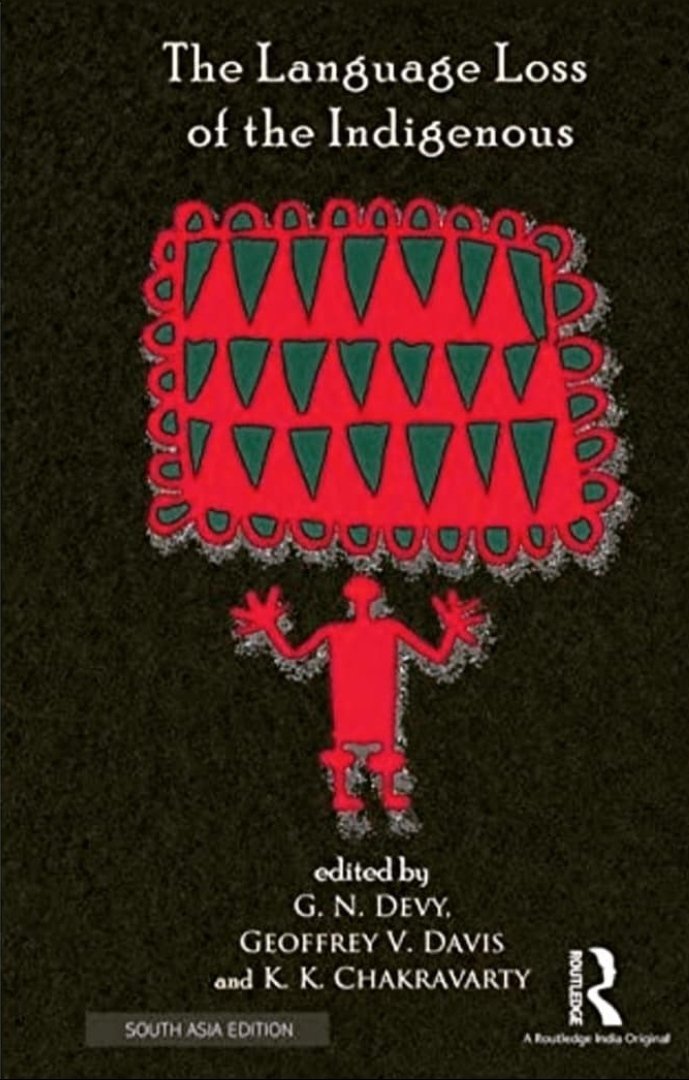
  • The Language Loss of the Indigenous, edited by G.N Devy, Geoffrey V. Davis and K. K Chakravarty

    This volume (published in 2016) traces the theme of the loss of language and culture in numerous postcolonial contexts. It establishes that the aphasia imposed on the indigenous is but a visible symptom of a deeper malaise – the mismatch between the symbiotic relation nurtured by the indigenous with their environment and the idea of development put before them as their future.

    The essays here show how the cultures and the imaginative expressions of indigenous communities all over the world are undergoing a phase of rapid depletion. They unravel the indifference of market forces to diversity and that of the states, unwilling to protect and safeguard these marginalised communities.

    This book will be useful to scholars and researchers of cultural and literary studies, linguistics, sociology and social anthropology, as well as tribal and indigenous studies.