Category: Folktales and Stories

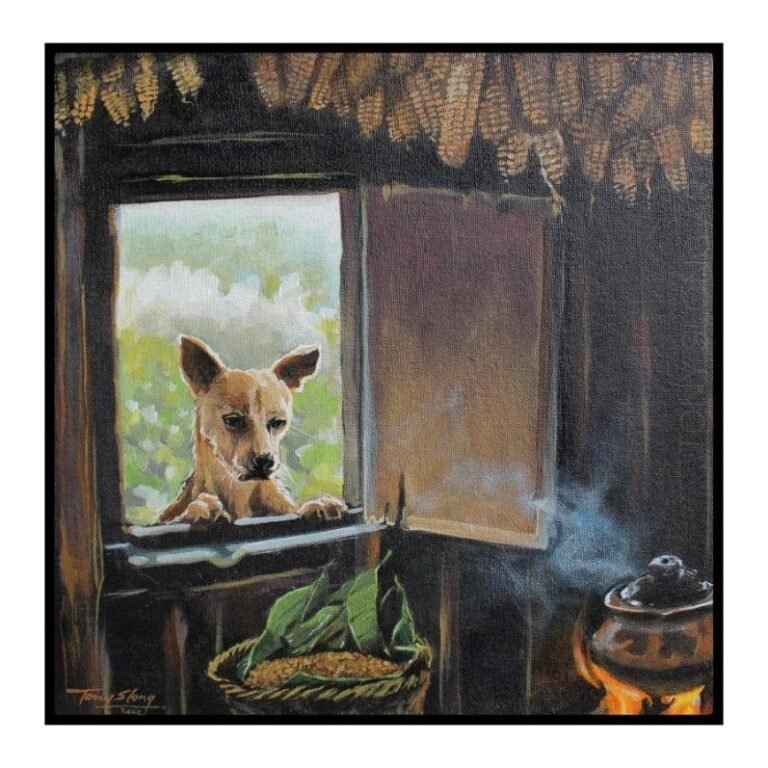
  • U ksew ha ïew luri lura by Tony Slong

    World Folklore Day 2023 🏞️🌿

    Kane ka matti jingdro da i @tonyslong ka pyni ïa u ksew ha ka khyllipmat ba u lap ïa ka tungrymbai shuwa ba un rah ban die ïa ka kumba la ïathuh ha ka khanaparom "Ka Ïew Luri Lura jong u Laiphew Mrad". 🐶😄

    Khublei Shibun @tonyslong ba phi la phah ïa kane ka dur kaba pynmutdur ha ngi ïa kane ka khanaparom! 🙏🙏

    .

    .

    .

    This painting by @tonyslong depicts the dog from the well-known Khasi folktale "Ka Ïew Luri Lura jong u Laiphew Mrad".

    In the story the dog attempts to sell tungrymbai or fermented soyabean in the animal market but it ends up being trampled upon by the other animals because they could not bear the smell of tungrymbai 😅😅🐶🐶 It is said that it is because of this incident that the dog came to live with man.

  • Different kinds of stories

    On the 27th of September 2021, a question was asked about the difference between Khanatang, Puriskam-Purinam and other forms of Khasi stories.

    These are the responses:

    Folktales are Ki Khanaparom

    Myths are Ki Khanatang

    Legends are Ki Khanapateng

    Fairytales and Fables are Ki Puriskam-Purinam

    It may be noted that these may have different names in different dialects.

    Understanding our oral tradition requires that we understand the different types of stories that our forefathers put forth, to articulate a history and a culture. 🌲🌾🍂

    Khublei Shibun @lieng_makaw and @lurstepkharlyngz for your responses! 🙏🙏

    If anyone wants to add more, please feel free to mention them in the comments section.

  • Thlen by Samuel Sawian

    Between the years of the fall of the republic of U Syiem Lakriah, and the rise of the daughters of the River Nymphs, there was an age undreamed of, when the iron state of Rangjyrteh stood tall over the plains of Sylhet and the beasts of the wild had foresworn their promises to heaven.

    Onto this age was born a boy, a son of Ka Kma Kharai, the daughter of U Mawlong Syiem and illegitimate heir to his republic of Mawsmai.

    Deformed at birth and sired by a mysterious father, the boy and the mother were driven out of Mawsmai by his grandfather, the Syiem. The Mawsmai Syiem was a powerful Syiem and his republic old. The rumours of Kma Kharai and her boy spread like wildfire, across the wilds of Ri War.

    Her boy, a demigod to some, a demon to many, grew up in the jungles – the sacred forests that surrounded each settlement. Gifted with the power of shapeshifting, he could transform himself to any animal he chose. They couldn't be bigger than him and initially, he could only transform for a short time. Sometimes a cat, at times a crow, often a snake. It was easier keeping this form, for they were always in hiding in the caves and tunnels under Sohra. As he grew older and stronger, he retained his transformations for longer. She warned him though, to not stay in his transformed state for too long, or he might forget how to become human again.

    Mother and son lived this way for a while. Moving from village to village. Always mindful never to be recognised. They say this was when she introduced the love of raw flesh to him. They say she gave him a taste of man flesh. Then one day, outside the thriving market of Rangjyrteh, when the boy's appetite had been transformed completely, Kma left him. We do not know where she went and little was heard from her again.

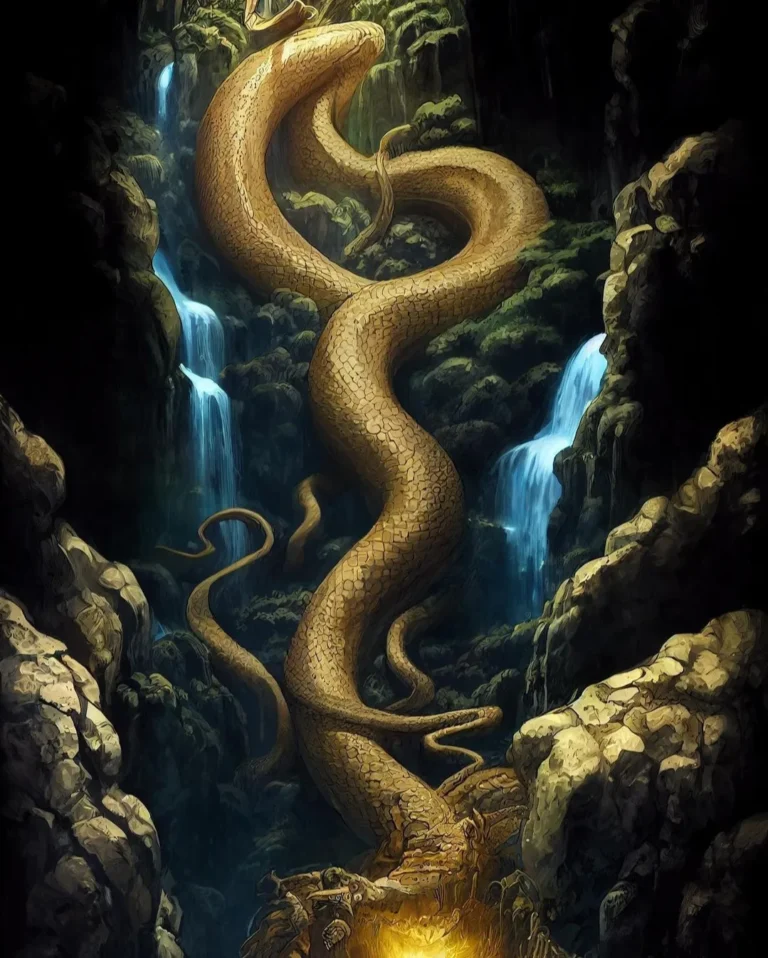
    What she left behind was a young python, left to wander the caves alone, doomed never to remember what it was to be human again.

    ________

    Hapdeng ki snem jong ka jingkyllon jong ka hima U Syiem Lakriah bad ka jingphuh jong ki khun kynthei jong ki Puri Um, ka la don ka ïa ka bym lah ban phohsniew ruh, haba ka hima nar jong ka Rangjyrteh ka ïeng rasong halor jong ki ri thor ka Sylhet bad haba ki mrad khlaw ki la len ïa ki kular ksiar jong ki sha ka bneng.

    Ha kane ka ïa la kha ïa u khun shynrang, u khun jong Ka Kma Kharai, ka khun jong U Mawlong Syiem bad kaba long ruh ka khunkliar jong u syiem. Haba la kha ïa uta u khyllung u la long uba sniewdur bad uba itieng ban peit bad namar ba ym tip u dei kpa ïano, la beh shnong ïa u bad ïa ka kmie jong u na Mawsmai da u Paieit jong u, U Syiem. U Syiem Mawsmai u dei u Syiem uba donbor bad ka hima jong u ka la long kaba rim. Ki khuborjler shaphang Ka Kma Kharai bad u khun jong ka ki la par kum ka ding ba klang sha shiliang ka Ri War.

    Uta u khun jong ka, u la man blei ha ki katto katne bad u ksuid kynsha ha kiba bun. U la heh la san ha ki khlaw – ki 'lawkyntang kiba ker ïa ki shnong. U la don ka bor ban kylla dur bad u lah ban kvlla sha uno uno u mrad uba u kwah. Kim lah ban kham heh ïa u bad ha kaba dang sdang u lah ban kylla tang shiphang shipor. Teng teng u kylla miaw, ha teng ka tyngab bad bunsien u bseiñ. Ka kham suk ban neh ha kane ka dur namar ba ki hap ban shu phet ban rieh ha ki krem ka Sohra. Katba uta u khynnah u nang heh bad nang khlaiñ, u la lah ban pynneh ia ki jingkylla jong u kham slem. Ka kmie ka la maham ïa u ba nym neh than shi slem ha kine ki dur, namar ïoh u klet noh kumno ban long briew biang.

    Ka kmie bad u khun ki la im kumne katto katne por, na kawei ka shnong sha kawei pat, lem bad ka husiar ïoh don ba ithuh ïa ki. Ki ong ba ka dei ha kane ka por ba ka kmie jong u ka la ai bam ïa u da ka doh im. Ki ong ba ka ai ha u ban mad ïa ka doh briew. Te ha kawei ka sngi, ha ka ïew ba shongshit jong ka Rangiyrteh, haba uta u khynnah u la bang bha ïa ka doh briew, Ka Kma ka iehnoh ïa u hangta. Ym tip shaei ka leit bad khlem ïohsngew shuh shaphang jong ka hadien kata.

    Ka la ieh shadien ïa u 'seiñlung, ieh ba un ïaidwir ïa ki krem marwei, ban kit bad ka nusib dum ban nym kynmaw shuh da lei lei ruh kumno ban long briew biang.

    Kane ka jingïathuhkhana te phin ïa sngewtynnat baroh! 😃😃

    "THLEN" ka dei ka jingïathuhkhana kaba la thoh da i @samuel.sawian

    Khublei Shibun @samuel.sawian ba phi la shah ban sah dak ïa kane ka khana kaba bat ïa ka jingmut jingpyrkhat, khamtam namar ba la pynshong nongrim ïa ka ha ki khanatang bad khanaparom jong ngi ki Khasi! 🤩🤩👏👏

    Thank you @samuel.sawian for this gorgeous and thought provoking story. You have merged folklore and fiction in the best way to tell a story that embodies so much meaning! 👏👏

    📸 @samuel.sawian

    🟡 Khasi translation by @speakyourroots

    🟡 No part of the story and its Khasi translation may be reproduced in any form without the consent of the author and the page. All material for this content has been posted with the permission of the author.

  • The original name of Nohkalikai Fall

    Ka Kshaid Nohkalikai

    Naduh hyndai kulong-kumah, hajan kawei ka shnong kaba kyrteng ka Rangjyrteh, ka tuid kawei ka wah kaba kyrteng ka Umïong. Ka tlong jong ka, ka long na shaphang Laitryngew, hynrei katba ka nangtuid arsut, katta ruh ka nang-heh nang-heh, ba bun ki shnat wahduid kiba wan ïasoh-lang bad ka, haduh ba ka kylla kum kawei ka wahbah ka baheh. Ka don kawei ka kshaid kaba ki ju khot kyrteng ka kshaid wah Umïong. Kane ka kshaid ka long ka bajrong rymphai bad ka baitynnad shibun eh, khamtam leilei ha ka por lyïur haba jur u slap. Ka jingnoh rymphum jong ka na khlieh-riat shapoh thwei, ka pynthame bad pynïap-ngiah ïa ki nongpeit haduh ba kim ngiah ban peitseh bad peit-jylliew ïa ka um kaba tuid phir-phir kumba tuid ka dut. Napoh ka thwei bajylliew jong ka, ki kiew ki sur ba sawa kynud ha ka jingbeh ka lyer, ryngkat bad ka jynhaw tdem-um kaba kiew, man la ka teng, kum u lyoh ha sahit-bneng.

    Dang hyndai-hynthai kata ka Rangjyrteh, ka la long ka shnong ka bapawnam hakhmat ki para-shnong baroh kiba ïadon markhap bad ka. Wat la ka la duh-noh, hynrei haduh mynta- mynne, ka kyrteng jong ka, ka dang sah tyngkreiñ . Ha kata ka por, ka la long ka shnong kaba bun briew. Bad ki briew ruh ki basmat-basting ha ka trei-ka-ktah, ha ka leit-ka-wan…

    .

    .

    .

    .

    Ka dohnud kmie jong ka, ka pdang hieb, bad ka lynñiar-kaw. Ka ïam, ka lympat ïalade bad ka pajut la u shñiuh. Ka rah la kawei ka wait bad ka phet kulmar kum ka balamwir. “Balei, balei” la kylli ki briew kiba wan ïabeh haba ki ïohsngew ïa ka jinglynniar, “ balei pha leh kumne?” “ Ngan nai im shuh,” ka la ong. “ Waw! u la shet u dusmon shisngi, ba un phon un shet ïa nga ba ngan bam-doh la i khun. Ngan leh aïu pat ban im khlemrain ha ka pyrthei, la suk ka tap.” La ki khroh, ki pyntngen ïa ka ruh, kam patiaw ; ka phet la ka phet bak-bak. La ki mut ban kem ruh, ym don ba shlan, namar, ka talaiñ da ka wait. Kumta ki shu ïabud lyngngoh kham na pajih, da ka jingsngewsynei kum ban jawummat. Ki kmie ki ïaphet kulmar shane shatai, ki ïapyrta la ki khun ki khun haduh ba ka shnong ka la win hi ñiak. Ka Likai pat, ka la mareh sak-sak sha khlieh-kshaid-Umiong bad ka la nohïap sham-lysham shapoh thwei.

    Naduh kata ka por, haduh kine ki sngi ki sa khot ïa kata ka kshaid “Ka Kshaid Nohkalikai.”

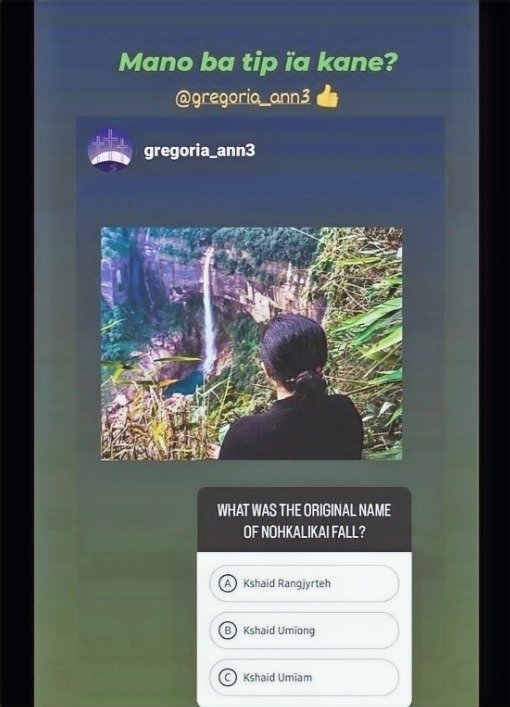
    Khublei Shibun @gregoria_ann3 ïa kane ka jingkylli! 😃😃 Ka jubab ka dei ka Kshaid Umïong! Bun na ngi ngim tip ïa ka jubab tipma ka don ha ka kot Ki Khanatang U Barim ba la thoh da i H. Elias S. D.B. 🏞️🏞️

    Khublei Shibun ïa phi @bee_the_wanderer @pynshngain25_ bad @donbok.rynjah.50 ba phi la phah ïa ka jubab kaba dei! 👍🙏

    This was a question posted by @gregoria_ann3 about the old name of Nohkalikai waterfall. The answer is Umïong waterfall which can be found in the book Ki Khanatang U Barim written by H. Elias S.D.B. 🏞️🏞️

    Photo credit: @gregoria_ann3

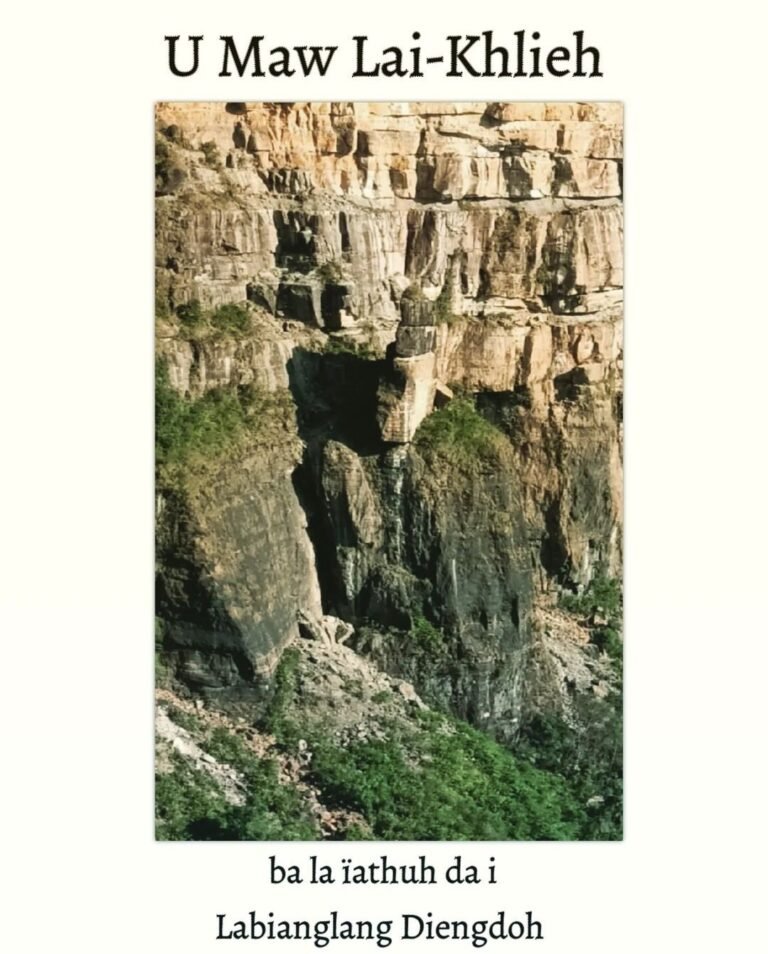
  • U Maw Lai-Khlieh told by Labianglang Diengdoh

    U Maw Lai-Khlieh

    ba la ïathuh da i

    Labianglang Diengdoh

    Mynba dang lung ka sngi u bai, ha ka por ba ki briew ki dang hok, dang shida, la don kawei ka shnong kaba paw nam ha ka akor ba bha bad ha ka jingjur u slap. Ym tang ha ka akor, ka burom hynrei na ka ruh la mih bun ki simpah, ki simsong, ki kaitor, ki myllung, ki mawbynna. Ka don ruh ha ka shibun ki puriskam, ki purinam, ki khanatang ki ba dang iai kynud haduh mynta mynne ha ki lum-ki wah, ki khlaw-ki btap kum ka Noh-Ka Likai, U Khoh Ramhah bad kumta ter-ter. Kata ka shnong kaba don am kadei ka Shnong Sobra. Napdeng kine ki khana kiba lah paw, lah bna hapdeng jong ngi u khun Khasi-khara bad kiwei de ki jaitbynriew, dang don kiwei pat ki khana ki ba don ha lyndet jong ki ia ka jingjia ba sngew triem bad ba sngew ngiew ban sngap. Ka wei napdeng kita ki khana kaba ngi la iohsngew pateng kadei shaphang U Maw-Lai Khlieh.

    U 'Maw-Lai Khlieh', u dei u wei na ki maw u ba don ha shiteng jong ka 'Riat-Mawiew' kaba don ha shnong Sohra. Ia une u maw ngi lah ban iohi narud surok, na u lum jngoh kulai lane u lum jingkhmih kulai. Lah ban iohi ruh na ka 'law-kyntang jong ka Hima Syiem Sohra (Madan Shad Seng-Khasi). Katkum ka jingiathuh jong ki longkpa-longkni, ki tymmen hyndai, ba ha uta u Maw-Lai Khlieh la don u Paia Ksiar bad u don la ka pharshi sha lyndet jong u.

    Ha ka por ba ki phareng ki dang synshar ia ka ri jong ngi baroh kawei, la ong ba ha kawei ka sngi, ar ngut ki shipai phareng ki la leit ban iaid kai pyngngad sha kata ka Riat Mawiew ban leit jngoh kai ia uta u maw. Hadien ba ki la poi ha kata ka jaka bad haba ki dang jngoh ban peit kai ia uta u Maw-Lai Khlieh, uwei u shipai u la iohi ba don ka jingthaba bapher na uta u maw. Kata ka jingthaba ka la kthik ia ka mynsiem jong u ban kwah ban hiar bad ban peit ba kadei kaei kata ka jingthaba. Kumta, khlem da artatien bad khlem da sngap ia ka jingkhang jong uta uwei pat u shipai, u la hiar bad u khlem da wan phai shuh. Uta u paralok jong u, haba u lah iohi ba um shim la wan phai shuh u lah her bran-bran ban leit iathuh sha ka sorkar phareng ia kaei kaba la jia.

    Ka Sorkar phareng marsien tip ia kata ka jingjia, ka la phah wad bniah ia kaei kata ka jingthaba kaba mih na uta u maw. Ka la phah ia ki briew jong ka ba kin wad bad kylli na ki trai shnong shaphang uta u maw. Ynda ki la ioh jingtip ba ha uta u maw la don uta u Paia Ksiar, mar-mar khlem pynslem ia ka por ka la phah sa ia lai ngut ki shipai ban hiar bad ka da kyntu ruh ba kin da tih dyngkhong ia uta u Paia Ksiar. Kumta, kita ki phareng ki la hiar bad marsynpoi ha uta u maw, la wan mih uwei u bsein uba don lai tylli ki khlieh bad u ta u bsein u la bam ia arngut kita ki shipai phareng. U ta u shipai u ba la lait phet im, u la kiew pynsted shalor bad u la phet ban leit iathuh ia kaei kaba la jia bad iohi.

    Ka Sorkar Phareng, hadien jong kata ka jingjia, ka la wad da ka buit-ka bor ba kumno kan ioh ban pyniap ia uta u bsein. Kumta ka la phah pynap da ka sapoh, ka kyiad, u buiam, da kaba pyrkhat ba uta u bsein un bam, un buaid bad ba kin iohi ban pyniap ia u da ka basuk. Ha ka step kaba bud ynda ki shipai ki la hiar ban leit ban pyniap ia uta u bsein, ki la lyngngoh ngain hadien ba ki iohi ba ka bam ka dih ka lah lut hynrei kim shim la lap satia ia u bsein. Kita ki shipai phareng ki la pyrkhat ba uta u bsein u la iap bad kumta ki la sdang ban tih ia uta u Paia Ksiar. Katba ki dang tih kynsan-kynsan uta u bsein u la mih biang bad u la bam duh noh syndon ia ki.

    Ka Sorkar Phareng haba ka lah ioh jingtip ia kata ka jingjia, sa shisien ka la kyntu biang ia ki briew jong ka ba kin wad jingtip na ki trai shnong da kumno pat ban ioh lad ban pyniap ia uta u bsein u ba don lai tylli ki khlieh. Ka Sorkar Phareng hadien ka jingwad bniah ka ba jur ka la ioh jingtip ba uta u dei u 'lei lum uba ju wan ha ka dur jong u bsein ban iada ia ka jingsniew ne ka jingshah pynjulor jong uta u Paia Ksiar namar wei ba la tih ia uta u Paia Ksiar, uta u Maw-Lai Khlieh ruh yn twa yn kyllon bad ka pyrthei ruh kan sa wai. Kumta ka sorkar Phareng kam banse bad shu ieh shrah noh ia ka jingkwah rhah jong ka ia uta u Paia Ksiar.

    Kumta, kane khana ka shu sahkut noh tang hangne bad haduh mynta mynne dang don ki ba dang ngeit ba uta u Paia Ksiar u dang neh haduh mynta lem bad uta u bsein u ba ker ba da ia u, ha uta u Maw-Lai Khlieh.

    When the sun and the moon were still young and when mankind was honest and simple in his ways, there was a town which was well-known for its refined manners and also for the heavy rain which fell there. There also arose from this town musicians, artists, poets and individuals of integrity. The town possessed an array of legends, folktales and myths which continue to echo in its rivers and streams, in its forests and groves like Ka Nohkalikai and U Khoh Ramhah and others. This well-known town is the town of Sohra. From these stories of the Khasi community which tell of gruesome events which have been heard, there are other stories terrifying to listen to. One of these stories is the story about U Maw-Lai Khlieh or the three headed stone.

    U Maw-Lai Khlieh is a boulder which stands midway on Ka Riat Mawiew which is a gorge in Sohra. One can see the boulder from a hill called U Lum Jngoh Kulai or Lum Jingkhmih Kulai. This boulder can also be seen from the sacred grove of Ka Hima Syiem Sohra (Madan Shad Seng Khasi). According to what has been told by forefathers and elders there was U Paia Ksiar or a golden pillar in U Maw Lai-Khlieh and there is a fable behind it too. When the Khasi Hills were ruled by the British, it is said that one day when two English soldiers went for a relaxing walk to Ka Riat Mawiew in order to see U Maw Lai-Khlieh, one of the soldiers noticed something like a glitter coming from the boulder. Without waiting for anything and not listening to the protestations of the other soldier, this soldier left and did not come back.

    When the soldier realized that his friend was not going to return, he raced to inform the British administration of what had happened.

    Once the British administration came to know of the incident, it ordered an investigation into what was glittering from the boulder. It sent people to find out about the boulder from the natives. When they came to know that there was a golden pillar in the boulder, the British sent three more soldiers with the order to extract the golden pillar. When the soldiers reached the boulder a snake with three heads slithered out of the stone. The snake then ate two of the soldiers while the remaining soldier scurried up the stone, horrified by what had happened and relating all that he had seen to his officers.

    After this incident, the British administration planned to take strong measures to kill the three headed snake. It sent some soldiers to place sapoh or rice grains mixed with yeast along with some kyiad or alcohol, with the hope that the snake would eat these and become sedated, so as to allow them to kill it. The next morning when the soldiers go down to the boulder to kill the snake, they were shocked to see that the rice and alcohol had disappeared but they could not find the snake. The soldiers assumed that the snake had died and began to dig up the golden pillar. At that moment, the snake emerged suddenly and ate all of them.

    When the British administration came to know of what happened it tried again to find out from the people about ways in which they could kill the three headed snake. After a thorough search for information, it was told to the British that the three headed snake was the guardian spirit of the hill, who appeared in the form of a snake to protect the golden pillar from being destroyed because if it was dug up, the three headed boulder would fall and that would be the end of the world. Thus, left without any options the British government abandoned its greedy plan to possess the golden pillar.

    The story ends in this wat and there are still many who believe that there is a golden pillar protected by a snake in the three headed boulder.

    "U Maw Lai-Khlieh" ka dei ka jingïathuhkhana kaba la phah da i @the_lostsoul_dreamer ✒️🗣️ Khublei Shibun ïa kane ka jingïathuhkhana kaba sngewtynnat! 😄🙏

    "U Maw Lai-Khlieh" is another story which has been handed down from generations and here it has been retold by @the_lostsoul_dreamer

    📸 @the_lostsoul_dreamer

    🟡 English translation by @speakyourroots

  • Ka Liengmakaw da Jespil Syiem

    There was once an orphaned youth U Manik by name who had no living relative in the world. He was nicknamed U Manik Raitong, meaning the lonely one, absolutely bereft of all family support. So overcome was he with the loss that had struck him early in his young life, that he roamed the village like one mad. At night, however, he would put away his sackcloth and ashes, eat, bathe and dress himself up in ceremonial garb. Then he would take up his flute, and play the most compelling dirges on it. Unknown to him, U Syiem's wife who had often heard him, became completely magnetised by the tunes that he played on his flute. In the event of U Syiem having to leave her to attend to matters of state in nearby regions, she was left all alone and was therefore lonely. Besides she had only just been married to U Syiem. One night she felt compelled to come to Manik's hut, but was denied entry. She broke open the door in order to be able to hear him better. However much he tried to send her away she refused.

    It was thus that she came to him every night and as a result she became pregnant. However, never once did she disclose her identity to him. When U Syiem returned after long months of being away he found that Ka Lieng Makaw, his wife, had given birth to a son who was now a few months old. He was naturally angry when he found that his wife refused to disclose the identity of the father. He summoned his people and commanded all the men folk to assemble before him. Each was ordered to bring a bunch of bananas with him. On the assigned day he ordered each one of them to offer a banana to the baby boy in order to prove the boy's paternity. However, the baby boy refused each man's offer.

    Then, when U Syiem inquired if any man had been left out, general mention was made of U Manik Raitong. It was a known fact that U Manik Raitong lived a life that was no better than a dog's. U Syiem took no chances, however, and had him come to court with a bunch of bananas. When the baby boy was offered the fruit he reached for it as if familiar with U Manik Raitong. The father having been identified, it was now the turn of the people to be shocked. U Syiem's anger knew no bounds and he ordered that U Manik Raitong be beaten to death as a criminal. U Manik Raitong, however, pleaded before the king to be allowed to choose death by burning.

    On the assigned day U Manik Raitong dressed in all his finery, made his way backwards to the funeral pyre, all the while playing on his flute. The people had already set the pyre alight. When he reached it he walked round three times but before jumping into the burning pyre, he stuck his flute upside down into the ground. The queen too who was indeed agitated beyond control and who had also dressed up as U Manik Raitong had done, watched every development from her room. But when she saw U Manik Raitong jump into the funeral pyre she rushed after him in order to join him in death. The funeral pyre was transformed into a gushing spring of water which exists even to this day, and if one were to visit Raitong one would discover that in the place where the flute had been planted upside down there grows a cluster of bamboos, whose leaves point downwards.

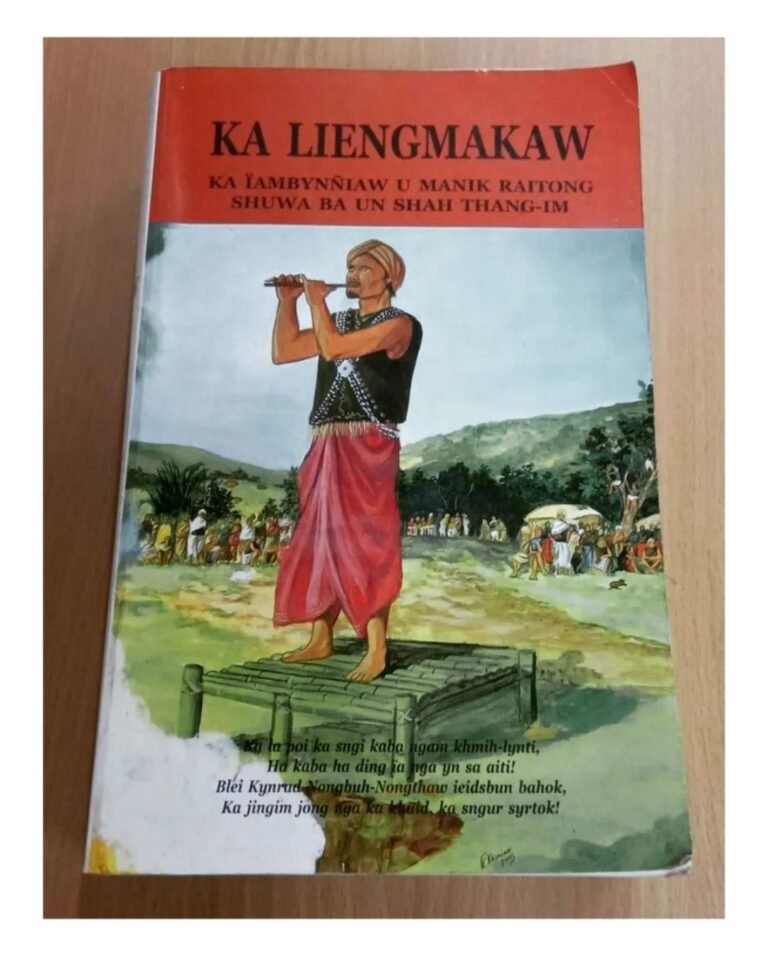
    Khublei Shibun Daohi Manar @xdtnoahjupejackllthmanar ba phi phah ïa kine ki dur jong kane ka kot 😄🙏

    U Daohi u ong: Ka kot Ka Lieng Makaw: Ka Ïam bynñiaw u Manik Raitong Shuwa Ba Un Shah Thang-Im ka dei ka jinglum lang jong ki jingrwai phawar kiba la rwai da i Bah Jespil Syiem. Kaba donkam ban tip ka long ba i Bah Syiem i khlem thoh ïa kine ki phawar, hynrei la lum lang hangne bad pynmih da ka Seng Kyrsei, jong ka Hima Raid UMden-Nongtluh, Ri Bhoi. Ïa kane ka kot la lah ban pynmih da ka jingimsngi bad jingduriap jong ka Vendrame Missiological Institute, Sacred Heart Theological College ka ba don ha Mawlai, Meghalaya.

    Kane ka kot ka batai bniah bha shaphang ka jingïam bynñiaw jong u Manik Raitong shuwa ba un shah thang-im bad ïa kane ngi lah ban sngewthuh lyngba ka jingpynwandur jong ki phawar. La thoh ïa kane ka kot ha ka rukom jong ki phawar. Ïa kine ki phawar la pynwandur da i Bah Syiem bad haba ngi pule ïa ki, nga sngew ki don ka bor ban pynmutdur ne pynpyrkhat ïa ka jinglong-jingman jong kata ka jingïam bynñiaw u bapli u Manik Raitong. Kaba myllung shuh shuh ka dei ka jingdon jong ki dur, kiba la pynwan katkum ki lynnong phawar.

    Daohi says: The book Ka Lieng Makaw — Ka Ïambynñiaw u Manik Raitong Shuwa Ba Un Shah Thang-im is a compilation of "phawar" sung by Jespil Syiem published by Seng Kyrsei, jong ka Hima Raid Umden-Nongtluh, Ri Bhoi. It is important to note that the phawar in the book have not been written by Mr. Syiem, as he has only sung and performed them. The book has also been released through the efforts of Vendrame Missiological Institute, Sacred Heart Theological College ka ba don ha Mawlai, Meghalaya.

    The book contains elaborate details of the sorrow and pain of "U Manik Raitong" before his burning and this is brought to us through the compositions of the "phawar". The story of "U Manik Raitong" and "Ka Lieng Makaw" is delivered through the singing of the "phawar". They have been composed in such a way as to express the despairing cries of "U Manik Raitong". What makes it even more evocative are the pictures that have been drawn according to the chapters of the "phawar".

    The English translation of the story is taken from "U Manik Raitong, Icon of Love and Creativity: An Appraisal" in the book The Oral Discourse in Khasi Folk Narrative by Dr. Esther Syiem.

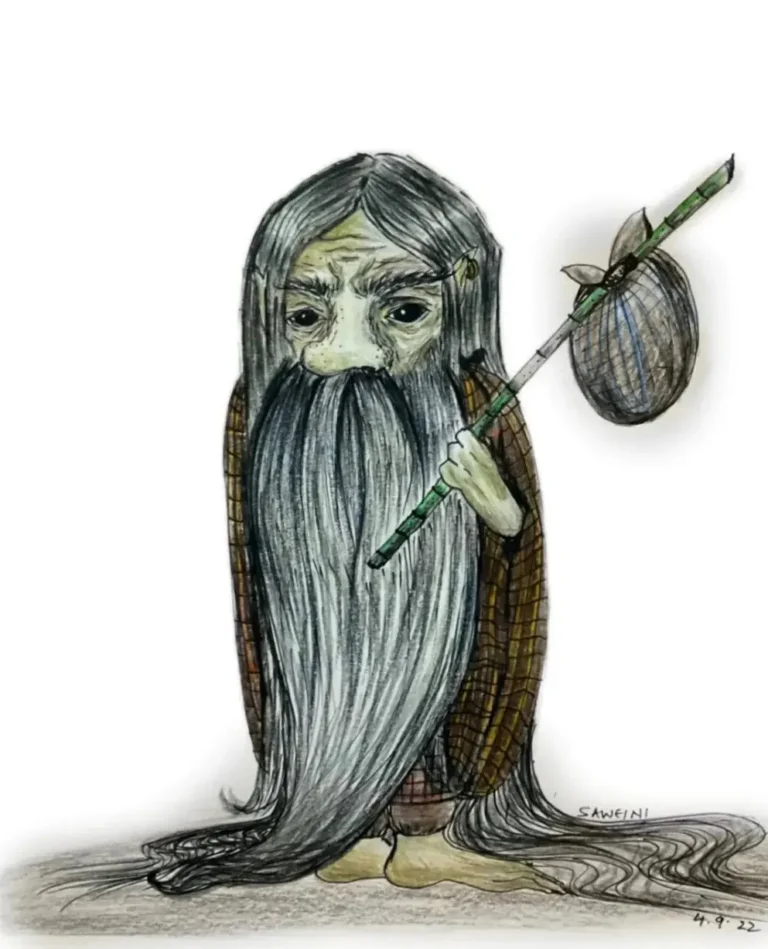
  • Ki Boit by Saweini Laloo

    Saweini says:

    Boit is a mythical character in Khasi folklore. The boit is the equivalent of the English "dwarf" and is believed to have long hair, sharp eyes and ears and menacingly sharp claws. The most striking of its features, however, are its feet! They turn backwards instead of forward like the ordinary human.

    Once, my father told me a story of a time from his childhood when most parts of Shillong were but a dense forest. He came home late one night and had to pass by an open field or "pynthor" lined with bamboos. It was eerily quiet that night and in Khasi belief, this is always an omen of the presence of some supernatural being. Sure enough, after reaching the middle of the field, he heard tiny voices singing. My father, being well acquainted with the different stories passed on by his parents and grandparents, knew exactly that he had to take cover and wait until the "boit" went their way. It was tragic to encounter them. My father hid behind some bushes and watched as one by one the boits walked their regular path, humming a strange tune. Bamboo clustered areas are believed to be the favourite haunts of such beings."

    Ngi ju ïohsngew ki khana shaphang ki boit bad bunsien ngi shait sngew ngiew sngew tieng da lah ïa sngap ki khana 😅😱 Khublei Shibun @saweini_ ba phi la phah ïa kane ka jingdro bad ka jingthoh jong phi 😄🙏

    The supernatural and horror in Khasi folklore is always engaging and also serves as great material for stories.

    🟡 Art by @saweini_

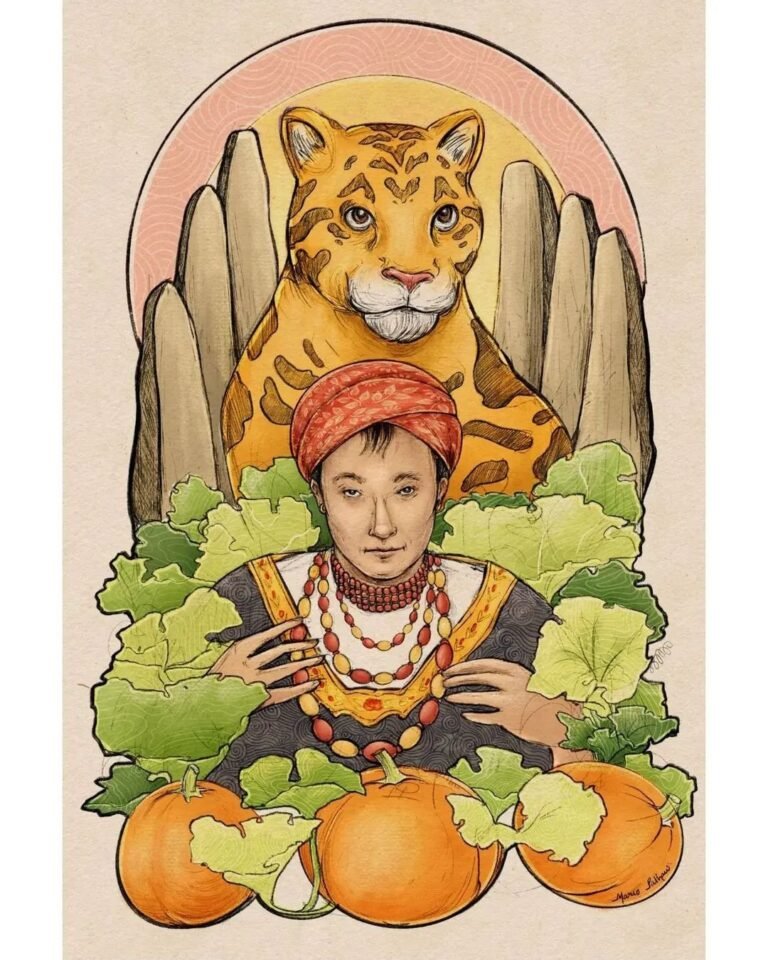
  • Shape shifters by Mario Pathaw

    Mario says: "Shape shifters are popular figures in myths and folktales around the world. In Japan and China, foxes assume human form to bedevil the unwary. In Brazil, the river dolphin Boto can turn into a boy and many Native American cultures have stories of "skin-walkers”. In Ireland, there is a myth which talks about the man wolves of Ossory."

    "This concept is also very popular in the Khasi tribe and there are tales and myths about the shape shifters of my clan, The Pathaw clan. According to the tales passed down from my great grandmother, the men of the Pathaw clan leave their bodies in a seemingly lifeless state while their spirits travel and roam around as the "Khla" (Tigers/ Leopards). The Khasi tribe describes a brave warrior as "U Khla Wait" (attributing to the fighting spirit of the Khla) and my mother describes our Pathaw men as warriors and protectors of the family."

    🐯…….🐯…….🐯

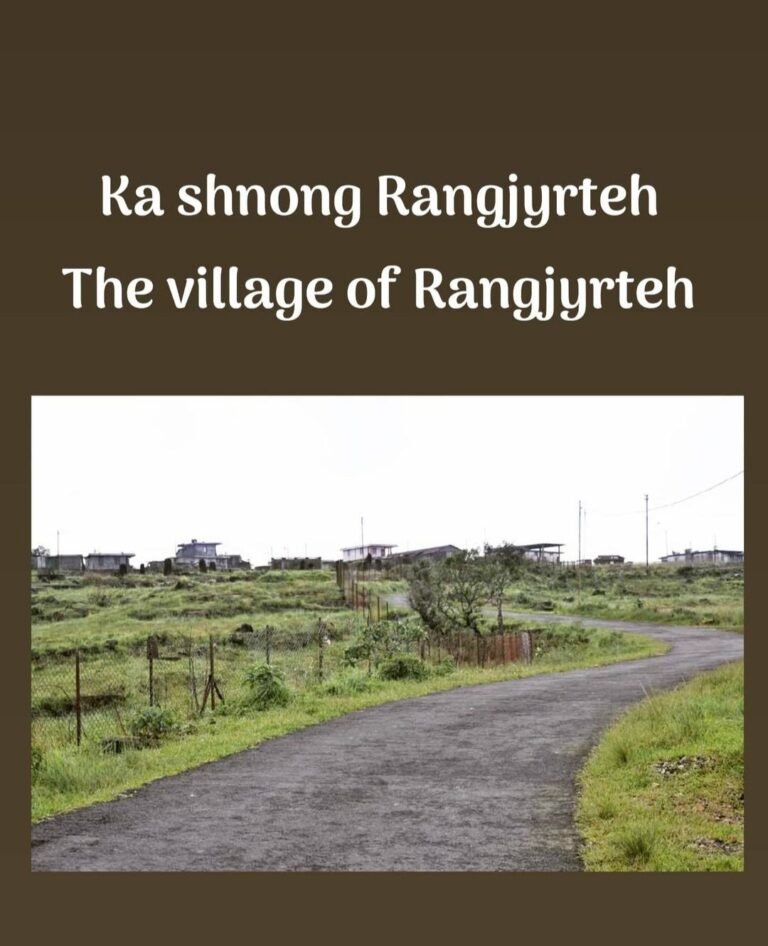
  • Ka shnong Rangjyrteh

    Ka shnong Rangjyrteh

    The village of Rangjyrteh

    In the bygone days, Rangiyrteh was a thriving village known for its mastery of iron smelting across the region, but now it is left abandoned in ruins and mostly only ever referred to in old Khasi folklores. Rangiyrteh is said to be the village where the woman named 'Ka Likai' hailed from. According to folklore, after a gruesome and devastating tragedy befell her, Ka Likai ran to the edge of a cliff and threw herself towards a waterfall to her death. The waterfall was then named 'The Fall of Ka Likai' or more popularly, the 'Nohkalikai Falls' According to oral tradition, Rangjyrteh was a prosperous place during that time and people lived mainly by the trade of iron smelting. The transaction of the iron products was between the local villagers and the people of Sylhet (now in Bangladesh). It is regarded as one of the oldest villages in the Khasi and Jaintia Hills and no one really knows when this village came into being but it has achieved its prominent place in Khasi imagination.

    (Taken from: https://www.google.com/amp/s/www.tripoto.com /trip/trip-to-rangiyrteh-lost-civilization -mawsawa-falls-dainthlen-falls-cherrapunjee -sohra-meghalaya-5f575ca82f851.amp)

    …just seven kilometers away from proper Sohra on the western side, lies an extinct ancient settlement, a place rarely appearing in Khasi literature but which has many historical and mythological events associated with significance and direct references to various aspects of Khasi culture and society. Believed to be the ancient industrial centre for iron smelting, people also adopted orange cultivation as a major activity. Located exactly opposite to Dainthlen Falls, this ancient settlement is known as 'Rangiyrteh' an indigenous name which currently falls within the jurisdiction of Laitduh village under Sohra Syiemship. But before the formation of Hima Sohra, Rangjyrteh was very much part and parcel of the then Hima Khathynriew Shnong (a conglomerate of several villages on the slope where the Umiam Mawphlang river flows). But as far as the historical aspects of 'Rangiyrteh' are concerned, it can be construed as the centre for forging iron which lasted till the 17th century. From the remains it shows that there was a generation of industrialized communities a long time ago in these hills. But the reason for the collapse of this indigenous ancient industry as was narrated by older people was primarily the incapability to compete with the products coming from then East Bengal under the British. Iron smelting was the main trade and activity of this place. Besides, the famous Nohkalikai Falls too has derived its name from the person of this hamlet (Rangiyrteh). Considering the plurality of history associated with 'Rangjyrteh', I wonder if it could ever be included in the list of heritage sites presented to UNESCO for possible funding. The factuality and merit of the place defines it and it deserves to be treated as a priority as far as preservation of evidence associated with our ancient socioeconomic system is concerned. The present and future generations should become aware of all these things. Therefore, when we have something as clear evidence connected with our past generation, we should attempt to explore and unearth the mysteries associated with our own origin..As far as Rangjyrteh is concerned, including the culture and activities that existed there long time ago, we should be proud of it as a community and this particular spot on this region belongs not only to a particular Hima or Raid or Village but to the entire Khasi community.

    (Taken from: https://theshillongtimes.com/2017/08/07 /rangiyrteh-a-forgotten-heritage-site-of-sohra/ (Written by Aristotle Lyngdoh) )

    It is a place with historical treasures and ethnic beauty that can still be witnessed today. Monoliths of different forms, tall and short and each having its own meaning, talk of a civilization's past. Under these monoliths are bronze or earthen pots with ashes of our ancestors; there are a few silver shells too. The place is characterized by some form of marking around each area surrounded by well-constructed rocks. The stone foundation used to cremate the dead and the place where they used to hold meetings or the 'dorbar' are visible too. There is also a belief that this village was once fortified with well-constructed walls made from iron and rocks. The people used a gateway called 'Ka Khyrdop' to go in and out of the village for trade or other purposes. There is also a belief that a battle between Rangiyrteh and a nearby village had taken place. The battle claimed the life of the Doloi or headman, and the place where he died is known as Ka Pom-Doloi. The monoliths on the spot are in remembrance of those who fought in that battle. It was in this village that the finest iron was made. We can still see rocks shaped like a basin where water was kept to cool the iron after melting. These irons were exported to Bangladesh, earlier known as Shilot. The people used to trek down to sell these irons, the pathways still noticeable from Rangiyrteh through Dainthlen, Mawpun and on to Nohkalikai Falls connecting Mawmluh village and finally to the plains of Bangladesh.

    (Taken from: https://thenortheasttoday.com/oped/the-lost -civilization/cid2550931.htm (Written by Shynna Lyngdoh Mawphlang) )

    Rangjyrteh is a village that many of us might not have heard of. There are many historical and folkloristic associations that the village holds. 🏞️🪨🌲
    If you know more please tell us!

    All photos are from https://www.google.com/amp/s/www.tripoto.com/trip/trip-to-rangjyrteh-lost-civilization-mawsawa-falls-dainthlen-falls-cherrapunjee-sohra-meghalaya-5f575ca82f851.amp

  • Ka Ngot bad ka Ïew

    Mynkulong-kumah, mynba dang lung ka pyrthei-ka mariang, la don arngut shipara, kiba kyrteng ka Ngot bad ka Ïew, ki khun jong u ’Lei Shillong. Baroh arngut ki long kiba bhabriew, la nam ka pyrthei-ka mariang baroh. Ki ïaid-ki-ïeng, ki leit-kai-leit-iaid ryngkat ryngkat shipara bad ki ïakup ïasem ruh kumjuh kumjuh. Ka nam ka burom bad ka dur ka akor jong ki, ka la par kylleng ka ri Khasi ri Jaiñtia.

    Ka Ïew ka la long kaba kham san kham rangbah, kaba la ïohi shuwa ïa ka Sngi ïa u Bnai. Hynrei ka kham sngewmeng, ka khoi-khoi mynsiem sngewrem lada kam lah ban leh ïa kano-kano kaba ka la thmu ban leh. Ka la long kaba kham kab-kab bad kham shlei-ktien khlem pyrkhat. Kaba leh kjeh, hynrei ka phoi kynsha bad ka syam. Ka Ngot pat, ka long markhongpong ïa ka Ïew. Ka mynsiem jong ka, ka jem hun-hun bad ka bapasiang kum ka tlieng. Ka khmut-ka-khmat jong ka, ka i jemnud jai-jai, bad ka phuh samrkhie rymmuiñ kum u 'tiew-dyngngai ba dang shylluit hapoh kob. Ka smat, ka sting bad ka ïarap ïa la ka hynmen ban trei ïa kane-katai.

    Ha kawei ka sngi Synrai kaba rang bha kdiar kdiar, bad ba phngaiñ bha ka bneng, ba lah ban ïohi sawdong ïa ka trai-bri pyrthei: ka Ïew ka la ïawer ia ka Ngot ban leitkai shalor Lum Shillong. Ki la ïaïaid kai kylleng shane shatai, haduh ba kin da poi top halor lum. Haba ki dang khmih nangta sawdong ka ri Khasi, ki ïohi ïa ki lum-ki them, ki wahduid wahheh, ki lyngkha-ki risa, bajyrngam byrtem, ki baitynnat la biang; bad haba ki phai shaphang arsut jong ka ri, ki la ïohi ïa ka ri thor jong ka ri Dkhar, kathie ngai-lyngai. Kane ka jingïohi baitynnat ka la shoh-jingmut ïa ki arngut shipara haduh ba ki la kwah ban leit jngohkai ïa kito ki jaka-ki puta. Ki um ki baphyrnai khlek-khlek bad ki baphalang ha ka jingthaba jong ka sngi, kiba don ha ki baden bad ki bir, ki pynkyndeh-mynsiem ia ka Ïew bakhyllew; bad ka la ong ïa la ka para, ka Ngot, ban ïaleitkai shata.

    Ha ka banyngkong, ka Ngot kam shym treh, namar ka la sheptieng ba jngai than. Hynrei ka Ïew, ka beiñ-ka-sin ïa ka ba ka long ka bakhawpud bad ka barit-bor-rit-mynsiem. “To” la kren-kob ka Ïew “lah mapha ne manga ban ïa mareh pynpoi kloi shaduh shathie.” “Em phi kong,” la ong ka Ngot, “lada phi kwah te ngin ïaleit lang keiñ, namar ngim tip ïa ka lynti ka syngkien kaba kumno bad ba ka bajngai artat” — Ka Ïew ka la kem-ktien bad ka la ong: “To ngin shu ïa kylla-um bad ngin leit tuid katba poi kloi.” Ka Ngot pat haba ka la ïohi ba ka Ïew ka la sngew-sarong than, ka la klet-noh ïa la ka jingrit-mynsiem baroh bad ka ong: “Lada phi da kob eh katta katta te to.” Te baroh arngut ki la kylla artylli ki wah.

    Ka Ngot ka la wad lynti na basuk bad ka tuid hin-lyhin, na ki jaka ki bajem, haduh ba kan da poi sha Shilot. Hynrei la ka lynti jong ka ka kham suk, ka la long pynban kaba khongdong mongdong, ka bakyllaiñ bad ka bajngai. Ynda ka la poi ha Shilot, la ka peit ïa ka hynmen shano shano ruh kam ïohi, kumta ka la sngewlyngngoh bad ka la sheptieng ïoh la jia eiei ha lynti. Ka la khun ïalade sha Shatok bad ka la leit shaduh Dwara, nangta ka phaidien biang ban leit wad ïa ka Ïew. Kane ka jingkhun jong ka Ngot ka la long ka baitynnat haduh katta-katta ba ki kjat sngi ki sngewtynnat ban leitkai sha ka bad ki shad ki sngewbha ha ka. Ka Ngot pat da ka jingphalang ka sngi, ka thaba khlek-khlek kum ka rupa bad namar ka jingpynkhun jong ka, haduh mynta-mynne ki briew ki sin ïa ka, ka “Rupa tylli.” Bad ha kata ka jaka, ki khot ïa ka haduh kine ki sngi, ka “Wah Rupa tylli.”

    Ka Ïew pat, ha la ka sngewmeng sngewsarong, ha la ka sngewkhlaiñ bor khlaiñ tyrpeng, ka wad na bajan bajan. Ka thom bor ïa ki lum ki them, ka kylla khriang bad lat-lat; ka syllud ïa ki diengbah diengsan, ki mawbah mawheh, bad ka tih naphang kat ïa kiba wit ha lynti. Hakhmat jong ka, ym don bakhraw ym don barit, ka syllad naphang; wat ki mawramsong, hakhmat jong ka ki kylla-mat-lieh, bad ki tyllun kum ki mawpyllon. Hynrei haba ka la poi ha Shella, ka dum ka buit ka stad jong ka baroh; ka la lyngngoh ngaiñ bad ka la sngewingkhong khait, haba ka ïohi ba ka Ngot, ka lah da poi nyngkong. “Ïa kat kane ka raiñ ka rem, ka jahburom duhburom, hakhmat ka pyrthei, ban da jop eh da ka para, la ong ka Ïew, ngan nai im shuh hi, la suk ka ïap.” Kumta ka ïam ka ud ka lympat-ka-lynsher ïalade, haduh ba kan da pait san bynta bad ka kylla san tylli ki shnat-wah; ka Dwara, ka Umtang, ka Kumarjani, ka Pasbiria bad ka Umtarasa.

    Naduh kata, don kiba khot ïa ka, ka Umïew bad don ruh kiba khot ka Umïam. Bad na kata ka jingjop, ka Ngot ka la kylla long kaba kham halor. Baroh ki ñiew ïa ka kaba kham pawnam, kham don-burom-surom, kham itynnat bad kham iphuh-iphieng. Te u dkhar-u-lyngkien ruh, u kheiñ ïa ka kum ka blei bad u noh ka kñia-ka khriam, u nguh-u-dem bad u duwai-u-phirat ïa ka. Haduh kine ki sngi, u khun ka ri Laiphew syiem bad u khun ka ri Khatar Doloi, u kheiñ ba ym bit ban jam pynjah-burom sha shiliang jong ka, khlem nguh khlem khublei, kumba ju long ka akor Khasi naduh hyndai ka sngi, ba ym bit ban ryngkang ne ban jam ïano ïano ruh, ne ban ïaid na khmat jongno jongno, namar ba ka long ka nongjop basngewrit.

    Umiew and Umngot are two major rivers in the Khasi Hills, both springing from the Shyllong Peak and flowing towards the plains of Bangladesh. But legend has it that the two rivers were the twin daughters of U 'Lei Shyllong, the god of Shyllong. As goddesses, the two were much acclaimed throughout the length and breadth of Ri Hynñiew Trep for their matchless grace and beauty and their love for one another. For in the world of spirits they were never seen apart but went everywhere in each other’s company.

    But unknown to many outside their closest circle of friends, the love that existed between the two sisters was not without ups and downs, arising mostly out of the peculiar traits of the elder sister, Ka Ïew. Having as the elder daughter seen the sun and the moon first, Ïew was more presumptuous in knowledge, more conceited by nature and totally uncompromising in attitude. She was also bad-tempered and noisy. Ka Ngot was more subdued, milder and pleasant, though not without a passion of her own which surfaced every now and then when her sister’s impudence crossed the bounds of what was proper and decorous.

    One bright sunny day in autumn, while the two young princesses were out strolling on the slopes of Shyllong Peak, enjoying the cool breeze and the magnificent scene of evergreen hills tinged with gold by the autumn sun, the sisters’ eyes strayed far away into the distant fields of Bangladesh. As the princesses gazed on, the water that collected in the numerous lakes shimmered in the sun so that the whole land seemed to twinkle with diamond s. A bold and adventurous plan presented itself to Ïew and she said: "Say, sister, why don’t we embark on an expedition to those shimmering lakes and unending valleys! Just imagine what new charms we may encounter! Staying on in these hills is boring!"

    But Ngot shook her head. Though smitten as much as her sister by the exquisite beauty of the sight, she was far too sensible to give up the security and happiness of her home and follow a mere whim into a remote land. Ïew, on the other hand, scoffed at her sister: "Come on, you foolish girl let’s run a race and see who reaches those valleys first." Ngot replied, "Dear Kong, if we must go, let us go together, without competing. The valleys are far and the way may be dangerous. It will be better if we stick together." But Ïew flew into a rage and said "If you are so damned afraid of the dangers on the way, let us turn into water and travel in the guise of rivers. But if you still say no to this, you are a coward and have no right to live like a goddess." Now Ngot was truly provoked by her sister’s scorn and insolence. She decided to take up the challenge and so both of them turned into rivers.

    In keeping with her mild and temperate character, Ngot sought the soft and gentle ways in her journey, unmindful of the numerous twists and turns she had to take in doing this. Thus she glided gently till she reached a place in Bangladesh called Shilot. In Shilot, however, she saw no sign of Ïew anywhere. She was surprised. Having made detours round many an obstacle, Ngot had lengthened her route a great deal and delayed her progress by many weeks. She had naturally expected her sister, therefore, to be already waiting there for her, with her boisterous laughter and scorn. Not finding her there made Ngot extremely anxious. She changed course, veered towards Shatok and went on to Dwara in search of her sister. Not finding her there either, and now convinced that Ïew was nowhere ahead of her, Ngot swivelled round and returned to look for her along the way she had come.

    These serpentine curves form the most attractive part of the river in its entire course, and when seen from a distance with the sun’s rays playing on the water, the river looks like silver. And that is why, to this day people call it “Wah Rupa Tylli", or the "River of Solid Silver". All this time Ïew was preoccupied, fighting her own impediments on the course she had chosen. Proud and domineering as a tyrant, she aimed for her target like an arrow. In trying to reach Shilot by the shortest and quickest route possible, she ploughed her way through hills and valley; and swept everything in her path, uprooting large trees breaking stones, pushing boulders aside, cutting a path through jungles, jumping into deep ravines and digging tunnels into the ground. But in spite of her great strength, all this was slow labour, and without her knowing it, took a great deal of her time, for there was an obstacle almost every inch of her route.

    And so it was not surprising that when she eventually rolled into Shella, near Shilot, she found Ngot far ahead of her. Ïew was simply dumbfounded. To think that her weakling sister had put her in second place! It was intolerable! A trick of fate! Her pride deeply hurt, she raved, "To suffer such damnable shame before the whole world! To be defeated by a mere child! How can I live on? Tell me, why should I live? I’ll remain a river forever!" Saying these words and cursing her fate, she cried and groaned, threw herself on the ground, and struck herself with such force that she splintered into five branches, called the Dwara, the Umtang, the Kumarjani, the Pasbiria and the Umtarasa. On hearing about her sister, Ngot was grief-stricken. She blamed herself for everything that had happened and decided not to return home alone, but also remain a river by the side of her sister.

    By and by the story of the two goddesses filtered into the human world and people began to flock to these rivers as pilgrims. Ngot was especially esteemed as a superior stream, attracting non-Khasis from the plains to its banks to perform religious rites. The ancient Khasis themselves considered it an immoral act to ford this river or go across it on a bridge

    without first offering prayers to it, for the river was, after all, a modest victor and a goddess.

    "Ka Ngot bad ka Ïew" is an endearing story of the relationship between two sisters. 🏞️🏞️
    The Khasi version has been abridged from H. Elias S.D.B and the English version has been abridged from Kynpham Sing Nongkynrih by @speakyourroots