Category: Folktales and Stories

  • “Ka Sati Sharyngkuid” or “The Sharyngkuid Ring”

    La don ha kawei ka shnong uwei u samla uba jaipdeh shibun. U kpa jong u, u long u mahajon bah ha kata ka shnong; hynrei ynda u la ïohi ïa ki rukom lut phut u khun jong u, u la ai ïa u shihajar tyngka bad u ong ïa u ba un leit khaii sha ki ri kiba jngai. Une u samla u la poi ha kawei ka shnong bad u leit sah ha kawei ka ïing basa. Hangne u la ïohi ïa ki para shong basa ba ki la pynshitom ïa kawei ka khnai kaba ki set hapoh ka ruh nar. Uta u samla u la sngew synei shibun ïa ka khnai bad u la ong ïa ki ba un ai shispah tyngka lada ki pyllait noh ïa kata ka khnai. Kita ki briew ki nang ïa tharai ba u shu kren kai hynrei ynda ki la ïohi shisha ba u mut ban siewspah ïa ka khnai ki ïa rkhie beiñ ïa ka jingbieit jong u bad ki ïa pyllait noh ynda u la siew ïa ki kumba u la kular. Kata ka khnai ka tang shu lait napoh ruh ka la ainguh ïa uta u nongpyllait im jong ka bad ka kular ban long ka mraw jong u katba u dang im ka ong artad ba lano ma ka sngi ka lah ban wan shat kylliang ka bok ba kan ïoh lad sa ma ka ban ïarap ïa u ynda u poi ha kano kano ka khim.

    Kum lashai uta u briew u la mih na kata ka shnong bad u la leit poi harud kawei ka wah. Hangta u lap ïa ki nongtong jar ba ki ker kut ia uwei u ksih da la ka jar. Ynda u la ngat u ksih hapoh jar u la kyrpad kat lah kat ïaï ïa ki ba kin pyllait noh ïa u: hynrei kim sngap ïa u haduh ba un da siew pat shispah tyngka sa na ka bynta u ksih. Ynda u ksih u la lait na ka tyrsim jong ka jingïap u ruh u la kular ban bud ban shakri ïa uta u briew katba u dang im. Uta u samla u la leit poi sa ha kawei pat ka shnong bad hangne u lap la ki briew khrui ki ïeng ban pynsalia ïa kawei ka khlieng kaba ki la ngat da kawei ka shangkhawiah. Ïa kane ka khlieng ruh u la pyllait da kaba siew tyngka bad ka ruh ka la bud ïa u.

    Ha kawei pat ka shnong u la lap sa ïa ki briew kine ki ïabah la ki diengtangon bad ki ïabeh ïa uwei u bseiñ uba heh. Ïa une u bseiñ ruh u la pyllait im kumjuh da kaba siew tyngka. Une u bseiñ uba la don ha tmier ka jingïap u la pynpaw ka jingsngewnguh kaba khraw ïa u nongpyllait im jong u. Ynda u la kular ban long mraw jong une u briew u la ïawer ïa u ban leit kai sha ïing ki kmie ki kpa jong u, u ong artat ba kin ym pep ban pynpaw kum ka dak ka jingainguh ïa ka mynsiem basbun jong u da kaba ai eiei kaba kordor ïa u. Uta u samla u la sngew ma her ban leit rung shapoh ka krem jong ki bseiñ. Hynrei uta u bseiñ u la ong ba ym donkam ban tieng ei ei. U ong ba u long u khun marwei jong u kpa bad ka kmie jong u bad ba ki la thep lut ïa ka mynsiem ha u. Ynda u la kren shngaiñ eh une u khun bseiñ uta u briew u la kohnguh ban leit. Hynrei shuwa ba kin leit u khun bseiñ u la bthah ïa u briew ba lada ka kmie jong u kan tyrwa ei ei ïa u, u dei ban pan tang ka sati kaba ka deng ha la u tdong.

    Kumta baroh lang ki la ïa leit bad tad shu poi uta u briew bad kita ki mrad jong u, u la ïohsngew sa tang ka pyrsad bad byrngem na kita ki bseiñ kaba la sngew triem her. Uta u briew u la kïuh that bad la ka thap phet. Hynrei ynda kita ki bseiñ ki la ïamih napoh thliew bad la sngewthuh na la u khun ba u la lait im da ka jingleh isynei jong uta u briew na ka shla ka bym tip shuh ki shu jem jai jai bad ki khroh ia uta u briew bad ki lok jong u ba kin ïaleit peit kai ïa ka ïing ka sem jong ki. Ki ïa bud ïa kita ki bseiñ bad ki la ïapar napoh thliew. Hynrei katba ki nang ïangam shapoh ramew kata ka thliew ka nangheh nangheh bad khadduh, ki la poi ha kaba i kum ka ïing kaba phyrnai khrek bad kaba dap da ki mar ksiar ki mar kordor suda. Ki kynja jingbam ruh kine ki bym tip skit shuh haduh la i kumba la lum lut ïa ka khleiñ jong ka mariang hapoh kata ka ïing poh ramew. Kita ki bseiñ ki la pynbam khawai ïa uta u briew bad ïa kita ki mrad jong u da kita ki jingbam. Ynda la dep kita ki men bseiñ ki la pynpaw ïa ka jingsngewnguh ïa uta u briew namar ki jingpyllait im jong u; bad ki ong ban ai ïa u kano kano kaba u mon ban pan na ki.

    Kumba la bthah ïa u da uta u khun bseiñ, uta u briew u la pan da kata ka sati kaba na u tdong jong ka bseiñ kmie. Kita ki bseiñ ki la shaïong hi ngaiñ u tad shu pan da ka sati. Ka la ong ka kmie bseiñ ia u, "Ko hep khun bynriew, phi la pan ka jingpan kaba eh shibun: namar kane ka sati ka dei ka synjat shong kurim jong ngi. Hynrei haba phi la pyllait kat ïa ka jingim u khun thep mynsiem jong ngi, phi la dei hok keiñ ban bat ïa ka naduh mynta. Ngin pyndeng kein ïa ka ha ka tiduh jong phi bad kynmaw ba la phi kwah eiei ha ka pyrthei ne lada haba phi don ha kano kano ka khim, phi dei tang ban shim nam ha kane ka sati bad phin ïoh shisyndon ïa la jingkwah bad phin lait ruh na kano kano ka jingkhim. Ngin pynong tang kane kawei ïaphi: wat khlad ha ban da lei lei na kane ka sati; namar, ha kata ka sngi ba phin khlad na ka, jynjar bakhraw kan ngat ha phi."

    Uta u nongkhaii, ryngkat bad ki lok jong u, u la mih na ïing jong ki bseiñ bad u la leit poi ha kliar jong uwei u lum uba don hapdeng ka ri kaba dap da ki them bad ki wah kiba itynnad. Hangne ki syntiew ki phuh man la u bnai baroh shisnem bad ki sim man ka jaid ki wan poi na kylleng ka pyrthei ban pyndap ia ka bneng da ki sur u jingrwai bathiang jong ki. Ynda u la shong ha kliar jong une u lum, une u samla u la sei la ka sati bad u la ong "Ha ka kyrteng ka nam jong ka sati sharyngkuid kaba nga ioh na u dong jong ka seiñ pun, ai ba kan long halor une u lum kyndiang ka ïing dulan paki kaba itynnad tam ha ka pyrthei". Ha ka shikhyllipmat ka mih hangta da ka ïing kaba thaba khrek bad ithiang sat ban peit. U la ong pat ban ïoh da ki mraw shynrang bad kynthei kiba la pynriam bha bad ban pyndap ïa ka ïing da ki jingbam kiba bang tam ha pyrthei. Tang mar kumta, ka ïing ka la dap da ki shakri shakor kiba i phuli i phieng bha bad ki kudam baroh ki dap da u khaw u kba bad ki jingbam kiba kordor tam ha ka pyrthei.

    Khadduh eh, u la shim nam biang da kata ka sati ban wan poi da ka thei sotti kaba bhabriew tam ha ka pyrthei ban long ka tnga jong u. Mar kumta shu wan mih da ka thei samla kaba la dap thew bha ban peit naduh khlieh haduh kjat, ka jingriam ruh kaba la i ïadei dur bha bad ka rynïeng ka briew, ha ka phuh mat ha ka rkhie rymmuiñ i kum ban shu pyndap ïa kata ka jaka baroh da ka jingsngewbha bad kmen suda. Kata ka samla ka la long ka tnga jong uta u briew, bad ki la ïa shong suk shong saiñ haduh shibnai khlem da jia ei ei ka ban pynkhuslai ïa ki.

    Hynrei ynda la dap shibnai une u riewbha bok u la sngew salia ban shu shong bad u la ong ia la ka lok ba un leit beh mrad noh bad un leit jah na ling haduh shitaïew. Ka tnga jong u ka la khang la u katba lah, hynrei um sngap. Ynda u la lah khreh lah khrum baroh u la mih na ïing, u da ïalam ïa kita ki mrad kiba u la lah siewspah bad baroh ki shakri shakor jong u. Hynrei shuwa ba un mih na ïing, u la ong ïa ka ba kan ym khuslai eiei, namar un ai pynbat ha ka ïa ka sati jadu kaba u la ïoh na ka tdong jong u bseiñ, bad lada kan shu shim nam ha kata ka sati, kan ïada ïa ka na ki jingma baroh bad kan ïoh ruh kat kaba ka kwah ha ka pyrthei.

    Harud bad sawdong ïa une u lum ha uba la mih kata ka ïing jadu, don kawei ka wah bah. Ha shiliang kane ka wah, hapoh khlaw shajngai bah, la don u majikor uba shong marwei ha ka ïing trep. Une u majikor u la sngewthuh da kaba peit thuh ïa ka jingmih kynsan jong kane ka ïing bad ïa ka rukom jong kiba shong ha ka, ba ka don ka borjadu aïu re aïu kaba lah ban thaw kat kane ka kam phylla. U la tip, ruh, da la ki jingkhan myntro ba ka don ka sati kaba phylla ha ka pyrthei hynrei kaba eh than ïa uno uno u briew ban ïoh namar ba la ai bat ïa ka ha ki thlen ki rakot. Namarkata u ju leit syntiat man ka sngi ïa u trai jong kane ka ïing bad ha kawei ka por u la ïohi ïa ka sati kaba phylla kaba u deng ha la ka tiduh. Ynda une u briew u la leit beh mrad, une u majikor u la pynkylla dur ïalade kum u pukirblei bad u la leit khrong khaw na ka tnga jong u, bad u la kylli shaphang u tnga jong ka bad balei u shu iehnoh ïa ka marwei kum ha kata ka jaka kaba kynjah. Kane ka briew kaba lui lui ka la ïathuh ïa u shaphang ka jingleit beh mrad u tnga jong ka bad shaphang kata ka sati kaba phylla kaba u la pyndeng ha ka kti jong ka.

    Uta u majikor u la leh kum uba kwah eh ban da khmih thuh bha ïa ka sati kaba pher kum kata haduh ba ka la kum sei bloit ia kata ka sati. Hangta hi uta u majikor ruh u knieh bad phet bak. U la mareh haduh ba u la poi sha shiliang kata ka wah. Hangta u la shim nam ia kata ka sati bad u la ong ban pynkynriah noh shapoh khlaw ha ka jaka ba shong ma u ia kata ka ïing. Mar kumta, kata ïing ka shu her kynsan na uta u lum bad ka la poi ha ka jaka shong uta u majikor, bak sha shiliang wah. Ynda kata ïing ka la poi sha shiliang wah kane ka briew kaba bieit ka la pan biang ia kata ka sati. Uta u majikor u ong pynban ba u la ïoh bat ma u ïa kaj ingim jong ka bad ka jong u tnga jong ka bad ba sah sa tang kawei ka lad ïa ka ban pynslem la ki sngi ha ka pyrthei bad kata ka long tang da kaba keiñnoh ban pyrkhat shaphang u tnga jong ka bad da kaba kohnguh ban ïa poi kurim bad u. Kata ka briew ka la lynñiar kat lah kat ïai, ka phut ia la u shñiuh, bad ka tim ïa une u dusmon u beiman; hynrei u pat u shu rkhie ia ka bad u ong. "Ngan ap ha ban da thanda ka mynsiem jong phi: phin phet shaei pat na ka kti jong nga"

    Uta u nongleit beh mrad u la wan phai na khlaw ynda bun sngi bad khlem ïoh siat kawei ka mrad ruh. U la wan phai bad ka thait ka jrem ka bym lah ong shuh. Ynda u la poi ha ka jaka ba ju don ka ïing jong u ka kliar lum ka la jyrngam kum mynshuwa, hynrei ka ïing bad ka tnga jong u kim don shuh. Ka khnai, ka khlieng, u ksih bad u bseiñ ki la ïa pynlong dorbar bad ynda ki la ïa pyrkhat slem ki la ong ba kin siew kylliang ïa ka jinglehsbun jong u da kaba ki wad bad pynpoi biang ïa ka ïing jong u bad ka tnga jong u. Nyngkong eh ka her bak ka khlieng ban leit ingoh shano ka la kah ka ïing bad kata ka briew. Jngai eh ka her namar kam shym wan poi haduh ban da sep hi ngaiñ ka sngi. Ynda ka wan phai ka ïathuh ïa la u kynrad bad ïa la ki lok ba ka leit poi haduh kata ka ïing bad ba kata ka ïing ka la poi sha kawei pat ka hima kaba jngai bah nangta. Ka ïathuh ruh ïa kaba ka la ïohi bad ïohsngew bad baroh shaphang uta u majikor bad ki jingbyrngem byrsit jong u ia kata ka thei, Hynrei ka khlieng ka la ong. "Un nym lah haduh ban da iap ban pynkohguh ïa ka ban ïapoi kha bad u.

    Baroh shimiet ki la ïa pyrkhat kumno ban ïoh pat ïa kata ka sati na uta u majikor namar ka khlieng ka la ïohi ba u deng ïa ka ha la ka kti. Kum lashai mynstep, ka khnai, ka khlieng, u ksih bad u bseiñ ki la ïamih ban leit wad ïa kata ka sati. Ynda ki la laid bunsngi ki la ïapoi ha kata ka khlaw ha kaba don kata ka ïing bad ki la syntiat ïa ka ïaid ka ïeng jong uta u briew baroh shi janmiet ha kata ka sngi kaba ki ïapoi. Ynda miet ka khnai ka la pong thliew bad ka la nang ap peit syntiat na ita i thliew ïa ki kam jong u shuwa ba un thiah. Shuwa ba un thiah ka khnai ka la ïohi ba u loit ïa ka sati na la ka kti bad u kbum khop hapoh shyntur. Ka khnai ka la ap haduh ba un da ïohthiah. Ynda ka la ïohi ba u la ïohthiah bha ka la par sor bad ynda ka la shong halor ka syngkhlieh ka la pynphai mian mian ïa la u tong bad ynda ka la pynrung hapoh thliew khmut ka la tynruh kynsan shaduh shapoh eh. Mar kumta uta u briew a synriah bhuk bad hamar ba u synriah ka mih boit ka sati napoh shyntur jong u bad ka sied shajan thliew ba ka la lah pong ka khnai. Hangta ka mareh bran haduh ka sati, ka tang shu la shim ïa ka, ka mih pynstet na ka thliew sha khyndew.

    U ksih, ka khlieng bad u bseiñ ki nang ïa ap shabar kata ka thliew katba ka khnai ka dang trei kam hapoh. Ka jingsngewbha jong ki ka long kaba khraw shibun eh ynda ki ïohi ba ka wan phai bad ka sati ha ka shyntur jong ka bad ba ka buit jong ka la lah haduh katta ia ka buit thok jong u majikor. Kum lashai ki la ïa kut lang ba ka khlieng kan rieh, ïa ka sati ha ka shyntur jong ka bad ba kan her stet katba lah sha u kynrad. Ka khlieng ka la dait ia ka sati ha ka shyntur jong ka. Hynrei hamar ba ka poi hapdeng kawei ka wah ka la kum ang ïa ka shyntur bad kata ka sati ka la hap plom hapdeng ka thwei kaba heh bad jylliew shibun. Ka tad shu hap ha um u dohkha uba heh u la kynrup bad u nguid ïa ka sati. Ka khlieng ka la leit phai sha la ki lok bad ka la ïathuh ia ki ïa kane ka jingjia ba sniew bok. Hangta ki la ïa pyrkhat kumno ban ïaleh ban ïoh pat ïa ka sati. Ki la ïakut ba u ksih un pynmih ïa ki dohkha baroh sha sla um haduh ban da lap ïa kata kaba nguid ïa kata ka sati; u bseiñ un tyrsuh bad khura ïa ki dohkha napoh ka krem da ka tong khnang ba kin mih sha madan ba un ïoh kem u ksih; tat shu pynmih u ksih ïa ka dohkha ha sla um ka khlieng kan rong ïa ki sha ryngkew, bad ka khnai tad shu poi sha ryngkew; kan puid ïa ka kpoh bad ka snier jong ki ban dup lap ïa ka sati.

    Kum lashai mynstep ki la ïa sdang ia la ka kam. U ksih u la sei bun spah tylli ki dohkha, hynrei um shym lap satia ïa kata ka sati hapoh kpoh jong kano kano ka dohkha. Lajan lut baroh ki khabah ha kata ka thwei; sah sa tang uwei uba heh tam, ïa une u dohkha u ksih u la ïaleh baroh shisngi bad haba khatduh u ïoh pyniap ïa u bad u la ring ïa u sha ryngkew. Ynda ka khnai ka la puid ïa ka snier jong u, ki la lap hangta ïa ka sati bad ka jingkmen jong ki hangta ka bym lah ong shuh. Ka khnai kam ai shuh ba kan rah ka khlieng, kum mynshuwa ïa ka sati: hynrei ka la ong ba kan kbum ïoh ka hap da kaba ka khlieng kan rong ïa ka khnai ha ki tyrsim jong ka sha u kynrad jong ki. Ki la poi suk pat sha u da kaba her. Hangta ka khnai ka la khlei ïa ka sati ha khmat jong u bad mano ba lah ban ong haduh katno ka jingkmen jong uta briew ynda u la ïoh pat ïa la ka sati da ka jingleh shitom jong ki lok kiba u la siewspah bad leh sbun. Khlem da pynslem shuh uta u briew u la shim nam da kata ka sati bad ha ka shikhyllipmat hi pynpoi biang ïa ka ling bad ka tnga jong u ryngkat bad ki shakri jong u baroh.

    Nangta u la shim nam biang da kata ka sati bad u la ong ba ïa uta u majikor ban bret sha kata ka wah ba un ïap jyllop hangta bad ban bam ki dohkha ïa u. U ksuid jong kata ka wah u la leit shim ïa uta u majikor na u ñiuh trong bad u la rong ïa u haduh sahit bneng bad nangta u la pynhap ïa u hamar pdeng kata ka thwei ha kaba ka sati ka la hap. Ynda la pynkynriah noh kumne ïa uta u majikor uta u briew bad ka tnga jong u ki la ïashong suk shong saiñ ha kata ka ïing jadu halor uta u lum. Ki la kha bun ngut ki khun shynrang bad kynthei. Kata ka khnai, ka khlieng, u ksih bad u bseiñ ki la shong ïa sah ryngkat bad ki bun snem. Bad ynda ka samoi jingim pyrthei ka la wai la pynkynriah ïa ki baroh sha kata ka ri jadu kaba don sha lyndet ka wah jingiap bad hangta ki jynjar bad khuslai jong kane ka pyrthei bad ka doh kam lah ktah shuh ïa ki.

    .

    .

    .

    There was once a young man who was very lazy. So his father, who was a wealthy trader, decided to give him 1000 rupees so that he would also learn to trade and do business. The young man left home and stayed at an inn. There he saw people pestering a rat in a cage. The man felt sorry for the rat and said that he would pay a hundred rupees if they set it free. The people thought he was joking but when they saw the money he was willing to pay laughed at his stupidity and let the rat go. The rat who was spared from death vowed that it would be the man's slave as long as it was alive and that one day it would be able to return the good he did.

    The next day the man came upon a river and there he found fishermen who had caught an otter. The man begged them to let go of the otter but they didn't listen to him until he gave them one hundred rupees. Again the otter was so grateful that he vowed to serve the man as long as he was alive. When the young man reached another village, people were pestering a vulture who had fallen into a trap. With the vulture too, the young man paid money for its freedom and the vulture vowed to follow him.

    In another place the man found that people were carrying clubs and wooden sticks, chasing a big snake. With this snake too, the man paid money so people would leave it alone. The snake was so happy to be alive that he too promised the man to be his slave. He also offered to take the man to his parents' home, saying that they would definitely give him something valuable in return for their son's life. The young man was horrified at the thought of going to the snakes' cave but the young snake said that he should not be scared because the snake was his parents' only child and that they loved him deeply. The man's fear subsided a little after hearing what the snake said. Before going however, the snake told the man that if his mother offered him anything, that he should ask for the ring she wore on her tail.

    When the man and his beasts reached the snake's cave, he could hear angry hissing from the snake's parents. He became so terrified that he began to tremble and was going to run away. But when the snake's parents came to know what the man had done for their son all their hissing stopped and they immediately coaxed him and his friends to come to their home. So as they followed the snakes into the earth they had to crawl into a hole. But as they proceeded the hole became bigger and bigger until they reached a home that was glittering with precious stones and gold. The abundance of food too seemed that all the riches of nature were in that place. The snakes gave the man and his beasts the food to eat. When they had finished, the snakes expressed their gratitude for saving their son and said that he could ask for anything he wanted from them.

    As instructed by the young snake, the man asked for the ring that the mother snake wore on her tail. On hearing this, they were shocked and didn't know why he asked for the ring. The mother snake then said that what the man asked for was a hard request to grant because the ring was their wedding ring. But because he had saved their son's life, he had the right to possess it , thereafter. She added that they would make him wear it in his little finger and if he wanted anything or was in a crisis, he only had to take the name of the ring and he would get what he wanted or the crisis would be lifted. Finally, they said that he should never part with the ring because on the day that he does, untold suffering and hardship would befall on him.

    When the man and his beasts left, they came upon a beautiful hill surrounded by bountiful valleys and flowing rivers. There were flowers which bloomed every month throughout the year and birds of all kinds from all over the world came to fill the place with their songs. As he sat on the hill the man took the name of the sharyngkuid ring and asked for a the most beautiful mansion in the world on the hill. In an instant there appeared before him a mansion that glistened in beauty. He then asked for male and female slaves and also for the most delicious food in all the world. In a second all this appeared in the mansion in abundance.

    Finally, the man asked for a beautiful woman who would be his wife. In that moment, there appeared a gorgeous woman with clothes that suited her stature and bearing, her face smiling and happy, almost as if her beauty and joy would fill up the whole place. So this woman became the man's wife and they lived happily for a month with no worries troubling them. The man became tired of sitting at home and decided to go hunting and told his wife that he would be gone for a week. His wife told him not to go but he did not listen. When he was ready he took with him the beasts he saved and his slaves. But before leaving, the man told his wife not to worry because he would give her the magical ring that he got from the snake and that if she took its name, the ring would protect her and she would also get whatever she wanted.

    Flowing around the hill where the mansion stood was a big river. Across the river, deep in the forest lived a magician. The magician had understood that there was something out of the ordinary that had happened with the appearance of the mansion and the people living in it. He also knew that there existed an enchanted ring in the world which was extremely difficult for any human to possess because it was given to snakes and demons to possess. So everyday the magician would spy on the mansion and its owners and he noticed that the man wore the enchanted ring on his little finger. When the man had gone hunting, the magician transformed himself into a fakir and begged for rice from the man's wife. Slyly he asked her about her husband and why he left her alone in such a place. The woman in her innocence told him that her husband had gone hunting and she also told him about the enchanted ring that he gave her to wear.

    The magician behaved as if he wanted to see the mysterious ring and in the instant the man's wife took it out, he snatched it from her and ran off. The magician ran till he crossed the river. There he took the name of the Sharyngkuid ring saying that the mansion should appear where he was along with everything in it. In an instant the mansion came to where he was and the man's wife came out asking for the ring. The magician said instead that he now had the power to control her life and now the only way to survive was that she become his wife. The woman screamed and pulled her hair in despair but the magician only laughed and said that he would wait till she calmed down because she will realise there is no way out for her.

    The man returned without any kill, feeling extremely fatigued. When he reached the place the mansion had vanished. The rat, the vulture, the otter and the snake met together to think about how to help their master and to repay him for the good he did for them. And so they decided to find his lost wife and mansion. The vulture took on the responsibility to fly and search for the mansion. It flew far and finally reached the place where the mansion now stood. When it returned the sun had already set and it told them that the mansion was now in a different hima which was far away from where they were. The vulture also told them what it had seen and heard, the threats of the magician to their master's wife.

    The four beasts thought all night of how to get back the ring from the magician because the vulture saw that he wore it on his finger. The next day they left to find the mansion. After many days they reached the mansion and began to spy on the magician's activities the whole evening. The rat burrowed a hole and saw that the magician put the ring into his mouth before he slept. Waiting till he fell asleep, the rat climbed up on his pillow and inserted its tail into his nose and with one swift move the rat made the magician sneeze which sent the ring flying to the ground near the hole the rat had burrowed. The rat then ran to the ring, took it and left through the hole.

    The otter, the vulture and the snake were waiting outside for the rat. They were delighted to see the ring in the rat's mouth and that the wile of the rat was greater than the wiles of the magician. It was decided that the vulture would carry the ring in its mouth and fly to their master with it. But as luck would have it, the ring fell into a deep and wide pool. In that instant a huge fish swallowed the ring. The vulture returned to its friends and told them what had happened. It was decided that the otter would rake up the fishes from the water, the snake would also take out fish from the underwater caves so that the otter could catch them. Once they were out of the water the vulture would catch the fish and the rat would cut open the bellies of the fish till they found the ring.

    The next day they started with their work with the otter throwing up hundreds of fish but the ring could not be found. The fish in the pool had almost finished but there was one big fish left and when they could capture it, lo and behold, they found the ring. Their joy could not be contained. The rat did not allow the vulture to keep the ring in its mouth anymore but decided to keep the ring in its own mouth while the vulture held it by its talons. Once they reached their master he was so happy that the ring was procured by the hard work of his friends whom he had saved once. Without wasting time, he took the name of the ring and in a moment the mansion, his wife and their servants were back with him.

    Once again the man took the name of the ring saying that the magician be taken to the river, that he drown in it and be eaten by the fish. The demon of the river took the magician by the hair on his head, swung him to the sky and threw him into the pool where the ring fell. The man and his wife lived in peace thereafter and had many sons and daughters. The rat, the vulture, the otter and the snake lived with them for many years. When they finally died, they were taken to the magical realm which was beyond the river of death, where the suffering and trouble of the world and the flesh could touch them no more.

    "Ka Sati Sharyngkuid" or "The Sharyngkuid ring" appears in U Mawpun Jingtip compiled by Denzille Bareh and published in 1956.

    English translation by @speakyourroots

    No part of the English translation may be reproduced in any form without the consent of the author. All material for this content has been researched and translated by @speakyourroots

  • The Origin of Lightning

    Mynhyndai eh, mynba ki sim-ki-doh, ki khniang ki puit, ki mrad ki mreng baroh ki dang ïakren bad ïasngewthuh kawei ka ktien, la don ka hima-bah jong u laiphew mrad laiphew mreng baroh. Baroh ki ïashong ïa-im ha ka suk ka saiñ, ka jingïaieid ïabha bad ki ïaleit ïawan ruh ryngkat. Kim tip kata ka ïashun ïapen, ka ïakajia majia, ka ïadait ka ïapyniap para ki hi.

    Ha kawei ka sngi, u Shakyllia, u Diengkhied bad u Risang haba ki dang ïa ïaid knmih shnong khmih thaw, ki wan poi hajan kawei ka lympung, ha kaba u khun bynriew u ïashad ïamastieh shisien shisnem. Kine baroh lai ki la sngew shohmynsiem ïa kata ka leh u bynriew bad ki la ïapyrkhat ba kan long kaba sngewbha bad itynnat lada kin lah ban pynlong kum kata hapdeng u laiphew mrad baroh. Kumta haba ki la leit phai, u Diengkhied bad la ka shaw-shaw, u Shakyllia bad la ka tangmuri, u Risang bad la ka ksing, ki la ïaput ïatem haduh ba la sawa ka khlaw baroh kawei.

    Kane ka tem ka put basngewtynnad, ka la pynkhih ïa u laiphew mrad baroh ban wan ïapeit bad ïasngapkai. Katto katne na ki, ki la ïaong ba haba ki la don ki nongput nongtem kiba kum kita, balei ba kim lah ban pynlong sa ka shad ka kmen, kumba leh lem u bynriew?

    Kumta ki la ïabuh ïa uwei uba kham-nang kham tip ka talat kam shane shatai, bad uba kham tbit ruh ha ki kam sngewbha. Une u long u Pyrthat. Ma u pat, ban leit pyntip ïa ka hima sima baroh kawei ban long kum kata ka phur ka siang, u la shna kawei ka nakra kaba lah ban ïohsngew shaduh jngai bah, bad u la tied da kata kyndung shi kyndung bad step bad sngi. Ynda kata ka ïa ka la poi, u laiphew mrad phew mreng baroh u la ïawan poi ha ka lympung kaba la khreh lypa hangta ha khlaw. Baroh ki la ïa riam ïa beit da ki kup-ki-sem tyngkai, ki ïarkhie bad iphuhmat.

    Ka Shrieh ka la pynsad pynkhyllong bha ïa la ki khun bad ka la rkhie phuhmut phuhmat haduh ba ka dam sa ka khmut ka khmat. U Sñiang ruh u la sum la sleh jriang bad u la ïaid wiat-samrkhie haduh ba la ang shynded sa ka khmut, kum ka shata. Ka Dkhoh ka la sad la khyllong bha, bad ka la nap tang ka peit ït haduh ban da plaid ki irmat bad byrie. Bad u Dkhan pat uba la rkhie ïap-ang ïap-ler ïa ka, u la dam la rit sa ki khmat. U 'Labasa bad u 'La-thapsim, ki la sei da ki khor ki khriam bad ki la kup la deng baroh shirynïeng.

    Te, haba la sdang ka put ka tem, ka ksing, ka tangmuri, ka lympung ka la shit ir. Ka kmen ka risa kum kata ym pat ju don. Ha kata ka por la wan pol u Kui, u phong u kup da ka khor ka khriam khyrwang, kaba phyrnai na khlieh ha kjat bad u la rah ruh la ka waitlam rupa kaba u la phah shna khnang na ka bynta ka shad ka kmen. Tang shu poi tiap ha lympung, u mastieh ir, u pynshad wait sha kadiang bad sha kamon haduh ba u paid peitkai u la shoh biej thiaw bad u ïarisa shaw shi shaw. U Kui pat u la sngewsarong sngewmeng haduh bym lah ong shuh.

    Haba la shong thait u Kui, u Pyrthat u la ïapankai ïa ka wait jong u ba un khalai kai shipor. U Kui u la sngewbynnud ban ai, ïoh u Pyrthat un shad kham bha ban ïa u bad ïoh baroh kin ïaroh. Kumta u la kren da rapjot da kumne kumtai, hynrei um banse ban ai, haba baroh baroh ki ban ia u ba u dei ban ai, namar ka jingheh jingkhraw jong kata ka shad ka kmen ka long na ka jingtrei shitom jong u Pyrthat. Te u Pyrthat, u tang shu ïoh ïa kata ka wait, u king-u-mastieh, haduh ba la i biria hi khait. Baroh ki la ïarisa bad ïaroh ia u.

    Hynrei hapdeng kata ka jingïarisa, u Pyrthat u tied u talaiñ shane shatai ïa kata ka wait haduh ba u laiphew mrad baroh bad baheh bad barit u la sheptieng ym don pyrthei shuh bad u ïaphet sakma. Hapdeng kane ka jingkulmar, u Pyrthat, u kiew de soit sha sahit bneng, u rah jyndat bad ksing bad wait. U Kui u la sngewsih shibun ba u la duh noh ïa la ka wait, bad u ïai pyrshang ban ïoh kiew sha sahit ban ïoh knieh biang na u Pyrthat uba la shukor ïa u.

    Naduh kata, sa mih ka jingïashun ïabitar hapdeng u laiphew mrad baroh.

    In the early days of the world, when the animals fraternised with mankind, they tried to emulate the manners and customs of men, and they spoke their language. Mankind held a great festival every thirteen moons, where the strongest men and the handsomest youths danced “sword dances” and contested in archery and other noble games, such as befitted their race and their tribe as men of the Hills and the Forests—the oldest and the noblest of all the tribes.

    The animals used to attend these festivals and enjoyed watching the games and the dances. Some of the younger and more enterprising among them even clamoured for a similar carnival for the animals, to which, after a time, the elders agreed; so it was decided that the animals should appoint a day to hold a great feast.

    After a period of practising dances and learning games, U Pyrthat, the thunder giant, was sent out with his big drum to summon all the world to the festival. The drum of U Pyrthat was the biggest and the loudest of all drums, and could be heard from the most remote corner of the forest; consequently a very large multitude came together, such as had never before been seen at any festival.

    The animals were all very smartly arrayed, each one after his or her own taste and fashion, and each one carrying some weapon of warfare or a musical instrument, according to the part he intended to play in the festival. There was much amusement when the squirrel came up, beating on a little drum as he marched; in his wake came the little bird Shakyllia, playing on a flute, followed by the porcupine marching to the rhythm of a pair of small cymbals.

    When the merriment was at its height U Kui, the lynx, arrived on the scene, displaying a very handsome silver sword which he had procured at great expense to make a show at the festival. When he began to dance and to brandish the silver sword, everybody applauded. He really danced very gracefully, but so much approbation turned his head, and he became very uplifted, and began to think himself better than all his neighbours. Just then U Pyrthat, the thunder giant, happened to look round, and he saw the performance of the lynx and admired the beauty of the silver sword, and he asked to have the handling of it for a short time, as a favour, saying that he would like to dance a little, but had brought no instrument except his big drum. This was not at all to U Kui's liking, for he did not want any one but himself to handle his fine weapon; but all the animals began to shout as if with one voice, saying “Shame!” for showing such discourtesy to a guest, and especially to the guest by whose kindly offices the assembly had been summoned together; so U Kui was driven to yield up his silver sword.

    As soon as U Pyrthat got possession of the sword he began to wield it with such rapidity and force that it flashed like leaping flame, till all eyes were dazzled almost to blindness, and at the same time he started to beat on his big drum with such violence that the earth shook and trembled and the animals fled in terror to hide in the jungle. During the confusion U Pyrthat leaped to the sky, taking the lynx’s silver sword with him. U Kui was very disconsolate, and has never grown reconciled to his loss. It is said of him that he has never wandered far from home since then, in order to live near a mound he is trying to raise, which he hopes will one day reach the sky. He hopes to climb to the top of it, to overtake the giant U Pyrthat, and to seize once more his silver sword.

    The Khasi folktale about the origin of lightning has for its protagonists the animals of the forest participating in a dance that would change their lives. The Khasi and English versions that have been used here have been abridged from Ki Khanatang u Barim by H. Elias, S.D.B and Folktales of the Khasis by Mrs. Rafy.

  • Ka Sohlyngngem bad u Rynñiaw

    Ka Sohlyngngem and U Rynñiaw were deeply in love with each other and would meet in the shade of tress in the forest. Ka Sohlyngngem was a beautiful bird who belonged to a poor but hard working family. U Rynñiaw, on the other hand, was the son of a well-privileged family and the "King of the Kingdom of Shade'' (Tales of Darkness and Light by Janet Hujon). The parents of Ka Sohlyngngem did not wish that she marry U Rynñiaw because of the difference in wealth between the families. As the sorrowful end of the story goes when Ka Sohlyngngem tells him, U Rynñiaw is distraught but not wanting to cause pain to her parents, decides to say goodbye and leaves Ka Sohlyngngem. Till today the cries of Ka Sohlyngngem are heard singing of her lost love.

    "Ka Sohlyngngem" da Primrose Gatphoh

    1. Ka Sohlyngngem ka thei bhabriew.

    Ki ong naduh hyndai;

    U sim Rynñiaw ka ri dymmiew,-

    Iap mat-u 'rang kynsai.

    2. Jar-Jar ka trei ka khun ki briew,

    Ba duk ba bylla sngi;

    Ka nang ban thaiñ ban suh syntiew,

    Kam nang ki 'tien lorni.

    3. U sim Rynñiaw, u khun binong,

    Ïa ka bunsien u ruwai :
    Hajan jong u ka brai ban shong;
    Ka sngap, -ka ioh thiah thai.

    4. Ar ngut ki ïaid sha lum sha wah,

    Ki shong hapoh dymmiew;
    Harud ki um sangam dait thah,
    Sha bym ïohsngew ki briew.

    5. Ka 'lei-lapmat ka wiat samrkhie,

    Ki khun mariang bha dur :
    Ha pdeng duriaw jingieit ki kie,
    Ki Paro-blei shi jur.

    6. Ki 'tien-sai-iong, ki 'tien-sai-saw,
    Ar ngut ki teh jutang:

    Ym don u syiem, ym don i mraw,

    Ban sngap ban ap jutang.

    7. Ki kmie ki kpa ka Sohlyngngem,

    Kim mon pynhiar synjat:

    Jingieit jong ka- -ka dom, ka rhem,

    Ka iam, ka khuslai sat.

    8. "Ko Khun" ki ong "Yn lei phin kwah

    Ioh un lehbeiñ lehkhoh

    Namar ma u u khun riewspah,

    Ma phi ka khun ba poh!"

    9. "Hu-hu ka ud ka pait dohnud,

    Namar u Syiem Rynñiaw :

    Ka phet kylleng ka wad ka bud,

    "Hu-hu Hu-hu' ka piaw.

    10. "Ko Ieit,' ka ong, '"dohnud ka pang :

    Eiei, ngam nang pyrkhat:

    I mei i pa, iap-iap ki khang,

    Bad phi ban shong ryngkat.

    11. "Jingieit jong phi ia nga la biang,

    Bad phi nga hun nga suk:

    Im-im ia phi ki ring 'sai syiang:

    Ki mon para ba duk."

    12. "Oh kumta pleng | Nga ruh ngam kwah

    Ynnai, – pynsngewsih lei !

    Hynrei, ko Ieit, ia nga to shah,

    Ngan doh khadduh-Khublei!"

    13. Kumta u piam, u doh, u dait;
    Junom ka iai kynmaw :
    Te, slem u-bat, um lah pyllait;
    Ki ummat ksiar ki jaw.

    14. Te soit u siang la ki sner diar;
    Shapoh lawbah u ruwai :

    "La pait, la pait ka Khuri Ksiar,

    La wai, ko Tiew-Pathai !"

    15. Ka Sohlyngngem ka shoh bieit ngaiñ,

    Shano kan ïashem pat !
    Mano ban sop, mano ban spaiñ:
    Badno kan shong ryngkat !

    16 "Hu-hu!" ka iam, "Hu-hu!" ka ud,

    "Hu-hu!" ka win ka khlaw :

    "Hu-hu!" "Hu-hu!" ka khot pangnud,

    'Hu-hu,! ko Syiem Rynñiaw !'

    17. Ka ngiah ka ruwai, ka shad, ka kmen,
    Ka keiñ ka put ka tem :
    Ha 'Iaw sangam ka shong rieh tngen :
    Ka ud, -ka pang shadem!

    18. Ka Thei-Iap-Saw ka khuslai sat,
    Ha thwei sangam ka miet ;
    La khap ka khmat, ka dem pyrkhat,-
    Ka Khuri Ksiar Jingieit !

    "Ka Sohlyngngem bad u Rynñiaw" is a story marked by love, sorrow, loss and absence. 🖤🤍🖤🤍

    🟡 As stated in Tales of Darkness and Light (2018) by Janet Hujon, Ka Sohlyngngem is the Ashy Wood Pigeon and U Rynñiaw is the Greater Racket-Tailed Drongo.

    🟡 The Khasi poem "Ka Sohlyngngem" is written by Primrose Gatphoh in his book Sawdong Ka Lyngwiar Dpei (1977).

    🟡 Pictures 2 and 3: Google

  • U Niang Raja

    In the past, in the Jaiñtia Hills there was the Kingdom of Sutnga. Besides the Kingdom of Sutnga, there was also the smaller kingdom known as the Kingdom of Madur Maskut which was ruled over by the Malngiang kings. The Malngiang king was Mailong Raja. Mailong Raja had a brother called Niang Raja who was a most trusted aid and adviser to the king. Niang Raja was also strong and brave, being extremely skilled in the art of warfare.

    The King of Sutnga was afraid of Niang Raja's prowess and wanted to kill him. A group of his soldiers had captured Niang Raja, cut his body into pieces and threw it into a gorge but the next day, Niang Raja was seen walking as if nothing had happened to him. Nobody knew the secret to Niang Raja coming back to life and this disturbed the King of Sutnga. Finally, after much deliberation, his ministers and him devised a plan to lure Niang Raja by using a beautiful woman. Thus, a search was undertaken to find the most beautiful maiden in the land. When they found her, the King of Sutnga promised that if she was able to discover the secret of Niang Raja then she would be gifted with money and her family would also be gifted with land. The maiden was dressed in the finest silk and gold, so that she would catch the attention of Niang Raja.

    Sure enough, one day when Niang Raja was in the market, he saw the beautiful maiden and was besotted by her. He sent his men to ask her who she was and where she came from but she would not tell them. Finally, Niang Raja talked to her himself, praising her beauty and as they talked he fell in love with her. Consequently, Niang Raja and the woman were married and she fulfilled all her duties as wife to a prince. Niang Raja loved his wife deeply and trusted her completely. She started to notice that he never took a bath at home and would go on long walks that stretched for hours.

    One day, she told him of her fear that he walked around with no attendants or soldiers with him. She then started to weep inconsolably. Seeing his wife in distress, Niang Raja told her that he went on his walks so that he could bathe in the river and when he did he would take out his intestines to wash them and dry them on the rocks. He told her that his power and the secret of his life lay in his intestines. So, with the knowledge of Niang Raja's secret, the men of the King of Sutnga waited for Niang Raja to arrive at the river. This would be Niang Raja's last bath. While the prince was in the river, they chopped his intestines, killing Ning Raja in the water instantly. Thus, with Niang Raja out of the way the King of Sutnga conquered Madur Maskut and the kingdom came to be known as Sutnga-Madur Maskut.

    The story of U Niang Raja tells of ambition, intrigue, the supernatural and betrayal. The events of the story capture the imagination and we are engrossed by the secrets of the past.

    Reference: 'Khasi Myths, Legends and Folktales' by Bijoya Sawian (2010).

  • Ka Syiem Jitlakhai

    U Maw Shyllaitbit lies to the west of the town of Mustoh and it is a huge rock that can be seen from parts of Shella District. It is believed that this was where the Queen-Goddess Jitlakhai lived along with her subjects.

    Queen Jitlakhai was an extremely beautiful woman, whose hair was golden in colour, long and enchanting. Queen Jitlakhai used to bathe in the Umbloi river and her hair being very long, flowed downstream and reached the plains. It so happened that her hair was found by a fakir. He was taken aback by the golden colour of the hair and its mind-boggling length! The fakir rolled some of the hair and took it to his king. The king was baffled and determined to find the woman to whom the hair belonged. He thus prepared an army with soldiers, elephants and tigers. The king followed the Umbloi river upwards till he reached Shella. But when he reached Shella nobody told him about where Queen Jitlakhai was. There was a deep trench between Shella and Mustoh which the King wanted to cross. The King schemed to bribe a poor man into telling him where Queen Jitlakhai lived. The man took the King to where the Queen lived.

    On seeing her subject, Queen Jitlakhai appeared and it was then that the King asked her to marry him. She refused his offer of marriage and when the King saw that she would not relent, his soldiers held her by force hoping to take her away. At that moment Queen Jitlakhai screamed and prayed. It was then that she turned into "rngai” which can be translated as an apparition or a ghost. Instantaneously her castle also turned into stone. It was from then onwards that people called this rock "Maw Shyllaitbit". To this day the appearance of a metal door can be seen on the rock. People believe that Queen Jitlakhai turned into "rngai” and no one has ever seen her since.

    "Ka Syiem Jitlakhai" is an engrossing Khasi folktale that tells the story of a queen with long golden hair. 👸

    Reference: 'Ka Jitlakhai' written by E. Weston Dkhar (1978)

  • Review of “The Legend of Ka Noh ka Likai” by Lapdiang Syiem

    Lapdiang Syiem’s Dramatisation of The Legend of Ka Noh Ka Likai: A Review by Dr. Amanda C. Tongper and Dr. Daiarisa Rumnong

    Nothing prepared us for the phenomenon which is Lapdiang Syiem. As we were ushered in into the enclosed space at Dylan’s Café, we were greeted by a figure framed atop a mula, transfixed with a baby in her arms. We stopped for a second, looking for traces of life in that mannequin of a being even though we knew at the back of our minds, that it is the actor, Lapdiang Syiem.  The first achievement of the actor was accomplished in the very first seconds of the play, as we later realised that we did not just enter the room where the performance was to take place – we were pulled into the orbit of the actor with a grip that was to hold us for the rest of the performance. 

    Lapdiang, through the character of Likai, pried open the tragic story of Ka Noh Ka Likai that has been encapsulated in time and brought to light relevant social issues muted within a tale that we have come to take for granted. Likai asked the audience bitterly if they wanted to hear her tale told again and spat a reverberating “Phuit!” With the strong and clever twist of the condemning act of spitting, the actor immediately convinced the audience that they must wake up from their complacent indifference to a story repeated time and again. The spit cautioned the audience that in this re-telling, they cannot rely on their rote-memory of the story. The spit challenged the collective conscience of the audience who may have known the narrative of Ka Noh Ka Likai, but has never thought to understand the story of Ka Likai, the being with thoughts and emotions of her own.

    Lapdiang Syiem’s performance provokes a fresh look at the oft-told story of Likai. Entering the venue, the image of Lapdiang whose face was covered by a mask, holding a baby seemed to be suspended in purgatory, adrift in limbo. The image is at once a detonating symbol. It evokes the pre-conceived notion that a woman is pitiable, weak, unsettled on her own and a man is her only anchor. This notion that rises from a deep-seated, almost genetic conditioning remains such an inescapable factor even in this 21st  century stage of our lives. The orbit we were drawn into had a familiar ring to it. But were we looking hard enough to notice the reflection we should see of ourselves; of how much the motif of a woman jumping to her death actually echoes all those stories of violence, dispossession and death?  Why is it that a woman is expected to be tied to a man? Why does a part of a so-called “binary” cannot exist alone? In the performance of Ka Noh Ka Likai, Likai after living as a widow was told by other women in her community that she should marry another man. A man it appears embodies security. However, this “security” that society perceives as normal or good may actually lead to irrevocable despair.  

    The only device that aided Lapdiang’s performance was the music played by Apkyrmen Tangsong. Apkyrmen played original compositions on the maringud, ksing and besli. All three instruments moulded themselves into the performance, even eerily voicing out the muffled cries

    of Likai’s baby. The poignant and haunting pieces feel like the past knocking on our foreheads saying: “Don’t get too comfortable, too familiar with showing me off. Try to understand my relevance for the present and even the future!” The music, words and gestures of the performance swayed the audience, dug out tears, drawing us breathless with questions that perhaps are desperate to break free. It made us feel uncomfortable…in all the right places.

    In Lapdiang’s performance, there is a curious blend of acting and telling, so that one is compelled to say, the oral is still with us. One usually speaks of the oral tradition with a sense of

    nostalgia, as a thing of the papyral past. However, with Lapdiang’s performance, one witnesses that this form of communication has never really left us. We only have to engage with it once again. The gusts and ripples of ka Ka Noh Ka Likai echo everyday, do we listen?

    As the play came to its end, there was silence among the audience. It was a sacred moment to watch Lapdiang give Likai life with such heart, strength and intelligence.


    Lapdiang Syiem is a force to be reckoned with.  

    Lapdiang A. Syiem was born and brought up in Shillong. She is a graduate from National School of Drama, Delhi with a specialisation in Physical Theatre from the Commedia School, Copenhagen. In 2016, Lapdiang, along with Keshav Pariat and Juban Lamar founded an artistic commune called, The Unhinged Commune. They blog regularly at kinongbamsohlah.wordpress.com

    This is a review of a fantastic and heart-wrenching performance by @lapdiangsyiem of "The Legend of Ka Noh ka Likai" in 2017. Folktales transformed into theatre is something else! 💫💫💫

    The review was published in @eclectic_northeast magazine and has been written by Dr. Daiarisa Rumnong (Assistant Professor, St. Mary's College) and Dr. Amanda C. Tongper (Assistant Professor, St. Anthony's College).

    Thank you @lamar.juban for the beautiful pictures used in this review!

    Please send an email to speak.your.roots@gmail.com if you would like to read the review!

  • Nga Kynmaw/ I Remember

    That is why the Khasi stories always begin with "When man and beasts and stones and trees spoke as one…." This shows the Khasi world view, that sees the universe as a cosmic whole that receives its animation and force from the one living truth, their God, U Blei.

    Around the Hearth, Kynpham Sing Nongkynrih

    They say that long before the written word arrived in the mystical hill state of Meghalaya in Northeast India, an ancestor lost the manuscript that contained the religious and philosophical scripts of the Khasis as dictated by God. Descending from the great summit after meeting God, the ancestor came across a raging and turbulent river. He clenched the manuscript between his teeth as he tried to swim, but being from the hills, he was not adroit at swimming such torrid waters. He bobbled midstream and the manuscript was reduced to mush, which he swallowed. He managed somehow to return home empty-handed, and recounted his plight to his clansmen, assuring them that he could still recite God's word to them. The clans convened a council of members where the ancestor instructed them on the laws and teachings of God. It was from here, they say again, that the Khasi traditions of storytelling originated. Bah Kynpham Sing Nongkynrih's Around the Hearth: Khasi Legends brings alive the history and traditions of Khasi storytelling. The Khasis developed a script only as recently as 1842, thanks to Welsh missionary Thomas Jones. Their language and tradition of oral storytelling, though, has survived for centuries among a people of soft yet strong disposition who believe supremely in the symbiotic relationship between nature and man. Who live in the shelter of clouds above pine trees, lush green mountains, and share songs and poetry warmly around the fires of their hearth.

    "Nga Kynmaw/ I Remember" sent by Randeep Baruah @rondeview_ 💭🗯️💬Thank you Sir for this valuable reminder on the oral tradition of the Khasis! 🙏🙏

    Taking his inspiration from Around the Hearth: Khasi Legends (Folktales of India)(2007) written by Kynpham Sing Nongkynrih, Randeep talks about the story of the lost of script of the Khasis that he recounts from Nongkynrih's book. It is a story that cements the power of story-telling and the art and truth contained in the oral tradition. May the words we speak echo the spirit of our forefathers, who with a wisdom of the ages laid down the roots of our intrinsic bond with nature.

    Randeep Baruah is a writer and communications designer.

    Picture credit: @rondeview_

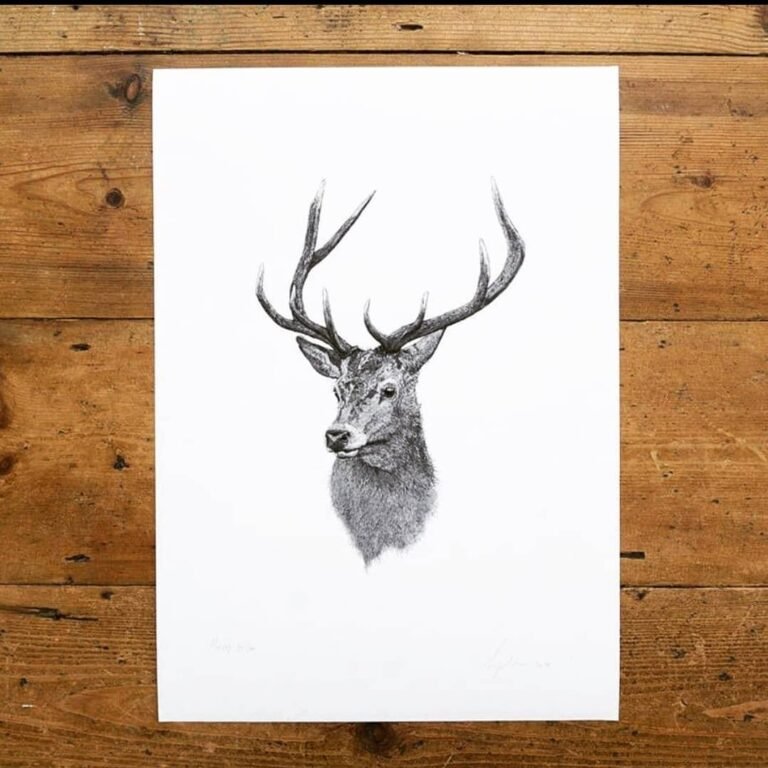
  • U Sier Lapalang by Janice Pariat

    Shall I tell you the story of Sier Lapalang? As with every folktale, there are many versions. My nanny's would be brief – "the young stag didn't listen to his mother and see what happened to him?" While others are infinitely more detailed.

    At the foothills of Ri Khasi lived Sier Lapalang, noblest animal of his race, pride of his mother's heart. He grew up protected, loved, his every whim indulged, until one day he began to grow weary of the plains, and his mother's constant counsel. He wished to explore the hills, and find there his favourite delicacies. Despite all warning, of hunters and fierce warriors, Sier Lapalang left.

    At first, all went well. He wandered deep into the strange country, relishing the cool climate, the floral treats, until one day he stood in all his glory on the slope of Shyllong Peak, at the heart of Ri Khasi.

    His dallying caught the attention of cowherds grazing their cattle nearby. A stag, a stag! they called. Soon a hunt commenced, and though Sier Lapalang was swift and strong and fled from hill to hill, there were too many hunters in pursuit. He began to tire, and slowed and stopped; then an arrow-or a thousand-pierced his chest. He was strung up, amidst triumphant cries, and taken homewards with much rejoicing.

    The story could end here, but it doesn't.

    The mother, ill with worry, leaves her home for the land of her enemies, roaming the hills, looking for her son, until she comes upon the hunting party, cheering their kill. She recognises her Sier Lapalang. And begins a lamentation so sorrowful that the world falls silent. Women swoon from the pain, men bow their heads in anguish. Not a hand is raised against her, not an arrow shot in her direction.

    The crowd of hunters stare mutely. They'd never heard such protestations of devotion and love. Their own manner of mourning for their dead was now without meaning. It is said, from her, the Khasis learned how to grieve.

    A profound and poignant retelling of the Khasi folktale "U Sier Lapalang" from poet and novelist @janicepariat ! Thank you so much Ma'am for your entry and for your interest in the page! 🙏🙏🙏

    Janice Pariat is an Indian poet and writer. She was born in Assam and grew up in Shillong, Meghalya. "Boats on Land" (Random House India, 2012) her debut collection of short stories, won the 2013 Sahitya Akademi Young Writer Award for the English language and the 2013 Crossword Book Award for fiction. Pariat is the first writer from Meghalaya to receive an award from the Sahitya Akademi for a work in English.

    Picture credit: @brillustrations

  • U Symphut/ U Suid Tynjang

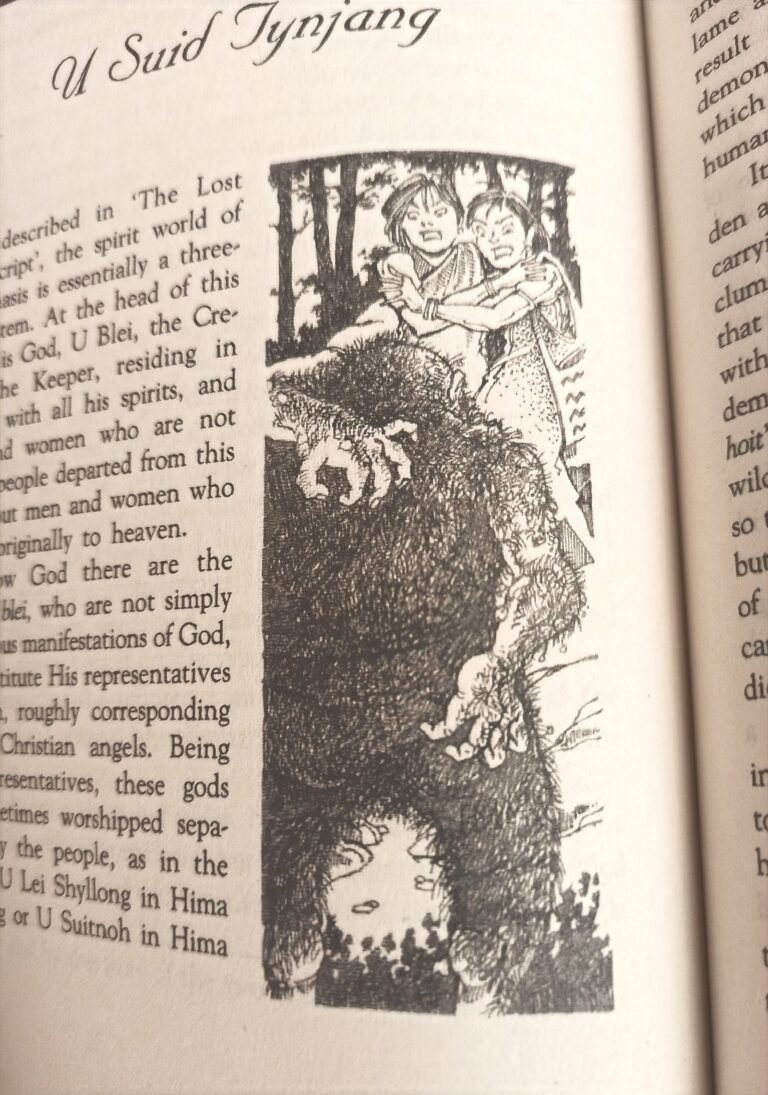
    U Symphut (Pnar) and U Suid Tynjang (Khasi) is an apparition/ ghost who captures an individual, carries him to places far and wide leaving him at the top of a cliff, or a tree, by the side of a river or a stream and even to a completely new and foreign land.

    Daohi Manar says:

    "I am not sure whether 'Symphut' is a ghost or an animal, but one thing I am sure about is that 'Symphut' never harms or injures its victims. During our childhood, incidents of someone being carried by the 'Symphut' occurred quite frequently with men usually being the victims! According to Khasi-Jaiñtia myth, 'Symphut' is a phantom or a ghost who snatches or captures an individual and carries him to places. The person who is in a daze is unaware of what is happening to him. He will come back to his senses only when an apparition wills it and departs or at times when the man is confronted or touched by another person. He then wakes up from this trance, not feeling hungry or in pain or even loses his sense of fear, realising his plight while still clueless of what happened to him and how he reached there. 'Symphut' supposedly never harms his victims and thus there is no tragic end to the story."

    What is said about "U Symphut" or "U Suid Tynjang" is that it is an imp who lives in a deep forest. His appearance is horrifying as his body is covered in sores. Thus, his skin is marked by scabs which torment him with an undying itch. This itch can be relieved by the scratching of a human hand. "Symphut" lures his victims by imitating the human call "Kaw hoit" for those travellers who are lost and exhausted. In this way he captures them and if they do not comply, they are tickled to death or left on the edge of a gorge or in a tree to die.

    "U Symphut" (Pnar) or "U Suid Tynjang" (Khasi) sent by Daohi Manar @xdtnoahjupejackllthmanar 👻👻👻 Thank you for this entry! 😅😅

    Picture and reference: Around the Hearth: Khasi Legends (Folktales of India) (2007) by Kynpham Sing Nongkynrih.

  • Ka Jingïamareh Kob ki Wah da Esther Syiem

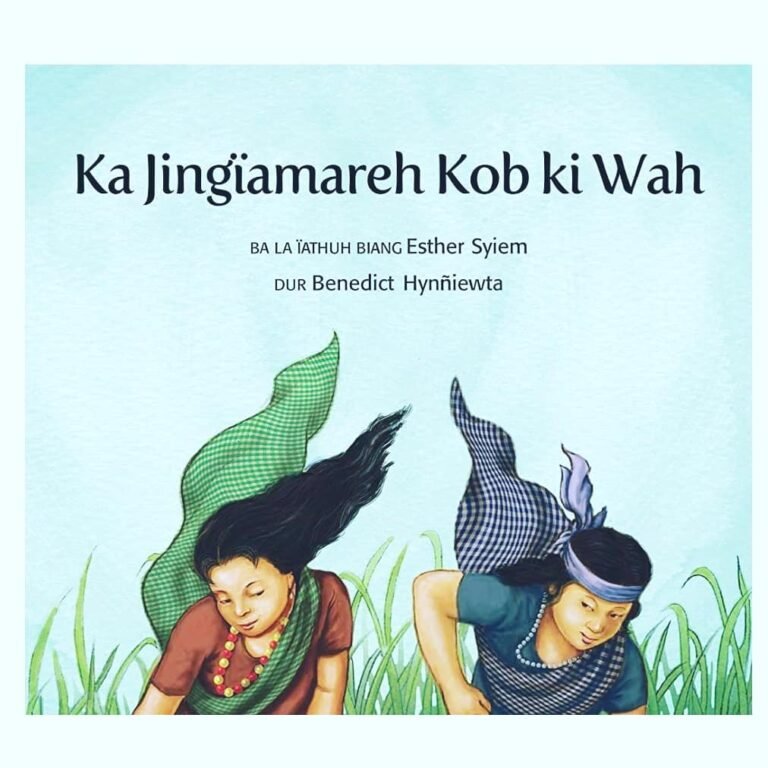
    Ka Jingïamareh Kob ki Wah , ba la ïathuh da Esther Syiem, Dur: Benedict Hynñiewta

    Ka Ïew bad ka Ngot ki ju sngewtynnad ban ïalehkai ha u lum hajrong. Ha kawel ka sngi, ka Ïew kaba kham shlur, ka la peit ïa ka jingshat ka sngi ha ki them shajngai bah bad ka la khot ïa ka Ngot, ka para kaba ju sngewtynnad ban shong mutdur, pyrkhat marwei, sha ka jingïakob mareh. Ha ka shi khyllipmat ka Ïew ka la kylla sha ka wah kaba kynthih ïa ki lum ki wah ban poi kloi shathie. Ka Ngot kam banse shuh ban bud lang… Mano ban jop?

    La ïathuh ïa kane ka khana pateng da ka nongthoh bad u artis, kiba ïoh mynsiem na ka mariang kaba dap da kiei kiei kiba jyrngam bad ba itynnad ha Meghalaya. Kane ka khana ka sngewban bang ïathuh ïa ki jnit ki jnat jong ka jingïamareh kob, katba ki jingdro pat ki tbeh sha kata ka jingïamareh na ki lum sha ki them.

    Ka Jingïamareh Kob ki Wah sien shon banygngkong eh ha ka ktien Khasi ïa kum kane ka kot dur.

    Ka nongthoh, Esther Syiem, ka hikai English Literature ha ka skulbah North-Eastern Hill University, Shillong. La palat shiphew snem eiei ba kane ka nongthoh ka la pyrshang ban wad bad plait bha ïa ki khana pynriewspah jaitbynriew jong ki Khasi. Ka dei ka nongthoh kaba thoh lang ha ka Khasi bad ka Phareng, ka nongthoh poitri kaba pawnam. Ka la pynmih ar tylli ki kitab poitri, ka drama Khasi, ka kot shaphang kine ki khana bad kiwei de ki ese.

    U Benedict Hynñiewta u dei u artis uba la pass na Visva Bharati University, Santiniketan, West Bengal. Ïa ki dur jong u, la lah pyni ha ki exhibition ha Ri India baroh kawei. U sngewtynnad ban put bisli bad u don bynta ruh bad ka folk fusion music group.

    .

    .

    .

    Originally in Khasi Race of the Rivers, Retold and Translated by Esther Syiem, Pictures: Benedict Hynniewta

    Ka Ïew and Ka Ngot love to play on the hilltop. One day, the adventurous Ka Ïew looks at the sun shining down on the distant, sun drenched plains and challenges her quiet sister to a race. In a flash Ka Ïew becomes a river, ready to rush downhill, and Ka Ngot has no choice but to join her… Who will reach first?

    This well known Khasi folktale is brought to life by a writer and an artist, both intimately connected to and inspired by Meghalaya's varied, lush landscape. The evocative text delights in detail, while luminous illustrations flow alongside, taking the reader on a mood-filled journey from the hills to the plains.

    Race of the Rivers has also been published by Tulika in Khasi, in which it was originally written. It is the first ever picture book for children in that language.

    Writer Esther Syiem teaches English Literature at the North Eastern Hill University, Shillong. She has been involved in the study of Khasi folk literature for more than a decade now. A bilingual writer and established poet, some of her publications include two collections of poetry, Oral Scriptings and Of Wit and Wisdom of Follies and Frailties, and a play in Khasi, Ka Nam.

    Artist Benedict Hynniewta is an alumnus of Visva Bharati University, Santiniketan, West Bengal. Benedict's art has been displayed in exhibitions across India. Currently, he teaches painting in North-Eastern Hill University, Shillong. He loves to play the bamboo flute and is also part of a folk fusion music group.

    Ka Jingïamareh Kob ki Wah the Khasi folktale of the rivers Umngot and Umiew, retold and translated into English by Dr. Esther Syiem and illustrated by @benedictskhemlang

    This book has been translated into different Indian languages including Hindi, Bengali, Tamil, Gujarati and Marathi. It is a perfect book for children! 🌻🌻🌻

    Both Dr. Esther Syiem and Benedict Skhemlang Hynñiewta teach in North-Eastern Hill University, Shillong, Meghalaya.

    The book is available at tulikabooks.com and amazon.in