Category: Research

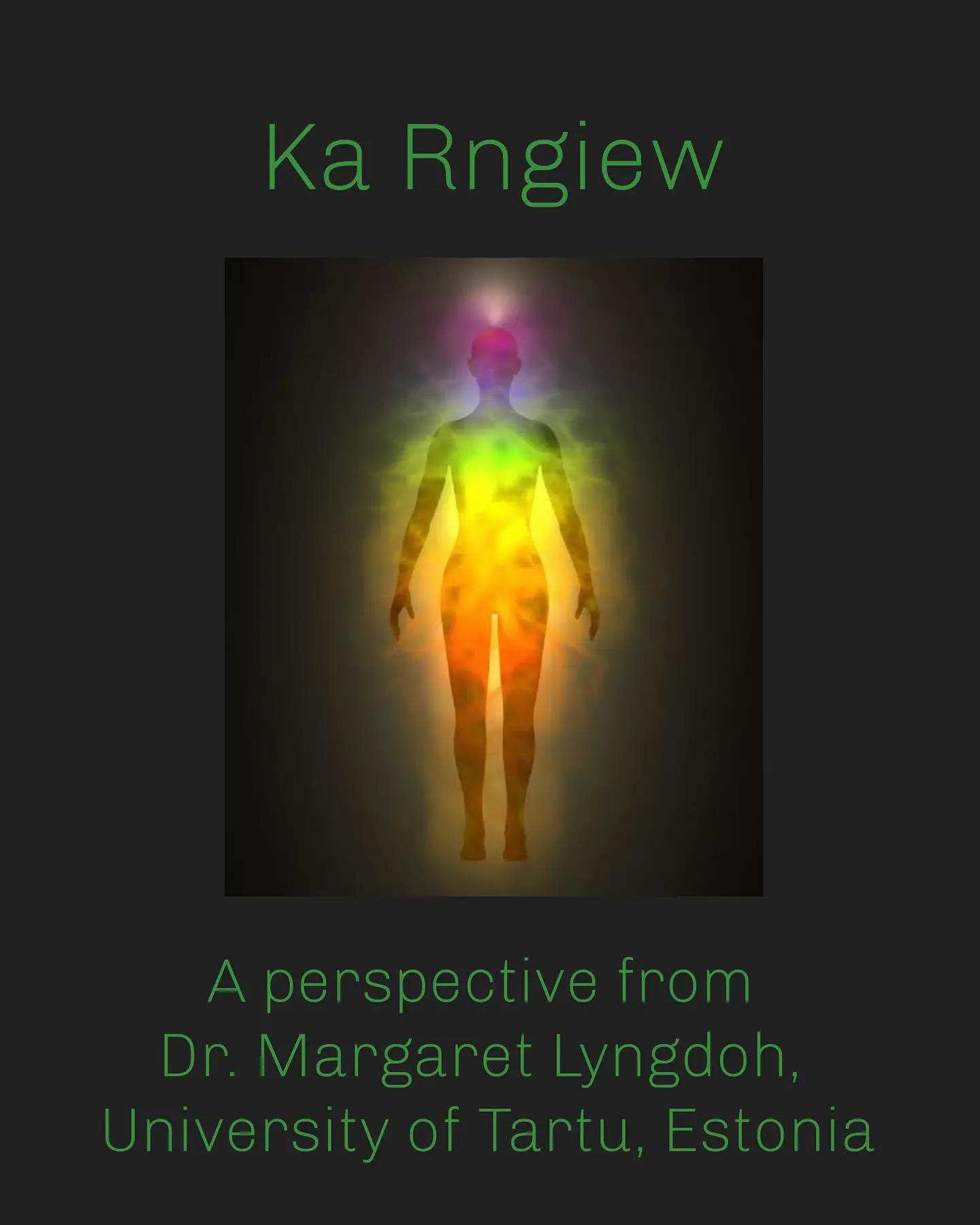
  • Ka Rngiew: A perspective from Dr. Margaret Lyngdoh, University of Tartu, Estonia

    In the Christian worldview, a person is made of the body, mind, and soul. In the traditional Khasi perspective, a person is made up of met, mynsiem, and rngiew. While met is the body, mynsiem is breath. Rngiew is what invests a body with personhood and it stays with a person through life. It is the quality that allows a person to remain impervious to the evil eye or ka sabuit. Thus the term longbriew means the nature of being "human" or the nature of an entity who is endowed with rngiew.

    There is no English word to approximate this Khasi concept. In its simplest explanation, rngiew is what makes a person human. Further, the Khasi word for breath, mynsiem has been adapted to fit the Western idea of the "soul" or even, "spirit". I cite, Lyngdoh, Margaret (2021). "Landscapes of Enchantment and their Usage: A Critical Case-Study from the Khasi Ethnic Community, Northeast India'' in Graham Harvey and Opinderjit Kaur Takhar (Ed.). "Religion and Senses of Place'' UK: Equinox Publications. (Religion and The Senses) [forthcoming]:

    A being is made up of Ka met (lit. body). ka mynsiem (lit. breath) and ka rngiew. To ‘be' a human being (longbriew), the Supreme Being must clothe the being with a rngiew. I will quote my interlocutor, Sweetymon Rynjah on this, "Ka Rgiew ka dei ka bor maia ba kynja Blei, ba u Blei u la pynkup, pynphong ia u briew ha ka jingwan longbriew jong u' (20 November 2015)".

    I paraphrase: The Rngiew is an ability that is god-like, that the Supreme Being clothes or invests a being with when he/she comes out of the womb initially divine, and then whatever he/she acquires or achieves in a lifetime is dependent on him-/her-self. The rngiew stays with a person through life and is reflected in the person's being and stature. If their (jinglong mynsiem) personality, spirit, essence, strength of character, nature, principles, moral fortitude etc. are in line with, 'Ka tip briew ka tip blei and ka tip hok tip sot' (lit. living a good life in accordance with the Covenant decreed by the Supreme Being), then their rngiew is strong and protects them from those who desire ill or harm to befall upon them.

    All humans and non-humans have rngiew. Ryngkew or guardian deities, have rngiew. This gives a sense of agency to a human or non-human entity. But clans also have rngiew, and in different contexts this can mean different things. But a strong rngiew of a clan can protect a clan from extinction. When we refer to the clan in this context, we use the words “longkur longkha". But rngiew is always a strong, positive quality that remains with humans, places, non-humans (like ancestors and guardian deities) all their lifetime. The first ancestress, Iawbei also has rngiew, especially because they have to look after the well being of a clan and further it's progress and prosperity. Even though we live in a state of rapid transitions, we cannot forget these core Khasi indigenous concepts because this is an essential part of our longbriew manbriew!
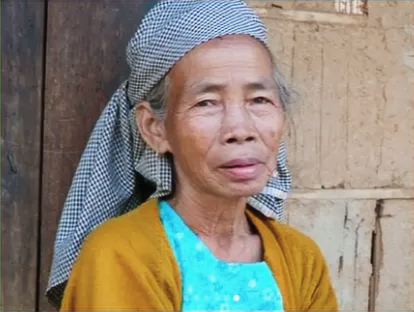
    In the photo is Kre Makri, who is a Khruk, a female weretiger, from Raid Nonglyngdoh, Ri Bhoi. Her rngiew transforms into a tiger and roams around in the alternate reality, Ramïa, where notable ancestors also live. She said that while the male weretiger or sansaram (lit. five clawed) has the function of holding on the laws of the ryngkew, the female weretiger, ka khruk, has the sacred function of holding of the rngiew of the clan. The photo was taken by me and this was in the winter of 2012.

    Dr. Margaret Lyngdoh @lieng_makaw gives us what she has found in her research from the approach of Folkloristics about "Ka Rngiew", showing us that it is a far reaching concept which sheds light on the well-being of the individual, the clan and our worldview as Khasi-Jaiñtia society. Thank you @lieng_makaw ! 😀🙏

    The post on "Ka Rngiew" posted on the 5th of August 2021, garnered a lot of attention and also counter-reaction that has proved fruitful in our understanding of this unique Khasi concept. The expression and discussion of different points of view is something that is important for indigenous culture to thrive.

    No part of this material may be reproduced in any form without the consent of the author. All material for this content has been collected through primary fieldwork.
  • Ka Rngiew

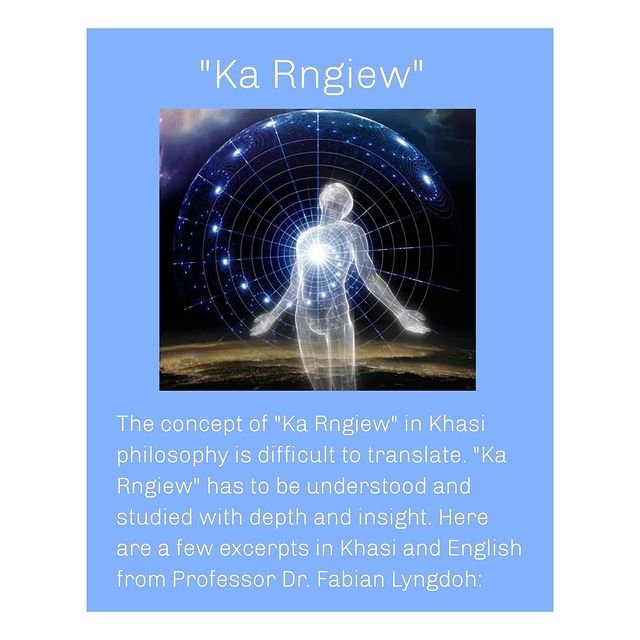
    The concept of "Ka Rngiew" in Khasi philosophy is difficult to translate. "Ka Rngiew" has to be understood and studied with depth and insight. Here are a few excerpts in Khasi and English

    from Professor Dr. Fabian Lyngdoh:

    Їa kine ki bynta la jied lyngkot na ka kot Ka Thymmei Pyrkhat U Khasi (2018) ba la thoh da i Dr. Fabian Lyngdoh.

    "Man la u briew u don la ka rngiew. Katkum u H. O. Mawrie, u Blei u la ai ïa ka rngiew tang ïa u briew ym ïa kiwei pat ki jingthaw, bad dei ka rngiew kaba pynïapher ïa u briew na u mrad. Ka rngiew ka dei ka jaka ne ka position u briew kum uba don mynsiem hapdeng kiwei pat ki para briew ba don mynsiem bad hapdeng kiwei pat ki kynja mynsiem, kum ki ksuid, ki snaïap bad ki blei ki dken."

    "Ka dei ka dur mynsiem (spiritual personality) jong u briew. U Blei u la thaw ïa kiei kiei baroh bad u la buh bynta bad sam bynta ha la ki jaka jaka. Man la u briew u dei ban pynneh (maintain) ïa kane ka jaka hapdeng ki bor mynsiem babun. Ki bor mynsiem khamtam eh ki ksuid, ki kwah ban pynpra ïa kane ka jingpynryntih (equilibrium) bad ki shim kabu man ki daw ban khynñiat noh їa u briew na ka jaka (position) ba u don, lane ban pynsniewdur їa ka rngiew jong u. U briew u ba la jem rngiew na kano kano ka daw u don ha ka position bym thikna (unstable equilibrium)".

    "Ban pynksan rngiew їa u la dei ban pynshong ne buh biang їa u ha ka jaka ba u ju don, kum u briew ba don mynsiem, uba la thaw da u Blei hi, uba don kata kata ka kyrteng, uba dei na kata kata ka kur, ba la kha na kata kata ka kmie, u ba dei u kñi kita kita, u para ne pyrsa jong kita kita; u lyngdoh, u basan ne u syiem ba la suid la shor bad kumta ter ter, kat kum ka position jong u ha ka mariang. U briew u ba biang ka rngiew u don ka daw (reason), ka tynrai (origin) bad ka jingiadei (relationship) ha kane ka mariang."

    "Ka mynsiem u briew ka dei ka maïan jinglong (being) jong u ka ban neh junom wat la ka met ka їap noh, bad ka rngiew pat ka dei ka dur ne ka jingpynpaw (manifestation) jong kata ka mynsiem. Ka mynsiem kam paw ha kano kano ka dur ne ka sur. Ki dak ki shin jong u briew ha ka mariang kum ka dur, ka kyrteng, ka sur bad ka jingiadei para briew ki pynlong ïa ka rngiew u briew. Haba ka mynsiem u briew uba la ïap ka wan paw ha ka dur ne ha ka sur hapdeng ki briew kiba im, ki Khasi ki ngeit ba ka dei ka rngiew briew bad kim ju ong ka dei ka mynsiem briew namar ba ïa ka mynsiem ym lah ban ïohi ne ban iohsngew.….Te hangne ngï ïohi ba ka rngiew u briew ka dei ka jinglong ne ka shap mynsiem u briew (spiritual personality) kaba don la ka jaka, ka dur, ka sur, ka kyrteng bad ka jingïadei parabriew ne ka jingïadei bad ka mariang."

    "U briew ha ka mariang u thaw dur ïalade ne ïa la ka rngiew (spiritual personality or spiritual identity) man la ka sngi lyngba ki jingїadei jong u bad kiei kiei baroh kiba shabar na u. Ka rngiew, kaba dei ka dur-maïan (ethereal image) jong u naduh met haduh mynsiem, kan shim dur ne shongdor katkum ki jingleh ne jingïakynduh jong u ha ka jingim bad kita kiba shabar na u."

    The following excerpts have been taken from an article by Dr. Fabian Lyngdoh in The Shillong Times, dated 23rd November 2017.

    "According to Khasi belief, man is a physical as well as a spiritual being who has a unique position and status among other beings. Every human being has 'ka rngiew' which may be conceived of as the spiritual personality or identity of the body and the spirit combined. 'Ka rngiew' means the place or position or status of each human being, man or woman, among other human beings and among other spiritual beings like 'ki ksuid' (demons), 'ki puri' (nymphs), 'ki blei ki dken' (gods and goddesses), ki sna-iap' (ghosts) and other beings, physical and spiritual within the cosmos. It is not man's personality in the social frame of reference, but it is his personality that is balanced in the spiritual frame of reference. When a person is in this balance, the Khasis say that he/she is 'dang eh-rngiew' (spiritual personality intact).."

    "The Khasis speak of a person who is 'u ba la jem-rngiew', meaning that he is out of position or in unstable equilibrium. In that unstable position a man's spiritual status is degraded or disfigured and evil may befall on him. To bring him back to his original status it requires first of all his own personal resolution, and second, the help of others especially through religious rites. These religious rites reflect the love and concern that his clan members have for him/her. The process of recovery according to the Khasis is to re-establish a person's status as a human being with body and soul, created by God Himself, who has such and such a recognized name given and confirmed in the ceremony of "ka jer ka thoh', belonging to such and such a clan, born from such and such a mother, who holds such and such a position in society, etc., the more we can recall of his/her various aspects of identity and human relationships, the better it would be. A man 'ba dang eh rngiew' (whose spiritual personality still intact), ha 'ka tynrai' (origin), 'ka dew' (reason to exist), and ka jingïadei' (relationships) is part of the human community and the entire cosmos."

    "Not only the physical environment and the human society, but the entire cosmos is understood by the Khasis as the medium where human beings live with their respective 'Ka rngiew', like water is to the fishes. Man cannot be a human being without 'ka rngiew' which is his overall personality, physical, mental and spiritual as recognized by his fellow human beings, by all creatures animate and inanimate and also recognized by spiritual beings. It is on this reason that the Khasis believe that man should not stand against nature, but adjust himself with it according to the requirements of his human existence."

    "Ka Rngiew" forms an important aspect of Khasi philosophy. The concept touches on the metaphysical nature of human existence. Thus, it will be gratifying to understand the many layers of meaning within this enriching concept. ✨✨✨

    Sources:

    🟡 https://theshillongtimes.com 2017/11/23/182286/

    🟡 Ka Thymmei Pyrkhat U Khasi (2018) by Fabian Lyngdoh.

  • Khasi Waterlore by Margaret Lyngdoh

    Water among the Khasis has divine/ordinary forms. In ordinary form, it is called Um, its secret name in ritual is Ñiaring- although this is not the complete name & I cannot reveal it here. In Khasi war cosmology, rivers carry the "seeds" of ancestors, while the megaliths represent the "bones" of the ancestors

    Ha ki Khasi, ka um ka don ka jingkyntang kaba na u Blei bad ka don ruh ka jinglong kum kiwei kiwei ki jingthaw ha ka pyrthei. La khot ïa ka, ka "um" bad la khot ruh ïa ka ha ki jingleh niam kum ka 'Ñiaring”. Ha ki Khasi, ïa ka jingbatai shaphang ka jingpynlong ïa ka pyrthei la ngeit ba ki wah ki dei ki symbai jong ki longshuwa bad ki mawbynna ki dei ki shyieng jong ki longshuwa.

    Among the Nongtrai, Lyngngam, & Muliang Khasi, the divine form of water is Ñiangriang. Among Khynriam Khasi, U Sangriang Um is said to be the father of Thlen. But in northern Khasi hills, in Jhare name magic, water is Ñiaring. The following narrative is recorded from deceased hare practitioner Marcus Lapang.

    "In the olden days, the true name of water was Ñiaring. The older sister of air, Ñiaring was confined to one place by the supreme being. In her place of confinement, her sorrowful cries could be heard.

    The Council of the Supreme Being was convened and there it was decided that Ñiaring should be freed to flow into all the earth. So the Riew Ramhah, or Pantia, appointed by the gods began to clear the earth thereby making channels for Ñiaring to flow into the world. They were created solely for this task. Neither human, nor spirit, the supreme being never made any other use of them and we don't know where they are today. The Khasi lands as we know them today are so hilly & uneven because Ñiaring had to be allowed to flow out into the world. After she was freed, Ñiaring tied a Jutang or a covenant, whereby she agreed to help mankind in any way that she could and she could go where she was needed in Khasi lands.

    Ñiaring made the promise that she would cleanse and purify from illnesses, that may be caused by beings whom she contains & nurtures. In return, mankind agreed not to be cruel or violate her. Water came before Lukhmi, the spirit of paddy (rice grain). When Ñiaring became free, the sounds of her sorrow turned into music & joy as she flowed over the rocks & mountains, which then became her musical instruments. Every water body is the road, the pathway of the Ryngkew (guardian deity of a place in nature) and Basa (the deity of water). We see the water flowing by, but we never see it return. But it returns & it goes back. Ñiaring has 30 kinds of entities, including fish, which live inside her and she offered to cleanse any human being afflicted by any of the entities who live inside her.

    The Puri, or water nymph/ spirit is one of the entities belonging to Ñiaring. Ñiaring also harbours inside her, evil spirits, & other non-human entities (ki ksuid ki khrei). This is the reason why Jhare magical practioners, using Ñiaring to heal illness caught from water. It is necessary to sacrifice to Ñiaring, a female white chicken, or white she-goat in times of necessity. But this sacrifice should never be performed continuously, but only when the Jhare practitioner tells you to do so.

    "Khasi Waterlore" by Dr. Margaret Lyngdoh @lieng_makaw. Thank you so much for sending an in-depth and insightful entry! 🙏🙏😃😃

    This entry is contributed by Dr. Margaret Lyngdoh, University of Tartu. Design and layout has been done by Talilula @thelazyscribbler

    Khasi translation by @speakyourroots

    No part of this material may be reproduced in any form without the consent of the author. All material for this content has been collected through primary fieldwork.
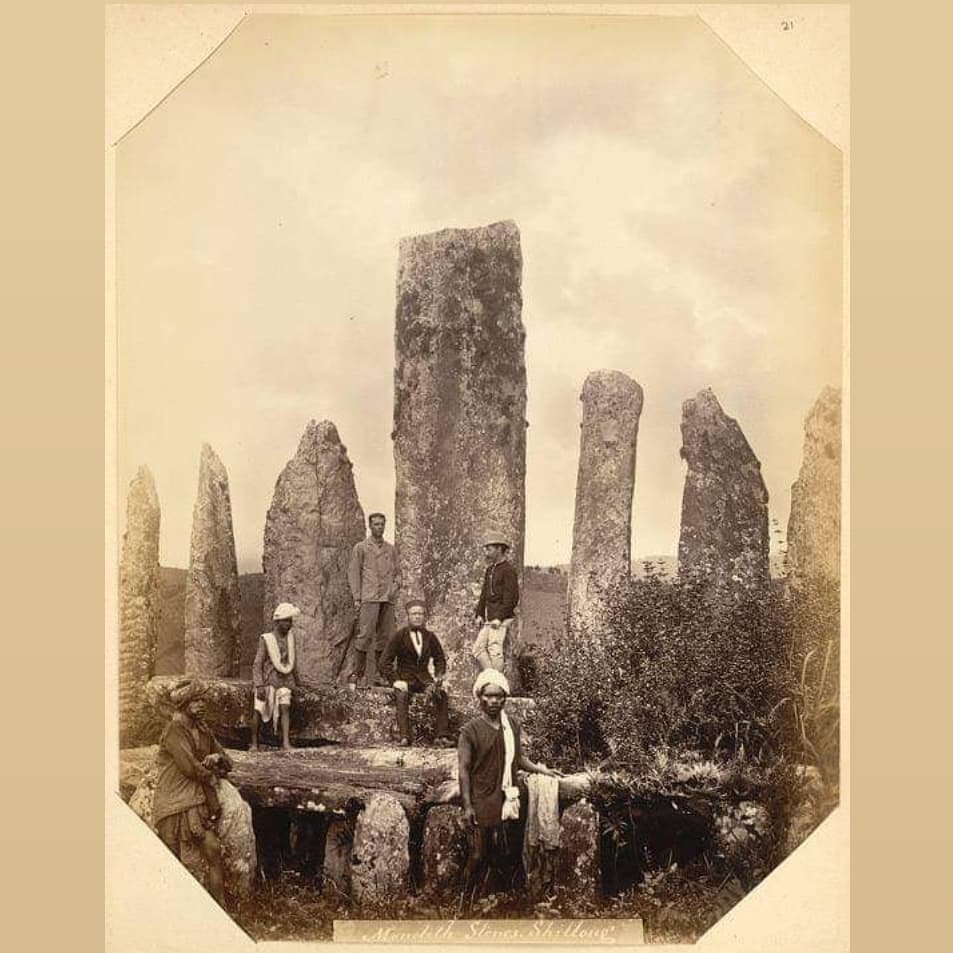
  • “Monolith Stones Shillong” as shown in Jean Baptiste Oscar Mallitte’s 1870s photograph

    Nathaniel Majaw says:

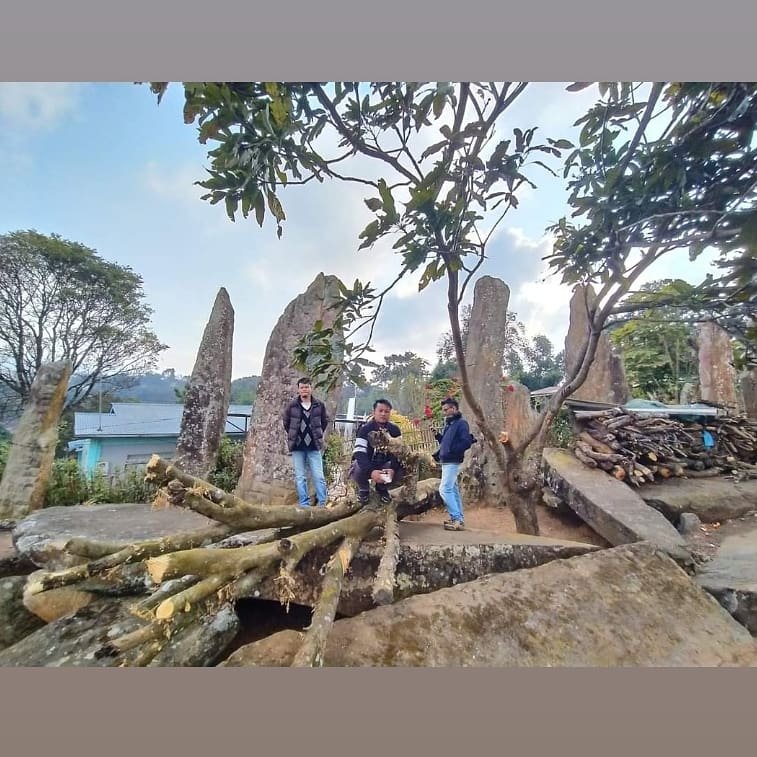
    We finally located the magnificent stones as shown in Jean Baptiste Oscar Mallitte's 1870s photo "Monolith Stones Shillong". These memorial stones are tucked away in a quaint property in the beautiful and peaceful Nongkseh Rim.

    The Khasi "Mawbynna" or monoliths/ megaliths are markers of history, culture, tradition and religion. Writers see language and literature emanate from them; indeed they are a repository of the past, present and future.

    Many monoliths and megaliths were destroyed in the great Assam earthquake of 12th June 1897. Thus, it is such a great joy to find these structures still standing after so many years.

    Congratulations to @nathanielmajaw and his team on finding these particular megaliths. 👋👋👋 These pictures were posted on Twitter on the 4th of February 2021. Thank you for giving permission to post these pictures! 🙏🙏🙏

  • Review of “The Legend of Ka Noh ka Likai” by Lapdiang Syiem

    Lapdiang Syiem’s Dramatisation of The Legend of Ka Noh Ka Likai: A Review by Dr. Amanda C. Tongper and Dr. Daiarisa Rumnong

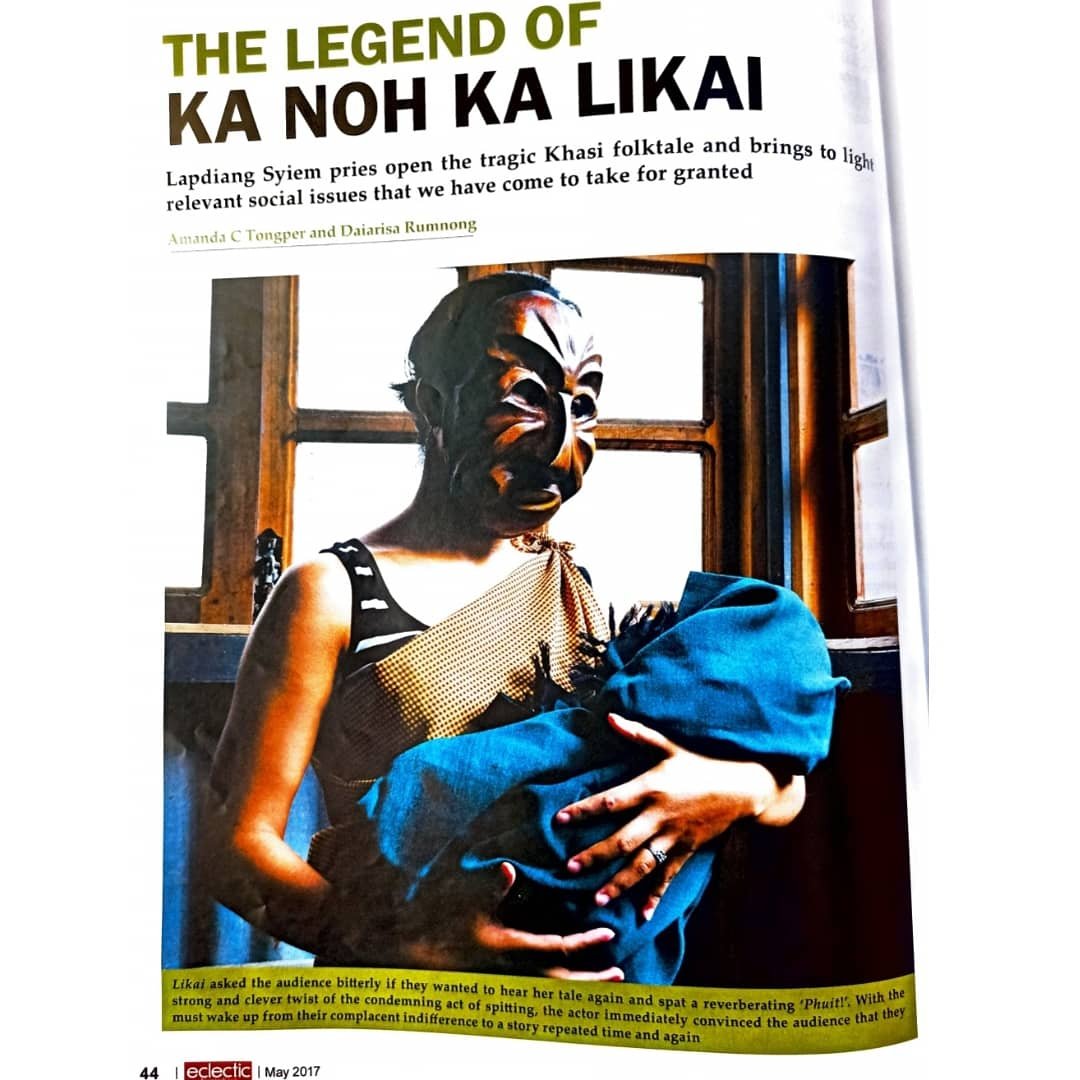
    Nothing prepared us for the phenomenon which is Lapdiang Syiem. As we were ushered in into the enclosed space at Dylan’s Café, we were greeted by a figure framed atop a mula, transfixed with a baby in her arms. We stopped for a second, looking for traces of life in that mannequin of a being even though we knew at the back of our minds, that it is the actor, Lapdiang Syiem.  The first achievement of the actor was accomplished in the very first seconds of the play, as we later realised that we did not just enter the room where the performance was to take place – we were pulled into the orbit of the actor with a grip that was to hold us for the rest of the performance. 

    Lapdiang, through the character of Likai, pried open the tragic story of Ka Noh Ka Likai that has been encapsulated in time and brought to light relevant social issues muted within a tale that we have come to take for granted. Likai asked the audience bitterly if they wanted to hear her tale told again and spat a reverberating “Phuit!” With the strong and clever twist of the condemning act of spitting, the actor immediately convinced the audience that they must wake up from their complacent indifference to a story repeated time and again. The spit cautioned the audience that in this re-telling, they cannot rely on their rote-memory of the story. The spit challenged the collective conscience of the audience who may have known the narrative of Ka Noh Ka Likai, but has never thought to understand the story of Ka Likai, the being with thoughts and emotions of her own.

    Lapdiang Syiem’s performance provokes a fresh look at the oft-told story of Likai. Entering the venue, the image of Lapdiang whose face was covered by a mask, holding a baby seemed to be suspended in purgatory, adrift in limbo. The image is at once a detonating symbol. It evokes the pre-conceived notion that a woman is pitiable, weak, unsettled on her own and a man is her only anchor. This notion that rises from a deep-seated, almost genetic conditioning remains such an inescapable factor even in this 21st  century stage of our lives. The orbit we were drawn into had a familiar ring to it. But were we looking hard enough to notice the reflection we should see of ourselves; of how much the motif of a woman jumping to her death actually echoes all those stories of violence, dispossession and death?  Why is it that a woman is expected to be tied to a man? Why does a part of a so-called “binary” cannot exist alone? In the performance of Ka Noh Ka Likai, Likai after living as a widow was told by other women in her community that she should marry another man. A man it appears embodies security. However, this “security” that society perceives as normal or good may actually lead to irrevocable despair.  

    The only device that aided Lapdiang’s performance was the music played by Apkyrmen Tangsong. Apkyrmen played original compositions on the maringud, ksing and besli. All three instruments moulded themselves into the performance, even eerily voicing out the muffled cries

    of Likai’s baby. The poignant and haunting pieces feel like the past knocking on our foreheads saying: “Don’t get too comfortable, too familiar with showing me off. Try to understand my relevance for the present and even the future!” The music, words and gestures of the performance swayed the audience, dug out tears, drawing us breathless with questions that perhaps are desperate to break free. It made us feel uncomfortable…in all the right places.

    In Lapdiang’s performance, there is a curious blend of acting and telling, so that one is compelled to say, the oral is still with us. One usually speaks of the oral tradition with a sense of

    nostalgia, as a thing of the papyral past. However, with Lapdiang’s performance, one witnesses that this form of communication has never really left us. We only have to engage with it once again. The gusts and ripples of ka Ka Noh Ka Likai echo everyday, do we listen?

    As the play came to its end, there was silence among the audience. It was a sacred moment to watch Lapdiang give Likai life with such heart, strength and intelligence.


    Lapdiang Syiem is a force to be reckoned with.  

    Lapdiang A. Syiem was born and brought up in Shillong. She is a graduate from National School of Drama, Delhi with a specialisation in Physical Theatre from the Commedia School, Copenhagen. In 2016, Lapdiang, along with Keshav Pariat and Juban Lamar founded an artistic commune called, The Unhinged Commune. They blog regularly at kinongbamsohlah.wordpress.com

    This is a review of a fantastic and heart-wrenching performance by @lapdiangsyiem of "The Legend of Ka Noh ka Likai" in 2017. Folktales transformed into theatre is something else! 💫💫💫

    The review was published in @eclectic_northeast magazine and has been written by Dr. Daiarisa Rumnong (Assistant Professor, St. Mary's College) and Dr. Amanda C. Tongper (Assistant Professor, St. Anthony's College).

    Thank you @lamar.juban for the beautiful pictures used in this review!

    Please send an email to speak.your.roots@gmail.com if you would like to read the review!