Category: Translation

  • Ka Ktien “Sahnud”

    Kumno ngin pynkylla ïa ka kyntien "sahnud" sha ka English? Ym don tang kawei ka kyntien kaba lah ban batai ïa baroh ki jingsngew haba pyndonkam ïa ka kyntien "sahnud". Namar kata ïa ka jingmut jong ka ngin kham sngewthuh lada ngi pyndonkam ïa kiwei pat ki kyntien.

    Khublei Shibun ïa baroh kiba la jubab ban ïarap ban batai ïa ka kyntien "sahnud"! 🙏😄

    .

    .

    .

    It was asked about how the Khasi word "sahnud" could be translated into English. Turns out, we cannot use only one word to explain the meaning of "sahnud". A couple of other words have to be used to explain the meaning and use of "sahnud".

    Thank you to all who helped to explain the meaning of the word! 🙏😄

    #khasiwords #khasiwordusage #khasiintranslation #khasilanguageintranslation #khasilanguageconservation #indigenouslanguageconservation #speakyourroots #speakyourrootschallenge #talklocal

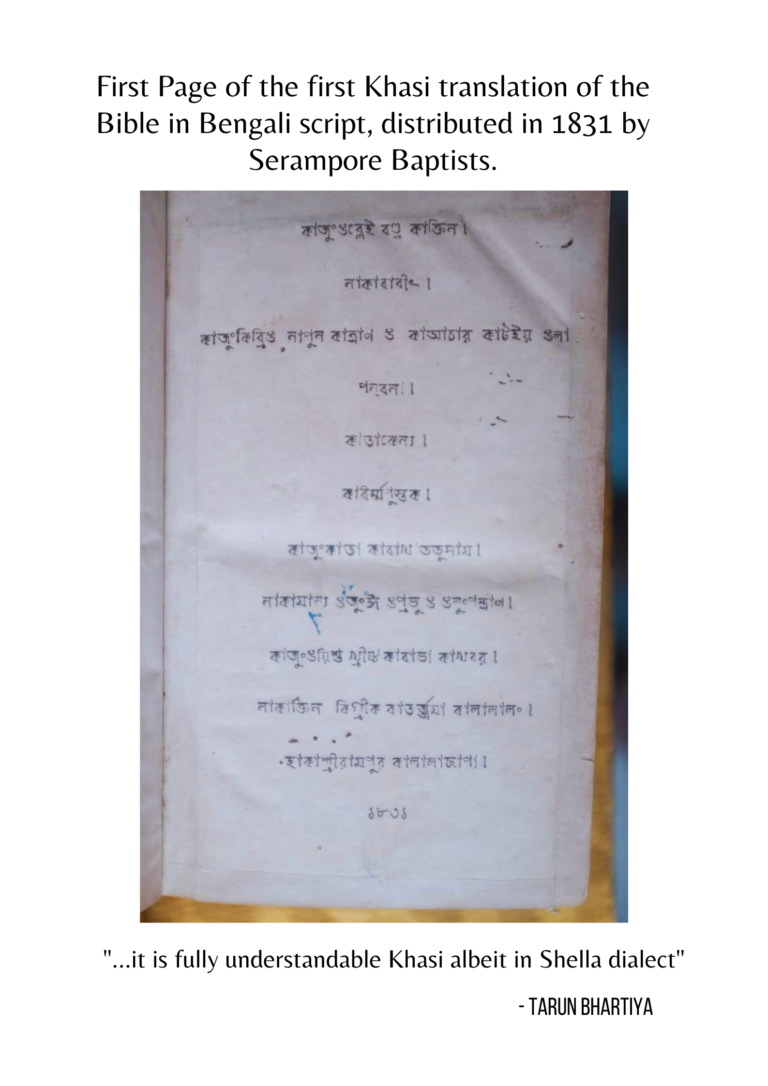
  • First Page of the first Khasi translation of the Bible in Bengali script, distributed in 1831 by Serampore Baptists.

    Thank you @tarunbhartiya for an informative and interesting contribution on the first Khasi translation of the Bible in the Bengali script! 🙏🙏 And what's more, there was a Khasi woman who helped William Carey in translating the Bible! 😃😃

    In @tarunbhartiya 's own words:

    "I so desperately want to know the name of the Khasi Lady – wife of the rajah/ chieftain who impressed Dr. William Carey with her intelligence and helped him translate the New Testament into Khasi. What was she doing in Calcutta/ Serampore in 1810s? How did she learn English? Was she literate (most probably yes)? Did William Carey talk to her about the Christian faith? Did she meet Krishna Pal who was planning to come to Pandua?"

    These and so many other questions arise when we read about the journey of the translations of the Bible into Khasi.

    You can read more in the following links:

    🟡https://theshillongtimes.com/2023/06/22/colonialism-and-mission/

    🟡https://www.placefortruth.org/blog/krishna-pal-the-first-baptist-convert-in-india

    🟡https://cherrapunjee.com/welsh-influence-in-cherrapunjee/

    🟡https://www.loc.gov/item/02014074/

    🟡https://books.google.co.in/books/about/Welsh_Missionaries_and_British_Imperiali.html?id=3JV6zQEACAAJ&redir_esc=y

    🟡https://books.google.co.in/books/about/The_History_of_the_Welsh_Calvinistic_Met.html?id=i6hGAQAAMAAJ&redir_esc=y

    🟡https://raiot.in/how-to-not-to-remember-thomas-jones/

    🟡https://raiot.in/was-thomas-jones-the-father-of-khasi-alphabet/

    🟡 Photographs are from the photographic project called "Unaddressed Picture Postcards from Khasi Jaintia Hills" by Tarun Bhartiya.

    https://indianexpress.com/article/lifestyle/art-and-culture/a-new-series-of-picture-postcards-explores-conversion-among-the-khasi-people-7575007/lite/

    #khasibible #khasitranslation #khasialphabet #williamcarey #thomasjones #khasichristian #khasihistory #speakyourroots #speakyourrootschallenge #talklocal

  • Different kinds of stories

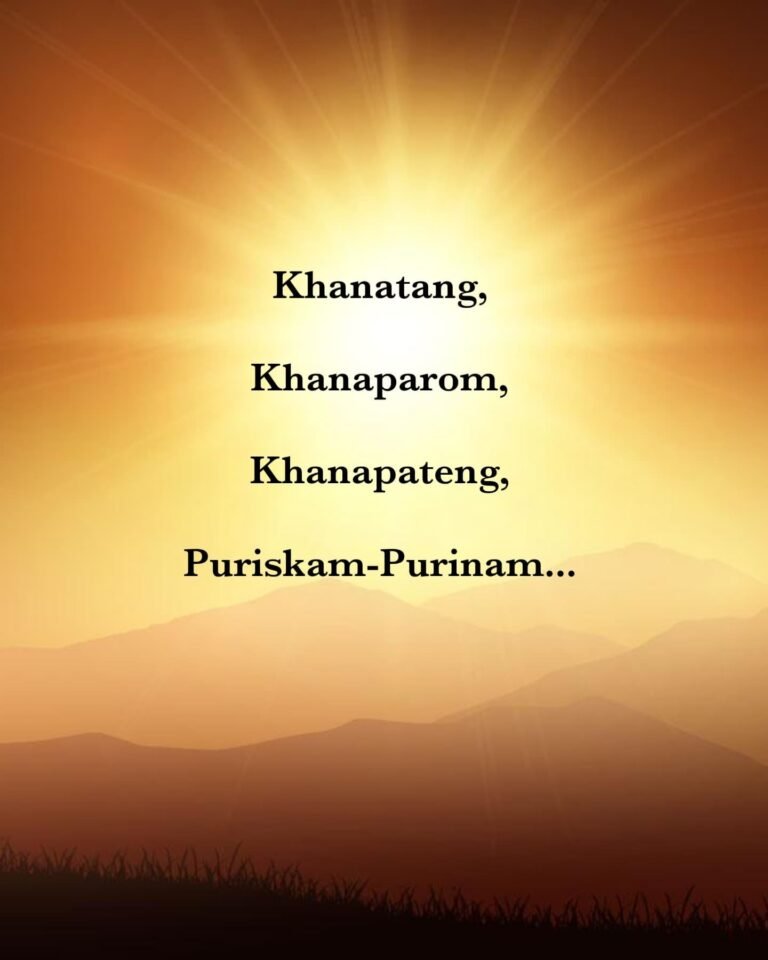
    On the 27th of September 2021, a question was asked about the difference between Khanatang, Puriskam-Purinam and other forms of Khasi stories.

    These are the responses:

    Folktales are Ki Khanaparom

    Myths are Ki Khanatang

    Legends are Ki Khanapateng

    Fairytales and Fables are Ki Puriskam-Purinam

    It may be noted that these may have different names in different dialects.

    Understanding our oral tradition requires that we understand the different types of stories that our forefathers put forth, to articulate a history and a culture. 🌲🌾🍂

    Khublei Shibun @lieng_makaw and @lurstepkharlyngz for your responses! 🙏🙏

    If anyone wants to add more, please feel free to mention them in the comments section.

  • Introduction to “Tales of Darkness and Light” by Janet Hujon

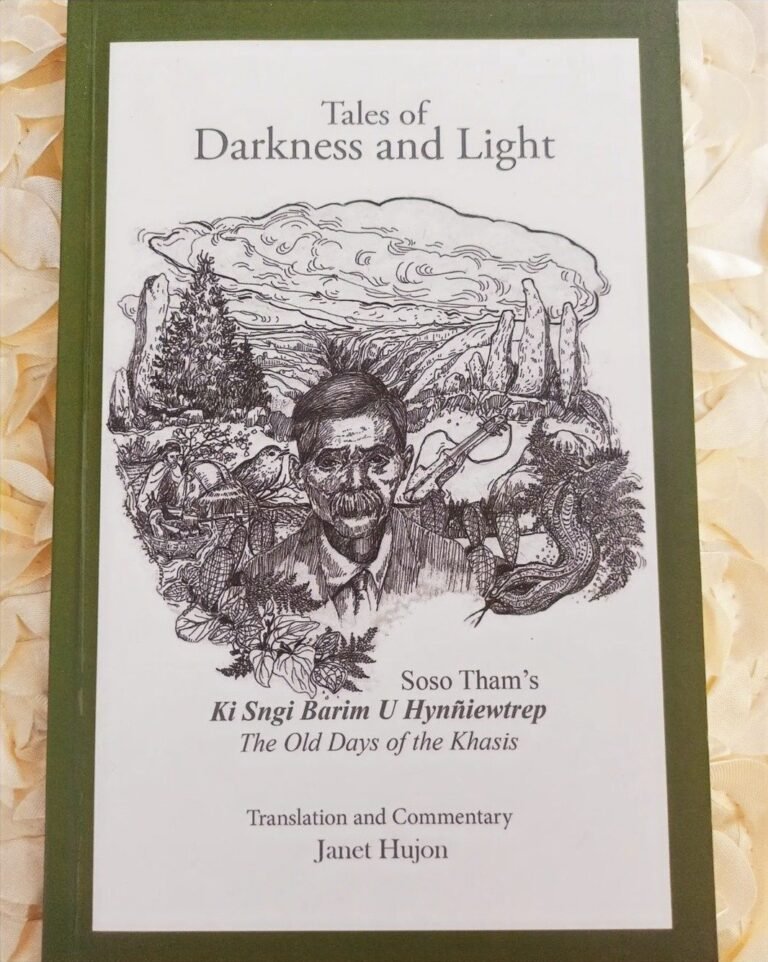
    Tales of Darkness and Light: Soso Tham’s Ki Sngi Barim U Hynñiewtrep: The Old Days of the Khasis (Translation and Commentary by Janet Hujon, 2018)

    INTRODUCTION¹

    Then will the rivers of our homeland tear the hills apart²

    The year is 1935. The event, at least for literature in Khasi, is momentous. A man diminutive in stature but with a voice that cradled the vast soul of his people had decided to do what he knew best. He completed a classic in Khasi literature and the Shillong Printing Works published The Old Days of the Khasis (Ki Sngi Barim U Hynñiew Trep).³ Soso Tham came in from the wilderness to carve in words the identity of his people—he made us see, he made us hear, he made us feel and he made us fear.

    In a land still under British rule this legendary schoolteacher expressed a weary frustration with the English texts he had taught his students year after year. He declared that from now on “he would do it himself”. And so he did. An oral culture for whom, in 1841, Thomas Jones of the Welsh Presbyterian Mission had devised a script, now had a scribe whose work expresses a profound love for his homeland and an unwavering pride in the history of his tribe—a history kept alive in rituals and social customs and in fables and legends handed down by generations of storytellers.

    Soso Tham refused to believe that a people with no evidence of a written history was without foundation or worth. He set out to compile in verse shared memories of the ancient past—ki sngi barim—presenting his people with their own mythology depicting a social and moral universe still relevant to the present day. For him the past is not a dark place but a source of Light, of Enlightenment. It may lie buried but it is not dead, and when discovered will provide the reason for its continued survival. Ki Sngi Barim U Hynñiew Trep is the lyrical result of dedicated devotion. It is an account of how Seven Clans—U Hynñiew Trep—came down to live on this earth. Tham tells us how

    Groups into a Nation grew

    Words ripening to a mother tongue

    Manifold adherents, one bonding Belief

    Ceremonial dances, offerings of joy, united by a common weave,

    Laws and customs slowly wrought

    Bound this Homeland into one⁴

    Not content to be the passive, unquestioning recipient of literary output and thought imposed by a foreign ruling power, Soso Tham decided to write in his native Khasi and about his own culture. Although he had embraced Christianity and imbibed Hellenic influences through his reading of English poetry, writing in Khasi expressed his resistance to the dominance of English—for surely, did not the Muse also dwell in his homeland? Creativity, he declared, is not the prerogative of any one culture. With the Himalayan foothills as a backdrop, winding rivers silvering the landscape, and hollows of clear pools and hillside springs, Tham points out that Khasis too have their own Bethel and Mount Parnassus and their own sources of inspiration from which to drink like Panora and Hippocrene in ancient Greece. His dalliance in the literature of distant lands had led him home.

    But in throwing off his colonial yoke to mark out an independent path, Tham did so with no trace of chauvinism. His affinity with the Romantics cannot be ignored. While he worked on his articulation of a Khasi vision, Tham remained alive to the gentle unifying truths of human experience and this can be seen in his translations of William Wordsworth’s poems into Khasi.

    For reasons of accessibility the nightingale (The Solitary Reaper) becomes the local “kaitor”,⁵ the violet (“Lucy”: She dwelt among the Untrodden Ways) becomes the “jami-iang”,⁶ and isn’t it just serendipitous that Wordsworth’s Cuckoo should so fit Soso Tham’s like a glove? This is because her call is heard in the Khasi Hills as it is in the Lake District. So when Tham addresses the bird as “queen of this land of peace” I feel he has not mistranslated the line “Or but a wandering voice?” but has chosen instead to give this spirit of the woods “a local habitation and a name”. The Khasification of the cuckoo is complete and a mutual recognition of the need to cherish what we have is established. Perhaps Wordsworth did us a favour, for without his poem Khasis may have never benefited from Tham’s translation thus opening our ears and hearts to this denizen haunting our woods.

    Poignant sadness in the face of beauty lost or just out of reach, so moving in Keats’ Ode to a Nightingale, is also felt in Ki Sngi Barim: inevitable perhaps in a piece recalling the past amidst a perilous present. Keats is therefore a gentle presence in Tham’s work, for listen:

    High on the pine the Kairiang sings⁷

    About the old the long lost past,

    Sweetness lies just out of reach

    And such the songs I too will sing⁸

    Stars of truth once shone upon

    The darkness of our midnight world

    Oh Da-ia-mon, Oh Pen of Gold

    Put down all that there is to know

    Awaken and illuminate

    Before the dying of the light⁹

    Furthermore, scenes from a Hellenic past in Keats’ Ode on a Grecian Urn dovetail neatly with the Khasi homeland where forces of nature each had their own deity. Ki Sngi Barim testifies to the ancient Khasi belief that the green hills, forests, valleys and tumbling waterfalls are guarded or haunted by their own patron deities and spirits. Reverence or fear has traditionally served to protect the natural world. Soso Tham himself might well have asked:

    What leaf-fringed legend haunts about thy shape

    Of deities of mortals or of both

    In Tempe or the dales of Arcady?…

    With their own world of sacred ritual and sacrifice Khasis would also have understood:

    Who are these coming to the sacrifice?

    To what green altar, O mysterious priest

    Lead’st thou that heifer lowing at the skies

    And all her silken flanks with garlands drest? ¹⁰

    Discovering the resonances between the English literary canon and Khasi poetry has undoubtedly been a source of pleasure because for me they underline the human stories we all tell. But this was not necessarily Soso Tham’s intention. What he wanted to do was to correct a gross misconception that still scars and skews the way Khasis look at themselves vis-à-vis western culture. His aim was to rebuild and restore cultural pride. Recounting the carefully laid down rules of social conduct, the heated durbars where systems of governance were debated and established, and the fierce fighting spirit of fabled warriors, Tham challenges the derogatory labelling of his people as mere “collectors of heads” or “uncouth jungle dwellers” incapable of sensitive thought and action.

    Once Great Minds did wrestle with thought

    To strengthen the will, to toughen the nerve

    Once too in parables they spoke they taught

    In public durbar or round the family hearth

    In search of a king, a being in whom

    The hopes of all souls could blossom and fruit

    and

    Boundaries defined, rights respected

    Trespass a taboo remaining unbroken

    Equal all trade, fairness maintained

    Comings and goings in sympathy in step

    Welfare and woe of common concern

    Concord’s dominion on the face of the earth¹¹

    What the poet constantly underlines is that a homeland and a way of life that has survived for centuries cannot be dismissed as insignificant—his ancestors were accurate readers of the writing on the land heeding the lessons and warnings inscribed on “wood and stone”.12 It is this wisdom that accounts for the continued existence of a unique people who, until relatively recently, lived life in tune with their natural surroundings and in sympathy with one another. This is why when Soso Tham renders in words the inspiring beauty of his homeland he does so with profound love and reverence, declaring with absolute conviction:

    Look East, look West, look South, look North

    A land beloved of the gods

    With a pride so touching in its childlike certainty he expects no dissent when he asks:

    Will the high Himalaya

    Ever turn away from her

    Pleasure garden, fruit and flower

    Where young braves wander, maidens roam

    Between the Rilang and Kupli¹³

    This is the land they call their home¹⁴

    To fully appreciate why Soso Tham is the voice of his people, one needs to know how Khasis respond to the world around them, and we must profoundly reflect upon this if we are to piece together again the shattered vessel of our cultural confidence. Here I recall what was for me a blinding flash in my understanding of the workings of my mother tongue. Years ago while we were travelling on the London Underground, my cousin made the following observation about an elevator carrying the city’s crowds. In Khasi she said: “Ni, sngap ba ka ud”. This would be the equivalent of saying: “Oh dear! Listen to her moan”. Simply because the old grimy elevator had been assigned the status of a human being and specifically that of a woman—“ka”—I immediately empathised with “her” suffering. In English the elevator would normally have been referred to as “it”, and I am convinced that my imaginative reaction to it would have been bland if not altogether non-existent.

    On that day I rediscovered the creative roots of my mother tongue. I was reminded that not only do Khasis see living beings, natural forces and inanimate objects as either male or female, but they also endow them with human qualities and feelings. It is this innate poetic tendency that makes the world come alive for every Khasi and no one exemplifies this better than Soso Tham. So when he writes about the great storms that batter Sohra, we are left in no doubt that here we are dealing with a living breathing entity, human in essence but with far greater power to awe:

    So the waterfalls threaten and the rivers they growl

    They sink to the plains and they smother the reed

    They banish wild boar who have ruled unopposed

    For that is the way our mighty rains roll

    Rivers turn to the left and advance on the right

    They collide with and devour whatever’s in sight

    Small islands appear as rice fields are sunk

    The might of the Surma gives the Brahma a fright¹⁵

    Tham’s words beat in time to the tempo of the natural world with which he so closely identifies, so that the storm lives through the poet and the poet lives through the storm. The poet is the storm. The vivid description provides an insight into what informs the hill person’s view of the natural world—this being the ability to respond with both awe and enthusiasm to the might and capriciousness of Nature. For a Khasi to underestimate the significance of perceiving, evaluating and identifying the effects of the natural world on them would be dangerous if not fatal. Yes we can delight in the Khasi flair for storytelling seen in Tham’s descriptions of gentle charm, sweeping majesty and lively engagement, but it is more important to heed the passages inspiring fearful dread. In a land burgeoning with promise and flowing with contentment the sonorous toll of doom is never ever totally muted. Then and even more so now that sense of foreboding cannot be ignored.

    In the process of translating I came across the word “tluh” which Tham used in connection with his first poetic breakthrough when he was translating the English poem Drive the Nail Aright Boys into Khasi. I had to look up the word because it does not form part of my everyday use of Khasi. When I found out that “tluh” is “a tree—the fibres of which are used to make ropes, or improvise head-straps, strings”—I felt both enlightened and apprehensive. I felt enlightened because I realised that a whole world of Khasi knowledge and expertise lay in just that one word. But elation was soon replaced by dread.

    In his book Wildwood: A Journey Through Trees Roger Deakin mourns the fact that “woods have been suppressed by motorways and the modern world, and have come to look like the subconscious of the landscape […] The enemies of woods”, he says, “are always the enemies of culture and humanity”¹⁶… and this is what made me apprehensive. Had I not come across the word “tluh”, I would never have discovered the world to which it refers. How much more do I not know? How much more have we lost? I therefore marvel not only at our poet’s appropriate choice of image but I also value the lesson he points us towards.

    Today the Khasi and Jaiñtia Hills form part of Meghalaya, a state in North-East India which came into being following local demand for the recognition of a strongly felt tribal identity. But it is clearly evident that long before this overt political step was taken Soso Tham had already addressed the question of identity, carrying with it that sense of rootlessness deeply embedded in the Khasi psyche, a raw wound sensitive to the reminder that “the Other” whom we have encountered in our recorded history has invariably been certain of his or her historical beginnings. This, I feel, accounts for the leitmotif of sadness running through Khasi literary and musical compositions, and the numerous nuanced terms for sadness and regret. Tham speaks for so many when he asks:

    Tell me children of the breaking dawn

    Mother-kite, mother-crow,

    You who circle round the world

    Where the soil from which we sprang?

    For if I could, like you I’d drift

    Down the ends of twelve-year roads!¹⁷

    Ki Sngi Barim is both a love letter to his homeland and a troubled and troubling exploration of what makes and sustains that fragile sense of self. He sees the battle for identity being waged on two fronts—against the enemy without and the enemy within. A reading of the work reveals in no uncertain terms that Tham fears the enemy within more than he does the foe without. Tragically this is still the case today. Mineral-rich Meghalaya with its dense forest cover is now a treasure trove being exploited by the rapacious few using tribal “rights” over the land as justification for their actions:

    Man’s greed is now a gluttonous sow

    (A pouch engorged about to rip)¹⁸

    Ki Sngi Barim is trenchant social critique told through a trajectory of spiritual questing. Through the converging prisms of Khasi myth and religion, Tham tells the universal story of temptation and man’s fall from grace. But despite the poet’s despair hope is never totally lost, for the narrative journeys towards the possibility of rejuvenation as we see in the final section Ka Aïom Ksiar (Season of Gold):

    The Peacock will dance when the Sun returns¹⁹

    And she will bathe in the Rupatylli²⁰

    O Rivers Rilang, Umiam and Kupli²¹

    Sweet songs in you will move inspire

    Land of Nine Roads, pathways of promise²²

    Where the Mole will strum, the Owl will dance²³

    Spellbound by the beauty of his homeland, the poet steadfastly holds on to his belief that the land that he fiercely cherishes and that inspires his art will once again be a spring of renewal and creativity. Whatever else this translation may achieve, my hope is that the powerful life of an old tradition will reawaken so that when we read we will hear:

    The crash of rivers, the thunder of waterfalls

    In the Khasi minstrel’s reed-piped-ears

    Where tumult is hushed and silence then ripples

    To the furthest brink of infinite time²⁴

    Perhaps the human voice will once again reassert its power to empower and change:

    Then once again will forests roar

    And stones long still shake to the core²⁵

    1 Some of the ideas in the Introduction have appeared in articles I submitted to the Shillong Times (Meghalaya) and in a paper entitled ‘Surviving Change’ which I presented at a conference organised by Lady Keane College, Shillong, in August 2014.

    2 Closing line in Soso Tham’s Preface to Ki Sngi Barim U Hynñiew Trep.

    3 Published in Shillong in 1936.

    4 Ka Persyntiew (The Flower Garden), in Ki Sngi Barim U Hynñiew Trep.

    5 Himalayan Treepie (Dendrocitta formosae), now endangered.

    6 Sapphire Berry (Symplocos Paniculata).

    7 Chestnut-backed Laughing Thrush (Garrulax nuchalis) also threatened by habitat loss.

    8 Ka Persyntiew (The Flower Garden), in Ki Sngi Barim.

    9 Ka Pyrthei Mariang (The Natural World), in Ki Sngi Barim.

    10 John Keats, Ode on a Grecian Urn, ll:5–7 and ll:31—34.

    11 Ka Meirilung (Gentle Motherland), in Ki Sngi Barim.

    12 Ki Symboh Ksiar (Grains of Gold).

    13 The names of rivers in the Khasi and Jaiñtia Hills respectively.

    14 Ka Persyntiew (The Flower Garden), in Ki Sngi Barim.

    15 Ki Kshaid ba Rymphum (Cascades of Joy), in Ka Duitara Ksiar. The Surma is a river in Bangladesh; Brahma is the mighty Brahmaputra (son of Brahma) which flows through Assam.

    16 Roger Deakin, Wildwood: A Journey Through Trees (London: Penguin, 2008), Introduction, p. xii.

    17 Ka Meirilung (Gentle Motherland), in Ki Sngi Barim.

    18 U Lyoh (The Cloud), in Ki Sngi Barim.

    19 A Khasi tale explaining the eyes on the tail of the Peacock who once upon a time lived in the sky with his wife the Sun. But one day as he looked down on the earth below he saw a golden-haired maiden with whom he instantly fell in love. He flew down only to discover that he had been captivated by a field of golden mustard. The foolish peacock was left heartbroken and realised he was doomed to live on earth forever. From that time onwards each morning he danced at sunrise to greet his wife whose tears would fall on his outspread tail and became those eyes on the tail of the Peacock.

    20 The Surma now in Bangladesh. Here it is compared to a necklace of solid silver.

    21 Rivers in the Khasi and Jaiñtia Hills.

    22 The Khasi word “lad” means both path or road as well as opportunity, so to translate the phrase “Khyndai lad” solely into Nine Roads would not necessarily imply opportunity. Hence my addition of “pathways of promise” in order to convey the local extended meaning of the word.

    23 Both the Mole and the Owl participate in a dance described in the legend about the Sacred Cave where the Sun hid her light to punish living creatures for casting doubt on her relationship with her brother the Moon. See Chapter 3, pp. 21–22.

    24 U Lum Shillong (Shillong Peak), in Ka Duitara Ksiar.

    25 From Ka Persyntiew (The Flower Garden), in Ki Sngi Barim.

    Kane ka dei ka lamkhmat jong ka kot Tales of Darkness and Light: The Old Days of the Khasis (2018) kaba la thoh da i Janet Hujon. Kane ka kot ka dei ka jingpynkylla sha ka ktien English ïa Ki Sngi Barim U Hynñiewtrep ba la thoh da u myllung Soso Tham.

    Kane ka lamkhmat ka long kaba shoh jingmut ban pule bad ka ai jingshai shaphang ka mynsiem bad jingsngewthuh jong u Soso Tham kum u myllung bad u rangbah Khasi. ✒️📖

    This is the introduction to the book Tales of Darkness and Light: The Old Days of the Khasis (2018) written by Janet Hujon. This book is an English translation of Ki Sngi Barim U Hynñiewtrep written by Khasi Poet Laureate Soso Tham.

    This introduction is a lovely read and it enlightens the reader on the values and heart of Soso Tham as a poet and a Khasi man. ✒️📖

    🟡 The cover art for this particular edition published by Martin Luther Christian University, Shillong @mlcuniv has been done by @careenjoplinlangstieh

    🟡 The book can be downloaded for free from here: https://www.openbookpublishers.com/books/10.11647/obp.0137

  • Translation

    Khyndiat ki jingpuson shaphang ka jingpynkylla ktien:

    Ka dei kaei kaei kaba sngewtynnat bad kaba phylla ba ka riti ka dustur kaba la ai na kawei ka pateng sha kawei pat da ka ktien kan nym iehnoh ïa ngi da lei lei ruh. Kane kam long tang shaphang ki khanaparom ne ki khanatang jong ngi, hynrei ka jia ha ka jungim kaba man la ka sngi ruh. Kum haba ngi ong ba lah "thoh shun ki blei"' ne haba ngi ong "Kamai ïa ka hok". Ngi ngeit bad ngi bud ïa kata kaba la ïathuh pateng ha ngi. Kano kano kaba la kren ka don ka bor bad ka jingshisha. Kane ka dei ka bor jong ki riti dustur kiba la ai pateng ha ngi.

    Namar ba ki tynrai ba jylliew bad ka jingkordor kaba dang ïai bteng jong ki riti dustur ba la ai da ka ktien ha ka jymbriew Khasi, ka ktien kaba kren ka don ka jingialeh bad ka ktien kaba thoh. Tanga lyngba ka jingpynkylla ktien ka wan ka jingïamir ha ka jaka jong ka jingïaleh hapdeng ka ktien ba kren bad ka ktien ba thoh. Khamtam haba pynkylla na ka Khasi sha ka English ka don ka jingpyrshang ban kem ïa ki bun syrtap jong ka ktien kaba kren kiba tuid hin hin. Ngi kyrmen ba ngim pat duh noh ïa ki 'sai kordor jong ka ktien kaba kren. Ka jingpynkylla ktien ka lah ban pyrshang ban ïoh ksoh ïa kine tangba kan nym lah hi baroh. Ka mynsiem jong ka ktien kaba sawa kan man pher hi na ka sia jong ka ktien kaba thoh.

    Some thoughts about translation:

    It is something beautiful and remarkable that the oral tradition will never leave us. This is not only concerning our folktales but our day to day life. For instance, when we say "thoh shun ki blei", being marked for good fortune by the gods or "kamai ia ka hok", earn righteousness and integrity. We believe it and we adhere to what has been passed down to us. Anything that is said, anything that is spoken holds validity and power. This is the power of the oral tradition.

    Because of the deep roots and continuing relevance of orality in Khasi culture, the spoken word will have its conflict with the written word. Yet through translation, there is perhaps a reconciliation rather than a tussle between the spoken word and the written word. Especially when translating from Khasi to English, the attempt is to capture the multi-layered quality of the spoken word which is itself so fluid. We hope we have not lost the nuances and beauty of the spoken word. Translation should try to capture that, though this is not 100% guaranteed. The spirit of the spoken word will always be different from the ink of the written word.

    Namar ba kawei na ki thong jong ka page ka dei ban pynkylla sha ka ktien English ïa kiba lah sah dak ha ka page, khnang ba kito ki bym sngewthuh ïa ka ktien Khasi bad Pnar kin ïoh ka lad ban sngewthuh bad ïoh ka jingbatai kaba dei shaphang ka histori, ka ktien bad ka jymbriew Khasi-Pnar. Kane ka jingpynkylla ktien kan ïarap ïa kiwei ba kin ïohi ïa ngi ha ka rukom kaba dei bad kaba shai. 🆎🅰️🅱️

    The way in which a community and culture is represented to the world is of critical importance. In this regard, translation serves a relevant role. Has anyone thought of taking up translation as a profession? ✍️🆎🅰️🅱️

    #kajingpynkyllaktien #translation #representation #documentation #oraltradition #khasioraltradition #khasiorality #spokenword #writtenword #kaktien #kaktienbakren #kaktienbathoh #speakyourroots #speakyourrootschallenge
    #talklocal

  • The Social Contract by Jean Jacques Rousseau

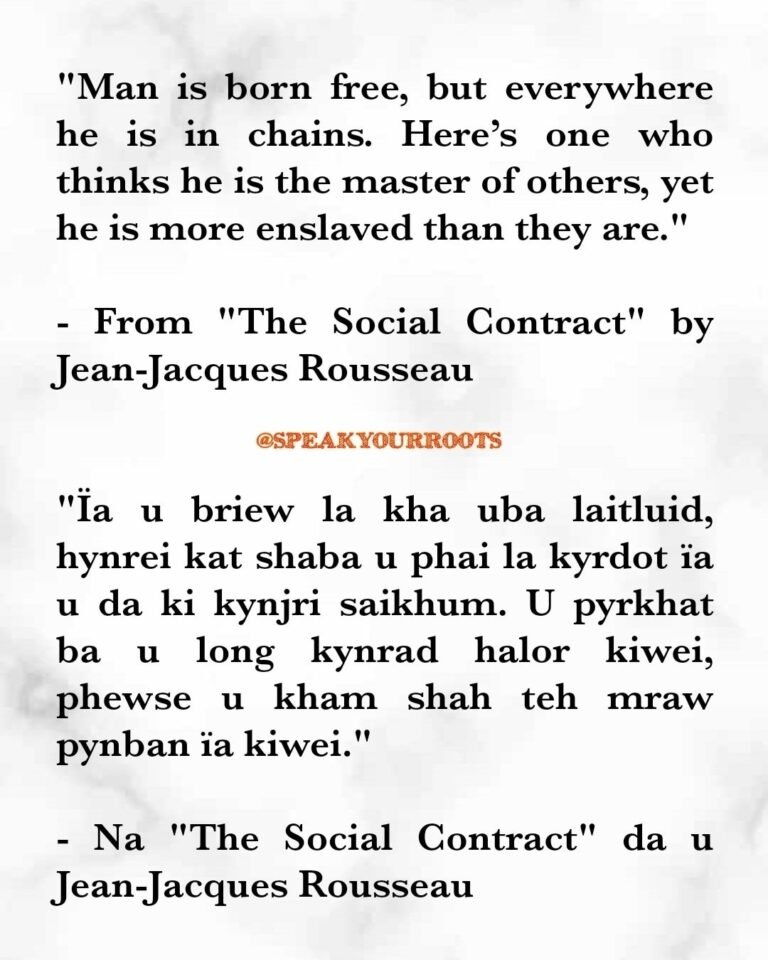
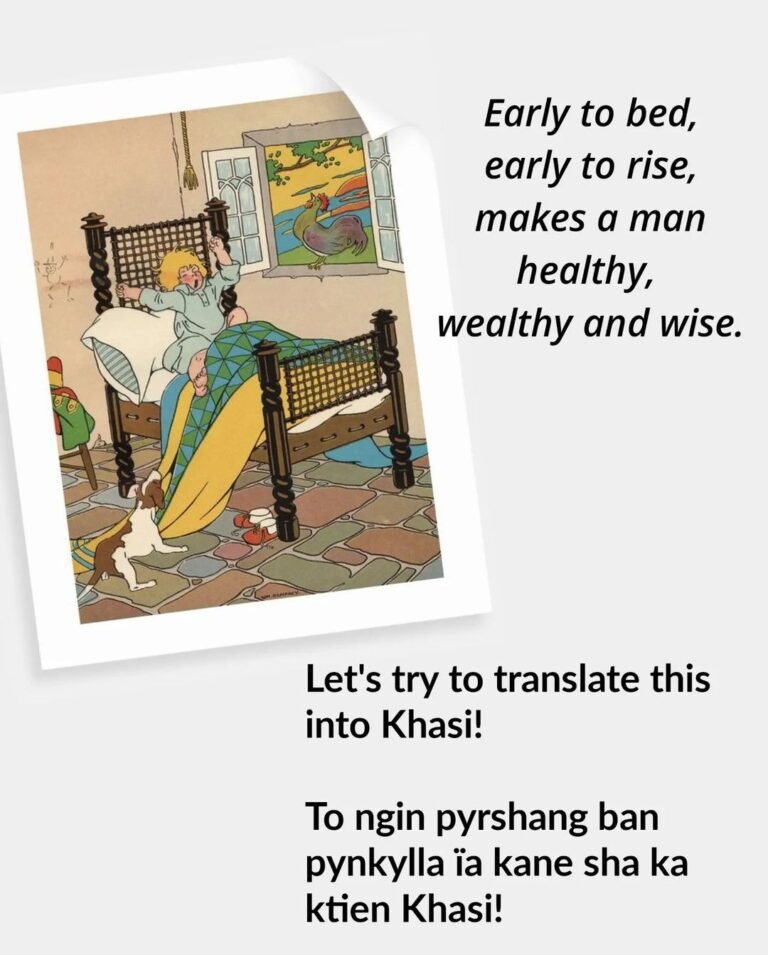
    "Man is born free, but everywhere he is in chains. Here's one who thinks he is the master of others, yet he is more enslaved than they are."

    – From The Social Contract by by Jean-Jacques Rousseau

    "Ïa u briew la kha uba laitluid, hynrei kat shaba u phai la kyrdot ïa u da ki kynjri saikhum. U pyrkhat ba u long kynrad halor kiwei, phewse u kham shah teh mraw pynban ïa kiwei."

    – Na The Social Contract da u Jean-Jacques Rousseau

    Ka kot The Social Contract (1762) ba la thoh da u Jean-Jacques Rousseau ka dei ka kot kaba bha palat lada ngi lah ban pule ïa ka. Kane ka dei kawei na ki kot ka ban ïarap ïa ngi ban sngewthuh kham jylliew ïa ka jingïadei para briew, ka synshar khadar, ka saiñ pyrthei, ka jingnang jingstad, ka ïoh ka kot bad ka imlang sahlang ha ka jingsuk bad jingbha jingmiat. 🗣️🫂👥

    Lada lah ban pynkylla sha ka ktien Khasi kan dei ka sienjam kaban long ka jingïohnong ïa ngi baroh!

    Khublei Shibun @czmylliem ba phi la pynkynmaw ïa kane ka kot 🤗🤗

    The Social Contract (1762) by Jean-Jacques Rousseau is a political piece of writing that serves as a pylon for the democracies of today, as it theorizes the elements of a free state where people agree to coexist with each other under the rules of a common body that represents the general will.

    Jean-Jacques Rousseau was a Genevan philosopher, writer and composer. His political philosophy influenced the progress of the Age of Enlightenment throughout Europe, as well as aspects of the French Revolution and the development of modern political, economic and educational thought.

    🟡 Khasi translation by @speakyourroots

  • United Nations Declaration on the Rights of Indigenous Peoples (UNDRIP) (Khasi translation)

    Sngewbha ñion ha ka link hapoh ba phin lah ban pule ïa KA DULIR UNITED NATIONS HALOR KA HOK KI TRAI MULUK-TRAI JAKA

    https://grassrootshillong.org/publications/

    Ïa ka United Nations Declaration on the Rights of Indigenous Peoples (UNDRIP), ngi dei ban tip bad ban pule bniah bha ïa ka. ✍️🤓

    Khublei Shibun Kong @joypathaw ba phi la phah ïa kane ka jingpynkylla sha ka Khasi lyngba ka sengbhalang @grassrootshillong . Ngi ai khublei bad kitbok kitrwiang ïa ki kam jong phi bad jong ka seng. 👏👏👏

    The United Nations Declaration on the Rights of Indigenous Peoples (UNDRIP) is a legally non-binding resolution passed by the United Nations in 2007. It delineates and defines the individual and collective rights of Indigenous peoples, including their ownership rights to cultural and ceremonial expression, identity, language, employment, health, education, and other issues. Their ownership also extends to the protection of their intellectual and cultural property. The Declaration "emphasizes the rights of Indigenous peoples to maintain and strengthen their own institutions, cultures and traditions, and to pursue their development in keeping with their own needs and aspirations." It "prohibits discrimination against indigenous peoples," and it "promotes their full and effective participation in all matters that concern them and their right to remain distinct and to pursue their own visions of economic and social development".

    The goal of the declaration is to encourage countries to work alongside indigenous peoples to solve global issues, such as development, multicultural democracy, and decentralization.

    On Thursday, September 13, 2007, the United Nations voted by a vast majority of 144 in favor (4 against, 11 abstained) of the Declaration.

    Source: https://en.m.wikipedia.org/wiki/Declaration_on_the_Rights_of_Indigenous_Peoples

  • Kynmaw

    How do I explain the word? "Ka ktien".

    Say it. Out loud. Ka ktien. The first, a short, sharp thrust of air from the back of your throat. The second, a lift of the tongue and a delicate tangle of tip and teeth.

    For I mean not what's bound by paper. Once printed, the word is feeble and carries little power. It wrestles with ink and typography and margins, struggling to be what it was originally. Spoken. Unwritten, unrecorded. Old, they say, as the first fire. Free to roam the mountains, circle the heath, and fall as rain.

    We, who had no letters with which to etch our history, have married our words to music, to mantras, that we repeat until lines grow old and wither and fade away. Until they are forgotten and there is silence.

    How do I explain something untraceable? The perfect weapon for a crime. Light as pine dust. Echoing with alibis. Conjuring out of thin air, the ugly, the beautiful, the terrifying.

    Eventually, like all things, it is unfathomable. So, how do I explain?

    Perhaps it's best, as they did in the old days, to tell a story.

    ……………………….

    I was asked recently, what's your favourite word in Khasi? Usually, I find "favourite" questions very difficult–favourite book, song, movie. So many, I reply helplessly, it's impossible to pick just one. But not this time. It came to me easily, immediately, and while there are many delicious words in Khasi (rympei, the hearth; 'lap praw praw, rain on a tin roof), this one is closest to my heart.

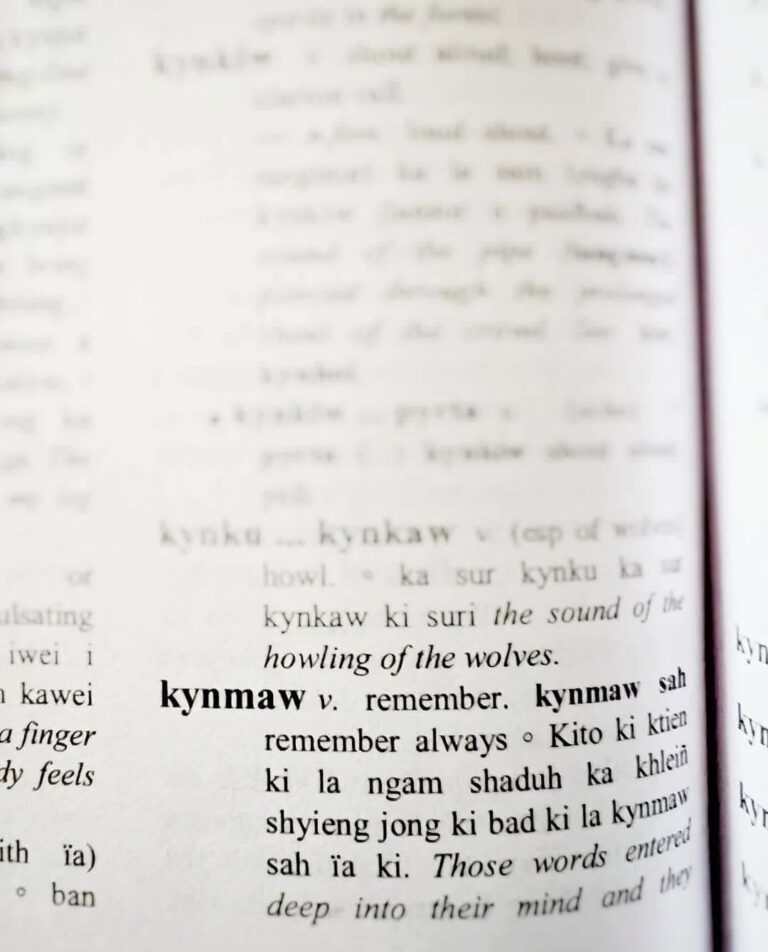
    Kynmaw.

    To remember.

    And not merely because of its rich and resonant meaning, but also because of its etymology. For the longest time, the people of these hills nourished an oral culture–one replete with song and story–and while there were attempts to "give" the languages here a script (using the Bengali alphabet), it was the British missionaries who succeeded. In particular a missionary named Thomas Jones, who travelled to Sohra in 1841, at a time when conversion to Christianity was at its slow beginning. What would help was to disseminate the word of God through the Bible–except how to publish an edition in a scriptless language?

    Today, in Meghalaya, is Thomas Jones Day. And so we remember him. For his diligence and good deeds, of which there were many–how complicated are our colonial histories!–but I choose to remember also how the languages here, at heart, are languages of the wind, the

    mountains, and waterfalls and forests. How they once sprung from land and tongue and remained untethered to page and pen and ink.

    How did we remember? Through song and story, of course, and stone. We computed our histories through stone–choosing to raise monoliths to mark lives and events and relationships. And so even our word for remember-kynmaw–means to "carry like stone". Here, remembering is not taken lightly. It is borne on our backs like stone–unwavering even in the face of (colonial) beliefs that the oral is light and frivolous and inauthentic. The spoken is as much true as the written. When we have no preservatory documents, remembering, to kynmaw, becomes all the more pressing, more important. The spoken does not forget."

    Khublei Shibun @janicepariat for your beautiful and profound thoughts! 🤗❤️🙏

    The era of the spoken word and of Khasi orality is vast, moving in the many sunrises and sunsets of history. This history which is our heritage pleads to be preserved as we move forward.

    As it is the course of things, we were given the Khasi alphabet by Welsh missionary, Rev. Thomas Jones. The Khasi alphabet has brought us to another chapter in Khasi orality, as our stories, teachings and values are transcribed onto paper. Yet as Janice Pariat has asserted, ban kynmaw ka long kaba kongsan, ban kynmaw ka long kaba kumba ngi dei ban long, namar ïa ka ktien la thaw, la shon nyngkong ha ki jylliew ka pyrkhat ka pyrdaiñ; la thaw la shon ïa ka ktien ha ki tyllun u thylliej bad ka shyntur. Kumba ki ong ki longshuwa, ka ktien kaba tam. Ka ktien ka long kaba maïan, ka ktien ka long kaba nylla!

    📸 All photos are from @janicepariat 🙏

  • Ka Dienshonhi

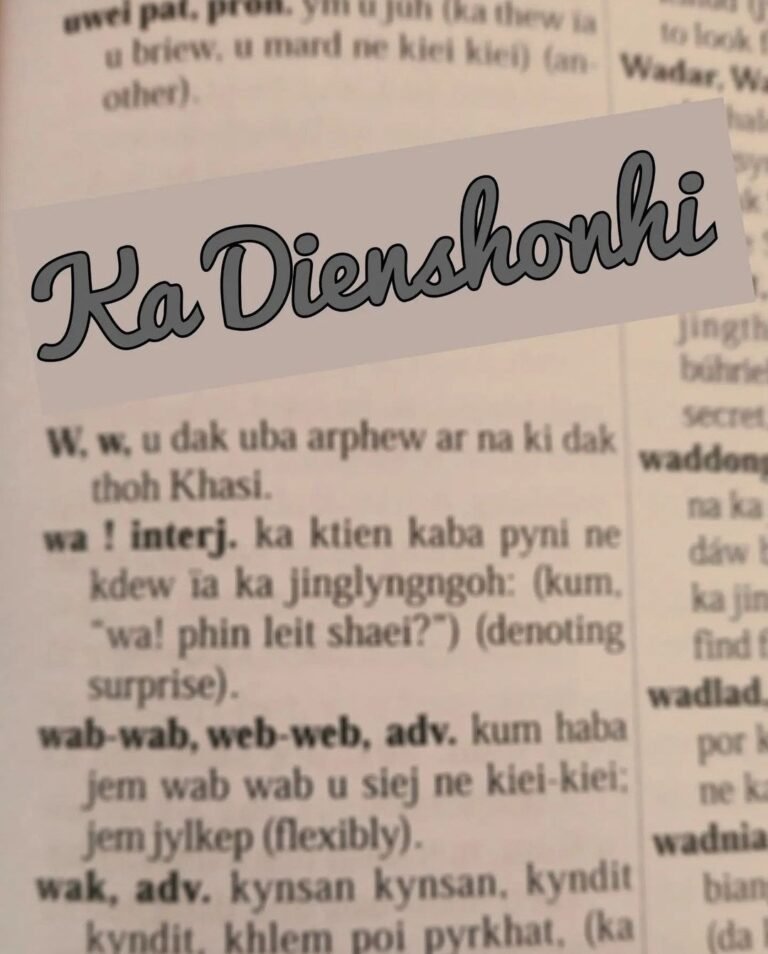
    Ka kyntien "Dienshonhi" ka thew ïa ka "Dak-Thoh-La-Jong". Da lah phiah ïa ka, ka long kumne harum:

    Ka kyntien "Dien" ka mut ïa kano-kano kaba paw haba la ïuh ne kano-kano ka jingpynsah dak ïa kiba bud nadien khnang ba kin lait na ka jingshah ïalam bakla. Ka kyntien “Shon” ka wan na kaba pynskhem ban nym jah ka dien na kaba shim nuksa na ka dien ban dang ïai pynmih dien shuh. Ka kyntien “Hi” ka thew ïa uno-uno ne kano-kano kaba pynmih dien namar kata, ka wan ka ktien “Dien-Shon-Hi”.

    The Khasi word "Dienshonhi" refers to "Dak-Thoh-La-Jong" which may be translated as that which is written by oneself. When it is broken up it means as follows:

    The word "Dien" means something that is seen or formed like a footprint or any other imprint or a sign that is placed to help people not get lost. The word "Shon" means to press down on something to leave a permanent imprint. Thus "shon" will strengthen that which is imprinted, to avoid it being lost. "Shon" will also take the example of the imprint to produce more imprints in the future. The word "Hi" refers to anything or anyone who produces an imprint. Thus, the word "Dien-Shon-Hi" is coined.

    Ka Dienshonhi: The Khasi Encyclopaedic Dictionary by Rev. Dr. Iarington Kharkongngor

    Ka kyntien "Dienshonhi" ka dei ka kyntien kaba la sot bad pynsaiñ dur na laitylli ki kyntien, kita ka "Dien", "Shon" bad "Hi". La pynïamir jingmut ïa kine lai ban long kawei ka kyntien, khnang ban pynshynna ïa ka jingmut jong ka kyntien nongwei kaba long "Dictionary". Namar kata, ngi lah ban ong ba ka kyntien "Dienshonhi" ka long ka kyntien ïamir, ka kyntien saiñ ne kaba ki ong ha ka ktien nongwei "coinage".

    The word "Dienshonhi" is a word that has been coined from three words, that is, "Dien", "Shon" and "Hi". The three words have been blended and brought together to express one meaning, so as to make clear the meaning of the English word "Dictionary". Thus, we can say that the word "Dienshonhi" is a coined word or coinage.

    Coining new words is one sure way for a language to grow! 😃🗣️🗣️📝 Two Khasi words in the post above which have been coined to explain the meaning of the English word "coinage" are 🟢 "kyntien ïamir" and 🟢 "kyntien saiñ".

    #kyntienïamir #kyntiensaiñ

    La ha ka kren ne ka thoh, ngi lah ban pynwandur bad saiñ dur ïa ki kyntien ki ban pynroi bad pynïar ïa ka ktien Khasi 🙏😃🗣️📝

    🟡 Source: Rev. Dr. Ïarington Kharkongor

    🟡 Translation and further elaboration by @speakyourroots

  • English to Khasi translation

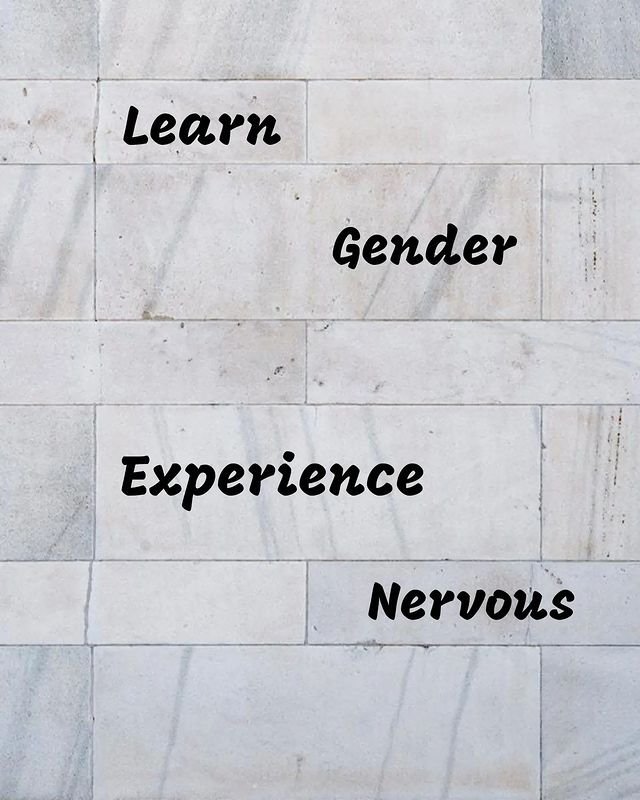
    Gender – Ka jingsngew ba dei kynthei ne ka jingsngew ba dei shynrang, kat kum ka rukom im, ka rukom pyrkhat bad kat kum ki jingngeit bad jinghikai ka iymbriew.

    Experience – Ki jingjia bad jingshem ha ka jingim kiba ai ka jingsngewthuh shaphang ka longbriew manbriew.

    Learn – Ban ksoh ia ka jingtip, ka jingsngewthuh bad ka jingstad.

    Nervous – Ka jingtieng kaba wan bad ka sngew syier bad ka pisa jingmut.

    Lah bun na ki nongbud jong ka page kiba la kylli kumno ban buh ha ka ktien Khasi ïa kine ki kyntien English. 🔡💭 La pyrshang ban pynkylla sha ka ktien Khasi ha ka rukom ban pynwan ïa ka jingmut jong kitei ki kyntien. 😄🙏

    Many followers of the page have asked how to translate these English words. 🔡💭 This is an attempt to place the right Khasi words so as to get the meaning of the words correctly. 😄🙏

    🟡 Khasi translation by @speakyourroots