Blog

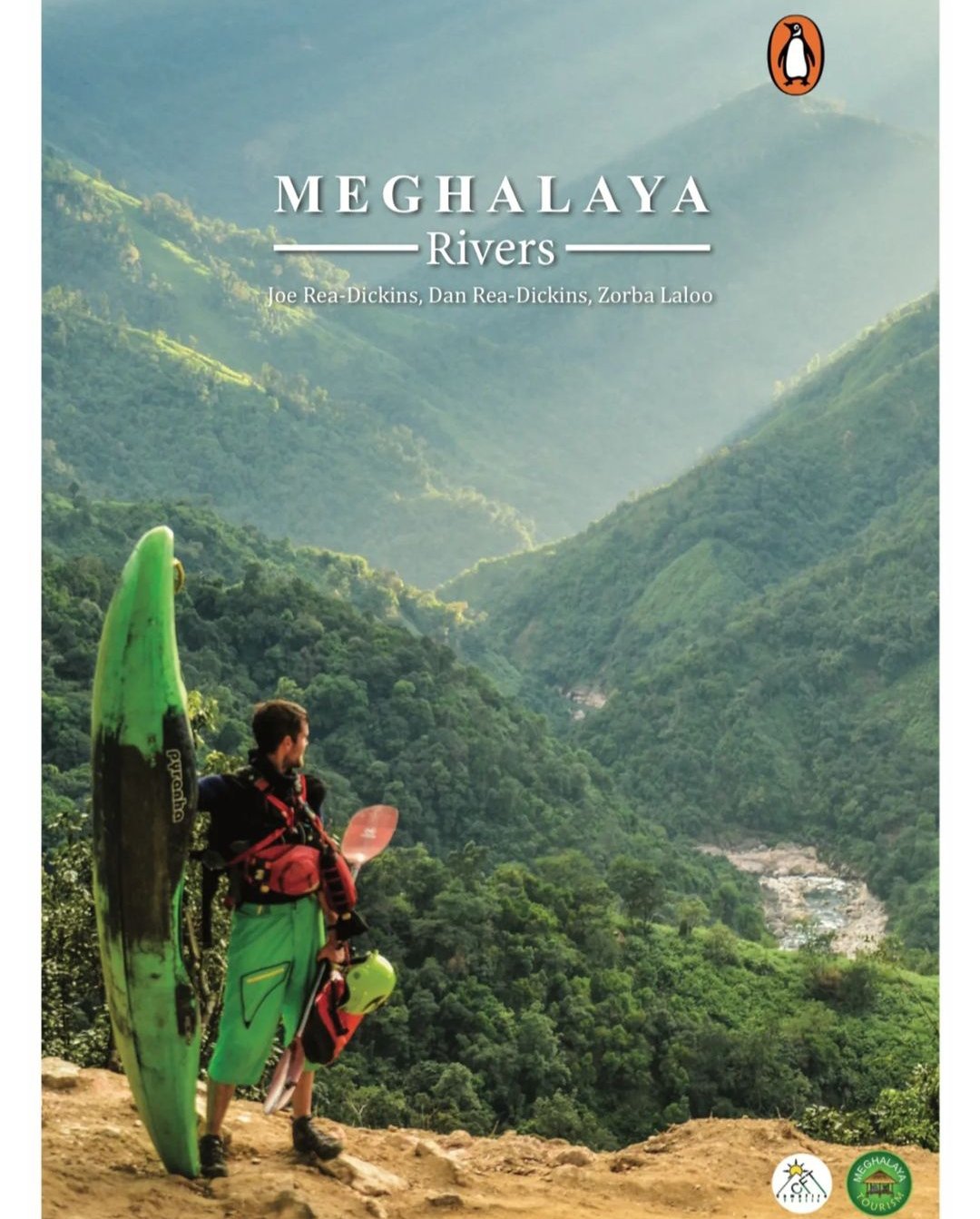
  • Meghalaya Rivers by Joe Rea-Dickins, Dan Rea-Dickins and Zorba Laloo

    'This book does justice to the fabulous find that Meghalaya is for the global whitewater community. This is pretty much the best guidebook I have ever seen and it indeed has lived up to and beyond what I expected with this book.

    -Shalabh Gahlaut, pioneer of Indian whitewater

    'This guidebook is an awesome resource which has put Meghalaya on the whitewater world map. It is colourful, detailed and well-researched – both in content and photos. It is the Lonely Planet for whitewater in Meghalaya!'

    -Anvesh Singh Thapa, Expeditions India.

    'Good river guidebooks are a joy. They excite the reader with the possible, explain and describe the probable. They tell histories, both natural and personal. They inform and entice their readers without giving it all away. This guide to Meghalaya's whitewater satisfies all these prerequisites, and does it in colour with engaging maps too. It's enough to send any whitewater enthusiast to this tropical paddling paradise.

    -Roman Dial, author of Packrafting! An Introduction and How-to Guide

    'The' "must-get" guidebook for anyone going to Meghalaya. This guide is simply the best tool to discover the rivers of this magical whitewater territory that is Meghalaya. Culture, flora, fauna, medical hazards, history and rivers, of course–it is all in there!'

    -Philippe Doux, publisher, Kayak Session magazine

    Praise and Reviews for "Meghalaya Rivers"

    A joy of a guidebook; on the rivers, it tells you just enough so as to leave you that feeling of exploring and off the rivers, it answers the questions you will want to ask. Add to this anecdotes, descriptions of descents, tales of terror and exhilaration and sections on the botany, geology, geography, wildlife and culture folktales of Meghalaya and you have the complete works.'

    -Dave Manby, pioneer of whitewater exploration

    'Much more than just your typical kayak guidebook: an immersion in Indian culture with many interesting and useful facts both on and off the river. These three individuals have worked very hard finding and documenting these river gems. The knowledge they have in the area is unmatched by anyone and I am stoked to see all their work put together in this epic guidebook of Meghalaya.'

    -Aniol Serrasolses, 2016 kayak world champion

    Author Profile: Zorba Laloo

    After his studies in Shillong and Darjeeling, Zorba worked with independent documentary film-makers for the BBC, National Geographic, and other leading Indian and European television. He was researcher and cameraman for the "Darjeeling Himalayan Railway", a documentary that received an award from the Royal Television Society, UK, in 2010. As a crew member for the Swiss-owned expedition company Ribexpeditions, he completed several source-to-sea expeditions under the tutelage of seasoned leaders. Inspired by rivers, he started paddling in Meghalaya and Northeast India with friends for sport and exploration. They were the first in India, and among the first in Asia, to start using packrafts. In 2012, he received the 'Golden Paddle Award' from the American Packrafting Association for his contribution in promoting paddlesports and river conservation. Disappointed by the lack of opportunities for students to experience the outdoors in Meghalaya, Zorba co-founded Campfire Trails, which has, to date, catered to almost 2000 students. Campfire Trails also works closely with villages to help design and develop sustainable eco-rural tourism projects, for which, it received the NEDFi Award for social entrepreneurship in 2015.

    Author Profile:

    Dan Rea-Dickins Dan has worked as a river guide in Scotland, Kenya, Uganda, Iceland and Switzerland. He has some notable descents to his name, the first and only descent of Charnia Falls in Kenya, being a safety kayaker and photographer for the first commercial rafting descent of the Murchison section of the White Nile and he also crossed Iceland by traversing the Vatnajökull glacier and packrafting the Jökulsá á Fjöllum river. Dan achieved all of this in between seasons in India. He has now shifted his focus and is training to be a paramedic in Liverpool, enjoying regular laps on the rivers of North Wales during his time off.

    Author Profile:

    Joe Rea-Dickins At age eighteen, Joe headed to India to work as a journalist for the New Indian Express, and with that his love affair with India began. After a second gap year, Joe moved to Aberystwyth, a secluded Welsh town to study international politics. In his second year of studies he was selected for the British Universities Kayak Expedition team and travelled to Venezuela for his first taste of expedition kayaking. In the years since graduating from university, Joe has spent almost as much time in South Asia as he has in Europe. Joe has raised money for women's education in Northern Pakistan through the release of two British-made kayak films "High" and "Too High'. He has worked in Delhi as a video editor for the Outdoor Journal, India's first international active-lifestyle and adventure magazine. Joe shot, edited and directed "The All India Kayak Expedition", a six-month rolling expedition to explore many un-paddled rivers in India. In 2016, Joe was part of a team that kayaked the Panjshir river in Afghanistan. They paddled around 130 km of whitewater and since the trip, he has raised awareness about the unique and often-misunderstood region. Now in the UK, Joe runs an aerial-photography business while formulating grand plans for more exploratory trips to far-flung locations.

    About the book:

    East India is the small culturally rich hill state of Meghalaya. Meghalaya receives the heaviest rainfall anywhere on Earth and all this water creates rivers that are some of the steepest and most powerful on the planet. Its rivers are steeped in a folklore that was shared over campfires and hearths back in a time when its people had no written word. These rivers are the bedrock of folklore and are surrounded by diverse natural beauty. This wild frontier has recently caught the attention of whitewater paddlers from all over the world. Six years of research by international and local paddlers has culminated into this one-of-a-kind book. More than just a guidebook, Meghalaya Rivers shares previously unpublished folk stories, personal accounts from river descents, detailed maps, insights into the unique culture, history, flora, fauna, environment and geography of this enchanting part of the globe. Not only is this book full of breathtaking photography from some of the most difficult-to-reach corners of Meghalaya, it is also packed with all the information needed to take you to these wild places. Now all you need to do is go and see them for yourself.

    "Meghalaya Rivers" (2018) is a valuable book that everyone of us should have! 🏞️

    Khublei Shibun @z.meghalaya for sending this! 😄🙏

    Ki um ki wah ka ri Khasi ki long ki jingai ba kordor bad ba kyrhai jong ka mariang kiba la pynphuh bad pynim ïa ka jymbriew, ki riti ki dustur, ki khanatang, ki khanaparom bad ka rukom im jong ka jaitbynriew hi baroh kawei.

    Ki dei ki kot kum ka "Meghalaya Rivers" kiba la pyni sha ka pyrthei ïa ka jingriewspah jong ka mariang ha ka ri Khasi. Ki dei kine ki thied jingim kiba ngi dei ban ri ban sumar na ka bynta ka mynta bad ka lawei ruh kumjuh. Kumba la lam lynti ha ka kot, ngi dei ban sngewthuh ïa ka jingkynsai jong ki um ki wah jong ngi. Ka shong ha ngi ban pyrshang katba lah ban pynman pynneh ïa ki ym tang kum ki jingitynnad jong ka mariang, hynrei kum ki jingmyntoi kiban kyrshan ïa ki shnong ki thaw ha kiba kine ki wah ki tuid.
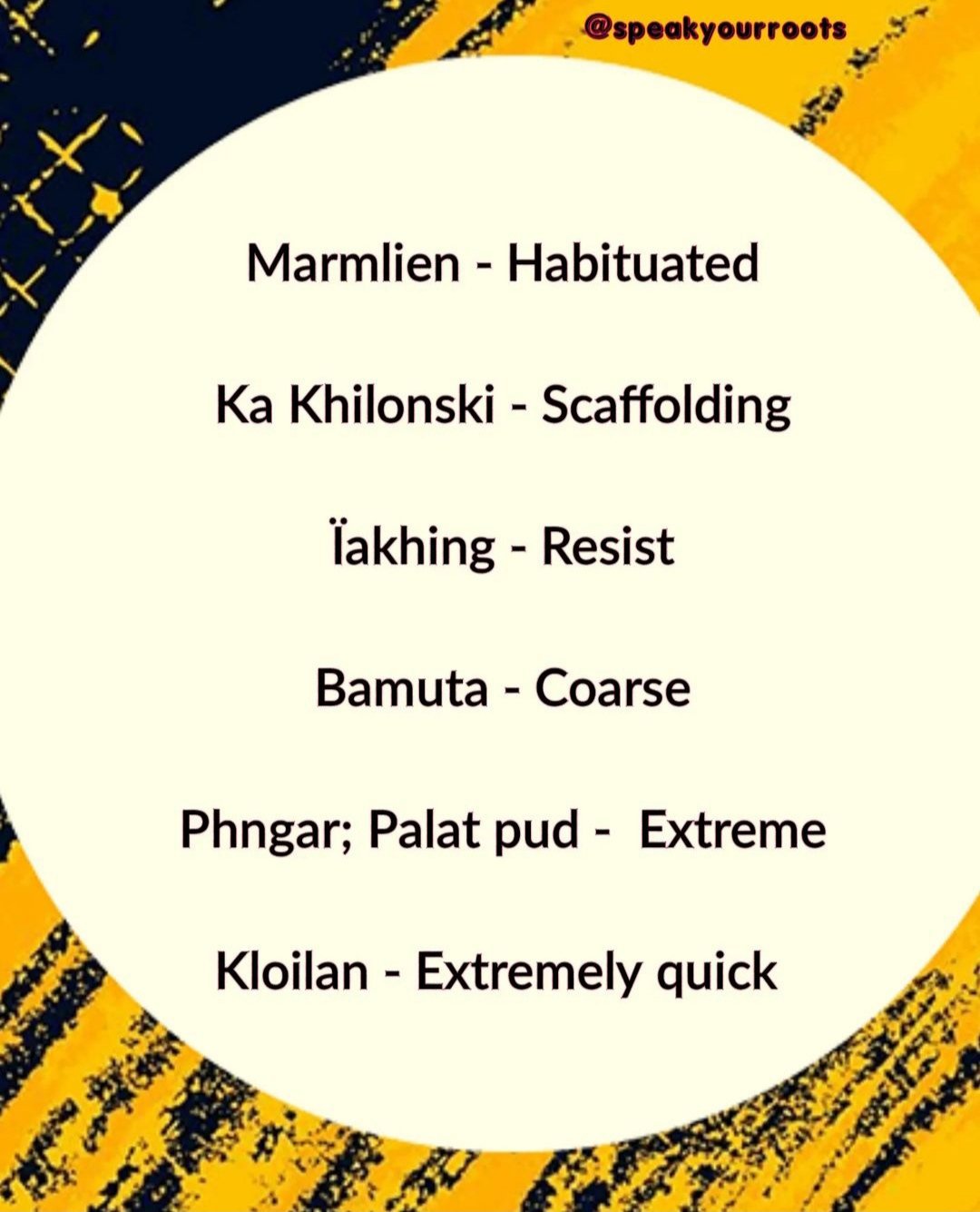
  • Khasi Words and their English equivalents

    Marmlien – Habituated

    Ka Khilonski – Scaffolding

    Ïakhing – Resist

    Bamuta – Coarse

    Phngar; Palat pud – Extreme

    Kloilan – Extremely quick

    Another list to remind us of Khasi words which we might not be using anymore. ✒️🗣️

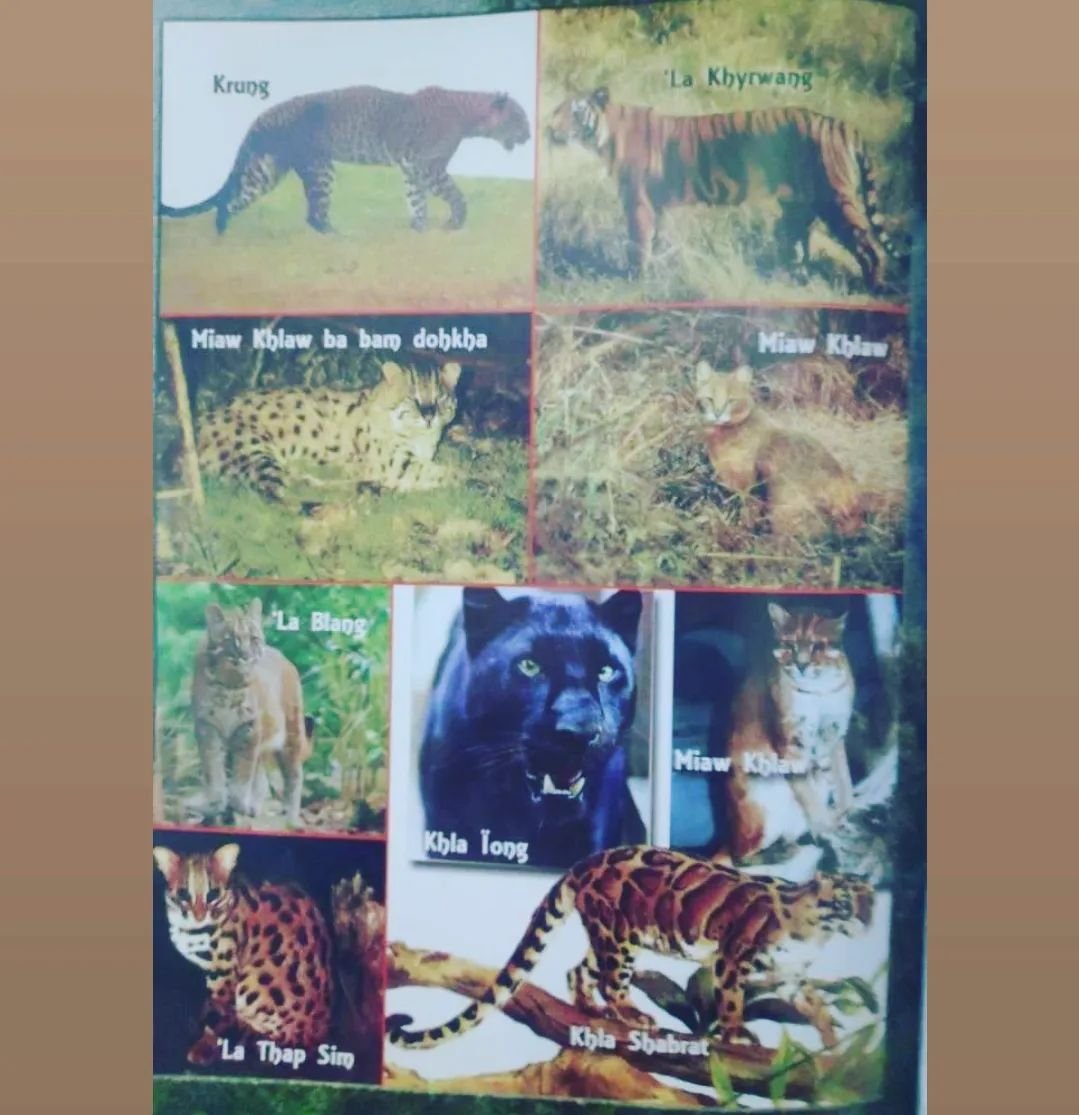
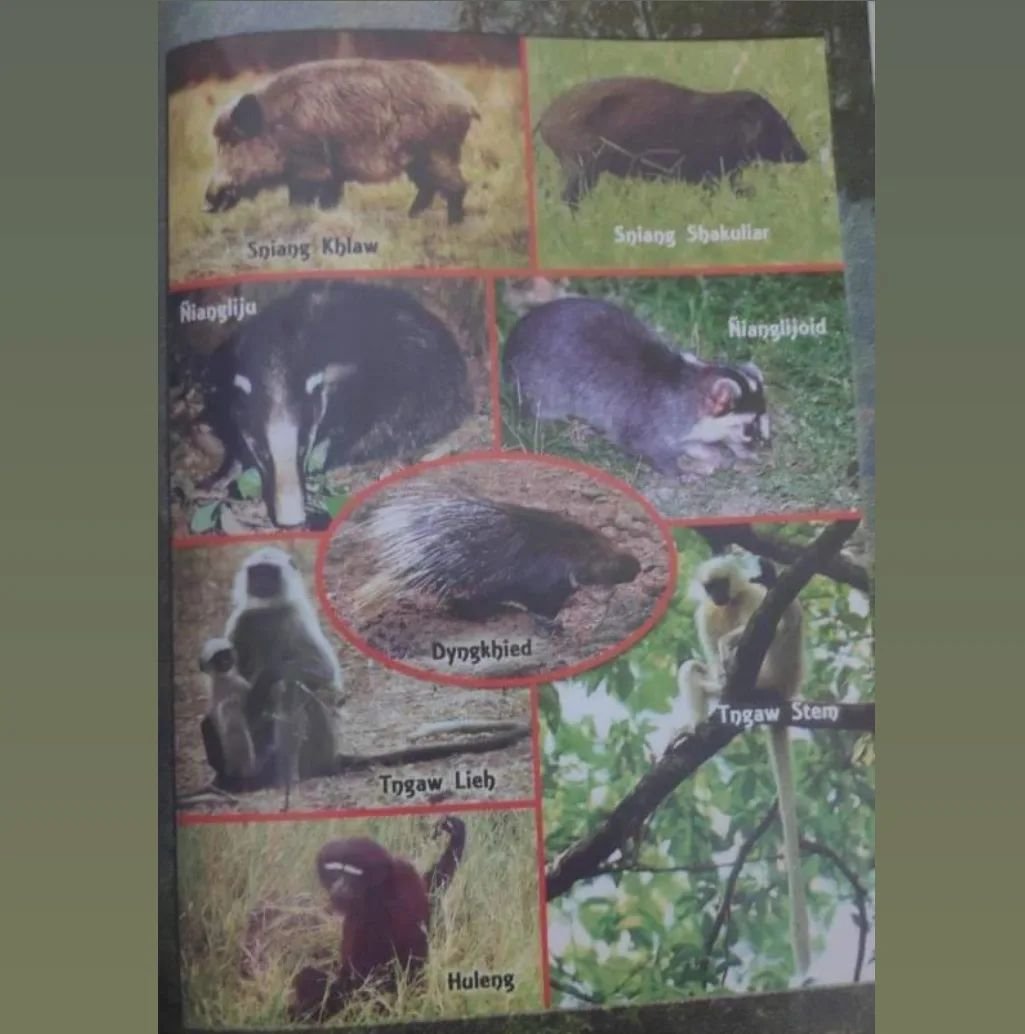
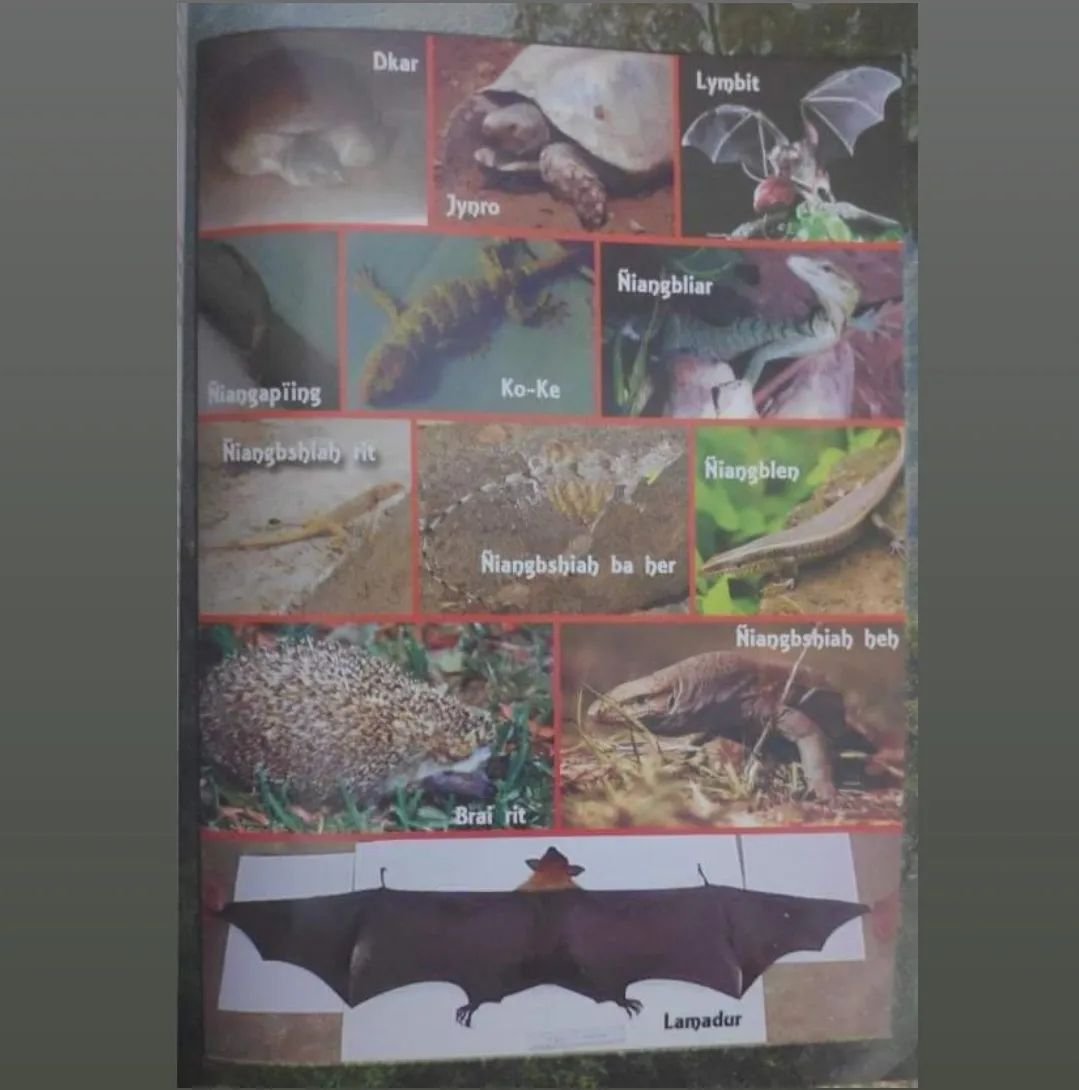
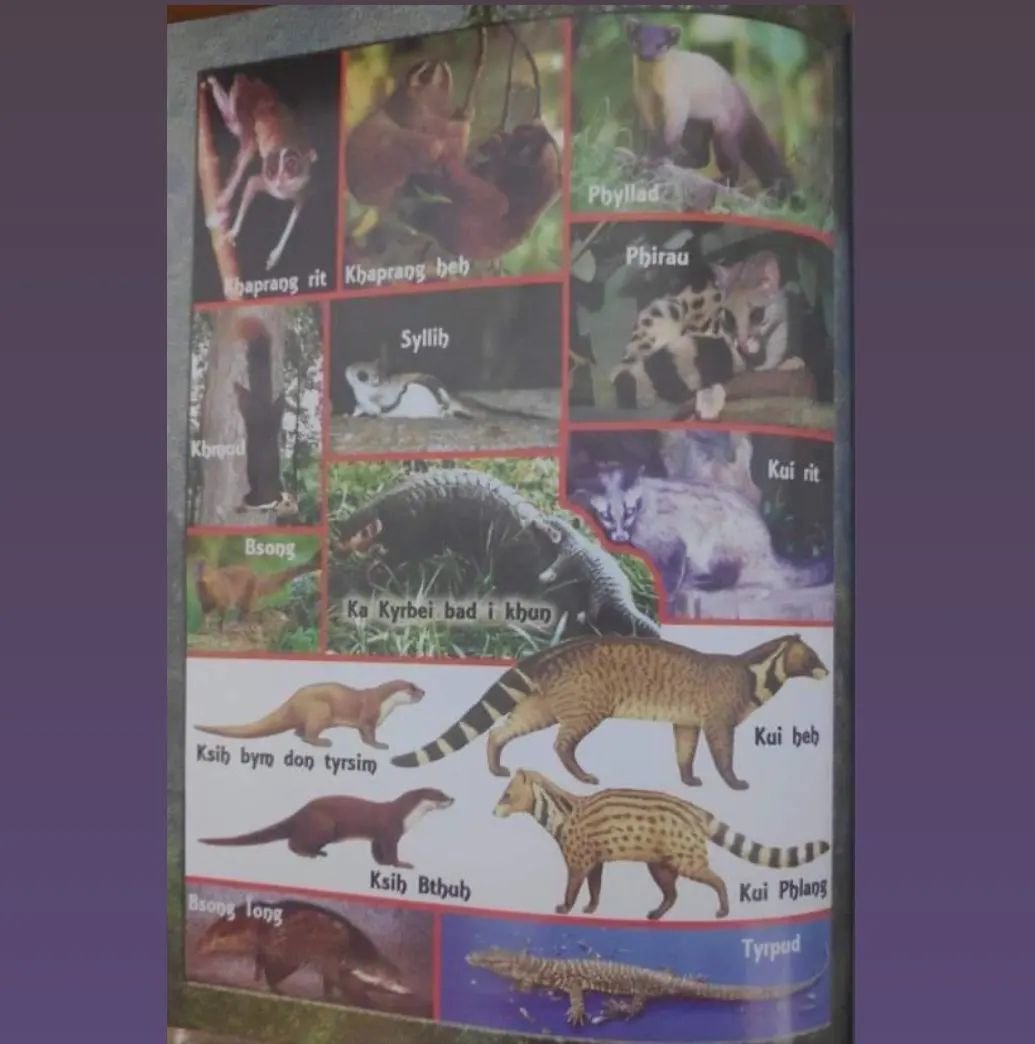
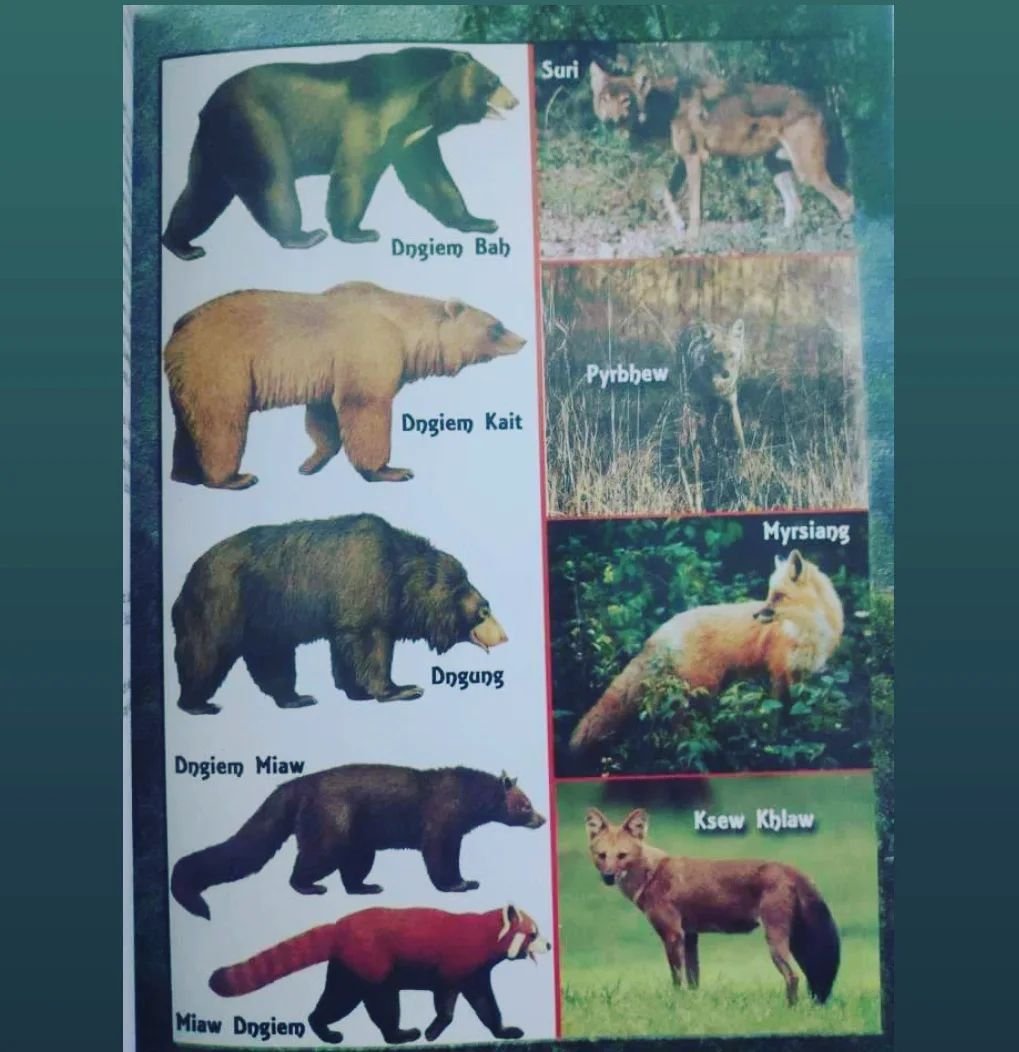
  • Different animal names in Khasi

    Different Khasi animal names sent by @ecology_boi 🐯🦊🐵

    These pictures are from the book "Ki Mrad Khlaw ka Meghalaya" by Shining Star Laloo. Khublei Shibun for sending these pictures! 🙏😀

    If you know the English names of the animals please mention them in the comments section!

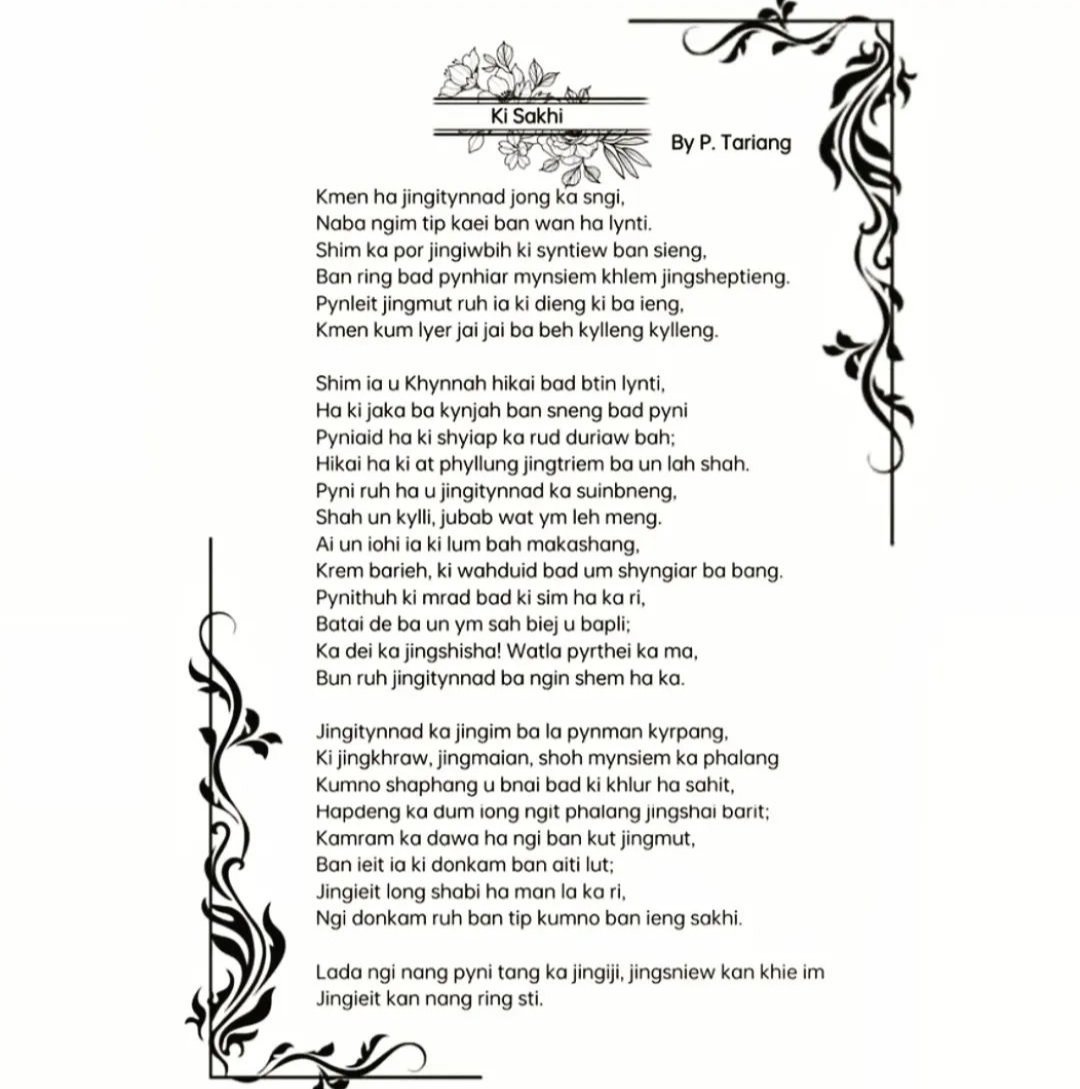
  • Ki Sakhi by P. Tariang

    Kmen ha jingitynnad jong ka sngi,

    Naba ngim tip kaei ban wan ha lynti.

    Shim ka por jingiwbih ki syntiew ban sieng,

    Ban ring bad pynhiar mynsiem khlem jingsheptieng.

    Pynleit jingmut ruh ia ki ding ki ba ieng,

    Kmen kum lyer jai jai ba beh kylleng kylleng.

    Shim ia u khynnah hikai bad btin lynti,

    Ha ki jaka ba kynjah ban sneng bad pyni

    Pyniaid ha ki shyiap ka rud duriaw bah:

    Hikai ha ki at phyllung jingtriem ba un lah shah.

    Pyni ruh ha u jingitynnad ka suiñbneng,

    Shah un kylli, jubab wat ym leh meng.

    Ai un iohi ia ki lum bah makashang,

    Krem barieh, ki wahduid bad um shyngiar ba bang.

    Pynithuh ki mrad bad ki sim ha ka ri,

    Batai de ba un ym sah biej u bapli:

    Ka dei ka jingshisha! Watla pyrthei ka ma,

    Bun ruh jingitynnad ba ngin shem ha ka.

    Jingitynnad ka jingim ba la pynman kyrpang,

    Ki jingkhraw, jingmaian, shoh mynsiem ka phalang

    Kumno shaphang u bnai bad ki khlur ha sahit,

    Hapdeng ka dum iong ngit phalang jingshai barit;

    Kamram ka dawa ha ngi ban kut jingmut,

    Ban ieit ia ki donkam ban aiti lut;

    Jingieit long shabi ha man la ka ri,

    Ngi donkam ruh ban tip kumno ban ieng sakhi.

    Lada ngi nang pyni tang ka jingijli, jingsniew kan khie im,

    Jingieit kan nang ring sti.

    – P. Tariang

    "Ki Sakhi" is an original Khasi poem by @the_dark_linen_ ✒️🏞️🌲

    Khublei Shibun for sending your poem! 😀🙏 Ka long kaba kit jingmut bha bad kaba don jinghikai.

  • The Dialect of Raid Narleiñ, Ri Bhoi District

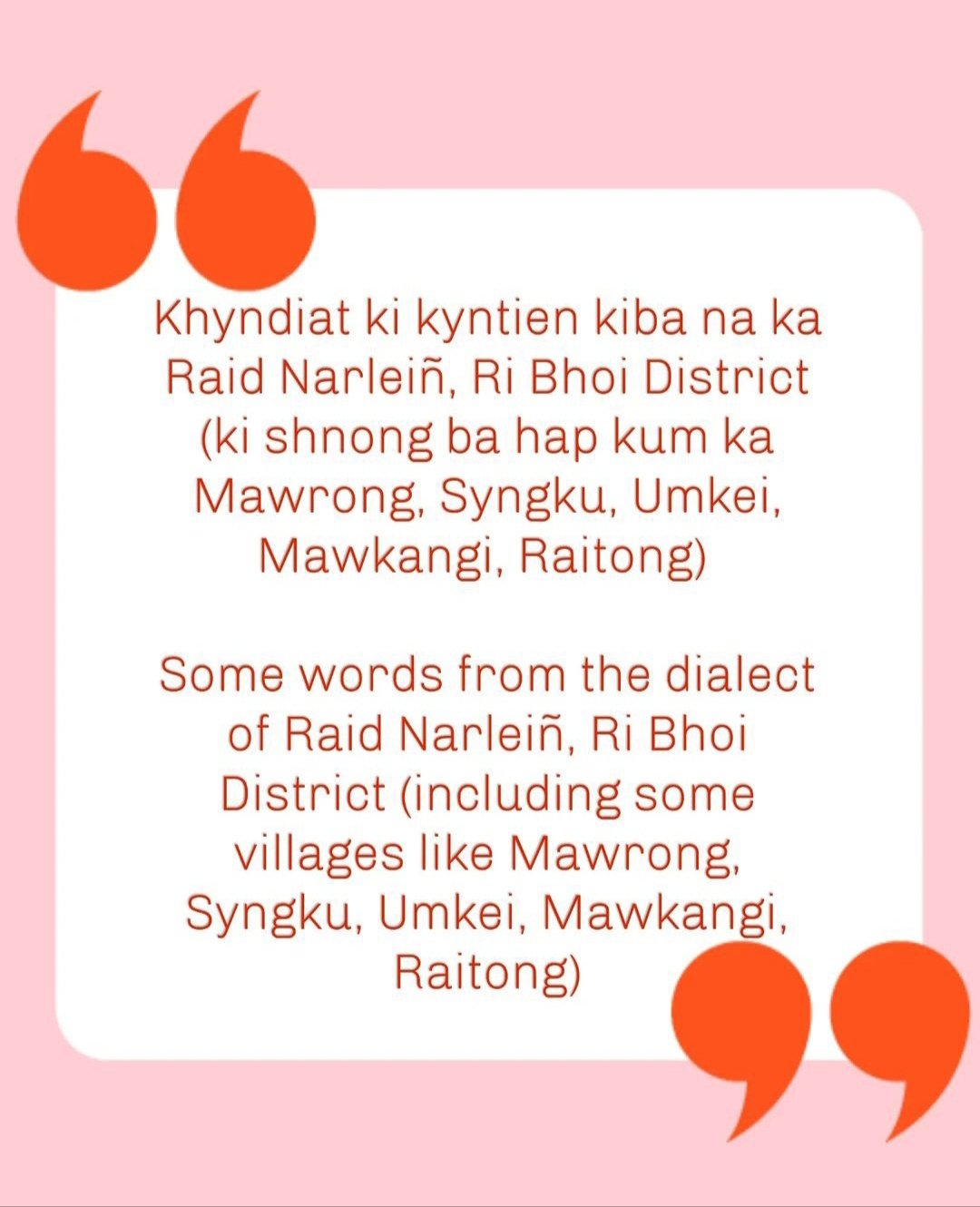
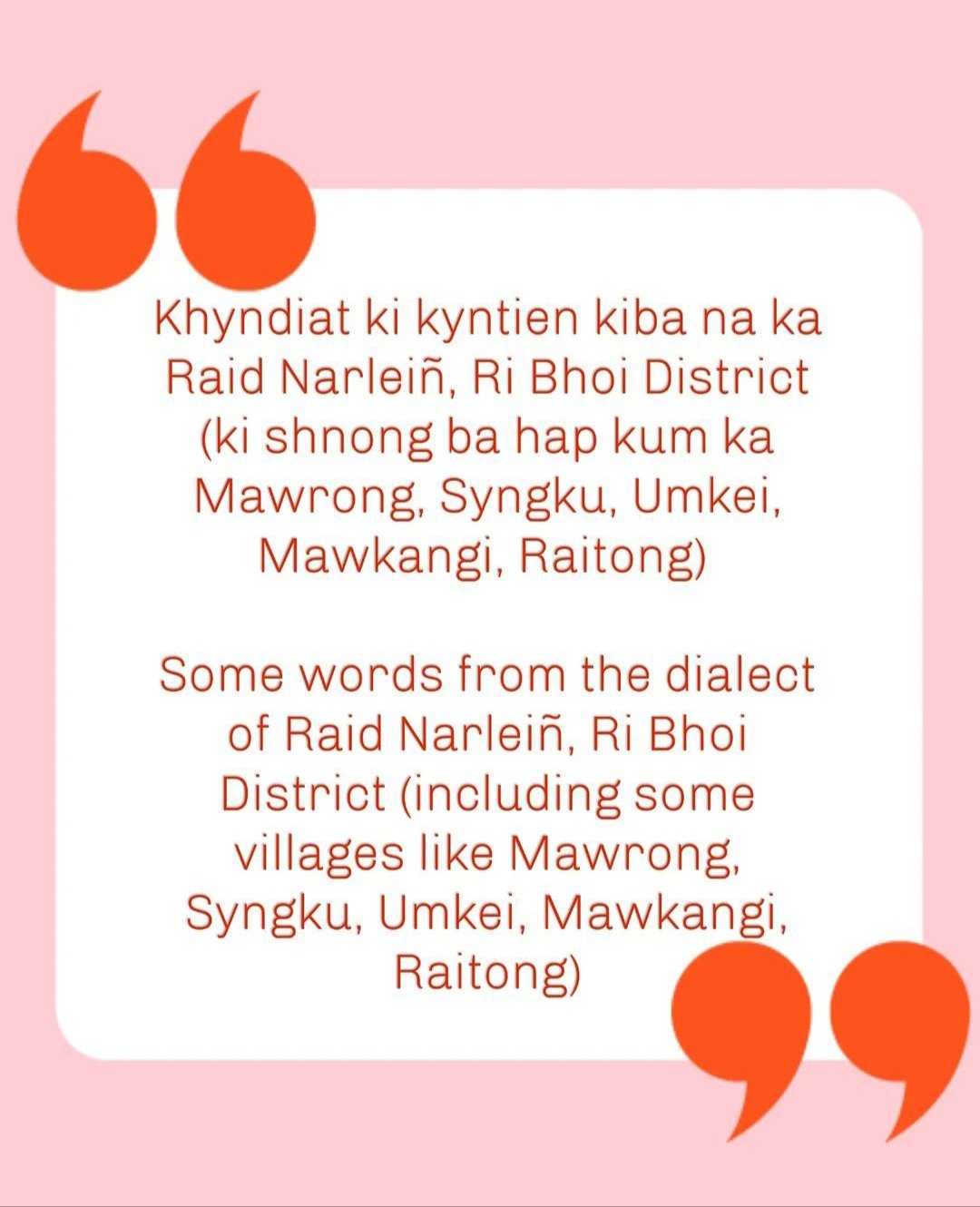
    Kine ki dei khyndiat ki kyntien kiba na ka Raid Narleiñ, Ri Bhoi District (Ki shnong ba hap kum ka Mawrong, Syngku, Umkei, Mawkangi, Raitong)

    Here are some words from the dialect of Raid Narleiñ, Ri Bhoi District (including some villages like Mawrong, Syngku, Umkei, Mawkangi, Raitong)

    Khñiem – Shitom ne pang (ill, sick)

    Jam – Pang (in pain)

    Khyññiet – Kyndit (in shock)

    Pyrtij – Kyrteng (name)

    Kyrkaw – Pyrta (call out a name/ shout out)

    Siah – U synsar/ ba sar (broom stick/ to sweep)

    Synrum – Ki jaboh/ ñuit (waste material)

    Mynchem/ Phyndwar – Phyllaw (lawn)

    Chynraiñ – Sngiew phieng ne tieng burom (awe/ respect)

    Mynraiñ – Lehraiñ (ashamed)

    Ba leh ba leh ba – Da kumno kumno ruh (whatever the situation)

    Jyrnep, Jyrnait – Jaboh (dirty)

    Luia – Jaituh (lazy)

    Syriaw, Jaknar – Jaituh and Lehsih (lazy and dirty)

    Sker – Tiar (solid things)

    Tadap – Ba lah jot/ bym ler/ bym long shuh (old, useless, torn, low quality thing)

    Pukai – Na ka bynta (in favour of)

    Tngam – Khriat (feeling cold)

    Tyrlan – Pjah (cold)

    Khyrngu – Rnga (Charcoal)

    Pharap – Kyrkieh (in a hurry/rush)

    Myrlin – Klet (forget)

    Here are some words from the dialect of Raid Narleiñ, Ri Bhoi District sent by @phiba_makdoh 😃👍 Khublei Shibun for sending these words @phiba_makdoh 🙏🏞️😄

  • U Wer

    Gertrude says:
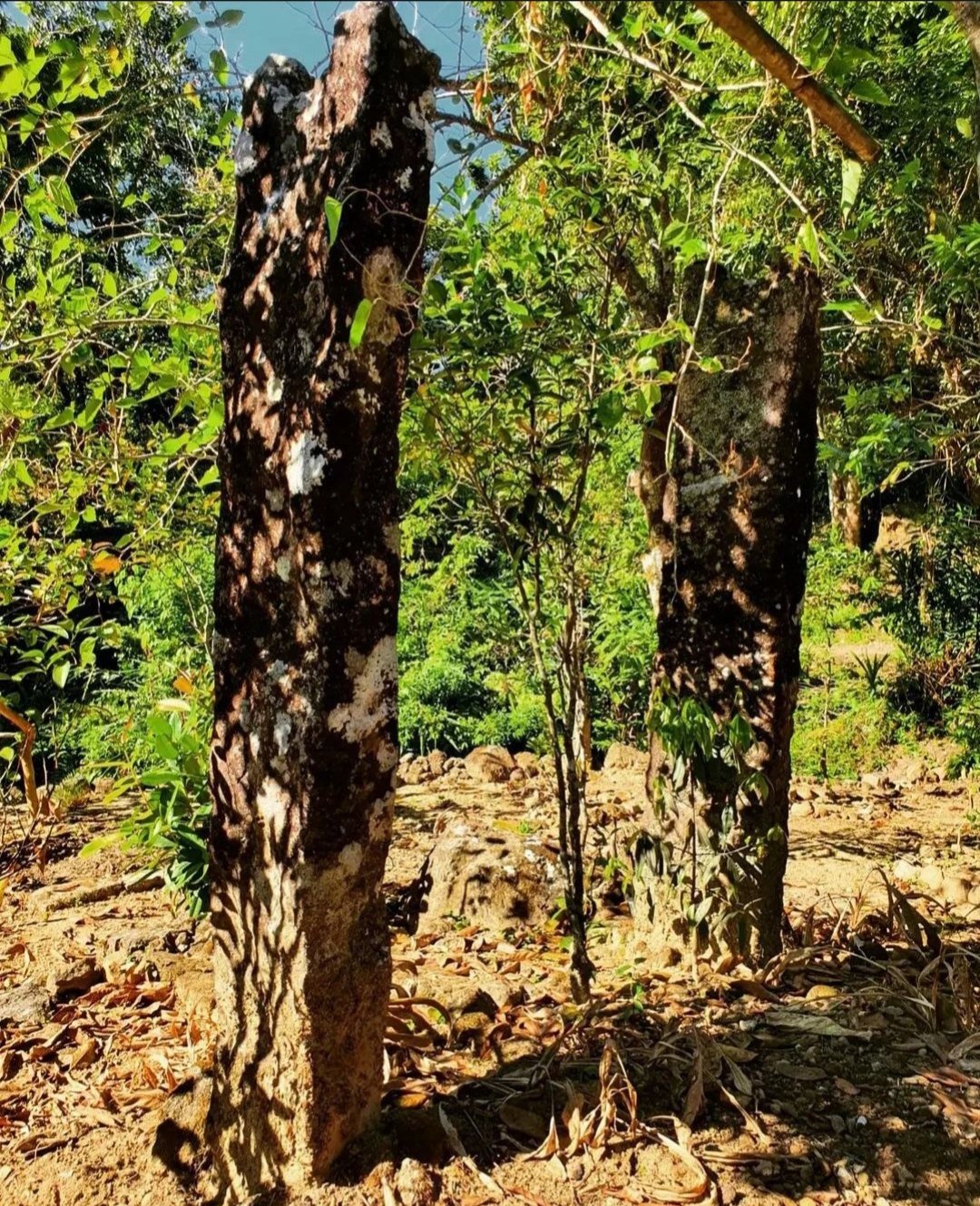
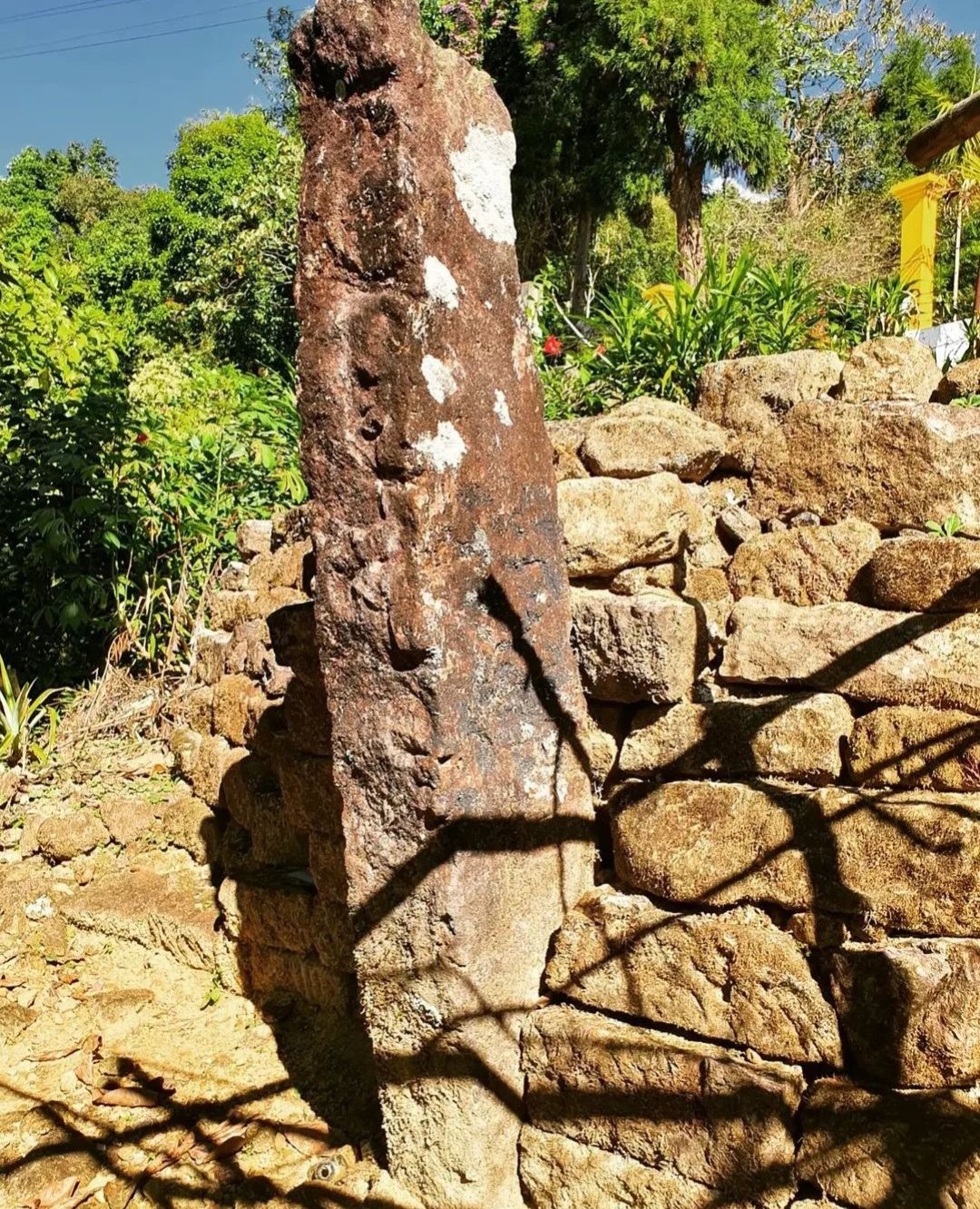
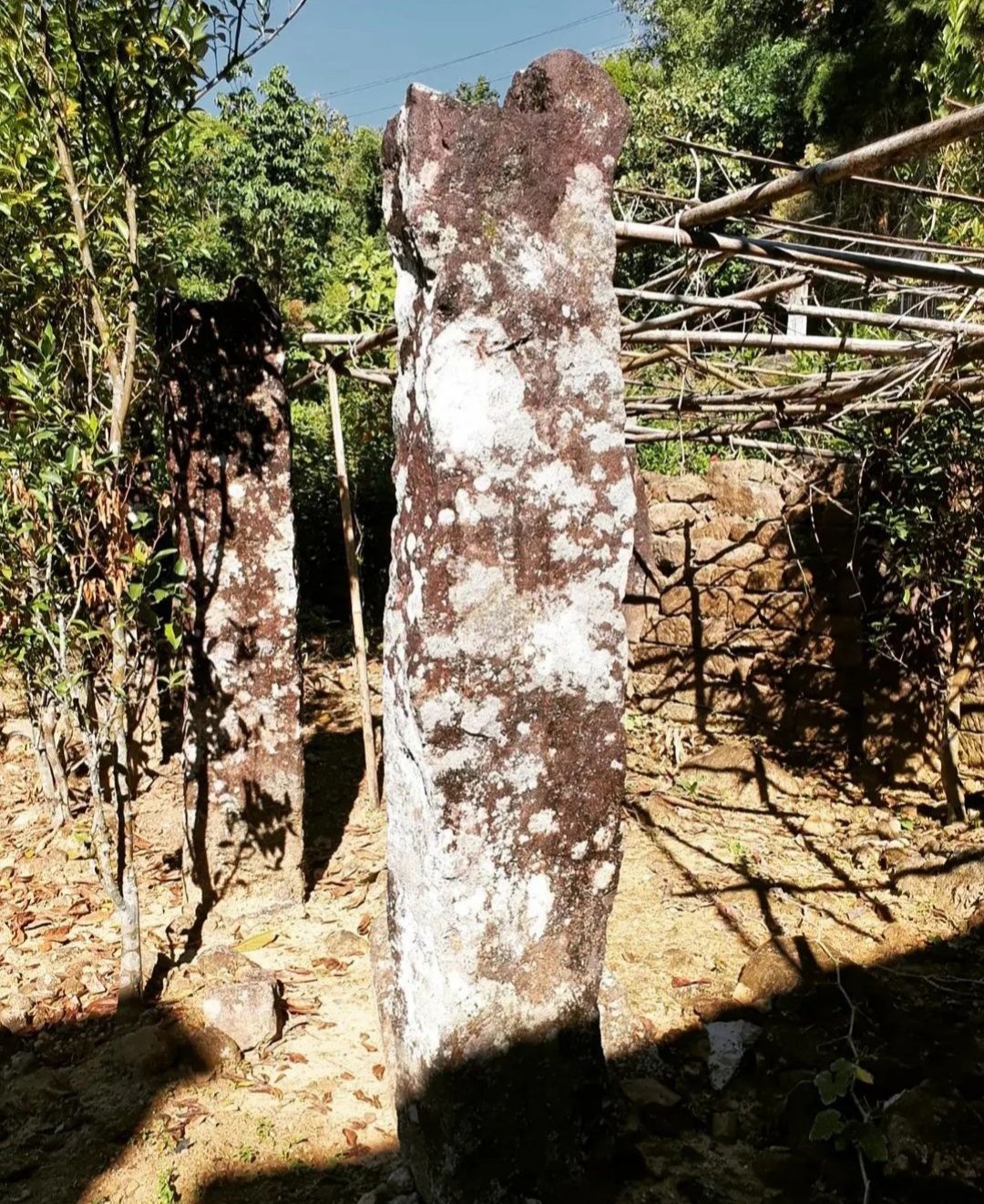
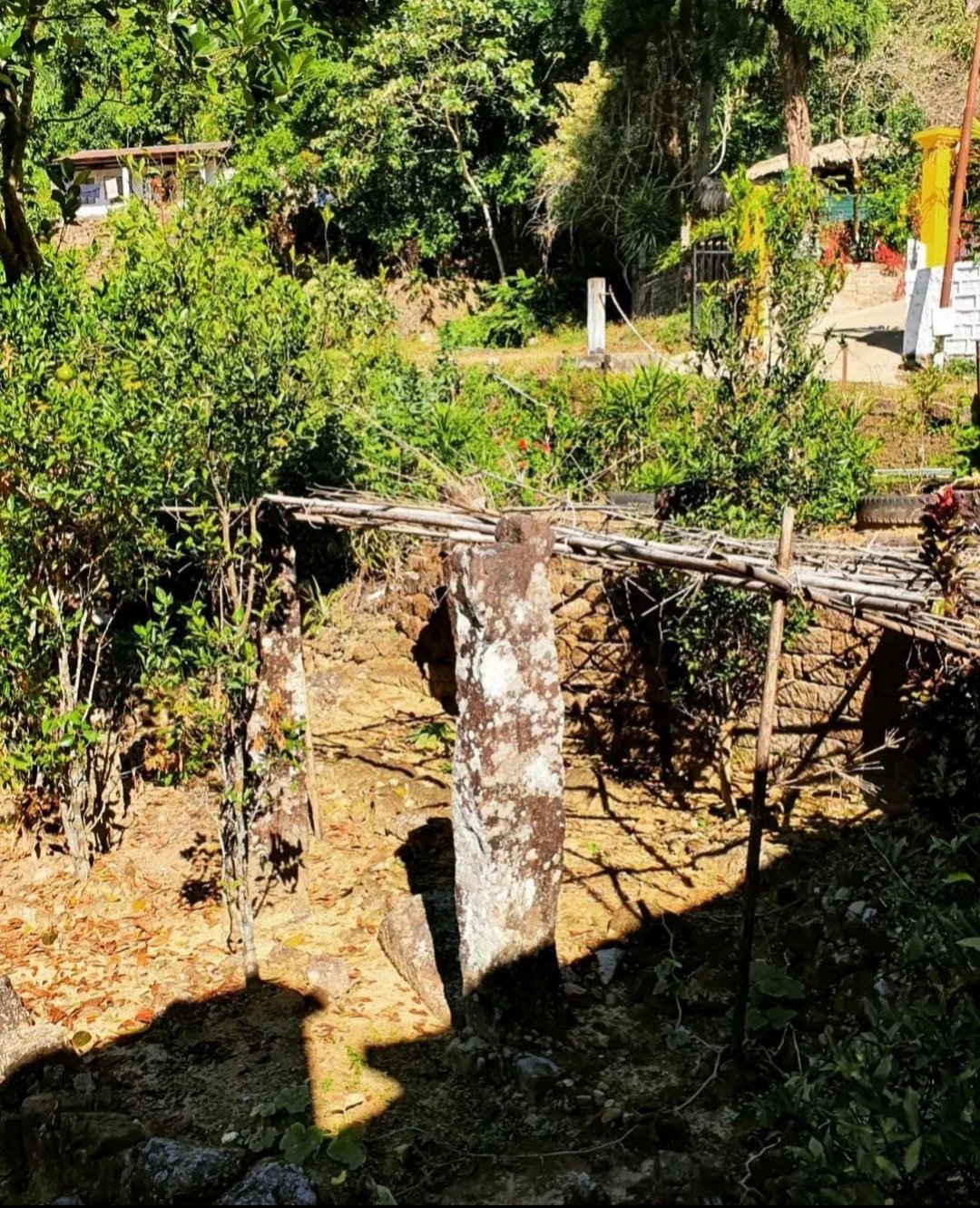
    "U Wer" is remembered by many for his strength, often measured by his ability to carry weighted and bulky materials on his back. He was the person who singlehandedly carved out these 10 feet long stones from a "mawsiang" (boulder), transported them to the village and made "mawthnah’' or foundation stones out of them for a friend's house.

    One of my informants recall him generously uprooting an entire tree from the forest ground for her when she mentioned to him that she needed wood. Another elderly informant said that he once held a barge in place with his hands and stopped it from leaving the shores of Tharia when a friend of his who wanted to board the vessel had not reached the river.

    What people recall most fondly are however the series of jibes "U Wer" casted on authority figures. He was once meddled by a few Border Security Force personnel for carrying a traditional hunting gun. Instead of surrendering, the man readily pointed the gun at them and laughed hysterically that they got deeply uncomfortable and decided to leave him be.

    Another occasion in which he presented his recalcitrant and mischievous self was when he was caught killing fishes in the "Nur Bah" (now commonly known as Wah Rew) with his beloved gun. The person who reported him was the Manager of the Komorrah Limestone Mining Company Limited, which has its factory downstream. Again, the BSF staff came to the scene only to be given the argument by "U Wer" that it was in fact the Manager who taught him, an ignorant and illiterate man, how to kill fish in that brutal manner. He elaborated on how it was Company people who had taught the locals to use dynamite and blow up the river mass-killing fish. "U Wer" was ultimately not punished but people told me that the Manager got fired immediately.

    True or not, these stories live in the messy universe of collective memory. And there I hope they stay.

    There are many stories that we hear of, of individuals possessing talent and skill. 💪💪 "U Wer" was a man of great strength and the stones in the pictures are testament to that. Khublei Shibun @gertrudelamare for this! 😄🙏

    📷 Photo credit: @gertrudelamare

  • Ki Sngi Ïew or Khasi Market Days by Farlando Diengdoh

    Ki Sngi Їew

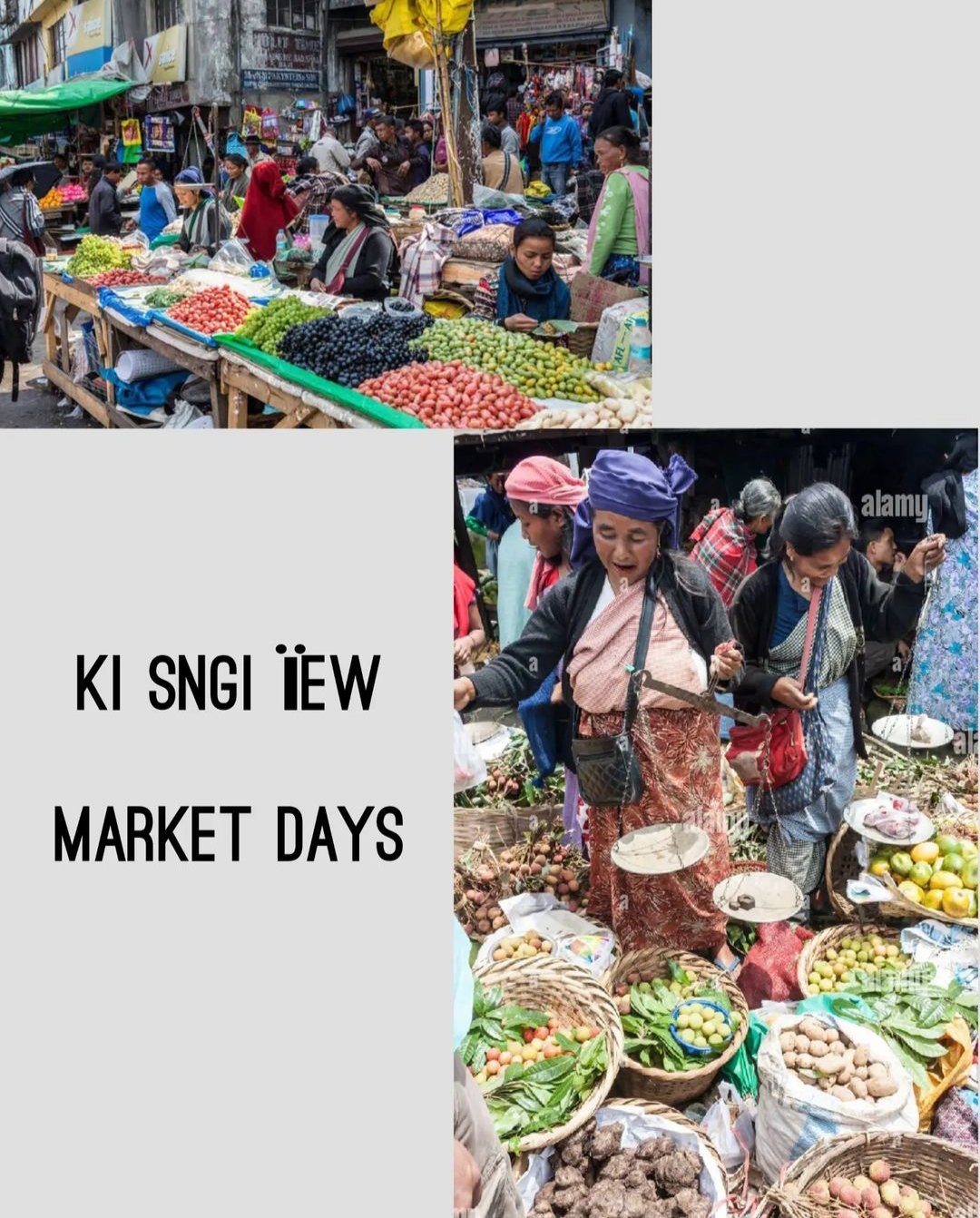
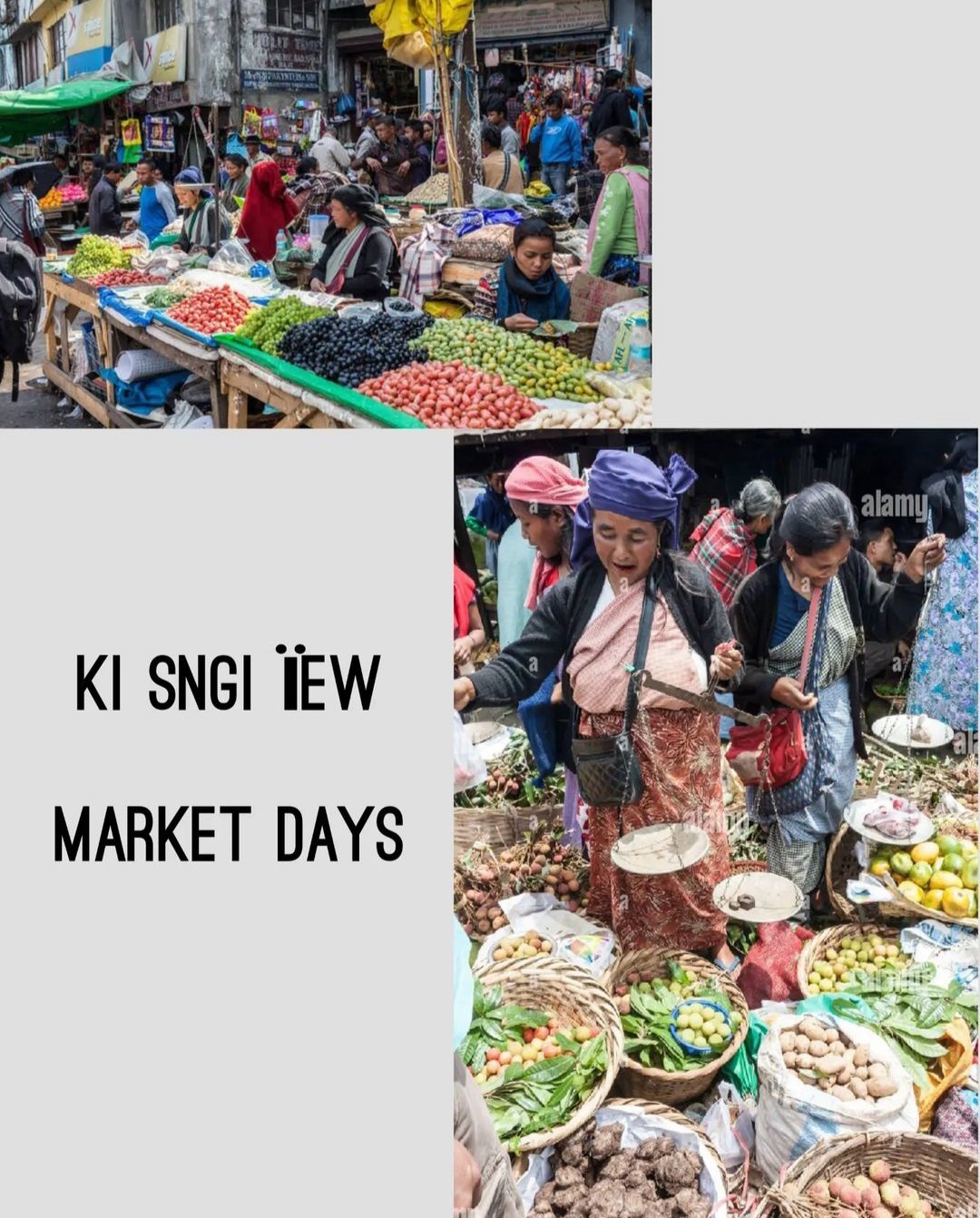
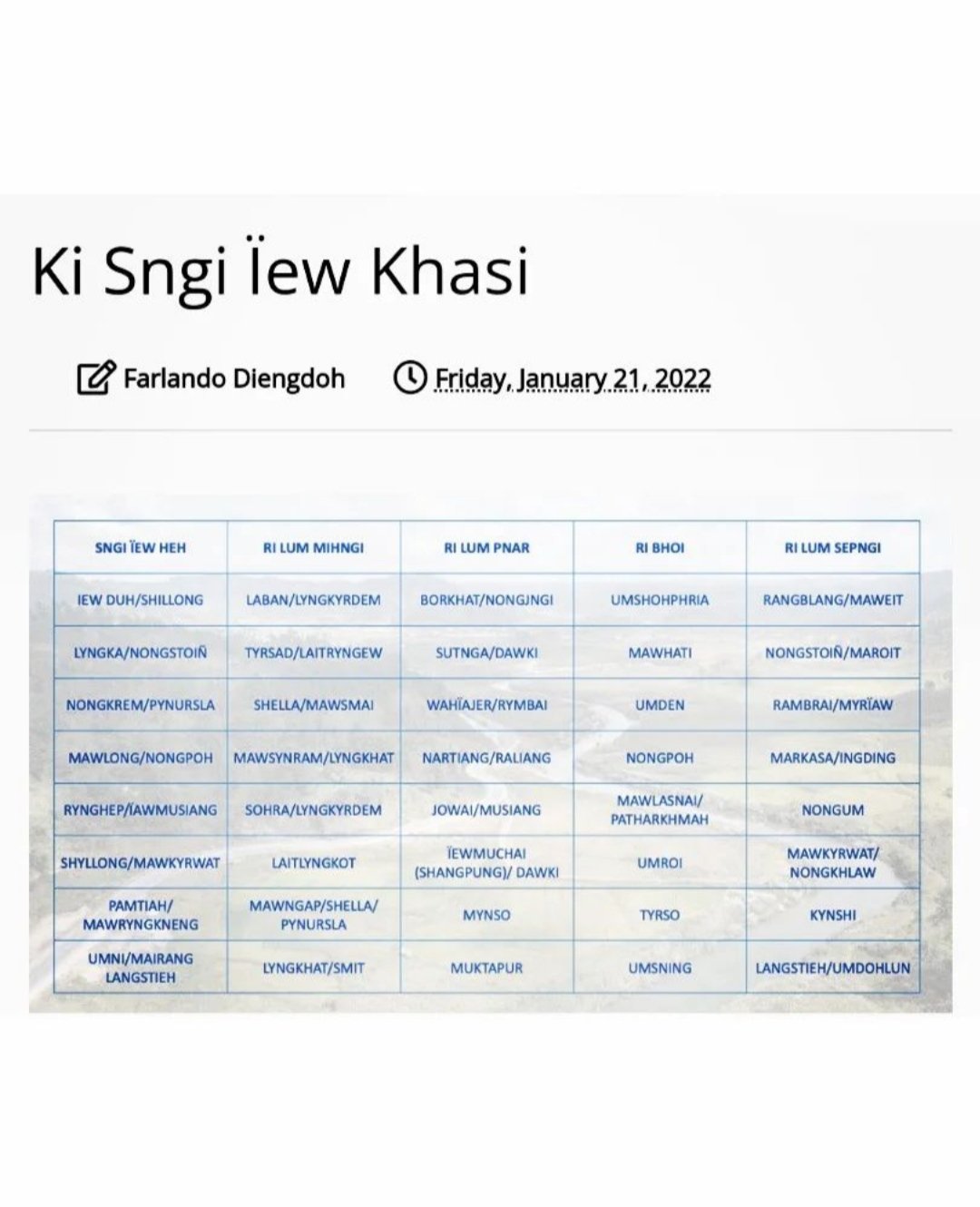
    Ka rukom kheiñ taïew jong ki Khasi ka ïapher na ka rukom jong ki phareng. Ka shi taïew ha ki Khasi ka dei phra sngi. Bad la kheiñ ïa ki sngi jong ka taïew da ki sngi ïew. Ki ïew ha Ri Khasi ki don man la ki thaiñ, kata ki Ri Lum Pnar, Ri Lum Mihngi, Ri Bhoi bad Ri Lum Sepngi. Ka don ruh ka jingpynbeit ryntih ïa ki ïew heh da kaba shim na baroh ki thaiñ. Hangne ha rum ngan pyrshang ban buh ryntih ïa ki Sngi ïew Khasi.

    Ha kitei ki jingkdew, ngi lah ban ïohi ba ha ka sngi Їew Duh ka dei ruh ka sngi Ïew Laban/ Langkyrdem ha Ri Lum Mihngi, ne ka Borkhat/Nongjngi ha Ri Lum Pnar, Umshohphria ha Ri Bhoi bad Rangblang/ Maweit ha Ri Lum Sepngi. Te ka jingkylli mynta ka long kumno ngin tip kum mynta ka sngi ka dei ka sngi ïew aiu?

    Lada phi tip kawei ka sngi, phin suk ban tip ïa kiwei de. Nuksa ha ka 1 tarik Kyllalyngkot 2022 ka dei ka sngi ïew heh Mawlong/ Nongpoh. Ka 2 tarik kan dei ka sngi ïew heh Rynghep/ Jowai/ Їawmusiang bad kumta ter ter.

    The way in which the Khasis calculate their week is different from the West. The Khasi week has eight days and this results from the calculation of market days. There are different markets which exist in the Khasi hills. These markets are the Ri Lum Pnar (Jaiñtia/ Pnar hills), Ri Lum Mihngi (Eastern hills), Ri Bhoi (Bhoi region) and Ri Lum Sepngi (Western hills). There is also a proper arrangement for the markets considering the fact that they occur in different areas. The second slide is the sequence of the different market days.

    In the sequence of market days, we see that the day of Їewduh is also the day of Laban/ Lyngkyrdem in Ri Lum Mihngi, or Borkhat/ Nongingi in Ri Lum Pnar, Umsohphria in Ri Bhoi and Rangblang/ Maweit in Ri Lum Sepngi. The question is how do we know which market day falls on which day?

    If we know one market day it will be easy to know the other market days too. For example, on the 1st of January 2022 it was Їew Mawlong/ Nongpoh. The 2nd of January 2022 will be the Їew Rynghep/ Jowai/ Їawmusiang and so on and so forth.

    "Ki Sngi Ïew" or the Khasi market days sent by @fdphy 🍉🍍🧅🌽🏞️
    Khublei Shibun for this comprehensive and valuable contribution! 💚🌲🙏😀

    🟡 You can download the digital calendar of the Khasi market days from https://www.fdiengdoh.com/2022/01/ki-sngi -iew-khasi.html?m=1

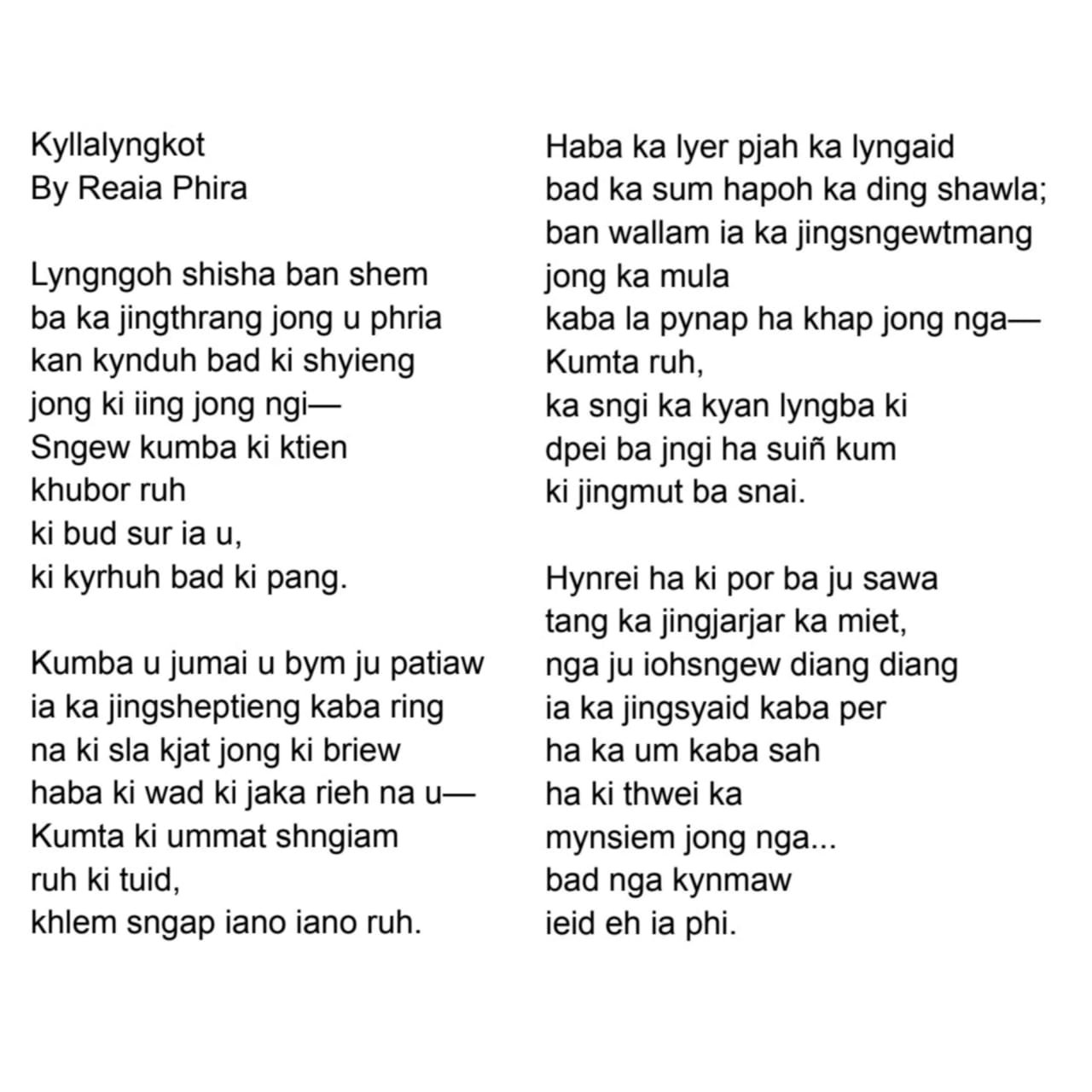
  • “Kyllalyngkot” da Reaia Phira

    Lyngngoh shisha ban shem

    ba ka jingthrang jong u phria

    kan kynduh bad ki shyieng

    jong ki iing jong ngi-

    Sngew kumba ki ktien

    khubor ruh

    ki bud sur ia u,

    ki kyrhuh bad ki pang.

    Kumba u jumai u bym ju patiaw

    ia ka jingsheptieng kaba ring

    na ki sla kjat jong ki briew

    haba ki wad ki jaka rieh na u-

    Kumta ki ummat shngiam

    ruh ki tuid.

    khlem sngap iano iano ruh.

    Haba ka lyer pjah ka lyngaid

    bad ka sum hapoh ka ding shawla;

    ban wallam ia ka jingsngewtmang

    jong ka mula

    kaba la pynap ha khap jong nga-

    Kumta ruh,

    ka sngi ka kyan lyngba ki

    dpei ba jngi ha suiñ kum

    ki jingmut ba snai.

    Hynrei ha ki por ba ju sawa

    tang ka jingjarjar ka miet,

    nga ju iohsngew diang diang

    ia ka jingsyaid kaba per

    ha ka um kaba sah

    ha ki thwei ka

    mynsiem jong nga…

    bad nga kynmaw

    ieid eh ia phi.

    Original Khasi poem "Kyllalyngkot" by @meat__ball__ ✒️🍃
    Khublei Shibun @meat__ball__ for sending your poem! 🙏😄

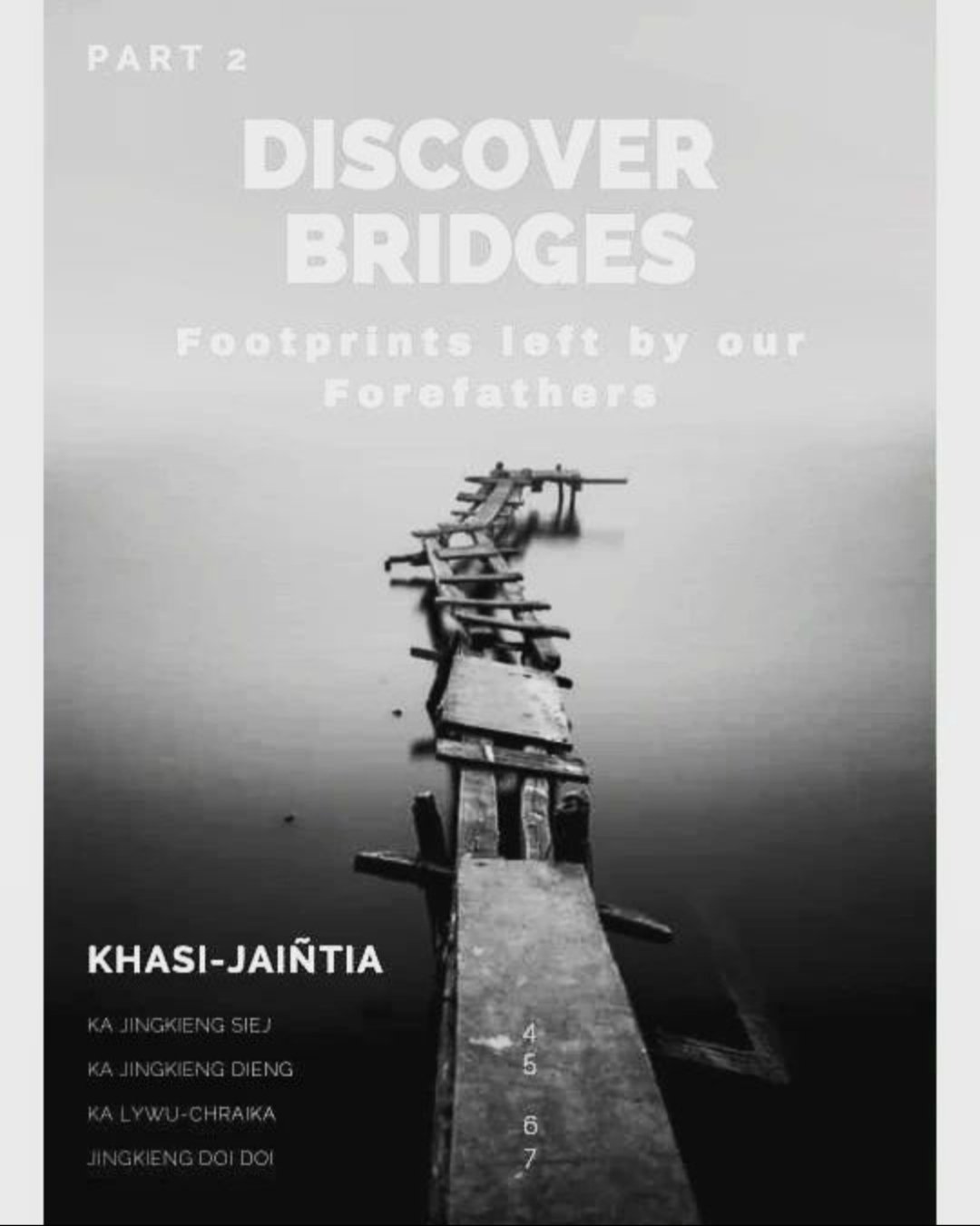
  • Discover Bridges Part 2

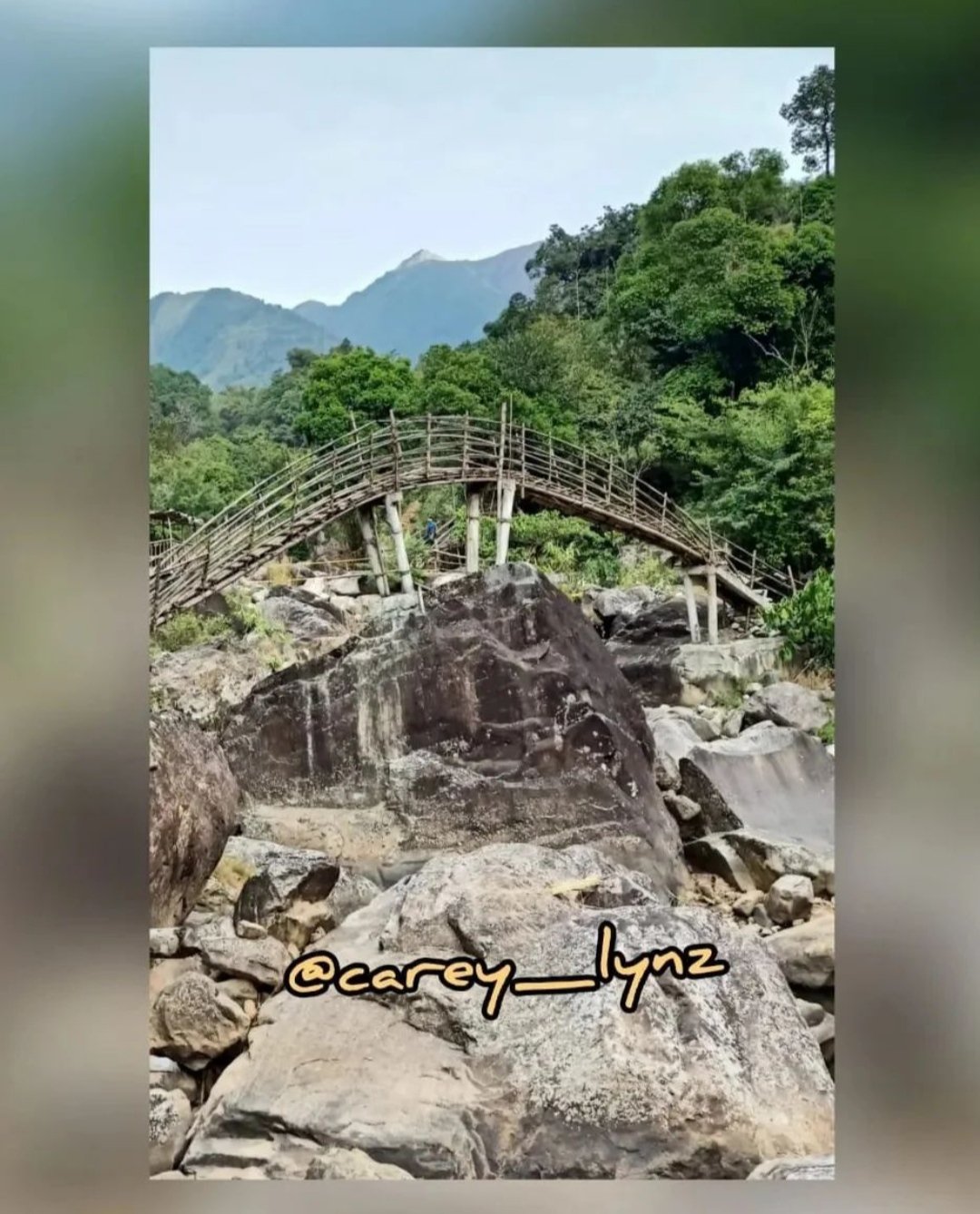
    There are very rare bamboo bridges in this day and age. However, they are mostly found in the Ri War areas such as Nongtalang, and areas around Khadarshnong and Noron. Other areas where the bridge is constructed during winter are from Nongbareh in the War Jaiñtia areas to Mawshun of the Hima Khyrim.

    Ka Jingkiengdieng/ A Trunk Bridge

    In actuality, this is not a full-fledged bridge as its basic material is a huge trunk of wood, supported at the ends with other pieces of wood so that it does not roll over when walked upon. In the olden days this can be found in a particular waterfall whereby it got its name as Ka Kshaid Umdiengpun. However, the English have renamed it as Elephant Falls. There is an interesting story behind this renaming of the fall.

    Ka Lywu-Chrai/ Living Root bridge

    These are the dialects of the War Jaiñtia in the Nongbareh Nongtalang areas. Basically "Lywu" means bridge and "Chrai" means "diengjri" or rubber plant. Such bridges are constructed by the community and it takes over 20 years to make it a fully grown bridge. It is called a living root bridge and remains for over a hundred years if it is taken care of by the community.

    The English called it 'Bio-engineering.' Such bridges can be found in areas like near the river Umshiang in Nongriat (Double Decker bridge), in the Ri War or War areas such as Nongwet, in Khadarshnong, in the river Wah Rew, in Amalyne and Amsohkhri which are in Nongtalang areas.

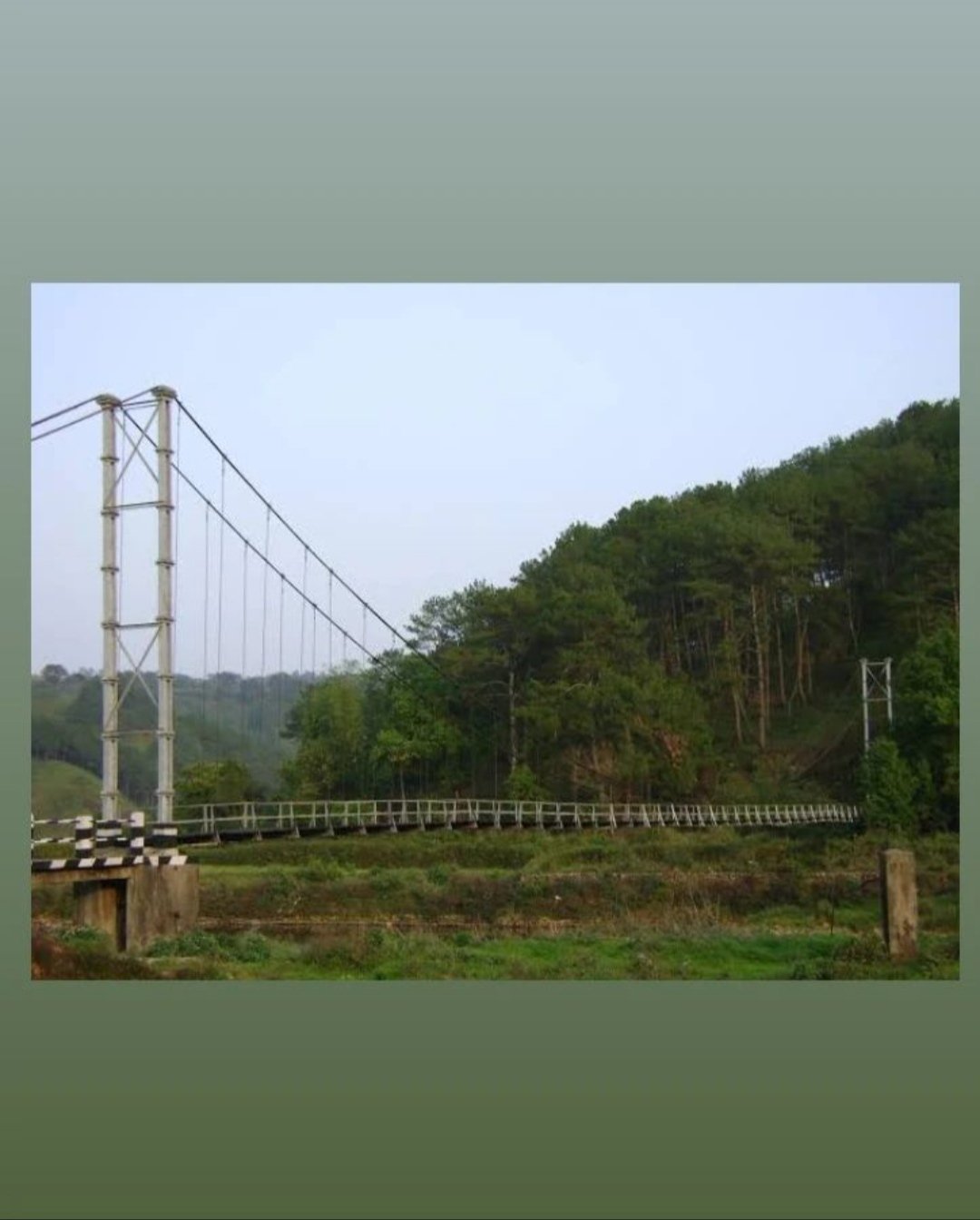
    Ka Jingkieng Doi Doi/ Suspended Bridge

    This bridge is built with suspenders on both sides and it rocks as one walks upon it. Such a bridge is found in Wah Umkjen on the way from Mawshabuit to Sohryngkham. This bridge was constructed during the British rule in the month of June 1927. Another bridge can be found in Ryngksaw near Maw-U tieng, Sohryngkham.

    Here is Part 2 of "Discover Bridges" sent by @carey_lynz 😄🙏

    Khublei Shibun for sending this entry! 💚💚

    Photo Source:
    Living Root Bridge: https://www.sahyogmantratours.com/blog/living-root -bridges-in-meghalaya/202009051 53114
    Suspension Bridge: https://westjaintiahills.gov.in/home9/attachment /2019010948/

  • First language, second language…

    When language is life and everything in between! 😄😂🧡🏞️

    May indigenous languages thrive
    May indigenous languages be revived
    May indigenous languages empower us!