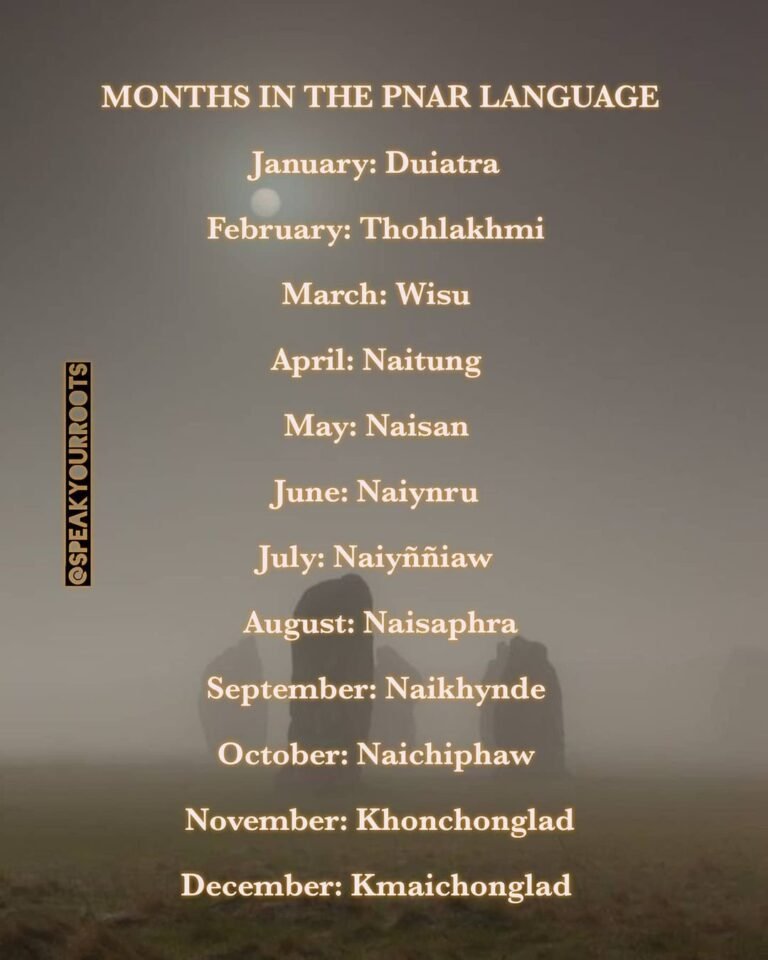
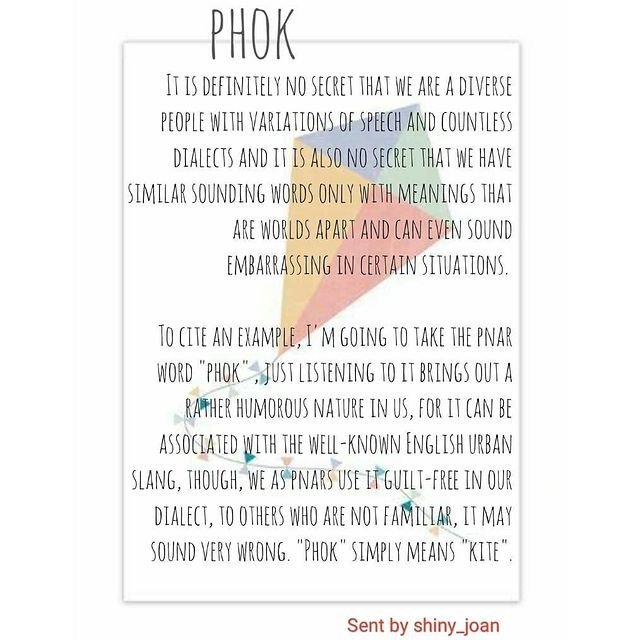
Tag: jaiñtiahills

  • Khaisap

    Ka ktien Pnar "Khaisap" ka dei ka ktien ka bym don kum ma ka ha ka ktien Khasi 😄

    Kyrmen ba ka jingbatai ïa kane ka ktien ka la shai bad ka long kaba khaisap! Lada phi kwah bynrap shuh, sngewbha thoh ha ka bynta ki comments.

    🟡 Baroh ki jingbatai ha ka Pnar, Khasi bad English la thoh da ka @speakyourroots

    .

    .

    .

    The Pnar word "Khaisap" does not have a Khasi equivalent 😄

    Hopefully the explication given is clear and satisfactory. If you want to add more to understanding the word, please mention it in the comments section.

    🟡 Explication in Pnar, Khasi and English by @speakyourroots

    #khaisap #pnarlanguage #pnardialect #pnarpeople #jaiñtia #jaiñtiahills #khasilanguage #khasilanguageconservation #speakyourroots #speakyourrootschallenge #talklocal

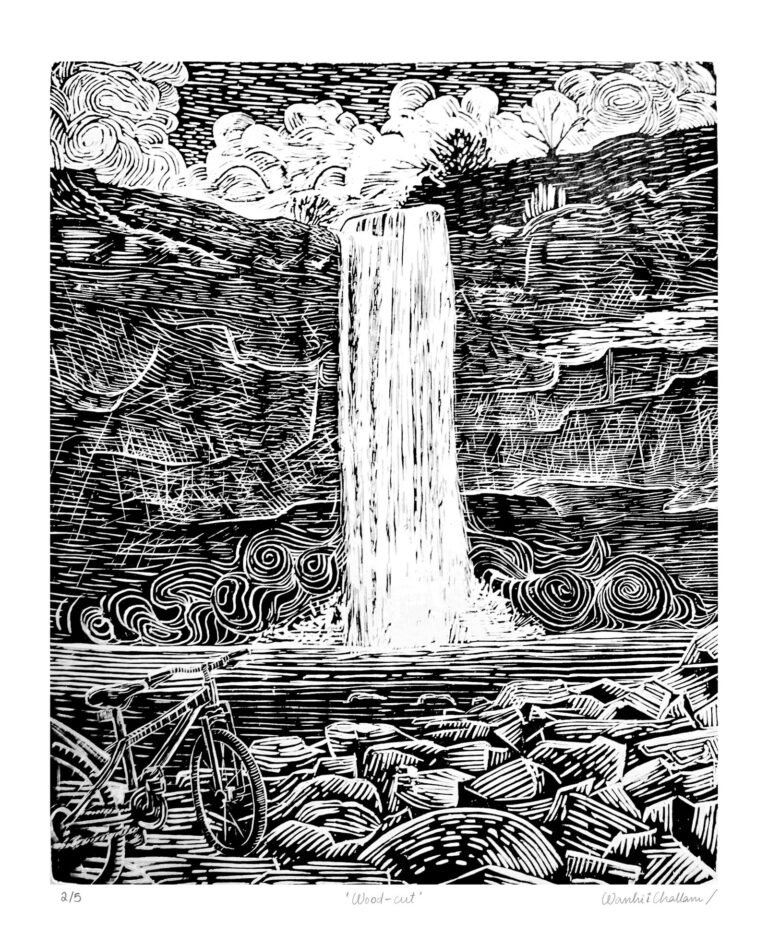
  • Woodcut of Phe Phe Falls by Wanhi-i Challam

    International Day of the World's Indigenous Peoples 2023 🌱🌲

    Contribution by @wanhii.psd 😃

    Title – "Untitled"

    Medium – Woodcut

    Editions – 5

    Year – 2023

    Size – 19'5'' x 24'

    Artist – Wanhi-i Challam

    He says: "This is a woodcut of a waterfall near by my home town – 'PHE PHE falls'. I chose to be very spontaneous with this one. Initially, it was intended to be just a simple, realistic landscape woodcut. However, as I worked on it, I chose to have some freedom in the techniques of cutting the wood and to allow the composition to evolve organically as I worked on it. I allowed the wood to guide me and fused the original form of the waterfall with my personal interpretation. I find it very meditative to work this way, not strictly following the realistic image of the waterfall, but instead capturing the emotions and feeling the rhythm of the waterfall with all its force, aggressiveness, daring, serenity, and stillness, while still conveying a sense of calmness and beauty."

    Khublei Shibun @wanhii.psd ba phi la phah ïa kane ka jingshna oh dur kaba itynnat! 🏞️

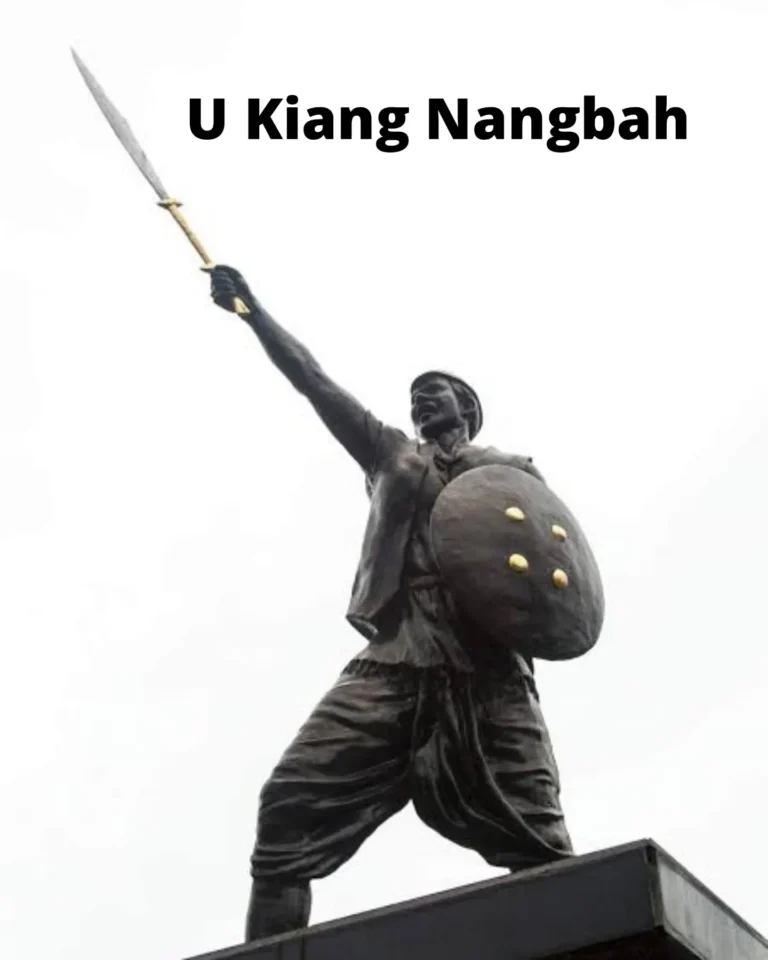
  • U Kiang Nangbah

    Kiang Nangbah Kiang Nangbah,

    Ya me da phrang dei mynsien dap chynrang,

    Ka yutran wa khia,

    kit mi neibynta ka ri,

    Tang wow im ka jaitbru,

    bynda mi da u radang ha u tylle pasi.

    Kiang Nangbah, the son of Ka Rimai Nangbah from the Soo Kpoh Clan, was an original settler of Jowai in a locality known as Tpep-pale. He fought a freedom battle against the mighty British force at a period almost coinciding with the 'First War of Independence' or the 'Indian Mutiny' or the "Sepoy Mutiny' of 1857.

    The Jaiñtia Revolt started in 1860 when the government introduced house tax on the people. It was U Kiang Nangbah who urged the people not to pay any tax to the government. It was because of this incident that Kiang Nangbah made up his mind to organise the Jaiñtia people against the British. Kiang Nangbah got the support of his work from all sections of the society.

    Kiang Nangbah rose to become one of the leaders of the resistance movement against the British. He organised military-style attacks on the British which were so successful as to threaten the colonial powers. Ultimately, he was captured by the British as a result of being betrayed by one of his own people. He was hanged to death by the British on 30th December 1862, in Jowai Town.

    His last words before he was hanged in the gallows were:

    "Lada khyr-uin i khmat o cha mihsngi,

    ka ri wa maia yong nga,

    hapoh chispah snem daw lait ko nei chah chakri:

    Lada khyr-uin wan i cha sepsngi,

    yanom bhor, kylla r'ta,

    Ka ri wa maia yong nga u chongbrō

    ko chirta".

    "If my Head turns to the east,

    my country will attain freedom within

    a hundred years,

    but if it turns westwards,

    we will remain slaves for eternity."

    U Kiang Nangbah was truly a man of courage who will continue to inspire our generation.

    Ha kane ka sngi, 30 tarik u Nohprah kaba dei ka lyngkhuh sngi ïap jong u Kiang Nangbah, ai ba ngin ïaid sha u snem thymmai da ka mynsiem kaba shlur, kaba dap da ka jingkyrmen, kaba lam lynti da ka jingshisha bad ka jingieit ïa ka jaitbynriew. 🏞️🌾

    Khublei Chibōn @warikasumer01 wa phah phi ya kini ki jingthoh wa kordor! 😄🙏

    🟡 Sources:
    – "The Legacy Of U Kiang Nangbah" by Mrs. Wa-i-sa Sumer.
    – "U Kiang Nangbah Bad Ka Jingialeh Ka Ri Jaiñtia naka bynta Ka Jinglaitluid" by (Late) S. Quotient Sumer.

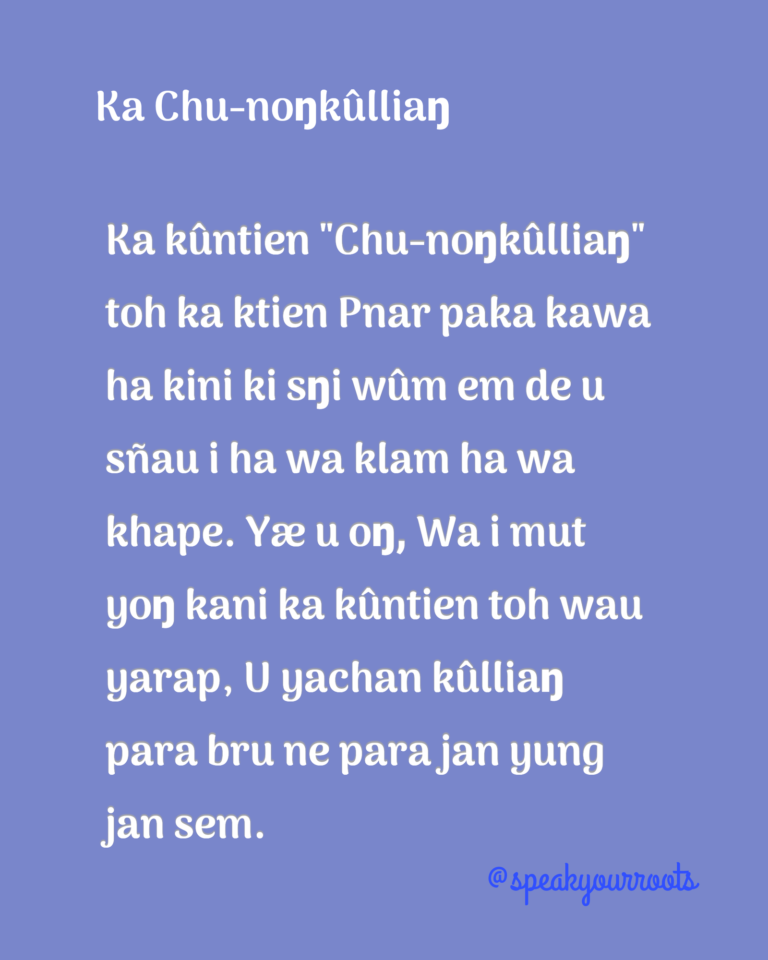
  • Ka Chu-noŋkûlliaŋ

    Ka Chu-noŋkûlliaŋ

    Ka kûntien"Chu-noŋkûlliaŋ" toh ka ktien Pnar paka kawa ha kini ki sŋi wûm em de u sñau i ha wa klam ha wa khape. Yæ u oŋ, Wa i mut yoŋ kani ka kûntien toh wau yarap, U yachan kûlliaŋ para bru ne para jan yung jan sem.

    Ka Chu-noŋgkylliang

    Ka kyntien "Chu-nongkylliang* ka dei ka ktien Pnar paka kaba ha kine ki sngi ngim ju ïohsngew shuh ha ka kren ka khana. Ngi lah ban ong ba ka jingmut jong kane ka kyntien ka dei ban ïarap, ban ïa kyrshan markylliang para bynriew ne para jan ïing jan sem.

    Ka Chu-noŋkûlliaŋ

    "Ka Chu-noŋkûlliaŋ" is a Pnar word which is not used often nowadays in conversation. It may be said that the word means the help or support that is given by family and friends to one another. The word "noŋkûlliaŋ" emphasises that help should be returned by both sides.

    "Ka Chu-noŋkûlliaŋ" is a Pnar word that highlights compassion and sympathy that is given and acknowledged in its return. 🫂👥

    Khublei Chiboon @xdtnoahjupejackllthmanar wa maya phi ya ka ktien ka thylliej 😄🙏

    🟡 Khasi translation by @xdtnoahjupejackllthmanar
    🟡 English translation by @speakyourroots

  • Behdieñkhlam

    Ki dur Behdieñkhlam wa da phah da u @duwaki9 😄🌾🌿🌲 Khublei Chiboon for sending these pictures! 🙏🙏

    Dur 1 bad 2: Ka lehniam “Ka Siang Thakur” ba ju pynlong ha ka step shuwa ban mih ka sngi jong ka sngi Khatduh (Muchai) ka lehniam Behdieñkhlam. Ïa kane ka lehniam la pynlong ha Ïung Blai jong ka Kur Rangad Neiñ ha Chilliangraij, Jowai.

    Slide 1 and 2: The ritual of "Ka Siang Thakur" which is performed on the morning of the last day "Muchai" of Behdieñkhlam before sunrise. The ritual in the pictures was performed in the "Ïung Blai" of the Rangad Neiñ clan in Chilliangraij, Jowai.

    Dur 4 haduh 10: Ka "Choh Thyndai" lane ka "Sympat Ïung" ba shim bynta da ki khun ki ksiew ka Beipun Bon ba ju tip kum ki Khon Raij.

    Slide 4 to Slide 10: The ritual of "Choh Thyndai" or "Sympat Ïung" participated in by the children and grandchildren of "Ka Beipun Bon" known as "Ki Khon Raij".

    Photo credit: @duwaki9. @duwaki9

  • Ja Khonbo

    Pnar explanation:

    Ha Jaiñtia hi waroh kawi ym jooh em u leh ki ya ka ni ka li e Ja Khonbo. Kani toh ka rakom ki pnar wa sah ha Jwai næ du ki Jwai wa pynjooh ya ini i rakom li e Ja Khonbo.

    I rakom li e "Ja Khonbo" toh i rakom, iwa, da i ja jooh lai e sñiawbha ki wahaïung wahasem, ki lok ki jor ïa ka manbei hadien wada kha khon ko. Ini man i kam chi wynta na i pyn-eh bok pyn-eh rngu ya ka bei wa ya'i khon wa dang kha.

    Ki waheh nachua sikai ki u pynmlien u li e jakhonbo da'iwa u li e da iwon iwon i wada chet kynsaai næ i wa bang dooh. Ki waheh nachua leh da pynjooh ki da'iwa u song lang ha'itæ i jakhonbo toh ka "pylleiñ chet", "i jadoh", i "dohseiñ" wa i "dohsyiar chet sngat", "dai chet sngat" wa kiwi kiwi.

    Khasi explanation:

    Ïa ka rukom ai "Ja Khonbo" ym ju leh ha ka ri Jaiñtia baroh kawei. Kane ka dei ka rukom jong ki Pnar kiba sah ha Jowai, ki dei ma ki kiba pynmlien bad pynjuh ïa kane ka rukom.

    Ka rukom leit ai "Ja Khonbo" ka dei ka rukom ha kaba ki bahaïing bahasem, ki lok ki jor ki ai sngewbha da ka ja ïa ka longkmie kaba kha khun. Kane ka long shi bynta na ka pyneh bok pyneh rngiew ïa ka kmie bad i khun ba dang kha. Ka ktien "Khonbo" ka mut khyllung.

    Kiba rangbah naduh mynshuwa ki la hikai ban pynmlien ïa ka leit ai "Ja Khonbo" da kano kano kaba la shet kynsai bad kaba bang duh. Kiba rangbah ki la pynmlien ruh ban song lang ha ka Ja Khonbo da ka pylleng phon, ka jadoh, ka dohsniang neiïong bad ka dohsyiar kylla, u dai sboh neiïong bad kiwei kiwei.

    English explanation:

    The custom of "Ja Khonbo" is not prevalent all over the Jaiñtia Hills. This custom is practiced only in the town of Jowai and it is the people of Jowai who have established this custom.

    In the custom of "Ja Khonbo" the relatives and friends gift rice that has been cooked well, especially for a mother who has birthed a child. This is part and parcel to strengthen the good fortune and fortify the essence of the mother and her child. The word "Ja" means rice and the word "Khonbo" means baby.

    Elders have taught that only the most special and most delicious food are to be given as "Ja Khonbo". Elders have also taught that boiled eggs, jadoh (rice cooked with meat), dohsniang neiïong (pork cooked with black sesame), chicken curry, dai sboh neiïong (dal cooked with black sesame) and others are included in "Ja Khonbo".

    "Ja Khonbo" is a custom practiced by the Pnar people of Jowai. It is a wonderful custom that expresses care for a mother and welcomes a child into the world. 🤱🧑‍🍼👼 🙏

    Khublei Chiboon Anvil ya i e jingmut yong phi hawa thaw ya kani ka post! 😄🙏

    🟡 Source: Anvil Ritre Laloo

    🟡 Khasi and English translation by @speakyourroots

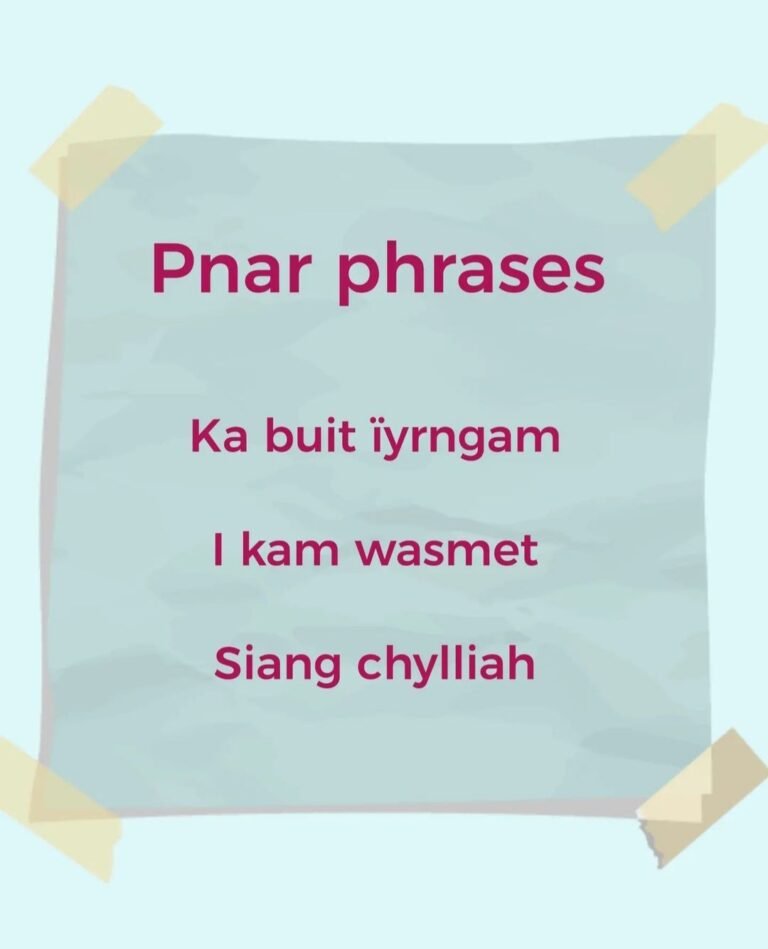
  • Some Pnar Phrases

    Pnar phrases

    "Ka buit ïyrngam"

    "Ka buit ïyrngam" is a cunning idea that a person thinks of.

    "I kam wasmet"

    "I kam wasmet" is a good cause that will help and benefit people and bring a promising future.

    "Sing chylliah"

    "Siang chylliah" is to breathe one's last breath.

    The books of (L) Mrs. P. P. Pasleiñ are a precious find! 😃 Here are some Pnar phrases from her book The Depth of Thwai Syiem (2001) 🍃🌱

  • Siah Siam

    "Siah siam" toh i ktien Phar i wa jooh ong i manda sñiaw hun jrut palat i mynsien haduh wym yïe de u batai. Em i por wa sñiaw siah siam næ wa bang ware i bam haduh wa sñiaw kamwa da psiah chadooh u klong nood. Teiñ teiñ ong i siah siam næ hawa ïoh u klam pynhiar jhar ïa kiwon kiwon kiwa da pynjaw mynsien ïa i chawa palat.

    "Siah Siam" ka dei ka rukom ong ki Pnar haba ka don ka jingsngewhun jrut ka mynsiem haduh bym lah shuh ban batai. Ki ong ïa kine ki kyntien lada ka bang palat ka bam kumba ka lah rung shaduh u dohnud. Teng teng pat ki ju ong siah siam haba ïoh ban kren ban ai nia ïa kino kino kiba la pynjew pynsngewsih ïa ka mynsiem shaba palat.

    "Siah Siam" is a Phar phrase that is generally used to describe the feeling of absolute satisfaction and contentment. It is also used to express the joy that one would feel after having a delectable meal or snack that reaches the satiety point of maximum measure. Many also use it to express the great satisfaction obtained when they get to express their feelings to someone who has angered and saddened them.

    "Siah Siam" is a Pnar phrase which means to feel great satisfaction! Thank you @anumanda for sending this and Shiny for the English translation 😃😃

    Khasi translation by @speakyourroots

  • Beiñ kiwa beiñ

    "Beiñ kiwa beiñ.

    Roh kiwa roh.

    Ïei їong kiwi,

    ym їe i u pyntoh."

    "Let those who criticise, criticise.

    Let those who praise, praise.

    Other people's opinions,

    cannot be catered to."

    Here's what may be described as a Pnar quote or chant sent by @laloorisa 😎😎😎 (translated by @speakyourroots)

    The lines urge us not to let people's words, either praise or criticism, affect us. Lest we fall prey to pride or feelings of inadequacy. We should just march to the beat of our own drum and do what makes us happy! 🌬️🌬️🌻🌼🌾

    Ham pynsñiaw ai ki! Wat pynsngew eh ia ki!

  • Ka pah chyrpang

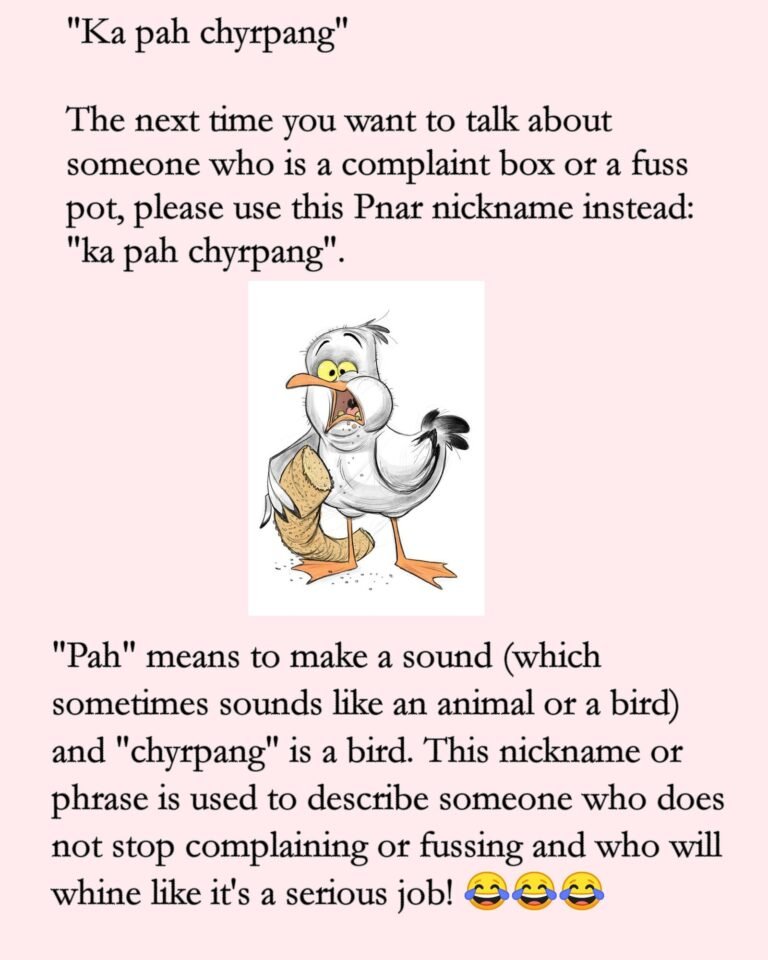
    The next time you want to talk about someone who is a complaint box or a fuss pot, please use this Pnar nickname instead: "ka pah chyrpang".

    "Pah" means to make a sound (which sometimes sounds like an animal or a bird) and "chyrpang" is a bird. This nickname or phrase is used to describe someone who does not stop complaining or fussing and who will whine like it's a serious job!

    Once again @laloorisa has sent another Pnar nickname: "Ka pah chyrpang" 😅😅😂😂

    This phrase is used to describe someone who annoys us by their constant complaining! Thank you @laloorisa for these witty and humourous nicknames 🤡🤡