Tag: jaiñtiahills

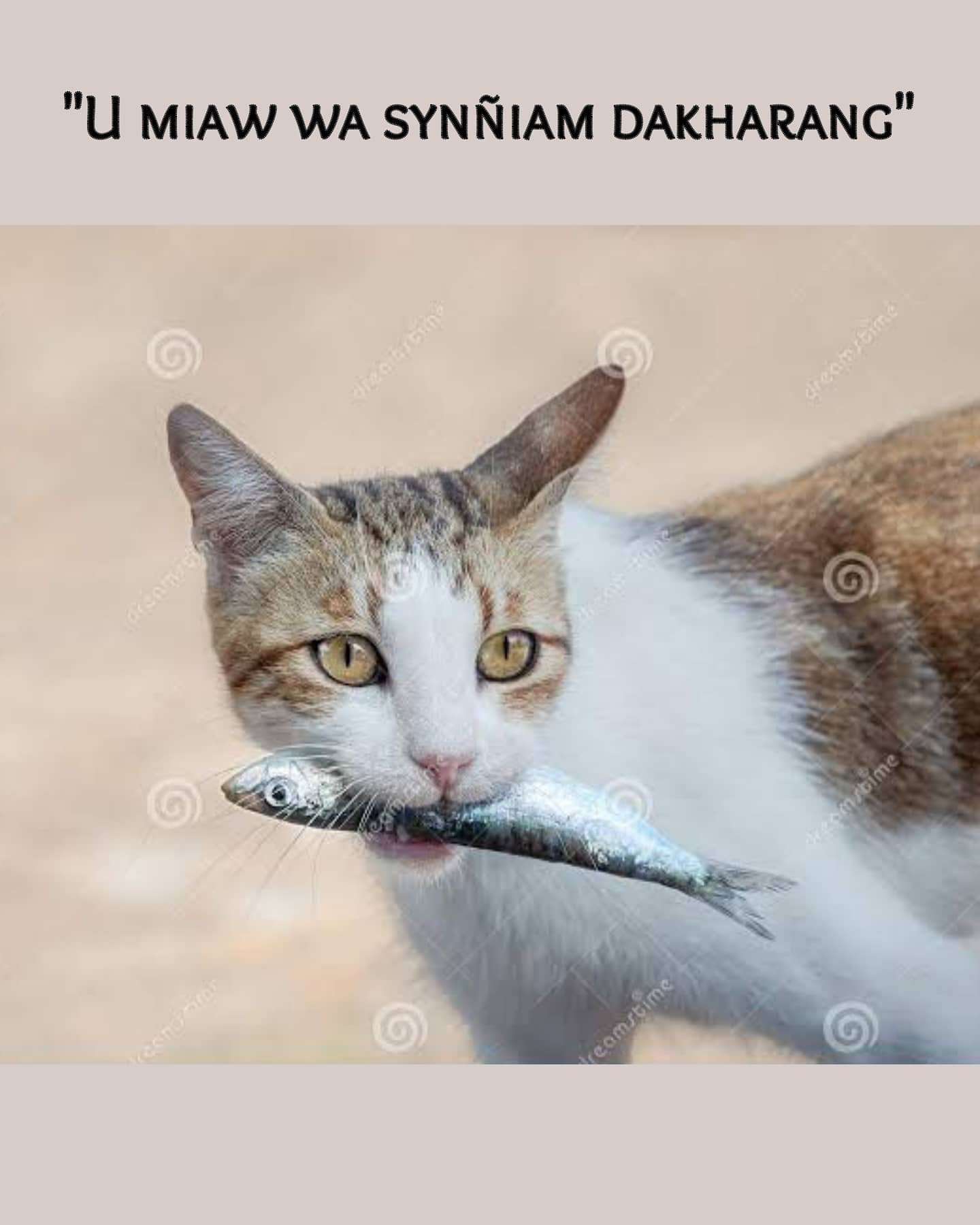
  • U miaw wa synñiam dakharang

    U miaw wa synñiam dakharang" is a Pnar phrase to describe men who are very good at making romantic advances towards women.

    "Miaw" means cat, "dakharang" is fish that has been smoked and "synñiam" may be translated as an opportunist waiting for the right time. The phrase describes the cat who has been waiting for the right time to steal the fish.

    Imat ki long thik kum u miaw ba pyrshang ban tuh dakharang haba ki pyrshang ban pynbiej kynthei, na kata ka daw ki sa khot ia ki da kata ka kyrteng.

    The men resemble the cat in its eager attempt to get the fish, in the way they woo women. That's why they have been given this nickname.

    "U miaw wa synñiam dakharang" is a Pnar phrase used to describe men who are expert "wooers" of women 😅😅😂😂 This post is dedicated to all you Don Juans and Zorros! 🤭😜

    Thank you @laloorisa for sending this! 😁😁
  • U Swet Titiaw

    Have you ever met a person who says no but they actually mean yes? If you offer them something they refuse and act as if they don't want it but in reality they do. In the Pnar language, they have a name for people like this. They call them "Swet Titiaw".

    The story goes that "U Swet Titiaw" is a farmer from Jowai. He has a peculiar quality and that is when people ask him something he acts as if he doesn't want to answer or when they offer him something he refuses but in his heart he wants to answer and he wants to accept the offer.

    In Pnar they say: "Leh u kam u wym bien tangwa napoh napoh kwah u naduh mynsien. Neite i daw haduh katni leh ia ki bru wa man kam o juh sin ki ki dei pyrtuid u 'Swet Titiaw'."

    "U ong tae ym bien ym bien

    tangwa ki kti ner ner nei dien.”

    "He will say no, no but his hands

    are already open from behind.”

    The Pnar nickname "U Swet Titiaw" sent by @laloorisa 😅😅😂😂 Thank you for your entry!

    "U Swet Titiaw" is quite the satiric nickname for someone who says no but actually means yes…🤡🤡

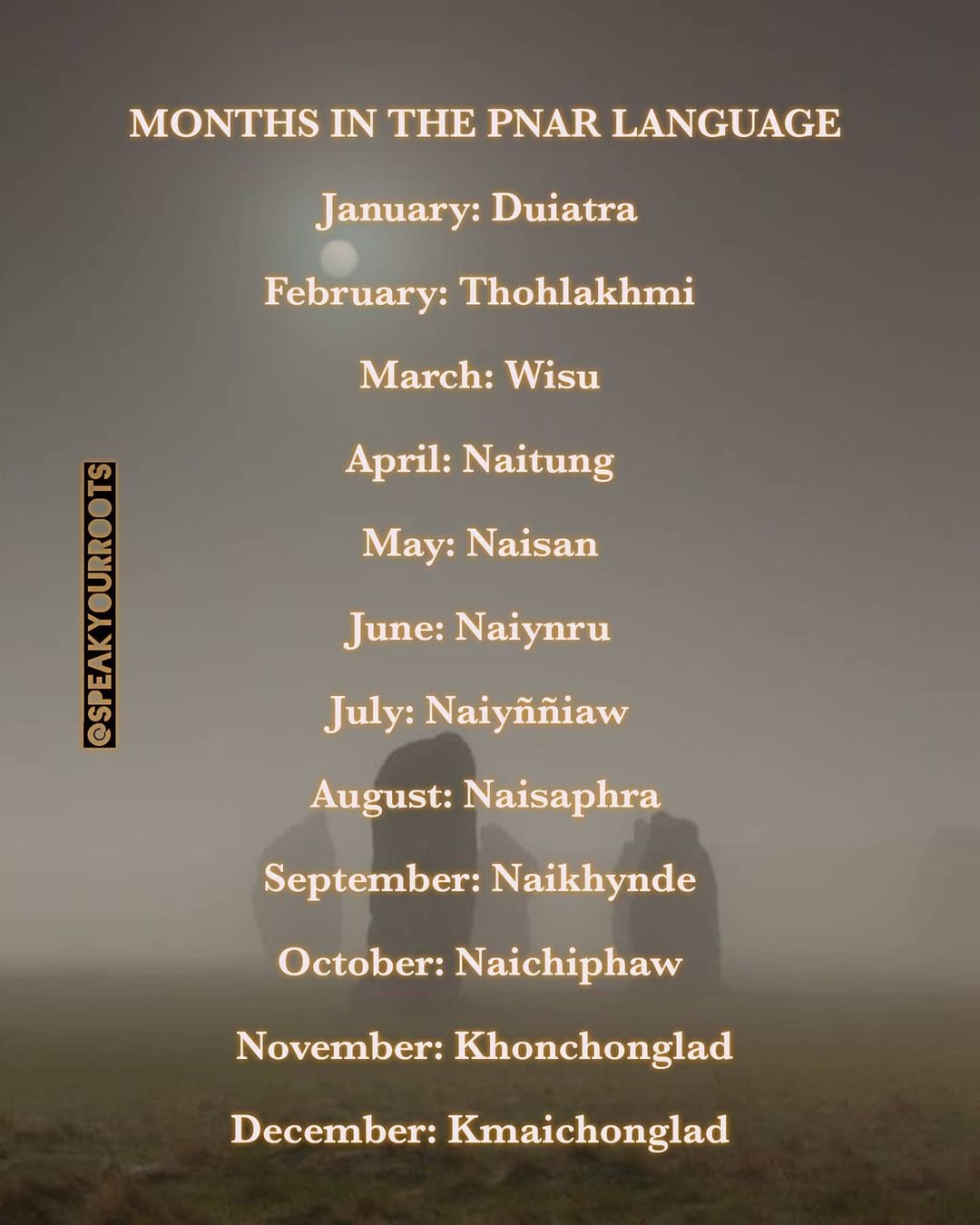
  • Months of the year in the Pnar language

    January: Duiatra

    February: Thohlakhmi

    March: Wisu

    April: Naitung

    May: Naisan

    June: Naiynru

    July: Naiyññiaw

    August: Naisaphra

    September: Naikhynde

    October: Naichiphaw

    November: Khonchonglad

    December: Kmaichonglad

    These are the months of the year in the Pnar language. 📆📆 The Pnar/ Jaiñtia language is mostly spoken in the Jaiñtia Hills District of Meghalaya.

  • “Peit Cheitai Cheitu” da Saweini Laloo

    Dang step dang step, chong u woh Ephrin

    Ha ka ben kawa rong soo

    Ka kot khubor ha kti beit, hajan

    Peit u cheitu, peit u cheitai

    Man da dep pure u

    Te chong u chi slem

    Peit u ia ki bru

    Wa lai cheitai cheitu

    Oh Papun o! Oh Papun o!

    Khana ia nga yi ioo phi cheitai?

    Ki jingmut u ioosar cha jngai

    Ham kylli jingkylli ware o ksu

    Peit cheitai, peit cheitu

    Wa lai ki kari wa ki bru

    Dang step, dang step, chong u woh wa ka ksu u

    Ha ka ben kawa rong blue

    Ka kot khubor ha kti ïong o

    Peit ki waroh arngut cheitai, cheitu.

    Original Pnar poem: "Peit Cheitai Cheitu" by @nini_sasa_23 😄😄 Thank you for the poem!

    This is a quaint and evocative poem about her "Papun" (grandfather) reading his newspaper in the veranda and then spending hours observing and ruminating on passersby and cars. 🌻🌻💞💞

  • Phok

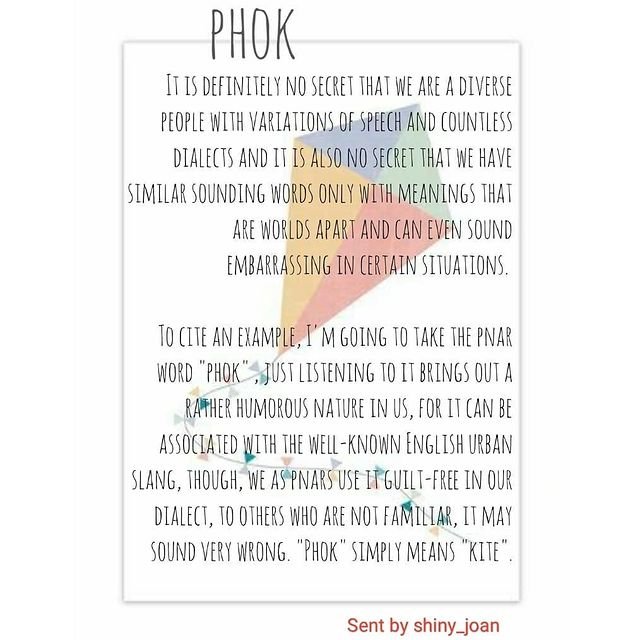
    It is definitely no secret that we are a diverse people with variations of speech and countless dialects and it is also no secret that we have similar sounding words only with meanings that are worlds apart and can even sound embarrassing in certain situations. To cite an example, I’m going to take the pnar word "Phok". Just listening to it brings out a rather humorous nature in us, for it can be associated with the well-known English urban slang, though, we as Pnars use it guilt-free in our dialect, to others who are not familiar, it may sound very wrong. '"Phok" simply means "kite”.

    The word "Phok" in the Pnar language means "Kite". Thank you @shiny_joan for sending this! 😄😄

  • “Jar I hok – Jngai nei thok – Kamai ia ka hok” da Daohi Manar

    Phet jngai na ka bamsap, phet jngai na ka bamsap

    Ileh Cha kamni, sa du i wöm ioo tipsap-tiptap?

    Jar jar lei hok, u ia k'bai-kyrha

    Ileh Cha kamni, dap da ki jingeh suda?

    Kylli oa pûn na nga

    Wa angnood iei jingkylla…

    Chirup u ieiñ tylli, Myllin noh i sniawpher u wi ia ka wi

    U rah iei roi i par, thrang i hei jingim

    Ka wait iong i tip i stad, kani toh u chim

    Ham sniaw salajong, Toa iyn-ia pûnku pûnkynrong

    Khlem niaw, Wei khlem da thaw

    U wa lieh, wa stem, wa soo ne wa u iong

    "Jar I Hok, Jngai nei Thok, Kamai ia ka Hok" is an original Pnar poem by @xdtnoahjupejackllthmanar

    The poem speaks of bringing about a change in society, through truth, unity and a thirst for knowledge. A change that is for the greater good of all. A change that creates an awareness of not only our rights but also our duties as a community and as citizens of the state and country.