Tag: khasiculture

  • U Mar Phalyngki

    SOSO THAM WEEK 12th December – 18th December 2023

    Khublei Shibun @xdtnoahjupejackllthmanar na ka bynta ka poim ha ka English, ka jingthoh ha ka Pnar bad Khasi bad ïa ki dur kiba itynnat! 😄🙏

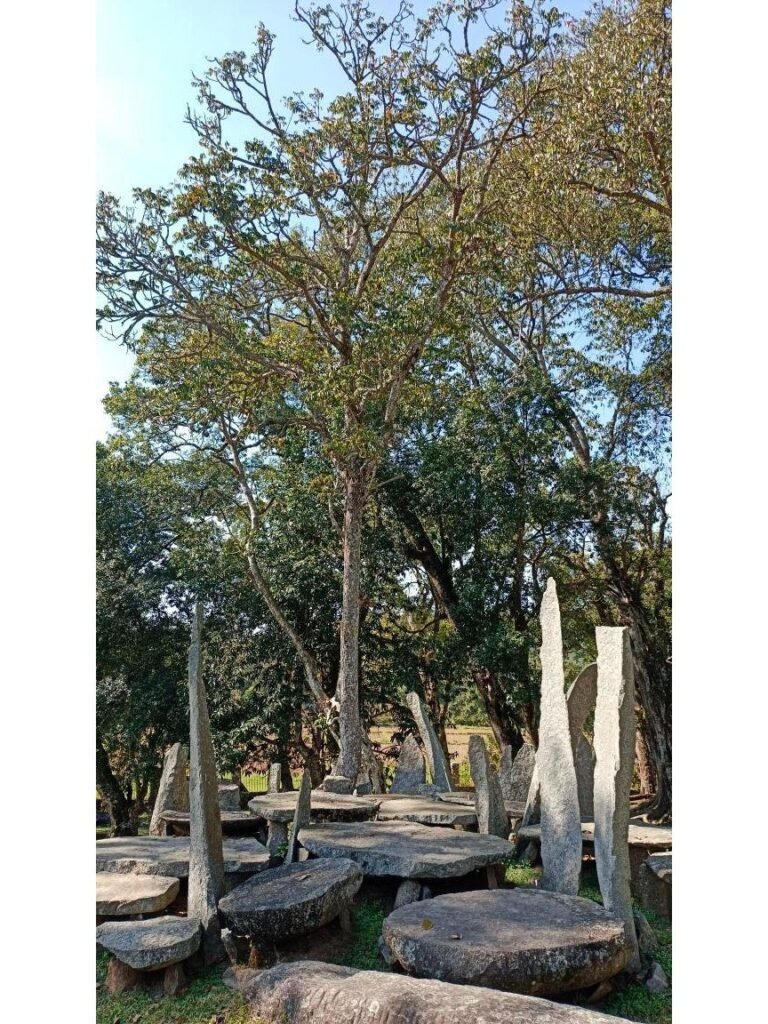
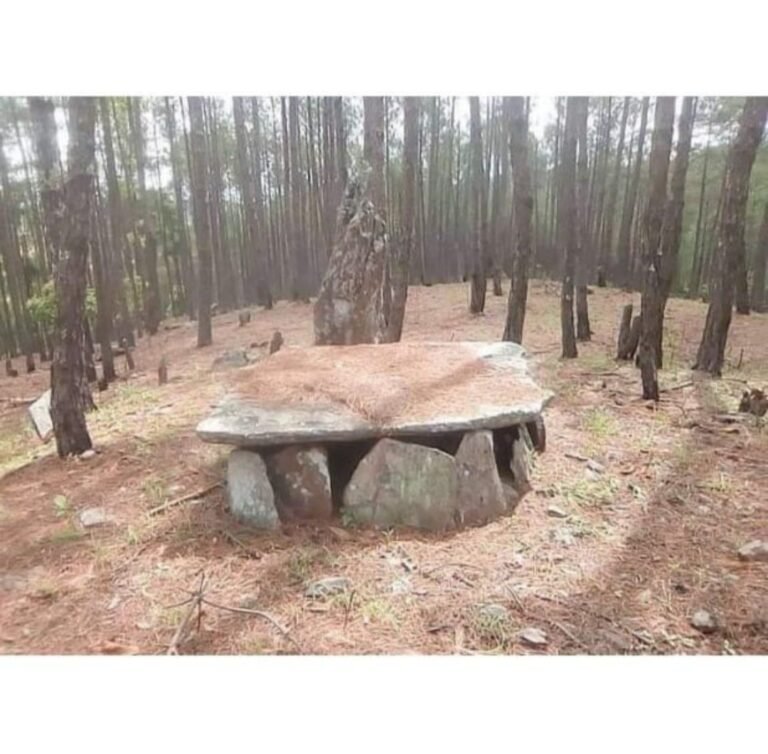
    Kane ka post ka dei shaphang u Mar Phalyngki uba dei uwei na ki rangbah shipai jong u Syiem Jaiñtia bad ruh shaphang ki mawbynna ha Nartiang kiba pawnam. Kat kum ka jingïathuhkhana U Mar Phalyngki u la pynïeng ïa u maw Mooi Iong Syiem uba 8 mitar bad uba dei ruh uwei na ki mawbynna ha ka ïew Nartiang uba jrong tam ha ka pyrthei.

    According to local legend, the tallest monolith in the cluster, Moo Iong Syiem which is eight metres long, was erected by U Mar Phalyngki. Phalyngki was a trusted lieutenant of a Jaintia king. He erected the monolith to commemorate his victory in battle. The Monoliths were erected approximately during 1500 AD. and 1835 AD. (Source: https://www.google.com/amp/s/timesofindia.indiatimes.com/city/shillong/nartiang-monoliths-in-meghalaya-are-tallest-in-the-world/amp_articleshow/64837454.cms)

    🟡 Khasi and Pnar write up by @xdtnoahjupejackllthmanar

    🟡 Photo credit @xdtnoahjupejackllthmanar

    #nartiang #mawbynnanartiang #nartiangmonoliths #marphalyngki #jaiñtiakingdom #jaiñtiakings #khasiculture #khasimonoliths #monolithculture #speakyourroots #speakyourrootschallenge #talklocal

  • U khiew uba la sop phu-ïong

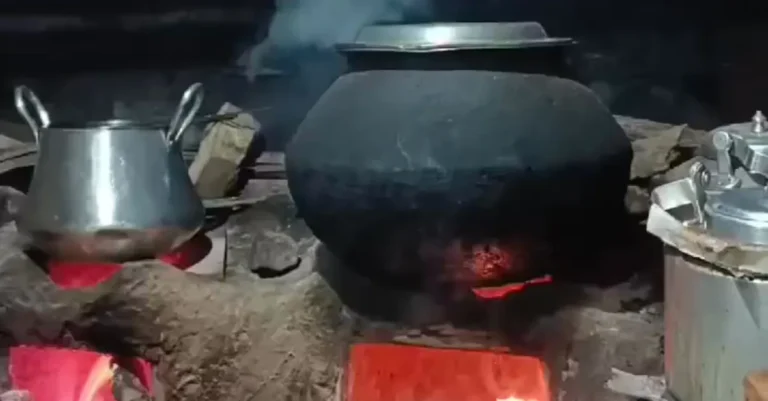
    U khiew uba la sop phu-ïong ba thnam ha ka ding bad ka dohthad kaba la thad rkhiang ❤️🔥

    This is a typical Khasi hearth along with soot covered pot and a load of smoked meat on the top. 😋😋❤️❤️

    Khublei Shibun @laia.naomi ïa kane ka reel! 🙏🤗

    #dpeikhasi #khiewkhasi #dohthad #khasihearth #smokedmeat #khasifood #khasiculture #khasilanguage #khasilanguageconservation #indigenouslanguageconservation #speakyourroots #speakyourrootschallenge #talklocal

  • Interview with Auswyn Japang, Assistant Professor and Research Scholar

    1. Ka ktien "folklore" ka mut aïu?

    Folklore ka dei ka jingiasoh jong ki ar tylli ki kyntien: ‘Folk’ kaba mut ki briew – ym tang kito kiba don ha ki nongkyndong, bad ‘Lore’ kaba kdew ia ki khanatang, ki puriskam, ki purinam, bad ruh ki jingrwai ki phawar. Hynrei, ka Folklore kam kut tang katne; ka dei ruh ka jingwan lang jong ki jingmut jingpyrkhat, ki khana ba laiphewjait bad ruh ki rukom. Ka kynthup ruh ia ka kolshor bad rukom im, ki jingngeit bad kumjuh ruh ia ki jingohdur bad ki rukom shna bapher bapher. Ka kynthup ruh ia kiei kiei kiba ngi lah ban iohi bad ia kito kiba ngi shu lah ban sngap. Bad ju ong ruh ba ka Folklore ka dei ka jingstad ba khlem da hikai jong ka pyrthei.

    1. What does the word "folklore" mean?

    Folklore is a combination of two words: ‘Folk’ implying people – not necessarily just the rural population, and ‘Lore’ predominantly implying stories, myths, legends, as well as songs. However, Folklore is more than just these elements; it is the coming together of ideas, narratives, and practices. It encompasses culture and tradition, beliefs, as well as art and architecture. It includes that which can be seen and that which can only be heard. Folklore is sometimes considered as unofficial knowledge about the world.

    2. Kumno ngin kham sngewthuh jylliew ïa ki riti dustur Khasi kiba la ïoh pateng na ka ktien ka thylliej?

    Ka jingdonkam ba kongsan eh jong ka ia kaba mynta ka dei ba ngi donkam ban don ka lad ha kaba ki khun samla ki long kiba shah pynshlur bad kiba kloi ban tip shaphang ka kolshor bad ki rukom kiba long tynrai lyngba ki khana. Dang shen ruh nga sdang ia kawei ka projek ha St. Anthony’s College lyngba ka Design Innovation Centre, ha kaba ngi pyndonkam ia ki khanatang kum shi bynta na ki jingpyrshang jongngi. Lyngba kane ka projek, ki khynnah jong ngi ki ioh ban nang ki skill kiba thymmai bad ruh ki ioh ia ka jinghikai ban burom ia ki khana bad kin long kiba kloi ban wad jingtip ba kham janai na ki. Kumjuh ruh, ki don katto katne ki kot ba ngim da kham pule la ngi dei ki rangbah ne khynnah kiba lah ban ai jingmut shuh shuh shaphang ka ktien ka thylliej u Khasi.

    Ngi donkam ruh ban don ka jingpynmlien ba pynshlur ban pule kot, khamtam kito ba lah thoh khnang katkum ka jingdonkam jong ka por ka ia jong ngi khnang ba ngin sngewthuh kham bha ia ka ktien ka thylliej u Khasi. Ka jingtip bniah ia la ka kolshor ka long kaba kongsan tam, da kaba ngi shim bynta ha ki cultural fest ne kino kino ki jingrakhe kiba iadei bad ka riti ka dustur jong ngi kum u Khasi. Ha kajuh ka por ruh, ki jaka pule (naduh kiba rit tam bad ter ter) ki lah ban noh synniang ha kane ka bynta. Kine ki lah ban wanrah ia ka jingsngewjan bad jingsngew sarong ia la ka jong ka kolshor. Ki literashor kiba iadei bad ki khynnah bad ki novel ba don bad ki dur ki dar kin iarap bha.

    2. How do we deepen our understanding of Khasi orality?

    One of the greatest needs of the hour is to create a situation where young people are encouraged and excited to learn about culture and traditional values through stories. I have recently started a project at St. Anthony’s College through the Design Innovation Centre, where we use folklore as the basis for our endeavours. Through this project, our students are not only learning new skills but are also being taught to find value in narratives and are encouraged to explore them. Additionally, there are a considerable number of books that are rarely read by both adults and children which can add towards the deeper understanding of Khasi orality.

    A reading culture is needed as well, one that is tailored to the demands of the time in order to understand the conceptual idea of Khasi orality. Exposure to one’s culture remains highly necessary, with active participation in cultural festivities and celebrations being strongly encouraged. Simultaneously, academia (starting from the lowest level and so on) can contribute to this. It can foster a sense of connection and pride in one’s own culture. Children's literature and Graphic novels can truly add so much.

    3. Kiei ki mat pdeng jong ka rukom ngeit rukom pyrkhat jong ki Khasi?

    Ki phang pdeng jong ka jingpeit, jingsngewthuh bad ka jingiadei jong U Khasi bad ka pyrthei ka long halor ka bor jong ka jingiateh, kiba iaid ryngkat ha kiba bun ki bynta – bad U Blei, para briew, bad ka mariang. U Khasi um lah ban im khlem ka jingiadei bad la U Blei, kum ba u/ka kim lah ban im khlem ka iing ka sem bad ki kur ki kha. Shuh shuh, u Khasi u bym suitniew ia ka mariang bad baroh kiba ha ka u lah phet jngai noh na ki jingngeit tynrai jong ki Khasi kum naduh ka mynnor. Kine baroh ki paw shai bha haba ngi leit wad jingsngewthuh shuh shuh sha ki field (lyngba ki fieldwork). Haduh kine ki sngi, ngi lah ban shem ia ki ha ka folklore jong ki Khasi, ki jingrwai tynrai, bad ruh ki riti ki dustur. Ki snem ba nga pynleit ha ka fieldwork ka lah ailad ianga ba ngan sngewthuh ia kine baroh, bad ki pyni shai ia ka jinglong kylluid ka jingpeit, jingsngewthuh bad ka jingiadei jong U Khasi bad ka pyrthei ha kaba u im da kaba wad ia ka jingim kaba shongsuk shongsaiñ.

    3. What are the salient features of the Khasi worldview?

    The Khasi belief system centres around the strength of bonds, operating on multiple levels – with God, among humanity, and with nature. A Khasi cannot exist without a connection to God, just as he/she cannot exist without their family and clan. Moreover, a Khasi who lacks deep respect for the land and the natural world has deviated from the beliefs of their ancestors. These elements become evident when one engages with them in the field (through fieldwork). To this day, these aspects remain observable in Khasi folklore, folksongs, and religious traditions. My years in the field allowed me to observe all of these, and it speaks volumes about the inclusiveness of the Khasi worldview that yearns for harmonious existence.

    4. Kumno ki rukom ngeit rukom pyrkhat jong ki nongwei ki ktah ïa ka rukom ngeit rukom pyrkhat jong ki Khasi?

    Namar ba ka jingwad jingtip jong nga ka dei ha ki War-Khasi, ngan jubab ia kane ka jingkylli lyngba nga jingsngewthuh jong nga. Ka jingpeit, jingsngewthuh bad ka jingiadei jong ki phareng, khamtam ha ka niam ka jingngeit, ka paw ba ki don katto katne ki jingktah. Haba u Khasi u pdiang ia ki jingpeit, jingsngewthuh bad ka jingiadei jong u bad ka pyrthei kumba ki peit ki phareng, ngin shem ba ka jingiadei jong u bad la ka jong ka jaka ka hiar, watla U Blei u iai long ba kongsan ha ka jingngeit jong u. Ki khana bad ki riti ki dustur ki kylla noh bad u jngai noh na ki, teng teng lah pynjngai bad lah bthah leh klet noh. Hynrei, khyndiat eh kiba pynneh iaki. Ka jingsaphriang jong ki khanatang bad kumta ter ter ka hiar noh, bad ju iohi bha ia kane ha kiba dang kham samla. Hynrei, kito ba don ka jingieit ia la ka jong ka kolshor bad ki pyrshang ban pynneh ia ka jingpeit, jingsngewthuh bad ka jingiadei jong u Khasi bad la ka mariang hi. Kaba sngewsih ka long ba bun kiei kiei kiba dei bad ka kolshor ne ka jinglong Khasi ka paw shai ka la duna. Ngi lah ruh ban ong ba ki jingpyrshang bad ka jingshimkhia jong ki jaka pule ka ai jingkyrmen.

    4. How have foreign worldviews affected the Khasi worldview?

    Since my research has primarily focused on the War-Khasi, I will be addressing this issue from that perspective. Foreign worldviews, especially concerning religious beliefs, have exerted certain influences. When a Khasi adopts a foreign worldview, their connection to the land weakens, even though God remains central to their belief system. Belief narratives and practices related to the land become unfamiliar to them, often discouraged and even suppressed. However, a small minority strives to preserve them. The sharing of folklore diminishes as a result, a phenomenon sadly observable among the younger generation. Conversely, cultural lore is retained mainly by those who maintain a strong affinity with their own worldview. The erosion of cultural memory is evident in most cases. However, a rising trend in academic interest seems to be promising.

    5. Kumno ki tiar stad ka juk mynta bad ki kor pathai jingtip kin nang bteng ban ïarap ban pynneh ïa ki riti dustur, ki rukom ngeit rukom pyrkhat bad kiwei kiwei jong ki Khasi?

    Ki technology bad ki kor media kiba mynta ki ai ia ki lad ban leh ia ki documentation ba bun rukom ha kaba iadei bad ka Khasi folklore. Ngi lah ban leh digital recording bad archiving, pyndonkam online platforms bad databases ban pynneh pynsah ia ka folklore jong ngi bad ruh ngi lah ban thoh ban tar bad ban pynkylla ktien ia ki jingthoh jong ngi sha kiwei pat. Ngi lah ruh ban shna ki kot pule, lah ban wanrah design bad innovation, bad ter ter. Ki lad ki long kiba bun bha. Hynrei, ki snem kiba nga lah pynleit ha ka fieldwork ki kdew ba ki don katto katne ki bynta jong ka folklore jong u Khasi ba ym lah ban lym kat kum ki kor ki bor mynta bad kan long kaba bakla ban shu pynwan dur noh ia ki ha ki kot ne hapoh ki kor media bapher – donkam ban mad ban shem ia ki kumba ki long hi. Katba dang don ki nongioh kynti jong ki riti ki dustur jong ngi, kiba pynneh ban pyndep ia ki, ka folklore jong u Khasi kan neh. Watla katta ruh, ha kaba donkam, ki kor technology ba ngi don ki lah ban iarap ban pynneh ban pynsah ia ka. Ha kaba mynta, nga tip ba ki don katto katne ki projects kiba trei nylla ha kaban lum bad pynneh pynsah ia ka folklore u Khasi kaba donkam mynta mynta.

    Ha kane ka artikl, nga lah pyrshang kat ba lah ban pyni ia kiba pule ba kin sngewthuh ia ka jingdonkam ban don ha ka field ban lum ban lang ia ka folklore. Kawei de ba nga lah ban kdew ka long ki riti ki dustur ba nga thoh ha kane ka artikle ki long ka Phur Nongjri bad ka Phur Sohbar ki bym shah ban ring ne shon dur ha kano kano ruh ka rukom, namar ka field hi ka kyntu ba ym baroh ki bynta jong ka folklore u Khasi ki donkam ban shah lum shah lang lyngba ki kor media kiba mynta.

    “Lore and the Process of Tradition: Locating the Place of Narratives and Religion in Ka Phur Nongjri and Sohbar”. In Untold Narratives, Invisible Marks, Ethnographica et Folkloristica Carpathica, Ethnology and Folklore. No 23. Pp. 89-102. 2021. https://ojs.lib.unideb.hu/ethnographica/article/view/9223/9132

    5. How will technology and media continue to help in the documentation of Khasi folklore?

    Modern technology and media offer numerous incentives for the documentation of Khasi folklore. We can utilize digital recording and archiving, online platforms and databases for preserving folklore and folk traditions, transcribe and translate materials, create educational resources, develop adaptive designs and innovations, and much more. The potential is limitless. However, my years of experience in the field suggest that certain aspects of Khasi folklore defy archiving or documentation in textual or digital spaces – they must be experienced and felt in the moment. As long as custodians of folk traditions exist, who continue to articulate and practice them, Khasi folklore will endure. Yet, whenever the need arises, modern technology can assist. Presently, I am aware of a few projects that are diligently working towards documenting aspects of Khasi folklore that require immediate attention.

    In this article, I have tried my best to direct the reader’s attention on the insistence of being in the field to be part of the documentation of folklore. The fact that the practices considered in this study ‘Phur Nongjri’ and ‘Phur Sohbar’ discourages documentation, the field itself suggests that not all aspects of Khasi folklore needs or can be documented.

    “Lore and the Process of Tradition: Locating the Place of Narratives and Religion in Ka Phur Nongjri and Sohbar”. In Untold Narratives, Invisible Marks, Ethnographica et Folkloristica Carpathica, Ethnology and Folklore. No 23. Pp. 89-102. 2021. https://ojs.lib.unideb.hu/ethnographica/article/view/9223/9132

    Happy World Folklore Day!

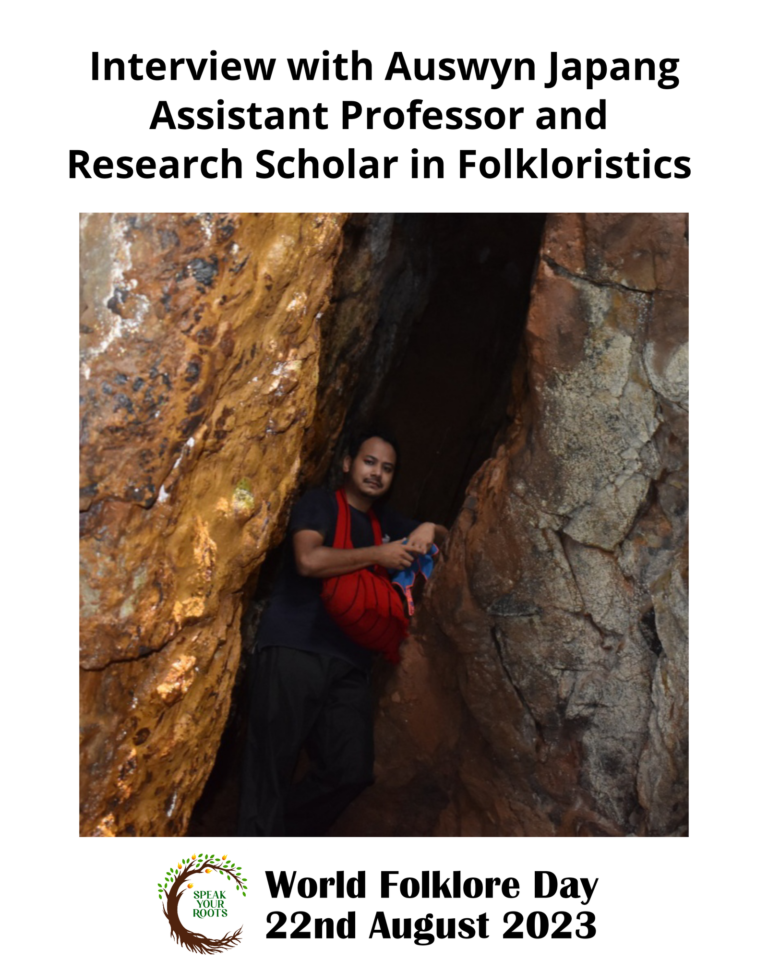
    Today on World Folklore Day, 22nd August 2023, we have an interview with Auswyn Japang @ausjapang who is an Assistant Professor and a Research Scholar in Folkloristics 🏞️🌿

    Khublei Shibun @ausjapang for expressing your thoughts and expertise on these questions, which have been made quite comprehensive! 😄🙏

    Auswyn says about research and fieldwork: "While every now and then I do get to engage in fieldwork, this is where true folklore resides. Some fieldwork involves treks of tremendous distances and they sometimes happen late in the evening as well. Sometimes without a streetlight. And no roads. Fieldwork also demands a great deal of endurance. I had to go down a sharp decline to reach a cave of religious significance whose folklore is unknown to a great many."

    We express our appreciation and gratitude for your hard work and the gruelling experiences that you have to go through to complete your research! 🙏🙏 Kudos to all research scholars who are who are plodding day and night to preserve and document Khasi folklore and folklife!

  • U Khaw na Ïing

    Contributing explanations from followers:

    1. "Ha ka jingmut i meiieid jong nga te i ong ba ki shait leh kumne khnang ban eh daw eh rngiew bad ban shai ka jingmut haba iaid ba ieng khamtam lei haba don ha lynti syngkien."

    2. "U Khaw Eh Rngiew! Ka kmie barabor haba mih ki khun ban leit jingleit jngai na la ïing ka ju pynkham bad ai hala ki khun ia une u khaw bad ha une u khaw ka shong ka jingngeit lymne ka bor ba maïan haka kmie ba une u khaw un long u nong sumar bad nong pyneh rngiew iaki khun sha kat kaba ki don haba ki jngai na la ïing jngai na la ka kmie!"

    3. "Ngi ki ba dang bat ia ka niam Khasi ngi shait thep khaw beit ha ki pla la ngi leit jan ne jngai. Ba I Mei I Pa ki shait ai ia ngi ba ngin lait na kiei kiei baroh ban bit ban biang ha ka leit ka wan ban da ban kiar u Sohkhaw Blei ia ngi. Ngam nang bha ban batai tang I ne hi."

    4. "Ha nga ka jingmut ka long ba kine ki symboh khaw ki long symboh sohkhaw Blei. Ban eh ka rngiew ka rwiang, u khaw eh khaw shan un ri un da un ker na ka lait ka thiem na u nongshun nong dusmon un pynbha ka bok ka nusib ban lait na ka tyrsaw tyrsain…"

    5. "Sha ngi ki Pnar, ka rukom leh kumtei ka mut ban eh ka bok ka nusib khnang ban poi suk wan suk sha iing. Ban da na ki nongkhap shniuh thlen. (low eh i maiń i kun)."

    6. "Ban eh ka bok ka rngiew, ym dei ban lah bha ia ka eksam, hynrei ban nym pang nym shitom, ban nym don ki jingpynwit ne jingpynthut ba kan iaid beit iaid ryntih."

    7. "Ka Kyrkhu Kyrdoh na ing na sem ba ngin poi suk poi saiñ sha ka jaka ba ngi thmu ban leit."

    8. "Ka iing kan don beit bad phi kat shaba phi leit. Kaei hi ba dei na la ka ing ka long ka ba khraw."

    9. "Batai iong pnar mo: U khoo pynkham juh ong ki heiwa wa pynkham manda lai cha jngai lane hei lai ialeh eksamin ter ter. low ni u khoo da e da ka nongrim heiwa u chim le chyien u khoo te kiap iow wiar i tiensar i sorsa i mynsien hawa lai wa wan hawa thoh wa tar. Man u kam ka dak iow pynskem yei mynsien yei pyrkhat pyrdeiñ. (There are also many reasons.. this is one of it)."

    10. "Khaw eh rngiew"

    11. "Ban pyneh rngiew"

    12. "Ban eh ka rngiew ka rwiang ha lynti syngkien."

    13. "I Mei i ju ai ia u khaw eh khaw shan ban eh ka bok ka rngiew, ban kyrshan ia ka met, ka mynsiem ban lait na ka thngan ka jingit, ban lait na ka tyrsaw haba mih na la Iing ban leh kano kano ka kam."

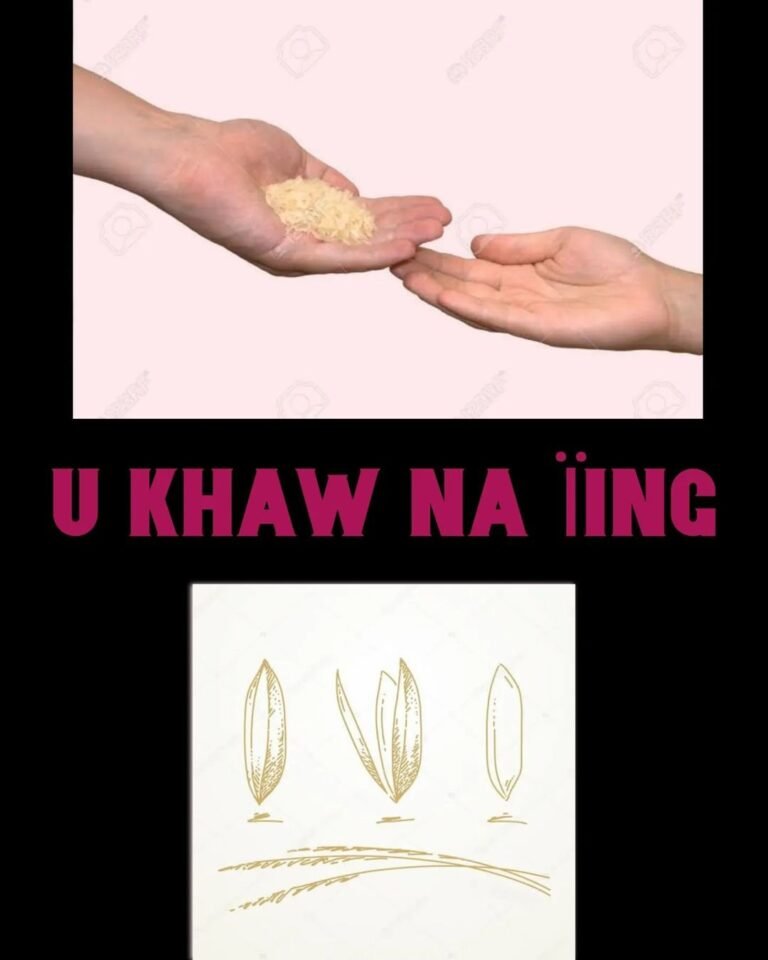
    "Khaw Eh Rngiew" and "Khaw Eh Khaw Shan" are a handful of rice grains given by a mother (or any member of the family) to a son or daughter (or anyone else in the family) who is about to embark on a journey, so that everything goes well without any problems. These rice grains serve as symbolic sustenance against hunger and thirst, protection from harm or ill-will and when chewed (some say only three grains) fear and apprehension (even shock from an accident) fade away.

    "Khaw Eh Rngiew" and "Khaw Eh Khaw Shan" imply the rice grains bless the one who possesses them with the strengthening of their essence/ personhood/ nature, preventing any misfortune that may befall them. It is also believed that the rice grains enhance the good fortune of a person and preserve their physical and mental health.

    Khaw Eh Rngiew" and "Khaw Eh Khaw Shan" are a handful of rice grains from home for your physical, mental and material well-being! 😃❤️🌾

    The Khasi belief in a handful of rice grains is rooted in culture and faith. Khublei Shibun @shillongftw for initiating this! 😄🙏

    Khublei Shibun ïa phi ruh baroh kiba la phah ïa ki jubab jong phi khnang ba ngin sngewthuh kham bha ïa kane ka dustur! 🙏🙏

    🟡 English explication by @speakyourroots

  • Excerpt from “Ka Um Bad Ki Deiriti ha ka Meirisawkun” (2008)

    Ki kyntien na Ka Um Bad Ki Deiriti ha ka Meirisawkun (2008) ba thoh da i Dr. Dondor Giri Nongkhlaw.

    Words from Ka Um Bad Ki Deiriti ha ka Meirisawkun (Water and Culture In The Environment) (2008) by Dr. Dondor Giri Nongkhlaw.

    Haiñ – Temperature

    Ri Shriaw – Desert

    Kreiding – Volcano

    Yanroh – Pollution

    Saiñ Umtli – Condensation

    Hap Brum – Precipitation

    Chamet Am – Liquid waste

    Chamet Tylli – Solid waste

    Here is the third list of unique words from the book Ka Um Bad Ki Deiriti ha ka Meirisawkun by Dr. Dondor Giri Nongkhlaw. 🌊🌀

    Dr. Dondor Giri Nongkhlaw is a Geomorphologist who has written several Khasi books focussing on the elements of the environment and their bond with Khasi life and culture.

    Kaba sngewtynnat ka long ba i Dr. Nongkhlaw i la thaw ïa kine ki kyntien da kaba shim bad bynrap na ki ktien Khasi-Pnar kiba bun jong ngi, ban pynman bad pynroi ïa kine ki kyntien kiba ngin pyndonkam ha ka jingpule Science bad Geography. 🙏👏

    What is good is that Dr. Nongkhlaw has coined these words by taking from the various Khasi-Pnar dialects that are there, to establish and add them to the language, so we can use them in the study of Science and Geography. 🙏👏

  • U Kba da i Rangskhembor Mawblei

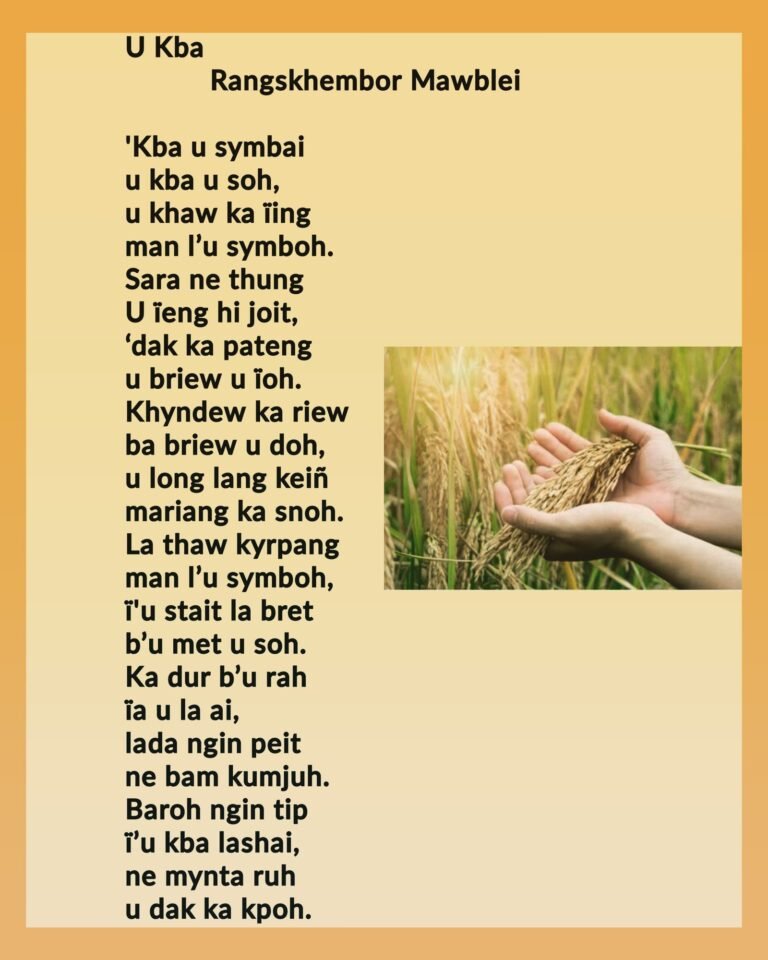
    Kba u symbai

    u kba u soh,

    u khaw ka ïing

    man I'u symboh.

    Sara ne thung

    U ïeng hi joit,

    'dak ka pateng

    u briew u ïoh.

    Khyndew ka riew

    ba briew u doh,

    u long lang keiñ

    mariang ka snoh.

    La thaw kyrpang

    man I'u symboh,

    I'u stait la bret

    b'u met u soh.

    Ka dur b'u rah

    ïa u la ai,

    lada ngin peit

    ne bam kumjuh.

    Baroh ngin tip

    Ï'u kba lashai,

    ne mynta ruh

    u dak ka kpoh.

    "U Kba" is an original Khasi poem written by @rangskhembormawblei , who is a sculptor and installation artist. He teaches in Mairang Vidyajyoti Inclusive Secondary School. He completed his BFA & MFA from Visva Bharati University, Kala Bhavana, Santiniketan.
    Khublei Shibun @rangskhembormawblei ba phi la ai lad ban sah dak ïa ka poitri jong phi! 😄🙏

    U kba u dei uba ngi ithuh ha man la ka thliew ïing Khasi bad u long uba pyntyllun ïa ka jingim jong ngi bad ïa ki samoi ka mariang ruh. Ngi sngewtynnat ba kane ka poitri ka ai ka jingmut kaba jylliew, kaba ai ki symboh kba kiba kordor 🌾🌾🏞️

    Rice paddy is known to every Khasi household, it moves the circle of life and the circle of seasons too. We appreciate poetry like this because it gives us a depth of meaning, it gives in each paddy valuable seeds of thought. 🏞️🌾🌾

  • Ka Pla Kwai

    Ko Pla Kwai,

    phi long kaba kynsai tam.

    La mynta ne lashai,

    ïa phi ngim kwah pyndam

    Ko Pla Kwai

    phi ai ka kmen ka syaid.

    La haba kut ne ba wai

    ïa phi te ngim kheiñ kai.

    Ko Pla Kwai,

    katno ka jingsngewshngaiñ

    haba ïohi ïa phi,

    namar phi pynkynmaw

    ïa ki sngi ki ïa ba phngaiñ.

    "Ka Pla Kwai" or the kwai pouch is a prominent object in Khasi collective memory. It comes in various shapes and styles and is made from cloth or more popularly rexine, with a size good enough to tuck in your bag 😄🍃 This pouch creates friendship and conversation, stories and laughter. Does anyone have a story of choking on kwai? 😅😂

    Ka pla kwai ka pynïoh paralok, ka pynmih ka khana ka parom bad ka rkhie sadhai. Phi don khana ba litlad kwai? 😅 Ne ba phi shit kwai? 🥵😂

    Khublei Shibun @bibianaryntathiang for this beautiful red pla kwai! Kaban ksaw ïa phi! 😀

    🟡 Poem by @speakyourroots

  • Interview with Naphibahun Lyngdoh, Archaeologist

    Celebrating International Day of the World's Indigenous Peoples, 9th August 2022

    1. What do you think is special about the history of the Khasis?/ Ha ka jingsngew jong phi kaei kaba kyrpang ne kynsai shaphang ka histori jong ki Khasi?

    Ka histori jong ngi ki Khasi ka long shisha kaba riewspah bad kaba kyrpang ha kiba bun ki liang. Haba ngi peit kylleng sawdong ngi lah ban ïohi ki jingtei jong ki mynbarim kiba bun rukom, naduh ki mawbynna-mawbyrsiew, ki jingkieng jyrmi, ki lynti hat, lynti rim, ki ïew rim bad kumta ter ter. Ka jingstad bad jingshemphang jong ki, ka pyni ruh ha ka jingynneh pynsah ïa ka Mei Mariang da kaba buh ia ki 'law kyntang. Kine ki pyni bad batai ia ngi ia ka histori kaba kyrpang jong ki Khasi. Ngi lah ruh ban ïohi ka jingkynsai ka histori jong ngi na ki riti-ki dustur, ka sap-ka phong, ka put-ka tem, ka shad-ka mastieh, ka riam-ka beit, ki khana-ki puriskam, bad kumta ter ter.

    The history of the Khasis is one that is special and truly rich in many aspects. When we look around, we see the rich architectural legacy of our ancestors, from the Megalithic culture (mawbynna-mawbyrsiew), the living root bridges, market routes, old roads, old markets and so on. Their intelligence and wisdom is seen in their ability to sustain and preserve the environment through the setting up of " 'law kyntang" or sacred groves. The uniqueness of our history is also showcased in our tradition and custom, our talent and skill, our music, our dances, our attire, our myths and folklore, etc.

    2. In your research, what have you found about the role of indigenous women in the preservation and transmission of traditional knowledge?/ Ha ka kam wad bniah jong phi, phi lap aïu shaphang ka bynta kaba ki kynthei Khasi ki sei bor ha ka jingpynneh bad pynsaphriang ïa ka jingstad jingshemphang bad jingtip ïa la ka riti ka dustur?

    Ha ka jingleit wad bniah jong nga sha ki shnong kiba pher bapher, nga lah shem bun ki riew kynthei kiba da ka buit ka sap jong ki, ki lah pynneh pynsah ïa ka riti ka dustur u Khasi. Kum ban shu ai nuksa, ka jingshna khiew ha ri Khasi-Jaiñtia lah sdang nyngkong eh ha Larnai kaba dei kawei na ki shnong ha Jaiñtia Hills, naduh ki spah snem mynshwa. Ha ka jingleit jong nga sha kane ka shnong, nga shem ba dei tang ki kynthei naduh kiba rit haduh kiba heh, kiba shna ia ki khiew ranei.

    In my research in different villages, I had found that women, through their intelligence and resourcefulness have been able to preserve our customs and traditions. For instance, the art of pottery making in the Khasi and Jaiñtia Hills was first started centuries ago in Larnai, a village in Jaiñtia Hills. When I went to the village, I found that not only older women but even young girls were involved in the making of the black earthen wares called khiew ranei.

    Haba nga leit pat sha ka shnong Mawsahew, nga shem ïa kawei ka sap bniah kaba dei ka jingthaiñ ki pla ïarong na u sla sohtrun bad kumba ngi tip ha ki por mynshwa, ha pyrthei baroh kawei ka dei tang ka Mawsahew bad ha Philippines ba ki pynmih ïa u ksai na u sla sohtrun (pinatex). Ha kane ka bynta ruh, nga shem ba bun na ki nong shna ïa kine ki pla
    ïarong kidei ki kynthei.

    When I had gone to Mawsahew, a village in Sohra, I came across a particular skili that is unique to our region and that was the weaving of ïarong bags from the fiber extracted from pineapple leaves. As we know, since time immemorial it was only in Mawsahew village and the Philippines that the skill of spinning thread from the fiber extracted from pineapple leaves (pinatex) had been practiced. Here too, I found that many of the weavers of the ïarong bags were women.

    Sha Umden, kaba dei kawei na ki shnong ka ka thaiñ Ri Bhoi, nga shem ïa ka jingthaiñ jong ki riam tynrai ki Khasi na u khniang ryndia bad hangne ruh bun na kiba trei ïa kane ka kam ki dei ki kynthei. Na ki nuksa kiba la kdew haneng, ngi lah ban ïohi ba ki kynthei ki sei ïa la i buit i bor bad ka sap ban pynneh pynsah bad pynsaphriang ïa ka jingstad bad ki riti ka dustur u Khasi. Hynrei kumban shu ong noh, ka jingpynneh ïa ka deiriti kaba riewspah jong ngi ka nym da urlong khlem ka jingiatrei lang shynrang bad kynthei.

    In Umden, a village in Ri Bhoi, I saw that the weaving of our traditional Khasi attire from the eri silkworm is done mostly by the women. From these examples cited above, we see that women have made use of their intelligence, strength and skill to preserve and spread Khasi wisdom, custom and tradition. However, the preservation of our rich culture will not be possible without the combined efforts of both men and women.

    3. What do you have to say to students who want to pursue their studies in History and Archaeology? / Phi don ban ong aïu ïa ki samla kiba kwah ban pule ha ki shlem jong ka History bad Archaeology?

    Nga ai mynsiem ïa kito kiba don shisha ïa ka jingthrang ban pule Archaeology khamtam ïa kito kiba don ïa ka jingthmu ban wad bniah ïa ka Histori jong ki Khasi naduh ki por ba rim-ba jah.

    As we all know, there is a dearth in research on the history of our people and region so I heartily encourage those who have a passion to study Archaeology to pursue research on Khasi history, dating back to undocumented times and ages so that they can contribute to the society as a whole.

    4. Please suggest books on Khasi history that we can read./ Sngewbha ai jingmut ïa ki kot aïu ba ngin pule shaphang ka histori Khasi?

    • A K Nongkynrih- Khasi Society of Meghalaya

    • David Roy- A Khasi Remembered

    • David Syiemlieh- Layers of History: Essays on the Khasi Jaiñtias

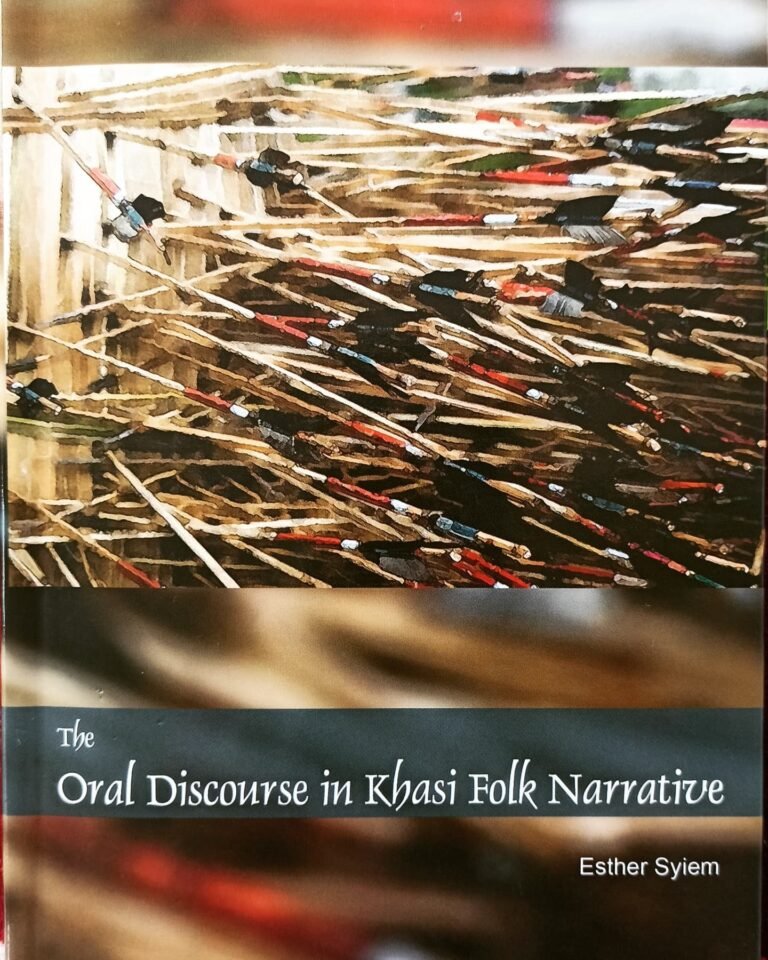
    • Hamlet Bareh- The History and Culture of the Khasi People

    • J N Chowdhury- The Khasi Canvas

    • P R T Gurdon- The Khasis

    • Shobhan Lamare- Jaiñtia Oral Narratives

    • Soumen Sen- Social and State Formation in Khasi and Jaiñtias Hills

    Ban rakhe ïa ka International Day of the World's Indigenous Peoples, ka Speak Your Roots ka la ïoh ban kren bad i @naphi_lyngdoh iba dei i Archaeologist. Ka kam wad bniah jong i ka la pynshai ïa bun ki phang jong ka histori bad jymbriew Khasi. ✍️🪖🛠️🏞️

    La thmu ban kren bad i kum iwei na ki kynthei iba trei ïa ka kam wad bniah shaphang ka jaitbynriew ban pynshai shuh shuh ia ka phangpdeng mynta ka sngi kaba dei "The Role of Indigenous Women in the Preservation and Transmission of Traditional Knowledge".

    Khublei Shibun @naphi_lyngdoh ba phi la pynsngew ïa ki jingmut bad jingthmu jong phi lyngba kane ka jingïakren! 🙏😄

    To celebrate International Day of the World's Indigenous Peoples, Speak Your Roots had the opportunity to talk with @naphi_lyngdoh who through her archaeological research has illuminated many areas of Khasi history and culture. 🪖🛠️🏞️✍️

    It is hoped that the talk with her as one of the women who is well-versed about the Khasi past will enlighten us about this year's theme "The Role of Indigenous Women in the Preservation and Transmission of Traditional Knowledge". 🙏😄

    🟡 Naphibahun Lyngdoh, is a Shillong based Archaeologist with interest in Ethnoarchaeology and Digital Archaeology.

    Her research focuses on abandoned settlements, megalithic culture and the ethnoarchaeology of this region. She is a recipient of the Nehru Trust for the Indian Collections at the Victoria and Albert Museum Award, 2019 for her research on the Megaliths of Mookyndur. Her research has been published in national and international journals.

    Congratulations Naphibahun and keep up the good work!!

  • Understanding the Significance of the Megalithic Remains of the Mawphlang Sacred Grove by N. Lyngdoh

    The research article by @naphi_lyngdoh entitled:
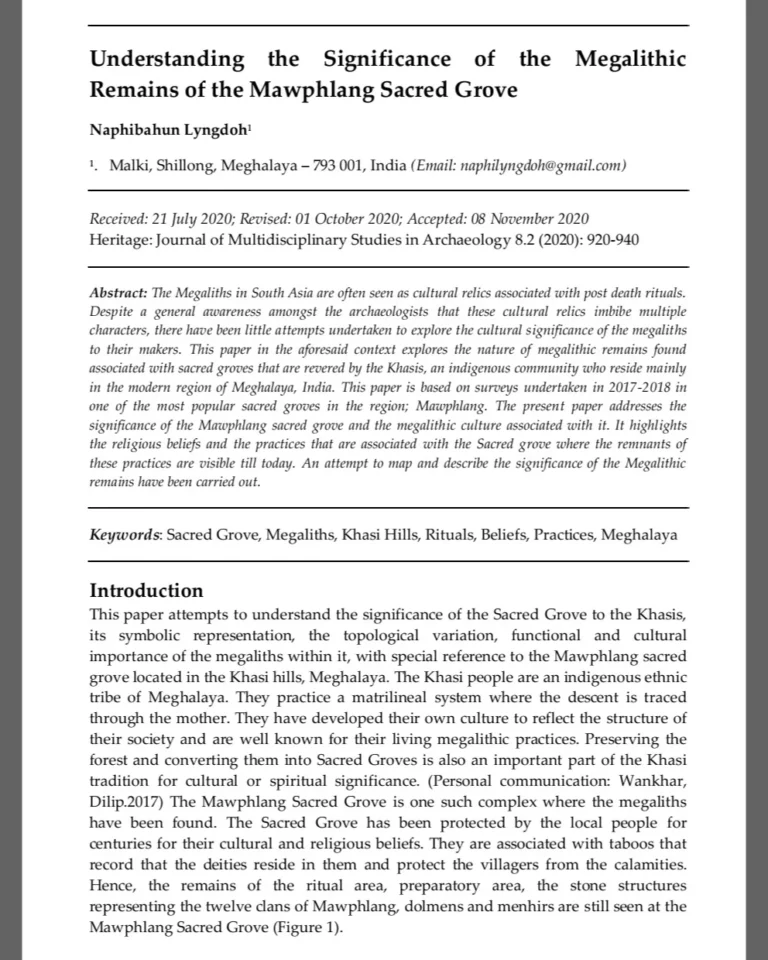
    "Understanding the Significance of the Megalithic Remains of the Mawphlang Sacred Grove" has been published in Heritage: Journal of Multidisciplinary Studies in Archaeology 8.2 (2020): 920-940 📝⛏️⚒️📏

    🟡 Please click on the link below to read the research article

    http://www.heritageuniversityofkerala.com/CurrentIssue.aspx?VID=82

    🟡 No part of this article may be reproduced in any form without the consent of the author. If used for citing in research, proper acknowledgement and citation which is accepted should be adhered to. All material for this content has been researched by @naphi_lyngdoh

    The article is a wonderful and interesting read on the megalith culture of the world famous Mawphlang Sacred Grove. Congratulations on your hard work. We wish you more success in the future! 👏👏

    Ngi sngew kmen bad sngew sarong ba ki khun samla jong ngi ki la khih la ksar ban nang pynïar ïa ka jingtip shaphang ka histori bad ka jymbriew la jong 😄🙏

    Naphibahun Lyngdoh is continuing with her research and work. She has completed her Master's in Archaeology and Bachelor's in History. Naphibahun is an alumna of St. Mary's College, Shillong, Meghalaya.

  • Ka Um Bad Ki Deiriti haka Meirisawkun, Part 2

    Ki kyntien na Ka Um Bad Ki Deiriti ha ka Meirisawkun (2008) ba thoh da i Dr. Dondor Giri Nongkhlaw.

    Words from Ka Um Bad Ki Deiriti ha ka Meirisawkun (Water and Culture In The Environment) (2008) by Dr. Dondor Giri Nongkhlaw.

    Desert – Ri Shriaw

    Condensation – Saiñ umtli

    Chlorophyll – Bseng jyrngam

    Water table – Thar shong um

    Run off – Tuid wut

    Watershed – Domphiahslap

    Precipitation – Hap brum

    Here is the second list of unique words from the book Ka Um Bad Ki Deiriti ha ka Meirisawkun by Dr. Dondor Giri Nongkhlaw. 🌊🌊🌀🌀

    Dr. Dondor Giri Nongkhlaw is a Geomorphologist who has written several Khasi books focussing on the elements of the environment and their bond with Khasi life and culture.