Tag: khasiculture

  • “Ka Um Bad Ki Deiriti ha ka Meirisawkun” by Dr. Dondor Giri Nongkhlaw (2008)

    Ki kyntien na Ka Um Bad Ki Deiriti ha ka Meirisawkun (2008) ba thoh da i Dr. Dondor Giri Nongkhlaw.

    Words from Ka Um Bad Ki Deiriti ha ka Meirisawkun (Water and Culture On The Environment) (2008) by Dr. Dondor Giri Nongkhlaw.

    Water molecule – Dana um

    Glacier – Ïor mluh

    Delta – Pyrwah

    River system – Phriang wah

    River basin – Phriang diang um

    Distributary – Pnat wah

    Waves – Dew

    Tides – Atphyllung

    Currents – Khriang

    These are some really interesting and unique words from the book Ka Um Bad Ki Deiriti ha ka Meirisawkun by Dr. Dondor Giri Nongkhlaw. 🌊🌊🌀🌀

    Dr. Dondor Giri Nongkhlaw is a Geomorphologist who has written several Khasi books focussing on the elements of the environment and their bond with Khasi life and culture.

  • Ka Nongkhynraw

    "Ka nongkhynraw" ka dei kaei kaei kaba la kamai katba ym pat shongkurim. Ki ju ong ruh ia ka nongkhynraw kum ka " ïutran"

    "Ka nongkhynraw" or "ïutran" is what one earns while unmarried.

    "Ka nongtymmen" ka dei ka nongkynti (ka hok la jong) ne ka jingdon jingem kaba hap ha ki nongïohpateng. Ki ju ong ruh ïa ka nongtymmen kum ka "nongmei nongpa".

    "Ka nongtymmen" or "ka nongmei nongpa" is the inheritance (rights and claim) or heirloom that falls onto successors or descendants.

    What is earned by an individual as theirs "nongkhynraw" and what is bestowed as inheritance "nongtymmen" are important markers of Khasi culture and society. 🧾💰

  • Ka Ramïa

    The Khasi word "Ka Ramia" may be described as a dream or a hallucination or an illusion.

    The following excerpts are from the Doctoral thesis entitled "Transformation, Tradition, and Lived Realities: Vernacular Belief Worlds of the Khasis of Northeastern India" written by Margaret Lyngdoh, University of Tartu.

    **No part of this thesis may be reproduced in any form without the consent of the author. Proper citation should be strictly adhered to when quoting any part of this research. All material for this content has been researched by Margaret Lyngdoh, Ph.D, University of Tartu.

    My research findings suggest that the "ramia" is a dream or vision world, which is inhabited by tigermen and women, ancestor spirits and the tiger deity. It is rather difficult to translate the implications of this term in a western context because the word "ramia" is also used by the Khasis to denote a kind of madness, when a person is not in his or her senses, or is not socially or personally aware of his or her surroundings. So, in the case of divine possession, for example, the person's spirit leaves the body, but the physical body remains and does its daily tasks. But if such a body, without its "rngiew", talks with someone else then the speaker does not make sense and is said to "kren ramia" (lit. 'talk ramia').

    In the Khasi context, a parallel reality is inhabited by the non–human entities and this may be comprehended only through movement into the dream/ vision state, the "ramia". Reality is not dualistically ordered or perceivable only to humans or to the dead. Reality is multiple, and variegated, dependent upon the beings who inhabit it and the purpose for which they inhabit it. The living environment is social and interactive with humans; moreover there exists a reciprocal, intentioned relationship. Human beings can apprehend alternate realities through the dreamworld ("ramia"), the world of the tigermen, the water realm of the spirit deities and the reality of the ancestors. For this to happen, for a human to access the alternate reality, a transformation is required. This is inclusive not only of the human–animal, but of the natural animal. I use the word human-animal, because in Khasi ontology, specially gifted individuals have the ability to transform into animals and deities.

    "Ka Ramïa" is an interesting and important concept of the Khasi worldview.

    Khublei Shibun @lieng_makaw for your research on this concept! 😄🙏

    What we need is to undertake in-depth research of Khasi culture and heritage in order to represent the community in the right light to the world. ✍️📚🏞️
    The importance of "searching and researching" cannot be stressed enough for all indigenous communities!

  • “Ki Mawbah”

    "KI MAWBAH"

    AN EXCERPT FROM KI DIENJAT JONG KI LONGSHUWA" FROM THE CHAPTER

    KI MAWBYNNA, KI MAWNIAM BAD KI KOR

    WRITTEN BY REV. FR. J. BACCHIARELLO, S.D.B.1974.

    Ki mawbah ki long ki mawthep shyieng jong ka kur, shisien lano, haba kata ka kur ka sngewdonbor. Ka jingheh jong u mawbah ka long kat kum ka jingheh jong ka kur. La ker kut baroh sawdong da ki maw, bad la tap na jrong da uwei u mawlyngknep ba la shah pynbiang sbak. Ïa ki mawbah ym ju don ba nud leh dusmon, namar ki Khasi ki burom bha ïa ki nongïap. Nalor kata ki tieng artat ïa ka snaïap ne ïa ki 'suidïap ba ki ju khot.

    "Mawbah" are stones that are erected as bone chambers of a clan, when the clan deems it suitable or possible to do so. The size of "Mawbah" is decided according to the size of the clan. Smaller stones form a surrounding circle which are then covered by a bigger flat stone called "u mawlyngknep", which is properly fitted as a cover. No one vandalises "Mawbah" because Khasis respect their dead and also because of the belief in spirits and ghosts.

    "Ki Mawbah" serve a significant purpose in Khasi belief 🙏🕯️ Khublei Shibun @sooki65 for sending this excerpt! 😄

    Photo credit: @sooki65
    Location: Nartiang

    English translation by @speakyourroots

  • U Dak Lai, The Number Three

    U Khasi u don ka rukom pyrkhat kaba kham kyrpang ha ka jingïadei bad ki dak "Lai". Haba thung mawbyrsiew, u pynïeng lai tylli ki maw ban shet jingshet. Haba phah khubor na kawei ka jaka sha kawei pat, u pyndonkam lai tylli ki ksah ne kyrwoh. Haba jer khun shynrang, u pyndonkam lai tylli ki kyrteng bad lai tylli ki khnam. Haba thang briew, u pyndonkam lai tylli ki 'nam tympem ban siat ha ka kpep ha ka por thang briew. Haba pyrta shnong, u pyrta lai sien lai wat. Haba thung mawbynna kur, ki thung lai tylli ki mawbynna na ka bynta u kñi bad ar ngut ki pyrsa. Haba poikha poiman lane haba iap briew, ki ap lai sngi lai miet ban trei ia kiwei pat ki kam.

    The Khasis have a unique perception and regard for the number "3" When they erect a "mawbyrsiew" which is the stone used as support for cooking in the hearth they use three stones. When they send a message or news from one place to another, they use three "ksah" or "kyrwoh" which are rings made from threads of bamboo. When they choose a name for a son during the name ceremony, they choose from three names and also keep three arrows. At the cremation, the Khasis shoot three arrows called " 'nam tympem" in the place belonging to a specific clan for cremations. When there is a public announcement, the "sangot" addresses the people three times before making the actual announcement. When they erect the clan moniliths, there are three moniliths: one for the maternal uncle and the other two for his nieces or nephews. When there is a wedding or a funeral, the Khasis wait for three days to perform other work.

    The number "3" has a significance that is wide ranging for Khasis and Pnars. Here is an excerpt from U Khasi Bad Ka Mariang by Rev. Dr. Ïarington Kharkongor. 3️⃣3️⃣3️⃣

    🟡 English translation by @speakyourroots

  • The Oral Discourse in Khasi Folk Narrative by Esther Syiem

    The Oral Discourse in Khasi Folk Narrative by Dr. Esther Syiem @meiithei (2011) offers analysis and insight into Khasi orality. The book discusses the Khasi world view, showing how the oral tradition thrived in the past and how it is still a powerful presence among the Khasi community in the twenty-first century.

    This book will especially be beneficial for researchers and anyone wanting to know and understand the Khasi oral tradition in an in-depth way.

  • An excerpt from”The History and Culture of the Khasi People”

    In this chapter entitled "Source of History" the author says that an effort has been made to write about the history of the Khasi people from the materials that they could gather, to "present a detailed account of both the political and cultural life from its earliest beginnings to the present day."

    Under the category of foreign accounts, the author says: Classical sources like the account of the Greek, Roman and Chinese starting from the 5th Century BC referring to Assam in general, indirectly allude to important socio-ecomomic and cultural conditions of the Khasi during the early period. Qazim's mention of fruits like citron, lime, lemon pineapple, orange, etc. produced from Assam in the medieval age refers to the cultivation of these fruits by the Khasi people who have grown them through generations till the present day.

    Mention of iron smelting, work in gold, silver and copper in Assam, in the early and mediaeval period refers to similar Khasi enterprises (of which we have evidence). On the proper basis of identification, we can make use of the foreign accounts and classical sources.

    References:

    1 Qazim was one of the earliest Muslim travellers to Assam.

    2 P. C. Choudhury, The History of the People of Assam to the 12th Century. A.D. and Ka Ryngi, Vol II, No. 1 and Vol II, No. 2.

    This is a great book you have to read! Thank you Miss @indariwarjri for the reminder! 🤗🤗

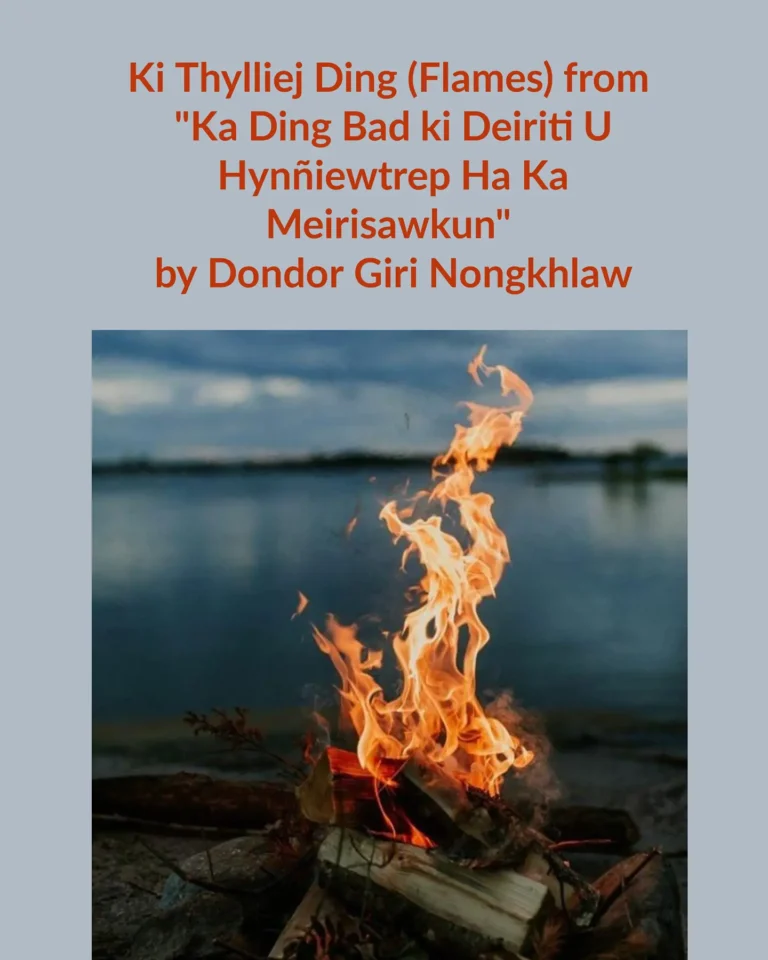
  • Ki Thylliej Ding (Flames) from “Ka Ding Bad ki Deiriti U Hynñiewtrep Ha Ka Meirisawkun”

    Ki Thylliej Ding

    Haba ka ding ka meh bad pyning ïa ki tyllaw ka pynmih ïa ka jingkhaleh kaba ki ong ki thylliej ding. Kine ki thylliej ding ki don lai rukom ki rukom khaleh ba la tip kum ka pyning, ka lap lap bad ka jliah.

    Ka Pyning: Kane ka long u thylliej ding ba pyning ïa ki tyllaw. Ka dei ka bording banyngkong ba pyning ïa ki tyllaw.

    Ka Laplap: Kane ka long ka bynta ba ar jong ki thylliej ding kaba ai lad ïa ka pyning ban ïaineh ding ha ki tyllaw.

    Ka Jliah: Ka long ka bynta ba ha khlieh duh jong ka ding kaba shuiñ ïa ka lyer na trai khiew ba shet jingshet bad ka long ka bynta kaba lah ban pur ding sha kiwei ki tyllaw.

    Types of Flames

    When a fire alights and touches a firebrand, it grows in degree and produces what we call flames. Flames have three ways in which they function and intensify. These are Ka Pyning, Ka Laplap and Ka Jliah.

    Ka Pyning is the first flame that burns a firebrand.

    Ka Laplap is the second part of a flame which allows Ka Pyning to sustain the fire in the wood.

    Ka Jliah is the topmost part of a flame which touches the air, which strikes the bottom of the pot while cooking. Ka Jliah is also the part of the flame that will spread the fire to other pieces of wood.

    Have you ever stared into a fire? How it is made up of so many flames…the element which gave many civilisations the thrust to empower themselves 🔥🔥🔥

    Dr. Dondor Giri Nongkhlaw is a Geomorphologist who has written several books in Khasi which discuss the elements of the environment and their strong bond with Khasi life and culture.

    🟡 English translation by @speakyourroots

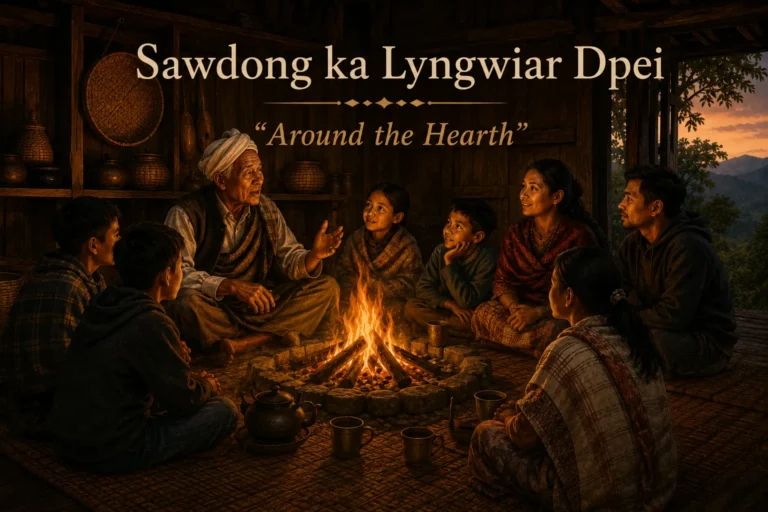
  • Sawdong ka Lyngwiar Dpei

    "Sawdong ka Lyngwiar Dpei" or "Around the Hearth"

    "Sawdong Ka Lyngwiar Dpei" ka dei ka jingong ne ki kyntien kiba ngi ju pyndonkam ban batai ïa ka por kyrpang ha man ki thliew ïing jong ka jaitbynriew Khasi ha kaba baroh shi ïing shi sem ki ju ïa shong harud ding, ban ïa sngap ban ïa khana. Dei ha kane ka por ba ki khanatang bad ki puriskam u mynbarim ki khie im lyngba ki riew rangbah ne ki riew tymmen kiba dei ki nongkren nongkhana. Ha kane ka por ruh, ki tymmen ki ju shim ïa ka kabu ksiar ban sneng ban kraw, khamtam eh ïa ki khun ki ksiew ki ban dang san ki ban dang samla, namar ba baroh shi ïing shi sem ki ïa don lang ha kane ka por.

    Katba ngi dang jam sha ka ïa jong ka pyrthei stad pyrthei thymmai, kata ka ding lane ka lyngwiar dpei jong ka ïing kum ban shu ong noh ka lah sang ban jah noh namar bun na ngi, ngi la ïa tei da ki ïing ki ban ïahap bad ki por mynta, kumba ngi ïohi ha ki phlim, ha ki TV, ki magazine bad kumta ter ter. Kuma, ngi la hap ban shu mutdur noh ïa kata ka ding lyngba ki dur ne haba ïohsngew ha ki khana. Te kumno ngin pynim ban pynneh biang ïa kata ka ding kaba la sdang ban duh noh-Ka ding kaba wanrah ïa ka jingsngew shngaiñ, sngew shongshit haba ngi sngap ïa ki khanatang, ki puriskam bad ki jingsneng-jingkraw kiba shongñia, kiba shong nongrim bad lehse bun na ngi, ngi lah duh noh ïa ka da kaba im tynneng kum ki nongwei.

    Hooid lehse ngi dang lah ban pynim ïa kane ka ding jong ka lyngwiar dpei kaba dei ka rukom tynrai jong ngi da kaba ïalum shi ïing shi sem, shi paralok ban ïa kren ïa phylliew jingmut shaphang ka jymbriew, ka histori bad ka ktien ka thylliej. Ngi hap ban shim ïa kane ka sienjam wat lada dei tang harud ka miej bamja, haba ïa shong dih sha, haba ïa shong pyllun ïa ka shawla ne ha kano kano ka por wat lada kam don shuh kata ka ding ne ka lyngwiar dpei, hynrei kan ïai rhem hapoh jong ngi lada ngi pynneh ïa ka rukom ïathuhkhana bad ïa sneng ïa kraw ha ki por kyrpang kiba sngewbit ha man la ki longïing.

    Ma ngi hi shimet ngi dei kita ki lyngwiar dpei ki ban pynpaw ïa ka jingstad bad jingshemphang jong ki longshuwa-manshuwa jong ngi.

    "Sawdong ka Lyngwiar Dpei" or "Around the Hearth" are words that are used to describe the time in a Khasi family when family members would sit around the hearth, the flames giving them warmth and light. It is at this time that stories are told, our oral tradition becomes alive, from the words and expressions of an elder of the family.

    As we move into the first quarter of the 21st century, the physical hearth has gone absent from our modern homes and we are left to imagine the embrace of the warm flames of a hearth from pictures or from books. How do we recreate that atmosphere, that feeling of being together almost as one breath and one mind as we listen to folktales, legends, myths and ponder on teachings which contain truths that we may have lost in our rush into globalisation?

    Perhaps we can recreate the hearth by gathering our family and friends to talk about our culture, history and language. Because we need to revive the interest and love for what is our own, for what we belong to. We may not have our physical hearth but we can create a symbolic "lyngwiar dpei" by talking, by listening, by reading, by understanding with clear hearts and minds. A clear heart and mind with a need to know who I am and what am I going to become?

    In a way, we are the hearth, we are the "lyngwiar dpei", we are a walking talking hearth who emanate the light of our ancestors' knowledge and wisdom.

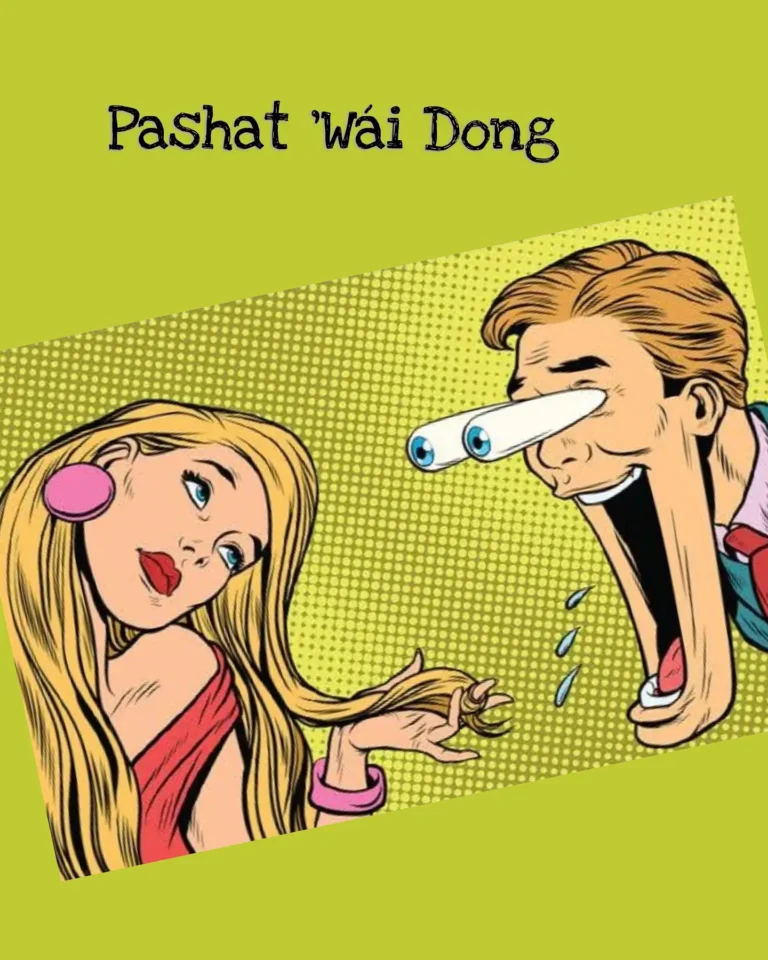
  • Pashat ‘Wáidong

    Pashat 'waidong ka dei ka jingaidak ka samla kynthei ïa u samla shynrang da kaba ai 'wai dong. Ka long ka rukom ai sngewbha ka samla ïa u briew uba ka ïapmat. Ïa kane la ju leh da kiba khraw bad ki syiem hyndai.

    "Pashat 'waidong" is an old practice where the woman gives betel nut that has been cut and rolled with betel leaf to the man with whom she is enamoured. This indicates her liking of him. The 'waidong is presented as a gift from the woman to the man and this was mainly practised by royal and noble families.

    "Pashat 'Wáidong" is an old Khasi practice (which may be described as a courtship practice) where the woman chooses and shows to all the man whom she is besotted with. 😁🤩😁🤩

    Te haba kumta phei ki Thei ba stad to pynkhreh noh u 'wáidong haba phei lah iohi ia u Rang ba biang nadong shadong 😂😂 Phei ki Rangkynsai roh, donbok phin ia ioh u 'wáidong ba kynsai kum ma phei! 😄😄

    Source: Ka Dienshonhi: The Khasi Encyclopaedic Dictionary by Rev. Dr. Ïarington Kharkongor