Tag: khasilanguageintranslation

  • Ka Ktien “Sahnud”

    Kumno ngin pynkylla ïa ka kyntien "sahnud" sha ka English? Ym don tang kawei ka kyntien kaba lah ban batai ïa baroh ki jingsngew haba pyndonkam ïa ka kyntien "sahnud". Namar kata ïa ka jingmut jong ka ngin kham sngewthuh lada ngi pyndonkam ïa kiwei pat ki kyntien.

    Khublei Shibun ïa baroh kiba la jubab ban ïarap ban batai ïa ka kyntien "sahnud"! 🙏😄

    .

    .

    .

    It was asked about how the Khasi word "sahnud" could be translated into English. Turns out, we cannot use only one word to explain the meaning of "sahnud". A couple of other words have to be used to explain the meaning and use of "sahnud".

    Thank you to all who helped to explain the meaning of the word! 🙏😄

    #khasiwords #khasiwordusage #khasiintranslation #khasilanguageintranslation #khasilanguageconservation #indigenouslanguageconservation #speakyourroots #speakyourrootschallenge #talklocal

  • Khasi words and their English equivalents

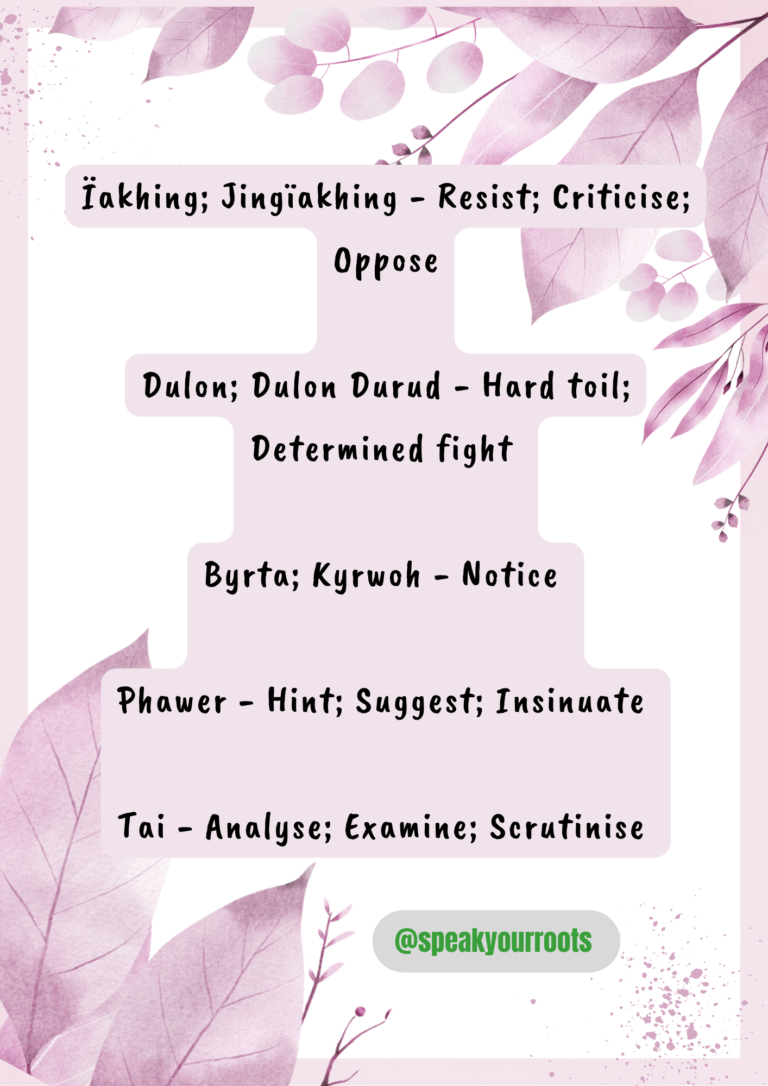
    Sa shisien ki kyntien Khasi bad ki jingmut jong ki ha ka ktien English! 😃🅰️🆎🅱️

    .

    .

    .

    Here are some Khasi words and their English equivalents. 😃🅱️🆎🅰️

    #habaimakaktienimkajaitbynriew

    #khasiwordsusage #khasilanguage #khasilanguageintranslation #khasilanguageconservation

    #speakyourroots #speakyourrootschallenge #talklocal

  • Khasi words and their English equivalents

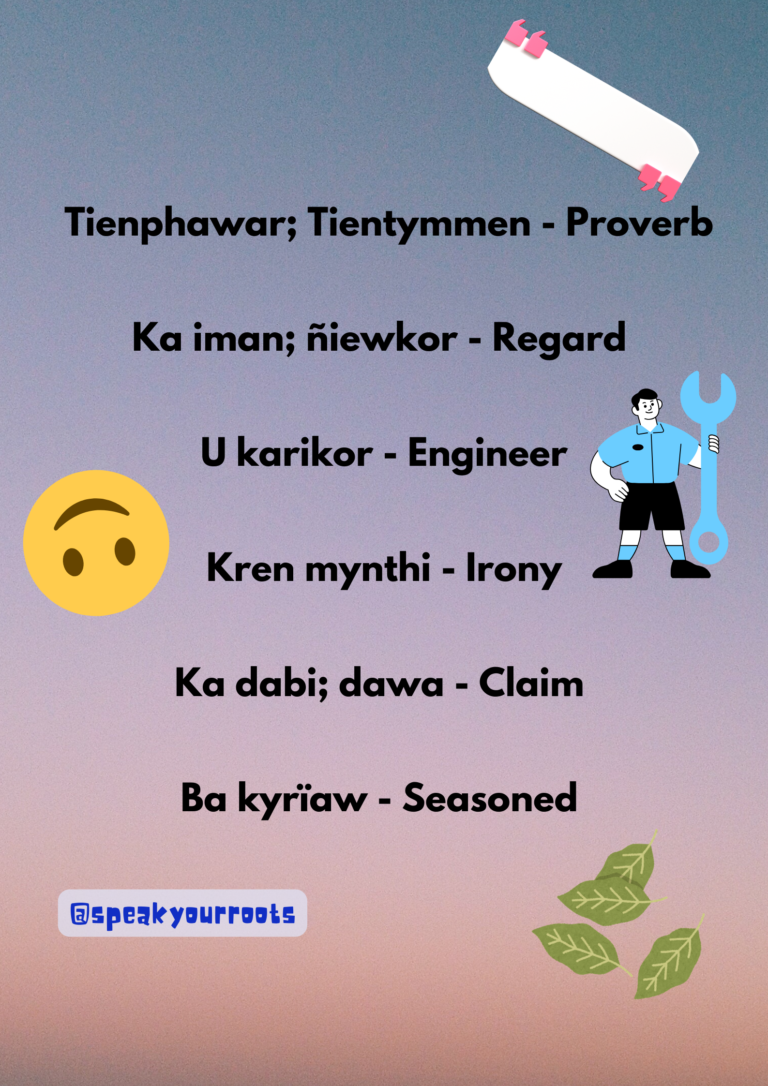
    Kine ki dei sa shi hud ki kyntien Khasi bad ka jingmut jong ki ha ka English. ✍️🗣️

    To ngin ïa pyndonkam ïa ki!

    #habaimkaktienimkajaitbynriew #khasiwordusage

    #khasiwords #khasilanguage #khasilanguageconservation #khasilanguageintranslation #khasitranslation #khasitoenglish #khasiwriting #speakyourroots #speakyourrootschallenge #talklocal

  • Ingkhong Shyllangmat

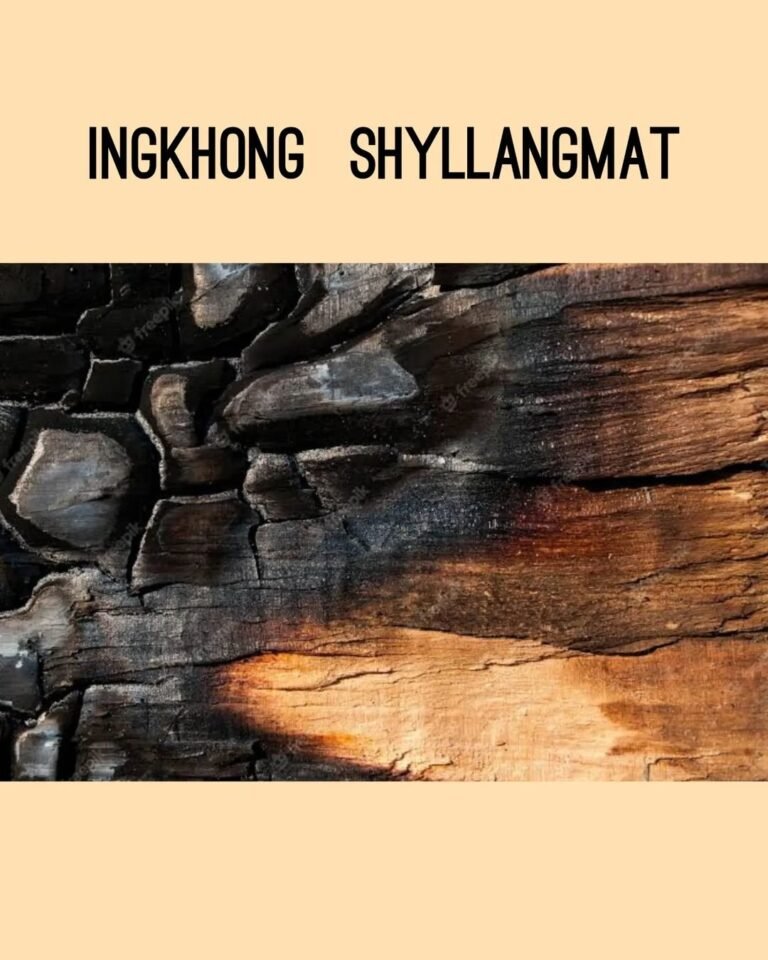
    Ingkhong-shyllang-mat (noun) U dei briew uba la shah khi lainuid bad shah kynthah dieng tyllaw ding na shyllangmat namar ka pap ka sang kaba u la leh ha shnong ha thaw bad kim ju shah ïa u ban shong ha shnong.

    Ka Dienshonhi: The Khasi Encyclopaedic Dictionary

    Ingkhongshyllangmat (noun; adjective) A a person who has no allegiance to one's own people; a traitor.

    – Ki nongialam ingkhongshyllangmat; traitorous leaders.

    As a verb ingkhong shyllangmat is to betray.

    – Ani, baroh ki la ingkhongshyllangmat ïa la ka ri!

    – Goodness! Everyone betrayed their country!

    Learner's Khasi Dictionary with English-Khasi Index

    Ha kato la kylli ïa ka jingmut jong ka ktien "ingkhong shyllangmat". Khublei Shibun ïa baroh ki jubab kiba phi lah phah 🙏🙏 Ki jubab ki la ïarap ban nang sngewthuh ïa kane ka rukom ong.

    Hangtei haneng la ai ïa artylli ki jingbatai ïa kane ka ktien. Kyrmen ba ngin kham sngewthuh shai lyngba kine 👍 Ka ktien "ingkhong shyllangmat" ka kit ha ka ka jingmut kaba khia kumba phi i haneng bad ka dei ruh ka jingkynnoh kaba eh bad khor bha ïano ïano.

    The Khasi word "ingkhong shyllangmat" has both a literal and symbolic meaning behind it as is seen from the two references cited above. It is a harsh punishment and a strong accusation against someone.

  • Ka kyntien Khasi “Kai”/ The Khasi word “Kai” by Janice Pariat

    In Khasi, the adverb "kai" suggests a mood that has no English equivalent and yet is very much a part of the lexicon of Khasi identity. "Kai" possesses a sense of pleasurable purposelessness, suffixed to a whole host of activities – "Ïaid kai" (to ramble, to stroll in the manner of a flaneur); "shong kai" (to sit around), "peit kai" (to just look), "leit kai" (to go on a leisurely outing) and so on.

    Perhaps "hanging out" or "chilling" best approaches the feeling contained in the word -although both these terms indicate an attitude that involves some premeditation or conscious choice and somehow do not quite capture the relaxed, joyful spontaneity of the easy-going "kai" with its wonderful connotations of having the freedom to roam, to look, to relax – "for free" – in a world that is not bound by the demands of time.

    Come, ïaid kai with me.

    Inspired by Janet Hujon; Tales of Darkness & Light

    Ka kyntien Khasi "kai" ka dei ka kyntien kaba ngi ju pyndonkam man la ka por tangba ngim ju poi pyrkhat ban batai bha ïa ka 😀

    Khublei Shibun @janicepariat ïa ka jingpuson jong phi kaba sngewtynnat bad kaba sngew kordor! ❤️❤️ Ki don ki kyntien ki bym lah ban pynkylla shisha ïa ka jingmut jong ki sha kawei pat ka ktien.

    📸 @janicepariat

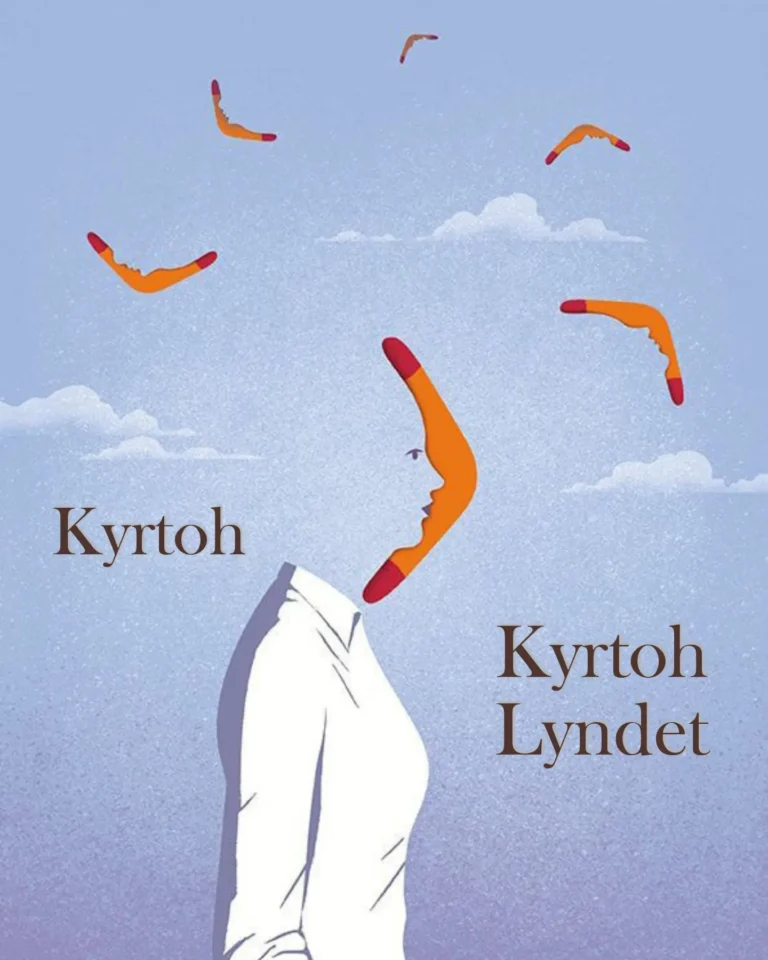
  • Kyrtoh Lyndet

    Ka ktien "kyrtoh" ka mut ban rynsied ne ban kynthih; ka thew ruh ïa ka jingryngkoh nalor ka jingker.

    Ka jingong "kyrtoh lyndet" ka mut ka jingwan ne ka jingpashat jong ka markylliang ne ka bainong jong kano kano ka kam kaba la leh u briew.

    The Khasi "kyrtoh" means to leap or to jump. The word also implies leaping over a boundary.

    The Khasi phrase "kyrtoh lyndet" is the coming or manifestation of retribution, meaning the reward or punishment of anything that is done by a person. "Kyrtoh lyndet" emphasises a boomerang effect or a rebound effect to anything that is done in life.

    The Khasi words "Kyrtoh Lyndet" affirms the consequences of anything that is done by us in life. 🌀🪃🪃

    🟡 Collated and modified from Ka Dienshonhi: The Khasi Encyclopedic Dictionary and Learner's Khasi Dictionary
    🟡 English explication by @speakyourroots
    🟡 Art by Davide Bonazzi

  • Sa shi hud ki kyntien

    Seasoned; Full grown – Kyrïaw

    Treasurer – U Khajanshi: U Nongkynshew

    Tide – Ka Jwarbata: Ka Atphyllung

    Stipulate – Ka Miaj

    Sheet of paper – Ka Shi Taw

    Scrutinize – Peitkhongkhai

    Sa shi hud ki kyntien kiba ngi lah ban pyndonkam ha ka kren ka thoh man la ka sngi. 🗣️✍️🆎

    🟡 Sources: Rev. Ïarington Kharkongor and Dr. Dondor Giri Nongkhlaw

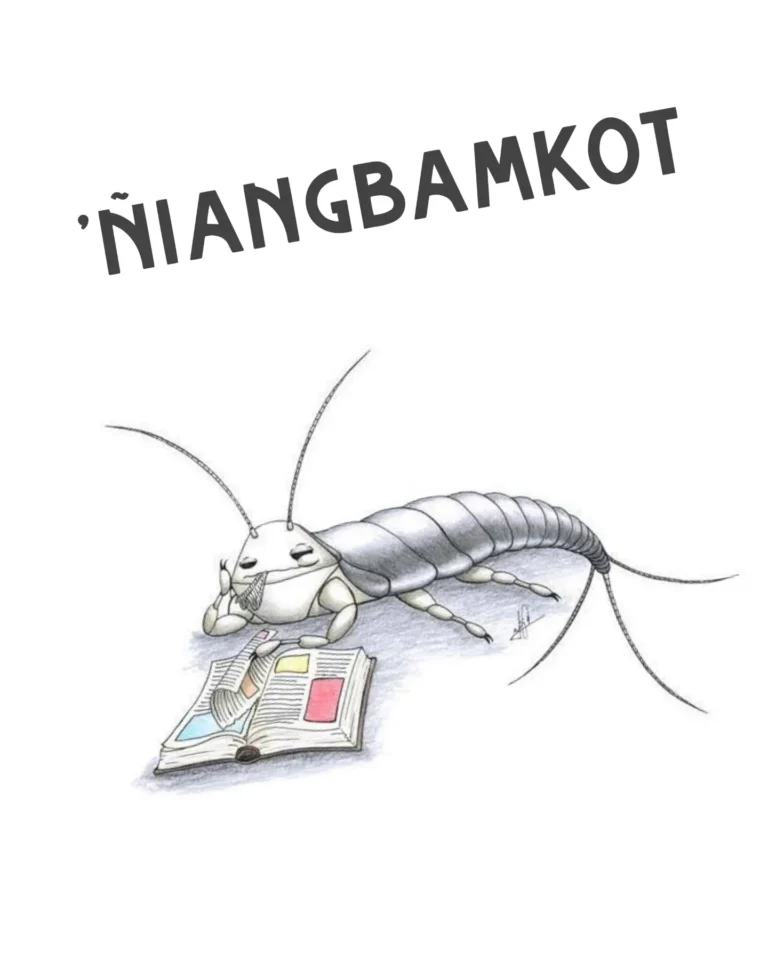
  • ‘Ñiangbamkot

    Phi lah ju pyrkhat ne em ïa ka kyntien " 'ñiangbamkot"?

    Ka dei ka kyntien kaba la pynkylla beit shisur shidur na ka kyntien phareng "bookworm" kaba thew ïa ki briew kiba khlaiñ bad sngewtynnat ban pule kot. Shuh shuh, kane ka jingpynkylla ka dei ruh ka jingbatai ïa ka kam ne ka jingbam jong ki "silverfish".

    Have you ever thought of the Khasi word "'ñiangbamkot"?

    The word is a literal translation of the English word "bookworm" which refers to a person who has a passion for reading. What's more is the translation emphasises the function of silverfish which is to eat paper. In Khasi" 'ñiang" is a shortened form of "khñiang" which means insect, "bam" means to eat and "kot" means paper.

    It may be said that " 'ñiangbamkot" is a recent translation because Khasis arise from an oral tradition which would not have given importance to being a "ñiangbamkot" 😅📖🐛

    Dedicated to all you worthy ñiangbamkotsss! 😁😂

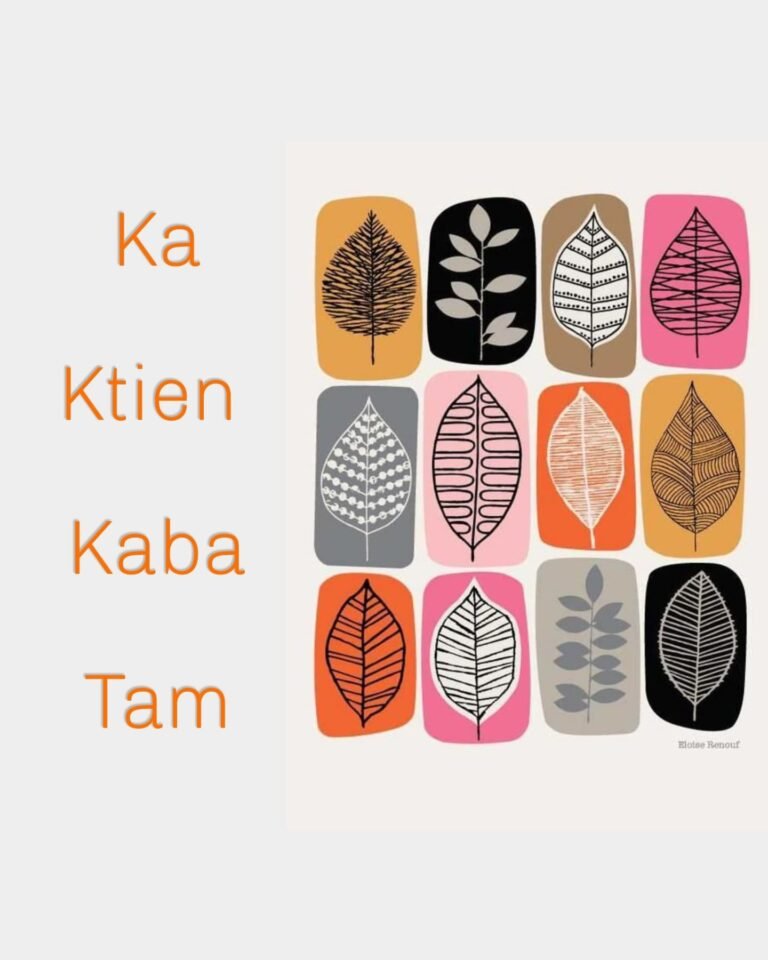
  • Ka ktien kaba tam

    "Ka ktien kaba tam" ka dei ka jingong kaba ngi ju ïohsngew na ka por sha ka por. Ngi lah ban batai ba kane ka thew ïa ka jingshai, ka jingkordor, ka jingbha, ka jingdonburom bad ka jingshongkhia jong ka rukom kren jong no jong no. Kine ki kyntien namar ki long kiba la mih na ka jingbha ki kham kordor ban ïa kano kano ka jingai ne ka kam.

    Namar ba ki Khasi ki kheiñ kynsai ïa ka ktien, ka ktien kaba kren ka long kaba donkam bha. Ym lah ban don ka jjngbymsuidñiew ne jingkhlemakor haba kren ïa kaei kaei. Kawei pa kawei ka kyntien ka dei ban long kaba shongsbai bad shongnia da ka jingmut bad ka jingshisha.

    Ha kawei pat ka liang, ka ktien ruh ka donkam ïa ka jingsngewthuh. Lada u nongsngap um sngewthuh ïa u nongkren kata ka long ka jinglehnohei. Ka bor jong ka ktien kan neh tang lada u nongsngap u pyrkhat bad sngewthuh ïa ka. Ha kane ka rukom u nongsngap u ban sa long u nongkren ïa ki pateng ki ban nang wan, u bat ïa ka bynta kaba kyrpang.

    "Ka ktien kaba tam" is a phrase that refers to the clarity, value, goodness, honour and dignity in the way a person speaks. Because of the quality of these words they are held to be more valuable than any gift or deed.

    As Khasis hold the spoken word in high esteem, anything that is spoken is deemed as important. There should be no carelessness or indifference when speaking to others. Each word is worth its weight in gold, possessing a depth of meaning and truth.

    On the other hand, the spoken word requires understanding. If the listener does not understand the speaker then it is useless. The power of the spoken word will endure if the listener thinks about and understands what is being said. In this way, the listener who will be a speaker to future generations, also plays an important role.

    Here is an attempt to explain the Khasi phrase "Ka ktien kaba tam" 🗣️🗣️Sometimes words are stronger than any action or gesture and this is why Khasis emphasise on the intrinsic value of the spoken word. 🌈💫

    Please feel free to add more in the comments!

    🟡 Khasi and English explication by @speakyourroots

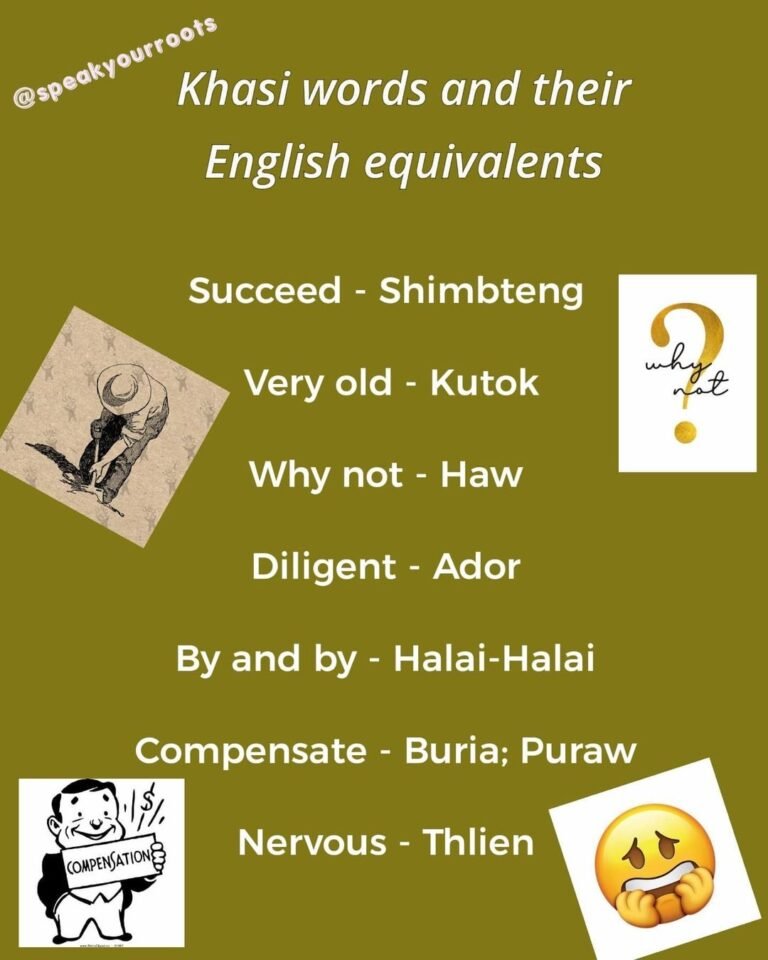
  • Khasi words with their English equivalents

    Succeed – Shimbteng

    Very old -Kutok

    Why not – Haw

    Diligent – Ador

    By and by – Halai-Halai

    Compensate – Buria; Puraw

    Nervous – Thlien

    Here is another list of Khasi words with their English equivalents 🤓🤓

    #habaimkaktienimkajaitbynriew

    A people are alive when their language is alive!