Tag: meghalaya

  • Ñiuma

    Ka ktien "Ñiuma" ka dei ka ktien kaba pyndonkam haba mut ban ong ym lei lei ne koit. Kum haba ong “Ñiuma, nga mynjur ïa kaei kaba phi batai".

    Ñiuma is a Khasi word that we hardly hear nowadays. It means yes, alright or very well. In a sentence we can say: “Ñiuma, nga mynjur ïa kaei kaba phi batai" which translates into "Yes, I agree to your explanation."

    Ñiuma" sent by @laurentium2021 😄 Thank you!
  • Ieid Thep Mynsiem

    The Khasi phrase "ieid thep mynsiem” translates to a love which literally keeps someone safe in one's very own soul. It is a phrase used to describe familial love, love amongst the closest of friends, or even lovers.

    "Ieid thep mynsiem" sent by @laia.naomi 💜💜💜 Khublei Shibun!

  • Laiphew

    The connotation or the Khasi term "Laiphew" which literally means thirty, as a limit ordinal is without a successor and it is a marker of a process of constitution of a community. It is not just a representation of the number 30, but it is supposed to be an idiolect of 'all types'. For example, "Laiphew Syiem'' means many chiefs; "Laiphew Mrad" means many animals. Philosophically speaking the Khasi concept of all and many as a generic concept is simultaneously concrete and general. Concept of numbers to instantiate all or many are place markers within the structure of all or many, which is simultaneously predicative and impredicative. Such predicative and impredicative application of linguistic concepts in describing the constitution of Khasi society is a narrative construction of Khasi selfhood.

    "Laiphew" sent by @manbha.syiemlieh Thank you! An extremely interesting entry! 😄😄

    Idiolect: the language or speech pattern of one individual at a particular period of life.

  • U ñiang ryndia

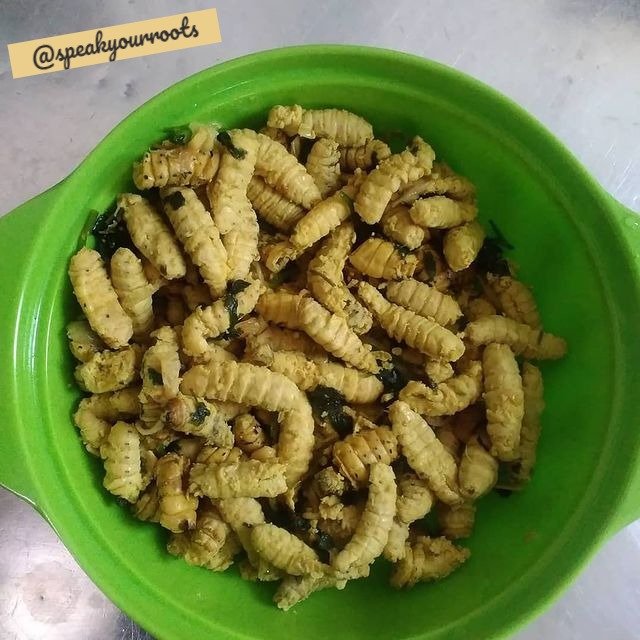
    "U ñiang ryndia" or the mulberry worm is a Jaiñtia delicacy that many might cringe to see. But for those who have the taste buds for it, u ñiang ryndia conjures a distinctive native feel.

    As a simple meal it can be boiled and then mixed with onion, ginger and salt.

    It can also be made into a more elaborate curry with onion, garlic, neiiong/ naiiong (black sesame/ black til), turmeric and then garnished with garlic leaves and coriander.

    U ñiang ryndia is available in the summer months!

  • Tana

    "Tana" is a Pnar word which means "handkerchief". Nowadays it is not used by everyone. It is the older generation who used it and it is mainly confined to jowai, Meghalaya. The Pnar word that is now commonly used for handkerchief is "rumar". "Rumar" in Pnar and "rumal" in Khasi are borrowed words from the Hindi language.

    Thank you @shiny_joan !