Tag: pnar

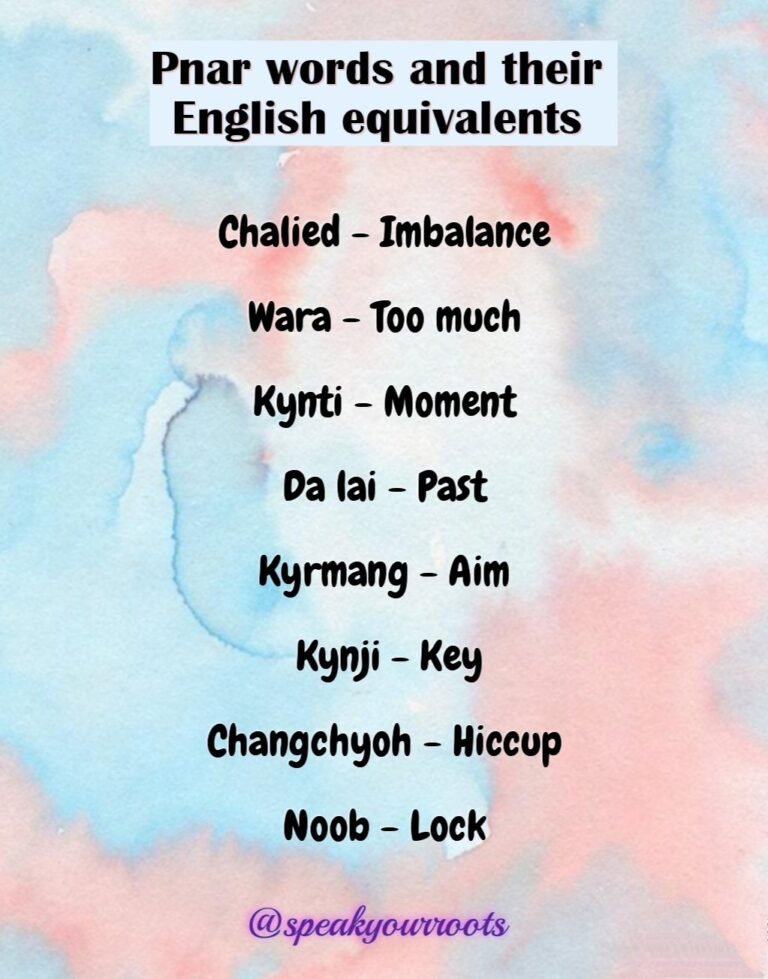
  • Pnar words and their English equivalents

    Kine ki dei ki kyntien Pnar kiba la phah da i @xdtnoahjupejackllthmanar 😄

    Khublei Chibōn wa phah phi ya kini ki kyntien Pnar, yow tip i wei yow nang i u pynemkam ha ka klam ktien Pnar. 🙏🙏

    Here are a few Pnar words and their English equivalents sent by @xdtnoahjupejackllthmanar

    🟡 Source: Pnar-English Dictionary by Sajeki Passah (2013)

    #pnarlanguage #pnarwords #pnarlanguageconservation #jaiñtiahills #jowai #indigenouslanguages #indigenouslanguageconservation #speakyourroots #speakyourrootschallenge #talklocal

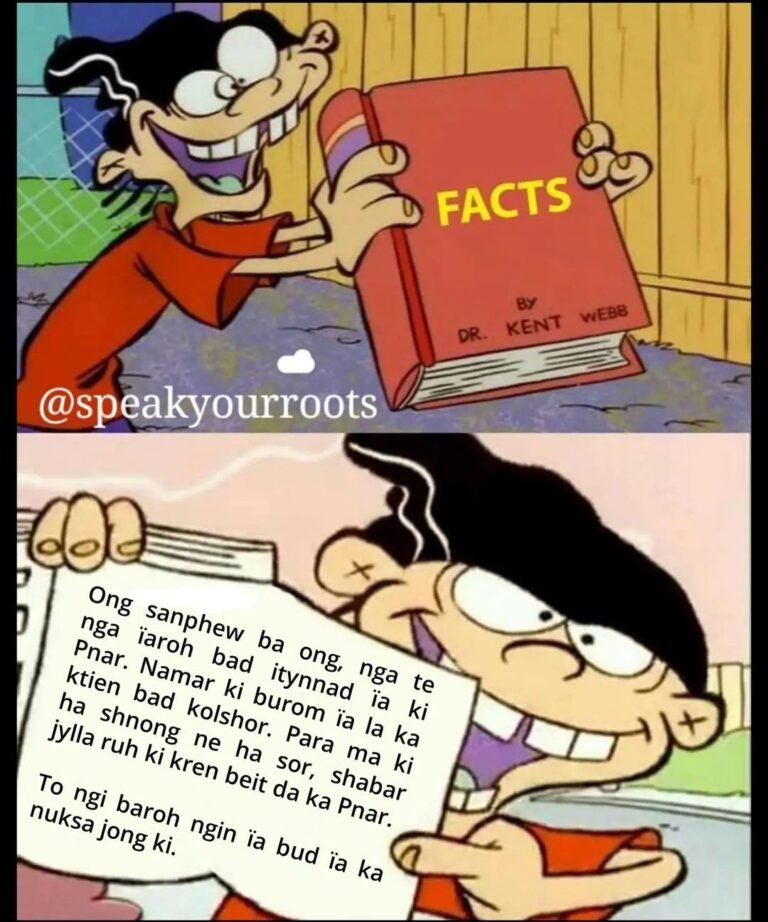
  • Ong sanphew ba ong

    Wat sngew eiei tangba kane ka dei ka jingshisha 😄🤌🤌

    Kan sdang beit da: "Ohh phi ki Pnar? Yong kur phi?" 😄😉

    If you're Pnar, you'll know 😂😂 #iypyk

  • Ja Khonbo

    Pnar explanation:

    Ha Jaiñtia hi waroh kawi ym jooh em u leh ki ya ka ni ka li e Ja Khonbo. Kani toh ka rakom ki pnar wa sah ha Jwai næ du ki Jwai wa pynjooh ya ini i rakom li e Ja Khonbo.

    I rakom li e "Ja Khonbo" toh i rakom, iwa, da i ja jooh lai e sñiawbha ki wahaïung wahasem, ki lok ki jor ïa ka manbei hadien wada kha khon ko. Ini man i kam chi wynta na i pyn-eh bok pyn-eh rngu ya ka bei wa ya'i khon wa dang kha.

    Ki waheh nachua sikai ki u pynmlien u li e jakhonbo da'iwa u li e da iwon iwon i wada chet kynsaai næ i wa bang dooh. Ki waheh nachua leh da pynjooh ki da'iwa u song lang ha'itæ i jakhonbo toh ka "pylleiñ chet", "i jadoh", i "dohseiñ" wa i "dohsyiar chet sngat", "dai chet sngat" wa kiwi kiwi.

    Khasi explanation:

    Ïa ka rukom ai "Ja Khonbo" ym ju leh ha ka ri Jaiñtia baroh kawei. Kane ka dei ka rukom jong ki Pnar kiba sah ha Jowai, ki dei ma ki kiba pynmlien bad pynjuh ïa kane ka rukom.

    Ka rukom leit ai "Ja Khonbo" ka dei ka rukom ha kaba ki bahaïing bahasem, ki lok ki jor ki ai sngewbha da ka ja ïa ka longkmie kaba kha khun. Kane ka long shi bynta na ka pyneh bok pyneh rngiew ïa ka kmie bad i khun ba dang kha. Ka ktien "Khonbo" ka mut khyllung.

    Kiba rangbah naduh mynshuwa ki la hikai ban pynmlien ïa ka leit ai "Ja Khonbo" da kano kano kaba la shet kynsai bad kaba bang duh. Kiba rangbah ki la pynmlien ruh ban song lang ha ka Ja Khonbo da ka pylleng phon, ka jadoh, ka dohsniang neiïong bad ka dohsyiar kylla, u dai sboh neiïong bad kiwei kiwei.

    English explanation:

    The custom of "Ja Khonbo" is not prevalent all over the Jaiñtia Hills. This custom is practiced only in the town of Jowai and it is the people of Jowai who have established this custom.

    In the custom of "Ja Khonbo" the relatives and friends gift rice that has been cooked well, especially for a mother who has birthed a child. This is part and parcel to strengthen the good fortune and fortify the essence of the mother and her child. The word "Ja" means rice and the word "Khonbo" means baby.

    Elders have taught that only the most special and most delicious food are to be given as "Ja Khonbo". Elders have also taught that boiled eggs, jadoh (rice cooked with meat), dohsniang neiïong (pork cooked with black sesame), chicken curry, dai sboh neiïong (dal cooked with black sesame) and others are included in "Ja Khonbo".

    "Ja Khonbo" is a custom practiced by the Pnar people of Jowai. It is a wonderful custom that expresses care for a mother and welcomes a child into the world. 🤱🧑‍🍼👼 🙏

    Khublei Chiboon Anvil ya i e jingmut yong phi hawa thaw ya kani ka post! 😄🙏

    🟡 Source: Anvil Ritre Laloo

    🟡 Khasi and English translation by @speakyourroots

  • Bia

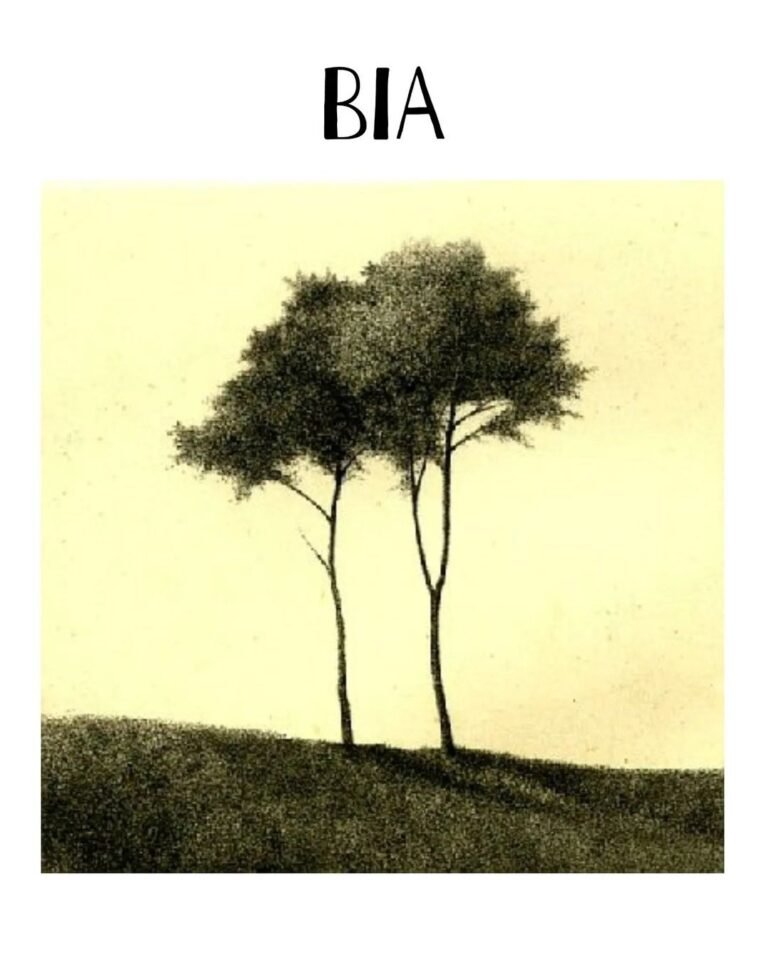
    Bia [adverb] The formal union of a man and a woman, typically recognized by law, by which they become husband and wife, a marriage

    This meaning of the word "bia" has been taken from the Pnar-English Dictionary by Sajeki Passah (2013).

    Bia [noun] marriage; wedding. -verb. bia ka•a to marry; to wed;

    This meaning of the word "bia" has been taken from the Garo-English Dictionary by P. R. Marak (2010).

    Khublei Chiboon @micromotives for quite an interesting observation! 😄👍

    Who would have thought that a word in the Pnar and Garo languages would be the same and have the same meaning too.

    Sngew kmen ba lah nang bun na ngi kiba pule ïa ki dictionary ne ki dienshonhi, ki ban ai bun ki jingtip ïa ngi. 👏👏

  • U Dak Lai, The Number Three

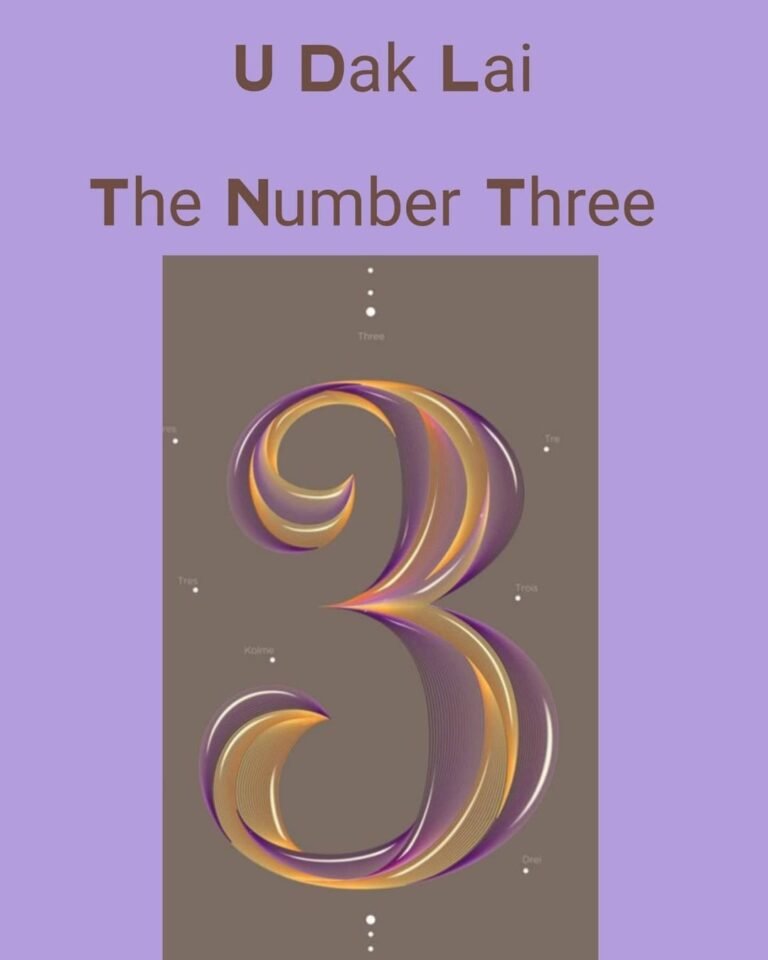
    U Khasi u don ka rukom pyrkhat kaba kham kyrpang ha ka jingïadei bad ki dak "Lai". Haba thung mawbyrsiew, u pynïeng lai tylli ki maw ban shet jingshet. Haba phah khubor na kawei ka jaka sha kawei pat, u pyndonkam lai tylli ki ksah ne kyrwoh. Haba jer khun shynrang, u pyndonkam lai tylli ki kyrteng bad lai tylli ki khnam. Haba thang briew, u pyndonkam lai tylli ki 'nam tympem ban siat ha ka kpep ha ka por thang briew. Haba pyrta shnong, u pyrta lai sien lai wat. Haba thung mawbynna kur, ki thung lai tylli ki mawbynna na ka bynta u kñi bad ar ngut ki pyrsa. Haba poikha poiman lane haba iap briew, ki ap lai sngi lai miet ban trei ia kiwei pat ki kam.

    The Khasis have a unique perception and regard for the number "3" When they erect a "mawbyrsiew" which is the stone used as support for cooking in the hearth they use three stones. When they send a message or news from one place to another, they use three "ksah" or "kyrwoh" which are rings made from threads of bamboo. When they choose a name for a son during the name ceremony, they choose from three names and also keep three arrows. At the cremation, the Khasis shoot three arrows called " 'nam tympem" in the place belonging to a specific clan for cremations. When there is a public announcement, the "sangot" addresses the people three times before making the actual announcement. When they erect the clan moniliths, there are three moniliths: one for the maternal uncle and the other two for his nieces or nephews. When there is a wedding or a funeral, the Khasis wait for three days to perform other work.

    The number "3" has a significance that is wide ranging for Khasis and Pnars. Here is an excerpt from U Khasi Bad Ka Mariang by Rev. Dr. Ïarington Kharkongor. 3️⃣3️⃣3️⃣

    🟡 English translation by @speakyourroots

  • Siah Siam

    "Siah siam" toh i ktien Phar i wa jooh ong i manda sñiaw hun jrut palat i mynsien haduh wym yïe de u batai. Em i por wa sñiaw siah siam næ wa bang ware i bam haduh wa sñiaw kamwa da psiah chadooh u klong nood. Teiñ teiñ ong i siah siam næ hawa ïoh u klam pynhiar jhar ïa kiwon kiwon kiwa da pynjaw mynsien ïa i chawa palat.

    "Siah Siam" ka dei ka rukom ong ki Pnar haba ka don ka jingsngewhun jrut ka mynsiem haduh bym lah shuh ban batai. Ki ong ïa kine ki kyntien lada ka bang palat ka bam kumba ka lah rung shaduh u dohnud. Teng teng pat ki ju ong siah siam haba ïoh ban kren ban ai nia ïa kino kino kiba la pynjew pynsngewsih ïa ka mynsiem shaba palat.

    "Siah Siam" is a Phar phrase that is generally used to describe the feeling of absolute satisfaction and contentment. It is also used to express the joy that one would feel after having a delectable meal or snack that reaches the satiety point of maximum measure. Many also use it to express the great satisfaction obtained when they get to express their feelings to someone who has angered and saddened them.

    "Siah Siam" is a Pnar phrase which means to feel great satisfaction! Thank you @anumanda for sending this and Shiny for the English translation 😃😃

    Khasi translation by @speakyourroots

  • “Panur” (War) and “Diñ Kum” (Pnar)

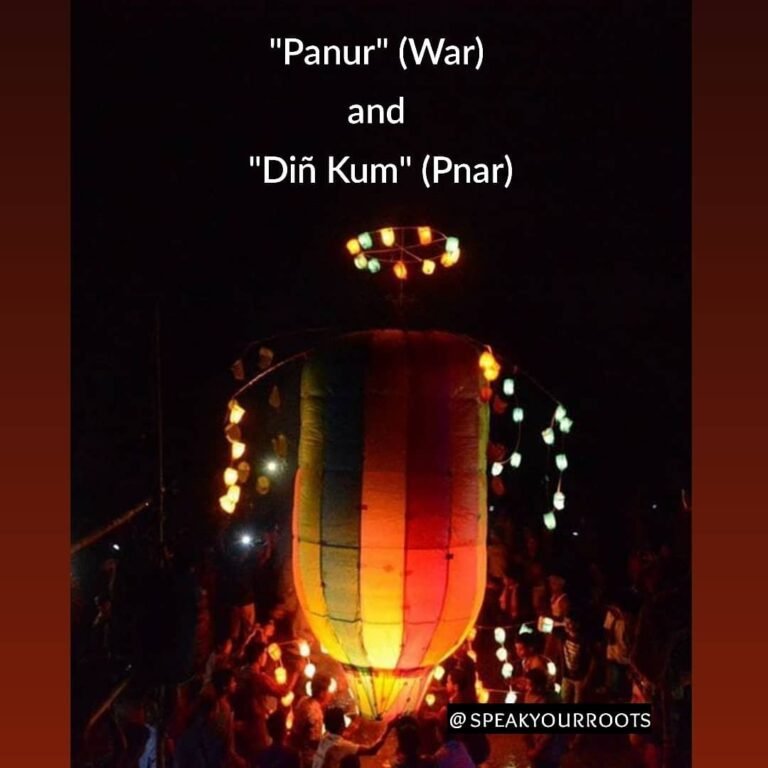
    "Panur" (War) and "Diñ Kum" (Pnar) are traditional sky lanterns made by the War and Pnar communities. These particular sky lanterns are however different in appearance from the usual sky lanterns.

    "Panur" and "Din Kum" are long and cylindrical in shape and are made of many rectangular pieces of kite paper joined together. The main lantern is called "Ka Kmie" (mother) and there are smaller lanterns called "Ki Khun" (children) as shown in the picture. "Panur" and "Diñ Kum" are made when there are festivals or any festive occasion. Alighting and flying them is done with great fervour and excitement.

    "Panur" (War) and Diñ Kum (Pnar) are traditional sky lanterns that are painstakingly made by the members of the community. They look beautiful when they are lighted up and create a feeling of oneness and belonging, accompanied with chants and "phawar".🎈🎈🎈

    Picture credit: @speakyourroots. Location: Nongjri, East Khasi Hills District.

  • Months of the year in the Pnar language

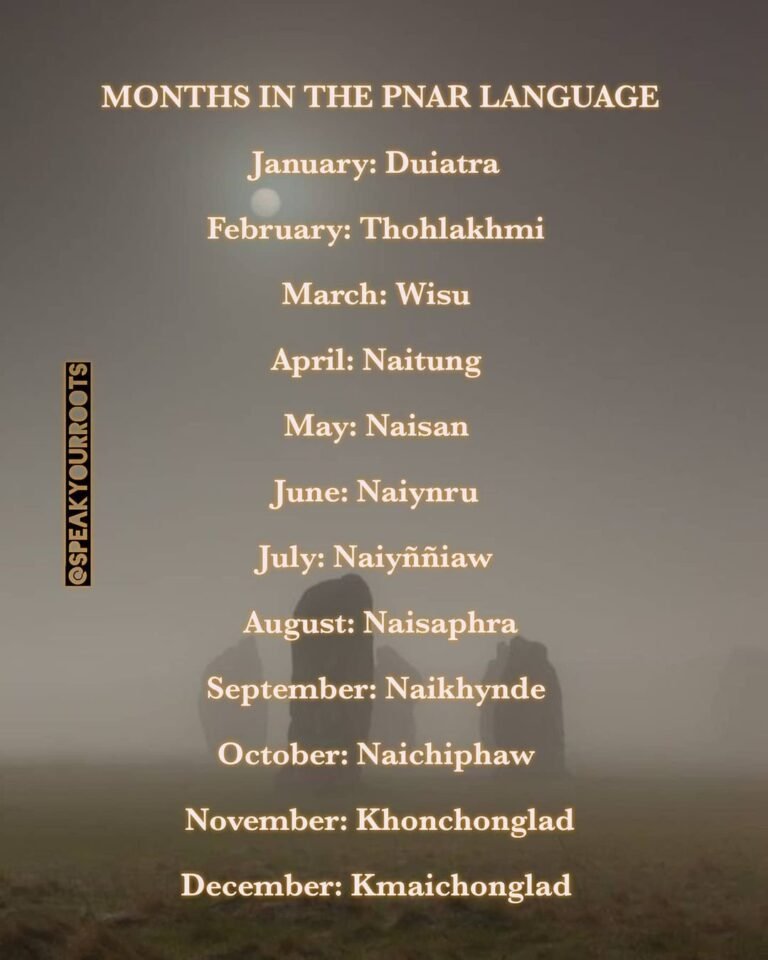
    January: Duiatra

    February: Thohlakhmi

    March: Wisu

    April: Naitung

    May: Naisan

    June: Naiynru

    July: Naiyññiaw

    August: Naisaphra

    September: Naikhynde

    October: Naichiphaw

    November: Khonchonglad

    December: Kmaichonglad

    These are the months of the year in the Pnar language. 📆📆 The Pnar/ Jaiñtia language is mostly spoken in the Jaiñtia Hills District of Meghalaya.

  • U Symphut/ U Suid Tynjang

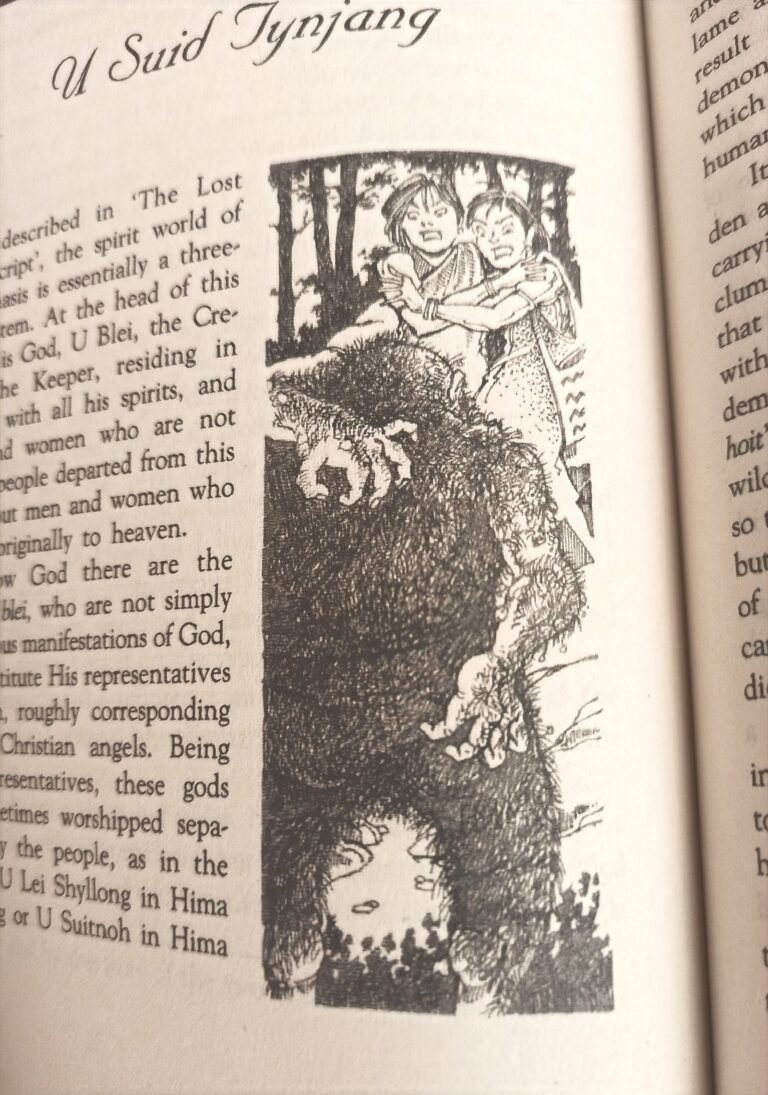
    U Symphut (Pnar) and U Suid Tynjang (Khasi) is an apparition/ ghost who captures an individual, carries him to places far and wide leaving him at the top of a cliff, or a tree, by the side of a river or a stream and even to a completely new and foreign land.

    Daohi Manar says:

    "I am not sure whether 'Symphut' is a ghost or an animal, but one thing I am sure about is that 'Symphut' never harms or injures its victims. During our childhood, incidents of someone being carried by the 'Symphut' occurred quite frequently with men usually being the victims! According to Khasi-Jaiñtia myth, 'Symphut' is a phantom or a ghost who snatches or captures an individual and carries him to places. The person who is in a daze is unaware of what is happening to him. He will come back to his senses only when an apparition wills it and departs or at times when the man is confronted or touched by another person. He then wakes up from this trance, not feeling hungry or in pain or even loses his sense of fear, realising his plight while still clueless of what happened to him and how he reached there. 'Symphut' supposedly never harms his victims and thus there is no tragic end to the story."

    What is said about "U Symphut" or "U Suid Tynjang" is that it is an imp who lives in a deep forest. His appearance is horrifying as his body is covered in sores. Thus, his skin is marked by scabs which torment him with an undying itch. This itch can be relieved by the scratching of a human hand. "Symphut" lures his victims by imitating the human call "Kaw hoit" for those travellers who are lost and exhausted. In this way he captures them and if they do not comply, they are tickled to death or left on the edge of a gorge or in a tree to die.

    "U Symphut" (Pnar) or "U Suid Tynjang" (Khasi) sent by Daohi Manar @xdtnoahjupejackllthmanar 👻👻👻 Thank you for this entry! 😅😅

    Picture and reference: Around the Hearth: Khasi Legends (Folktales of India) (2007) by Kynpham Sing Nongkynrih.

  • “Peit Cheitai Cheitu” da Saweini Laloo

    Dang step dang step, chong u woh Ephrin

    Ha ka ben kawa rong soo

    Ka kot khubor ha kti beit, hajan

    Peit u cheitu, peit u cheitai

    Man da dep pure u

    Te chong u chi slem

    Peit u ia ki bru

    Wa lai cheitai cheitu

    Oh Papun o! Oh Papun o!

    Khana ia nga yi ioo phi cheitai?

    Ki jingmut u ioosar cha jngai

    Ham kylli jingkylli ware o ksu

    Peit cheitai, peit cheitu

    Wa lai ki kari wa ki bru

    Dang step, dang step, chong u woh wa ka ksu u

    Ha ka ben kawa rong blue

    Ka kot khubor ha kti ïong o

    Peit ki waroh arngut cheitai, cheitu.

    Original Pnar poem: "Peit Cheitai Cheitu" by @nini_sasa_23 😄😄 Thank you for the poem!

    This is a quaint and evocative poem about her "Papun" (grandfather) reading his newspaper in the veranda and then spending hours observing and ruminating on passersby and cars. 🌻🌻💞💞