Tag: pnar

  • “Ka Ktien Khasi Jong Ngi” da Labianglang Diengdoh

    Ha sla pyrthei la kha ia nga,

    Nga san longbriew, nga im pura;

    Ryngkat jingieid i mei i pa,

    Ha la ka ktien ba ngan kren bha.

    Ym tang ban kren kumta la biang,

    Hynrei ban thoh te ba ngan nang;

    Kumta jingstad sawdong ka phriang,

    A-B, ka jinghikai ka sdang.

    Ka ktien khasi shisha ba iar,

    Ha ri khynriam bad ha ri pnar;

    'Sohra'- Ka ieng 'tien salonsar,

    Ban ia biang lang, ban ym kulmar.

    U Thomas Jones na ri sepngi,

    U la wanlam dak thoh khasi;

    ia jait bynriew ban lam lynti,

    Ban ym sah dum bynriew khasi.

    I'u la tip haduh kine ki sngi,

    Kum u kpa ki dak thoh khasi:

    Khlem don ma u ba prat lynti,

    Ngi lah sah dum ha la ka ri.

    Ki longshuwa da buit ba iar,

    Lyngba jingeh ki khih ki ksar;

    Ban roi ban iar ka thoh ka tar,

    Ban ym sah bieit, sah dum jynjar.

    Rai-eh Rai-dam, hei! ka bym kai,

    Kam dei ka mutdur pyrkhat rngai;

    Kat ban sawar ka ktien shongsbai,

    La ha ka kren khana ne rwai.

    Maitang! haram kam dei ho phi,

    la longshuwa baieid jong ngi;

    Burom shi junom bhor Ia ki,

    Shikit-iapar kam long na ngi.

    Kumne Ia la ka ktien ngin ieid,

    Ngin kren ngin thoh te khlem jingriej;

    Nangne pateng kan khih kan smiej,

    Sha jngai kan phet ka dum ka bieit.

    -Labianglang Diengdoh

    Original poem: "Ka Ktien Khasi Jong Ngi" written by @_i_g_d_r_e_a_m_e_r_

    Thank you for sending this entry! 🎉🎉

    Speaking, reading and writing in our indigenous language may be described as a persistent and consistent act of resistance to forces that may endanger it.
  • Phok

    It is definitely no secret that we are a diverse people with variations of speech and countless dialects and it is also no secret that we have similar sounding words only with meanings that are worlds apart and can even sound embarrassing in certain situations. To cite an example, I’m going to take the pnar word "Phok". Just listening to it brings out a rather humorous nature in us, for it can be associated with the well-known English urban slang, though, we as Pnars use it guilt-free in our dialect, to others who are not familiar, it may sound very wrong. '"Phok" simply means "kite”.

    The word "Phok" in the Pnar language means "Kite". Thank you @shiny_joan for sending this! 😄😄

  • U ñiang ryndia

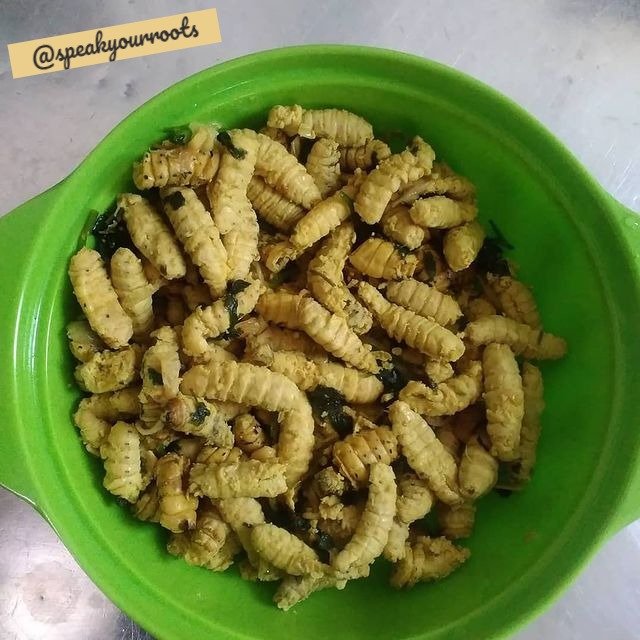
    "U ñiang ryndia" or the mulberry worm is a Jaiñtia delicacy that many might cringe to see. But for those who have the taste buds for it, u ñiang ryndia conjures a distinctive native feel.

    As a simple meal it can be boiled and then mixed with onion, ginger and salt.

    It can also be made into a more elaborate curry with onion, garlic, neiiong/ naiiong (black sesame/ black til), turmeric and then garnished with garlic leaves and coriander.

    U ñiang ryndia is available in the summer months!

  • Tana

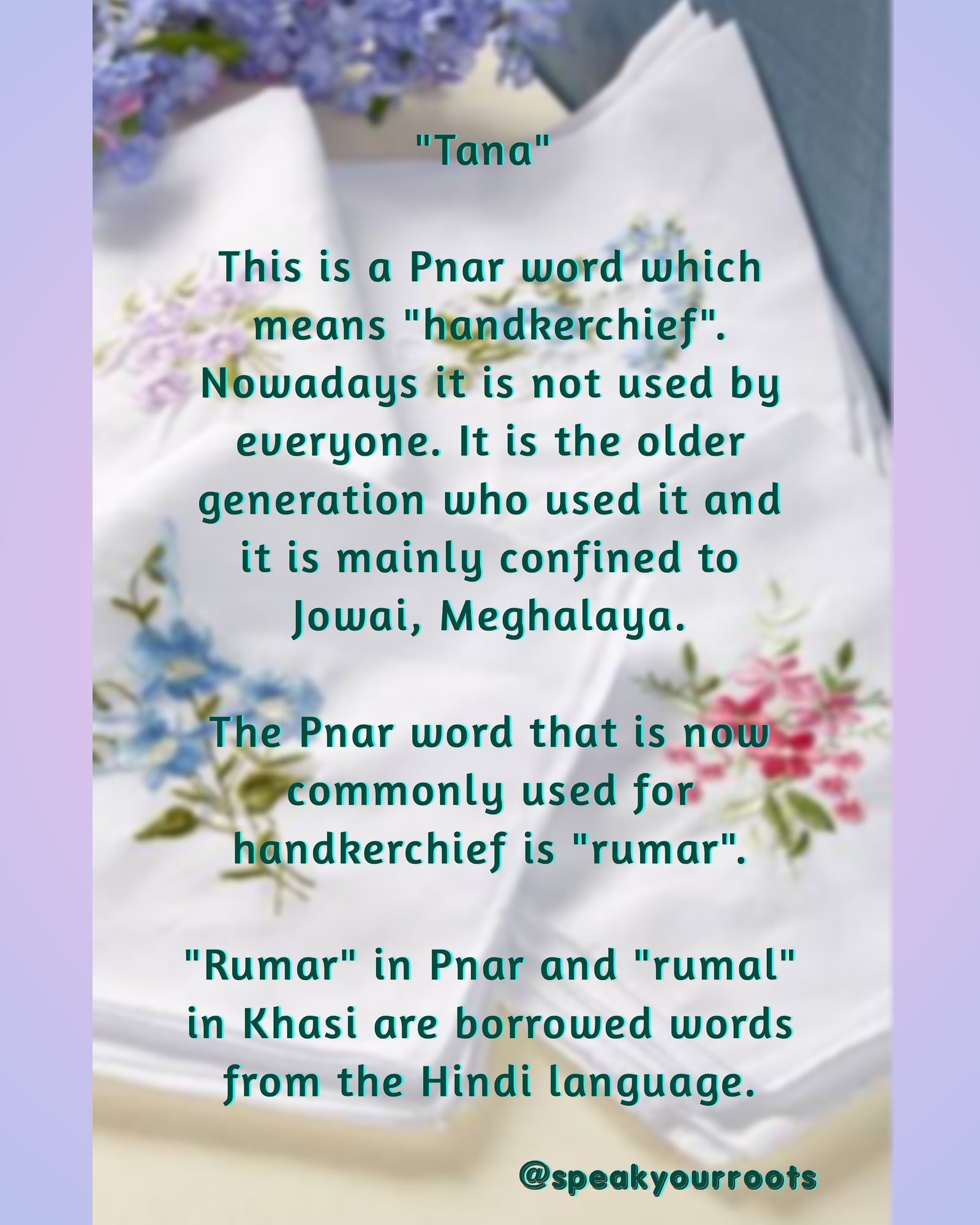
    "Tana" is a Pnar word which means "handkerchief". Nowadays it is not used by everyone. It is the older generation who used it and it is mainly confined to jowai, Meghalaya. The Pnar word that is now commonly used for handkerchief is "rumar". "Rumar" in Pnar and "rumal" in Khasi are borrowed words from the Hindi language.

    Thank you @shiny_joan !