Tag: speakyourrootschallenge

  • Language is the road map of a culture

    "Language is the road map of a culture. It tells you where its people come from and where they are going."

    – Rita Mae Brown

    Rita Mae Brown, born in 1944 is an American feminist writer, best known for her coming-of-age autobiographical novel, "Rubyfruit Jungle". Brown was active in a number of civil rights campaigns.

  • Siah Siam

    "Siah siam" toh i ktien Phar i wa jooh ong i manda sñiaw hun jrut palat i mynsien haduh wym yïe de u batai. Em i por wa sñiaw siah siam næ wa bang ware i bam haduh wa sñiaw kamwa da psiah chadooh u klong nood. Teiñ teiñ ong i siah siam næ hawa ïoh u klam pynhiar jhar ïa kiwon kiwon kiwa da pynjaw mynsien ïa i chawa palat.

    "Siah Siam" ka dei ka rukom ong ki Pnar haba ka don ka jingsngewhun jrut ka mynsiem haduh bym lah shuh ban batai. Ki ong ïa kine ki kyntien lada ka bang palat ka bam kumba ka lah rung shaduh u dohnud. Teng teng pat ki ju ong siah siam haba ïoh ban kren ban ai nia ïa kino kino kiba la pynjew pynsngewsih ïa ka mynsiem shaba palat.

    "Siah Siam" is a Phar phrase that is generally used to describe the feeling of absolute satisfaction and contentment. It is also used to express the joy that one would feel after having a delectable meal or snack that reaches the satiety point of maximum measure. Many also use it to express the great satisfaction obtained when they get to express their feelings to someone who has angered and saddened them.

    "Siah Siam" is a Pnar phrase which means to feel great satisfaction! Thank you @anumanda for sending this and Shiny for the English translation 😃😃

    Khasi translation by @speakyourroots

  • Some food for thought

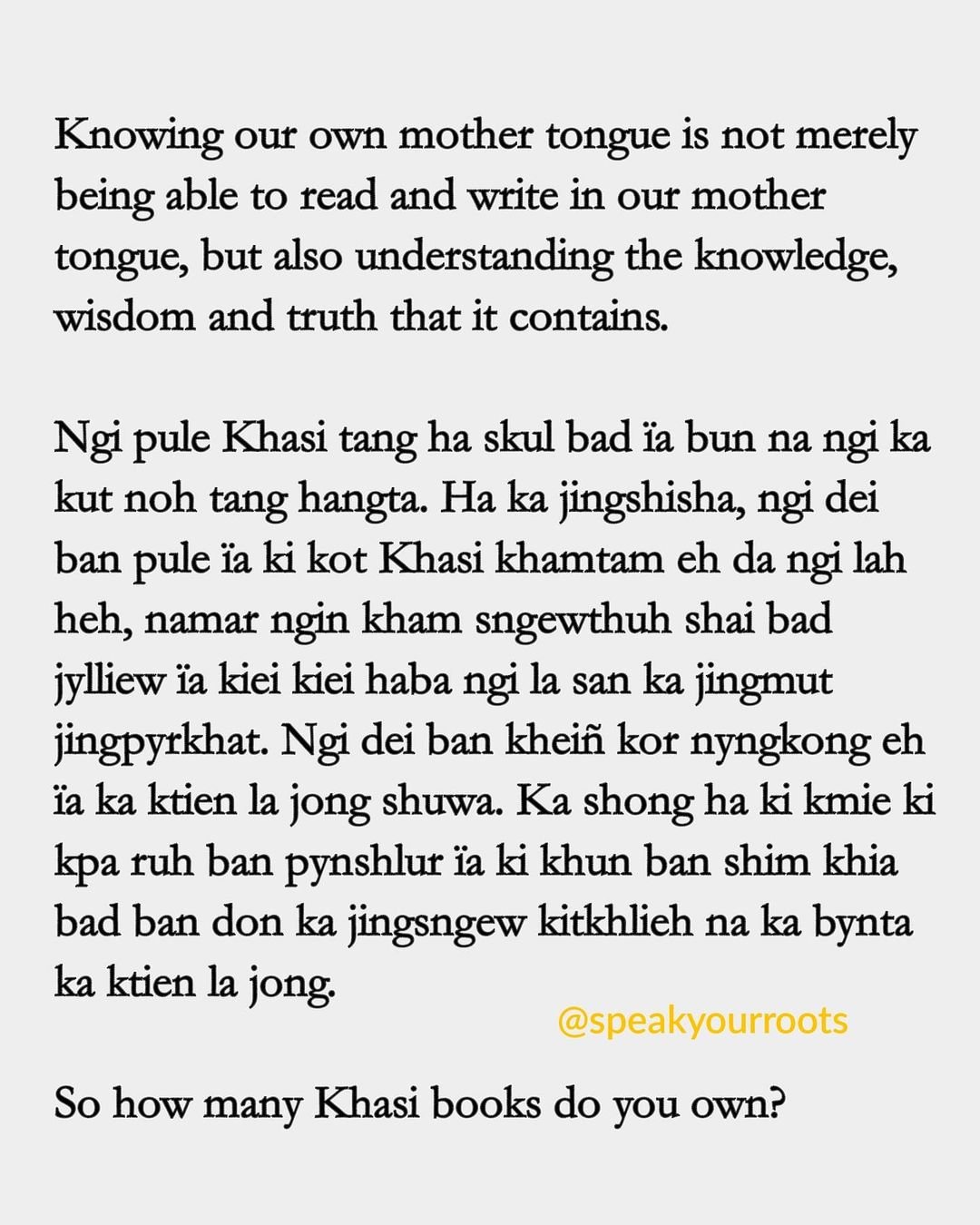
    Knowing our own mother tongue is not merely being able to read and write in our mother tongue, but also understanding the knowledge, wisdom and truth that it contains.

    Ngi pule Khasi tang ha skul bad ïa bun na ngi ka kut noh tang hangta. Ha ka jingshisha, ngi dei ban pule ïa ki kot Khasi khamtam eh da ngi lah heh, namar ngin kham sngewthuh shai bad jylliew ïa kiei kiei haba ngi la san ka jingmut jingpyrkhat. Ngi dei ban kheiñkor nyngkong eh ïa ka ktien la jong shuwa. Ka shong ha ki kmie ki kpa ruh ban pynshlur ïa ki khun ban shim khia bad ban don ka jingsngew kitkhlieh na ka bynta ka ktien la jong.

    So how many Khasi books do you own?

    Some food for thought…💭🗯️💬

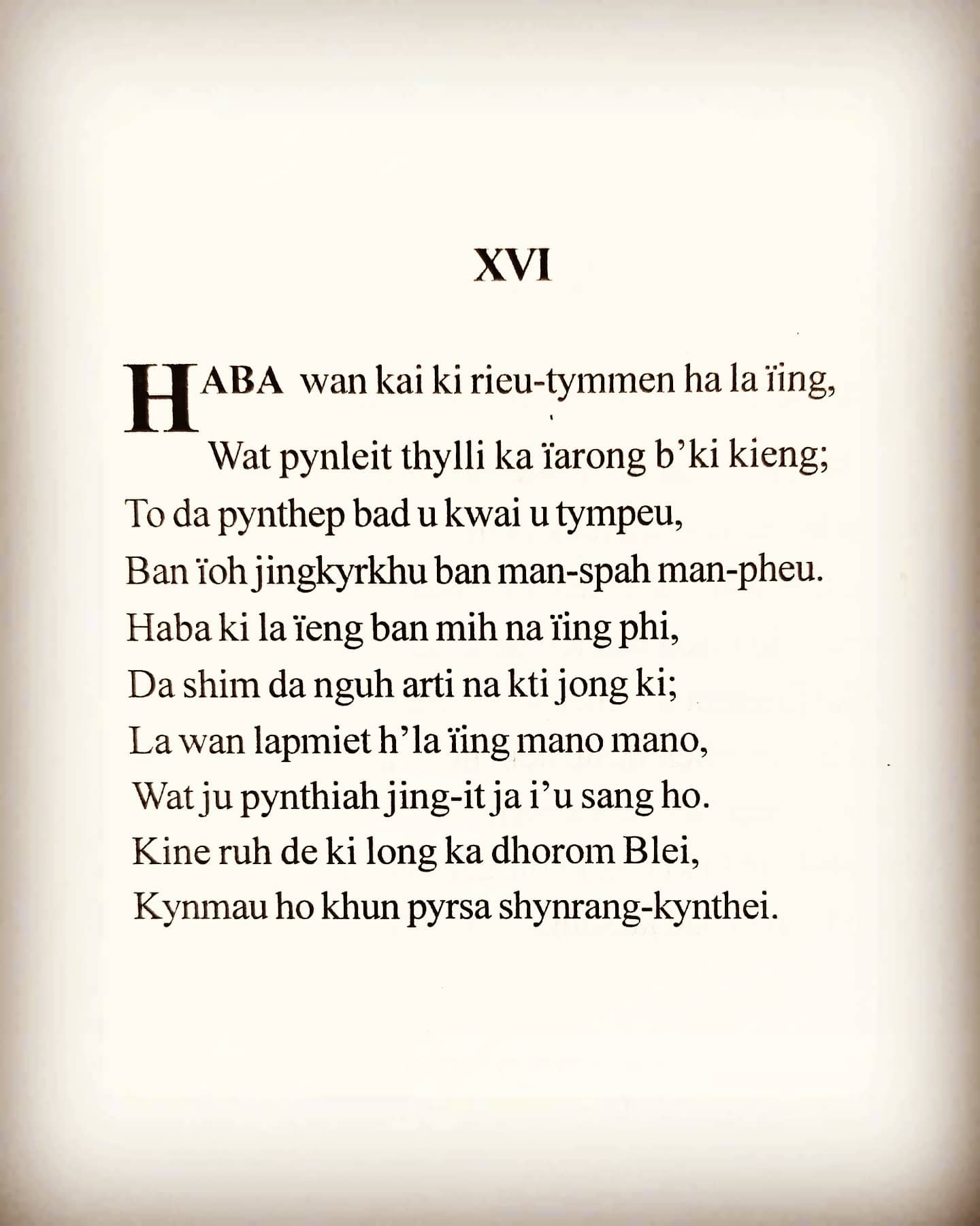
  • Ka Jingsneng Tymmen Shaphang ka Akor Khasi ha ka Rukom Rwai Phawar”, Part I (1902) & Part Il (1903)

    Haba wan kai ki rieu-tymmen ha la ïing

    Wat pynleit thylli ka ïarong b'ki kieng;

    To da pynthep bad u kwai u tympeu,

    Ban ïoh jingkyrkhu ban man-spah man-pheu.

    Haba ki la ïeng ban mih na ïing phi,

    Da shim da nguh arti na kti jong ki;

    La wan lapmiet h'la ïing mano mano,

    Wat ju pynthiah jing-it ja i' u sang ho.

    Kine ruh de ki long ka dhorom Blei,

    Kynmau ho khun pyrsa shynrang-kynthei.

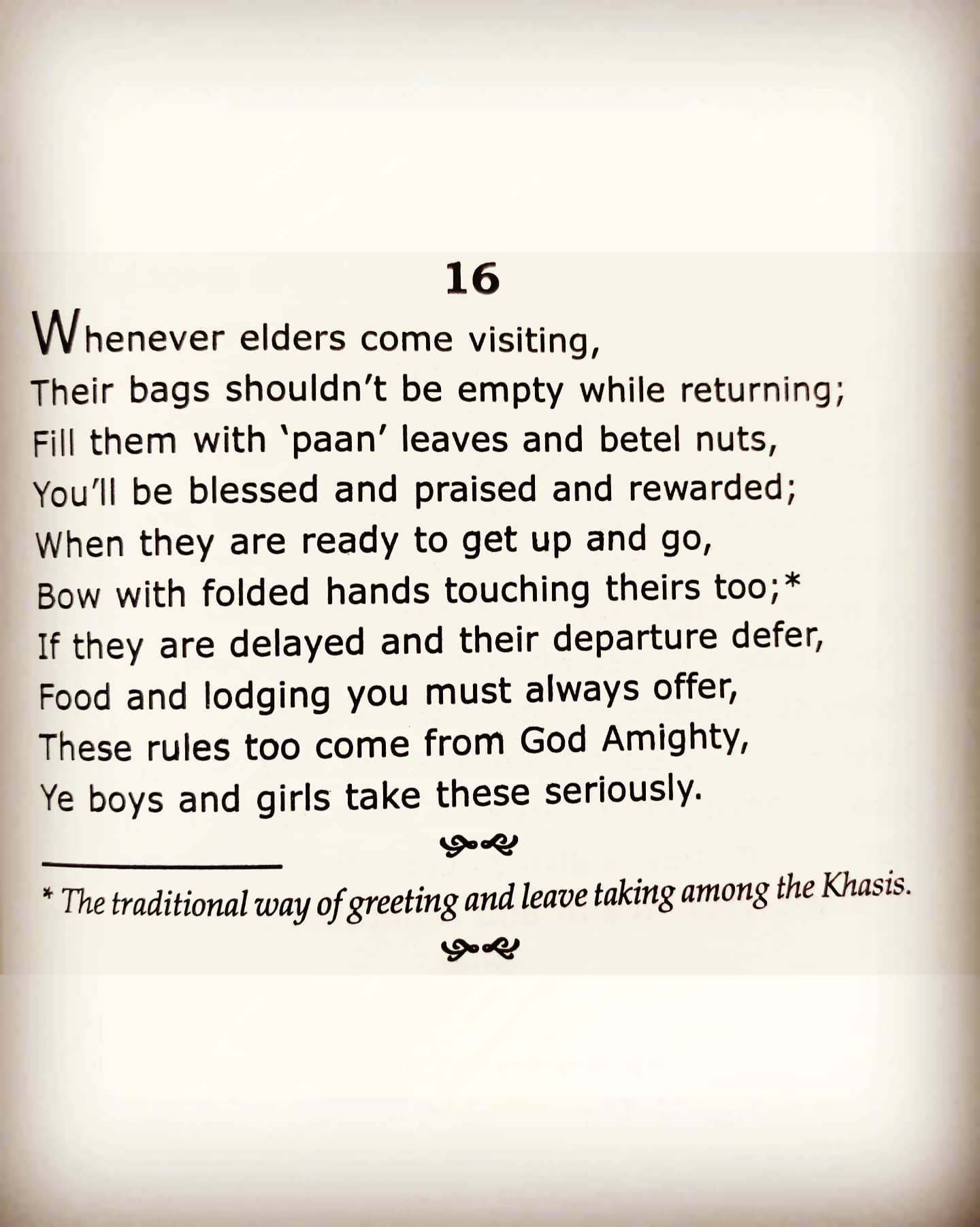
    Whenever elders come visiting,

    Their bags shouldn't be empty while returning;

    Fill them with 'paan' leaves and betel nuts,

    You'll be blessed and praised and rewarded;

    When they are ready to get up and go,

    Bow with folded hands touching theirs too;*

    If they are delayed and their departure defer,

    Food and lodging you must always offer,

    These rules too come from God Almighty,

    Ye boys and girls take these seriously.

    * The traditional way of greeting and leave taking among the Khasis.

    "Ka Jingsneng Tymmen Shaphang ka Akor Khasi ha ka Rukom Rwai Phawar", Part I (1902) & Part Il (1903) by Radhon Sing Berry Kharwanlang is a unique collection of valuable lessons and teaching on how to live a good and moral life. 🌻🌼🏵️

    The teachings are given in the form of "phawar” where two lines follow the same rhyme scheme, that is, aa bb.

    Both Part I and Part II have been translated into English by Bijoya Sawian @sawianbijoya in her book "The Teachings of Elders: Ka Jingsneng Tymmen, Parts I and II" (1997).

    Slide 1: "Ka Jingsneng Tymmen Shaphang ka Akor Khasi ha ka Rukom Rwai Phawar", Part II (1902)

    Slide 2: "The Teachings of Elders: Ka Jingsneng Tymmen, Parts I and II" (1997).

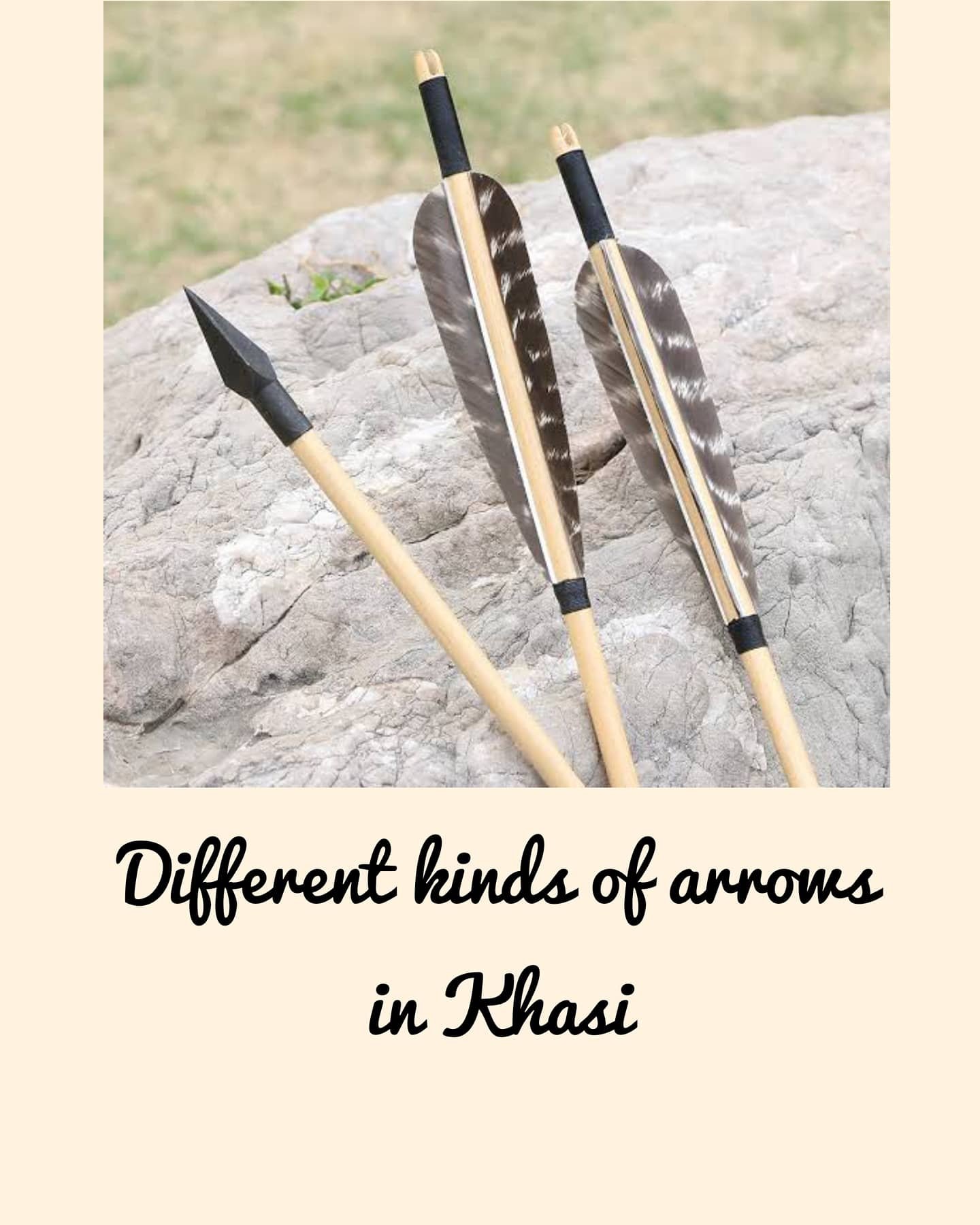
  • Different kinds of arrows in Khasi

    "U 'nam-ïong" u dei u khnam ba don dak ïong ha ki sner jong u (An arrow with a black mark on its feathers/fletching).

    "U 'namlang" u dei u khnam 'langtylli; u khnam kdait (An arrow made from a kind of reed).

    "U 'namphiah" u dei u khnam shiliang sner bad bunsien la ju pyndonkam da ki khynnah (An arrow having feathers/ fletching only on one side and is mainly used by children).

    "U 'namphong" u dei u jait khah uba la ju pyndonkam kum u khnam na ka bynta ban siat sim (Reed that is used as an arrow when shooting birds).

    "U 'namtabla" u dei u khnam pynbúd uba dei ha ka met jong u mrad. Ïa uno uno u briew uba ïoh pynban khnam kumta bad ynda ki la ïoh ïa ka mrad ki ai ka siang tyrpeng ïa u (The arrow that triggers the pursuit of a hunt. The person who is responsible for this is prized with the shoulder blade of the animal).

    "U 'namthang" u dei u khnam bym don sop ba la shu syang pynrkhiang haduh ban da eh bha tnaw. (An arrow without an arrowhead which has only been dry-roasted over a fire till it is very hard).

    "U 'namtohrih" u dei u jait phlang uba long kum u khnam (a kind of grass or reed which is like an arrow and can be used as one).

    "U 'nampliang" u dei u khnam sngáb; u khnam sop. U sngáb u dei u kynja jingpynwoh ha u khnam. La ju pyndonkam bunsien tang ha ka thma bad kaba siat mrad (An arrow with a bard; an arrow with an arrowhead, which is used only during wars and animal hunts).

    "U 'nampur" u dei u khnam sner (A feathered arrow).

    U 'namsop u dei u khnam uba ka dur jong u sop ka long kum ka khoh. La ju pyndonkam ha kaba ïa siat thong. (An arrow whose arrowhead resembles the cone-shaped "khoh". It is used during archery competitions).

    "U 'namtympem" u dei uwei na ki lai tylli ki khnam ba siat na ka kpep ha ka por thang briew. Ïa uba nyngkong ki siat shaphang shatei; ïa uba ar sha sepngi bad ïa uba lai pat shathie. Kane ka rukom ka long ban beh ïa ki ksuid kiba wan thap ban pynbakla lynti ïa ka mynsiem u nongïap. (One of the three arrows shot from the funeral pyre. The first arrow is shot towards the north, the second arrow is shot towards the west and the third arrow is shot towards the south. This protects the spirit of the deceased from being led astray).

    Arrows form an important part of many tribal cultures. They are used for hunting, in games and competitions and during wars. Here are different names of arrows in Khasi! ⬆️↗️➡️↘️⬇️⬅️↖️↪️↩️

    🟡 Source: Rev. Dr. Ïarington Kharkongor

    🟡 English translation by @speakyourroots

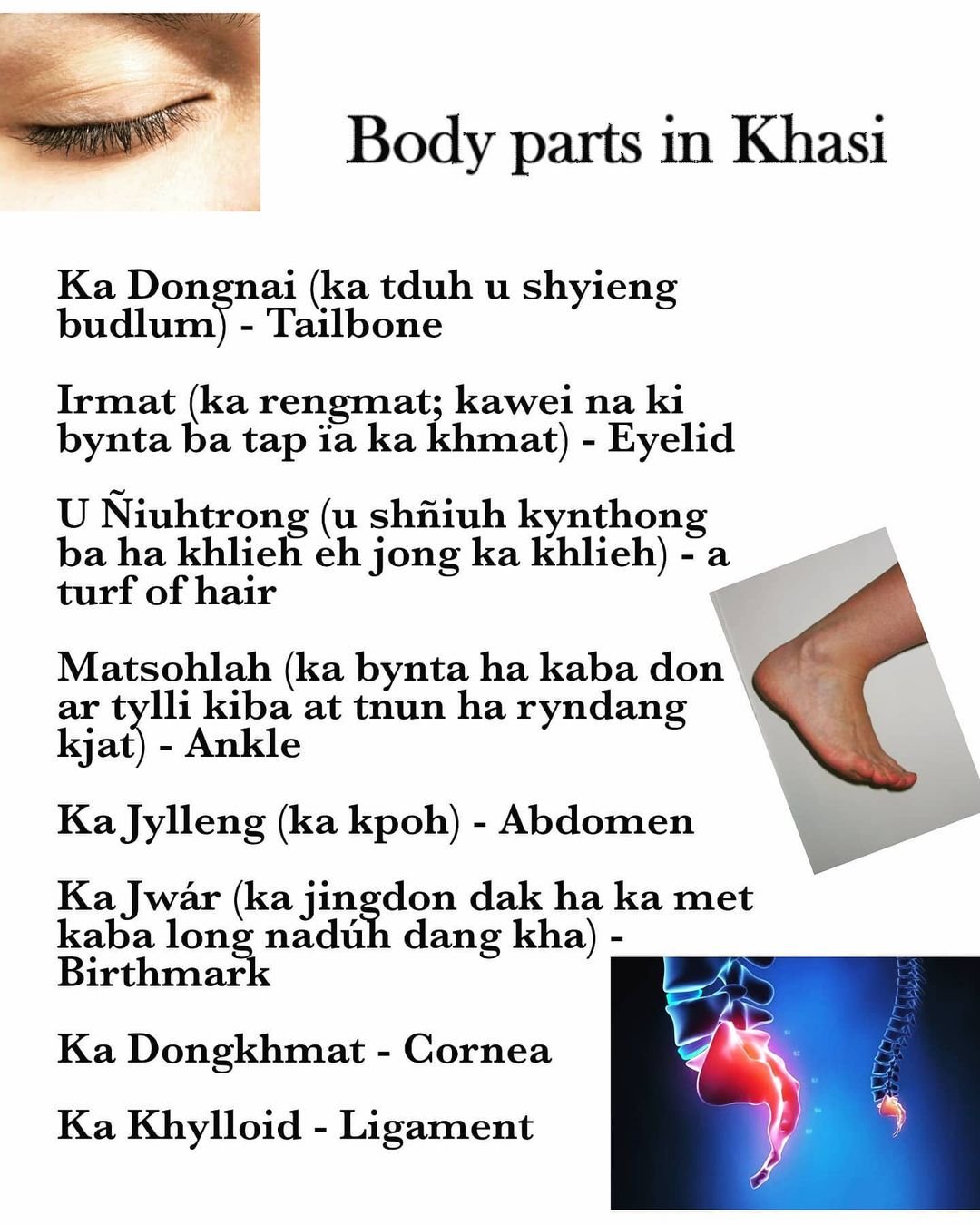
  • Body parts in Khasi

    Ka Dongnai (ka tduh u shyieng budlum) – Tailbone

    Irmat (ka rengmat; kawei na ki bynta ba tap ïa ka khmat) – Eyelid

    U Ñiuhtrong (u shñiuh kynthong ba ha khlieh eh jong ka khlieh) – A turf of hair

    Matsohlah (ka bynta ha kaba don ar tylli kiba at tnun ha ryndang kjat) – Ankle

    Ka Jylleng (ka kpoh) – Abdomen

    Ka Jwár (ka jingdon dak ha ka met kaba long naduh dang kha – Birthmark

    Ka Dongkhmat – Cornea

    Ka Khylloid – Ligament

    Here are the names of some body parts in Khasi 🤓🤓 If the doctor's prescription was in Khasi, we're sure we would see some of these words 😅😅

    🟡 Source: Rev. Dr. Ïarington Kharkongor

  • Ka wait tyngkrong

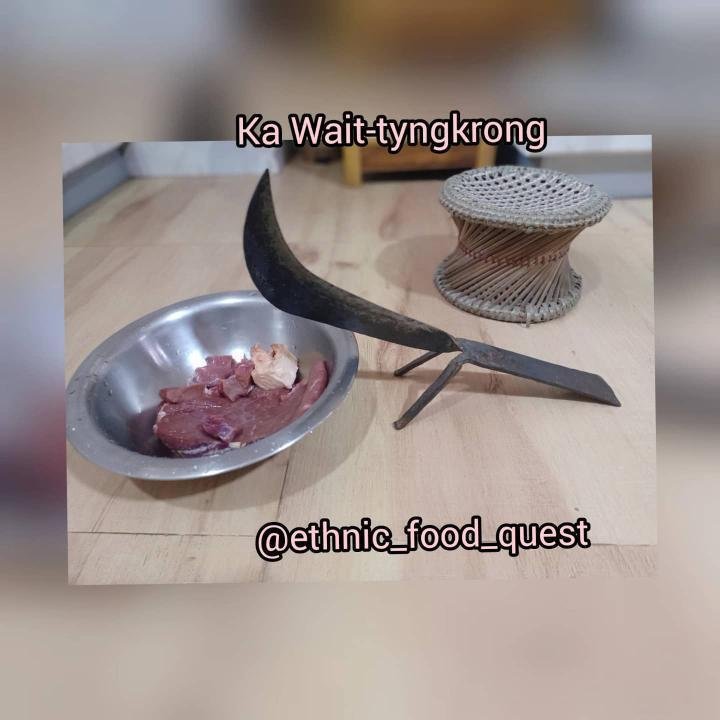
    Ka wait tyngkrong ka dei ka wait kaba pyndait da ki artylli ki kjat ha lyngkdong kum ban kyrshan haba ot doh. Ngi ju shong ha ka mula ne ha ka lyngknot haba ngi ot doh ha ka wait tyngkrong. (from Rev. Dr. Ïarington Kharkongor)

    "Ka wait tyngkrong" is a large Khasi traditional kitchen knife which stands on two legs at a 45 degree angle that is used to cut meat. One sits on a mula (traditional woven stool) or lyngknot (low wooden stool) to cut meat on the wait tyngkrong.

    Ka Wait Tyngkrong" is a very handy large bladed kitchen knife used by Khasis and Pnars. We can sit comfortably and cut meat accordingly dropping the pieces into a large aluminium/ steel dabor (a large aluminium/steel basin).

    Khublei Shibun @ethnic_food_quest for sending this! 🥩🍗🍖

  • The Thirteen Months in the Khasi Calendar: A look at U Lber, U Pynram and U ‘Nai-it

    Ki nongrep Khasi ki kheiñ ba don khatlai (13) bnai ha ka shi snem. Baroh ki bnai ki don arphew phra (28) sngi lait noh ha ka Snem Ryngkoh (leap year), kata man ka saw snem don arphew khyndai sngi ha u Rymphang. Ka kyrteng ki bnai ki long: U Kyllalyngkot ne Kyllalyngkhot, U Rymphang, U Lber bad U Pynram, U Ïaïong, U Jymmang, U Jylliew, U 'Naitung, U 'Nailur, U 'Nailar, U 'Nai-it, U Risaw, U 'Naiwieng bad U Nohprah. Baroh kitei ki bnai ki don la ka jong ka jong ka dor bad ka jingmut. Ki nongrep haba ki ai kyrteng ïa kitei ki bnai, ki don ka jingmut ban pynïadei ïa ka rukom rep bad ka mariang.

    U Lber bad u Pynram

    U Lber, u bnai uba lai jong ka snem, u dei u bnai pyrem. Ha une u bai don ar tylli ki kyrteng – u Lber bad u Pynram. Baroh ar kine ki kyrteng ki don mar khatsaw sngi; kata ka mut naduh ba mih haduh ba pyllun bnai u dei u Lber bad naduh ba pyllun bnai haduh ba sep bnai u dei u Pynram. Haba kheiñ lang ïa ki sngi jong u Lber bad Pynram ki long arphew phra. Ar taïew na ki-ka taïew kaba nyngkong bad ka taïew kaba ar, ki hap ha u Lber, bad ar taïew pat, uba lai bad uba saw, ki hap ha u Pynram. Baroh saw tylli ki taïew ki ïaryngkat sngi kawei ïa kawei pat.

    U 'Nai-it

    U 'Nai-it u dei u bnai uba shiphew jong ka snem, u dei u bnai uba ar jong ka Synrai. Une u bnai u don saw taïew lane arphew phra sngi. Une u bnai u wan long kyrteng na ka jingpah u kbeit bad kiwei pat ki jait sim kiba her ha suiñ bneng. Ha une u bnai haba u kbeit u swait ha suiñ bneng ban kem sim ne kem khnai u ju pah "it it-it it". U long u bnai ba ki sim laiphew jait ki sngewtynnat ban her suwari ha suiñ bneng ban kem khnai ne khñiang. Baroh ki jait khñiang, ki dkhiew bad kiwei pat ki kynja ba im ki sngewtynnat ban paw pyrthei ha une u bnai. Ki ïa mih na la ki jong ki jong ki trep ban ïalehkai bad rynsied sngewbha ha sla khyndew namar ka bneng ka la rang itynnat bad u kba u la sang saw doh.

    Khasi farmers calculate that there are thirteen (13) months in a year. All the months have 28 days except for a leap year. The names of the months are: U Kyllalyngkot or Kyllalyngkhot, U Rymphang, U Lber bad U Pynram, U Ïaïong , U Jymmang, U Jylliew, U 'Naitung, U 'Nailur, U 'Nailar, U 'Nai-it, U Risaw, U 'Naiwieng and U Nohprah. All these months have their own value and meaning. When farmers give names to these months, there is a connection between agricultural activities and the environment.

    U Lber and U Pynram

    U Lber (which may be March) is the third month of the year which is a Spring (Pyrem) month. In this month there are two names – U Lber and U Pynram. Both have fourteen days each; meaning from the new moon to the full moon is U Lber and from the full moon to the waning crescent is U Pynram. When calculated the total number of days is twenty-eight. The first two weeks belong to U Lber and the third and last weeks belong to U Pynram. All four weeks follow the same day pattern.

    U 'Nai-it

    U 'Nai-it is the tenth month of the year and it is the second month of Autumn. This month has four weeks or twenty-eight days. This month gets its name from the chirping of a bird called u kbeit (which the Khasi dictionary calls "a kind of hawk") and other kinds of birds. During this month u kbeit while hunting smaller birds and rats makes an "it it-it it" sound. Different types of birds go around flying everywhere during this month to hunt rats and insects. Many kinds of insects, ants and others like to emerge during this time. Animals and insects enjoy this time of the year as the weather is sunny and paddy also begins to redden.

    The Khasi way of calculating the number of months is very interesting! 😀😀 It goes hand in hand with the phases of the moon 🌕🌓🌔🌖🌘

    🟡 English translation by @speakyourroots

  • Ïing Trep Khasi

    Oh gosh! Our first meme!🥳 Tell us in the comments section what else can we find inside ka ïing trep?

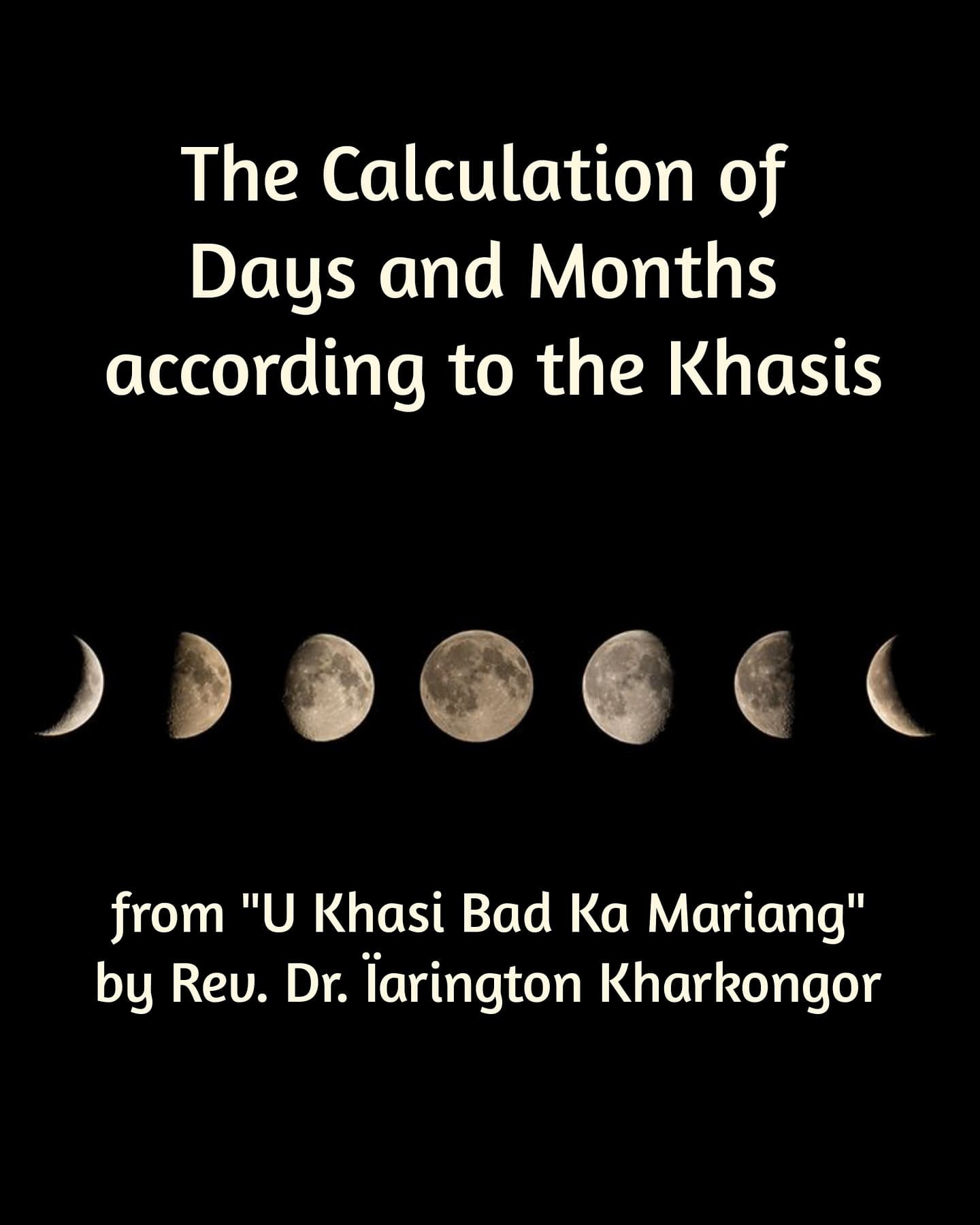
  • The Calculation of Days and Months according to the Khasis

    Ka rukom kheiñ tarik u Khasi ka long ba u Khasi u kheiñ ïa ka jingsdang bad jingkut bnai na ka jingmih bad jingsep u bnai ha sahit bneng (moon calendar).

    Haba u Khasi u ong "Lung bnai" ka mut ka taïew kaba nyngkong; haba u ong "Pyllun Bnai" ne "U 'Nai Khatsaw Synñia" ka mut ka taïew kaba ar; haba u ong "Ngen Bnai" ka mut ka taïew kaba lai bad haba u ong "Sep Bnai'" ka mut la kut bnai. U Khasi khamtam u nongrep u sngewthuh ba don tang arphew hynñiew sngi shiteng ne arphew phra sngi (27½ ne 28) ha ka shi bnai.

    The way in which the Khasis calculate days or months is by looking at the phases of the moon, from the beginning to the end (moon calendar).

    When the Khasis say "Lung Bnai" this refers to the first week; when they say "Pyllun Bnai'" or "U 'Nai Khatsaw Synnia" this means the second week; then "Ngen Bnai" refers to the third week and finally, "Sep Bai" means the end of the month. Especially the farmers, they understand and calculate that a month has 27½ or 28 days.

    It's a full moon today guys! 🌕 The September full "harvest" moon is here so enjoy the "Pyllun Bnai" while it lasts 💛🤍💛🤍