Tag: speakyourrootschallenge

  • Ka Jingïamareh Kob ki Wah da Esther Syiem

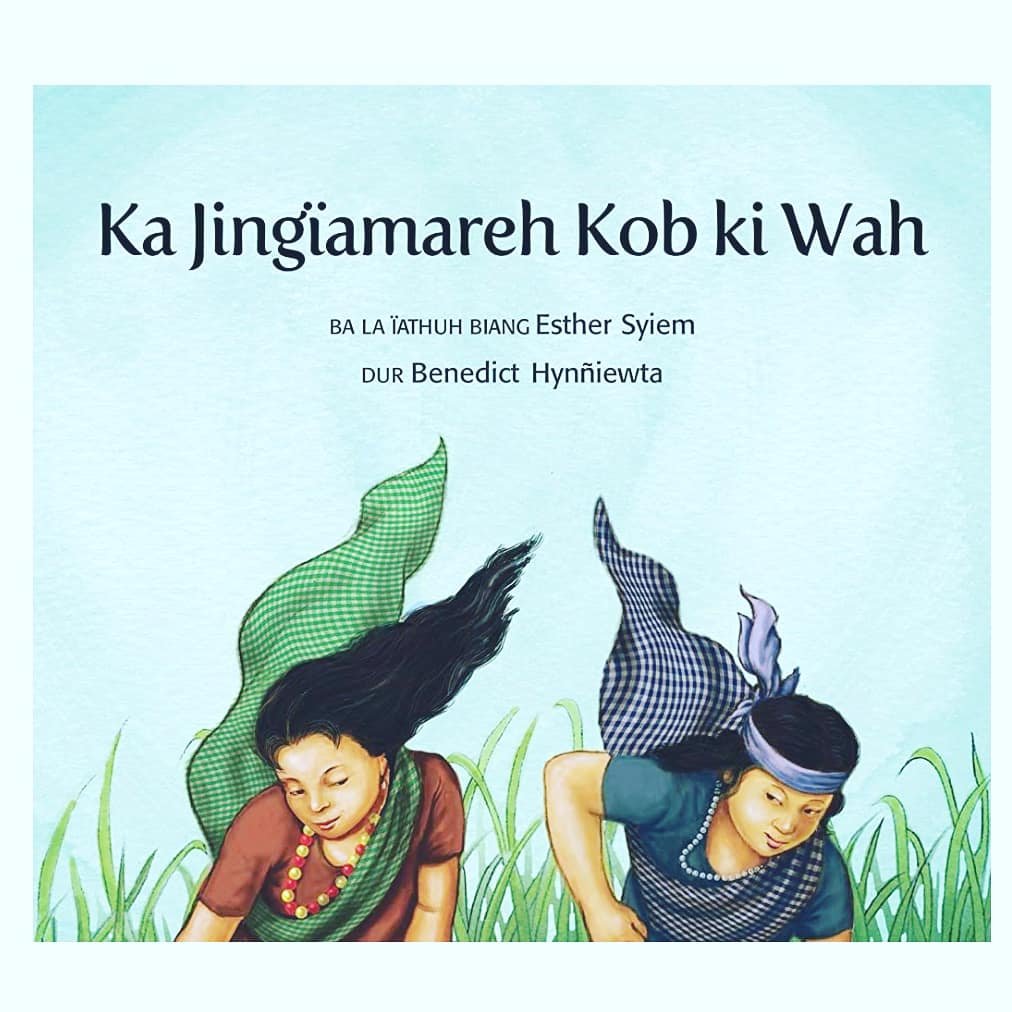
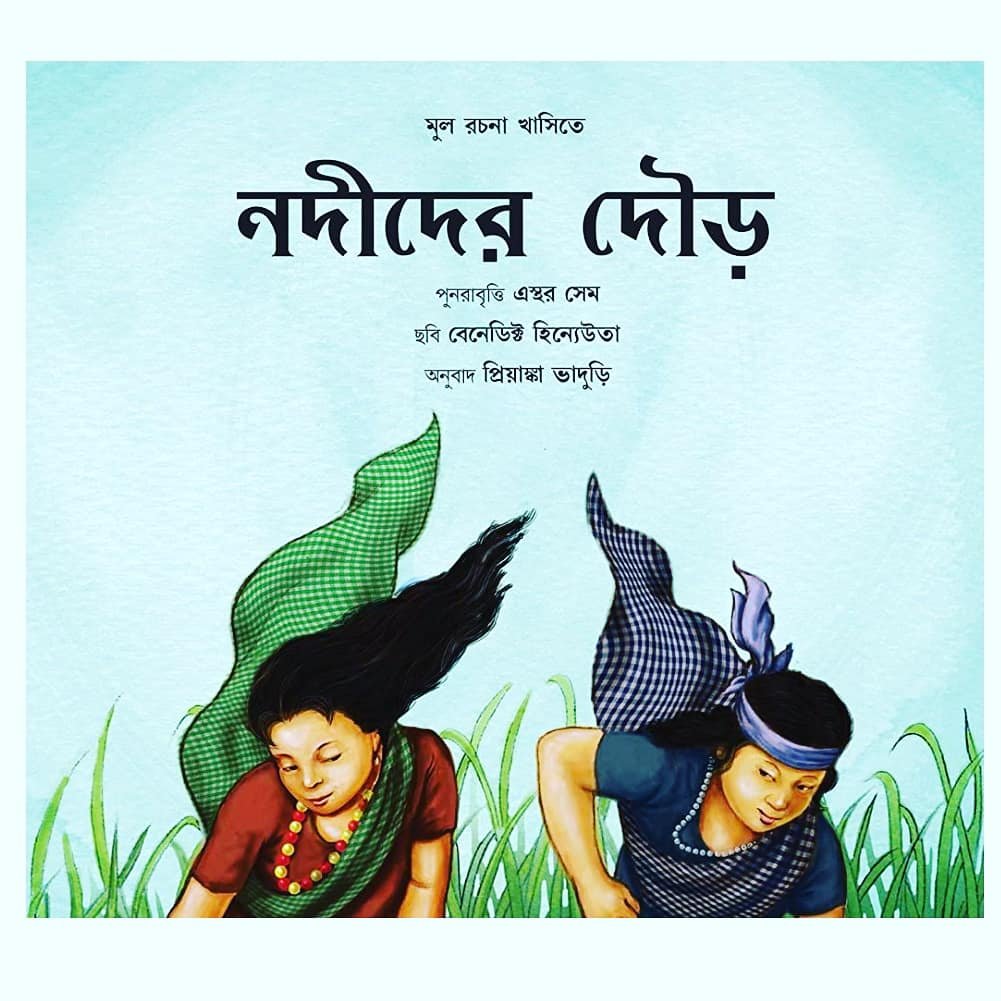
    Ka Jingïamareh Kob ki Wah , ba la ïathuh da Esther Syiem, Dur: Benedict Hynñiewta

    Ka Ïew bad ka Ngot ki ju sngewtynnad ban ïalehkai ha u lum hajrong. Ha kawel ka sngi, ka Ïew kaba kham shlur, ka la peit ïa ka jingshat ka sngi ha ki them shajngai bah bad ka la khot ïa ka Ngot, ka para kaba ju sngewtynnad ban shong mutdur, pyrkhat marwei, sha ka jingïakob mareh. Ha ka shi khyllipmat ka Ïew ka la kylla sha ka wah kaba kynthih ïa ki lum ki wah ban poi kloi shathie. Ka Ngot kam banse shuh ban bud lang… Mano ban jop?

    La ïathuh ïa kane ka khana pateng da ka nongthoh bad u artis, kiba ïoh mynsiem na ka mariang kaba dap da kiei kiei kiba jyrngam bad ba itynnad ha Meghalaya. Kane ka khana ka sngewban bang ïathuh ïa ki jnit ki jnat jong ka jingïamareh kob, katba ki jingdro pat ki tbeh sha kata ka jingïamareh na ki lum sha ki them.

    Ka Jingïamareh Kob ki Wah sien shon banygngkong eh ha ka ktien Khasi ïa kum kane ka kot dur.

    Ka nongthoh, Esther Syiem, ka hikai English Literature ha ka skulbah North-Eastern Hill University, Shillong. La palat shiphew snem eiei ba kane ka nongthoh ka la pyrshang ban wad bad plait bha ïa ki khana pynriewspah jaitbynriew jong ki Khasi. Ka dei ka nongthoh kaba thoh lang ha ka Khasi bad ka Phareng, ka nongthoh poitri kaba pawnam. Ka la pynmih ar tylli ki kitab poitri, ka drama Khasi, ka kot shaphang kine ki khana bad kiwei de ki ese.

    U Benedict Hynñiewta u dei u artis uba la pass na Visva Bharati University, Santiniketan, West Bengal. Ïa ki dur jong u, la lah pyni ha ki exhibition ha Ri India baroh kawei. U sngewtynnad ban put bisli bad u don bynta ruh bad ka folk fusion music group.

    .

    .

    .

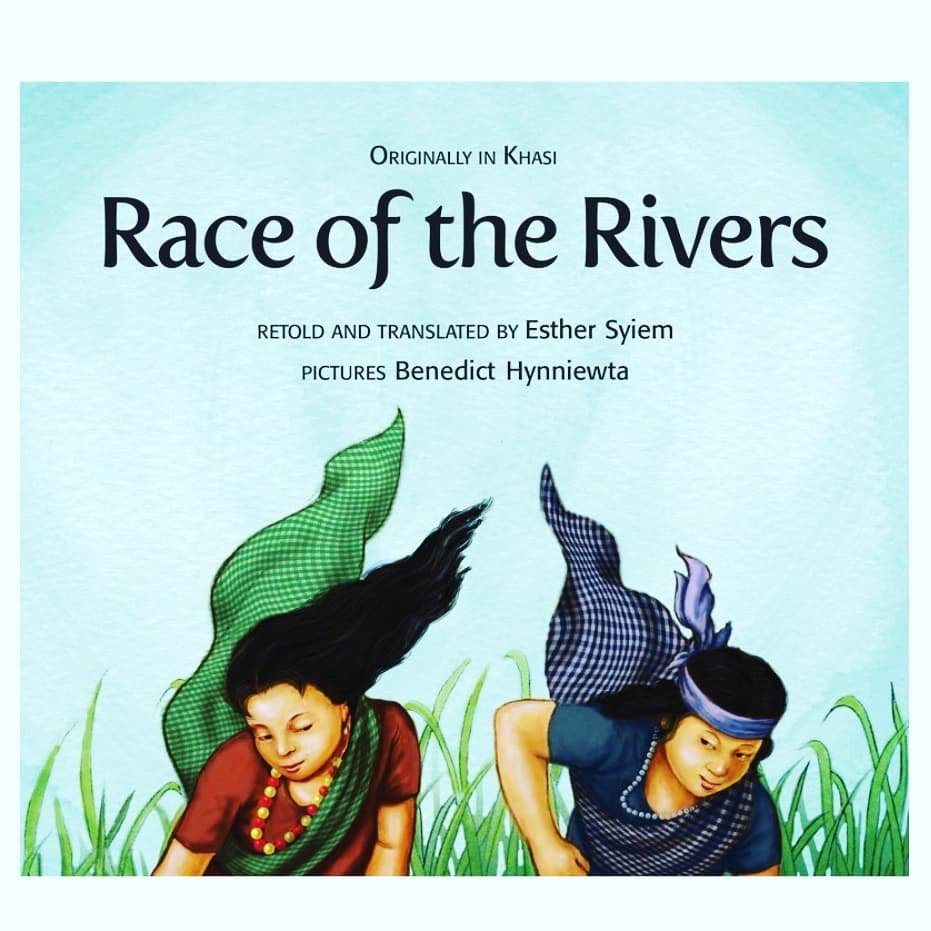
    Originally in Khasi Race of the Rivers, Retold and Translated by Esther Syiem, Pictures: Benedict Hynniewta

    Ka Ïew and Ka Ngot love to play on the hilltop. One day, the adventurous Ka Ïew looks at the sun shining down on the distant, sun drenched plains and challenges her quiet sister to a race. In a flash Ka Ïew becomes a river, ready to rush downhill, and Ka Ngot has no choice but to join her… Who will reach first?

    This well known Khasi folktale is brought to life by a writer and an artist, both intimately connected to and inspired by Meghalaya's varied, lush landscape. The evocative text delights in detail, while luminous illustrations flow alongside, taking the reader on a mood-filled journey from the hills to the plains.

    Race of the Rivers has also been published by Tulika in Khasi, in which it was originally written. It is the first ever picture book for children in that language.

    Writer Esther Syiem teaches English Literature at the North Eastern Hill University, Shillong. She has been involved in the study of Khasi folk literature for more than a decade now. A bilingual writer and established poet, some of her publications include two collections of poetry, Oral Scriptings and Of Wit and Wisdom of Follies and Frailties, and a play in Khasi, Ka Nam.

    Artist Benedict Hynniewta is an alumnus of Visva Bharati University, Santiniketan, West Bengal. Benedict's art has been displayed in exhibitions across India. Currently, he teaches painting in North-Eastern Hill University, Shillong. He loves to play the bamboo flute and is also part of a folk fusion music group.

    Ka Jingïamareh Kob ki Wah the Khasi folktale of the rivers Umngot and Umiew, retold and translated into English by Dr. Esther Syiem and illustrated by @benedictskhemlang

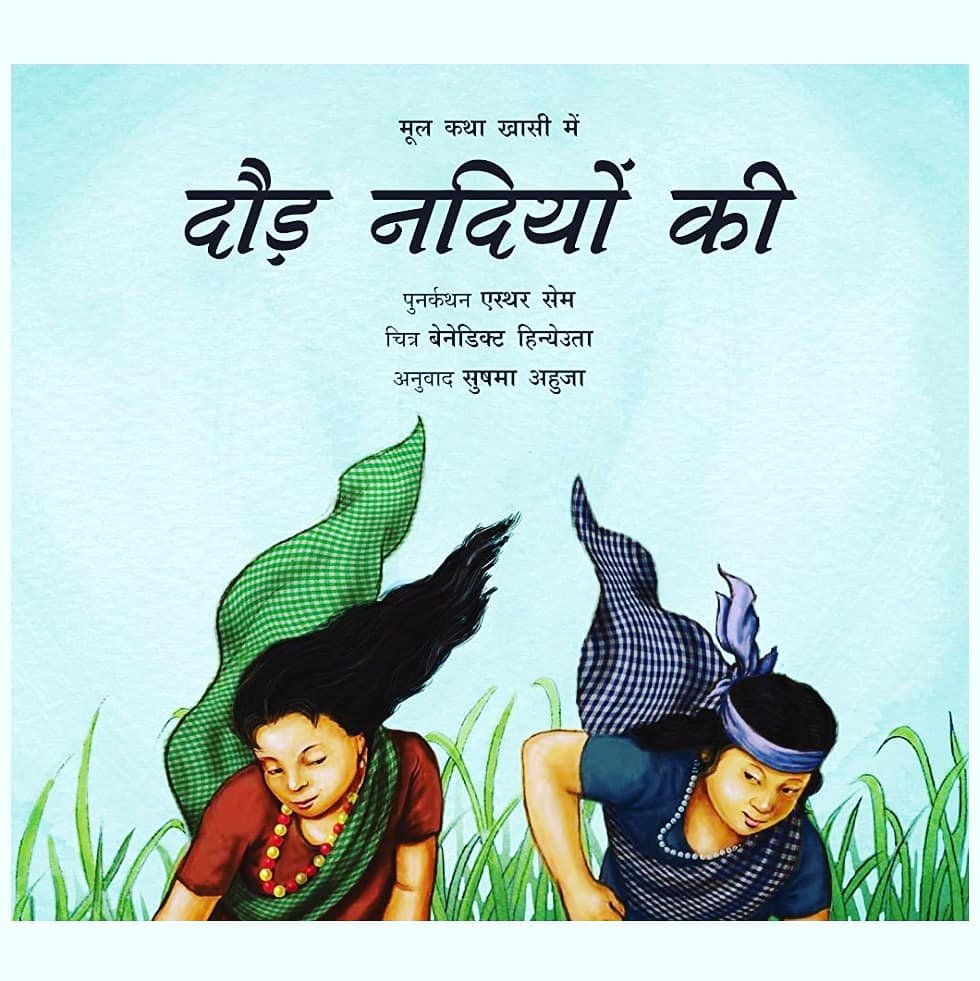
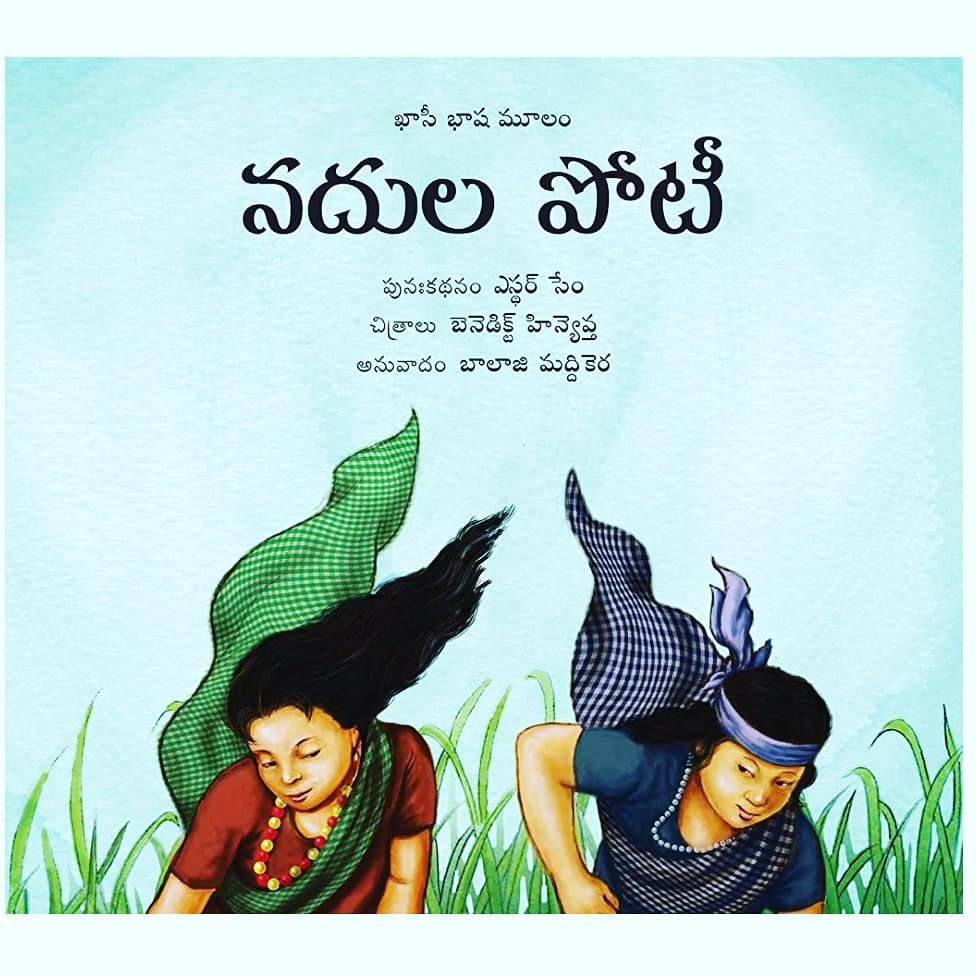
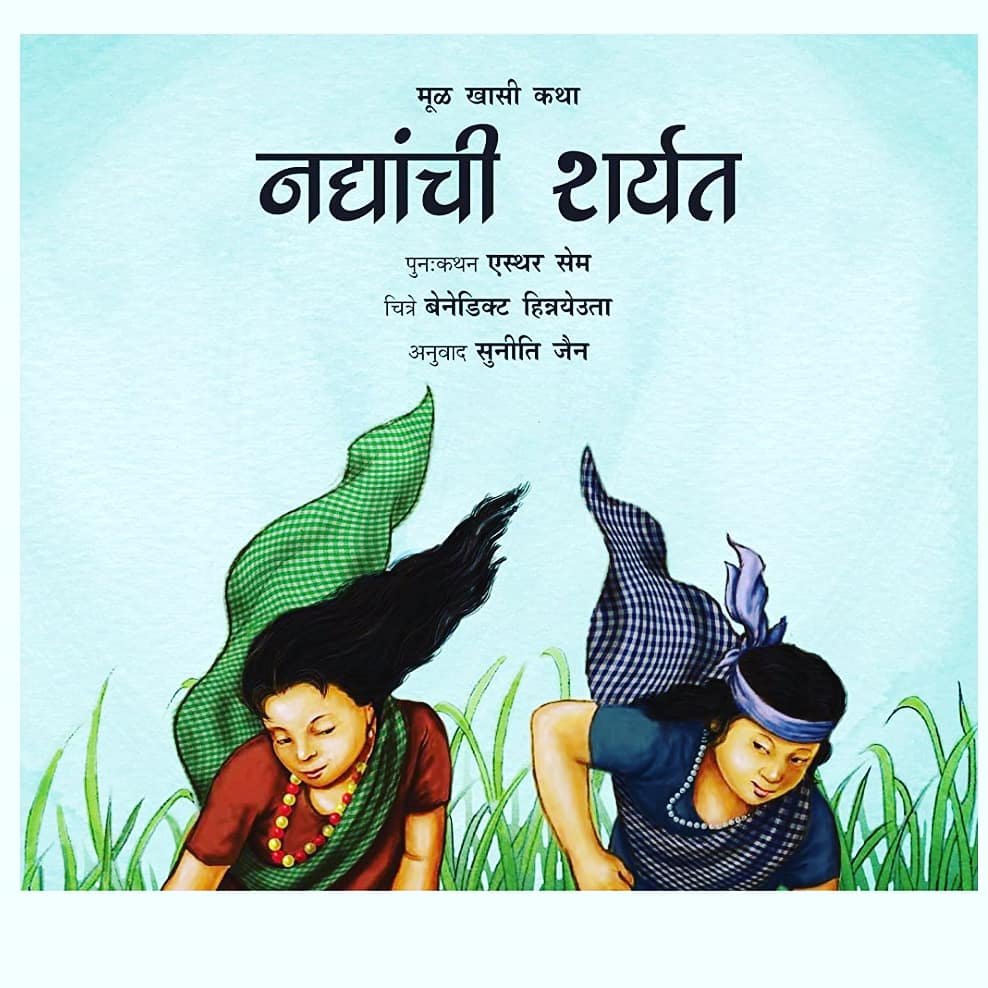
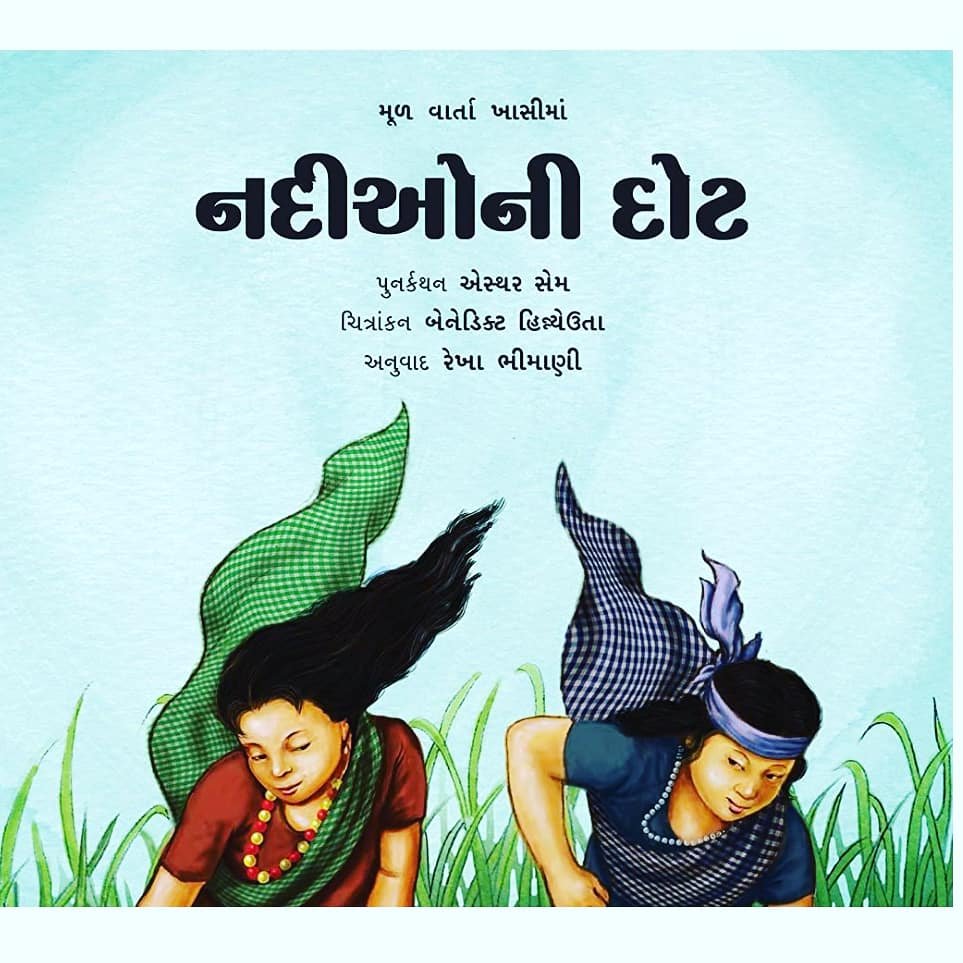
    This book has been translated into different Indian languages including Hindi, Bengali, Tamil, Gujarati and Marathi. It is a perfect book for children! 🌻🌻🌻

    Both Dr. Esther Syiem and Benedict Skhemlang Hynñiewta teach in North-Eastern Hill University, Shillong, Meghalaya.

    The book is available at tulikabooks.com and amazon.in
  • “Ki jingsngew ha ka miet ba wan ka khlam” da Vancouver Shullai

    Sngew triem keiñ, para,

    Haba la poi ka Khlam ha phyllaw ïing.

    Sngew salia wat tang ban ring mynsiem ruh,

    Ïoh jia ba ka ïohsngew bad ka tip noh

    Hamar hangno ngi ïa rieh.

    Ka palong ha kaba la ju dem shiryta,

    Ka sngew pher mynta ka miet:

    Sngew eh ka tyrsok, sngew sohkyrdot ka rajai,

    Haba la khura kata ka Khlam ïa ka phyllaw ïing.

    Sngew artatien ban pyrta sha la ki marjan ruh

    Ban twad jingmut lem na ki,

    Ïoh jia ba ki la ïakynduh ïa kane ka nongshun

    Bad khah snam noh haba ïa khublei kti.

    Hynrei, para, nga pynkynmaw ïa phi,

    Ba ka step ruh kam jngai

    Bad ka Khlam kan sa phet sha la ka lynti

    Ynda thaba noh ka sngi ha phyllaw ïing.

    "Ki Jingsngew ha ka Miet ba wan ka Khlam" is an original Khasi poem by poet and singer @vancouvershullai ! 😄😄😄 Thank you for taking up the responsibility for writing in your own indigenous language! 🌲🌲

    As the pandemic rages on, all one can do is talk about how one feels to find solace. The current situation confronts us with our feeble mortal existence but it also teaches how faith, hope and courage can turn the weight of an overwhelming tide.

    Vancouver Shullai says of the poem: "This poem was written on the night the first COVID-19 positive case was detected in Shillong in the year 2020. An air of apprehension enveloped the entire town as soon as the news was reported. There was a very unusual sense of discomfort, I recall, an extremely foreign feeling no one was prepared for. I wrote this poem to document that calm yet fearful night."

    Thank you @vancouvershullai for documenting this experience in poetry!

  • “Choh Jamalung” (The call of the Cicada)

    As dusk fell, there are days in the valley of Ri Bhoi when children would gather outside their houses; and hold two little bamboo sticks in their hands. In front of a small tree or a branch and just beside the light bulb, they make beating sounds with those sticks to call the "jamalung" (an insect under cicada family).

    The children from Raid Nongtluh would also phawar (chanting song):

    “Et-et pule, charadom pule;

    Saiñ syrmah siñ-jop, siñ-jop

    Chi bang-op, bang-op.

    Dap te ka dap-te ka dap dohkha,

    Chang te ka chang-te ka chang kyrla;

    O! Siñ lum, O! Siñ wah:

    Ka kmei pha te ka tah, tung-dung;

    U pa pha te u wieh, cha-rung”

    The "jamalung" is captivated by the radiance of tungsten lights, and wings its way to the tree. The children are enlivened as they contend with each other for the catch. And the fate of "jamalung" is uncertain, it may be consumed, released back or played with till it is no more.

    "Ka Choh Jamalung" (The Call of the Cicada) is a chanting song sent by @esra_syiem ! 😀😀 Thank you for this unique entry!

    It is reminiscent of those childhood chants and games which sound like gibberish but no one cares because they're so much fun to say 😂😂😂 Those were the days when children were shooed away outside the house to play and shout 💞💞

    "tungsten light" is the light from a filament bulb.

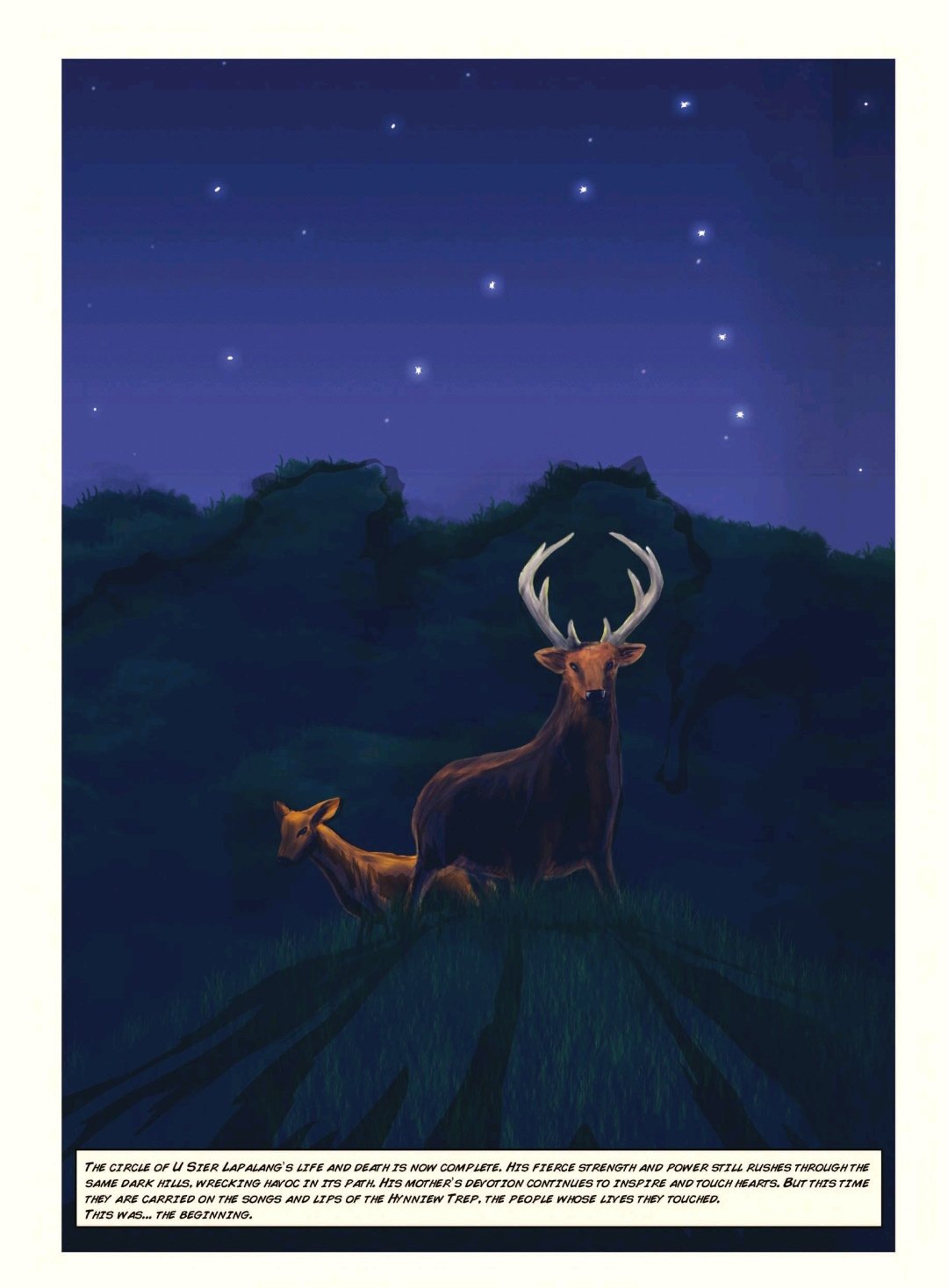
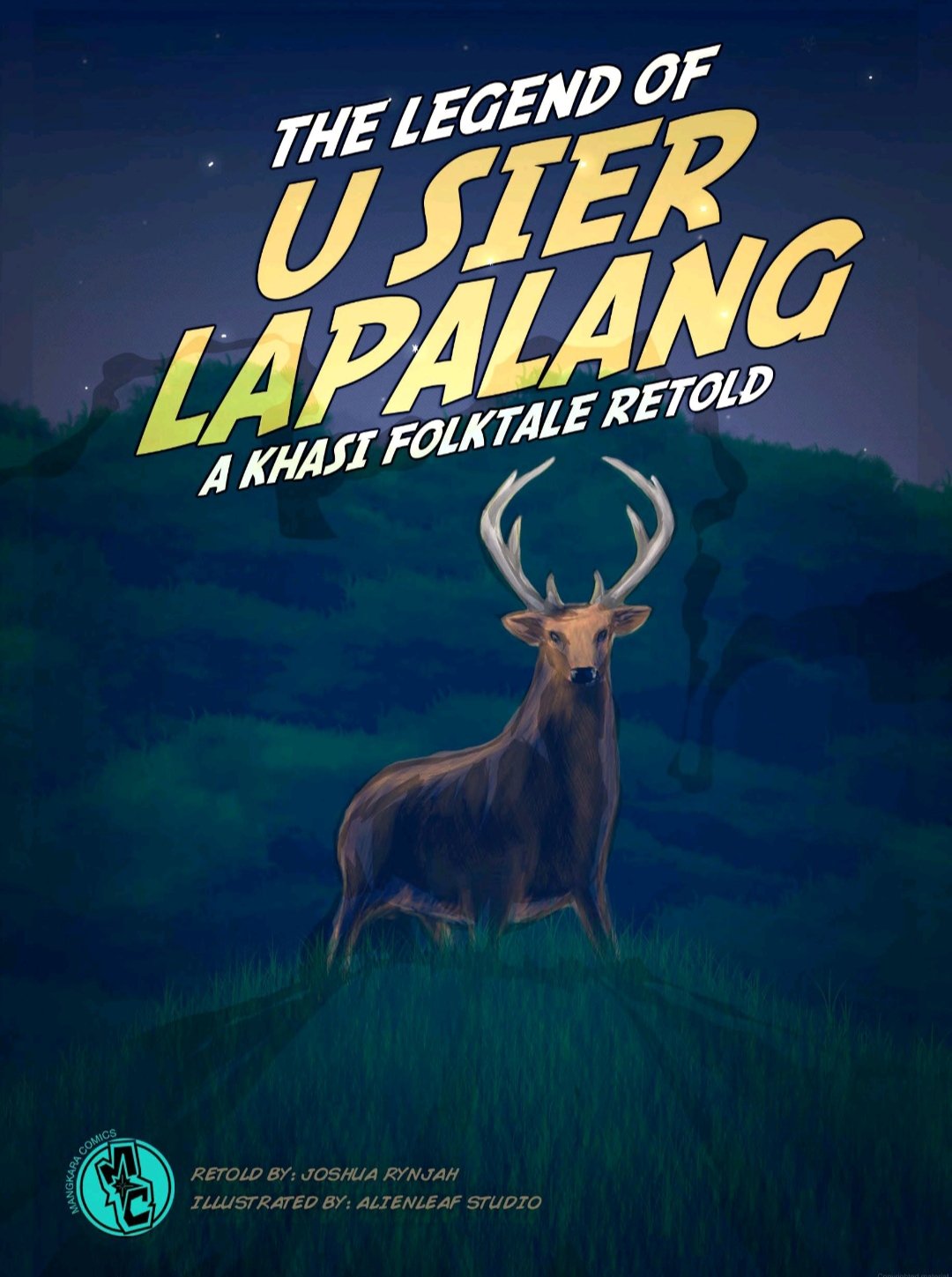
  • The Legend of U Sier Lapalang as a comic book!

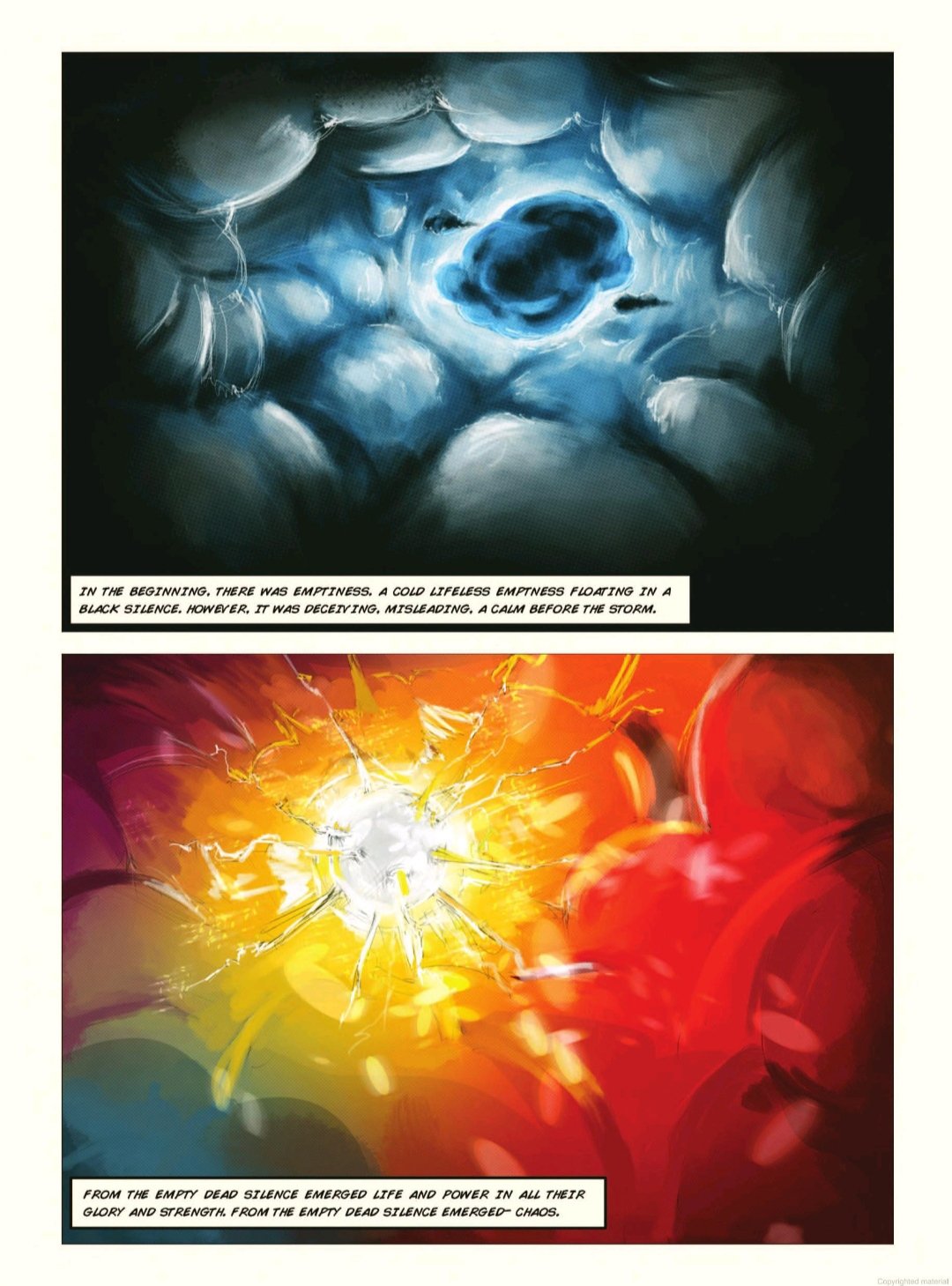
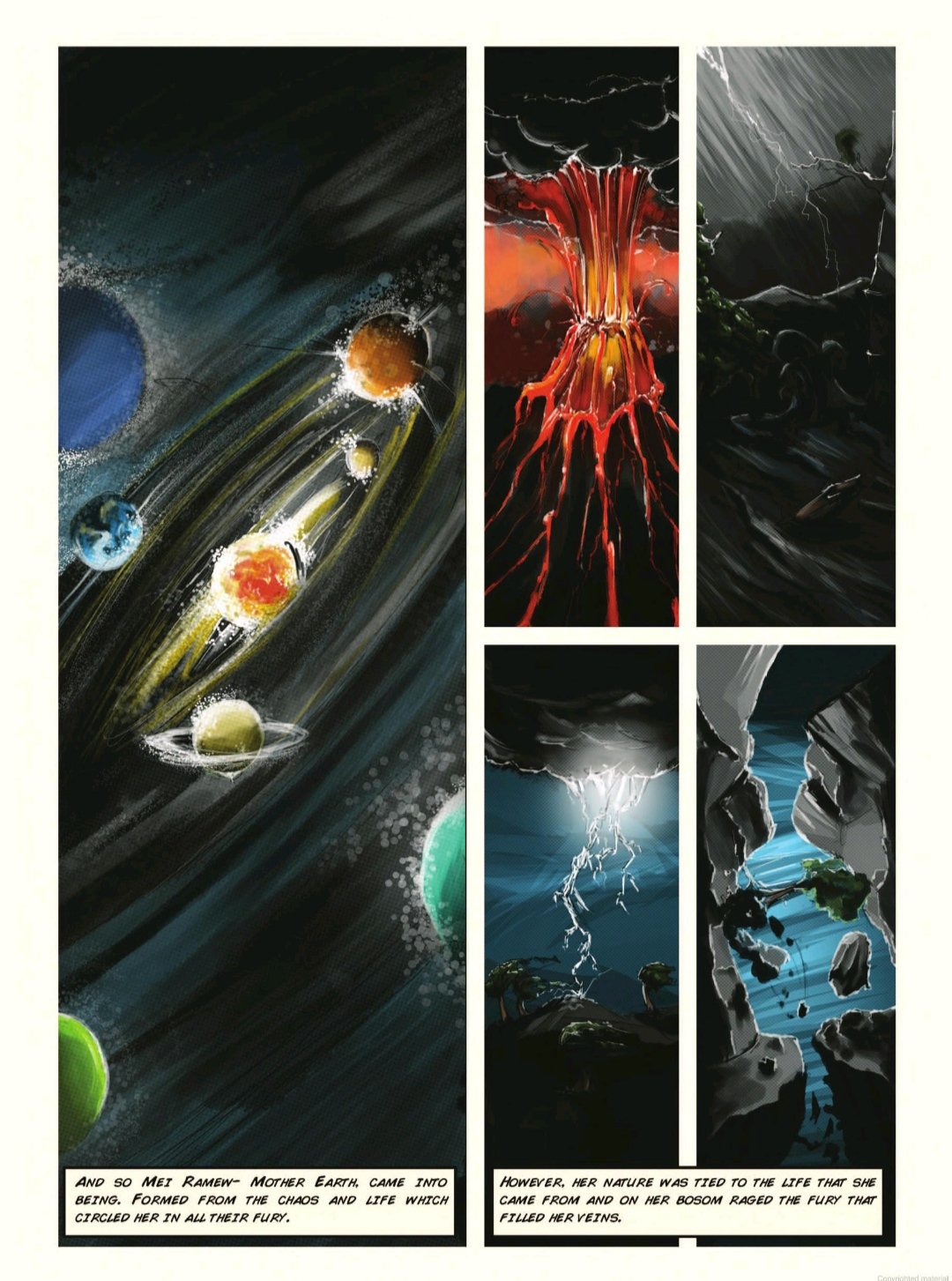
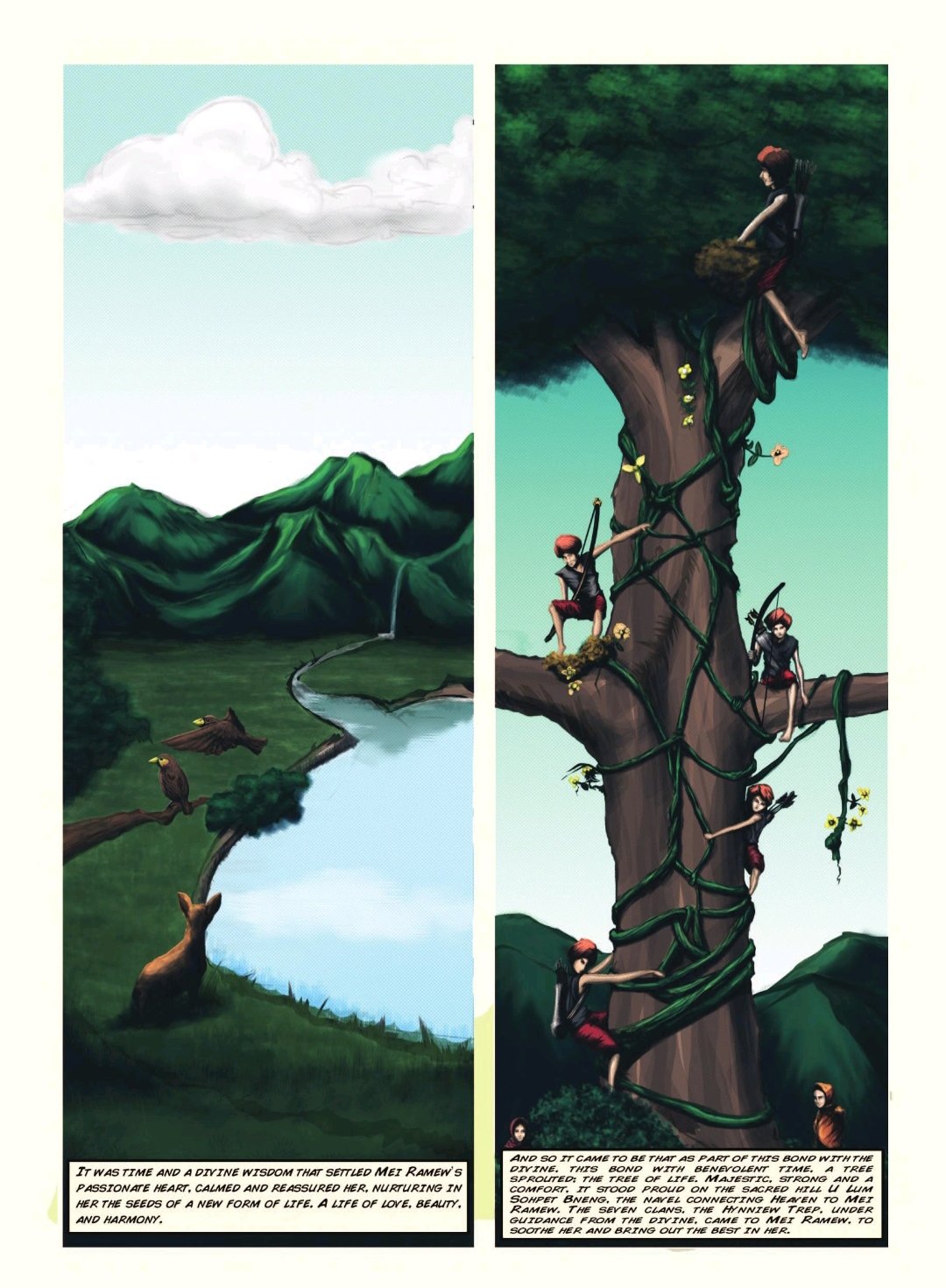
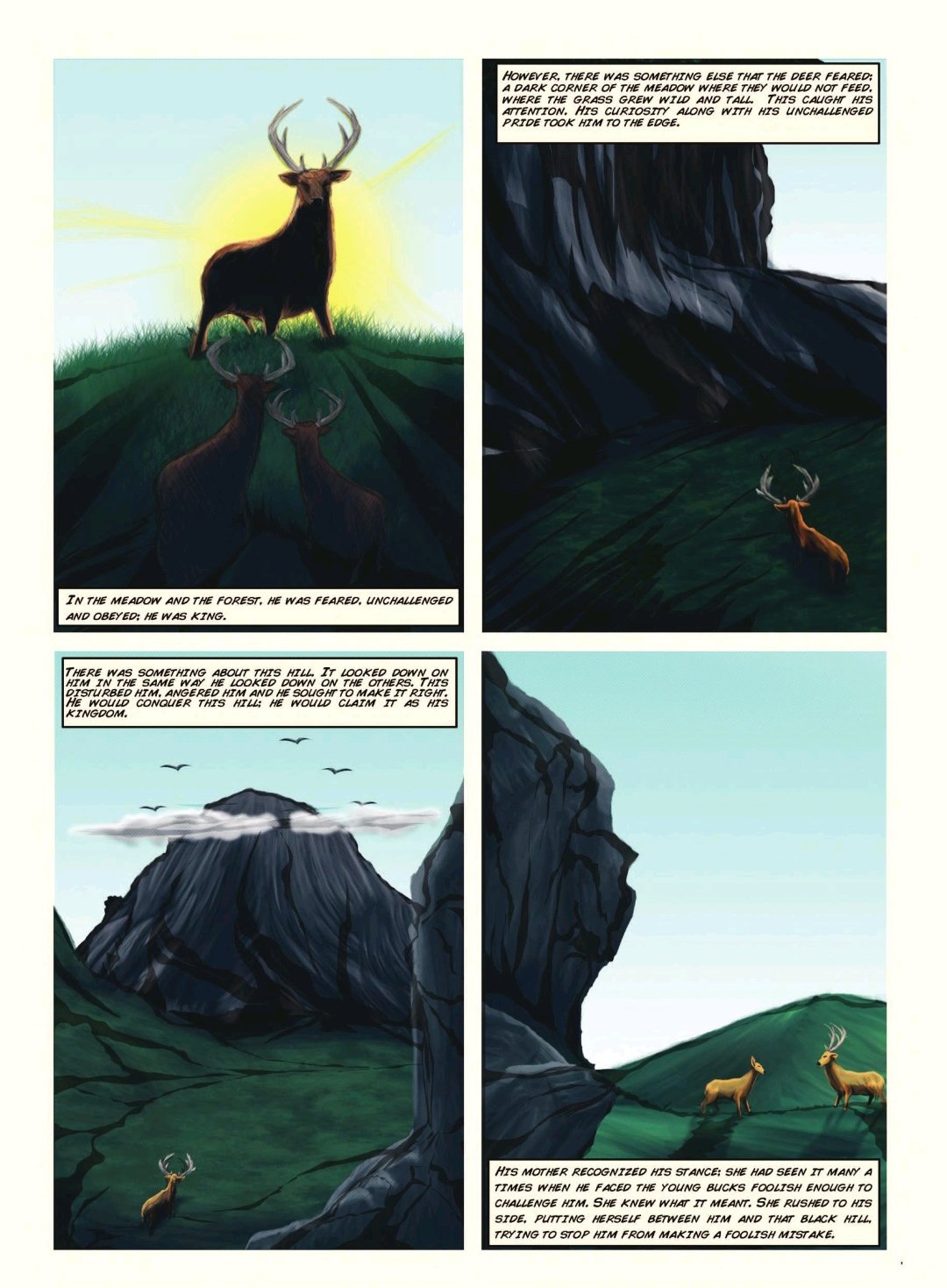
    This comic book has been adapted from the Khasi folktale U Sier Lapalang by Joshua S. Rynjah. It was published by Joshua S. Rynjah and Alienleaf Studio in 2014.

    The book is available on Google Play Store as an e-book: https://play.google.com/store/books/details/The_Legend_of_U_Sier_Lapalang?id=e-y4BAAAQBAJ

    Script: Joshua S. Rynjah

    Storyboard: Joshua S. Rynjah

    Art: Alienleaf Studio

    Art Director: Joshua S. Rynjah

    Graphic Designer: Dipankar Sinha

    Post Processing: Dipankar Sinha

    Colour and Shading by: Aikindasuk D. Khongsngi and Grover Me'Gam

    Online Publishing and Marketing: Lambert Shadap and Lenin Nongsiej

    Joshua S. Rynjah is an Assistant Professor in the Department of English, St. Mary's College, Shillong.

  • Ktung and Jaraiñ

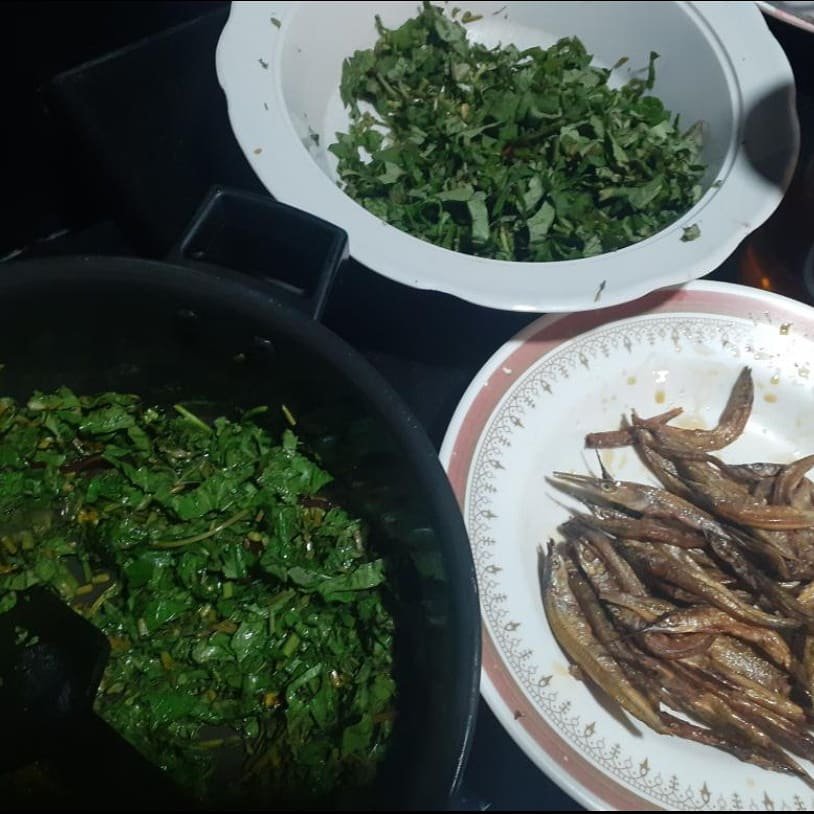
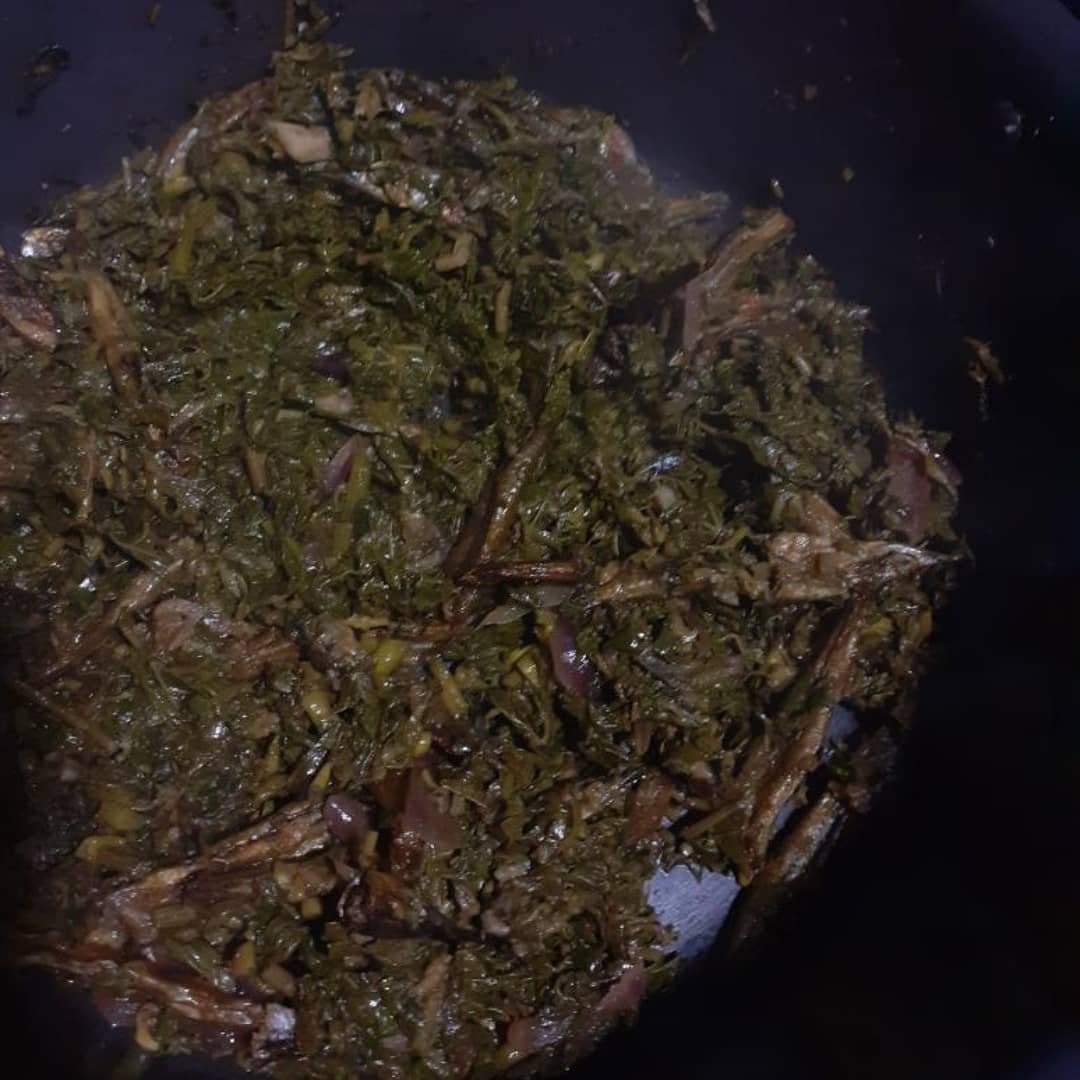
    This post is about "Ktung and Jaraiñ" 😋😋 Thank you @bada_boombam for sending this delicious reminder! 😀😀

    She says: Jaraiñ and ktung is a dish loved by many, the Umami flavour of the dried fish and the sour and lightly bitter taste (you can barely sense it) of the jaraiñ just makes this dish that comfort lockdown food. It can be had as a side dish or even as "jingtah" (as curry eaten with rice). I think the Bhois cook it in bamboo which further adds to flavour because of the smokiness.

  • Dried fish chutney

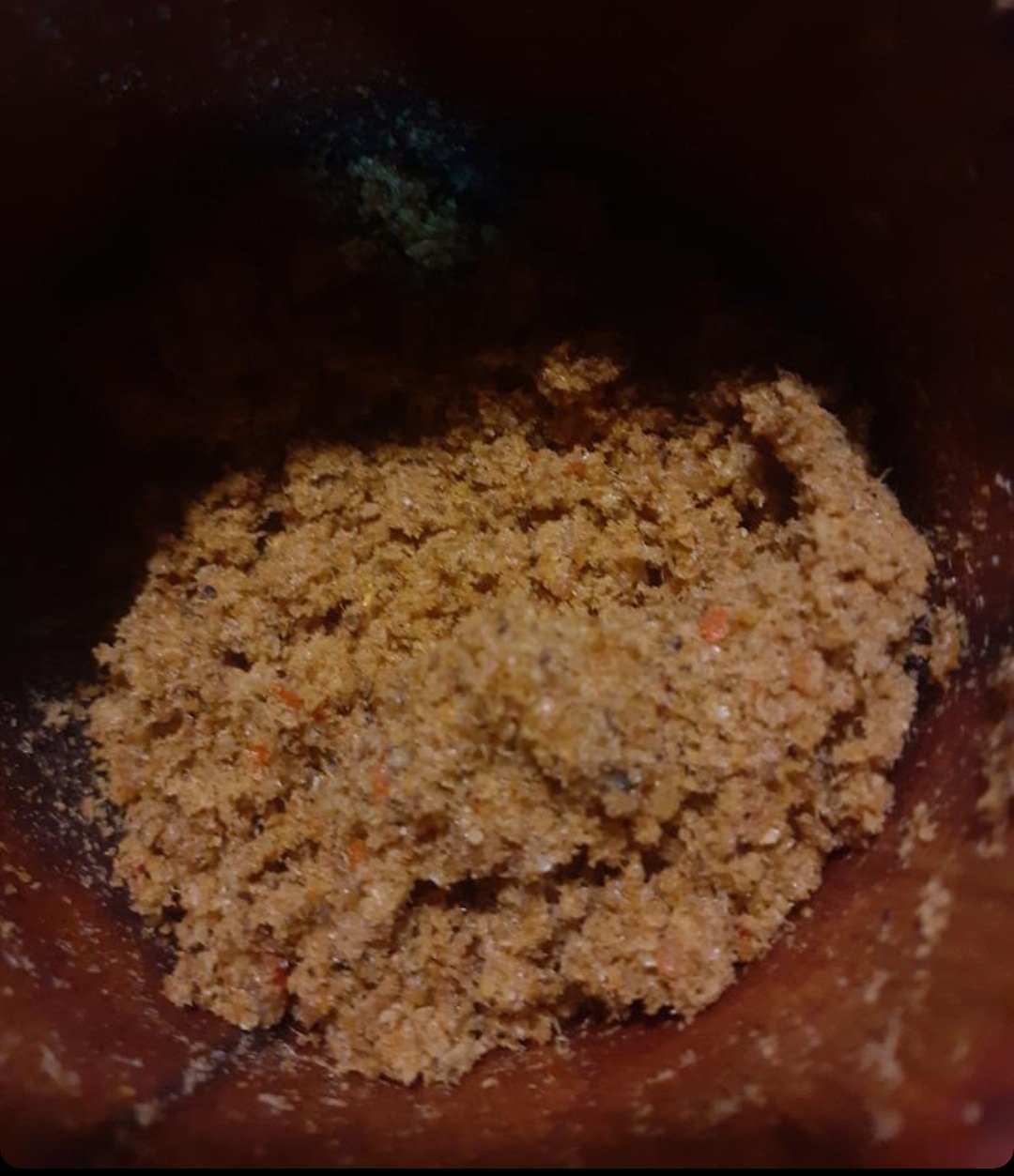
    Dried fish chutney from @bada_boombam 🤩🤩🤩 Thank you for a picture of this mouth-watering chutney! 😋😋😋

    She says: My favourite ktung chutney. It's a marriage of ktung Bombay, dried bird's eye chillies, ginger and szechuan pepper. The trick to that perfect taste lies in how much ginger you add.

  • Ktung mluh bad u sohsaw dieng

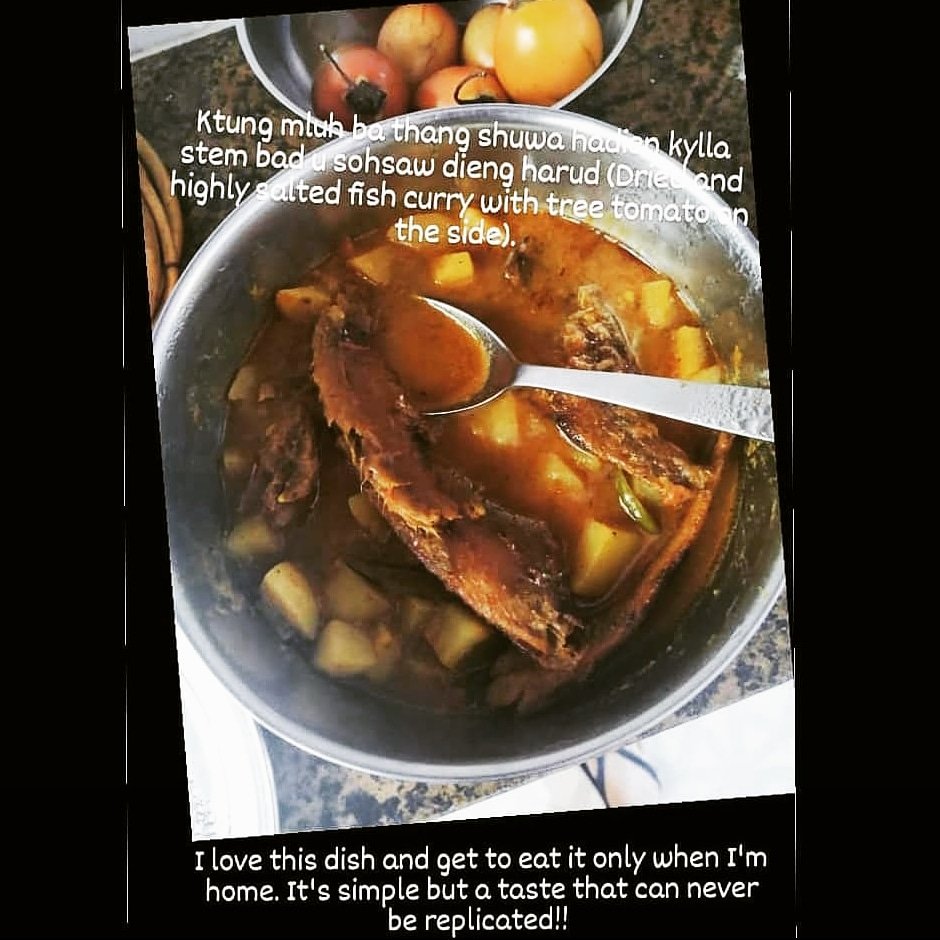
    Ktung mluh ba thang shuwa hadien kylla stem bad u sohsaw dieng harud (Dried and highly salted fish curry with tree tomato the side).

    I love this dish and get to eat it only when I'm home. It's simple but a taste that can never be replicated!!

    ​​

    "Ktung mluh bad u sohsaw dieng" 😋😋😋 yum yum! Thank you @lapdiangsyiem for sending this!

  • Mei Mariang Ngan ym ïeh ia phi da i Daohi Manar

    Ko lyer ba beh jai jai

    Pha pynlung ïa mynsiem jong nga

    Pha beh khlem don jingkhuslai keiñ shirta!

    Khublei, A ko lyer pha la pyntngen ïa nga

    Kumno keiñ mynta ba ngan ïada?

    Ha la marwei, nga ïam pangnud, nga da jaw ki ummat

    Ïa Mei Mariang haduh katne

    Khun bynriew "Kim pyrkhat!"

    Pyrthei Mariang ba itynnad

    B'u Blei u ai kyrpang

    Ka shong ha ngi, tang ha nga bad ha phi

    Ïa Mei- Ramew ba ngin sumar ngin ri

    Ki um ba shngiam ba sngur

    Ba ramew la dep pynwandur

    Da khmat ba sngewdiaw, nga peit ïa pha

    Shaei, pat mynta jaka ban rieh: ïa nga

    Ïathuh keiñ shaei "Ngan ïoh jaka?"

    Kjat sngi ba tyngshaiñ, ki wan doh ïeid ïa nga

    Jingkyrmen nga don, ba pham duh ïa jingjyrngam

    Ngan um ïeh ïa phi, keiñ noh….khun, wat ïam!

    Ka ri khlem jingsheptieng, ko ri ki Blei

    Ba dap da jingshngaiñ, Ri Tipbriew-Tipblei

    To kular ïa nga ba phin kamai hok ha pyrthei

    Ïa nga, to sumar-kyndong

    Sa shisien ha phi keiñ nga ong.

    "Mei Mariang – Ngan ym ieh ïa phi"

    – Daohi Manar

    An original Khasi poem by @xdtnoahjupejackllthmanar

    Thank you for sending this poem! The message that man and nature are intricately connected has to be reiterated!!

  • Phok

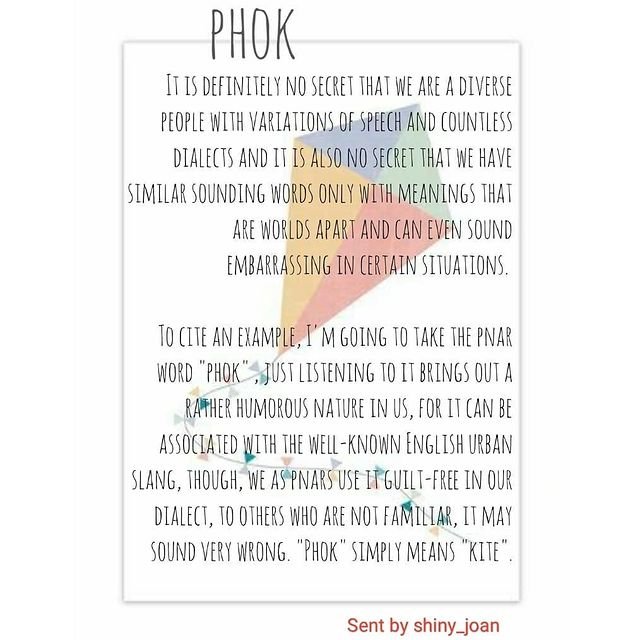
    It is definitely no secret that we are a diverse people with variations of speech and countless dialects and it is also no secret that we have similar sounding words only with meanings that are worlds apart and can even sound embarrassing in certain situations. To cite an example, I’m going to take the pnar word "Phok". Just listening to it brings out a rather humorous nature in us, for it can be associated with the well-known English urban slang, though, we as Pnars use it guilt-free in our dialect, to others who are not familiar, it may sound very wrong. '"Phok" simply means "kite”.

    The word "Phok" in the Pnar language means "Kite". Thank you @shiny_joan for sending this! 😄😄

  • Ñiuma

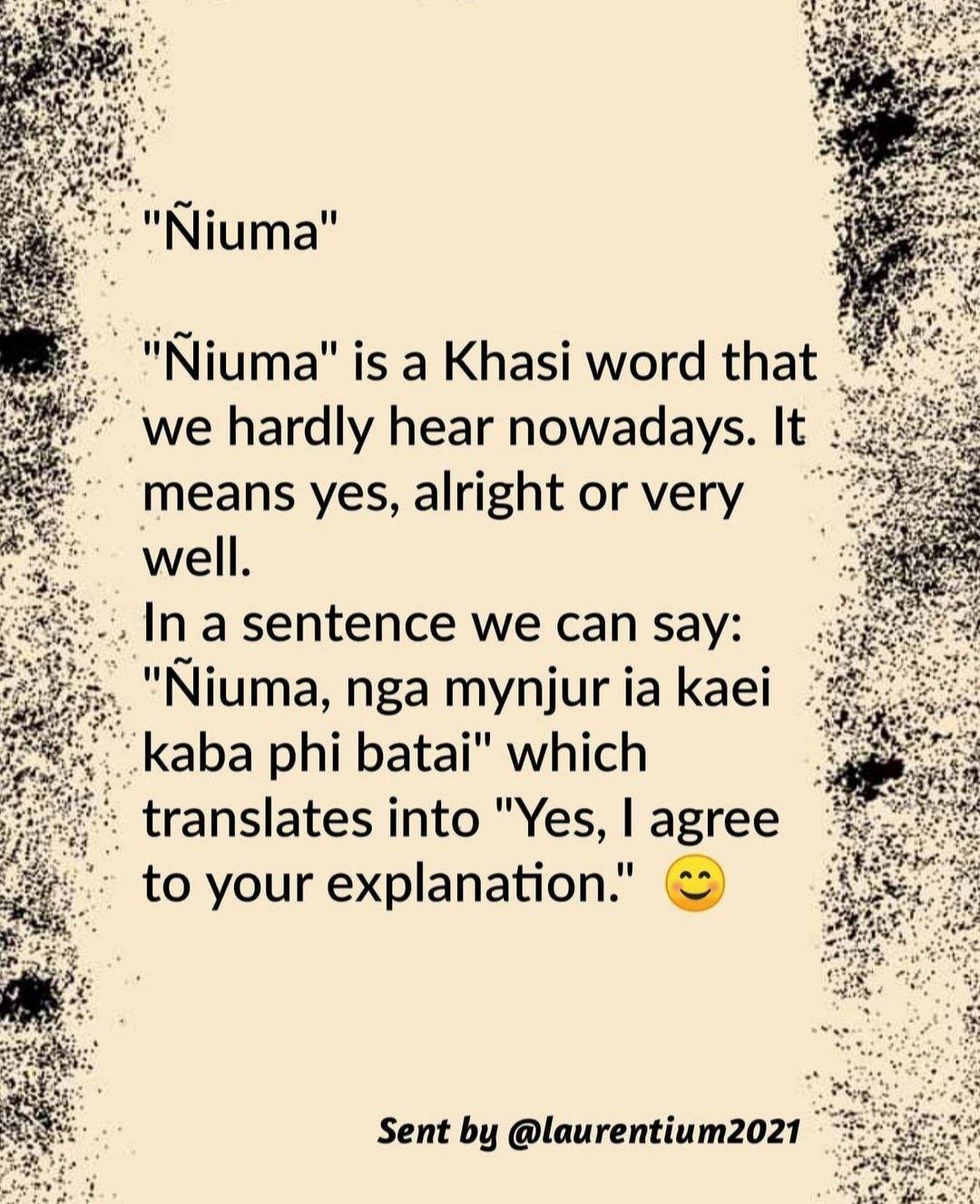
    Ka ktien "Ñiuma" ka dei ka ktien kaba pyndonkam haba mut ban ong ym lei lei ne koit. Kum haba ong “Ñiuma, nga mynjur ïa kaei kaba phi batai".

    Ñiuma is a Khasi word that we hardly hear nowadays. It means yes, alright or very well. In a sentence we can say: “Ñiuma, nga mynjur ïa kaei kaba phi batai" which translates into "Yes, I agree to your explanation."

    Ñiuma" sent by @laurentium2021 😄 Thank you!